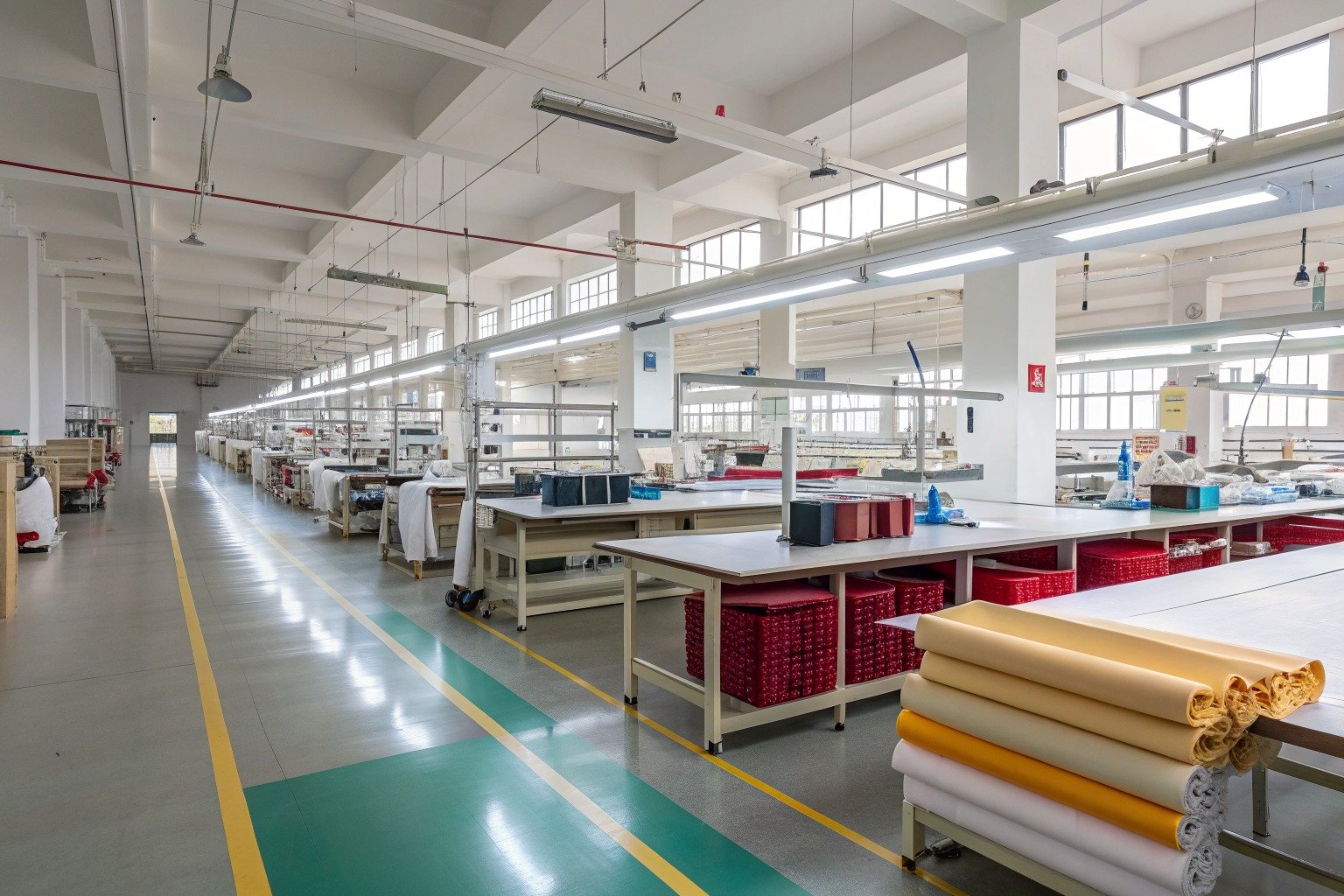
A designer once sent me a beautiful digital file of a floral scarf pattern. The colors were rich, the lines were delicate, and she was eager to move directly to bulk production. She had approved a digital proof on her calibrated monitor and saw no reason for a physical swatch. I gently insisted. When the printed swatch arrived on her chosen silk charmeuse, the fine lines of the flower petals had spread slightly, losing their crispness. The deep navy background looked slightly mottled, not solid. She was shocked. The design that looked perfect on a computer screen had interacted with the physical fabric in a way neither of us could have predicted without a test. She later told me that swatch saved her $8,000 in misprinted scarves.
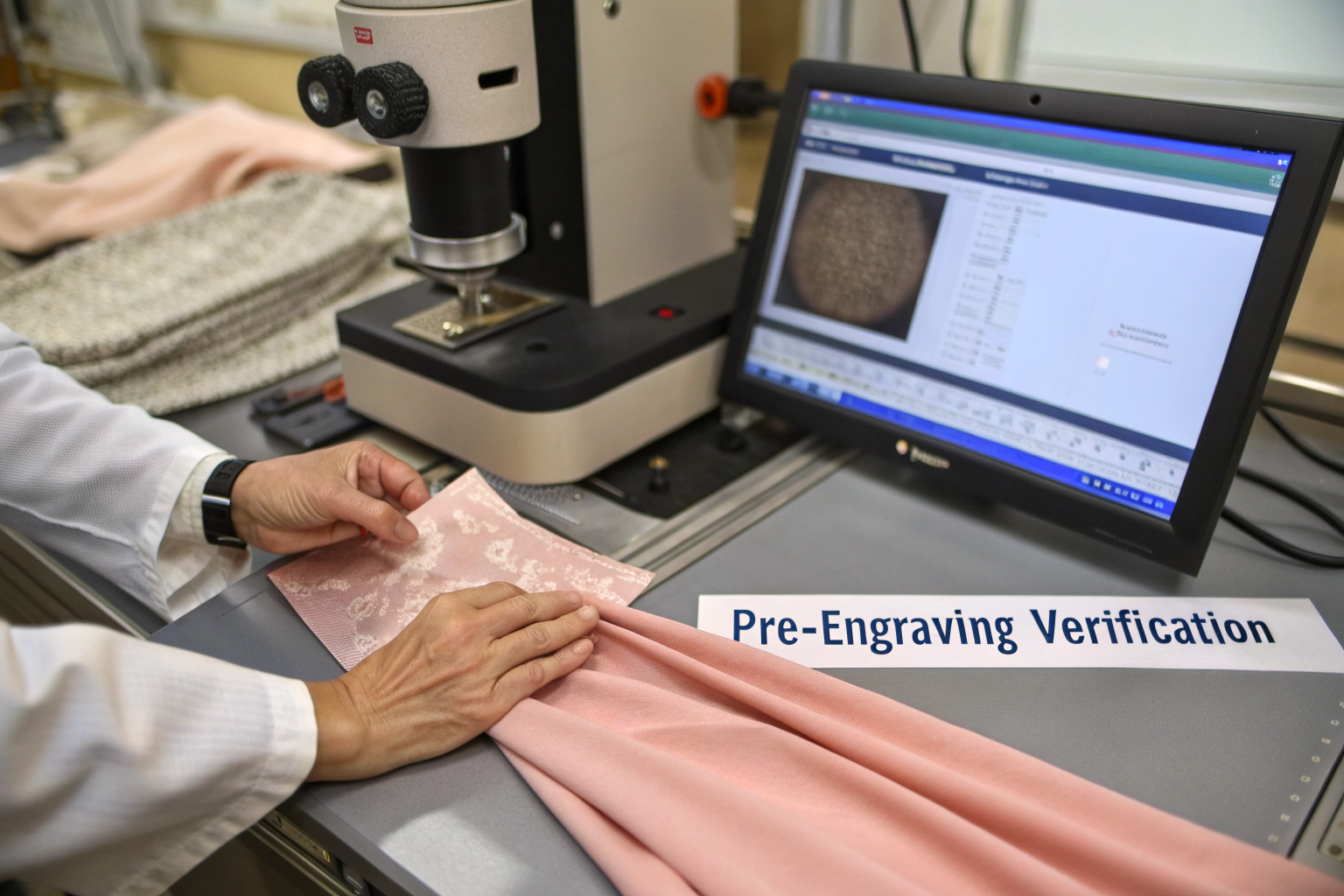
Chinese scarf factories ask for a final fabric swatch before starting screen engraving because the physical interaction between ink, fabric, and screen cannot be fully predicted by a digital file alone. The weave structure, the fiber content, the fabric’s absorbency, and its surface texture all affect how the ink sits, spreads, and cures. A screen, once engraved, is a permanent metal cylinder. If the engraving is done based on a design intended for one fabric, and the production fabric is different—even slightly—the entire print run can be compromised. The swatch is the final, physical confirmation that the design, the fabric, and the screen are in perfect alignment.
At our factory in Zhejiang, we treat the pre-engraving swatch as a non-negotiable step in the printing process. I want to explain the technical reasons behind this requirement, what specific data the swatch provides that a digital file cannot, and why skipping this step is one of the most expensive risks in scarf manufacturing.
What Technical Information Does the Final Fabric Swatch Provide?
A digital file defines the design. The fabric defines the canvas. The final fabric swatch provides the physical canvas so the engraver can calibrate the screen to the specific properties of that exact material. These properties fall into three categories: surface texture and weave, absorbency and wicking behavior, and dimensional stability under tension.
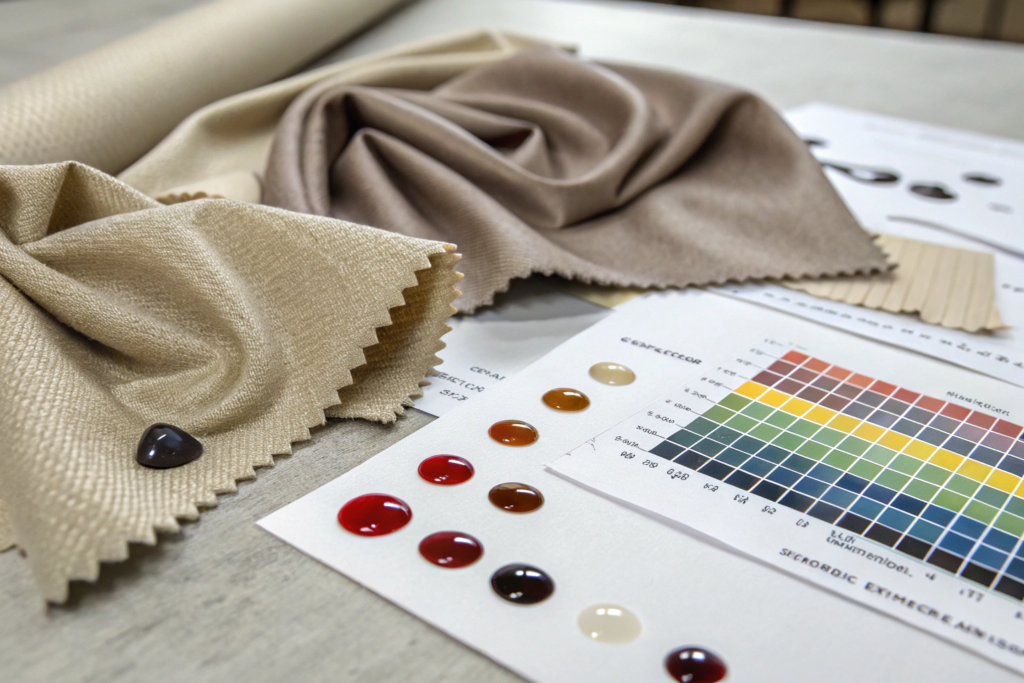
The surface texture determines how the ink transfers from the screen to the fabric. A smooth, tightly woven silk satin receives ink cleanly with minimal dot gain. A textured, open-weave linen or a plush, napped wool causes the ink to spread slightly along the fibers, blurring fine details. The absorbency determines how much ink the fabric drinks. A thirsty cotton voile absorbs ink deeply, potentially muting the color saturation. A synthetic polyester with a tight weave keeps the ink on the surface, producing a brighter, more saturated color. These differences cannot be accounted for in a digital file. They must be tested on the actual fabric.
How does the weave structure affect ink dot gain on the engraved screen?
Dot gain refers to the physical spreading of an ink dot when it transfers from the screen to the fabric. On a smooth, flat fabric surface, the dot retains its circular shape and intended diameter. On a textured fabric with high and low points, the ink follows the three-dimensional topography. It bleeds along the raised yarns and pools in the valleys. The result is a printed dot that is larger and more irregular than intended. A fine, 1-point line designed for a smooth silk may become a blurred, 2-point line on a coarse linen. The screen engraver compensates for this by adjusting the dot size or the line width on the screen based on the fabric’s specific texture. The swatch allows them to measure the actual dot gain and make this compensation. This dot gain in textile printing is a critical process control variable.
Why does the fiber content determine the chemical formulation of the print paste?
Different fibers require different dye chemistries. A print paste formulated for cotton, using reactive dyes, will not bond with polyester. A paste for silk, using acid dyes, requires a different fixation process than a paste for wool. Even the thickener, the agent that gives the print paste its viscosity and prevents the ink from bleeding, is formulated differently for different fibers. If the final production fabric is a different fiber than the fabric used for the initial color matching, the chemical reaction will be wrong. The color will be off, or the print will wash out. The final fabric swatch confirms the fiber content and allows the print chemist to formulate the exact paste recipe for that specific material. This textile dye-fiber compatibility is fundamental to print chemistry.
How Does the Swatch Protect the Screen Engraving Investment?
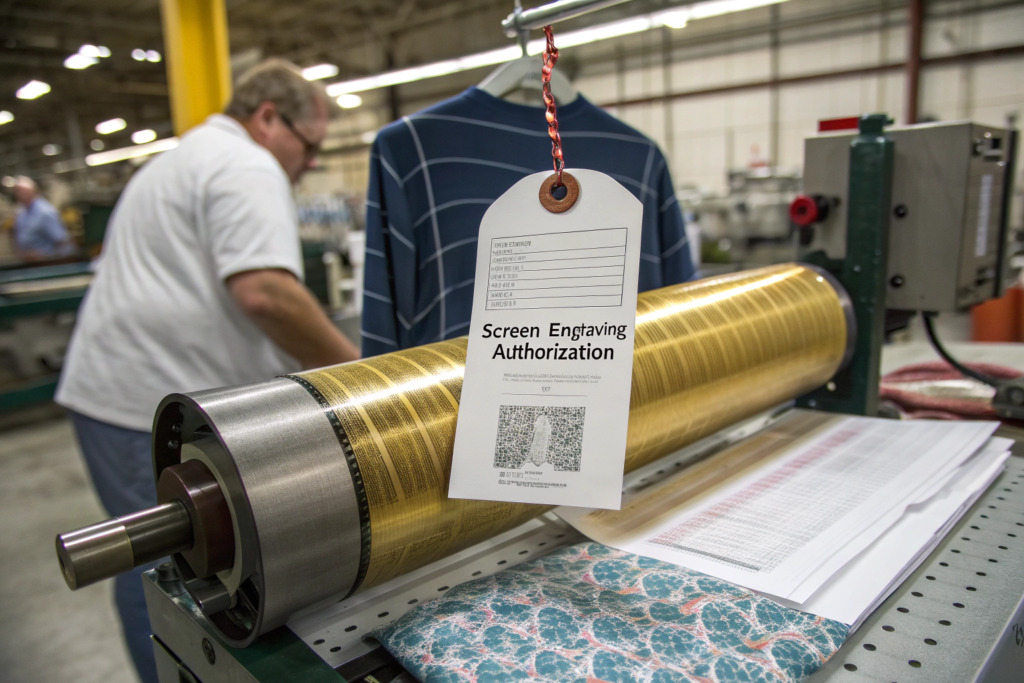
A rotary screen is a precision-engineered metal cylinder. It is electroformed with nickel and laser-engraved with microscopic holes that form the design pattern. The cost to manufacture a single screen for a multi-color scarf design is significant, often ranging from several hundred to over a thousand dollars per screen depending on the size and complexity. If the screen is engraved incorrectly—because it was calibrated for the wrong fabric—it cannot be repaired. It must be scrapped and a new screen manufactured. This cost is borne by either the factory or the client, depending on who made the error.
The final fabric swatch is the insurance policy on this investment. By testing the print on the exact production fabric before the screen is engraved, the factory verifies that the design will print correctly. The swatch approval is the gate that releases the screen engraving order. Without it, the factory is engraving blind.
What is the cost of re-engraving a rotary screen versus the cost of a swatch?
The cost of a single strike-off on the final fabric—a small test print using a flat screen or digital printer—is minimal. It involves a small amount of fabric, a small quantity of print paste, and a short amount of press time. The cost of re-engraving a rotary screen is the cost of a new screen cylinder, plus the production downtime while the new screen is manufactured and installed, plus the potential delay in the shipment. The ratio between these two costs is enormous. The swatch is one of the highest-return quality assurance steps in the entire scarf production process. This cost of quality in textile printing analysis explains why prevention is always cheaper than correction.
How does the swatch become the binding "Color and Print Standard" for the bulk run?
Once the client approves the printed swatch, it is sealed, signed, and dated. It becomes the contractual reference standard for the entire bulk production run. The bulk print is not compared to the digital file; it is compared to the approved swatch. The swatch captures the color, the line sharpness, the hand-feel, and the overall appearance on the correct fabric. During bulk production, the quality control team continuously compares the production output to this physical standard. If a deviation occurs, it is flagged immediately. This golden sample for textile printing protocol is the foundation of print quality consistency.
What Common Mistakes Does the Swatch Prevent?
The swatch is a powerful error-prevention tool because it catches mistakes that are invisible in a digital proof. These mistakes fall into three common categories: fabric substitution, design-scale mismatch, and texture interaction. Each of these mistakes can ruin an entire production run, and each is easily caught by a simple physical swatch printed on the correct fabric.
Fabric substitution occurs when the fabric used for color development is not the same as the fabric ordered for bulk production. This can happen when the dye house uses a standard test fabric that is similar, but not identical, to the production fabric. Design-scale mismatch occurs when the digital design is proportioned for one fabric width, but the production fabric is a different width, causing the pattern repeat to be cut off or distorted. Texture interaction occurs when the fabric’s surface texture—a slub, a rib, or a nap—interacts with the print in an unexpected way, creating a visual effect that was not visible on a smooth digital screen.
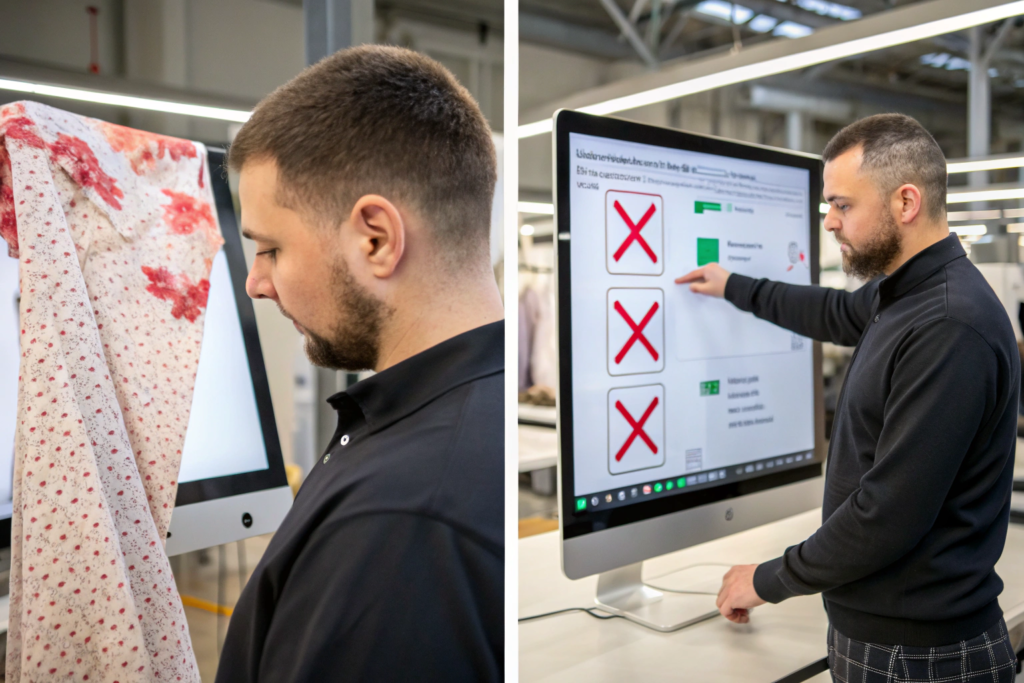
How does a swatch reveal a "fabric substitution" before it becomes a crisis?
A fabric substitution can be accidental or deliberate. A supplier might ship a slightly different weight or blend of fabric than what was sampled. A printed swatch on the actual fabric received for production will immediately reveal if the fabric has changed. The color will look different. The hand-feel will be different. The print sharpness will be different. By catching this discrepancy before the screens are engraved, the factory and the client can stop the process, investigate the fabric supply, and correct the issue before any bulk printing begins. Without the swatch, the substitution is discovered only when the bulk shipment arrives, and by then, the screens are used, the fabric is printed, and the order is ruined.
Why might a design look sharp on a monitor but blurry on a textured weave?
A monitor is a perfectly smooth, light-emitting surface. A textured weave is a three-dimensional, light-scattering surface. A 1-point line on a monitor has a defined width in pixels. On a smooth silk, that line may print close to 1 point. On a coarse, slubby linen, the ink will follow the irregular yarns, and the line will appear to waver and blur. The fine serifs on a font that look elegant on screen may fill in and become unreadable blobs on a textured fabric. The swatch reveals this texture interaction and allows the designer to adjust the artwork—thickening lines, simplifying fonts, enlarging details—before the expensive screens are engraved. This textile print design for textured fabrics guide provides practical design rules.
How Should a Buyer Approve a Swatch for the Fastest Turnaround?
The swatch approval step can either be a seamless accelerator or a frustrating bottleneck, depending on the buyer’s responsiveness and clarity. The factory has the screens on hold, the production slot reserved, and the clock ticking. Every day the swatch sits on a buyer’s desk waiting for approval is a day added to the delivery timeline.
The most effective way to approve a swatch is to set clear criteria in advance and communicate a decision within 24 hours of receiving the swatch. The approval should be in writing and should reference specific, objective criteria: color match to a Pantone standard, sharpness of fine details, and overall aesthetic appeal. If revisions are needed, the feedback should be specific, measurable, and limited to one round.
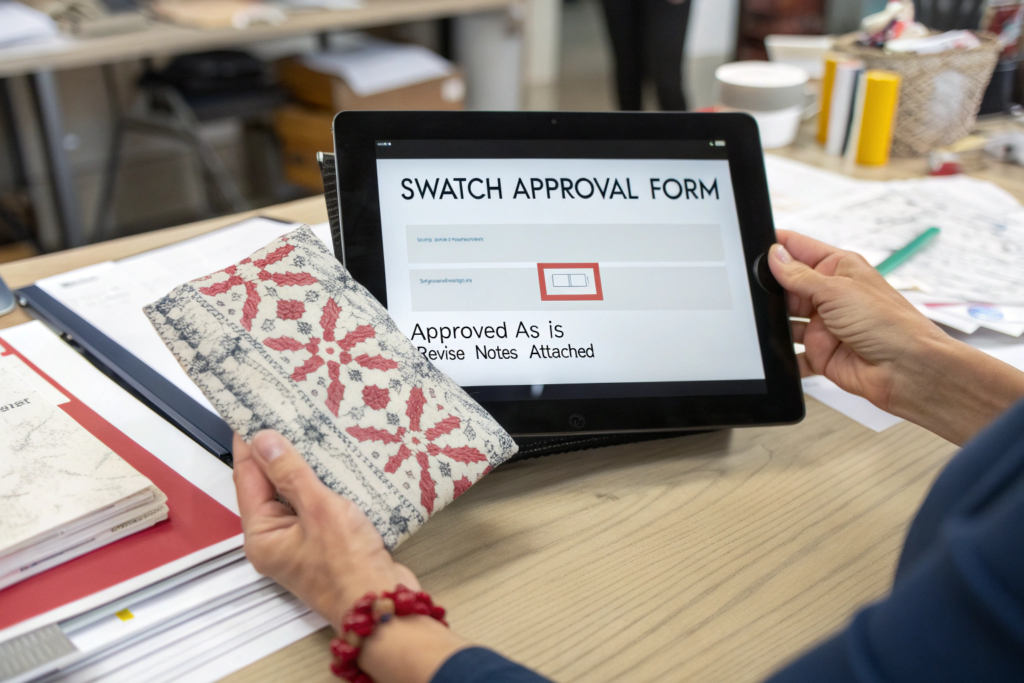
What specific criteria should you evaluate on a printed swatch before approval?
When you receive the printed swatch, evaluate it under a D65 daylight-simulating light source, not under warm office lighting or by a window on a cloudy day. Check the color accuracy against your Pantone reference. Check the sharpness of the finest lines and the smallest text. Check the ink penetration: turn the swatch over and see how much ink has bled through to the back. Check the hand-feel: does the printed area feel stiff, sticky, or plastic-like? A high-quality print should leave the fabric’s natural hand-feel largely intact. Check the pattern alignment if the design has a repeat; does it match at the seams? This printed textile evaluation checklist provides a comprehensive framework.
Why should you limit feedback to one round and use a standard light source?
Multiple rounds of swatch revisions consume weeks and erode the factory’s confidence in the buyer’s decisiveness. Limiting feedback to one round forces the buyer to consolidate all internal feedback into a single, coherent set of instructions. Using a standard D65 light source ensures that the color you see and approve is the same color the factory sees and matches. A color approved under a warm desk lamp will look different under the D65 lights of the factory’s quality control station. This misalignment generates needless rejection of correct bulk production. This standardized lighting for color approval is essential for consistent results.
Conclusion
The request for a final fabric swatch before starting screen engraving is a signal of a careful, quality-focused factory. It acknowledges the physical reality that ink, fabric, and screen interact in ways that a digital file cannot predict. The swatch protects the significant investment in screen engraving, catches fabric substitutions and design-scale errors before they become disasters, and establishes the binding physical standard for the entire bulk production run.
We have examined the technical data the swatch provides—surface texture, absorbency, and fiber chemistry—that directly determines the screen engraving settings and the print paste formulation. We have contrasted the trivial cost of a swatch with the substantial cost of re-engraving a screen. We have identified the common mistakes the swatch prevents and the approval protocols that keep the process moving efficiently.
If you are developing a printed scarf program and want to understand our pre-engraving quality assurance process, we can provide a detailed timeline, a swatch evaluation guide, and a standard light source recommendation. Our Business Director Elaine manages our printed scarf development and can coordinate your swatch approval process. Contact her directly at elaine@fumaoclothing.com. A great print begins with a great swatch. Never skip the step that protects the rest.