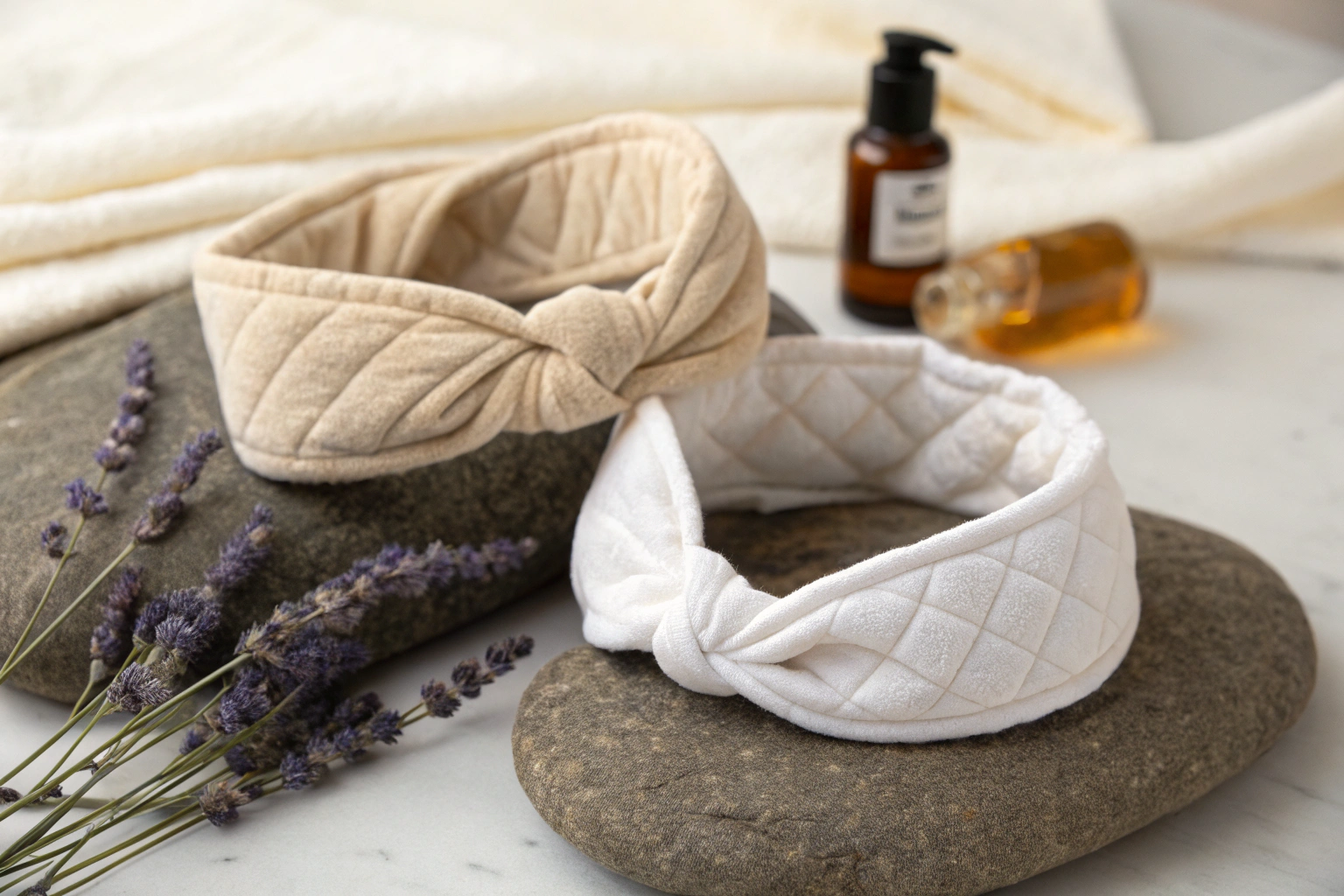
A skincare brand founder once visited our showroom with a very specific problem. Her spa collection needed two types of headbands that, in her mind, felt like completely different products. One was a thin, elegant knot headband in organic linen for her "mindfulness" makeup removal line. The other was a thick, plush, spa-terry wrap for her "hydration ritual" mask application. Her previous supplier could do the flat knot beautifully but couldn’t produce a puffy band that felt genuinely luxurious and survived the rigorous laundering of a commercial spa. She asked if both could live under one roof. I took her to our sample room and showed her the flat bands on one shelf and the puffy bands on the next.
Yes, our factory can absolutely produce both flat and puffy headbands for spa brands. These two products, while physically different, share a common DNA in our manufacturing process: precision cutting for a clean drape, secure closure construction, and the use of skin-safe, OEKO-TEX certified textiles. We treat the flat knot headband as a drape and minimalism exercise, and the puffy headband as a structural and textile engineering challenge.
At our factory in Zhejiang, we have developed dedicated production lines for both types of spa accessories. I want to explain the technical differences between the two constructions, the materials that give each one its signature hand-feel, and the specific sanitary and durability standards required by the professional spa and beauty market.
What Are the Structural Differences Between Flat and Puffy Headbands?
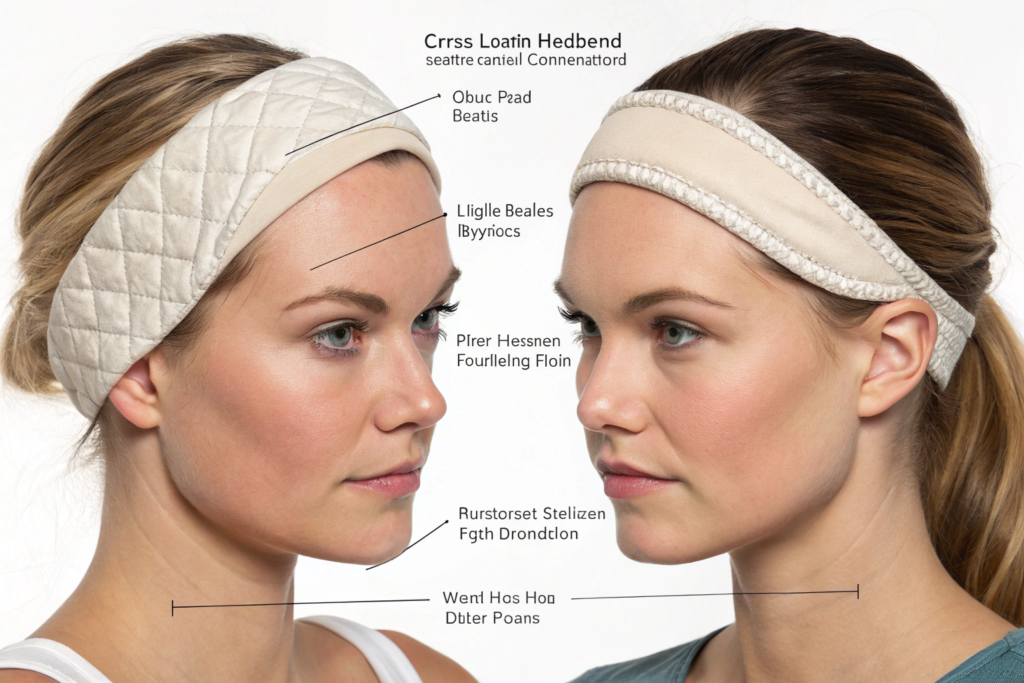
The difference between a flat headband and a puffy headband begins beneath the surface. A flat headband is essentially a precisely cut and sewn strip of fabric. Its beauty lies in the quality of the fabric drape, the sharpness of the folded edges, and the minimalism of the closure. It relies on the inherent properties of the textile—the softness of organic cotton, the crispness of linen, or the sheen of silk—to create the spa aesthetic. There is no padding, no filler, and no topstitching beyond the edge finishing and the elastic casing.
A puffy headband, in contrast, is a constructed textile product. It has an outer shell, an inner padding layer, and often a quilted or channel-stitched pattern that holds the padding in place. The structure traps air, creating the soft, cushioned feel that spa-goers associate with luxury and comfort. The volume of the padding also creates a functional benefit: it holds the hair back more securely and absorbs more moisture during facial treatments than a thin, flat band. The closure on a puffy band is typically a wider velcro or a secure snap, designed to withstand the added bulk and repeated washing.
How does the internal padding affect the sewing and closure requirements?
The padding inside a puffy headband creates a thickness that a standard sewing machine cannot easily handle. The outer fabric, the padding layer, and the inner lining must be compressed and sewn through simultaneously. We use heavy-duty walking-foot sewing machines that feed the multiple layers evenly without shifting or puckering. The closure on a puffy band must be robust. A thin, delicate elastic, suitable for a lightweight flat linen band, would snap under the strain of the thicker band or fail after repeated stretching over a bulky spa hair wrap. We use a wider, reinforced elastic or a high-quality velcro that is sewn, not just glued, into the seam. The bar-tack stitching at the stress points of the closure is reinforced to survive the pulling and tugging of daily spa use. This multi-layer textile sewing techniques resource explains the industrial methods.
Why does a flat knot headband need a different elastic than a puffy spa wrap?
A flat knot headband is lightweight. It requires a soft, narrow elastic that creates a gentle gather without adding bulk. The elastic is typically enclosed in a fabric casing along the bottom edge, creating the signature ruched look. A puffy spa wrap has significant volume and weight. If a narrow elastic were used, it would dig into the wearer’s head, create a pressure point, and fail to hold the heavier band securely. The puffy wrap requires a wider, flatter elastic or a full velcro panel that distributes the holding force across a larger surface area. The elastic tension is also calibrated differently: gentle tension for the flat band to avoid marking the skin, and firmer tension for the puffy band to secure the weight. This elastic selection for headwear is a critical design decision.
What Materials Create the Premium "Spa Feel" for Each Type?
The spa market demands a specific sensory experience. The headband must feel cool, soft, and weightless against the skin for a relaxation treatment, or plush, warm, and absorbent for a hydration wrap. The material selection is the primary driver of this experience. A spa brand’s reputation is built on these tactile moments; a scratchy or synthetic-feeling headband can undermine the entire treatment.
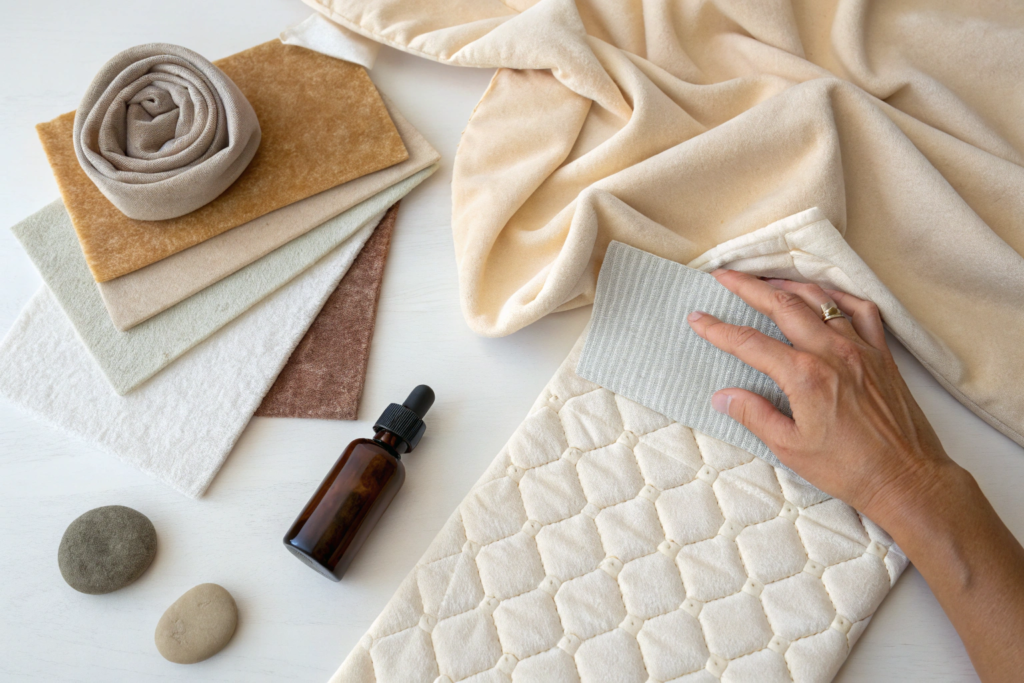
For flat knot headbands, the preferred materials are natural, breathable, and drapey. Organic linen offers a crisp, clean feel that softens with each wash. Sand-washed silk charmeuse provides an ultra-smooth, cooling touch that is gentle on delicate facial skin and hair. Organic cotton voile is a lightweight, breathable, and affordable option that drapes beautifully. For puffy spa wraps, the preferred materials are plush, absorbent, and cushioning. Cotton terry cloth is the classic spa material, offering high absorbency and a recognizable luxury texture. Microfiber chenille provides a velvety, ultra-soft hand-feel that is also quick-drying. Quilted cotton with a thin polyester fill creates a structured, pillowy shape that feels substantial and luxurious.
Why is sand-washed silk preferred over standard silk for delicate facial skin?
Standard silk charmeuse, while smooth, can have a slight crispness or "scroop" that feels less than perfectly soft against freshly exfoliated or sensitive skin. Sand-washed silk undergoes an additional finishing process where the fabric is literally tumbled with fine sand or enzymes. This process microscopically abrades the fiber surface, removing the crispness and creating an exceptionally soft, matte, peach-skin texture. The fabric becomes more pliable, drapes even more fluidly, and feels instantly comforting against the skin. For a spa headband worn during a facial, this level of softness is a signature detail that justifies a premium price. This sand-washed silk finishing process explains the technique.
What is the difference between cotton terry and microfiber chenille for water absorption?
Cotton terry absorbs water through its looped pile structure. The loops create a massive surface area that wicks moisture away quickly. However, cotton terry holds that moisture and dries relatively slowly. Microfiber chenille is made from ultra-fine polyester and polyamide fibers that are split during manufacturing to create microscopic channels. These channels wick moisture incredibly fast through capillary action and also release it quickly, allowing the fabric to dry much faster than cotton. For a spa wrap used during a steam treatment or a hydrating mask application, microfiber chenille may be the better choice because it stays drier against the skin. Both materials have their place. We offer both, and we guide our spa clients to the right choice based on the specific treatment.
What Sanitary and Durability Standards Must Spa Headbands Meet?
The professional spa environment imposes requirements on headbands that the retail fashion market does not. A spa headband is not a personal accessory; it is a shared or single-use commercial textile that must withstand frequent, high-temperature laundering, aggressive stain removal, and exposure to skincare products like oils, masks, and serums. It must also be hypoallergenic and free from any chemicals that could irritate skin that has just been steamed, exfoliated, or treated.
The standards fall into three categories: thermal tolerance for commercial laundry, chemical resistance to skincare products, and colorfastness and anti-pilling for repeated wash cycles. A headband that fades, pills, or shrinks after five washes is unacceptable for a spa. A headband that cannot withstand a 75-degree Celsius wash cycle for sanitization is a hygiene risk. We design and test our spa headbands to meet these specific, demanding standards.
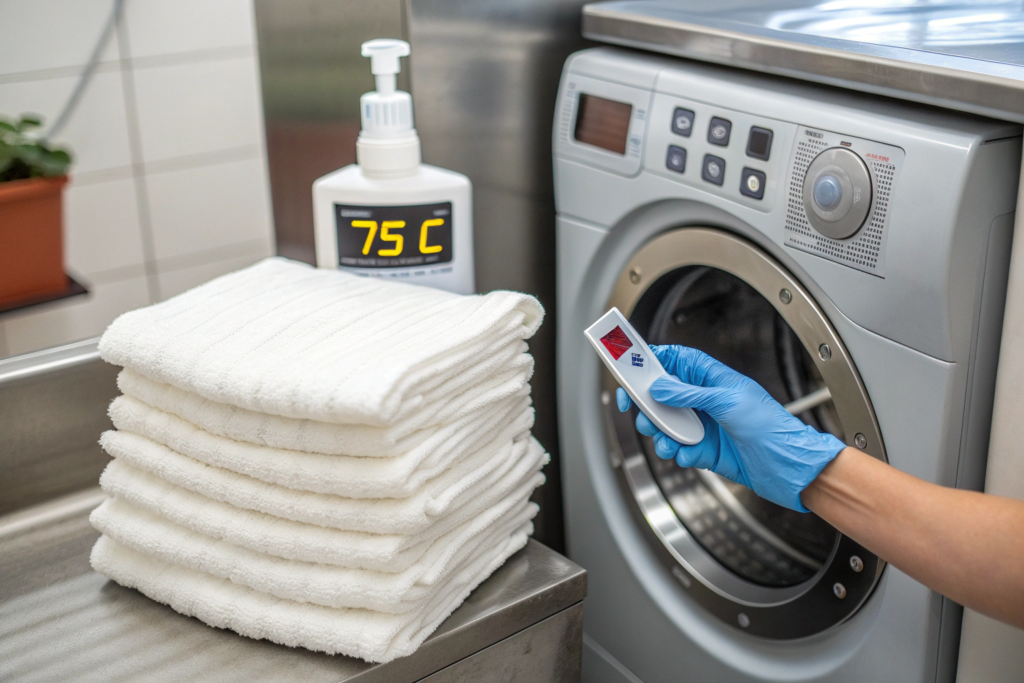
What laundry temperatures must spa headbands withstand for commercial sanitization?
Commercial spa laundry protocols, particularly in Europe and North America, often require thermal disinfection. This means washing at a minimum of 71 degrees Celsius for a minimum of three minutes, or at 85 degrees Celsius for a shorter duration, depending on the specific regulatory standard. Standard retail headbands, washed at 30 or 40 degrees Celsius, would be destroyed by these temperatures. The elastic would degrade, the fabric would shrink, and any adhesive in the closure would fail. Our spa-grade headbands use high-temperature-resistant elastic, pre-shrunk fabrics, and sewn closures designed for thermal disinfection. We test every batch in a commercial washer at 75 degrees Celsius and provide a thermal tolerance test report. This thermal disinfection laundry standards are the benchmark for healthcare and spa textiles.
How do we ensure the headband doesn’t absorb or react with facial oils and serums?
Spa treatments involve oils, serums, and masks. A headband that absorbs these products can become stained, develop odors, and transfer product residue to the next client’s skin—a serious hygiene violation. We apply a hydrophobic, breathable barrier finish to the inner lining of our spa headbands. This finish, which is OEKO-TEX and REACH compliant, prevents oils and serums from penetrating the fabric. The product beads on the surface and can be blotted away. The finish survives repeated commercial laundering. We test this by applying a standardized synthetic sebum and a common facial serum to the headband fabric and measuring the absorption depth and the ease of removal. This oil-repellent textile finish technology is adapted from performance workwear.
How Should a Spa Brand Size and Package Its Headband Collection?
The presentation of a spa headband is as important as its performance. The headband is often the first physical touchpoint in a treatment, and the unboxing experience for a retail spa product sets the emotional tone for the entire ritual. The sizing, the packaging, and the care instructions must all align with the brand’s identity as a purveyor of calm, luxury, and well-being.
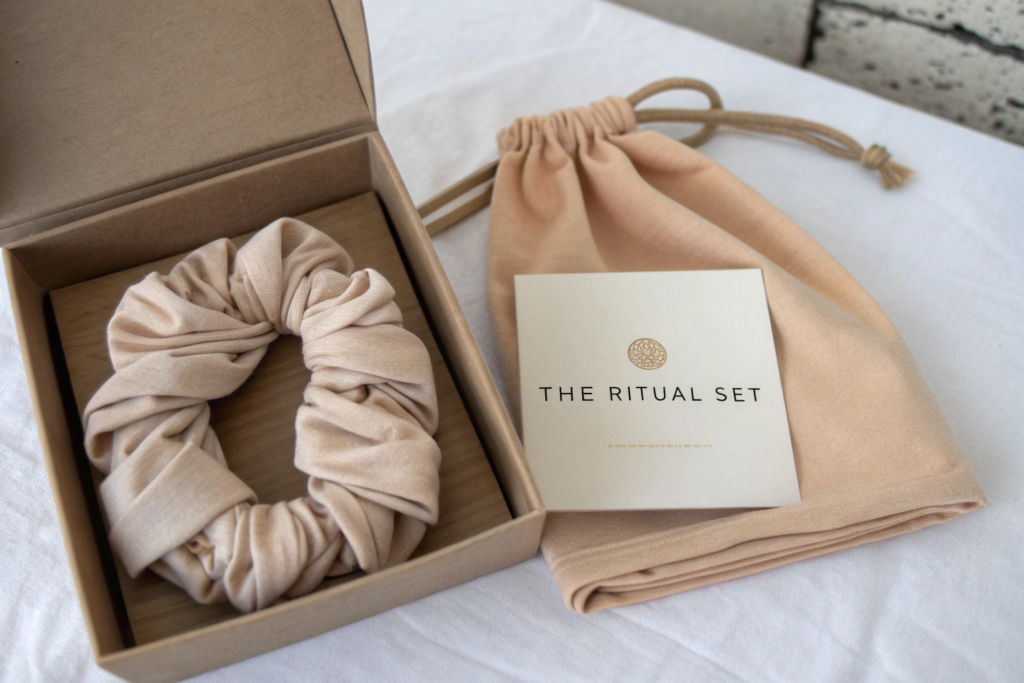
Spa headbands are typically offered in a single, adjustable size designed to fit a wide range of head circumferences comfortably. The packaging should reflect the brand’s aesthetic—minimalist and sustainable for a natural brand, or crisp and clinical for a medi-spa. The packaging must also include clear care instructions that specify the recommended washing temperature, drying method, and any restrictions on bleach or fabric softener. Many spa brands now include a small, branded laundry bag with the headband, designed to protect the headband during the commercial wash cycle.
What is the ideal size range for a one-size-fits-most spa headband?
A one-size-fits-most spa headband must comfortably fit head circumferences from approximately 54 to 61 centimeters, which covers the vast majority of adult clients. For a flat knot headband, this is achieved with a continuous loop of elastic that stretches to accommodate the range. For a puffy wrap, a velcro closure with a wide adjustment range provides a secure, custom fit. We recommend providing a prototype to a small group of testers with diverse head sizes to validate the comfort and security across the range. This headband sizing for comfort provides a useful reference.
How can the packaging encourage reuse and reflect the spa’s sustainability values?
The spa industry is moving rapidly away from single-use plastics and disposable packaging. For a spa headband, the packaging can be part of the product. Instead of a poly bag, the headband can be packaged in a reusable, branded cotton muslin drawstring bag. This bag can then be used by the client to store the headband between treatments or to carry other small spa items. The hangtag can be printed on seed paper that the client can plant. The care instructions can be printed on the inside of the belly band, eliminating the need for a separate sheet. These small, thoughtful details align the packaging with the spa’s sustainability narrative and create a memorable unboxing experience. This sustainable spa packaging solutions are now expected by eco-conscious spa brands.
Conclusion
Producing both flat and puffy headbands for spa brands is a study in contrasts within a unified quality framework. The flat knot headband is a minimalist exercise in fabric drape, precision edge finishing, and gentle elastic tension. The puffy spa wrap is a structural exercise in multi-layer quilting, absorbent material selection, and durable, sanitary closure construction. Both must meet the demanding hygiene, laundry, and chemical resistance standards of the professional spa environment.
We have explored the internal construction differences, the sensory material choices, the rigorous sanitation and durability testing, and the brand-focused packaging strategies. A spa headband is not just an accessory. It is part of the treatment itself.
If your spa brand is developing a headband collection and you want to explore flat and puffy options, material swatches, and hygiene test data, we can provide a development kit and a consultation on the best construction and materials for your specific treatments. Our Business Director Elaine manages our spa and wellness accessory programs. Contact her directly at elaine@fumaoclothing.com. The right headband doesn’t just hold the hair back; it sets the mood for the entire ritual.