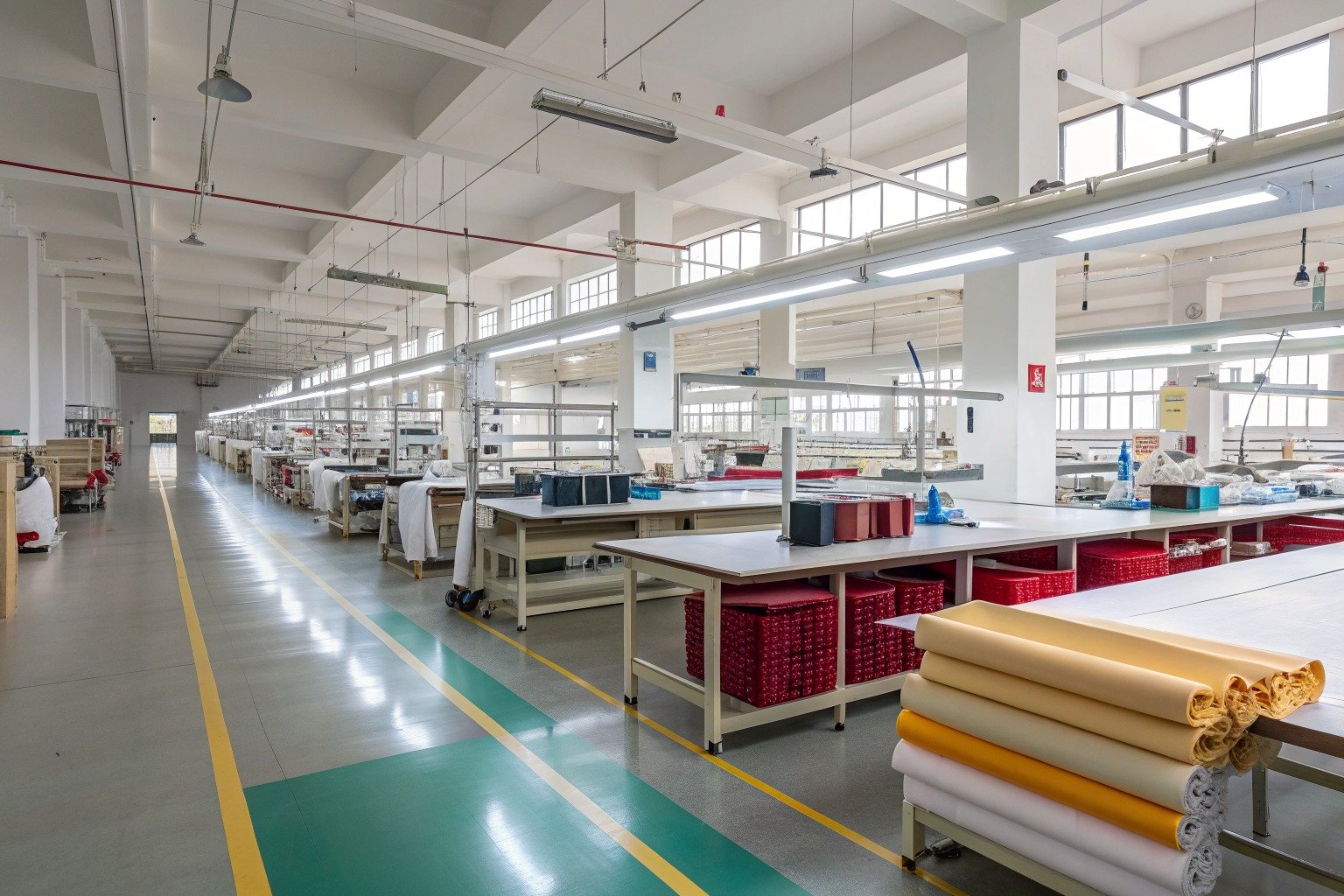
I walked through a resort gift shop in Florida last August and saw a display of our wide-brim straw hats. Or rather, I saw what used to be our wide-brim straw hats. The brims had warped into wavy, uneven shapes. The crowns had slumped slightly, losing their crisp silhouette. They looked tired, defeated by the tropical humidity that hung in the air of that beach town. I bought one, took it back to my hotel room, and spent the evening dissecting the problem. The paper braid had absorbed moisture from the air, the fibers had swollen and softened, and the internal stiffening agent we were using had broken down under the combination of heat and water vapor. I knew we could fix it. I just needed to redesign the chemical treatment.
You get a Chinese straw hat factory to improve the shape retention after humidity exposure by requesting a specific upgrade to three technical areas: the UV-resistant and moisture-blocking coating applied to the paper braid, the internal stiffening agent used in the crown and brim construction, and the density of the weave itself. This is not a matter of asking for a "better hat." It is a matter of specifying the exact chemical treatment, application method, and quality control test that verifies humidity resistance before the hats leave the factory.
At our factory in Zhejiang, we have developed a proprietary anti-humidity treatment for straw hats that we apply to every hat destined for tropical and coastal markets. I want to explain the science of why straw hats lose their shape in humidity, the specific coating and stiffening technologies that prevent it, and how to communicate this technical requirement to your factory so you receive hats that hold their shape from the shipping container to the beach.
Why Does Humidity Cause Straw Hats to Lose Their Shape?
To fix a problem, you must first understand its root cause. A straw hat loses its shape in humidity because the primary material—paper braid or natural straw—is made of cellulose fibers. Cellulose is hydrophilic, meaning it attracts and absorbs water molecules from the surrounding air. When the relative humidity rises, the cellulose fibers in the straw absorb this moisture. The fibers swell in diameter, becoming softer and more pliable. The internal stiffening agent that gave the hat its crisp shape is diluted by the absorbed water, losing its rigidity.
The brim is the most vulnerable part of the hat. It is a wide, flat cantilever with no vertical support. When the fibers in the brim soften, gravity and the weight of the brim itself cause it to droop, warp, or develop a wavy edge. The crown, supported by the head, fares slightly better, but it can still lose its crisp silhouette and develop a slumped, rounded appearance. The problem is worst in climates where high humidity is combined with heat, as the heat accelerates both the moisture absorption and the chemical breakdown of the stiffening agent.
How does cellulose fiber swelling physically alter the hat’s structure?
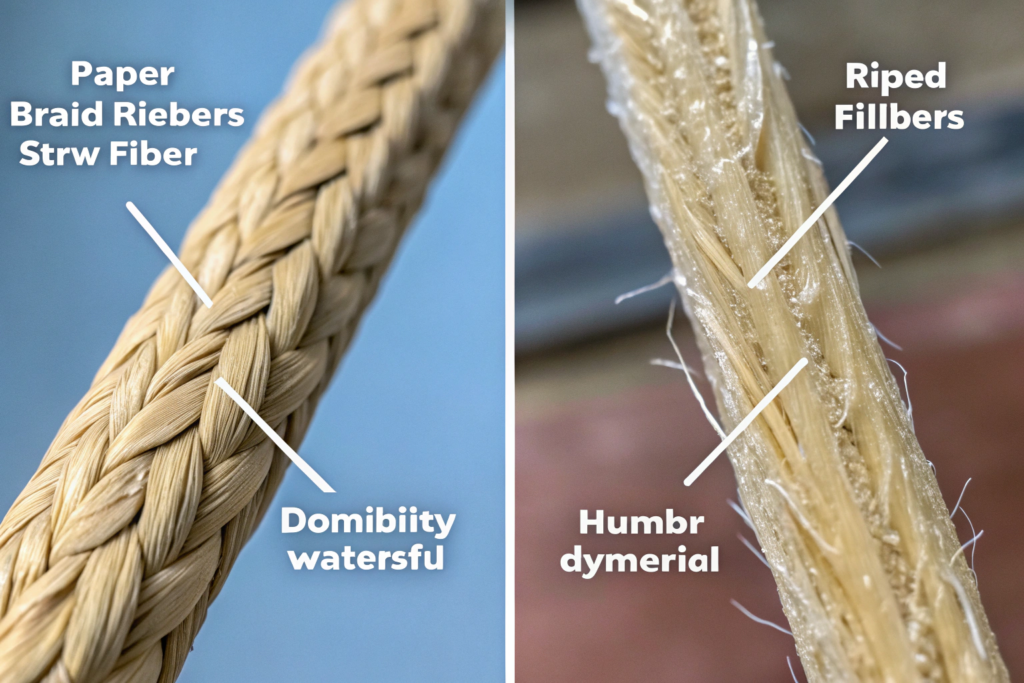
Cellulose fibers are like microscopic straws. Their walls are composed of layers of cellulose microfibrils held together by hydrogen bonds. Water molecules penetrate these layers, breaking the hydrogen bonds and causing the fibers to swell in diameter by 10 to 20 percent. When thousands of these fibers swell simultaneously within the tightly woven braid, the braid itself expands. This expansion creates internal stress. The stiffening resin that coated the fibers and locked them into the desired shape cracks or softens under this stress. When the hat dries, the fibers shrink back, but the resin has been compromised. The fibers do not return to their original position. The result is permanent warping. This cellulose moisture absorption and swelling research explains the physical mechanism.
Why does standard stiffening agent fail in tropical environments?
Standard stiffening agents used in budget straw hats are often water-based acrylic or PVA (polyvinyl acetate) formulations. These are cheap, easy to apply, and provide good initial stiffness at room temperature and low humidity. However, both acrylic and PVA are susceptible to moisture. They soften and lose their mechanical strength when exposed to high humidity or water. A PVA-based stiffener that works perfectly in a dry, air-conditioned retail store will fail completely on a humid beach. For tropical and coastal markets, the stiffener must be moisture-resistant. This means switching to a cross-linking polyurethane-based stiffener that cures into a water-insoluble network, or a solvent-based stiffener that is inherently hydrophobic.
What Chemical Treatments Prevent Humidity-Induced Warping?
The solution to humidity-induced warping is a two-layer chemical defense system. The first layer is a hydrophobic coating applied to the surface of the paper braid. This coating repels water molecules, preventing them from reaching the cellulose fibers in the first place. The second layer is a moisture-resistant stiffening agent that saturates the fibers and, once cured, locks them into shape with a water-insoluble polymer network. Both layers are necessary. A coating without a stiffener will keep the water out but leave the hat floppy. A stiffener without a coating will eventually succumb to prolonged humidity exposure.
The specific chemical formulations we use are industrial-grade, water-based or solvent-based polyurethane dispersions. These are the same class of chemicals used to protect outdoor wooden furniture and marine coatings. They form a clear, flexible, and durable film that is both hydrophobic and UV-resistant. They are applied by spraying or dipping the finished hat body, followed by a heat-curing process that cross-links the polymer.
What is the difference between a hydrophobic nano-coating and a traditional lacquer?
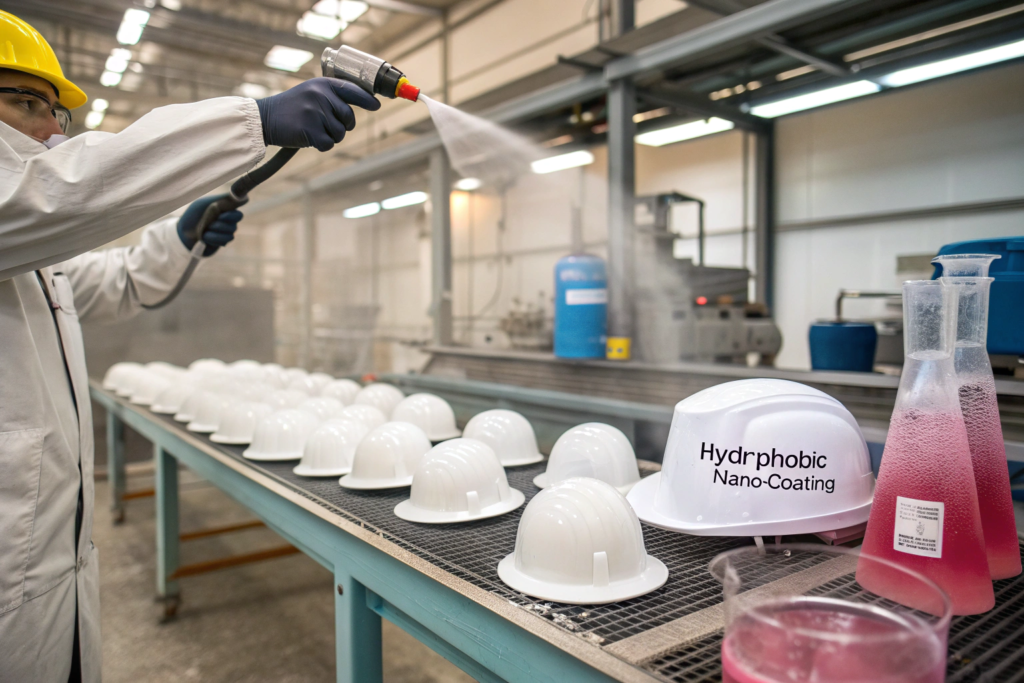
A traditional lacquer forms a thick, continuous film on the surface of the straw. It adds weight and can crack when the hat is flexed. It also seals the hat so completely that it can trap moisture inside. A hydrophobic nano-coating is different. It consists of microscopic particles that bond to the individual cellulose fibers, creating a nanoscale layer of water-repellent molecules. The coating is invisible, weightless, and does not form a continuous film. It allows the hat to breathe while causing water to bead and roll off the surface. The nano-coating penetrates the fibers rather than sitting on top of them, so it does not crack when the hat is flexed. This hydrophobic nano-coating technology is the gold standard for moisture protection.
How does a cross-linking polyurethane stiffener differ from a standard acrylic stiffener?
A standard acrylic stiffener dries by water evaporation. The polymer chains simply lie next to each other. If water is reintroduced, the polymer chains can be pushed apart again, softening the film. A cross-linking polyurethane stiffener works differently. When it cures, the polymer chains form chemical bonds—cross-links—with each other, creating a three-dimensional network. This network is insoluble in water and will not soften when exposed to humidity. The cross-linking is triggered by heat during the curing process. Once cured, the stiffener provides permanent, moisture-resistant shape retention. The stiffness and flexibility can be tuned by adjusting the cross-link density. This cross-linking polyurethane chemistry is the technical foundation of durable shape retention.
How Should You Specify "Humidity Resistance" to the Factory?
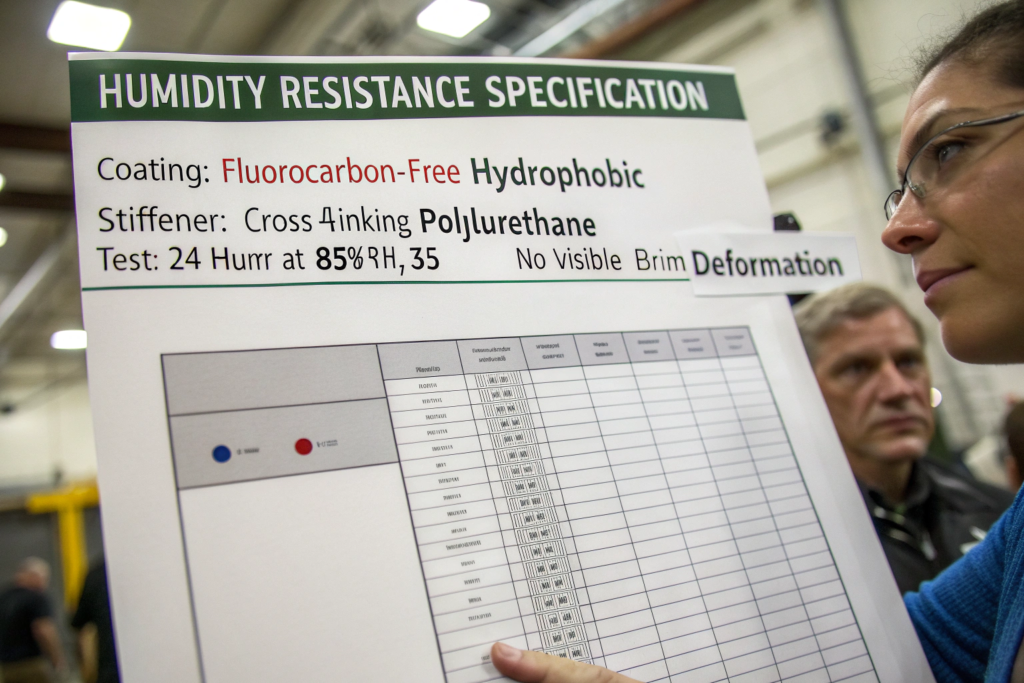
The most effective way to communicate your humidity resistance requirement to a factory is to include a specific, measurable performance standard in your purchase order or tech pack. A vague request like "make the hats hold their shape better" will yield inconsistent results because it means different things to different people. A specific requirement like "hat must show no visible brim deformation after 24 hours of exposure to 85% relative humidity at 35 degrees Celsius" is a testable, objective standard.
The specification should include three elements: the chemical treatments to be used, the application method, and the pass/fail criterion for the quality control test. The chemical treatment should be specified by its functional performance, not necessarily by a brand name. Specify "cross-linking polyurethane stiffener" and "hydrophobic nano-coating." The application method should specify full saturation of the crown and brim, not just surface spraying. The QC test should reference a standardized humidity exposure protocol.
What is a "humidity chamber test" and how do you request it?
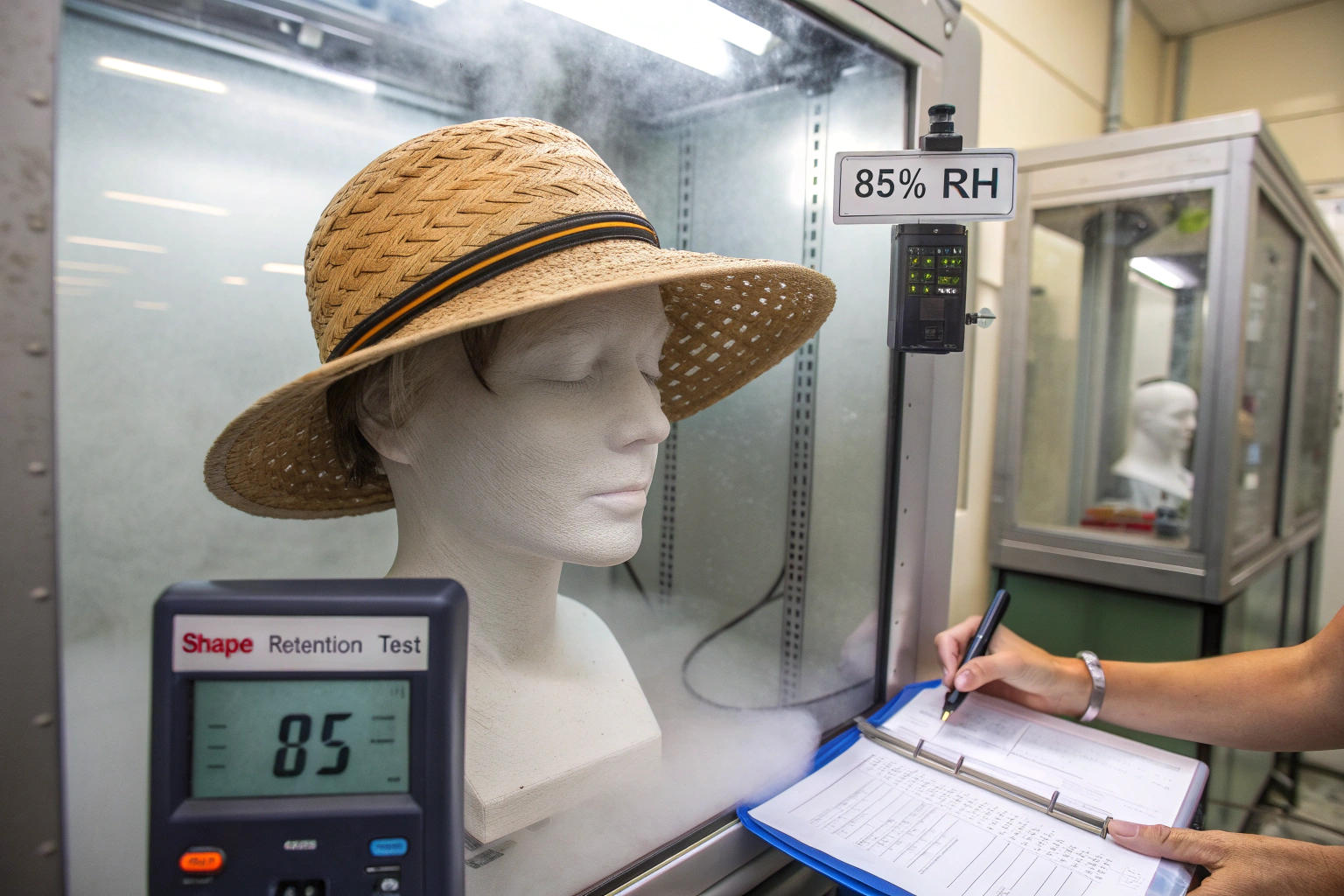
A humidity chamber test, also called a constant climate chamber test, places the finished hat in a controlled environment chamber that maintains a specific temperature and relative humidity for a defined period. We have a programmable chamber in our quality control lab. A standard test protocol is: place the hat on a mannequin head or a flat surface inside the chamber, set the chamber to 35 degrees Celsius and 85% relative humidity, and leave the hat for 24 hours. Remove the hat and immediately inspect for any visible brim droop, crown slump, or surface discoloration. Take a photograph against a reference grid to document the result. Request that the factory include this test report with every production lot. This environmental chamber testing for consumer goods is a standard service offered by testing labs.
How can you verify the treatment was applied before the shipment leaves?
The hydrophobic nano-coating is invisible, which makes it difficult to verify by eye. The verification method is a simple water drop test. Request that the factory perform this test on a random sample from the production lot and video-record the result. A single drop of water is placed on the brim of the hat. On a treated hat, the water will bead up into a sphere and roll off without wetting the straw. On an untreated hat, the water will spread out and soak into the fibers within seconds. This test takes ten seconds and provides immediate, visual proof that the coating is present and functional. Specify in the contract that the video of the water drop test must be included with the final inspection documents. This water repellency spot test is a simple but definitive verification method.
What Long-Term Design Changes Improve Inherent Shape Stability?
Beyond chemical treatments, the physical construction of the hat can be engineered to improve inherent shape stability. These design changes make the hat more resistant to humidity even before the chemical treatments are applied. They are part of a comprehensive strategy that combines material selection, structural reinforcement, and chemical protection.
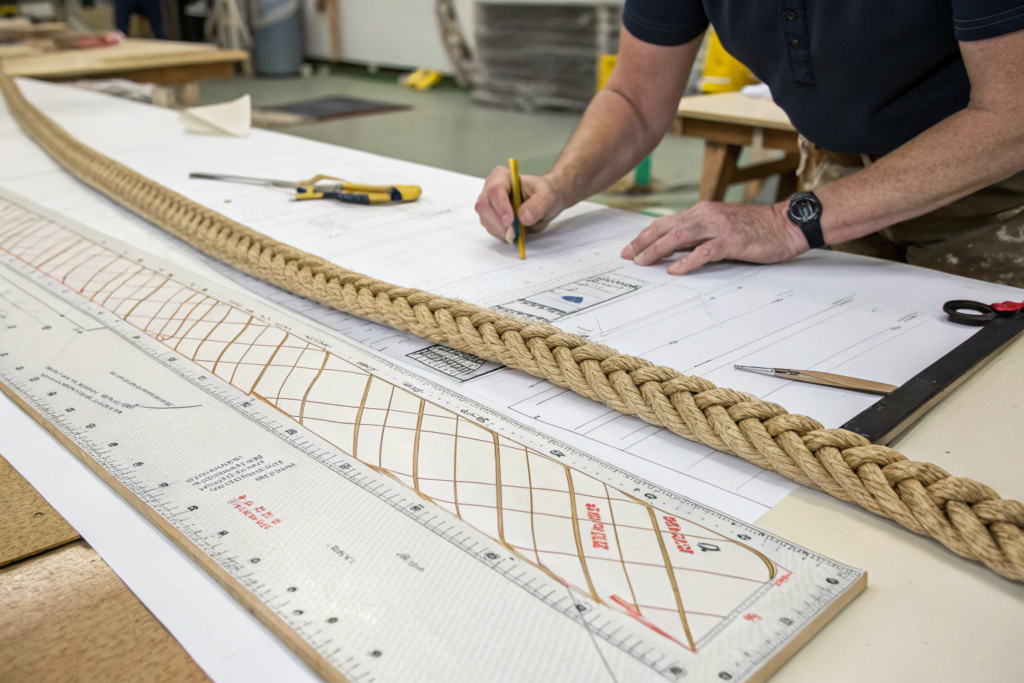
A denser braid with more stitches per inch is inherently more rigid and less susceptible to swelling distortion than a loose, open braid. A wired brim edge provides a structural skeleton that holds the brim shape regardless of the condition of the paper braid. A hidden cross-grain reinforcing tape, sewn into the brim underside, acts like a rib that prevents the brim from drooping along its length. These physical reinforcements add a small cost but dramatically improve long-term shape retention.
How does a wired brim edge work as a structural skeleton?
A wired brim edge is a thin, flexible wire—usually nylon-coated stainless steel or galvanized steel—sewn into a channel along the perimeter of the brim. The wire can be shaped by the wearer to hold a specific curve—flipped up, down, or undulating—but its primary function is structural. It provides a rigid ring around the brim edge that resists the gravitational droop that occurs when the paper braid softens in humidity. Even if the braid itself becomes temporarily flexible, the wire holds the intended shape. This is the single most effective structural upgrade for wide-brim hats destined for humid climates. This wired brim construction technique is standard in premium outdoor hats.
Why does a denser weave with more stitches per inch resist warping?
A loose, open weave has large gaps between the braids. These gaps allow water vapor to penetrate deep into the hat structure. The individual braids have more freedom to move and swell independently. A dense weave with a higher stitch count per inch is tighter and more compact. The braids support each other, and the reduced air gaps slow the penetration of moisture. The denser structure also has more contact points between the braids, which means more friction holding the braids in their intended positions. The result is a hat that is naturally stiffer and more resistant to shape change. This braid density and hat stiffness relationship is well understood in hat manufacturing.
Conclusion
Improving the shape retention of straw hats after humidity exposure is a solvable engineering problem. It requires a three-part solution: a hydrophobic nano-coating that repels water at the molecular level, a cross-linking polyurethane stiffener that provides permanent, moisture-resistant rigidity, and structural reinforcements like a wired brim edge and a denser braid weave that provide inherent stability. A clear specification, a humidity chamber test, and a simple water drop verification ensure that these treatments are actually applied and effective.
We have examined the cellulose science that causes warping, the chemical technologies that prevent it, the specification language that communicates your requirement clearly, and the structural upgrades that provide a second layer of defense. The cost of these treatments is a fraction of the cost of a container of warped, unsellable hats.
If you are sourcing straw hats for a tropical or coastal market and want to discuss our anti-humidity treatment options, we can provide treated and untreated sample swatches for your own water drop test, along with our humidity chamber test data. Our Business Director Elaine manages our straw hat programs and can coordinate the technical specification and QC protocol. Contact her directly at elaine@fumaoclothing.com. A hat should look as good on the last day of vacation as it did on the first. Let’s make sure yours do.