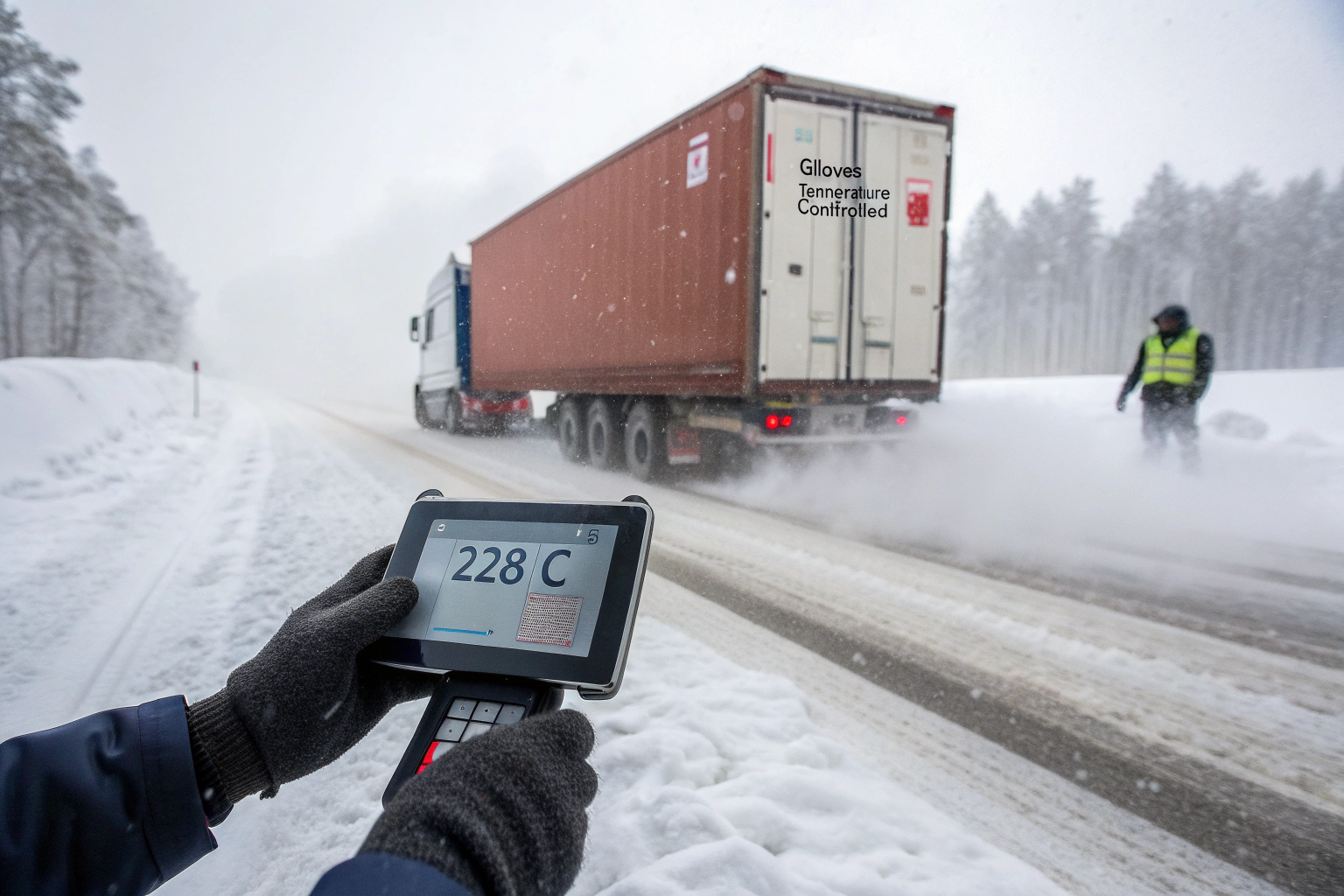
A few years ago, a Russian buyer from Yekaterinburg called me about a shipment of wool-blend gloves that had just arrived. His voice was tight. When his team opened the container at the rail terminal, the gloves were not soft and pliable. They were frozen solid. The moisture naturally present in the wool fibers and the leather palms had iced over during the three-week transit through Siberian winter temperatures. The gloves were stiff, the seams were brittle, and several dozen pairs had cracked at the knuckle fold when they were unpacked. He had lost a significant portion of his order to a factor he never considered: the temperature inside the shipping container.
Russian importers ask for temperature-controlled shipping for gloves because a standard unheated shipping container traveling across the vast Russian interior in winter can reach internal temperatures far below freezing. These extreme temperatures cause physical damage to textile fibers, leather, and elastic components. Moisture within the materials freezes and expands, rupturing fiber structures and embrittling synthetic elastic threads. Temperature-controlled shipping, either in the form of heated containers or insulated thermal liners, maintains the cargo within a safe temperature range, ensuring the gloves arrive at the distribution center in the same condition they left the factory.
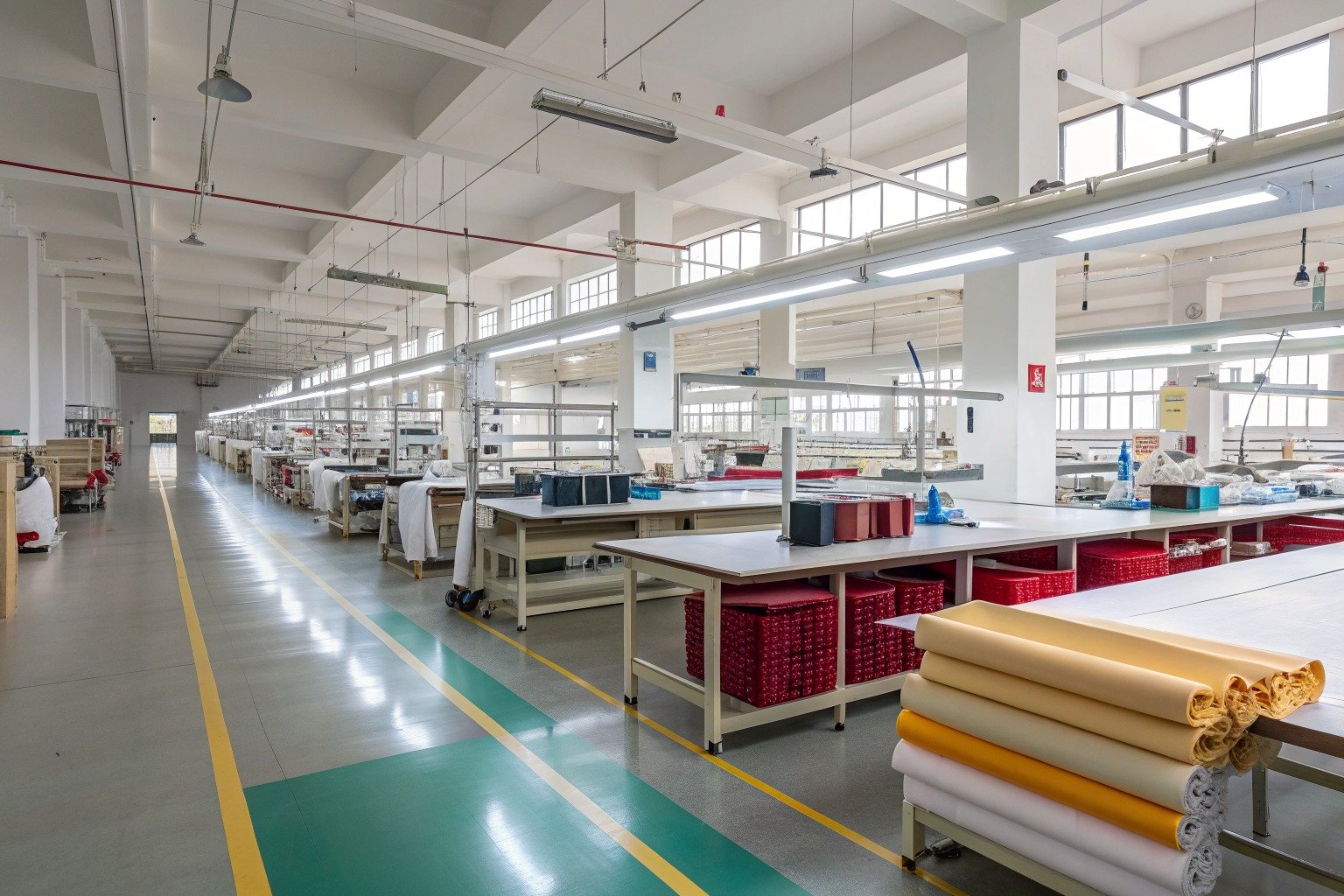
At our factory in Zhejiang, we have learned to take Russian winter logistics seriously. The journey from our loading dock to a store in Novosibirsk is not just a distance; it is a journey through one of the coldest supply chains on the planet. I want to explain why gloves are uniquely vulnerable, what happens to different materials when they freeze, and how a proper thermal shipping strategy prevents a disaster at the receiving dock.
Why Are Gloves Uniquely Vulnerable to Cold Damage During Transit?
Gloves are uniquely vulnerable to freezing because they are complex, multi-material composites designed to be worn in cold conditions but not manufactured or stored in them. A typical winter glove contains a textile shell—wool, acrylic, or polyester—a moisture-wicking lining, an elastic cuff, and often a leather or synthetic palm. Each of these materials responds differently to extreme cold. The failure of any one component ruins the glove.
The primary vulnerability is moisture. Textile fibers, especially natural ones like wool and cotton, are hygroscopic; they absorb moisture from the air. Leather retains moisture from its tanning process. This residual moisture is harmless at room temperature. At minus twenty-five degrees Celsius, it freezes into microscopic ice crystals. These crystals expand within the fiber structure, prying apart the fibers and weakening the material. When the glove is bent or flexed while frozen, the ice crystals act like tiny knives, cutting the fibers. The result is a glove that, once thawed, has lost its structural integrity, softness, and insulating properties.
How do sub-zero temperatures affect the elasticity of rubber cuffs?
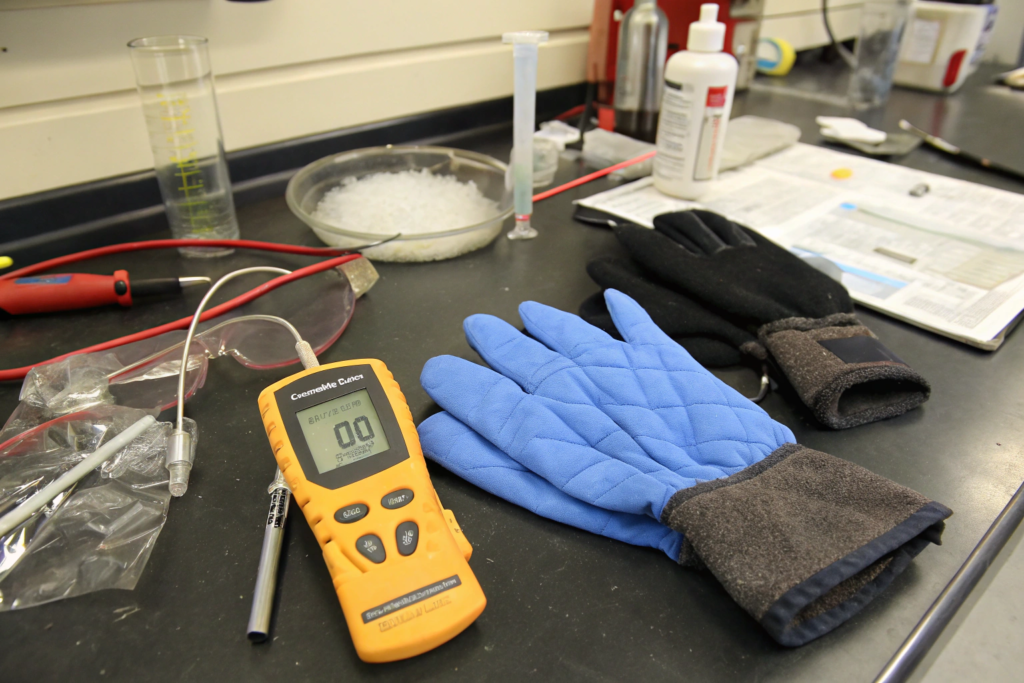
The elastic cuffs on gloves are typically made from a blend of natural rubber and spandex fibers wrapped in polyester yarn. Rubber and spandex have a property called the glass transition temperature (Tg). Below this temperature, the polymer chains lose their ability to move and stretch. The material becomes rigid and brittle. If a frozen glove is stretched to put it on or to inspect it, the elastic cuff can snap or develop permanent cracks. This damage is irreversible. A temperature-controlled shipping environment keeps the cargo above the glass transition temperature of these critical components, preserving their elasticity. This polymer glass transition in cold environments explains the physical change.
What happens to leather palms when they freeze and thaw repeatedly?
Leather is animal skin. Its structure is a network of collagen fibers. When leather freezes, the water within the fiber network turns to ice. The ice expands, pushing the fibers apart. When it thaws, the water pools, and the fibers do not fully return to their original position. Repeated freeze-thaw cycles, which can occur during a long transit where the container temperature fluctuates between day and night, cause the leather to become progressively stiffer, weaker, and more prone to cracking. The natural oils in the leather can also separate and crystallize, leaving a white, powdery "spew" on the surface that looks like mold to a retailer or customer. Temperature control prevents these cycles. This leather degradation in extreme environments resource explains the science.
What Is Temperature-Controlled Shipping and How Does It Work?
Temperature-controlled shipping does not necessarily mean a high-tech, electrically powered refrigerated container of the type used for fresh produce. For winter gloves, the goal is usually to prevent freezing, not to maintain tropical warmth. This is achieved through two primary methods: active heating using a heated container or a container with a built-in diesel-powered temperature control unit, and passive insulation using thermal liners, insulated blankets, and phase-change materials.
For the Russia route, a common and cost-effective approach is to use an insulated container liner combined with a small, self-contained heater unit or a supply of thermal gel packs that release heat gradually. The container is loaded at the factory with the gloves at ambient temperature, around 15 to 25 degrees Celsius. The insulated liner and the thermal mass of the goods themselves help retain this heat. A temperature data logger, a small electronic device, is placed inside the container to record the internal temperature at regular intervals throughout the journey. This log provides documented proof that the goods were maintained within the agreed temperature range.
How does an insulated container liner differ from a standard dry container?
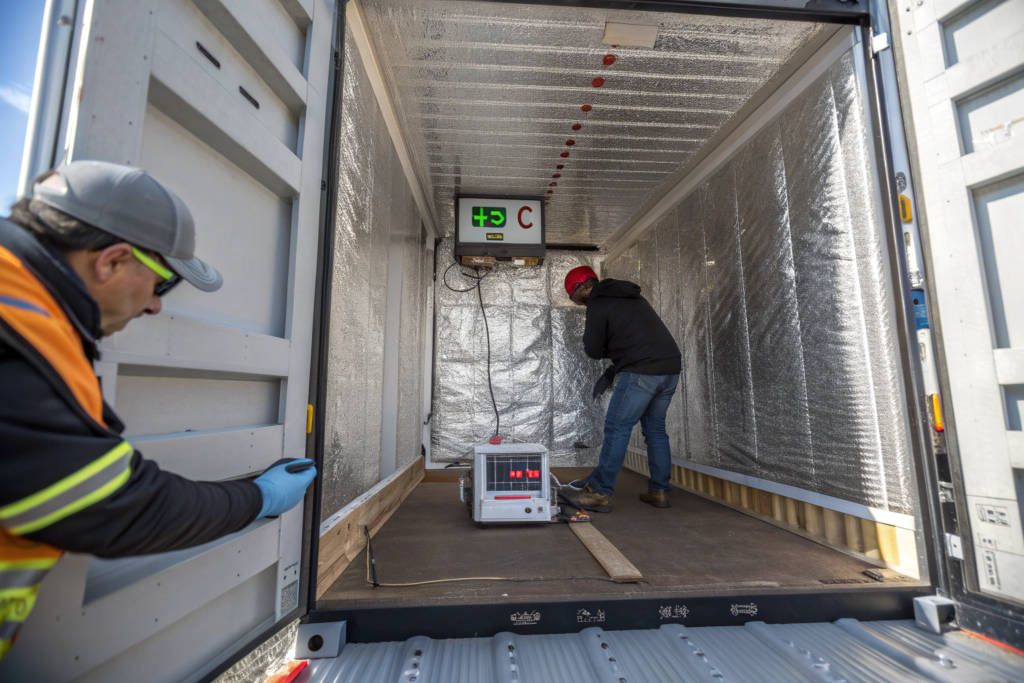
A standard dry container is a steel box. It offers almost no insulation. The internal temperature quickly equalizes with the external ambient temperature. In Siberia in January, the inside of a standard container can reach minus 40 degrees Celsius. An insulated container liner is a multi-layer blanket that lines the interior walls, floor, and ceiling of the container. The liner is typically made from a layer of reflective aluminum foil bonded to a layer of closed-cell polyethylene foam or bubble wrap. This reflective insulation reduces the rate of heat transfer. It does not generate heat, but it dramatically slows the cooling rate, often enough to keep the cargo above freezing for the duration of the overland rail journey, especially when the goods are loaded at a warm ambient temperature. This insulated container liner technology is standard for cold-chain logistics.
What is a temperature data logger and why do Russian customs officers review it?
A temperature data logger is a small, battery-powered device that contains a digital thermometer, a clock, and a memory chip. It is programmed to record the temperature at set intervals, such as every hour, throughout the entire shipping journey. Upon arrival, the data logger is retrieved, and the temperature history is downloaded to a computer. The resulting graph shows the internal container temperature from factory to destination. Russian importers value these logs because they provide objective evidence that the goods were not damaged by freezing during transit. If a quality dispute arises, the temperature log can prove whether the damage occurred during shipping or was pre-existing. Some Russian retail contracts now require the submission of a temperature log with the shipment documents. This cold chain temperature monitoring practice is adapted from the food and pharmaceutical industries.
What Is the Russian "Winter Roads" Logistics Challenge?
The journey from our factory in Zhejiang to a warehouse in Moscow, St. Petersburg, or deeper into Siberia is not a single-mode, ocean-to-port trip. It often involves a combination of sea freight to Vladivostok or overland rail directly from China into Russia. The overland rail route, which crosses northern China and enters Russia through Manchuria or Mongolia, is exposed to the full force of the Siberian winter for the entire journey. There is no ocean to moderate the temperature.
Russian importers planning winter deliveries must account for a logistical challenge known as the "Winter Roads" period. This is the time from roughly November through March when temperatures along the northern transport corridors consistently remain below freezing. During this period, standard unheated containers are essentially mobile freezers. Any moisture-containing product will freeze solid. The solution is not to avoid shipping during winter—business must continue—but to engineer the packaging and container environment to withstand the conditions.
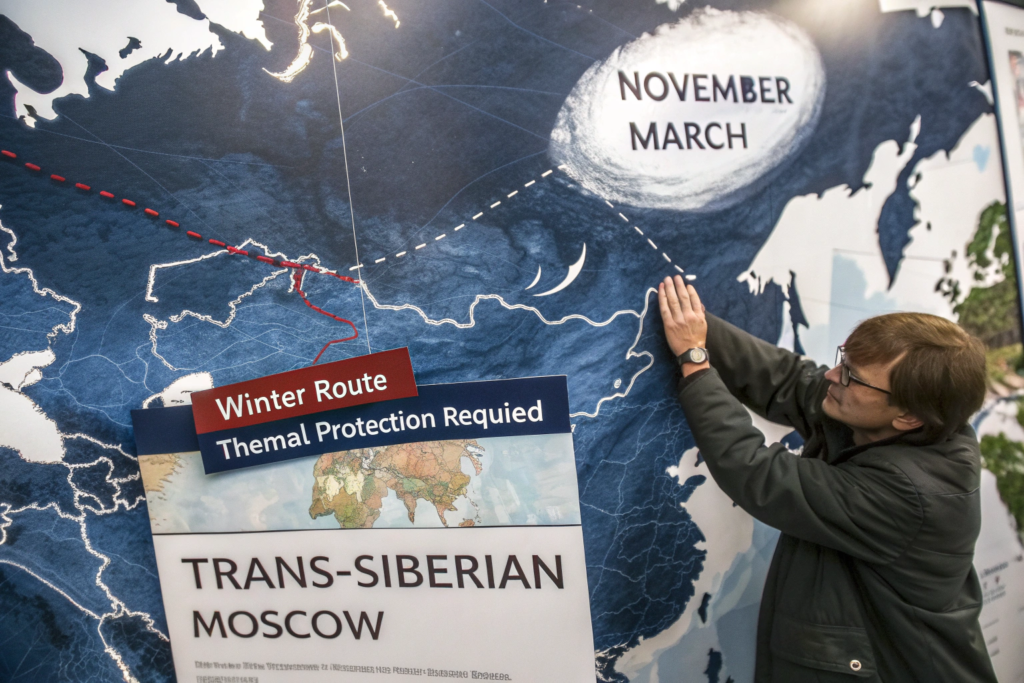
How does the Trans-Siberian rail route expose cargo to prolonged extreme cold?
The Trans-Siberian railway is a marvel of engineering, but it passes through some of the coldest inhabited places on Earth. For days at a stretch, the container sits on a railcar as the outside temperature hovers between minus 30 and minus 50 degrees Celsius. The train may be delayed by snow, extending the exposure. There is no engine on a standard rail container car to provide power for heating. The container relies entirely on its insulation and any self-contained heating elements. This prolonged, deep cold soak is far more severe than the brief cold exposure a container might experience on an ocean voyage, where the water moderates the air temperature. The thermal protection strategy must be designed for this specific, extreme profile. This Trans-Siberian railway logistics resource explains the operational realities.
Why is the "last mile" delivery in Russia the most vulnerable stage for cold damage?
The container may arrive at the rail terminal in Moscow intact, but the journey is not over. The goods must be unloaded, often in an open, unheated yard, and transferred to a delivery truck for the final leg to the distribution center. This "last mile" is a high-risk stage. The container is opened to the frigid air. Individual cartons are moved onto a truck that may or may not be heated. The brief exposure during unloading, combined with the sudden temperature shock, can cause the most damage. A smart logistics plan includes a "hot box" procedure: the unloading is done inside a covered, minimally heated transfer area, or the truck is pre-heated before loading. The temperature data logger captures this last-mile exposure and can reveal whether a brief freezing event occurred during transfer.
How Should an International Brand Prepare Winter Gloves for Shipment to Russia?
Preparing winter gloves for shipment to Russia requires a layered approach that starts at the factory packing station. The goal is to minimize the moisture content inside the sealed carton, insulate the cartons from the external environment, and document the temperature history for the importer and the retail customer.
The first layer is moisture control. Silica gel desiccant packs are placed inside each individual glove poly bag and inside each master carton. These packs absorb the residual moisture in the gloves and the packaging air, reducing the amount of free water available to freeze. The second layer is thermal insulation. The master cartons are packed tightly into an insulated container liner. The liner is sealed to create a thermal envelope. The third layer is documentation. A temperature data logger is activated and placed inside a carton in the center of the container. The container is sealed, and the logger records the journey. The importer receives the data log file along with the shipping documents.
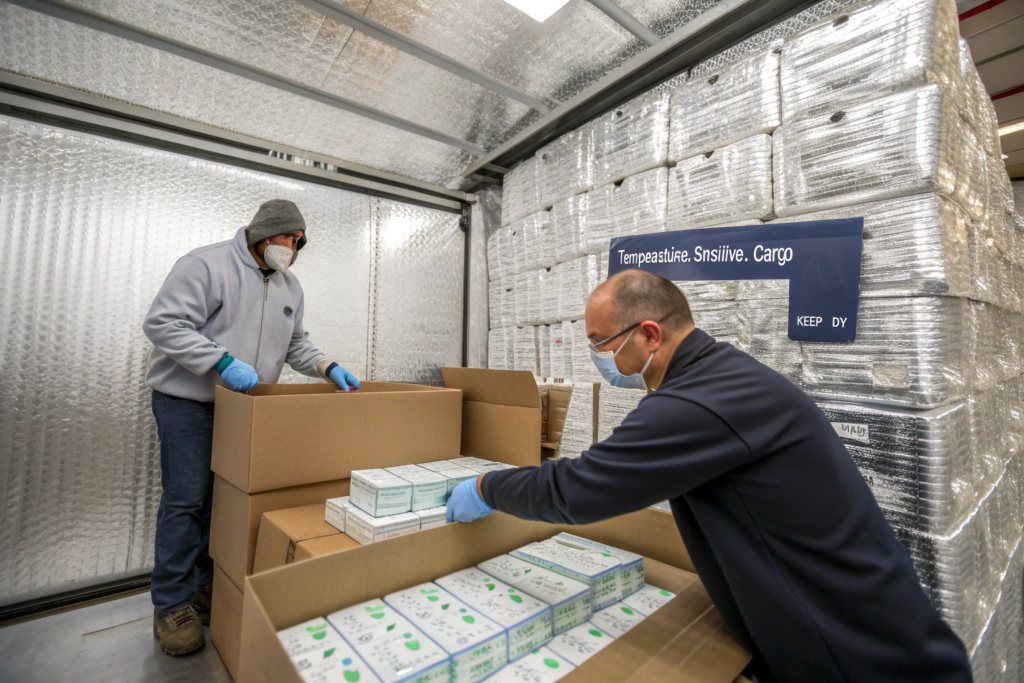
Why should desiccant packs be added to glove cartons specifically for winter transit?
Moisture is the enemy in freezing conditions. The less moisture inside the carton, the less ice forms. A glove that was dry when packed will survive freezing temperatures with minimal damage because there is no water to expand and rupture the fibers. A glove that was slightly damp from ambient humidity will be destroyed. Desiccant packs absorb the ambient moisture that is sealed inside the poly bag and the carton at the time of packing. They create a dry micro-environment around the gloves. This is a very low-cost insurance policy against freeze damage. We specify the quantity and type of desiccant based on the carton volume and the expected transit time. This desiccant use in cold chain packaging is standard practice.
What specific clauses should a brand include in a winter shipping contract with a Russian buyer?
Clarity in the shipping contract protects both the brand and the buyer. The contract should specify the required temperature range during transit, such as "Cargo temperature must not fall below minus 5 degrees Celsius." It should state who is responsible for arranging and paying for the thermal protection—the seller under CIF terms, or the buyer under FOB terms. It should require the use of a temperature data logger and specify that the log data will be shared with the buyer upon arrival. It should clarify that freeze damage documented by a temperature log indicating a breach of the required range is the responsibility of the party that arranged the shipping. These contract terms ensure that everyone understands their role in protecting the cargo. This incoterms and shipping contract clauses guide provides a framework.
Conclusion
Russian importers ask for temperature-controlled shipping for gloves because they operate in a logistics environment where freezing is not a possibility; it is a certainty for a significant portion of the year. The journey from a Chinese factory to a Russian store shelf crosses some of the coldest terrain on Earth. The multi-material construction of gloves—wool, leather, and elastic—is uniquely vulnerable to the ice crystal damage, fiber embrittlement, and elasticity loss that occur at extreme sub-zero temperatures.
We have examined the materials science of freezing textiles, the logistics technology of insulated liners and data loggers, the specific hazards of the Trans-Siberian rail route and the last-mile delivery, and the practical steps a brand can take to prepare a shipment that survives the winter journey intact. The cost of thermal protection is modest compared to the cost of a shipment of cracked, stiff, unsellable gloves.
If you are shipping winter accessories to Russia and want to discuss thermal protection options, moisture control packaging, and temperature data logging, we can provide a shipping preparation checklist and coordinate the thermal liner installation. Our Business Director Elaine manages our Russian market logistics and can connect you with our freight partners who specialize in cold-weather routes. Contact her directly at elaine@fumaoclothing.com. A glove that survives Siberia will survive anywhere. Let’s make sure yours do.