
A golf apparel brand owner once asked me to change the sweatband on his order of 5,000 caps from standard cotton to a moisture-wicking neoprene. He sent a one-line email: "Please upgrade the sweatband to neoprene." What he didn’t realize was that neoprene is thicker than cotton, so the cap’s internal circumference would shrink unless we adjusted the pattern. He didn’t know that neoprene requires a different adhesive that wouldn’t stain the crown fabric. When I called him to explain, he was embarrassed but grateful; he had almost triggered a chain of technical problems without realizing it. That call saved his order.
The best way to request a different sweatband material from a baseball cap factory is to frame the request as a technical specification change rather than a simple material swap, and to ask two critical questions before issuing a final instruction: "How will this material change affect the cap’s internal fit, and does it require a different attachment method?" This approach signals to the factory that you understand the sweatband is not just a strip of fabric glued inside the cap. It is a structural component that affects sizing, comfort, durability, and the cap’s overall appearance.
At our factory in Zhejiang, we produce baseball caps with a wide range of sweatband materials for brands across North America and Europe. The sweatband is the only part of the cap that touches the wearer’s skin for hours at a time. Getting it right is a comfort issue, a performance issue, and increasingly, a sustainability issue. I want to walk you through the specific sweatband options available, the hidden technical implications of changing materials, and the exact language to use when communicating your request to ensure you get exactly what your customers need.
What Sweatband Material Options Are Available from a Professional Cap Factory?
A professional cap factory stocks a library of sweatband materials, each engineered for a specific performance profile. The material choice affects how the cap feels during a marathon versus a casual summer afternoon, how it holds up after repeated machine washes, and how it interacts with the wearer’s skin and hair. You cannot simply ask for "a better sweatband." You need to specify the material that matches your customer’s primary need: moisture management, softness, durability, or sustainability.
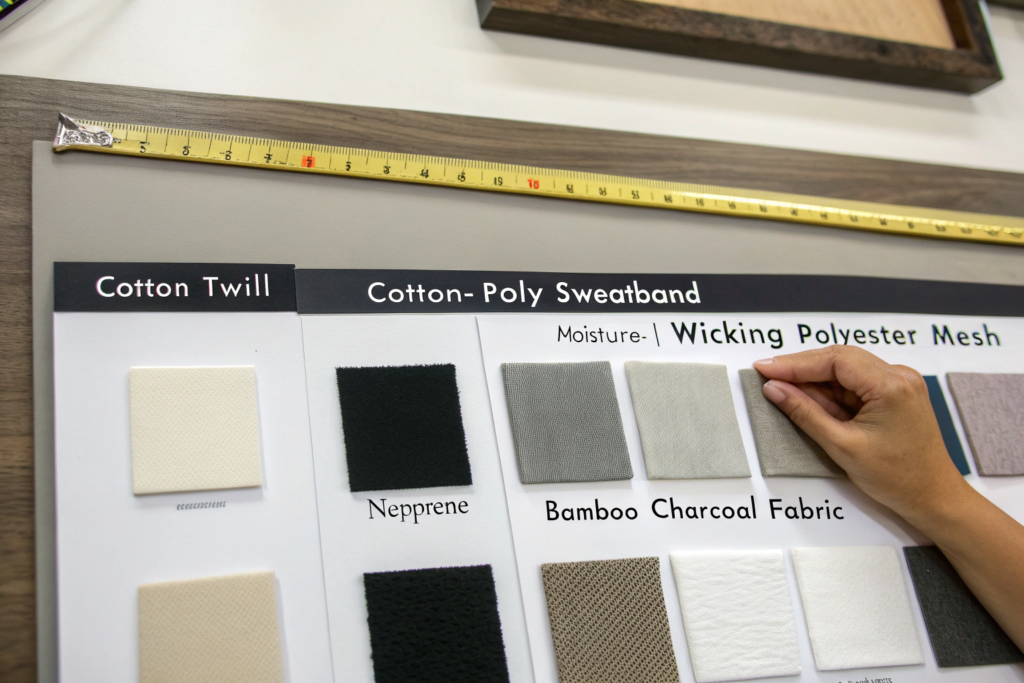
The five core sweatband categories we stock and produce are cotton twill, a cotton-rich blend for everyday casual caps, a polyester mesh for high-performance athletic caps, neoprene for waterproof and extreme-condition caps, brushed cotton flannel for premium fashion and golf caps, and bamboo charcoal fabric for eco-conscious brands. Each material has a different thickness, a different stretch profile, and a different cost per meter. Understanding the trade-offs allows you to make an informed request.
Why is cotton twill the standard, and when should you upgrade it?
Cotton twill is the default sweatband material for most mid-market caps because it is affordable, breathable, and comfortable against the skin in moderate conditions. The twill weave provides a slight diagonal texture that helps wick moisture away from the forehead, but its absorbency has a limit. During intense exercise, a cotton sweatband becomes saturated, heavy, and slow to dry. For a lifestyle cap worn casually, this is acceptable. For a performance cap marketed to runners or gym-goers, it is a liability. The upgrade path from cotton twill is a polyester mesh or a cotton-polyester blend that wicks moisture without retaining it. This sweatband material comparison explains the basic differences.
What performance benefits does neoprene offer for sports and outdoor caps?
Neoprene is a closed-cell synthetic rubber foam, the same material used in wetsuits. As a sweatband, it is completely waterproof. It does not absorb sweat at all. Instead, it acts as a barrier that prevents sweat from dripping down the forehead and into the eyes. This makes neoprene the preferred choice for high-intensity outdoor sports caps, fishing hats, and tactical headwear. However, neoprene comes with specific manufacturing requirements. It is thicker than fabric sweatbands, typically 2mm to 3mm, so the cap pattern must be adjusted to maintain the correct internal circumference. It is applied with a heat-activated adhesive rather than standard fabric glue, and the application temperature must be precisely controlled to prevent the neoprene from delaminating or the crown fabric from scorching. This neoprene for sweatband applications resource provides technical details.
How Does a Sweatband Material Change Affect the Cap’s Fit and Construction?
A sweatband is not a superficial trim. It is a structural layer that occupies physical space inside the cap. When you change the thickness or stretch of that layer, you change the internal circumference of the finished cap, which directly affects how the cap fits on the customer’s head. A cap that is too tight causes headaches. A cap that is too loose slides down and looks sloppy. Fit is the first thing a customer notices, and a poor fit generates returns faster than any other quality issue.
The factory’s pattern maker must adjust the crown panel dimensions to compensate for the new sweatband thickness. The seam allowance where the sweatband attaches to the crown must be recalculated. The attachment method, whether sewn, glued, or heat-sealed, may need to change. These are not optional adjustments. They are mandatory steps that a professional factory performs as part of a material change request. A factory that does not mention these adjustments when you request a sweatband change is a factory that is not managing your fit quality.
Why must the crown panel pattern be adjusted for thicker materials?
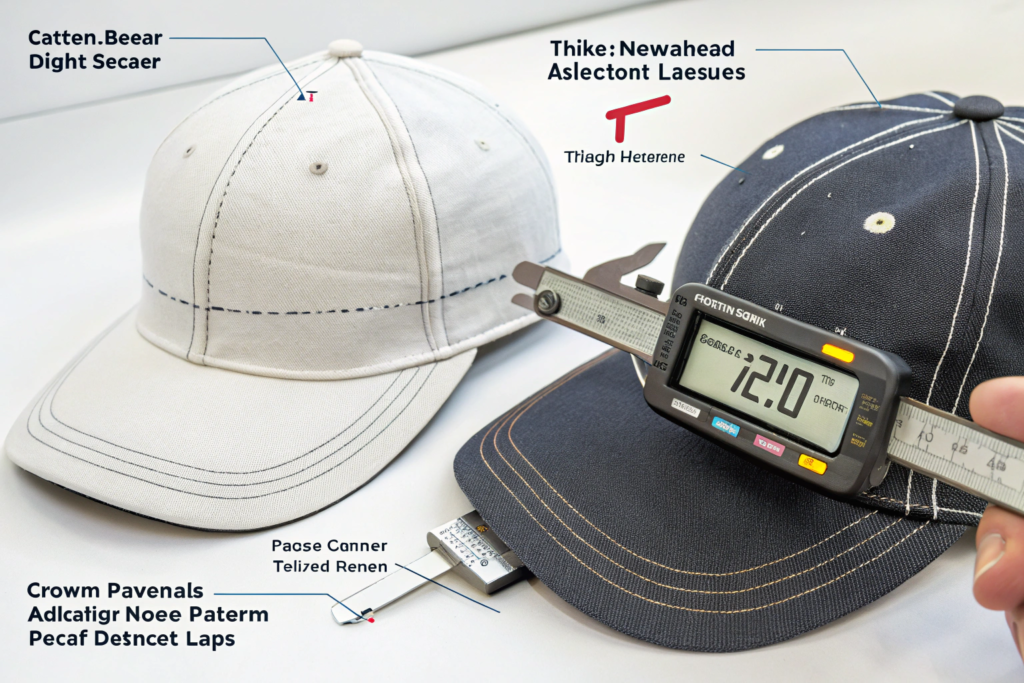
The crown of a baseball cap is the dome-shaped fabric piece that covers the top of the head. The sweatband is attached around the base of this crown. If the original pattern was designed for a 1.5mm cotton sweatband and you upgrade to a 3mm neoprene sweatband, the internal circumference decreases by approximately the difference in thickness multiplied by two, which is roughly 3mm in diameter. This may sound small, but in headwear fit, 3mm is the difference between a comfortable cap and one that leaves a red mark on the forehead. The pattern maker adjusts the crown panel’s bottom edge by adding material to the seam allowance, ensuring the finished cap’s internal measurement matches the size specification on the label. This hat sizing and construction resource explains the relationship between sweatband thickness and crown dimensions.
What attachment methods are compatible with different sweatband materials?
Cotton and polyester fabric sweatbands are typically attached with a combination of sewing and fabric glue. The glue provides initial positioning, and the stitch line provides permanent security. Neoprene cannot be reliably glued with standard fabric adhesive. It requires a heat-activated film adhesive that bonds to the neoprene’s surface when pressed at a specific temperature for a specific dwell time. If the temperature is too low, the bond fails. If it is too high, the neoprene melts or the crown fabric scorches. Some premium caps use a fully sewn sweatband with no glue at all, which provides the cleanest finish but requires the sweatband to be pre-cut with folded edges. When you request a material change, you should ask the factory to confirm which attachment method they will use and why. This textile bonding and lamination techniques article explains the technical options.
How Should You Communicate a Sweatband Request to Avoid Production Errors?
The clarity of your communication directly determines the accuracy of the factory’s execution. A vague request like "make the sweatband more comfortable" forces the factory to guess what you mean. A specific request that names the material, confirms the thickness, references the attachment method, and requests a revised pre-production sample leaves no room for misinterpretation. The factory can respond with a confirmation or a technical concern, and the conversation stays on track.
The most effective way to communicate a sweatband change is to reference the existing specification sheet or tech pack, state the exact line item you want to change, specify the new material by its precise trade name, and request a confirmation of any downstream adjustments to the pattern, the sizing, or the attachment method. You should also request a pre-production sample with the new sweatband before the bulk fabric is cut.
What exact technical details should you include in the request?
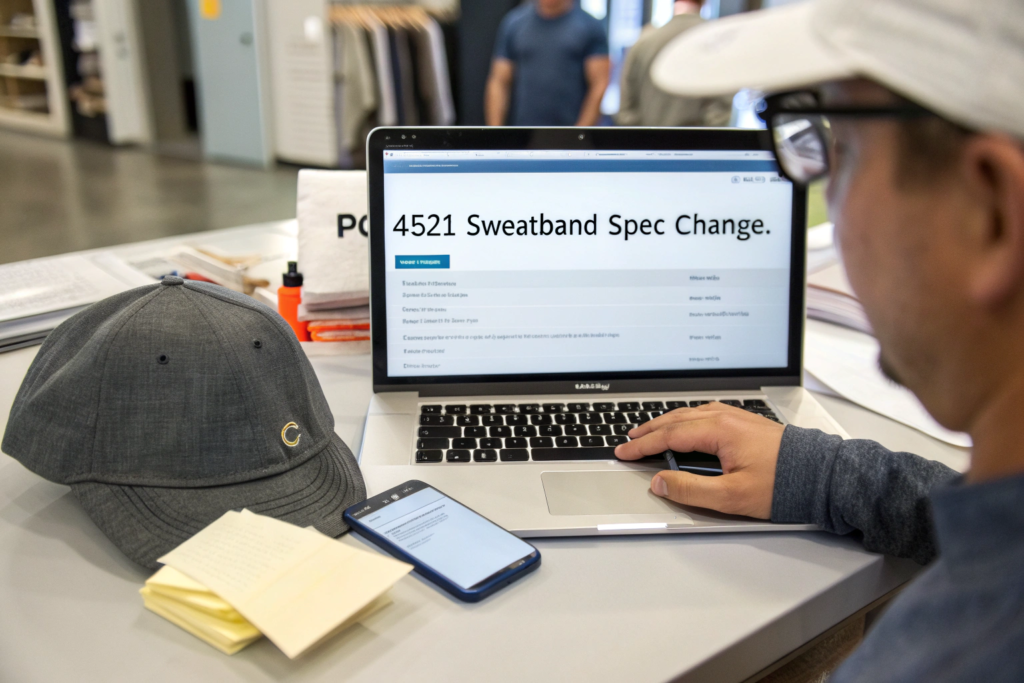
Your request should include five specific details. First, the purchase order or style number to identify the product. Second, the current sweatband material as listed in the tech pack, so there is no confusion about the baseline. Third, the new sweatband material using its specific trade name, such as "1.5mm neoprene foam with nylon jersey facing" rather than just "neoprene." Fourth, the desired thickness in millimeters, if relevant. Fifth, a request for the factory to confirm any required pattern adjustments, sizing changes, or attachment method changes, and to provide a pre-production sample with the new sweatband for your approval before bulk production begins. This tech pack specification guide provides a framework for clear communication.
Why is a pre-production sample with the new sweatband non-negotiable?
A pre-production sample is a physical proof that the factory has understood and correctly implemented your material change. It allows you to feel the new sweatband against your skin, test the cap’s fit on your head, and evaluate the attachment quality before thousands of units are produced. Without a sample, you are approving the change based on trust alone. A factory that resists providing a pre-production sample for a material change is a factory that is cutting corners. The sample should include all the features of the final product: the same crown fabric, the same visor, the same closure, and the exact sweatband material you specified. Approve the sample in writing, and it becomes the binding reference standard for the bulk production run. This pre-production sampling process is a standard quality assurance practice.
How Can a Sweatband Upgrade Support Your Brand’s Sustainability and Marketing Story?
The sweatband is a hidden opportunity for brand storytelling. It is the part of the cap that absorbs the wearer’s sweat, so the material’s origin, chemical treatment, and environmental impact are directly relevant to the customer’s health and values. An increasing number of brands are upgrading their sweatbands not just for performance, but for the marketing narrative that a specific material enables.
A cap with a sweatband made from GOTS-certified organic cotton tells a story about purity and environmental responsibility. A cap with a sweatband made from recycled polyester tells a story about ocean plastic diversion. A cap with a bamboo charcoal sweatband tells a story about natural odor control and sustainable forestry. These stories are communicated through hang tags, website product descriptions, and social media content. The sweatband becomes a proof point that the brand pays attention to every detail, even the ones the customer cannot see at first glance.

What certifications should you ask for with organic or recycled sweatband materials?
If you are upgrading to an organic cotton sweatband, ask the factory for a valid GOTS (Global Organic Textile Standard) scope certificate that covers the sweatband fabric. If you are upgrading to a recycled polyester sweatband, ask for a GRS (Global Recycled Standard) certificate. These certifications are independently audited and provide legal protection for your sustainability marketing claims. A factory that cannot provide a valid certificate for the specific material batch is a factory that is asking you to make unsubstantiated claims. This textile sustainability certifications database allows you to verify certificates in real-time.
How can you translate a technical sweatband change into a consumer-facing benefit?
A technical specification like "2mm neoprene sweatband" means little to a customer browsing an online store. Translate the specification into a benefit that addresses a specific customer problem. "Neoprene sweatband" becomes "Waterproof inner band prevents sweat from dripping into your eyes during your round." "Bamboo charcoal sweatband" becomes "Naturally antimicrobial inner lining keeps the cap fresh, wear after wear." "Organic cotton sweatband" becomes "Chemical-free inner band, safe for sensitive skin." This translating features into benefits is the bridge between the factory’s spec sheet and the customer’s shopping decision. Work with the factory to understand the material’s functional advantage, and then craft the customer-facing message that communicates that advantage clearly.
Conclusion
Requesting a different sweatband material from a baseball cap factory is a test of your communication clarity and your understanding of how a seemingly small change affects the entire product. A professional factory will not simply swap the fabric and hope for the best. They will adjust the crown pattern, confirm the attachment method, and provide a pre-production sample for your approval. A professional buyer will not send a one-line email. They will specify the material by name, request confirmation of downstream adjustments, and insist on a sample before bulk production.
We have walked through the sweatband material options available, from standard cotton twill to performance neoprene. We have examined the fit and construction implications of changing thickness and stretch. We have outlined the exact communication format that prevents production errors. And we have explored how a sweatband upgrade can support your brand’s sustainability and marketing narrative.
If you are developing a baseball cap program and want to explore sweatband material options, we can provide a sample pack of our available sweatband materials, including organic cotton, recycled polyester, bamboo charcoal, and neoprene. We will also provide the technical data sheets for thickness, stretch, and recommended attachment methods. Our Business Director Elaine manages our headwear accounts and can coordinate your sweatband material change request. Contact her directly at elaine@fumaoclothing.com. The part of the cap your customer feels most should be the part you specify best.