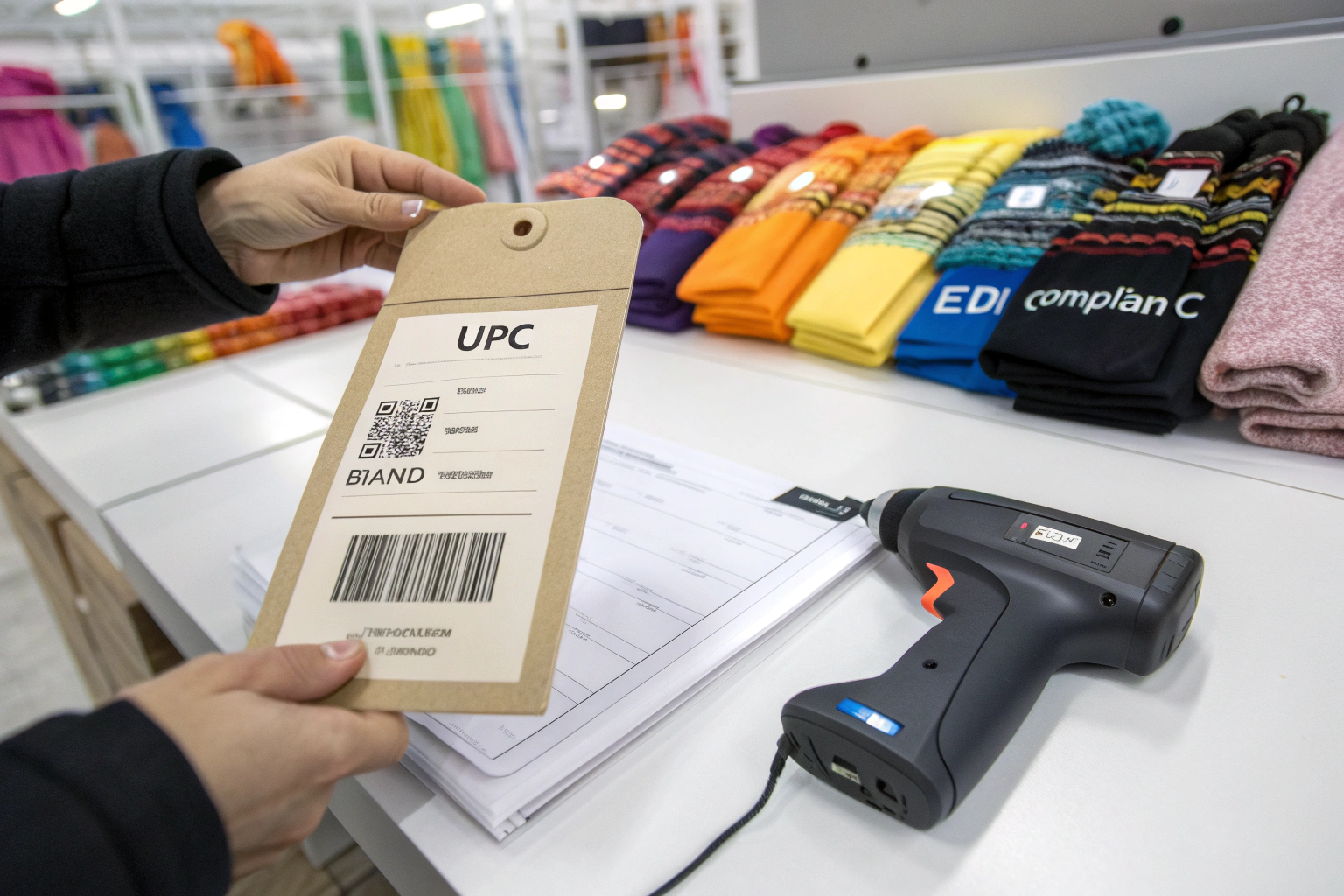
A few months ago, a frantic call came in from a supplier working with a major US supermarket chain. They had 15,000 units of winter accessories ready to ship, but the retail compliance team had just rejected the entire batch. The reason had nothing to do with the quality of the beanies or gloves. It was the hang tag. The barcode was slightly blurred, the font was a point too small, and the tag’s paper stock wasn’t certified for the retailer’s specific pegboard hook system. They were facing a chargeback of nearly $12,000 and a missed holiday floor set. That moment crystallized something I already knew well: a hang tag isn’t just a price sticker; it’s a critical piece of logistics technology that, when done wrong, can destroy a season’s margin.
The answer is yes. We can produce custom hang tags with barcodes specifically engineered for supermarket accessories. This isn’t a side service we outsource to a local print shop. In our Zhejiang factory, we have integrated digital and flexographic printing lines that allow us to design, print, barcode, and attach retail-compliant tags in-house. We understand that for supermarkets, the tag is non-negotiable inventory infrastructure. It must scan instantly at the point of sale, survive the stretching and handling of a peg hook, and comply with the strict vendor guides of retailers like Walmart, Target, and major European hypermarkets.
I want to walk you through exactly how we ensure barcode scannability, what materials survive supermarket environments, and how we manage the data accuracy required to prevent chargebacks. This is the invisible logistics layer that makes or breaks a successful accessory program.
How Do We Guarantee 100% Scannable Barcodes on Accessory Hang Tags?
A barcode that does not scan at the checkout is not a minor inconvenience; it is a product that cannot be sold. For a cashier at a busy supermarket, it means a manual entry that slows the line and frustrates the customer. For the brand, it means a compliance violation that can trigger a chargeback from the retailer’s distribution center. Creating a scannable barcode is not magic. It is a matter of precision printing, strict contrast ratios, and systematic verification with specialized equipment that replicates the exact laser scanners used in retail environments.
We treat barcode production as a distinct quality control checkpoint, separate from the general aesthetic review of the tag. You don’t guess if a barcode works; you test it, and you test it again with a verifier that grades the symbol against international ANSI/ISO standards. A barcode that passes the visual check might still fail a scanner if the bar width reduction is off or if the quiet zone is encroached upon by the tag design. We eliminate these risks through measurement.
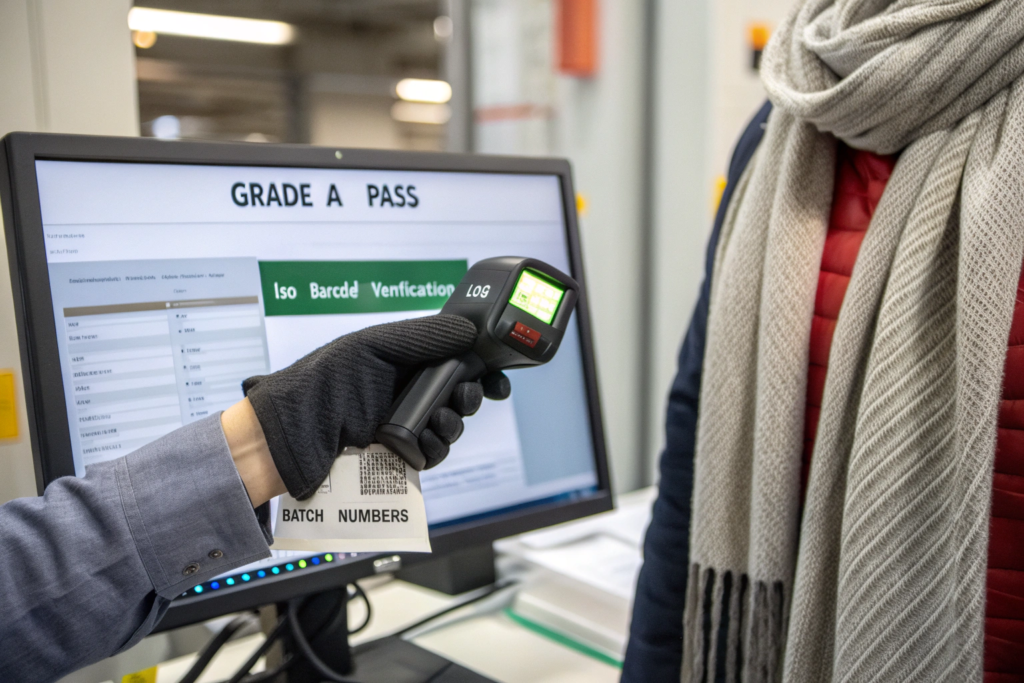
What is a barcode verifier and why is it more reliable than a simple scanner?
A simple retail scanner, like the one at a checkout counter, reads a barcode and tells you what the number is. It does not tell you if the barcode is barely readable, or if it will fail on a different scanner model at another store. A barcode verifier is a calibrated laboratory instrument that measures the barcode against a specific ANSI/ISO standard (typically ISO/IEC 15416 for printed barcodes). It analyzes the symbol contrast, the edge determination, the modulation, and the decodability. It then assigns a letter grade, A, B, C, D, or F. Most major retailers require a minimum grade of "C" or "B" on the final printed tag. We test our tags with a calibrated verifier during the print run and during the final attachment process to ensure they consistently achieve an "A" or "B" grade. This ISO barcode verification standard is the only way to scientifically guarantee that a tag will scan on the first pass at 99.9% of retail points of sale.
Why do bar width reduction and quiet zones matter for supermarket scanners?
Printing ink onto textured paper or cardstock causes a slight spreading of the ink, known as dot gain. If the design file doesn’t compensate for this, the black bars become slightly too wide, and the white spaces become slightly too narrow. This is called Bar Width Reduction (BWR). A supermarket laser scanner interprets the ratio of black to white; if the bars bleed into the spaces, the scanner fails to decode the number. Our pre-press process applies a specific BWR compensation based on the exact paper stock and printing method used. Similarly, the quiet zone, the blank margin on the left and right of the barcode, must be at least ten times the width of the narrowest bar. A common failure occurs when a designer, thinking the tag looks "cleaner," pushes the barcode too close to the edge of the tag or too close to another graphic element. We strictly enforce the quiet zone dimensions regardless of aesthetic preferences. This GS1 barcode sizing guidelines resource explains the specific dimensional requirements for UPC-A and EAN-13 barcodes used in global retail.
What Materials Survive the Rigors of Supermarket Pegboard Display?
Supermarket accessories like scarves, gloves, belts, and hats are typically displayed on metal peg hooks. Customers are in a hurry. They grab a hat, yank it off the hook, look at the price, and often shove it back onto the hook. A tag that tears during this process becomes detached from the product. A detached tag turns a $19.99 accessory into an unidentifiable piece of fabric that must be marked down or thrown away. This is why the material choice for the tag isn’t just about looking good; it’s about mechanical survival.
We select tag materials based on the product weight, the expected customer handling, and the retailer’s specific vendor requirements. A heavy knit beanie requires a thicker, more tear-resistant tag and a reinforced attachment method compared to a lightweight silk scarf. The most common failure point is the "bishop’s collar," the small hole where the tag attaches to the product. We mechanically reinforce this specific area to ensure the tag stays with the product from the warehouse floor to the customer’s home.
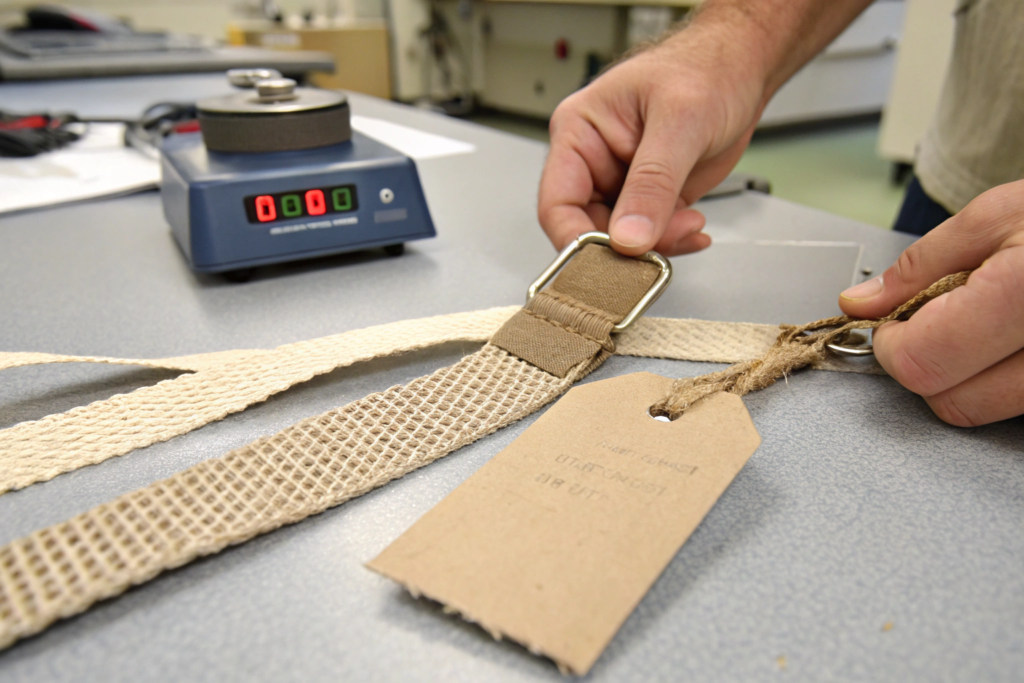
What is a reinforced bishop’s collar and why is it essential for peg hooks?
The attachment hole on a hang tag, often called a "bishop’s collar" due to its shape, is the weakest structural point. When a customer yanks a hat off a peg hook, all the force concentrates on this tiny die-cut hole. A standard paper tag without reinforcement will tear through immediately. We reinforce this area using a thin, transparent plastic patch laminated over the hole during the manufacturing process, or by using a synthetic paper like Polyart that has inherent tear resistance. This distributes the pulling force across the laminated area rather than the raw paper edge. Some supermarket chains mandate that tags survive a specific "pull test," where a weight is hung from the tag for a defined period. Our reinforced tags consistently exceed these minimum thresholds. This retail hang tag durability guide explains the different material options and their mechanical properties.
How do humidity and cold affect supermarket hang tag legibility?
A winter accessory like a beanie or glove travels through extreme environments before it reaches the customer. It is shipped in a cold container, unloaded in a chilly warehouse, and often displayed near the front of a store where automatic doors let in bursts of cold, dry air or damp rain. Standard uncoated paper absorbs moisture from the air, causing the paper fibers to swell. This swelling can distort the printed barcode enough to cause a "no-read" failure. The paper can also become limp and tear more easily. We address this by using a moisture-resistant paper stock with a varnish or aqueous coating that seals the paper surface without making it look plasticky. For accessories specifically destined for outdoor or refrigerated sections, we upgrade the tag substrate to a fully synthetic, waterproof material that remains dimensionally stable in any condition. This paper moisture resistance for packaging is a critical factor in maintaining scannability.
How Do We Handle Data Accuracy and GS1 Compliance for Barcodes?
A scannable barcode that displays the wrong number is a much bigger problem than an unscannable one. If we print your supermarket vendor’s UPC code incorrectly, the checkout screen might display the wrong product name or charge the wrong price. At the distribution center, the carton-level label might route the pallet to the wrong store. Data accuracy is the invisible backbone of modern retail logistics, and it requires strict adherence to GS1 standards.
GS1 is the global organization that administers the barcode standards used by almost every major retailer worldwide. When you license a UPC company prefix from GS1, you are given a unique block of numbers that identify your brand. The specific product number, combined with a mathematically calculated check digit, creates the complete Global Trade Item Number (GTIN) that appears in the barcode. We do not generate numbers for you; we act as your production partner in translating your authenticated GTINs into physical tags.
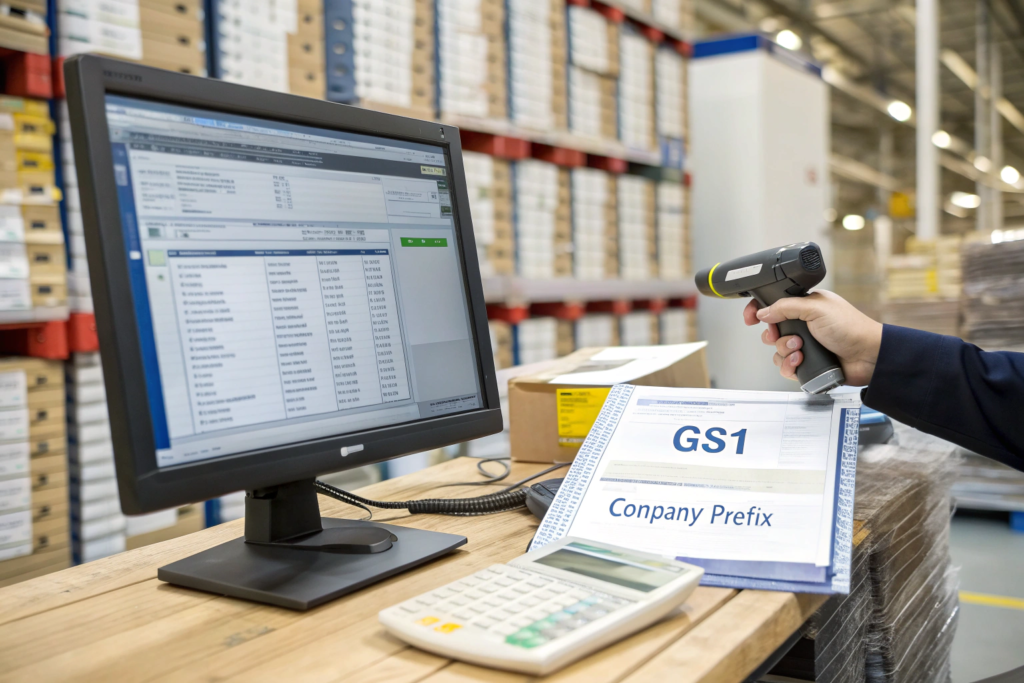
What is the difference between a UPC-A and an EAN-13 barcode?
UPC-A, or Universal Product Code Version A, is a 12-digit barcode primarily used in the United States and Canada. EAN-13, or European Article Number, is a 13-digit barcode used in the rest of the world. While they look similar, the encoding structures are distinct. A supermarket in Germany will not reliably scan a UPC-A code, and a supermarket in Texas may have legacy systems that don’t read EAN-13s. We configure your barcode type based on the destination market of the accessories. If your brand sells the same beanie in a US Walmart and a French Carrefour, we can print dual tags or separate tags for each market’s specification. The GS1 barcode types explained documentation provides clear guidance on the regional standards.
How do we ensure the human-readable numbers match the barcode data?
The human-readable numbers printed below the bars are the manual backup for the scanner. If these numbers do not exactly match the data encoded in the bars, it creates a data integrity failure. We use a unified software system where the barcode image is generated directly from the database record; the human-readable text is pulled from the same field. There is no manual retyping. Before a tag design goes to print, our quality control team scans the proof tag with a verifier and visually confirms that the number on the screen matches the number printed on the tag and the number on the purchase order. This triple check eliminates the transposition errors that commonly plague manual data entry processes. This barcode data integrity process is a standard operating procedure.
What Custom Shapes and Finishes Are Available for Supermarket Tags?
A supermarket tag must be functional first, but that doesn’t mean it has to look generic. The tag is a crucial piece of brand real estate. It communicates your brand name, logo, size, price, and care instructions in a single glance. In a competitive aisle with dozens of accessories vying for attention, a well-designed tag creates a perception of quality that can justify a higher price point.
We offer a wide range of custom shapes, die-cut contours, and premium finishes that go beyond the basic white rectangle. These options allow your brand to maintain a distinct visual identity while still meeting the technical scanning and durability requirements. The key is to apply premium finishes in a way that never interferes with the barcode’s contrast or the tag’s structural integrity.
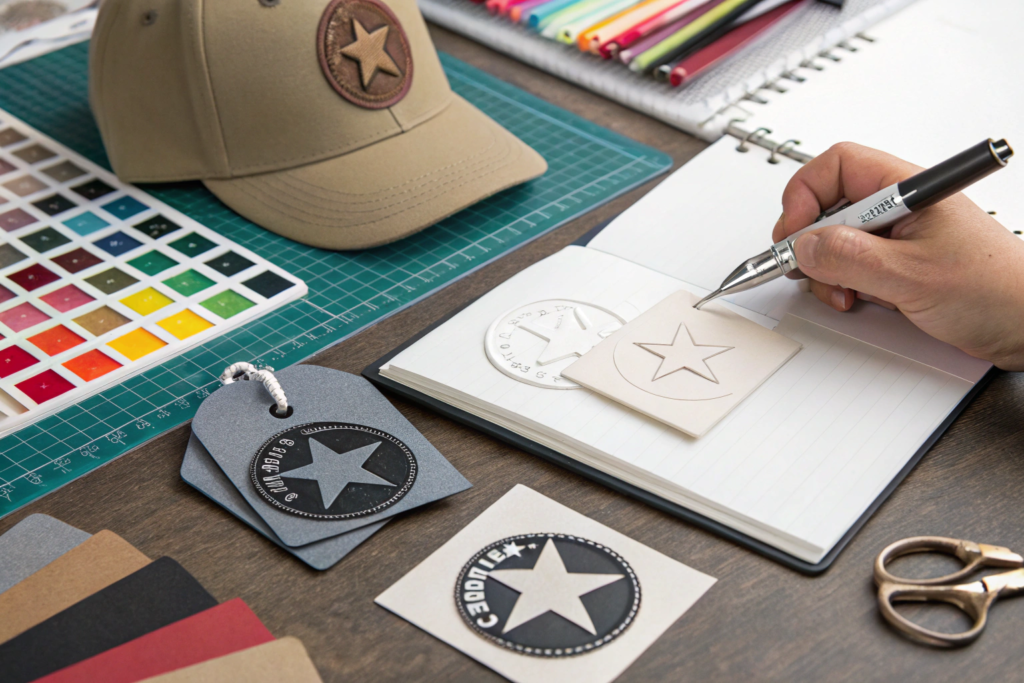
How does foil stamping and embossing affect the brand’s shelf presence?
Foil stamping applies a metallic layer, such as gold, silver, or rose gold, to specific areas of the tag using heat and pressure. Embossing raises the paper surface to create a three-dimensional tactile effect. Both techniques signal a premium, luxury product. On a supermarket shelf, a foil-stamped logo catches the overhead fluorescent light and draws the customer’s eye. However, foil stamping near a barcode must be carefully controlled; a reflective foil can interfere with the laser scanner’s ability to read the barcode if it bleeds into the quiet zone. We maintain a strict "keep-out zone" around the barcode where no special finishes or dark backgrounds are applied, ensuring the scannability is never compromised by the beauty of the design. This print finishing techniques guide explains the various enhancement options.
What sustainable tag materials are available for eco-friendly accessories?
For supermarket brands with sustainability commitments, we offer hang tags made from FSC-certified recycled paper, kraft paper with soy-based inks, and even biodegradable cotton string ties instead of plastic swift tacks. The barcode is printed with a high-contrast black ink that remains scannable on the natural brown or grey background of recycled stock. We have tested these materials extensively to ensure that the reduced brightness of recycled paper does not degrade the barcode contrast below the required "B" grade. The transition to sustainable packaging is a growing requirement in European supermarket tenders, and we are fully equipped to meet these specifications without sacrificing technical performance. This sustainable packaging standards resource details the certifications and materials available.
Conclusion
A custom hang tag with a barcode for supermarket accessories is a precision component of your supply chain, not an afterthought. It must survive the physical rigors of peg hooks and customer handling, scan instantly on a laser reader, and carry accurate GS1-compliant data that matches the retailer’s purchase order. When any of these elements fail, the product fails, regardless of how beautiful the accessory itself may be.
We have walked through the verification technology that guarantees scannability, the material reinforcements that prevent tag tear-out, the data management protocols that ensure numerical accuracy, and the design options that elevate your brand’s shelf presence. The combination of all these factors under one roof, managed by a single project manager, eliminates the fragmentation that often causes tag-related chargebacks.
If you are developing accessories for supermarket distribution and need a manufacturing partner who understands retail compliance at the tag level, we can provide barcode verification reports, material durability samples, and a GS1-compliant data workflow. Our Business Director Elaine manages our supermarket accessory programs and can coordinate the tag specifications with your retail compliance team. Contact her directly at elaine@fumaoclothing.com. A perfect hat with a failed tag is just lost fabric. Let’s make sure yours sells.