Last season, I had to tell a promising New York brand that their 5,000-piece order of minimalist satin headbands was a month late to the trend. Social media had already moved on to statement textures and vintage-inspired weaves. They were stuck with a beautiful product that felt like last week’s news. This is the brutal reality of the accessories market. You can have perfect stitching and flawless packaging, but if the aesthetic is stuck in the past, your margin evaporates faster than water in a hot steamer. Trend forecasting is not a luxury for a fashion buyer. It is a survival skill.
The 2026 jacquard woven headband trends point firmly toward a fusion of digital-age colors and handcrafted, tactile textures. The customer no longer wants a simple elastic band with a printed logo. She wants a piece of wearable art that signals her taste for quiet luxury and personalized style. For bulk buyers and brand owners, this means your manufacturing partner must be capable of complex weaving, custom color matching, and rapid sampling. Without these capabilities, you cannot translate the Pantone Color of the Year into a shippable product before the season peaks.
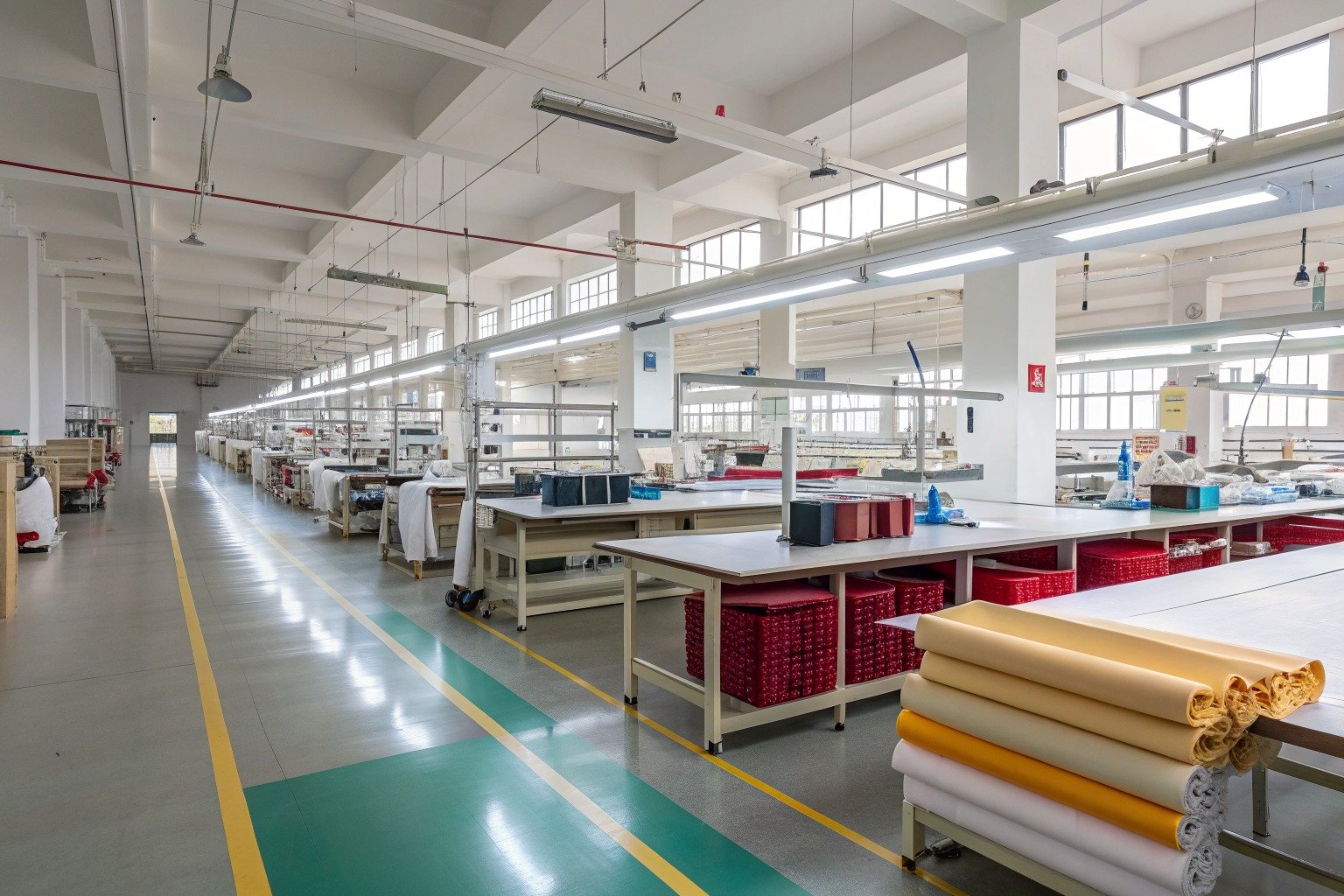
This is a game I love to play. Running a factory that chases fast fashion is not just about having the right looms. It is about feeling the shift in the air before the first runway show even starts. Our design team in Zhejiang has been analyzing street style, fiber innovation, and textile machinery advancements to prepare our weaving floor for what comes next. I am going to share the exact texture, color, and production strategies we are using right now to help our clients capture the 2026 spring and fall seasons. Stick with me. This is where the real margin is hiding.
What Textures Will Dominate the Woven Headband Market in 2026?
The days when a headband was just a strip of cotton canvas are long gone. Texture is the new logo. We are seeing a massive swing away from smooth, flat weaves toward dimensional fabrics that look heavy but feel light. For a buyer, texture creates the perception of value. A headband with a raised, three-dimensional surface allows you to sell it for $22 instead of $12. We are currently developing a line for a German retailer that uses a slub yarn technique to mimic the look of hand-spun wool, but it is 100% synthetic and passes strict tensile strength tests. The key manufacturing challenge here is tension. You cannot weave a loose, fluffy boucle on a machine calibrated for flat nylon.
The market is demanding tactility. This is driven by the ASMR and sensory fashion trends dominating TikTok. Your customer wants to stroke the fabric on the screen. To achieve this, you need a factory that has invested in advanced jacquard looms with electronic jacquard heads. This is expensive equipment, and many small workshops cannot afford it. This is where we come in.
How is the "Quiet Luxury" velvet jacquard evolving for spring?
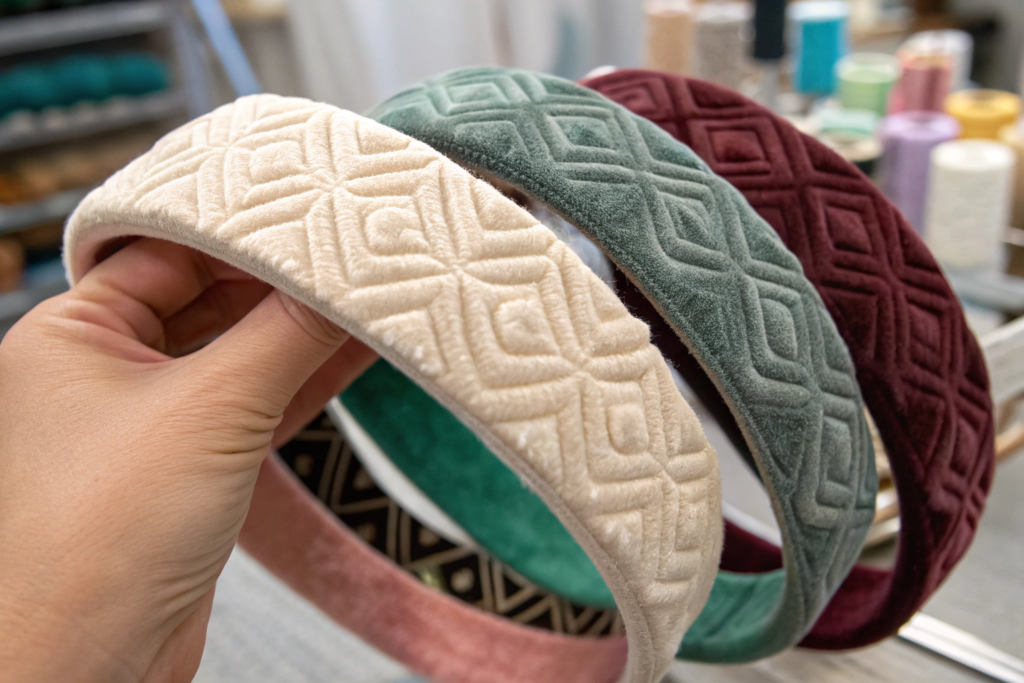
Last year, velvet was associated only with winter holiday glam. For 2026, the technology of burnout velvet and crushed patterns is making it a trans-seasonal staple. We are applying chemical etching on silk-viscose blends to create a "devore" effect. This means a sheer, light base fabric with a raised velvet pattern. It offers the luxury look of velvet without the weight. This trend requires precise laboratory-like control on the factory floor. If the chemical paste is applied a second too long, you lose the ground weave entirely. We have our project managers oversee the textile chemical processing for these specific orders to ensure the hand-feel remains buttery but the durability is high. The key colorways here are not just black. We are seeing a surge in "Weathered Blue" and "Soft Olive" velvet headbands. The trend connects directly to the sensory appeal driving fashion psychology today. A soft, plush headband calms the wearer while projecting effortless wealth.
Why are raw boucle and slub weaves becoming a year-round bestseller?
Boucle used to scream "grandma’s winter knit." Now, with refined polyester filament yarns, it screams "high-fashion boutique." We are making raw, loop-y textures in bright high-summer colors like neon coral and liquid lime. The appeal is the optical depth. A flat ribbon reflects light in one direction. A boucle jacquard absorbs and scatters light, hiding small stains and making the product look far more expensive than the raw cost of the yarn. This is a massive win for your margin. To manufacture this, we rely on air jet looms which allow us to insert low-twist filament yarns without breaking them. The result is a soft, bulky fabric that does not pill. An important consideration for importers is the construction classification. If you use a blend of recycled polyester and natural cotton, the textile fiber regulations require accurate labeling. We ensure your jacquard headband is tagged correctly to fly through US customs as a textile accessory, avoiding delays.
Which Color Patterns Define the 2026 Jacquard Headband Trend?
If you thought earthy neutrals were going to dominate forever, 2026 is going to surprise you. Color is back, but it is weird. It is not the primary reds and blues of the past. We are moving toward ambiguous tones that shift between warm and cool depending on the light. I call them "chameleon colors" because they cause arguments on whether the headband is brown or purple. For a global importer, this creates a challenge. A digital photo of a "Digital Mauve" headband might look vastly different on a phone screen compared to the physical sample under store lighting. This causes more returns and chargebacks than any manufacturing defect.
This year, we have found a solution in the form of metamerism-proof color matching. Our quality control team now approves lab dips under three different light sources: D65 (daylight), incandescent, and TL84 (store display lighting). For the jacquard trend, the magic is not just in the solid color but in the contrast. We are using a matte warp and a glossy weft to create the illusion of a dynamic, moving pattern, even when the headband is flat. This gives the shopper a sense of motion, which is incredibly eye-catching on a shelf.
How do gradient ombre and "sun-bleached" effects work in woven fabric?
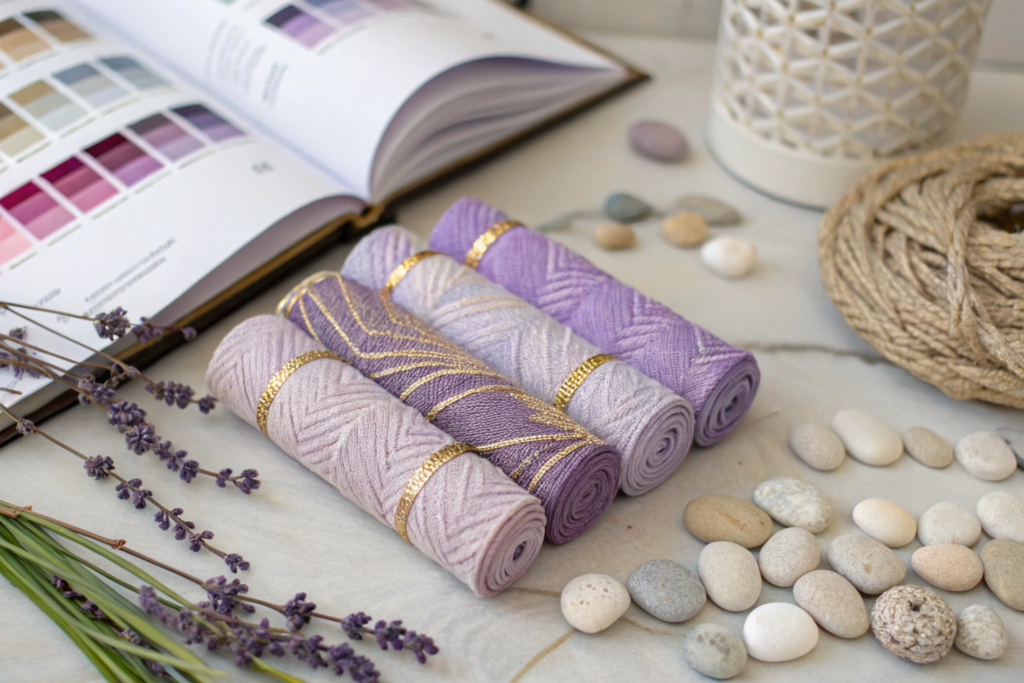
We have moved past the messy dip-dye ombre. The 2026 trend is a "digital gradient" where the transition is so smooth it looks like a software gradient, but it is woven yarn. Achieving this on a jacquard loom requires an ultra-high density of warp threads. You have to pre-program the drop stitch sequence to create a gradual disappearance of the face color. It looks like a sun-bleached vintage treasure, but it is brand new and consistent across 5,000 units. This vintage-fade style, which we call "weathered romance," is huge for the spring 2026 fashion forecast reports. It triggers nostalgia but feels fresh. The colors we see dominating are Faded Terracotta, Atlantic Blue, and Soft Lilac. To hit this look, you need a factory that owns its own warping machine. Outsourced warping creates tension differences that ruin the smooth gradient. We manage the entire production sequence in-house to keep the transition invisible. This connects to the demand for color fastness tests, as consumers expect a washed-vintage look but with modern-day color hold.
Why is metallic threading the secret weapon for holiday margins?
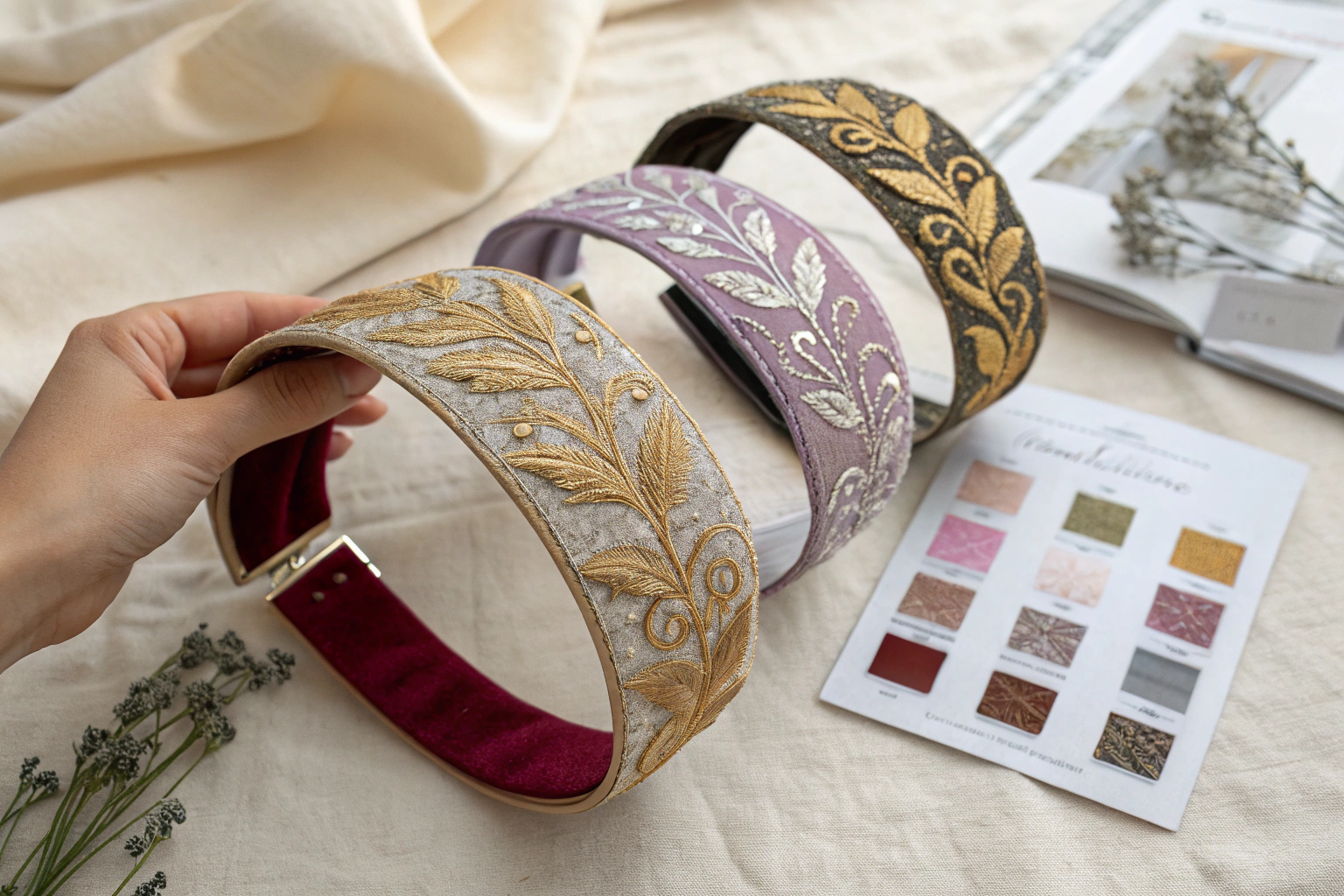
Gold and silver are never fully out, but the "chunky lamé" of the 2010s is dead. The 2026 metallic is delicate and integrated. We are twisting a single filament of Lurex with a matte cotton thread so the sparkle looks like a secret code visible only when the light catches it. It is subtle luxury. The manufacturing challenge here is needle wear. Metallic yarns are abrasive. If a factory tries to run a high-speed jacquard loom without lubricating the needle eyes properly, you will get snags and holes by the thousandth unit. We run a dedicated preventive maintenance schedule for any metallic yarn orders to ensure the needles are swapped out before they damage your fabric. This delicate shimmer shifts a basic black headband into a holiday gift item. The psychology works. Consumers see the gentle sparkle of metallic thread as a signal of high quality, which allows them to justify a higher price point at the checkout.
How to Source High-Quality Jacquard Headbands Without Tariff Issues?
You have identified the exact shade of Mocha Mousse and the perfect boucle weave. You place a trial order of 2,000 units. It lands in LA or Rotterdam, and Customs hits you with a 25% duty because you misclassified the fabric composition. All your trend-spotting genius is gone. Profitability in trendy fashion accessories lives and dies on the tariff code. A jacquard headband can fall under several different US HTS codes depending on whether it is considered an elastic band, a woven garment accessory, or a fancy dress item. This is not a game of chance. It is a game of precision.
Our role in Zhejiang goes beyond stitching. We function as your tariff engineers. We construct the product with the Harmonized Tariff Schedule open on our desk. For example, if we are constructing a heavily embellished fashion headband, we might slightly adjust the shell-to-elastic ratio to ensure it legally falls under a fabric-based heading instead of a plastic trinket heading. It is the same beautiful product, but with a much lower import tax. We also control the bulk of the weight through the choice of the core textile.
What is the "Fabric First" classification strategy for imports?
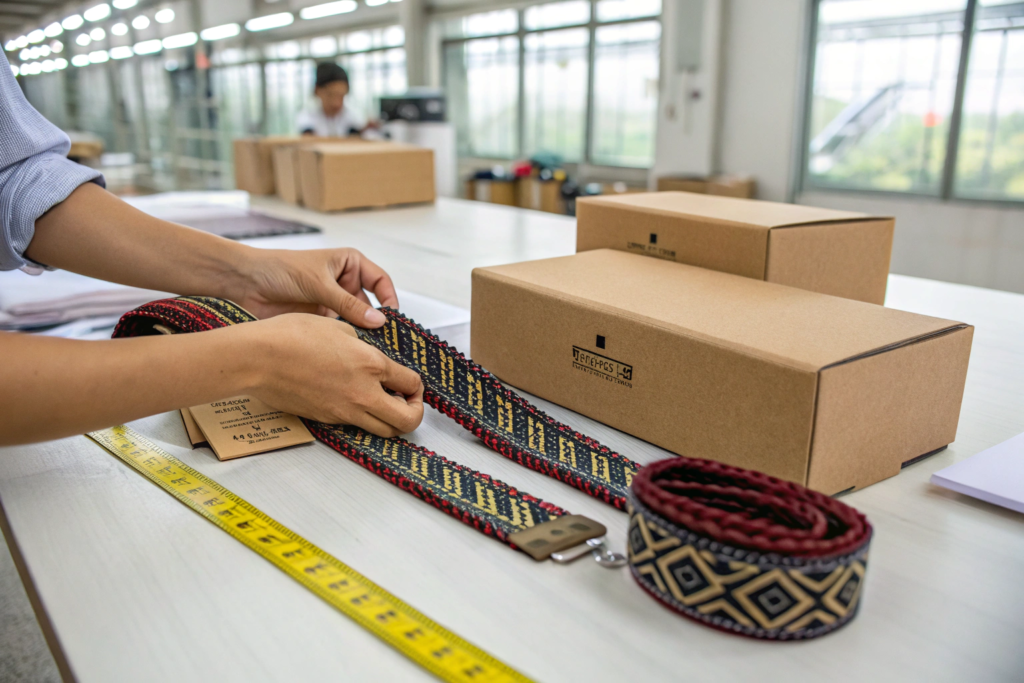
This is a simple but powerful concept. For a headband to benefit from lower textile tariff rates, the essential character must be the woven textile, not the rubber or plastic inside. If you import an item that is 70% plastic structural shell and 30% fabric cover, it might be taxed as a toy or a plastic good. We flip this by using a thick, padded jacquard as the main structure and just a thin, hidden elastic retention cord inside. The item is now a "woven garment accessory." This strategy requires you to work with a supplier who understands import classification and provides a detailed material breakdown sheet. The World Trade Organization’s guidelines on textile trade are complex, but we translate them into practical design advice. We pre-test the fiber content because if the label says 100% polyester and a lab finds 2% spandex, you are in for a legally mandated recall. We test it ourselves first.
How can "de minimis" shipping protect your micro-trend inventory?
Trendy items usually start with a small test order. Before you commit to a full container of digital gradient headbands, you might want 800 pieces to test the market. At this stage, you absolutely must take advantage of the Section 321 de minimis rule. If the shipment’s total value is under $800, it enters the US duty-free. For our clients, we often break down a large production run into smaller, staggered shipments. We hold the stock in our finished goods warehouse. When you sell 700 units in a week, we ship the 700 units from China directly to your store or your 3PL. This keeps you under the threshold. It also allows you to streamline your e-commerce fulfillment. This model is perfect for social media-driven drops. You don’t get stuck with a warehouse full of dead stock if the trend dies in week three. You just stop the pipeline. This flexibility turns a fixed manufacturing cost into a variable one, giving small brands the agility of huge fashion houses without the overhead.
Is Your Supply Chain Ready for the Vintage Weave Revival?
This brings me to the elephant in the room. Everyone loves the look of a heavy, upholstery-style tapestry headband or a ’90s grunge wired headband until they try to wear it for more than two hours. The biggest trend failure I see in 2026 is the "beautiful headache." A headband must have a place in the structure where the pressure is released. You cannot just wrap a stiff jacquard ribbon around a steel core and call it a day. The vintage look often requires a heavy yarn, a thick weave, or a wired edge. If you don’t engineer comfort into the reverse side, you will have high sales in week one and massive returns in week three.
We have solved this by introducing a "comfort bridge" technology on the reverse. For our tapestry-style headbands, we use a hidden, breathable neoprene lining at the pressure points behind the ears. The outer fabric is a stunning, historical brocade pattern. The hidden inner zone is soft, hypoallergenic, and slightly ridged to prevent slipping. This is the kind of detail that a generic trading company overlooks. As a real manufacturer, we focus on the inside of the product as much as the outside. Let’s look at the specific elements of this revival that are redefining the market.
Why are Baroque and Paisley jacquards trending again in 2026?
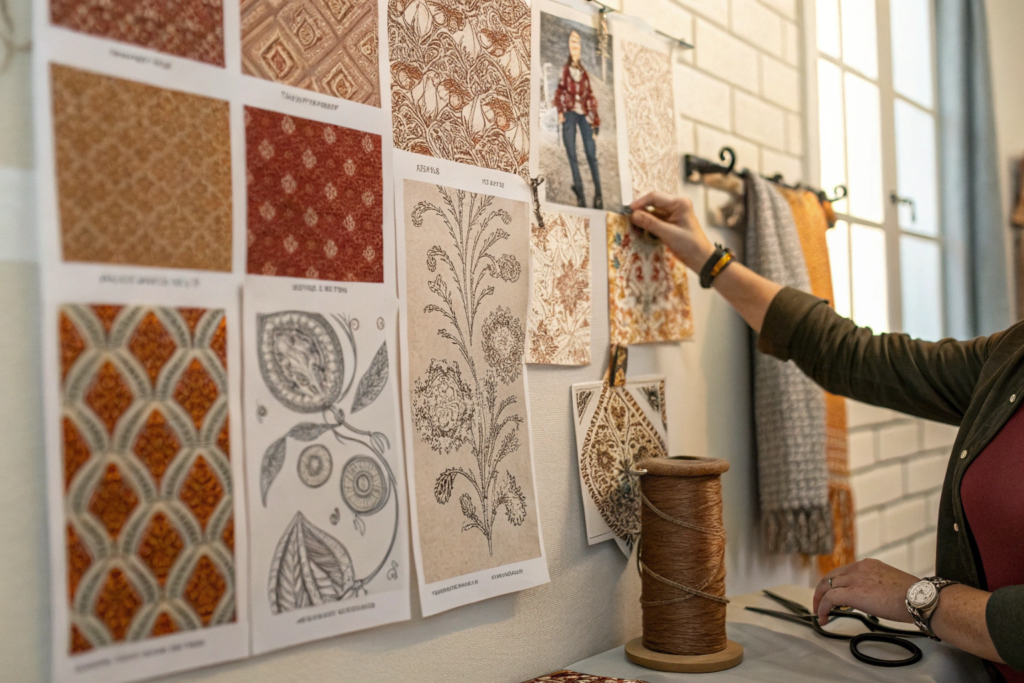
Fashion is obsessed with heritage dressing. Baroque swirls and intricate paisley scrolls convey a sense of history and permanence that a cheap print cannot. When these are physically woven into the fabric via jacquard techniques, they have a sculptural quality. The demand for custom jacquard patterns is exploding because brands want exclusive baroque designs that fast-fashion giants cannot copy instantly. To produce this, you need a factory that does its own digital pattern programming. We can take a hand-painted watercolor of a Baroque swirl and convert it into a loom-readable file in 24 hours. The intricacy of the design is directly tied to the hook count of the loom. A high-hook loom creates photographic detail. A low-hook loom makes it look like a blurry pixel. When sourcing, you should ask for the loom capabilities before placing an order for a detailed pattern. The wrong machine will disappoint you.
How does the wired vintage "90s Headband" adapt to modern safety standards?
The classic ’90s knotted headband with a wire inside is a massive trend for 2026, but the metal wire of the past was a liability. It would snap, poke out, and scratch a customer’s forehead. We no longer use metal for this. We use a high-density PE (polyethylene) mono-filament or memory wire. It bends and springs back without developing sharp kinks. This is non-negotiable for a product that goes to a major US retailer because you must pass the sharp edge children’s product safety testing protocols if it is likely to be used by teenagers. We also double-serge the ends of the wire pocket so that aggressive bending cannot push the wire through the fabric. This is an execution detail that a professional sourcing agent notices immediately. It separates the safe, reliable exporter from the fly-by-night operation. You get the perfect vintage silhouette with zero injury risk.
Conclusion
Predicting the 2026 jacquard woven headband market is not about guessing the next mystery color. It is about technical mastery. It is about knowing which chemical wash creates a soft velvet without destroying the fabric strength. It is about knowing how to weave a sun-faded gradient that looks like a sunset and passes the wash test. We have looked at the textures, the ambiguous colors, the safe wiring, and the tariff-smart construction. These are the elements that turn a simple strip of fabric into a high-margin, must-have accessory for American and European consumers.
If you are planning your spring or fall 2026 collection and you want to move faster than the market, it is time to get the details right on your jacquard program. At Shanghai Fumao, we offer end-to-end management from the digital mapping of your exclusive Baroque pattern to the de minimis logistics that protect your cash flow. Don’t let a technological bottleneck in a generic factory stop you from landing a trend before it peaks.
If you want to discuss our current library of 2026 textures or share your tech pack for a custom woven design, our Business Director Elaine is the person you need to talk to. She can show you how to compress sampling times and lock in your seasonal orders before the looms fill up. Contact Elaine directly at elaine@fumaoclothing.com. Let’s weave the future of your brand together.