You pull open your bathroom drawer and grab a hair band from a sealed pack you bought a year ago. You stretch it around your ponytail for the third loop, and it snaps. Not a gentle fraying. A sudden, violent break that leaves the elastic dangling limp. You grab another from the same pack. It stretches but feels gummy and sticky. The rubber has degraded into a tacky mess that leaves residue on your fingers. You throw the whole pack away. The hair bands were never worn. They died in the drawer. The shelf life expired before they ever touched a head.
The average shelf life of an unused elastic hair band stored in a sealed polybag at room temperature is 3 to 5 years. However, the actual functional shelf life depends heavily on the rubber compound formula, with natural rubber latex bands degrading within 2 to 3 years due to oxidation, while high-quality thermoplastic polyurethane bands can remain usable for up to 7 years. Environmental factors like heat, humidity, and UV exposure can cut the shelf life of latex bands to as little as 12 months.
The clock starts ticking the moment the rubber compound is vulcanized, not when you open the package. A hair band that sat in a hot shipping container for six weeks before reaching your warehouse has already aged substantially before your customer ever sees it. I want to explain exactly why elastic degrades, how to test the remaining life of a stored batch, and how we formulate our hair bands in Zhejiang to maximize shelf life for retailers who hold inventory across multiple seasons.
Why Do Polyester-Wrapped Elastic Hair Bands Degrade While Sitting in a Box?
A hair band looks like a simple circle of fabric. Inside, it is a reactive chemical system that is slowly self-destructing. The polyester or nylon outer wrap is cosmetic. The functional core is the rubber compound. This rubber is under constant attack from oxygen molecules in the air, even through a plastic bag.
Polyester-wrapped elastic hair bands degrade in storage primarily because of oxidative crosslinking in the rubber core. Oxygen atoms attack the double bonds in the polymer chains, causing two simultaneous destructive processes: the polymer chains continue to crosslink, making the rubber harder and less stretchy, and the residual processing oils migrate to the surface, causing the sticky, gummy feel. Heat accelerates this process exponentially. A hair band stored at 30 degrees Celsius ages three times faster than one stored at 20 degrees Celsius.
The polyester or nylon outer wrap offers almost no barrier protection. Oxygen diffuses straight through it. The polybag the hair band is packed in, if it is standard low-density polyethylene, is also highly oxygen-permeable. Only packaging in an oxygen-barrier film, like an aluminum foil laminate or an EVOH coextruded film, substantially slows this aging process.
Why do some old hair bands turn brittle while others turn sticky?
This depends on whether the rubber compound is undergoing chain scission or additional crosslinking. A natural rubber latex band, when it oxidizes, undergoes chain scission where the long polymer molecules are chopped into shorter pieces. The result is a loss of elasticity and a brittle, crumbly texture, like an old rubber band in a desk drawer. A synthetic TPE or TPU band often continues to crosslink, where the polymer chains form additional bonds that make the material progressively harder. The tacky surface comes from oils and plasticizers separating from the hardened polymer matrix and migrating to the surface.
What is the role of the polybag in extending shelf life?
A standard clear polybag does very little to block oxygen. Its function is primarily dust protection and retail presentation. To truly extend shelf life, we use an anti-UV additive in the polybag and ensure the bag is sealed against humidity, which also accelerates degradation. An opaque, anti-UV master carton for bulk storage further shields the stored hair ties from the fluorescent lighting in a warehouse that emits low levels of UV radiation constantly.
How Can You Tell If a Stored Batch of Hair Bands Is Still Sellable?
A retailer finds a carton of hair bands in the stockroom from two seasons ago. The carton label shows a manufacture date of 18 months earlier. The purchasing manager asks if the stock is still good to sell. There is no visible mold. The bands look fine. Sending them to a lab for a chemical analysis takes two weeks and costs more than the carton is worth.
You can tell if a stored batch of hair bands is still sellable by performing a quick three-step field test: the Stretch-Return Test where you stretch a sample band to three times its relaxed length, hold it for 10 seconds, and release it; the Tack Test where you pinch the rubbery inner core between thumb and forefinger; and the Snap Test where you stretch the band rapidly to its breaking point. A fresh band snaps back instantly, feels dry and smooth, and breaks with a clean, elastic snap. A degraded band recovers slowly, feels sticky or gummy, and breaks with a low-force, plastic yield.
I train our clients’ warehouse staff to perform these three tests on a random sample of five bands from any carton older than 12 months. It takes less than two minutes. The Stretch-Return test is the most revealing. A band that was originally 60 millimeters in relaxed diameter and stretched to 180 millimeters should return to within 62 millimeters within five seconds of release. If it stays at 75 millimeters or returns slowly over 20 seconds, the elastic memory is failing.
What is the minimum acceptable elongation at break for a sellable hair band?
A fresh, high-quality elastic band will stretch to 250% to 350% of its original length before breaking. A band that has degraded to the point where it breaks at less than 180% elongation should not be sold. It may hold a ponytail initially but will snap during the day’s normal wear. This is measured with a simple ruler, but for precision we use a digital tensile tester.
How does the smell test indicate chemical degradation?
A fresh elastane band has a very faint, neutral smell. A natural latex band has a mild, sweetish rubber odor. A band that is degrading emits a sharp, acidic, or rancid odor as the polymer oxidation products volatilize. A strong chemical smell is a clear indicator that the rubber compound has advanced degradation and the product should be written off.
What Is the Difference in Shelf Life Between Latex, TPE, and Silicone Hair Bands?
The word "elastic" covers a family of very different materials. A consumer thinks all hair bands are the same. A factory knows that the choice of core material at the compounding stage determines whether the hair band outlasts the fashion cycle or dies in the warehouse.
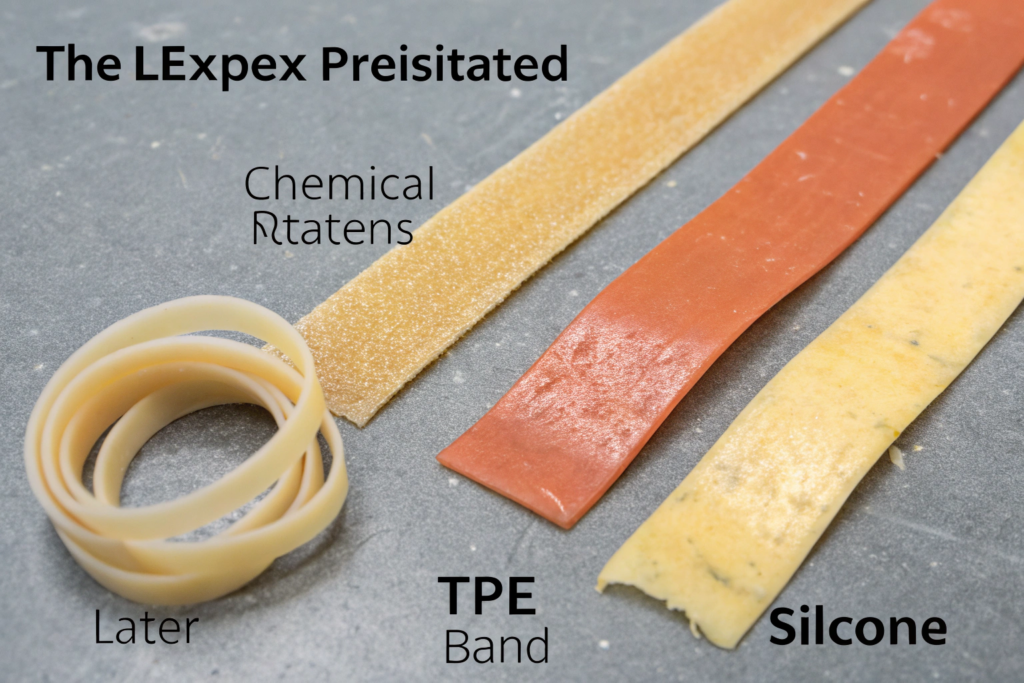
Natural rubber latex hair bands have the shortest average shelf life, 2 to 3 years, because the natural latex proteins and lipids are highly susceptible to oxidation. Thermoplastic elastomer bands have a longer shelf life, 4 to 5 years, due to their saturated polymer backbone that resists oxygen attack. Silicone rubber hair bands have the longest shelf life, 6 to 8 years, because the siloxane polymer chain is essentially inert to oxygen and UV radiation.
Latex bands fail because the cis-isoprene units in natural rubber are chemically reactive. The double bonds in the backbone are oxygen’s favorite target. TPE bands, usually a styrene-ethylene-butylene-styrene compound, have a fully saturated mid-block that oxygen cannot easily attack. Silicone is in a different category entirely, it is a quartz-like mineral backbone with organic side groups, and it just does not degrade under normal ambient conditions.
Why do many premium brands choose TPE over natural latex?
TPE offers a better balance of shelf life, production cost, and performance. It has the soft, stretchy feel of latex without the significant allergy risk, and it does not yellow as it ages in the same way latex does when exposed to light. It is also easier to color-match in vibrant, colorfast shades because the base polymer is naturally translucent white, not yellowish, giving a cleaner starting point for color matching in high-end accessories.
Is silicone the ideal material if cost is less of a concern?
Silicone is functionally immortal in shelf-life terms. However, it is more expensive per kilogram than TPE, has a slightly higher surface friction that can snag fine hair, and requires platinum-cured processing to avoid skin irritation. For ultra-premium hair accessories marketed as "lifetime" products, silicone is the correct choice.
How Should You Store Bulk Elastic Hair Bands to Maximize Shelf Life?
A buyer who purchases 50,000 hair bands as safety stock for a long-term retail contract must store them correctly, or the final 10,000 bands drawn from the inventory will be noticeably degraded compared to the first 10,000. Storage conditions are not a warehouse afterthought. They are a final manufacturing step that happens off-site.
You should store bulk elastic hair bands in a cool, dark environment at a stable temperature between 18 and 22 degrees Celsius with relative humidity below 55 percent. The cartons must be stored off the concrete floor on pallet racking, away from direct sunlight, fluorescent tube lighting, and heat sources such as heating vents or exterior sun-facing walls. The original anti-UV master cartons should remain sealed until the bands are ready to be packed into retail displays.
I recommend a first-in, first-out inventory management system for all elastic accessories. The oldest cartons are placed at the front of the picking rack. If a shipment of hair bands sits for 18 months before being opened, the customer receives product that is already 18 months into its shelf life. A FIFO system ensures that no batch of accessories sits in storage longer than the time it takes to cycle through the stock.
What is the effect of temperature cycling on stored hair bands?
A warehouse that heats up during the day and cools at night creates thermal expansion and contraction cycles in the rubber. This physical stress accelerates the migration of plasticizers to the surface and creates micro-cracks that become oxidation nucleation points. A stable temperature is better than a low temperature. Storage at a constant 20 degrees Celsius is superior to storage in a shed that fluctuates between 5 and 35 degrees Celsius.
Should hair bands be stored in vacuum-sealed packaging for long-term storage?
Vacuum sealing with an oxygen barrier film can effectively pause the oxidation clock. We have tested hair bands sealed in aluminum-foil-laminate bags with an oxygen absorber packet. After five years of accelerated aging simulation, the bands performed within 95% of their original elasticity specifications. This packaging is more expensive and is typically used only for military or emergency preparedness kit contracts where multi-decade storage is required.
Conclusion
The shelf life of an elastic hair band is a countdown controlled by the rubber chemistry, not the calendar. A natural latex band stored in a hot Florida warehouse may become unsellable in 18 months. A TPE or silicone band stored in a cool, dark stockroom will be fresh for 5 years or more. The polyester outer wrap is decorative camouflage. The rubber core inside is the ticking clock.
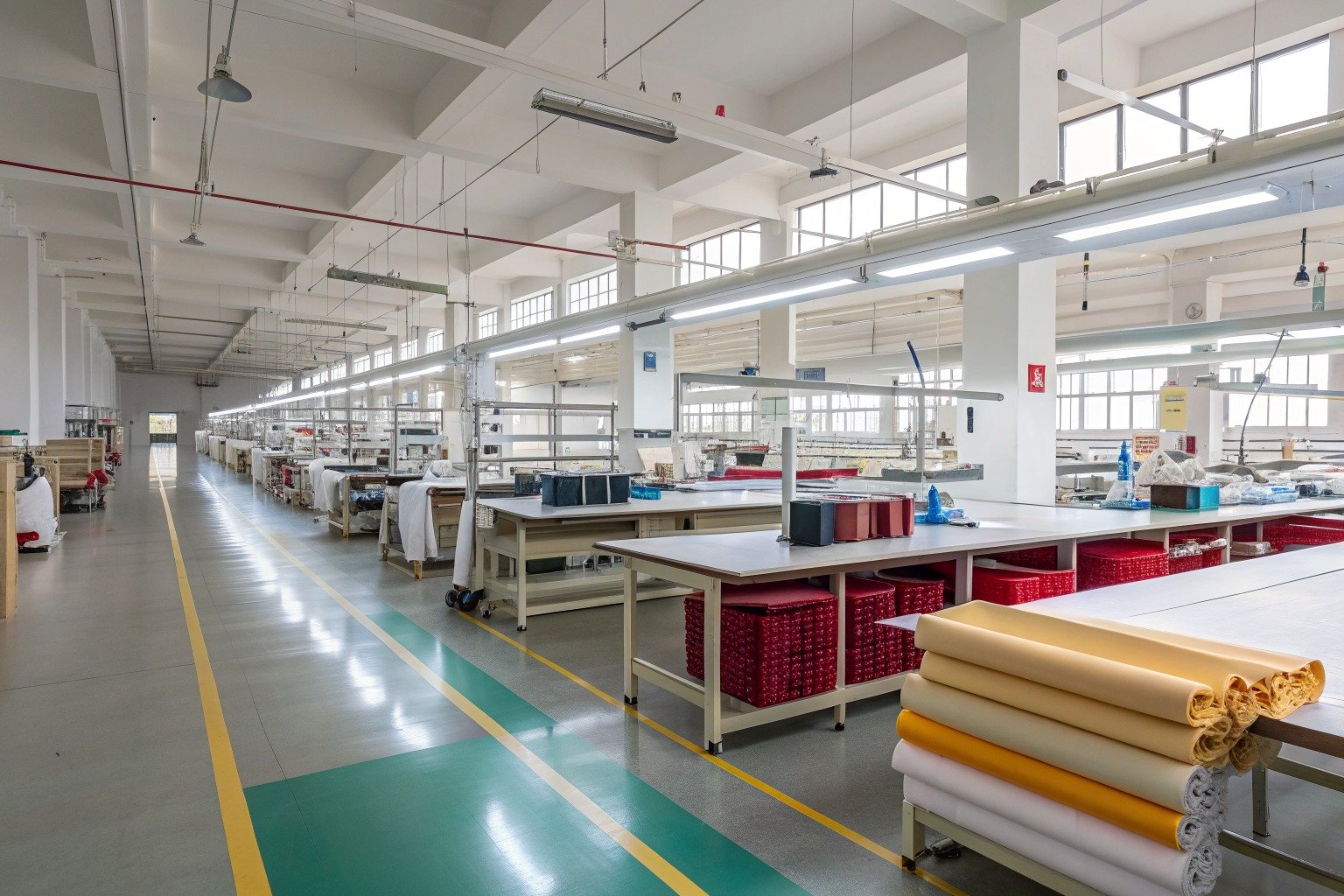
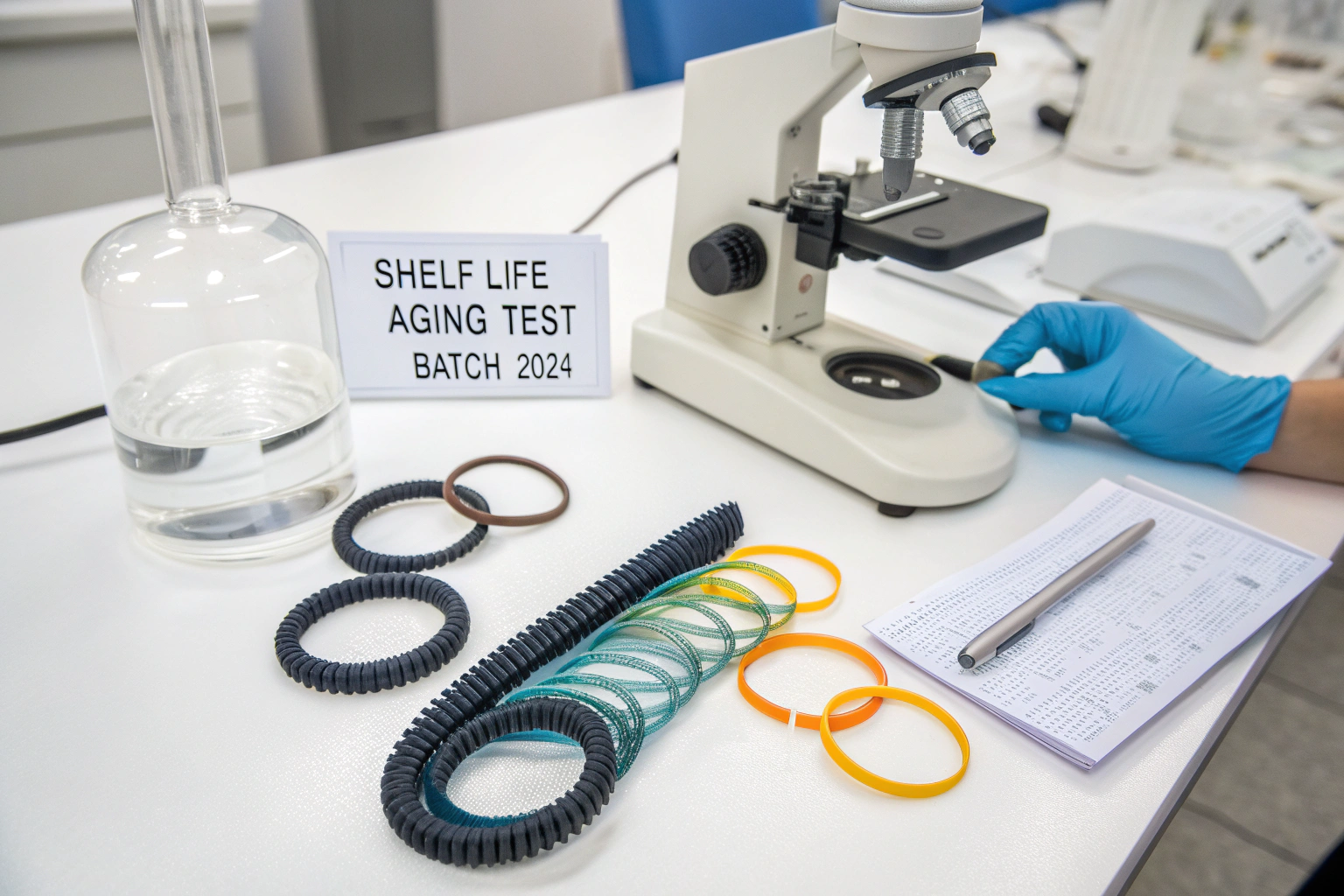
Our factory in Zhejiang formulates our own TPE compounds to maximize shelf life for brands that sell through multiple retail seasons. We test every batch with accelerated aging in a 60-degree-Celsius oven that simulates 24 months of ambient storage in 10 days. We validate the stretch-return performance against a sealed retention standard before shipping.
If you have a warehouse full of aging hair band inventory and need to know if it is still sellable, or if you want to source bands with a guaranteed minimum shelf life for your next retail program, contact our Business Director, Elaine. She can send you our shelf life testing protocol, a sample of our TPE formulation, and a batch certificate showing the date of manufacture and the validated shelf life period. Write to her at elaine@fumaoclothing.com. Let’s make sure your hair bands outlast the fashion cycle, not expire in it.