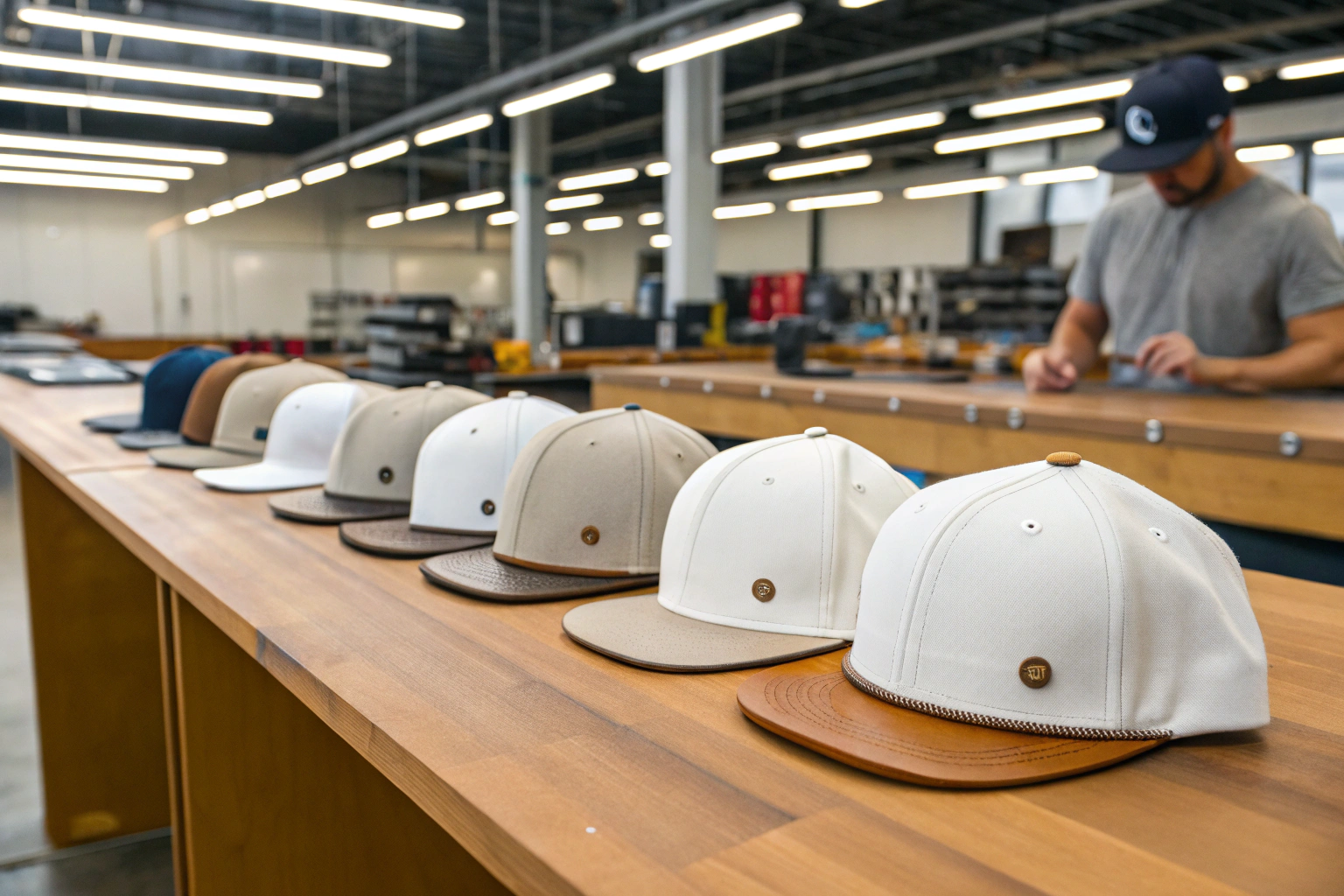
A buyer from a golf resort chain asked me this exact question two years ago. He wanted fitted caps for his pro shop, where customers expected a premium, tailored feel and were willing to try on sizes. But he also wanted adjustable snapbacks for the outdoor tournament tent, where volunteers handed caps to participants who needed to put them on immediately without fussing with a size chart. He asked if he could combine both closure types in a single production order to hit his volume targets and simplify his logistics. I told him yes, and we shipped fitted caps and snapbacks from the same production run, sharing the same crown fabric and visor material, packed in the same master carton.
Yes, AceAccessory can produce both adjustable and fitted hat styles within a single purchase order. This is a standard capability at our factory. The crown panels, visor, and sweatband are produced on shared production lines using the same base materials. The production path diverges only at the back closure assembly stage, where fitted hats receive a closed back with a sized seam, and adjustable hats receive the specified closure type, plastic snap, metal buckle, fabric strap, or Velcro. The order minimum applies to the total combined quantity across both closure types, not to each type individually, making it economically viable to split an order between adjustable and fitted styles to serve different retail channels, customer preferences, or price points within one collection. I will explain how we structure the production batch, what sizing and design considerations apply to each closure type, and how the combination affects pricing, minimums, and packaging.
How Does the Production Process Split Between Fitted and Adjustable Styles?
The production of a baseball cap is a sequential assembly process that converges and diverges at specific stages. The front of the cap, the crown panels, the visor, and the sweatband, are common to both adjustable and fitted styles. These components are cut, sewn, and assembled identically regardless of the back closure. The differentiation point is the back panel and the closure mechanism. Understanding this convergence and divergence explains how we efficiently produce both styles within a single order.
What Parts of the Hat Are Common to Both Adjustable and Fitted Versions?
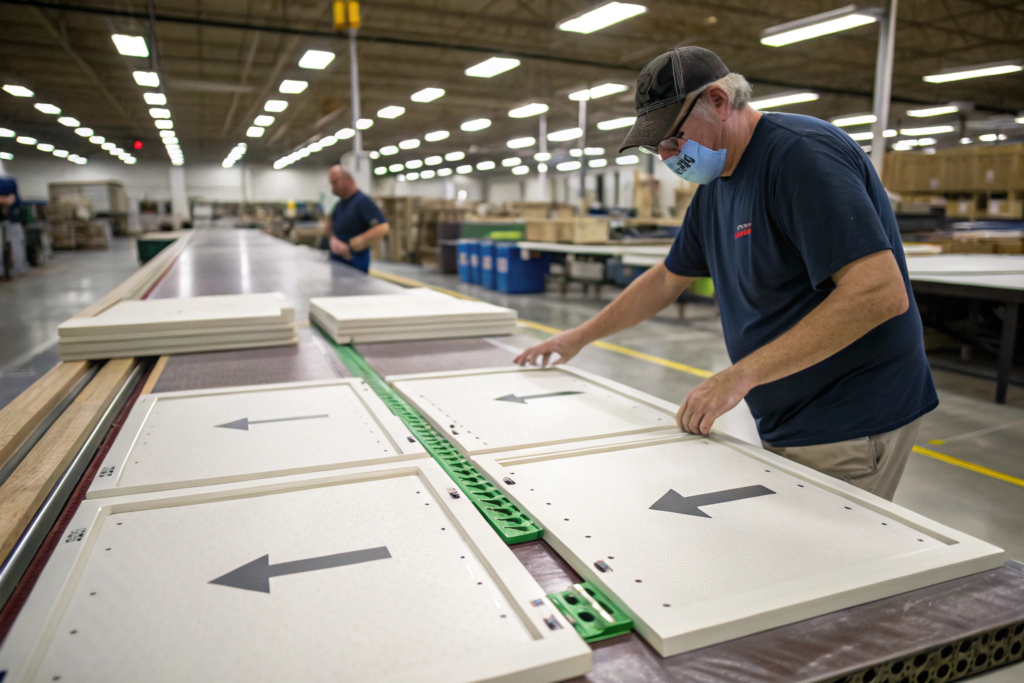
The shared components form the majority of the hat and the majority of the production labor. The visor, also called the brim or bill, is identical across both versions if it is the same visor shape and material. The visor is constructed from a visor board, a shaped piece of stiff material, covered with the face fabric on top and a matching or contrasting fabric underneath, with multiple rows of stitching securing the layers. This visor assembly is produced in batches and is agnostic to the closure type. The same visor goes onto both adjustable and fitted caps.
The front crown panels, typically four or five shaped fabric pieces that form the front dome of the cap, are cut, sewn together, and topstitched identically for both versions. The front structure, whether it is a structured cap with a buckram backing or an unstructured cap with a soft crown, is identical. The sweatband, the interior band that sits against the forehead, is cut, sewn, and attached identically. The sweatband material and wicking properties are shared.
The shared components represent approximately 85% of the hat’s material and labor content. This high degree of commonality is what makes split orders efficient. The production line produces the shared components in a single batch run. The batch quantity is the sum of the adjustable quantity plus the fitted quantity. The production team produces 500 visors, 500 front crowns, and 500 sweatbands to serve an order of 300 adjustable and 200 fitted caps. The efficiency of the combined run is essentially the same as a single-style run of 500 identical caps.
At What Stage Do the Closure Types Diverge in Assembly?
The divergence point occurs when the finished front crown and visor assembly moves to the back panel attachment station. A hat at this stage is a nearly complete cap with an open back. The open edges of the crown panels at the back are ready to receive the closure. The production flow splits into two parallel finishing lines.
The adjustable line receives the back closure components. For a snapback, a pre-cut plastic snap strip is topstitched to one side, and a matching snap receiver strip is topstitched to the other side. The open area between the two snap strips is left open, which is the defining characteristic of the adjustable trucker or snapback style. For a strap-and-buckle closure, a fabric strap with a metal or plastic buckle is attached to one side, and a matching fabric strap with sizing holes is attached to the other. For a Velcro closure, the hook and loop strips are sewn to the fabric back straps. The adjustable assembly step adds roughly two to three minutes of sewing time per cap.
The fitted line receives the back panels. The matching fabric pieces are sewn to the open back edges, and the center back seam is closed to form a continuous, sized crown. The seam is taped or covered with a fabric welt for a clean interior finish. The fitted closure is then measured on a sizing gauge to verify that the finished circumference matches the specified size label. The fitted assembly step adds roughly two to three minutes of sewing time per cap as well.
After the closure assembly, both adjustable and fitted caps flow to the shared finishing station. The button is attached to the crown top. Loose threads are trimmed. The cap is inspected, steamed to shape, and packed. The finishing steps are identical. The different paths for adjustable and fitted caps in this production sequence are understood by any factory with experience producing both styles, and our custom hat manufacturing process is designed to handle this split efficiently without creating bottlenecks.
How Do Sizing and Fit Specifications Work for Each Closure Style?
Sizing is the practical difference that matters most to the end customer, and it is the dimension where fitted and adjustable styles serve fundamentally different needs. A fitted cap provides a precise, tailored fit in a specific size, and the customer must know their hat size. An adjustable cap provides a flexible fit that accommodates a range of sizes, and the customer adjusts it to their preference. Both approaches have advantages, and the factory’s role is to execute each sizing system accurately and consistently.
What Size Range Is Practical for Fitted Hats in a Wholesale Order?
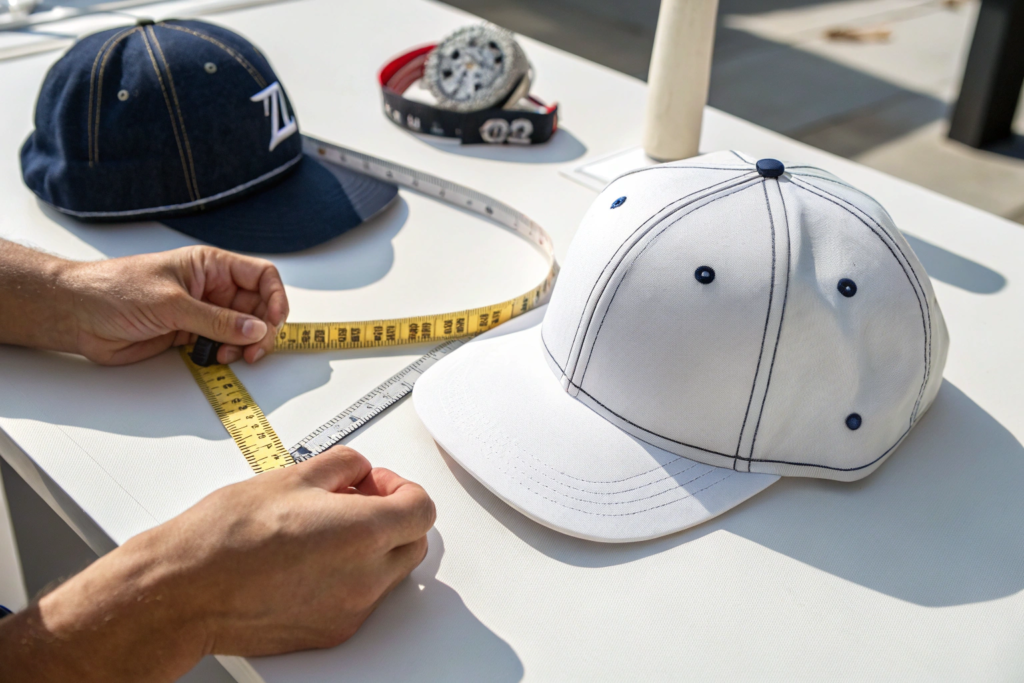
Fitted hats are sized by head circumference, usually in centimeters or inches. The industry standard size range for adult fitted baseball caps runs from Small, at approximately 55 to 56 centimeters, through Medium at 57 to 58 centimeters, Large at 59 to 60 centimeters, and Extra Large at 61 to 62 centimeters. Some brands also offer an Extra Small at 53 to 54 centimeters and, less commonly, an Extra Extra Large at 63 to 64 centimeters.
In a wholesale order, you do not order an even quantity of every size. You order a size run, which is a ratio of sizes based on the expected distribution of head sizes in your customer population. The standard size run ratio for the US market, based on decades of hat sales data, is approximately 1-2-2-1. For every six fitted hats ordered, you order one Small, two Mediums, two Larges, and one Extra Large. This ratio reflects the bell curve distribution of adult head sizes, with the peak in the Medium to Large range.
For your specific order, you can adjust the size run based on your customer demographic. A women’s hat program may shift the run smaller, with extra Smalls and Smalls. A men’s big-and-tall program shifts the run larger, with extra Larges and Extra Extra Larges. I recommend starting with the standard run for a new fitted hat program and adjusting based on your first season’s sell-through data. The factory can accommodate custom size run ratios, but the minimums apply per style and color, not per individual size, within the combined fitted and adjustable order. This industry sizing convention is widely applied in hat size standardization across the headwear industry and provides a reliable reference for your wholesale planning.
How Are Adjustable Closures Sized and Tested for a Broad Customer Base?
An adjustable cap is sized not by the manufactured circumference but by the adjustment range of the closure mechanism. The cap crown is cut to fit a specific minimum head size when the closure is fully tightened, and it expands to fit a larger size when the closure is loosened. The standard adjustable cap is designated as One Size Fits Most, and it is designed to fit a head circumference range of approximately 55 to 60 centimeters for adult caps and 50 to 55 centimeters for youth caps.
Achieving a consistent One Size Fits Most range requires precise closure placement and strap length. If the snap strips are attached too close together, the cap is too tight at maximum extension and will not fit larger heads. If the strips are too far apart, the closure gapes open unattractively at minimum extension for smaller heads. The attachment positions are specified precisely on the work order, and the QC process includes a fit check on a range of head form sizes to verify the cap fits comfortably across the full advertised range.
For a strap-and-buckle closure, the fabric strap length and the hole spacing determine the adjustment range. The strap must be long enough to provide adequate slack for the largest head size in the range while being able to be pulled tight enough to eliminate slack for the smallest head size. The hole spacing, typically 1 centimeter apart, provides fine adjustment increments. The buckle mechanism is pull-tested to ensure it holds the strap securely under tension and does not slip during wear or activity. These performance details are as important as the aesthetic of the closure and are verified in QC inspection on every production batch. Resources for headwear industry standards can provide additional context on the technical specifications that underpin proper fit and sizing universality.
What Are the Visual and Functional Trade-Offs Between Closure Types?
Adjustable and fitted caps present differently on the head and on the shelf. The choice between them is not just a functional decision about sizing. It is an aesthetic decision about the cap’s silhouette, the rear branding opportunity, and the overall price point and perceived value. The experienced buyer considers both the visual design and the functional performance when structuring an order that includes both closure types.
How Does the Back Profile Differ Between Adjustable and Fitted Silhouettes?
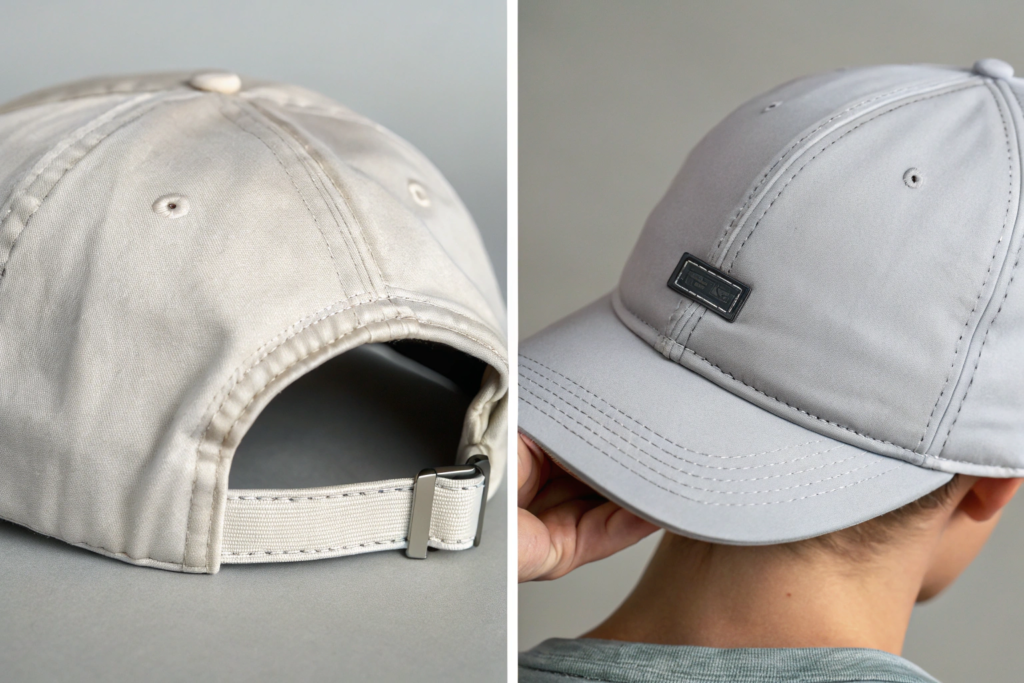
The back profile of a fitted cap is a continuous, uninterrupted fabric surface from the front crown panel, around the head, and back to the front. The closure is a sewn seam, typically reinforced with a fabric welt on the interior. The exterior back surface is clean, with no plastic hardware, no gap, and no adjustment strap. A back branding embroidery, a woven label, or a printed logo on the rear center seam is fully visible and fully integrated into the cap design. The fitted cap silhouette is the preferred look for premium, fashion-forward, and pro-shop caps because the clean back profile looks intentional and expensive.
The back profile of an adjustable cap has a gap. The plastic snap closure, the fabric strap, or the metal buckle is the visual focal point of the rear view. The snap strips or strap extend from the crown panels, and the open gap between them reveals the back of the wearer’s head through the gap. This is the classic trucker cap aesthetic, and it is a deliberate look that many consumers prefer for casual, sporty, and vintage-style caps. The plastic snap strip itself is a branding opportunity. It can be printed with a brand name, a logo, or a slogan. The snapback has become its own visual icon, and many streetwear and sports brands choose it precisely for its recognizable rear aesthetic.
A hybrid option is the strapback, which uses a fabric or leather strap with a metal or leather buckle. The strapback closes the visual gap partially, as the strap spans the opening, and presents a more refined adjustable rear view than a plastic snap. The strapback has gained popularity in lifestyle and premium casual caps because it combines adjustability with a more elevated hardware aesthetic.
Which Closure Type Delivers a Higher Perceived Value for Retail?
In the hierarchy of perceived value, fitted caps occupy the top tier, followed by strapbacks with premium hardware, snapbacks, and Velcro closures at the value tier. This perception is driven by the association of fitted caps with professional sports, premium pro shop retail, and a more tailored, considered purchase experience. A customer who buys a fitted cap has engaged with a size chart, tried on a size or two, and made a specific choice. The purchase feels more deliberate and personal.
Snapbacks occupy a strong position in the mid-tier. The association with vintage baseball, hip-hop culture, and streetwear gives the snapback a cultural authenticity that supports a solid retail price point. The printed snap strip can elevate the perceived value through branded detailing. Strapbacks with leather straps and metal or leather buckle hardware elevate the adjustable category into the premium tier. The hardware communicates quality, and the natural material of the leather strap adds a tactile luxury element that a plastic snap cannot match.
Velcro closures, while functionally effective, occupy the entry-level tier for perceived value. The Velcro is associated with promotional caps, budget caps, and caps where price is the primary purchase driver. Velcro also has a functional limitation. The hook side of the Velcro collects lint, hair, and debris over time, and the closure can become noisy or less secure after extended use. For brands positioning at mid-tier or above, I recommend snapback or strapback over Velcro for adjustable caps, unless the budget tier is a deliberate part of your assortment strategy.
How Does Combining Closure Types Affect Logistics and Packaging?
Combining adjustable and fitted hats in a single order is production-efficient, but it adds a layer of complexity to the logistics and packaging that must be managed. The correct SKU labeling, the accurate carton packing record, and the efficient use of shipping carton space are all considerations that a factory with multi-style shipping experience handles as standard procedure.

How Are Multi-SKU Orders Labeled and Tracked for Distribution?
Every hat in the order, regardless of closure type or size, receives a unique SKU label. A fitted cap in size Medium with a navy crown is a different SKU from the same fitted cap in size Large. An adjustable snapback in navy is a third SKU. The SKU is printed on the hangtag, on the inner care label, and on the individual polybag label. The SKU barcode allows the retailer or the fulfillment center to scan and track each unit individually.
The packing list breaks down the shipment by SKU, with carton-level detail. The packing list shows which cartons contain which SKUs and in what quantities. This carton-level detail is essential for a retailer receiving a mixed pallet. The distribution center can scan a carton label, immediately know the contents, and route the carton to the correct storage location or directly to a store without opening every carton and sorting through a mixed pile of hats.
The master carton marking includes the SKU codes inside, the quantity, and the carton weight. For multi-SKU orders, we typically pack cartons by SKU purity whenever possible because it simplifies distribution. One carton contains only fitted Medium hats. Another carton contains only adjustable snapbacks. This purity reduces handling errors at the receiving end. When order quantities per SKU are too small to fill a full carton, we pack mixed cartons with clear exterior labeling and a detailed packing slip inside. Our logistics team works with you to determine the optimal carton configuration based on your distribution requirements, whether the goods are going to a single warehouse, multiple retail locations, or a third-party fulfillment center. The accurate labeling and tracking of multi-SKU orders depends on rigorous inventory control practices deployed from the packing bench to the shipping dock.
Can Both Hat Types Be Packed Together in the Same Master Carton?
Yes, both adjustable and fitted hats can be packed in the same master shipping carton, and doing so is common when individual SKU quantities do not fill a full carton. The hats are packed in the carton with the same protection principles that apply to single-style orders. Each hat is individually polybagged. The hats are stacked in rows within the carton, alternating crown direction to maximize space utilization while avoiding compression of the crown shape. Void fill is added as needed to prevent shifting.
There is a specific consideration when packing adjustable and fitted caps together. Adjustable caps with a plastic snapback closure have a rigid plastic component on the back of the hat. If the snapback of one hat is packed in contact with the fabric crown of an adjacent fitted hat, vibration during transit can cause the snap plastic to abrade the fabric surface. To prevent this, we arrange the hats in the carton so that the rigid backs of adjustable caps face outward toward the carton walls, and the soft fabric crowns of fitted caps are oriented inward away from the snapbacks. A separation layer of tissue paper or a thin foam sheet between rows of hats provides additional abrasion protection. This packing detail is part of our standard operating procedure for multi-style hat orders and is specified in the packing work instruction for the warehouse team.
Conclusion
Producing both adjustable and fitted hats in a single order is not a special request requiring a separate production run. It is a standard capability at AceAccessory that leverages the high commonality of hat components, the crown, visor, and sweatband are shared, with production diverging only at the back closure assembly. The combined order meets the total quantity minimum, not each closure type individually, which gives you the flexibility to allocate units between fitted and adjustable styles based on your channel strategy and customer preference.
Fitted hats provide a premium, tailored silhouette with a clean back profile that supports rear branding and commands the highest perceived value. They require a size run ratio based on your customer demographic. Adjustable hats in snapback, strapback, or buckle closure provide One Size Fits Most flexibility, a recognizable rear aesthetic that is itself a branding element, and a price point and convenience that suit volume retail and promotional channels. A single order that combines both styles allows you to serve the pro shop customer and the tournament tent customer from one production batch, one logistics shipment, and one factory relationship.
If you are planning a hat program that includes both fitted and adjustable styles and you want to discuss your size run ratios, closure types, and order configuration, contact our Business Director Elaine at elaine@fumaoclothing.com. Tell her about your target channels, your desired price tiers, and your initial volume estimates. She can provide a combined quotation, advise on a recommended split between fitted and adjustable based on your target customer, and coordinate samples in both closure types from the same crown fabric so you can evaluate the collection as your customer will see it, as one cohesive assortment with options for every head and every preference.