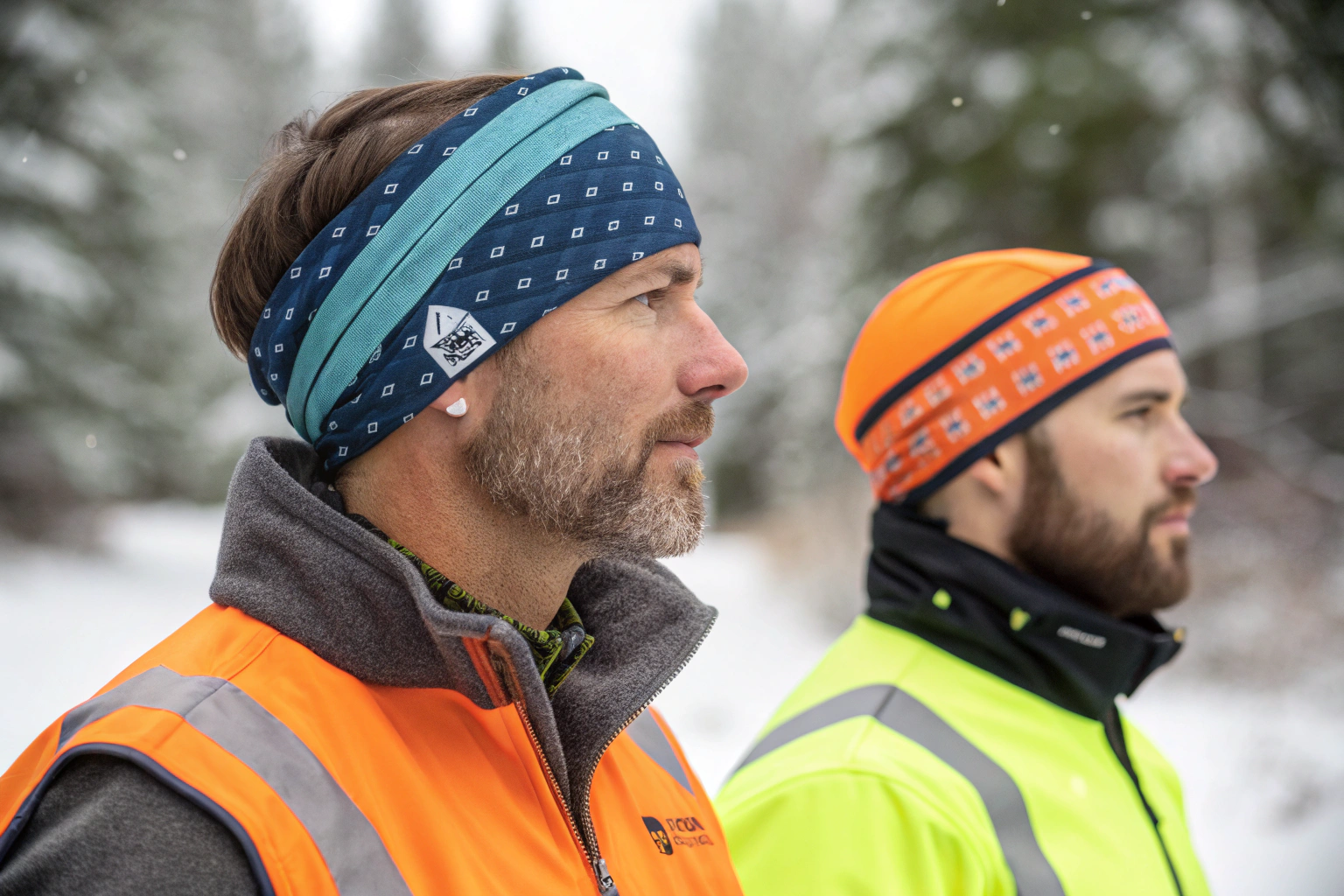
You pull a standard fleece headband over your ears on a freezing January morning. Twenty minutes into shoveling snow or directing traffic on a windy construction site, your ears feel like ice blocks. The headband soaked up sweat, the wind cut straight through the thin fabric, and now it sits limp and useless around your neck. The safety vest keeps your torso visible, but your head is freezing, and your focus is slipping. This is not a fashion complaint. It is a performance failure for someone who works eight hours outdoors in a Scandinavian winter or a Colorado blizzard.
The 2026 winter headband trends for outdoor workers center on three technical upgrades: windproof bonded softshell outer layers, thermal-regulating merino wool or carbonized bamboo inner linings, and integrated high-visibility reflective print panels that meet ANSI Class 2 safety standards. These are no longer simple knit bands. They are engineered personal protective equipment that retains body heat even when wet and keeps the wearer visible in low-light conditions.
A construction flagger, a delivery driver, a utility lineman, and a winter fisherman all share the same need: ears protected from frostbite without the bulk of a full hat that interferes with a hard hat or a communication headset. I want to walk you through the materials, the safety certifications, and the fit engineering that separate a genuine outdoor work headband from a flimsy fashion accessory.
Why Is Windproof Softshell Fabric Essential for Outdoor Safety?
Fleece is warm in still air. Fleece is useless in a 30-kilometer-per-hour wind gust on an open highway worksite. The wind slices through the brushed fibers and strips away the warm air layer trapped against the skin. This is called convective heat loss, and it is the primary danger for outdoor workers in cold climates, not just the ambient temperature.
Windproof softshell fabric is essential for outdoor safety because it creates a physical membrane barrier that blocks wind gusts from penetrating to the skin while still allowing internal water vapor from sweat to escape. This stops the wind chill factor from dropping the effective temperature on the ear skin to dangerous levels, preventing frostnip and maintaining worker concentration.
We construct our 2026 outdoor work headbands with a three-layer bonded softshell. The outer face is a tight-woven polyester-spandex blend treated with a PFAS-free durable water repellent. The middle layer is a breathable TPU membrane that blocks 100% of wind but allows moisture vapor transmission. The inner lining is a brushed thermal grid fleece or merino wool.

How is a softshell headband tested for wind blockage exactly?
We use a wind tunnel test adapted from fabric research labs. A sample headband is stretched over a heated cylinder calibrated to 34 degrees Celsius, the surface temperature of human skin. A fan blows air at 40 kilometers per hour across the fabric. A thermal camera measures the temperature drop on the cylinder surface behind the fabric. Our softshell headband must limit the temperature drop to less than 3 degrees Celsius after 10 minutes of sustained wind exposure. A standard fleece headband drops 8 to 10 degrees in the same test, which explains frozen ears on a busy construction site.
Does the softshell membrane compromise breathability?
A rubber raincoat blocks wind perfectly but traps sweat, leaving the worker wet and cold. The TPU membrane we use is microporous. Pores 0.2 microns in size allow sweat vapor molecules to pass outward but block liquid water droplets and wind. The moisture vapor transmission rate must exceed 8,000 grams per square meter per 24 hours for our outdoor headbands to pass the internal comfort test.
What Thermal Lining Materials Work Best Under Hard Hats?
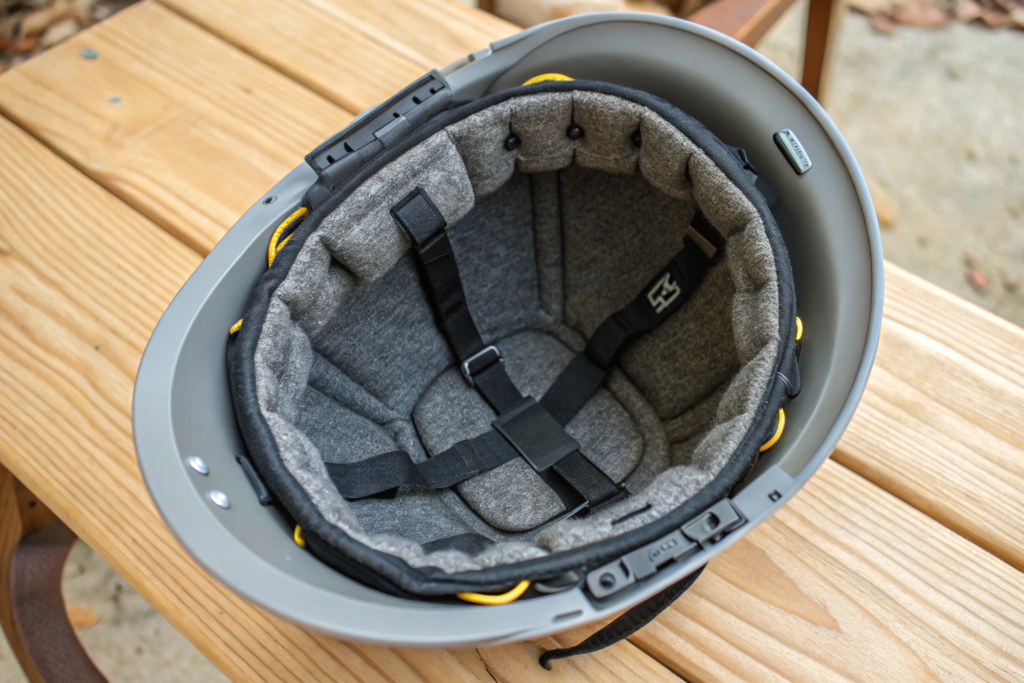
The space under a hard hat suspension system is tight. A thick, puffy headband pushes the hard hat upward, compromising the impact protection gap between the shell and the skull. The lining must be thin but fiercely insulating, and it must not lose its loft when compressed by the suspension straps.
The best thermal lining materials for under a hard hat are 200GSM merino wool terry loop and carbonized bamboo charcoal fleece. Merino wool naturally crimps, trapping warm air in microscopic pockets, and wicks moisture away from the forehead sweatband. Bamboo charcoal fleece provides a soft, antimicrobial layer that kills bacteria and prevents odor buildup during a 12-hour shift.
We source our merino wool from a certified non-mulesing Australian supplier with a fiber diameter of 18.5 microns, fine enough to avoid any scratchy sensation on the sensitive skin behind the ears. The carbonized bamboo option appeals to vegan-certified safety programs and facilities that prohibit animal fibers. Both linings resist the microbial growth that causes the musty, sour smell after a week of heavy winter work.
How does the lining behave when the worker sweats heavily?
A lineman climbing a pole generates intense body heat, even at minus 10 degrees Celsius. The forehead under the hard hat suspension pad sweats first. Merino wool can absorb 35% of its own weight in moisture vapor before it feels wet to the touch. The fiber structure actively pulls moisture away from the skin and releases it to the outer layer, keeping the skin dry. Synthetic polyester fleece traps moisture in liquid form, freezing into an ice layer against the skin if the worker rests outdoors.
Does the lining thickness interfere with hearing protection?
A headband that covers the ears is inherently an acoustic barrier. However, a 2-millimeter thick compressed merino lining under an ear muff creates a better acoustic seal than bare plastic against skin. The slight padding fills the gaps around safety glasses temples, improving overall hearing protection effectiveness. We design the ear coverage zone to sit flat and thin, never bunched, so the ear muff clamps securely without pressure points.
How Are High-Visibility Reflective Strips Integrated Without Cracking?
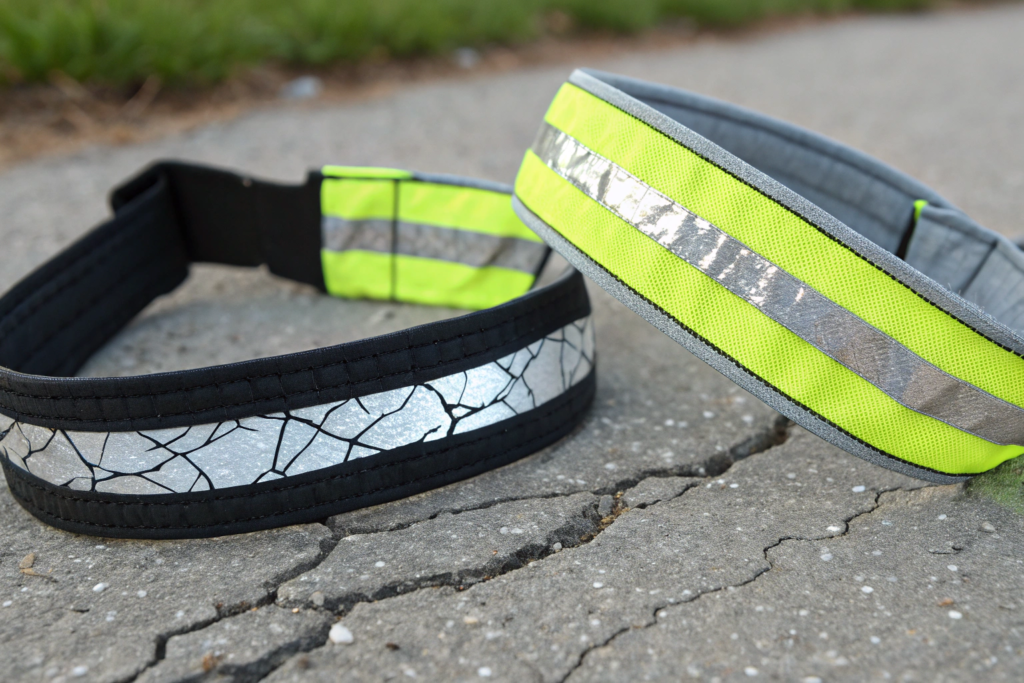
A standard reflective tape sewn onto a stretchy headband is a failure waiting to happen. The tape is rigid. The fabric stretches. Every time the worker pulls the headband on, the tape cracks into a mosaic of disconnected silver flakes. After a month, the reflective surface is useless, and the worker is invisible to a truck backing up at dusk.
We integrate high-visibility reflective strips without cracking by using a heat-transfer reflective film that stretches up to 30% elongation before yield. This film bonds directly into the softshell face fabric through a hot-press process, becoming part of the textile rather than a stiff plastic sticker sewn on top.
The reflective film contains millions of microscopic glass beads embedded in a stretchable polyurethane carrier. When a headlight beam hits the film, the beads act like catadioptric retroreflectors, bouncing light directly back to the source. This technology meets the retroreflectivity requirements of ANSI/ISEA 107 Class 2 for high-visibility accessories.
Where should the reflective strip be placed for maximum visibility?
The 360-degree belt principle applies even to a headband. A worker facing away from a vehicle is invisible. We place a continuous reflective strip across the back of the headband that wraps around to the side panels just above the ear. This creates a 270-degree reflective halo. With a reflective hard hat dome above and the headband strip around the back, the worker’s head position is instantly readable from any angle.
How many wash cycles can the reflective film survive?
An outdoor work garment gets washed frequently because it gets dirty. We test the reflective headband through 25 industrial laundry cycles at 60 degrees Celsius with aggressive detergent. After 25 washes, the retroreflectivity coefficient must remain above 330 candelas per lux per square meter to pass the EN ISO 20471 standard for safety workwear. The film we use typically holds its reflectivity for 40-plus washes.
What Fit Engineering Keeps a Headband in Place During Active Labor?
A loose headband slides up the back of the head during bending, exposing the neck to cold. A tight headband creates a compression headache behind the ears after two hours. The outdoor worker needs a third option: dynamic secure fit that stays put during crouching, climbing, and turning the head sharply. Standard elastic eventually sags.
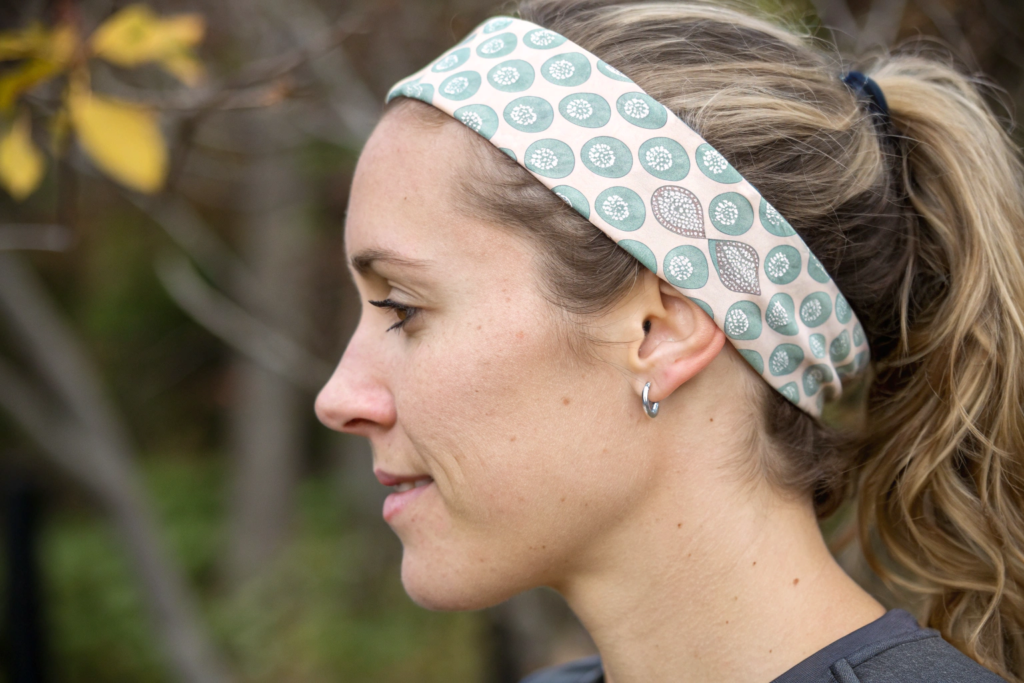
The fit engineering that keeps a headband in place uses a contoured ear-drop shape with a subtle silicone grip bead printed on the inner forehead band, combined with a four-way stretch fabric cut on a curved pattern that follows the skull’s natural occipital curve. The silicone bead grips the skin lightly without adhesive, and the curved cut eliminates the straight-tube slip-up effect.
Our design pattern is not a simple rectangle sewn into a loop. It curves like a banana, narrower at the forehead center and wider over the ears. This anatomical shape naturally anchors on the brow ridge and the occipital bone at the back of the skull, the two hard points that prevent upward migration during physical labor.
How does a silicone grip strip differ from an elastic drawstring?
An elastic drawstring cinches tighter and tighter, concentrating pressure on a narrow cord line. After an hour, the worker has a red groove imprinted across their forehead. The silicone bead strip we use is 15 millimeters wide and applies gentle, distributed friction. It does not pull. It just stops sliding. The silicone is medical-grade and hypoallergenic, tested for skin contact irritation.
Does the headband design account for ponytails and long hair?
Yes, and this is a major blind spot in outdoor work gear for women. We offer a "low-gap" variant of the same thermal headband. The back panel drops lower to cover the nape but leaves a reinforced slit opening for a ponytail or a hair bun to pass through. This slit binds with a soft fold-over elastic that grips the hair bundle without snagging. Female utility workers and delivery drivers consistently request this feature, and our winter accessories line includes it as a standard option, not a special request.
Conclusion
The 2026 winter headband for outdoor workers is not a thicker version of a yoga accessory. It is a piece of PPE that has to block 40-kilometer-per-hour wind, wick sweat without freezing, reflect headlights at 200 meters, and stay anchored on the skull during a 10-hour shift of physical labor. Every material decision from the TPU membrane to the retroreflective glass beads serves a specific safety function.
Our Zhejiang factory builds these headbands using certified merino wool sources, bonded softshell membrane technology, and ANSI-compliant reflective films. We understand the difference between a fashion accessory that looks warm and a work accessory that actually prevents cold stress injury.
If you supply workwear to municipalities, construction firms, or logistics fleets, and you need a winter headband that meets ANSI visibility standards and survives industrial washing, contact our Business Director, Elaine. She will send you a technical data sheet, a reflective film sample, and a pre-production fit sample for your field testing. Write to her at elaine@fumaoclothing.com. Let’s protect the workers who keep our roads clear and our lights on.