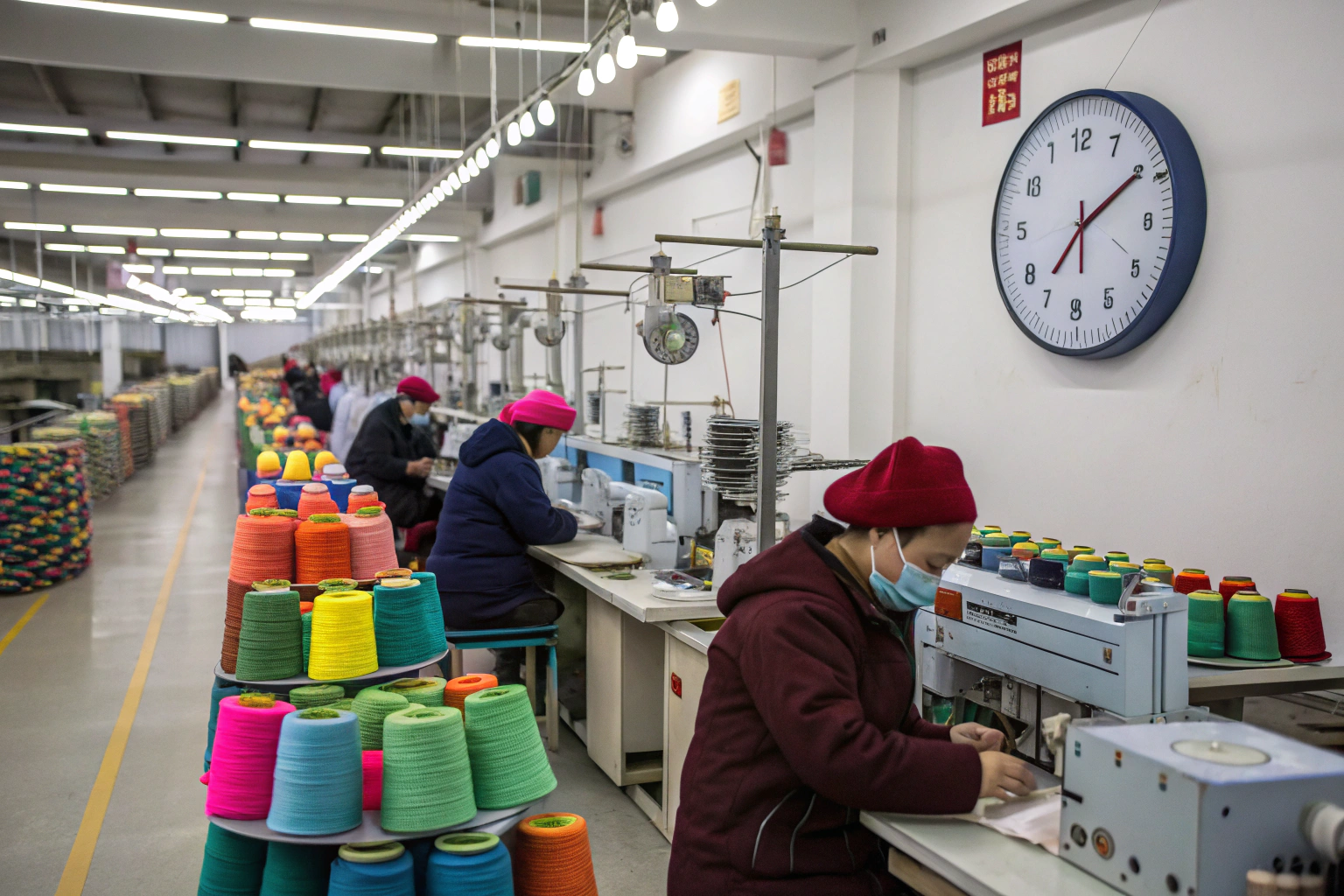
I remember a Thursday afternoon in late October two years ago. The phone rang. It was a client from Chicago who sounded like he had just run a marathon. His company had won a contract to provide 8,000 branded beanies for a corporate event. The event was in four weeks. The original supplier in another country had just informed him they could not meet the deadline. He needed the beanies on a plane in 12 days. He asked if it was even possible. I told him to send the artwork and the specs. By Friday morning, we had a sample knitted. By the following Friday, the entire order was packed and on a truck to Shanghai airport. He received the beanies with three days to spare. He still sends me a holiday card every year.
Handling rush orders for promotional beanies is not about working faster in a panic. It is about having a system designed for speed before the rush order ever arrives. At Shanghai Fumao, we have structured our production flow, our material inventory, and our project management specifically to accommodate the reality of the promotional products industry. Promotional orders have immovable deadlines. The event date will not change because a factory is busy. You need a partner who understands that a beanie delivered on December 16th for a December 20th event is a success, and a beanie delivered on December 21st is a complete failure.
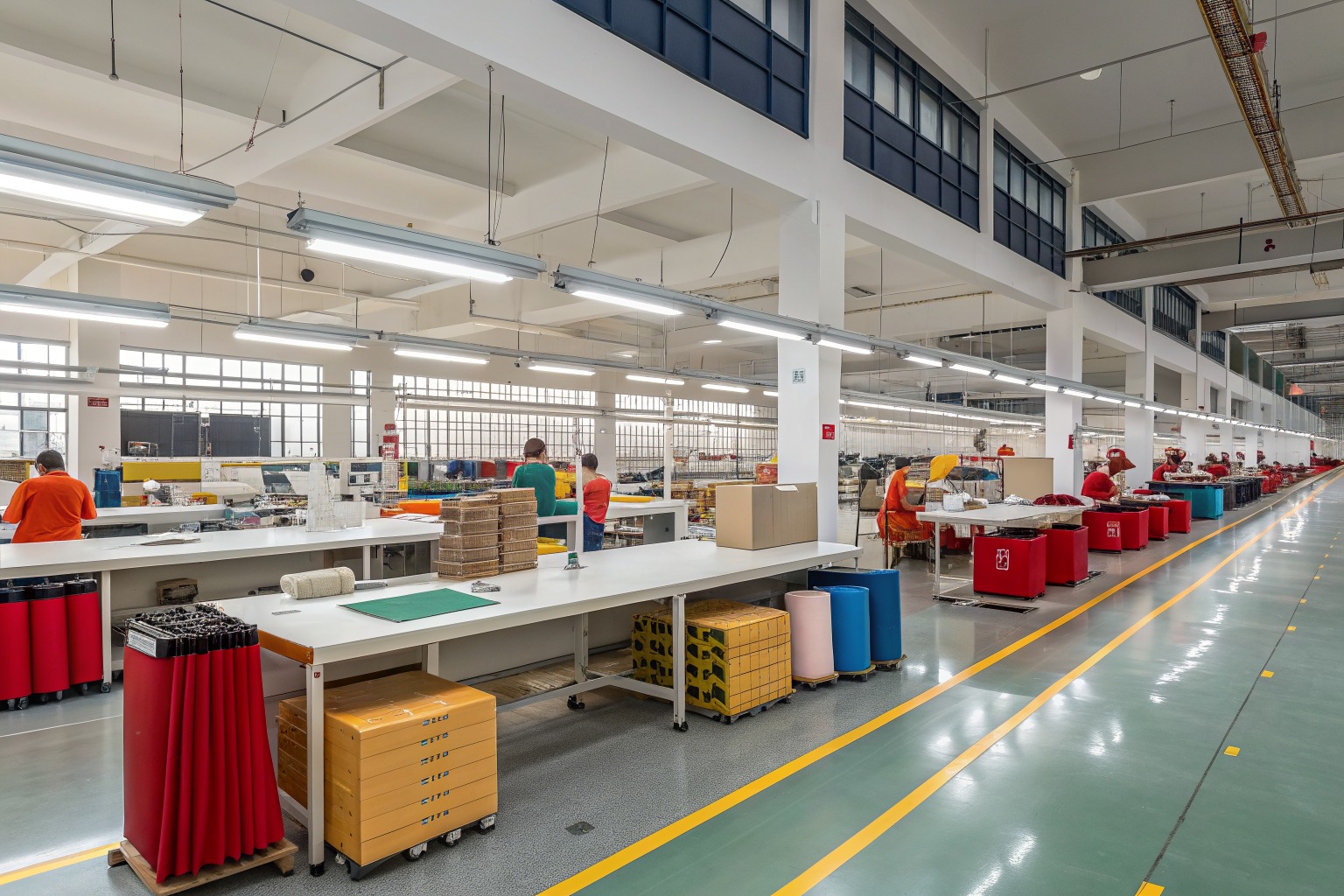
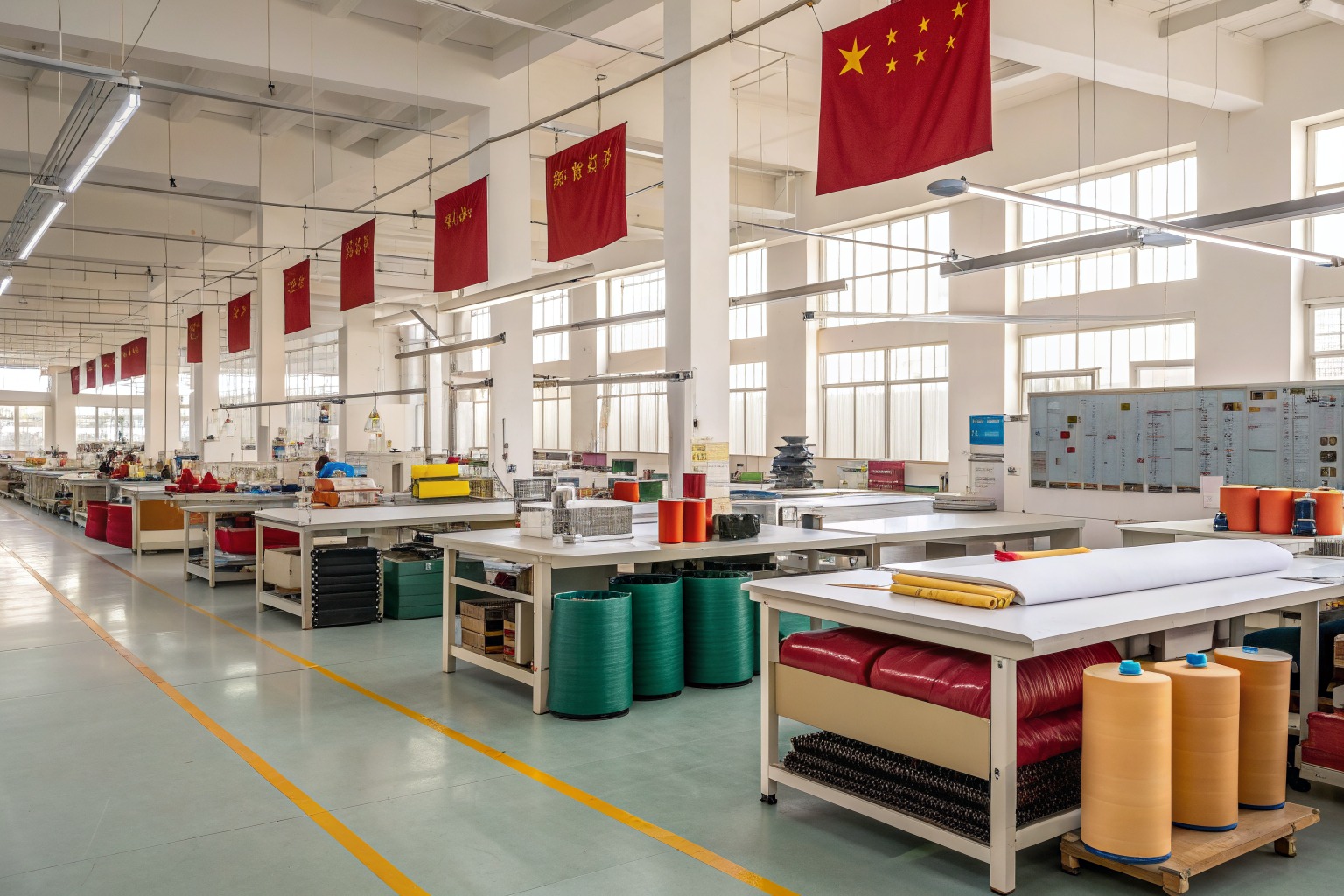
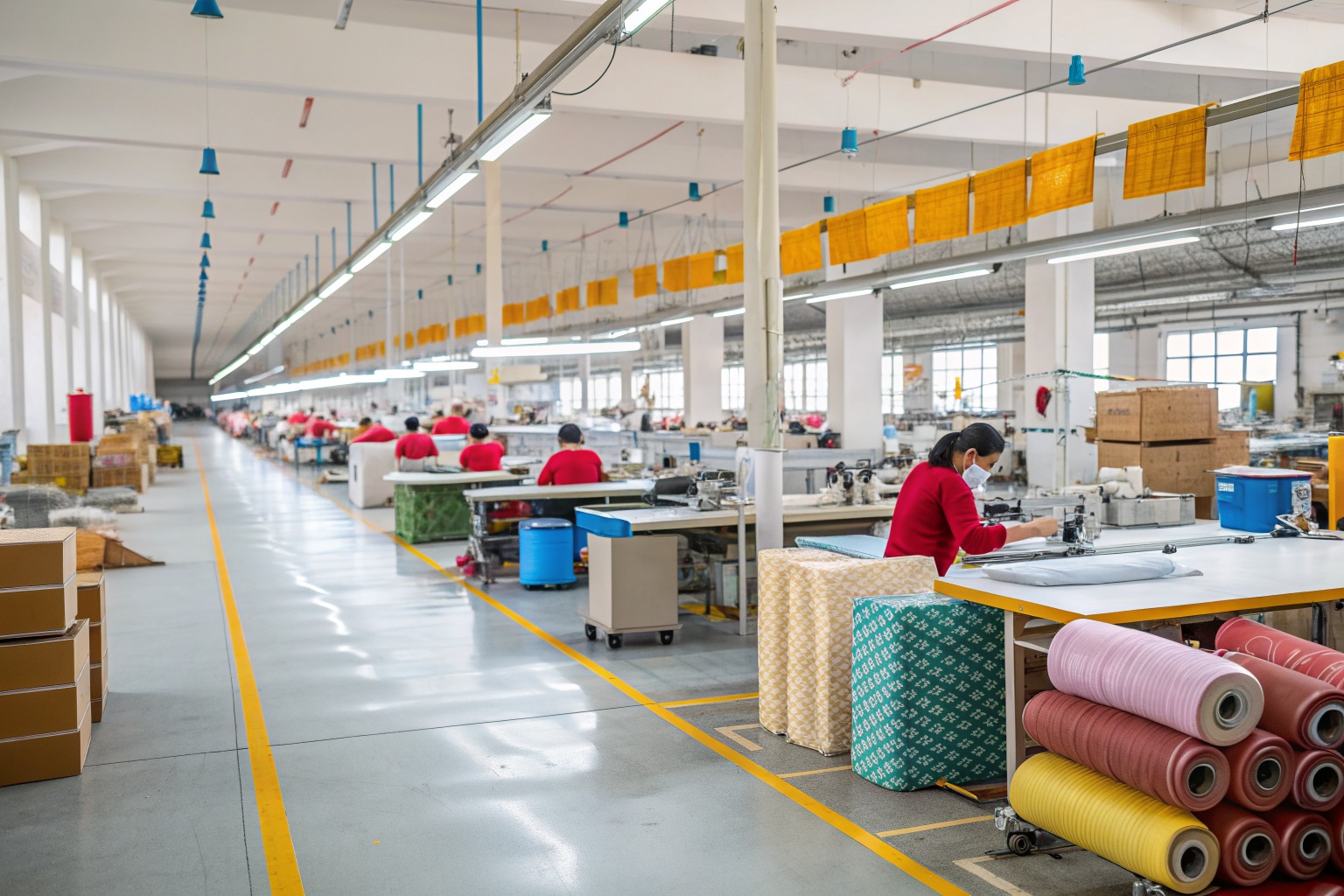
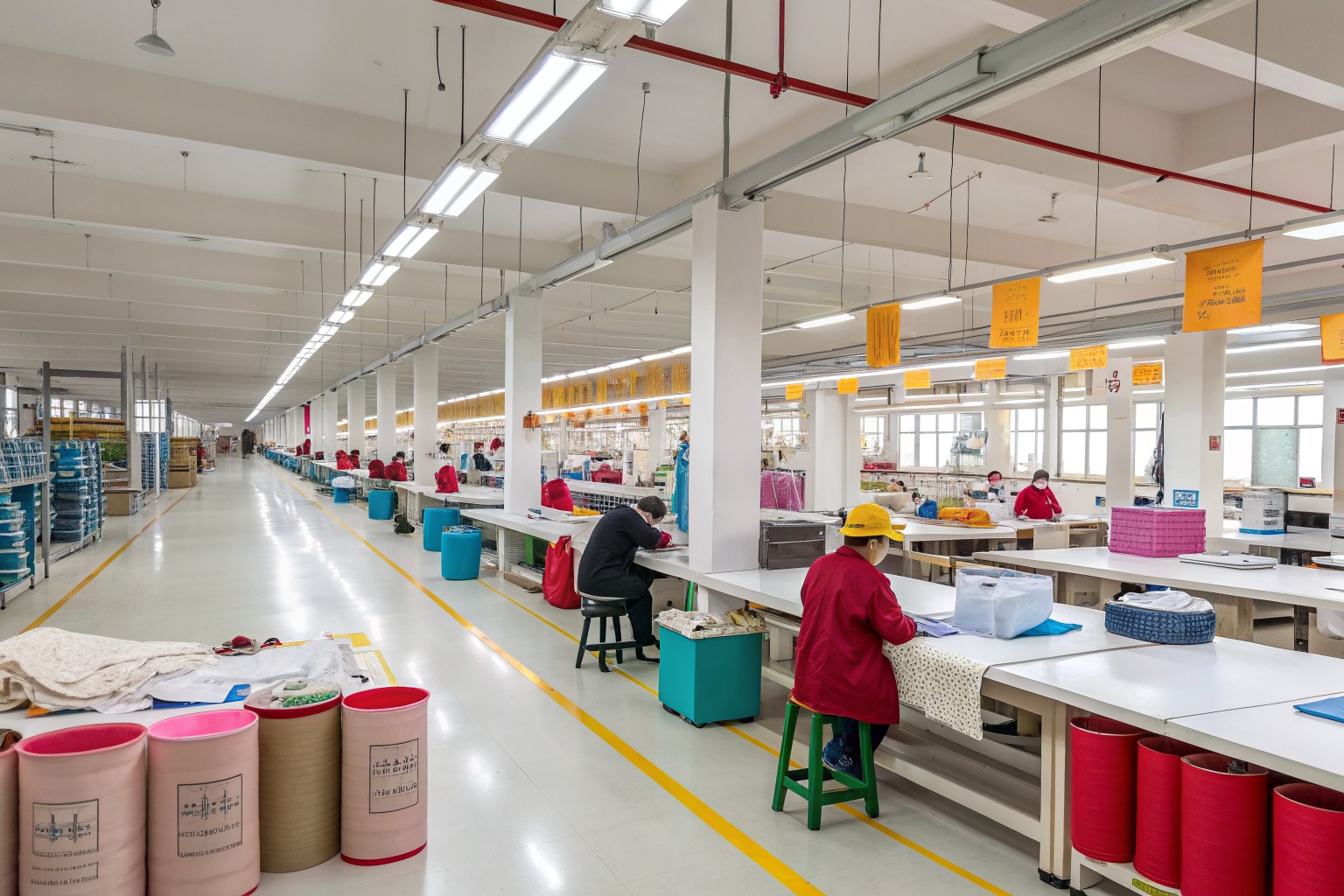
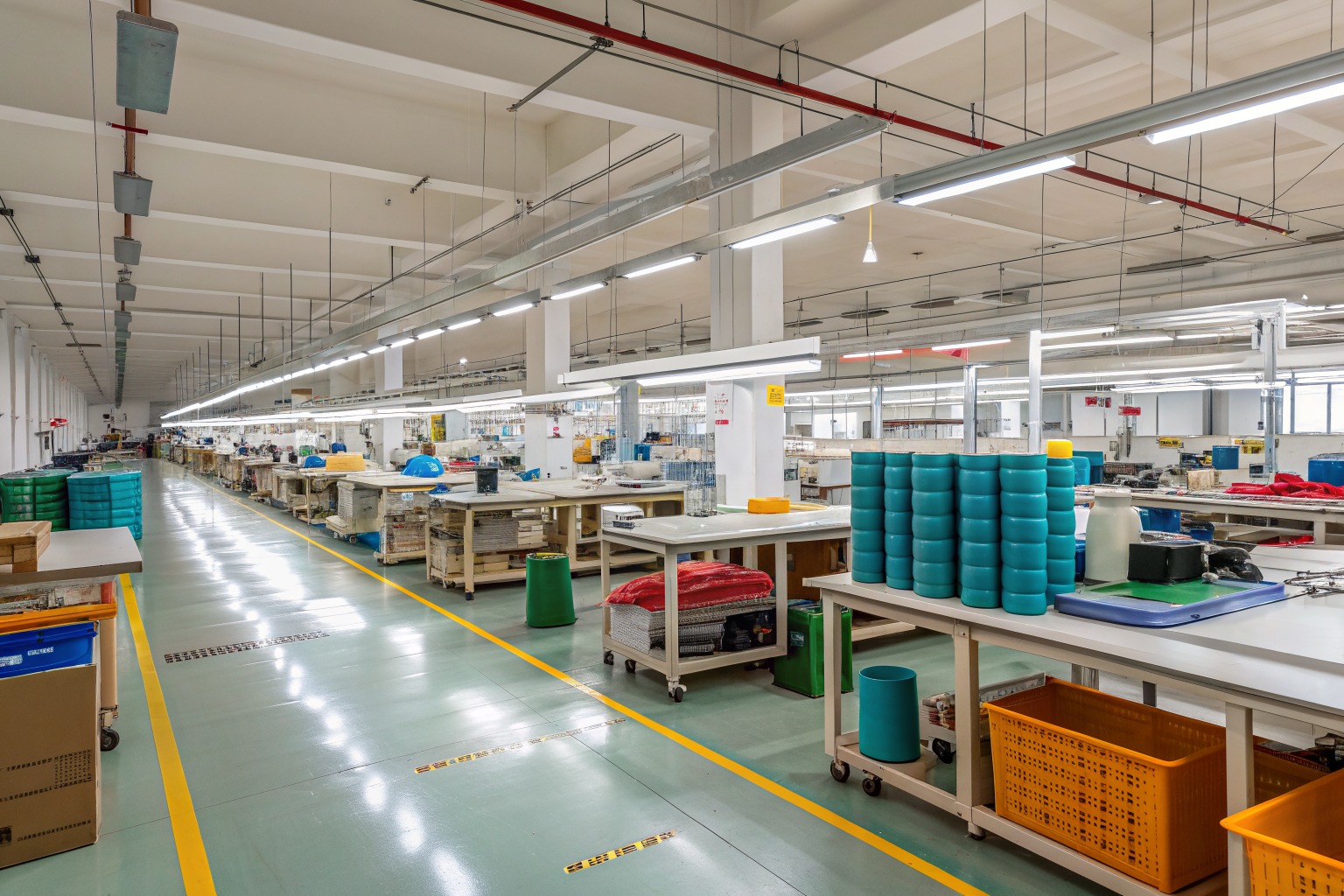
The key to rush production is pre-positioning. We keep large stocks of the most common promotional beanie colors and yarns in our warehouse. We have dedicated knitting capacity that can be pivoted to a hot order without disrupting our regular production schedule. And we have a project management team that treats a rush order like a relay race, not a marathon.
What Is the Realistic Lead Time for a Rush Order of Promotional Beanies?
The word "rush" means different things to different people. For some buyers, a rush is six weeks instead of twelve. For others, a rush is ten days. It is important to set realistic expectations from the start. I will never promise a timeline I cannot keep. A broken promise on a rush order damages your business far more than a longer but honest timeline.
For a standard custom promotional beanie with a simple embroidered or woven logo, our absolute minimum production time from approved sample to ex-factory is 7 to 10 calendar days. This assumes we are using a stock yarn color that we have on the shelf. It assumes the logo is a simple one-color design. It assumes we do not need to make a custom jacquard pattern or a special cuff fold. If you need custom dyed yarn or a complex knitted-in pattern, the rush timeline extends to 14 to 18 days minimum because the yarn dyeing process cannot be compressed.
Can You Produce 5,000 Custom Beanies in Under 14 Days?
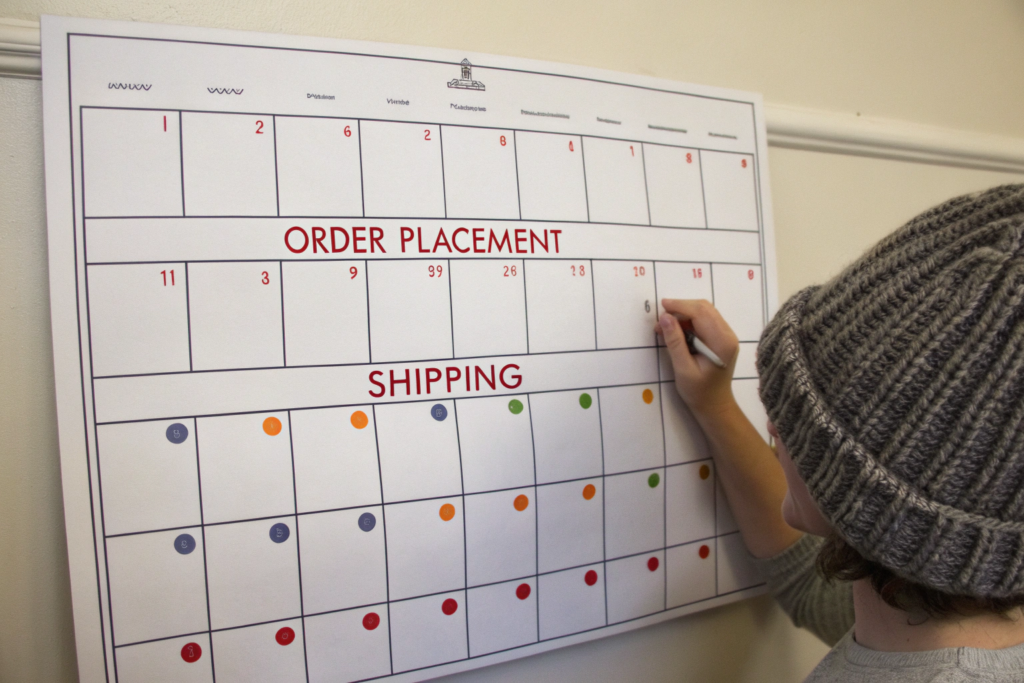
The short answer is yes, with conditions. 5,000 beanies is a medium-sized order for a promotional run. It is not a massive volume that would overwhelm our capacity, but it is enough pieces that we need to plan the knitting schedule carefully.
A single automated knitting machine can produce roughly 40 to 50 basic beanie bodies per day depending on the gauge and the yarn thickness. To produce 5,000 bodies in 7 days of knitting time, we need to dedicate approximately 15 to 18 machines to your order. We have that capacity available in our facility. We can shift machines from stock production to your custom order without missing a beat.
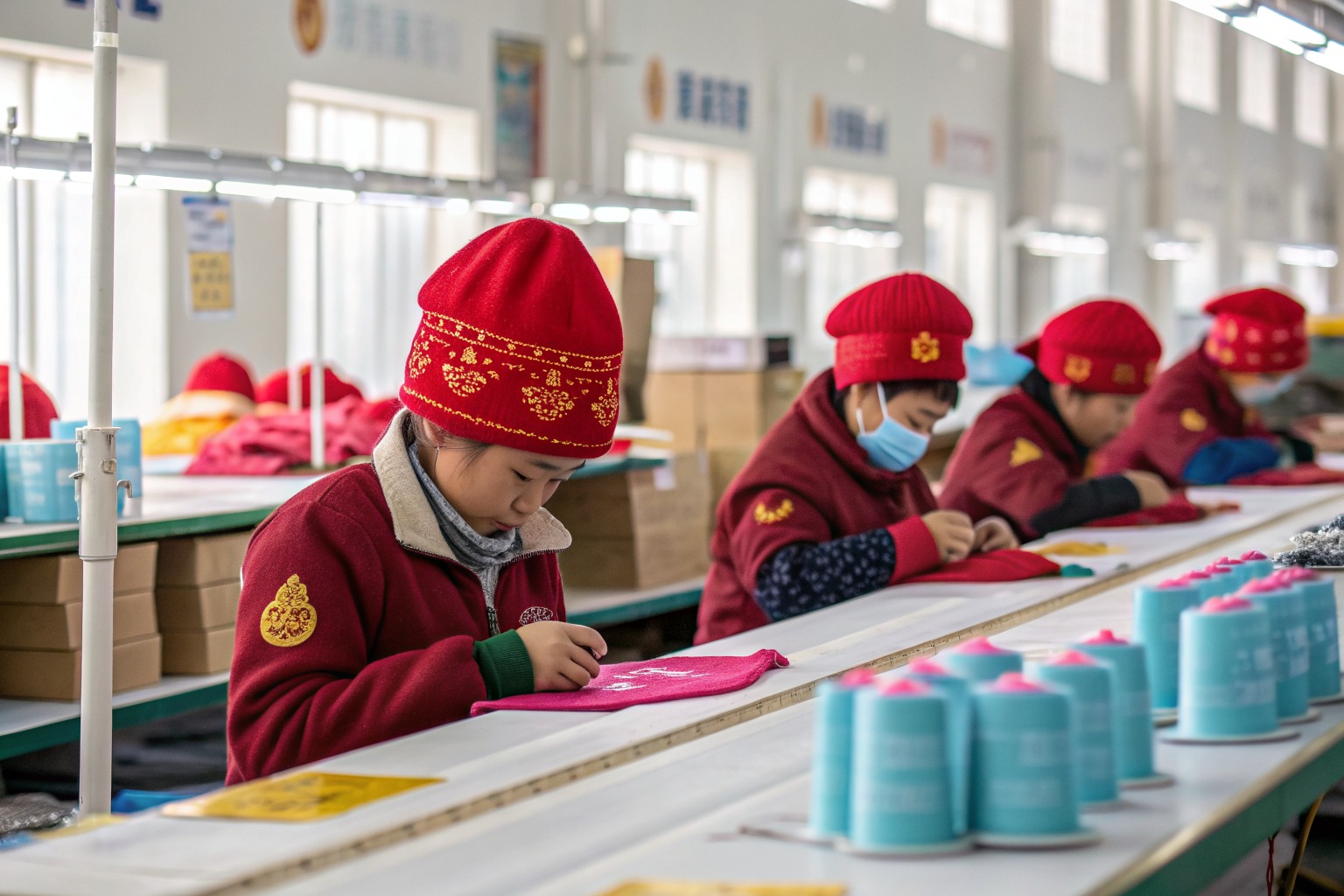
The bottleneck is usually not the knitting. The bottleneck is the finishing and the decoration. Each beanie needs to be linked at the crown, the loose threads need to be trimmed, and the logo needs to be applied. Embroidery takes time. A multi-head embroidery machine can do about 80 to 100 beanies per hour for a simple logo. For 5,000 beanies, that is 50 to 60 hours of embroidery machine time. We run multiple shifts during a rush. The machines do not stop.
The critical path item is the label and packaging. If you need custom hangtags printed, that adds 3 to 4 days that run parallel to production. We order the tags on day one so they arrive by the time the beanies are finished. If you can accept a standard polybag with a suffocation warning, we save those days. Our production team will map out the exact critical path for your specific order so you know where the time is going.
How Does Yarn Availability Impact Rush Production Timelines?
Yarn is the single biggest variable in rush production. If you want a specific shade of "Navy Blue" or "Heather Grey" that we stock in our warehouse, we can start knitting within hours of your order confirmation. We keep tons of acrylic and cotton blend yarns in our most popular promotional colors precisely for this reason.
If you need a custom color that matches a specific Pantone, the timeline changes dramatically. The yarn must be dyed to order. The dye house has a minimum lot size. The dyeing process takes 3 to 5 days. Then the yarn must be dried and wound onto cones for the knitting machines. This adds at least a week to the timeline that cannot be compressed. Heat and chemistry take a fixed amount of time.
We always recommend that promotional buyers choose from our stock yarn colors for rush orders. We can send you a yarn swatch card in advance so you know exactly what colors are available for immediate production. If a custom color is essential to the brand guidelines, we can do it. But we need to be honest that the rush becomes a fast walk instead of a sprint. This is the kind of transparent communication that prevents disappointment later. Our design team can help you select a stock color that is very close to your brand color, often close enough that the difference is not noticeable on a knitted texture.
How Do You Ensure Quality Does Not Suffer During Accelerated Production?
Speed without quality is just a faster way to fail. I have seen factories rush an order and skip inspection steps to hit a deadline. The goods arrive on time, but the logos are crooked, the sizing is inconsistent, and the yarn has pulls. The buyer is worse off than if the order had been late. A late but perfect beanie can still be used at the next event. A bad beanie is just trash that costs money.
Our approach to rush orders is to maintain every single quality checkpoint. We do not eliminate steps. We just compress the time between steps and run them in parallel where possible. The inline inspection still happens. The final AQL audit still happens. The only difference is that we schedule these checks with zero waiting time. The inspector is standing by when the batch finishes.
What Inline Checks Prevent Defects When Knitting at Maximum Speed?
When knitting machines run at high speed for extended periods, two things can go wrong. First, the yarn tension can drift. A slight change in tension creates a beanie that is tighter or looser than the spec. Second, needles can break or develop burrs that snag the yarn.
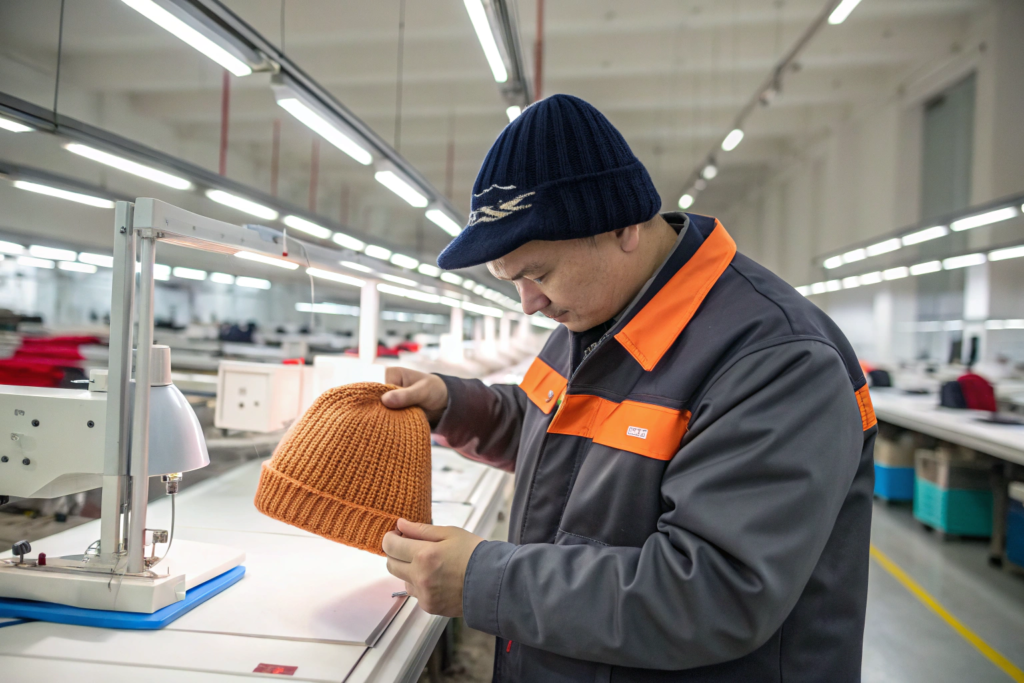
Our inline check process during a rush order includes more frequent measurements. Normally, we might pull a sample for measurement every 4 hours. During a rush, we pull a sample every 90 minutes. We measure the circumference and the length against the tech pack. If the measurement drifts by more than 3%, we stop the machine and adjust the tension.
We also do a visual check of the knit surface. A broken needle creates a vertical line in the knit that looks like a run in a stocking. It is easy to miss if you are not looking for it. Our knitting technicians are trained to spot these defects early. A beanie with a needle line cannot be fixed. It is waste. Catching it early saves yarn and saves time. This is the kind of manufacturing discipline that comes from years of experience. You cannot learn it from a manual. You learn it from making mistakes and fixing them.
How Is Embroidery Placement Verified on a Compressed Schedule?
Embroidery placement on a beanie is more difficult than on a flat item like a cap. The beanie is stretchy. It has a fold-over cuff that changes the visual center. A logo that looks centered on the knitting machine may look off-center when the beanie is worn.
Our process for rush embroidery verification uses a two-step check. First, we use a placement template on the embroidery machine. The template is a clear plastic guide that shows exactly where the logo should sit relative to the crown seam and the cuff fold. The operator uses this for every beanie.
Second, we do a 100% visual check on a head form. This is a plastic dome shaped like a head. As the beanies come off the finishing line, a worker places each one on the head form and checks the logo alignment. This takes about 5 seconds per beanie. For 5,000 beanies, that is about 7 hours of labor. We do not skip this step during a rush. A crooked logo is the most common customer complaint for promotional beanies. It makes the brand look cheap. We protect your brand by spending that extra 7 hours.
We also apply this same rigor to our other custom accessories. Whether it is a baseball cap or a hair band, placement matters.
What Are the Cost Implications of Expedited Beanie Production?
Rush orders cost more. This should not be a surprise. You are asking the factory to reorganize its production schedule, potentially delay other orders, and pay workers overtime. These things have real costs. But the cost premium for a rush order is often much smaller than the cost of missing the event entirely.
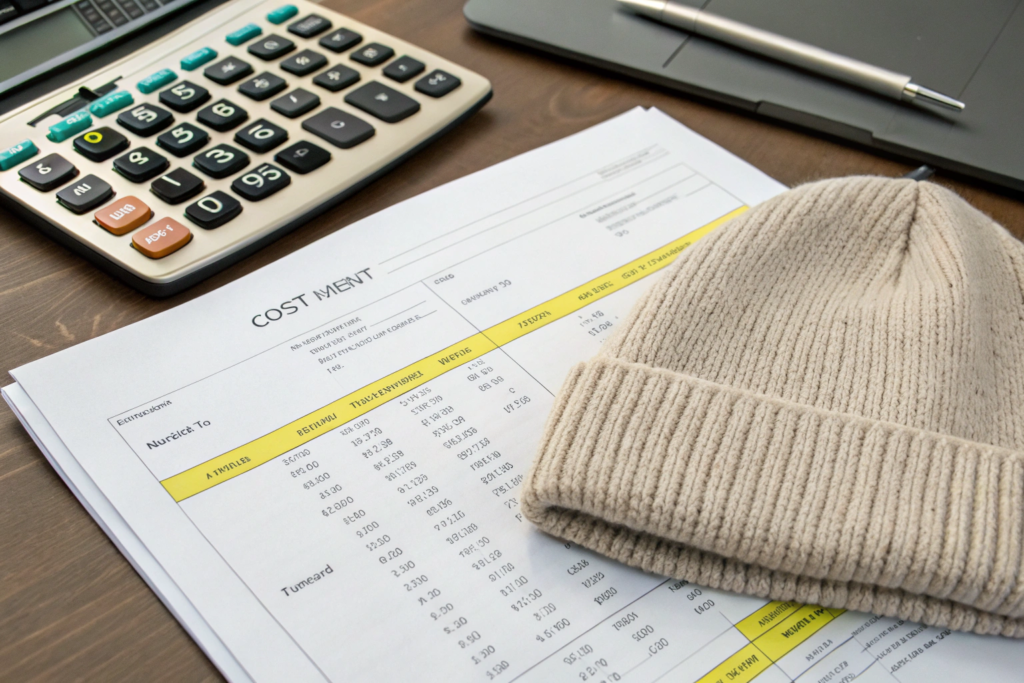
At AceAccessory, we are transparent about the rush premium. It is not a random number we make up. It is based on specific additional costs we incur. We pass those costs through to you with a fair margin. The typical rush premium for a promotional beanie order is 10% to 20% above the standard FOB price. This covers overtime wages, expedited component shipping, and the opportunity cost of pausing stock production.
Why Is There a 15% Surcharge for Orders Under 14-Day Lead Times?
Let me break down exactly where that 15% goes. About half of it covers labor overtime. Our standard workday is 8 hours. During a rush, we run 10 to 12 hour shifts. Chinese labor law requires a premium of 150% to 200% of base wage for overtime hours. This is non-negotiable and we pay it.
Another portion covers expedited logistics for components. If we need a specific color of embroidery thread that we do not stock, we have to order it by express courier instead of standard freight. The shipping cost for a small spool of thread can be $30 instead of $2. That cost is spread across the order.
A small portion covers the schedule disruption cost. When we dedicate 15 knitting machines to your rush order, those machines are not producing stock beanies for other clients. We lose some efficiency because we are changing over yarn colors more frequently. Each color change on a knitting machine takes about 20 minutes of downtime. If your order uses three colors, that is an hour of lost production per machine.
The 15% is fair. It compensates us for the extra effort and cost without making your promotional item unaffordable. For a beanie that normally costs $2.80 FOB, the rush price is $3.22. That $0.42 difference is a small price to pay for peace of mind and on-time delivery. Our pricing team can provide a detailed quote that shows the standard price and the rush price side by side.
Can I Reduce the Rush Surcharge by Choosing Air Freight or Sea Freight?
The rush surcharge is strictly for production speed. It is separate from the freight cost. You cannot reduce the production surcharge by choosing a different shipping method. The factory still has to do the same amount of work to make the beanies fast.
However, the total landed cost equation changes based on freight. For a true rush where the event is in two weeks, air freight is usually the only option. Air freight is expensive. It can cost $4.00 to $6.00 per kilogram. A beanie weighs about 100 grams. That is $0.40 to $0.60 per beanie just for the air freight. This cost is often higher than the production rush surcharge.
If you have a little more time, say 4 to 5 weeks total, we can use expedited sea freight. Some carriers offer a "premium" ocean service that guarantees a specific vessel and faster discharge at the port. This costs more than standard sea freight but much less than air. The choice depends on the event date minus the production time.
The key is to communicate the true "in-hands date" to us. We can work backward and tell you the latest date we can finish production and the required freight method to hit that date. Sometimes, spending a little more on production speed saves you a lot on air freight. It is a logistics optimization problem that we solve for our clients every day.
What Information Do You Need from Me to Start a Rush Beanie Order Immediately?
When a client calls with a rush order, time is the most valuable currency. Every hour spent going back and forth with questions is an hour of production lost. You can dramatically speed up the process by having the right information ready before you even pick up the phone.
I have developed a mental checklist of the minimum viable information needed to start a rush beanie order. If you can provide these six things in your first email or call, we can have a quote and a production slot reserved within hours, not days. If information is missing, we have to pause and ask. That pause costs time you do not have.
What Specs Must Be Confirmed to Avoid Sampling Delays?
The single biggest delay in rush orders is the sampling loop. You approve a sample. It is not quite right. We make a change. We send another sample. You approve again. Each loop eats 3 to 4 days. On a rush order, you cannot afford more than one sample round, and ideally zero.
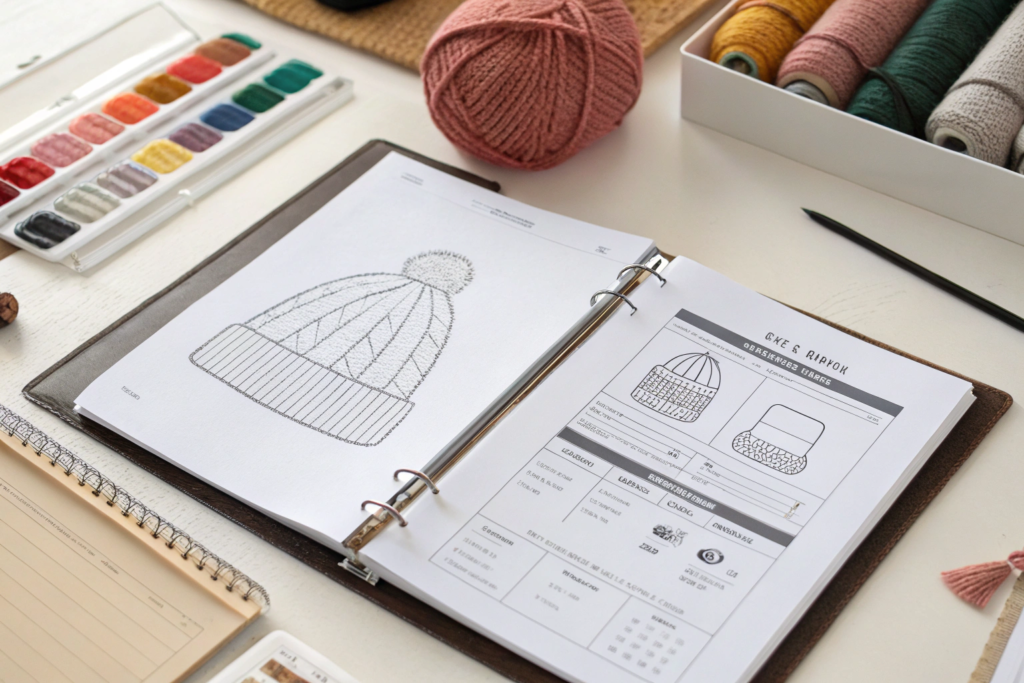
To achieve a "sample-less" approval, you need to confirm these five specs in writing. First, the yarn color using a Pantone reference or our stock color code. Second, the beanie dimensions including crown height and cuff width. Third, the logo size and placement measured from the cuff fold and the crown seam. Fourth, the embroidery thread color. Fifth, the label and packaging requirements.
If you can provide a tech pack with a clear sketch and these measurements, we can often go straight to production with a pre-production photo confirmation. We knit one piece, take a high-resolution photo against a ruler, and email it to you. You reply "approved." That takes 24 hours instead of 4 days for a physical sample shipment. This digital approval process is how we hit those 10-day production windows.
Why Do Artwork Files Need to Be in Vector Format for Fast Embroidery?
This is a technical detail that causes more rush order delays than almost anything else. Embroidery machines do not read JPG or PNG image files. They read stitch files, which are generated from vector artwork.
Vector artwork is created in programs like Adobe Illustrator. It uses mathematical lines and curves instead of pixels. It can be scaled to any size without losing quality. When you send a vector file like .AI or .EPS, our digitizer can convert it to a stitch file in about 2 hours. The logo will be clean and sharp.
If you send a JPG or a low-resolution PNG, the digitizer has to manually trace the logo. This takes 4 to 6 hours. The result is less precise. Curves may look jagged. Text may be blurry. We often have to send a stitch simulation back and ask for clarification. This adds a day to the process.
If you do not have vector artwork, tell us immediately. We can often redraw a simple logo in vector format for a small fee. It takes about 24 hours. But we need to know this on day one, not day three. Our design support team is ready to help with artwork issues, but we can only help if we know the problem exists.
Conclusion
Rush orders for promotional beanies are a test of a factory’s systems, not just its speed. At Shanghai Fumao, we have built those systems over years of experience with promotional product deadlines. We know that the event date is a hard stop. We know that a late beanie is a worthless beanie. We plan our material inventory, our machine capacity, and our quality checks around the possibility that a client will call on a Thursday afternoon with an urgent need.
The keys to a successful rush order are transparent communication about realistic timelines, a willingness to use stock colors and simple designs to save time, and a client who can provide complete and accurate specifications on the first contact. When those three things align, we can perform minor miracles on the production floor.
If you have a promotional beanie project with a tight deadline, do not assume it is impossible. Reach out to us with the details. We will give you an honest assessment of what can be done and what it will cost. We would rather tell you "no" up front than say "yes" and fail to deliver.
To discuss a rush order for custom beanies or any other promotional accessories, please contact our Business Director, Elaine. She specializes in managing expedited projects and can give you a realistic timeline within hours of receiving your specs. You can reach her directly at elaine@fumaoclothing.com. When the deadline is tight, experience matters. Let us put ours to work for you.