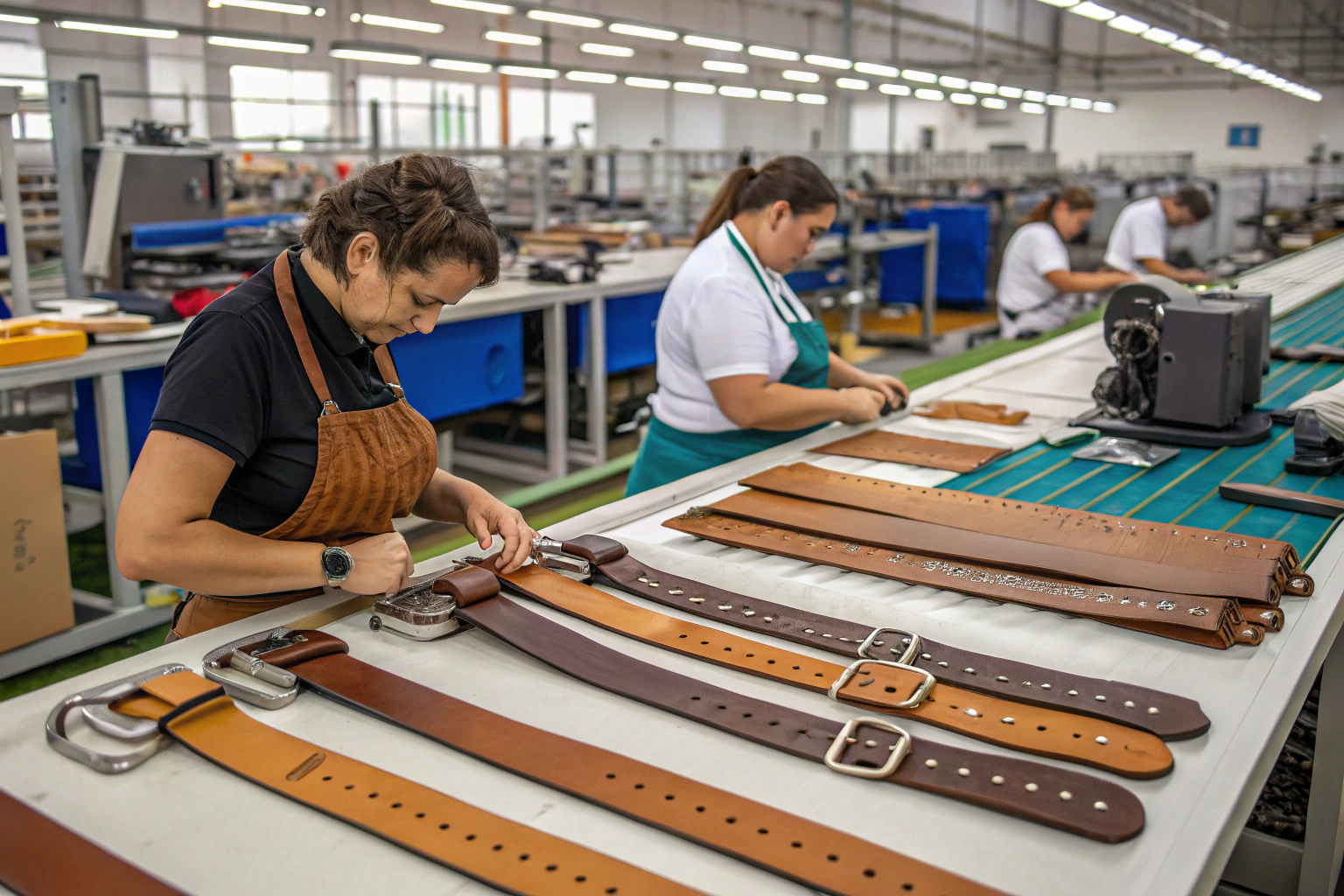
You are planning your belt assortment for the upcoming season. You need 1,000 classic 35mm leather belts for your men's line and 1,500 trendy 20mm fabric and leather belts for your women's collection. You find a factory that specializes in men's heavy leather belts. They do not want to touch the narrower, more decorative women's styles. You find another factory that does delicate women's belts. They are not equipped for the thicker leather and heavier hardware of men's belts. You are facing the prospect of managing two separate suppliers, two sets of samples, two quality standards, and two shipping schedules. You wonder if there is a single factory that can handle the diversity of your collection without compromising on quality in either category.
Yes, a well-equipped Chinese factory like Shanghai Fumao can efficiently produce both men's and women's belts on the same production line. This is achieved through a flexible manufacturing cell structure where workstations and tooling can be quickly adjusted for different leather thicknesses and widths, and where a cross-trained workforce is skilled in both heavy-duty leather construction and finer, decorative assembly techniques.
I manage AceAccessory in Zhejiang, and our belt division produces the full spectrum, from rugged 40mm work belts to delicate 10mm fashion straps. We do not see a fundamental conflict between men's and women's belt production. We see different product specifications that our flexible manufacturing system is designed to accommodate. Let me explain how we make this work seamlessly and why it benefits our clients.
How Does a Flexible Manufacturing Cell Handle Different Belt Specifications?
The key to producing diverse belt styles on one line is not having separate, dedicated lines for each category. It is having flexible manufacturing cells that can be quickly reconfigured. The core steps of belt making, cutting, edge finishing, buckle attachment, and stitching, are the same. The tools and settings are what change. A men's belt typically uses a thicker leather, perhaps 3.5mm to 4.0mm, and a wider strap, 35mm to 40mm. It requires a heavy-duty sewing machine with a powerful motor and a walking foot to feed the thick leather evenly. It uses larger, heavier buckles and snaps. A women's belt often uses a thinner leather or fabric, 2.0mm to 3.0mm, and a narrower strap, 15mm to 25mm. It may require a lighter-duty sewing machine, more delicate edge finishing, and smaller, more decorative hardware.
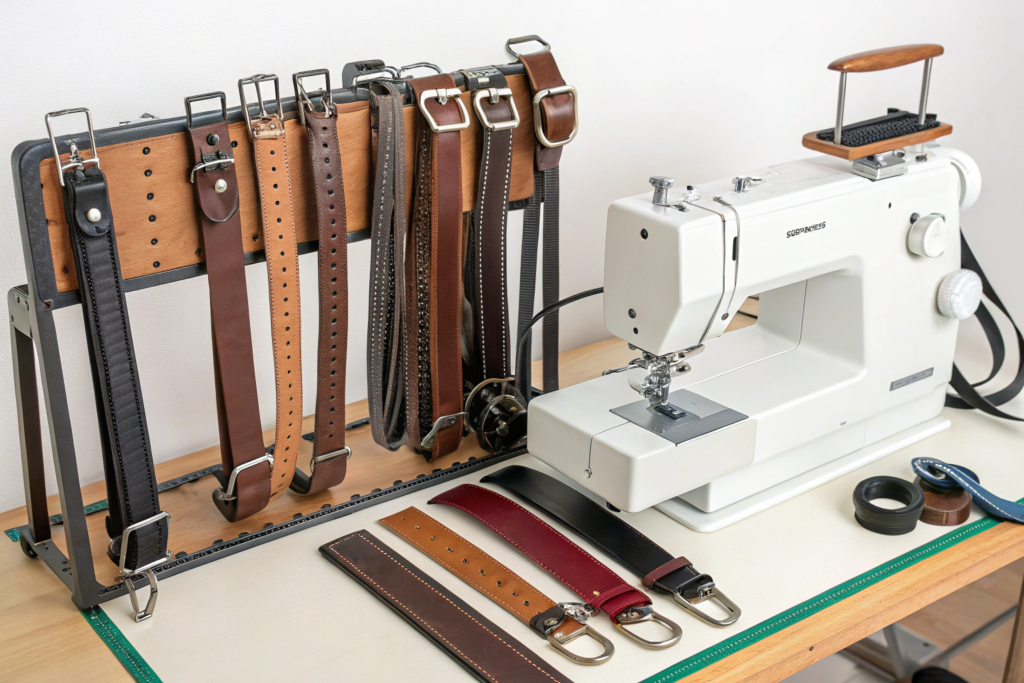
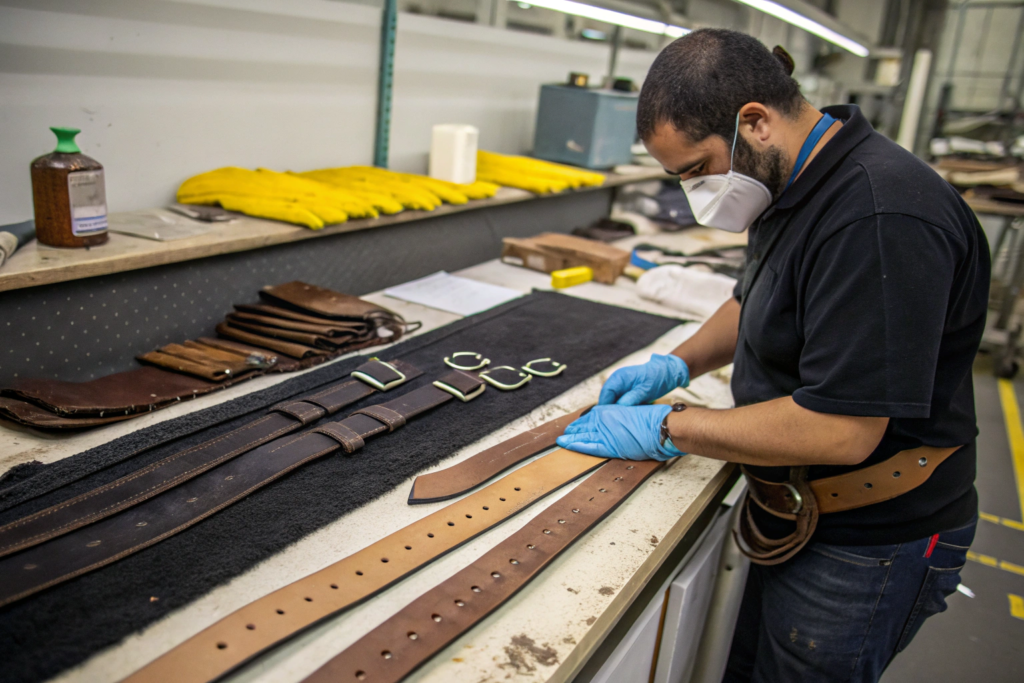
At AceAccessory, our workstations are designed for quick changeovers. The sewing machine settings, thread tension, and needle size, are adjusted in minutes. The edge finishing station has different grits of sandpaper and different edge paints ready. The hardware inventory is organized by size and finish. This flexibility allows us to run a batch of men's belts in the morning and a batch of women's belts in the afternoon on the same line with minimal downtime. This flexible manufacturing cell design for mixed belt production widths and thicknesses is the operational backbone of our efficiency.
How Does the Workforce Adapt to Different Construction Techniques?
The skills required for a heavy leather work belt and a delicate fabric fashion belt are different. The worker attaching a large brass buckle to a thick leather strap needs to manage the weight and use significant force. The worker sewing a fine, decorative stitch on a narrow suede belt needs a lighter touch and a keen eye for precision. A factory that only does one type of belt will have a workforce specialized in that single skill set. A flexible factory cross-trains its workforce.
At Shanghai Fumao, our experienced belt makers are trained on the full range of our product categories. They understand the different material behaviors and the different quality standards for each style. We assign the most appropriate worker to each task based on the specific requirements of the order. For a complex men's belt with a hand-stitched detail, we assign our most skilled leather artisan. For a high-volume women's fabric belt with a simple D-ring closure, we can use a team trained for efficient, repetitive assembly. This cross training and skill versatility in a mixed men's and women's belt factory allows us to match the worker to the task.
What Is the Difference in Edge Finishing for Men's Versus Women's Belts?
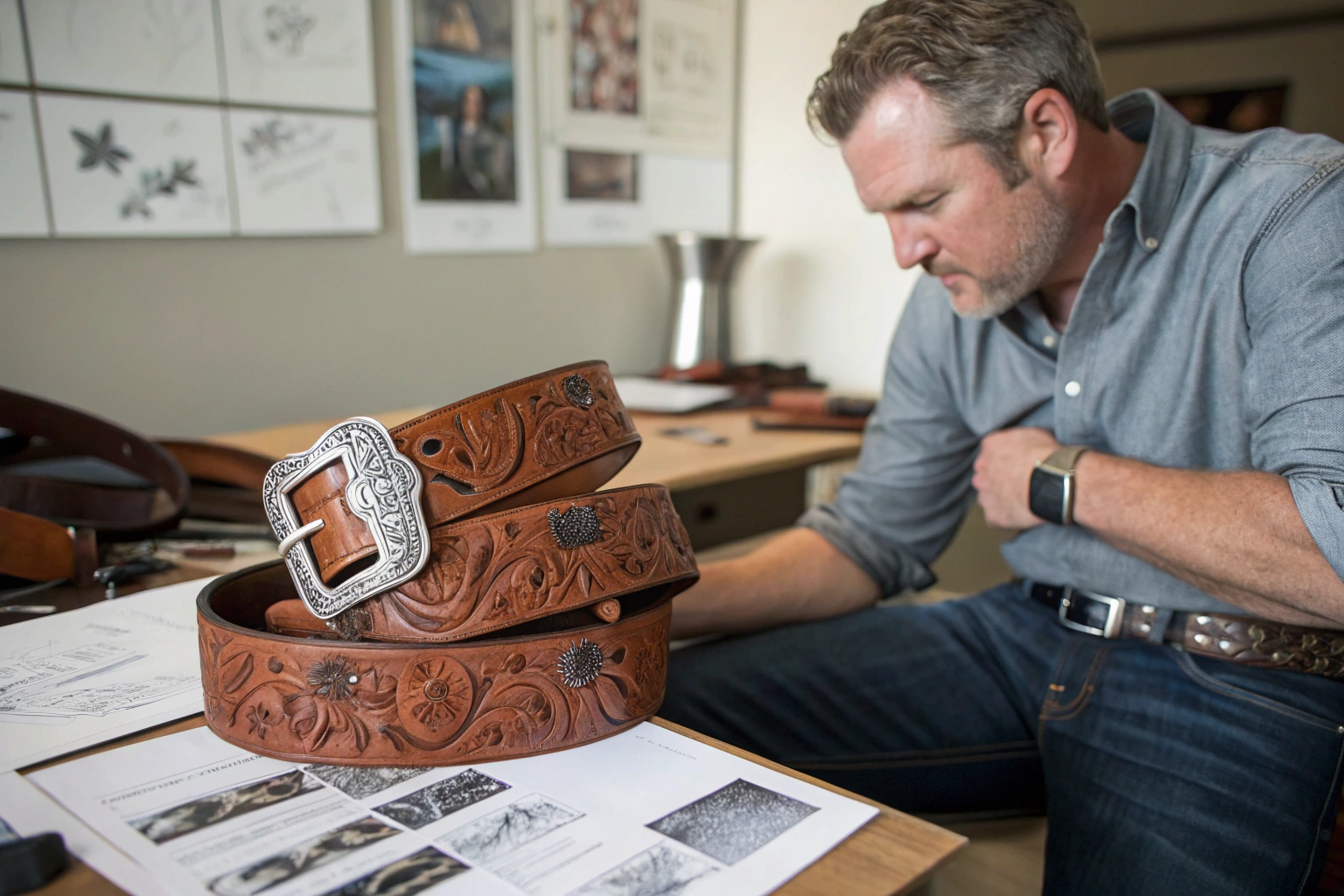
Edge finishing is one of the most noticeable differences between a premium men's belt and a standard women's fashion belt, and it requires different techniques and time. A classic men's leather belt typically has a burnished edge. The cut edge is sanded smooth, then rubbed vigorously with a natural gum and a wooden tool. The friction creates a hard, smooth, sealed edge that blends with the leather color. This is a labor-intensive, skilled process. Many women's belts, particularly at lower price points, use a painted edge. A layer of colored edge paint is applied to seal the edge. This is faster and less expensive. A premium women's belt might also use burnishing. Our finishing department is equipped and trained to perform both edge painting and traditional burnishing. We select the appropriate method based on the client's quality specifications and target price point. This edge finishing techniques comparison for men's and women's belt production is a key cost and quality differentiator.
What Are the Quality Control Differences Between Men's and Women's Belts?
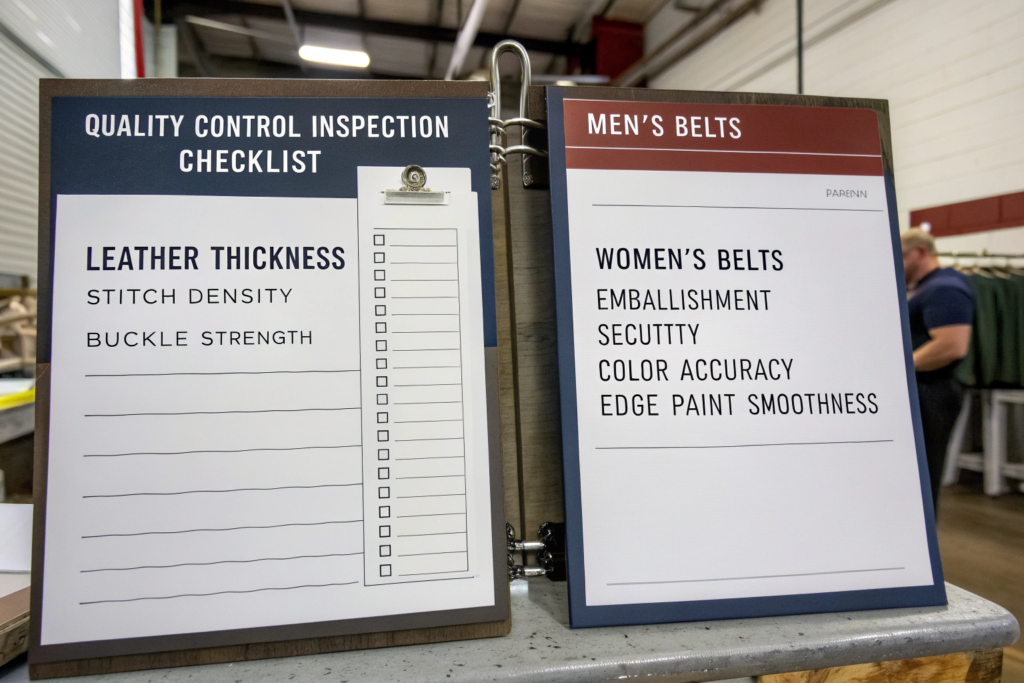
While the fundamental principles of quality control are the same, the specific inspection criteria differ between a rugged men's belt and a delicate women's fashion belt. A single QC checklist applied to both would be ineffective. We use category-specific inspection protocols.
For a men's belt, the QC inspection emphasizes structural integrity. The leather thickness is measured with a caliper. The stitch density and thread strength are checked. The buckle and snap are tested for secure attachment and pull strength. The focus is on durability and longevity. For a women's belt, the inspection adds criteria for decorative elements. The security of any embellishments, such as stones, studs, or unique buckle shapes, is checked. The color accuracy and consistency of the finish are critical. The smoothness of the edge paint and the precision of any decorative stitching are evaluated. Our QC team is trained to apply the correct standard to the correct product category. This differentiated quality control checklists for men's and women's belt categories ensures that each product meets the appropriate standard for its intended use and market positioning.
How Do You Test the Strength of a Heavy Men's Belt Versus a Fashion Belt?
The testing methods reflect the different expectations. A heavy men's belt is expected to withstand significant daily tension. We perform a pull test on the buckle attachment. A calibrated force is applied to the buckle to ensure the stitching or snaps do not fail below a specified threshold, often 50 kilograms or more. A fashion women's belt, particularly a narrow style, is not expected to endure the same forces. The pull test threshold is lower and more focused on the specific hardware, ensuring a D-ring does not bend or a decorative clasp does not break under normal use. The testing is appropriate to the product's intended function. This differentiated strength and durability testing for men's versus women's belt construction ensures we are not over-engineering a fashion item or under-engineering a workhorse.
How Do You Manage Color Consistency Across Leather and Fabric Styles?
Color consistency is a challenge in any production run, but it is amplified when dealing with both leather and fabric belts. Leather dye lots have natural variations. Fabric colors must match Pantone references. When a client orders a women's belt in a specific shade of "cognac" and also a men's belt in a coordinating "cognac" leather, managing the color across different materials is a key task. We use lab dips and physical standards for each material. We do not assume that the "cognac" leather will match the "cognac" fabric. We provide separate approvals for each. If the goal is a coordinated look, we work with the client to select materials that harmonize well together. This color management across leather and textile materials in belt production is a detail that requires careful attention.
How Does Consolidating Men's and Women's Belts Benefit the Brand Owner?
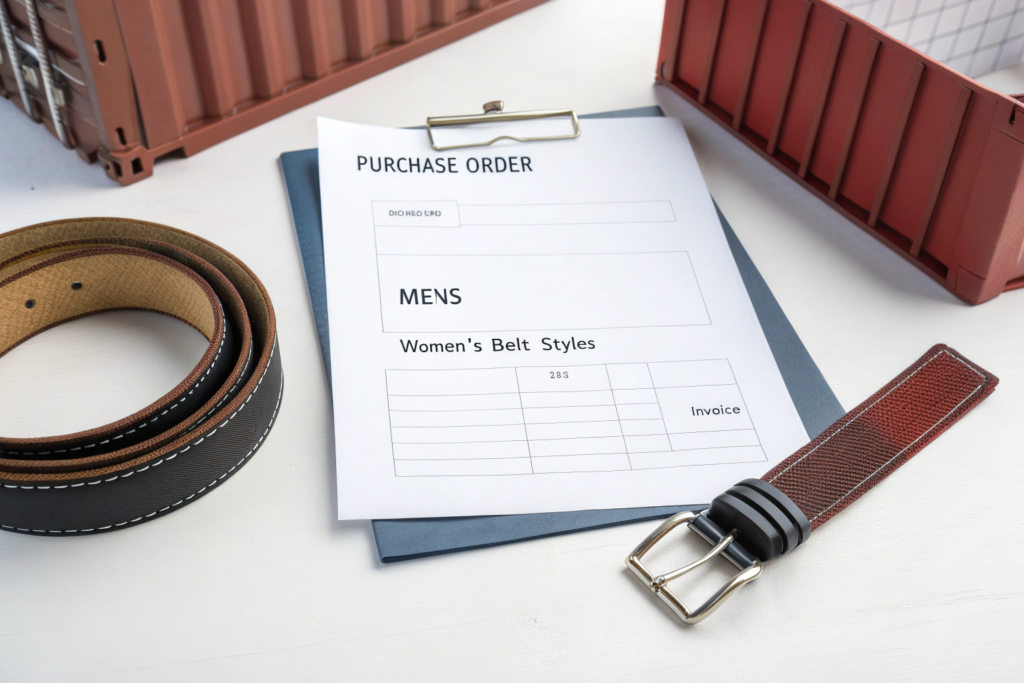
For the brand owner or buyer, the ability to source both men's and women's belts from a single factory like AceAccessory offers significant operational and strategic advantages. The primary benefit is simplicity. You manage one vendor relationship instead of two. You communicate with one project manager. You track one set of samples. You receive one consolidated shipment. This reduces administrative overhead and frees up your time to focus on design and sales. There is also a financial benefit. By consolidating your volume with one factory, you increase your total order value, which can lead to better pricing and more favorable payment terms. You also save on logistics costs by shipping a single, fuller container instead of two smaller LCL shipments. This benefits of vendor consolidation for multi category belt sourcing is a compelling business case for finding a flexible manufacturing partner.
How Does This Consolidation Improve Brand Cohesion?
A unified brand aesthetic is powerful. When a customer sees your men's belt and your women's belt side-by-side, they should feel like they come from the same family. This cohesion is much easier to achieve when both products are made in the same factory. Our design team can ensure that the metal finishes on the buckles are consistent across the men's and women's lines. We can ensure that the edge finishing, whether burnished or painted, has the same quality and appearance. We can coordinate packaging and labeling so the entire belt collection presents a unified brand image. This achieving brand cohesion across men's and women's accessories through single factory sourcing is a strategic advantage.
Can a Single Factory Handle the Different Minimum Order Quantities?
Yes, and this is a key area of flexibility. The MOQ for a custom men's belt buckle mold might be different from the MOQ for a custom women's belt buckle. A heavy leather men's belt might have a higher material minimum than a fabric women's belt. A flexible factory like AceAccessory can manage these different requirements within a single commercial relationship. We can offer a consolidated MOQ. For example, we might say, "Your total belt order across all styles needs to be 2,000 units. Within that, you can split the quantity across your men's and women's styles as needed, subject to per-style minimums of 300 units." This provides the brand with the flexibility to test new women's styles while relying on a stable men's core program. This managing diverse MOQ requirements within a consolidated belt order is a valuable service we provide.
What Are the Limitations of Mixing Production on One Line?
While a flexible line is highly efficient, there are practical limitations and operational disciplines required to make it work successfully. The primary challenge is managing changeovers to prevent cross-contamination and to maintain efficiency. You cannot simply switch from a black leather belt to a white suede belt without a thorough cleaning of the work area. Dark leather dust and oils can easily transfer to the light suede and ruin it. We have strict protocols for line clearance between batches. Work surfaces are cleaned. Tools are changed or cleaned. The area is inspected by a supervisor before the new batch begins. This takes time and discipline. A factory that is sloppy about changeovers will produce defective, contaminated goods. Our disciplined approach to line clearance is a key part of our quality system. This challenges and protocols for clean changeovers in mixed material belt production is a reality of flexible manufacturing.
Does Mixing Production Affect Overall Efficiency and Lead Time?
There is a trade-off. A factory dedicated to a single, high-volume product achieves maximum efficiency and the lowest possible cost per unit. A flexible factory sacrifices a small amount of that pure efficiency for the benefit of variety and responsiveness. The time spent on changeovers is non-productive time. However, for a brand that needs a mix of men's and women's styles in moderate volumes, the overall efficiency of a consolidated supply chain outweighs the minor loss of pure production line speed. Our production planning team is skilled at batching similar orders together to minimize changeover time. We might run all black leather belts, both men's and women's, in sequence before switching to brown leather. This balancing production efficiency with product variety in a flexible belt factory is a core competency of our operations management.
How Do You Ensure Specialized Knowledge Is Not Lost?
In a highly specialized factory, the workers develop deep, narrow expertise. In a flexible factory, we must actively manage knowledge retention. We do this through standardized work instructions, visual aids, and a core team of senior artisans who mentor newer workers. The specific settings for a men's 4mm leather belt are documented. The technique for a perfect burnished edge is taught and reinforced. The specialized knowledge is not lost. It is codified and shared. This allows us to maintain high quality across a diverse product range. This knowledge management and skill retention in a multi product manufacturing environment is essential for long-term consistency.
Conclusion
A Chinese factory can absolutely produce both men's and women's belts on one line, provided it is structured for flexibility, not rigid specialization. The key is a manufacturing cell equipped for quick changeovers, a cross-trained workforce skilled in diverse techniques, and a quality control system that applies the correct, category-specific standards to each product. At Shanghai Fumao, this is not just a capability. It is our standard operating model. We are built for variety. We thrive on the challenge of producing a rugged 40mm work belt and a delicate 10mm fashion strap with equal expertise and quality.
For the brand owner, this flexibility translates directly into a simpler, more cohesive, and more cost-effective supply chain. You gain the operational efficiency of a single vendor and the strategic advantage of a unified brand aesthetic across your entire belt collection.
If you are looking for a belt manufacturing partner who can handle the full spectrum of your men's and women's designs, I encourage you to contact our Business Director, Elaine. She can discuss our capabilities and provide samples of our work across different categories. You can email Elaine at: elaine@fumaoclothing.com. Let us simplify your belt sourcing.