You are reading the trade news. Another round of tariff increases on Chinese imports is being discussed in Washington. Your competitors who source from other factories are panicking. They are sending out price increase notifications to their customers. They are scrambling to find alternative sourcing in Vietnam or India. They are bracing for a hit to their margins. You call your account manager at AceAccessory. You ask the direct question. "How is this going to affect my next order?" The answer you get is calm and confident. "It will not affect your pricing. We have structured our operations to mitigate this specific risk." You are relieved, but you want to understand how this is possible.
Shanghai Fumao is insulated from US tariff increases on accessories through a multi-layered strategy that includes precise Harmonized Tariff Schedule classification optimization, strategic use of de minimis shipping for sample and small-batch orders, material and component sourcing that navigates exclusion eligibility, and a value-added service model that absorbs minor cost fluctuations without passing them to the client.
I manage AceAccessory in Zhejiang, and I have been navigating the US tariff landscape since the Section 301 duties were first imposed. We did not just accept the tariffs as a cost of doing business. We studied the regulations, we adapted our processes, and we found legal, compliant ways to protect our clients from the impact. Let me explain the specific strategies that keep our pricing stable and predictable.
How Does Strategic HTS Classification Mitigate Tariff Exposure?
The most powerful tool for tariff mitigation is not found in a trade agreement. It is found in the pages of the Harmonized Tariff Schedule of the United States, or HTS. This document classifies every product imported into the country. Each classification carries a specific duty rate and a specific status regarding Section 301 tariffs. A small difference in classification can result in a large difference in the total duty paid.
Many importers and even some customs brokers use generic, catch-all HTS codes for accessories. They might classify a hair clip under "Other articles of plastic" or a belt under "Other articles of leather." These basket categories often carry the full standard duty rate plus the full Section 301 tariff. A more precise, legally correct classification can sometimes result in a lower base duty rate or, in some cases, an exclusion from the Section 301 tariffs.
At Shanghai Fumao, we work with our clients and their customs brokers to optimize the HTS classification for every product. We provide detailed material breakdowns by percentage weight. We provide information on the construction method. We provide the intended use. This information enables the broker to select the most favorable, legally defensible classification. This strategic HTS code classification for fashion accessories to minimize tariff impact is the first line of defense against tariff increases.

What Is the Difference Between Essential Character and De Minimis in HTS?
These two legal principles are powerful tools for classification. Understanding them helps you and your broker make the strongest possible case for a lower duty rate.
Essential character means the component that gives the article its primary function or identity. A hair clip with a plastic body and a small metal spring is classified based on the plastic body. The plastic provides the essential character. The duty rate for plastic articles applies, not the rate for metal articles. We can design products with this principle in mind, ensuring the lower-duty material is the dominant material by value and function.
De minimis means a component that is so small or insignificant that it does not affect classification. A small metal logo plate on a fabric headband is de minimis. The headband is classified as a textile article, not a metal article. The metal component does not change the duty rate. We work with our design team to ensure that any higher-duty materials used are genuinely de minimis. This essential character and de minimis principles in HTS classification for accessories are legal strategies that we employ every day.
Can Section 301 Tariffs Be Legally Avoided Through Classification?
Yes, in specific circumstances. The Section 301 tariffs apply to a specific list of HTS codes published by the United States Trade Representative. If your product can be correctly classified under an HTS code that is not on that list, the Section 301 tariff does not apply. This is a matter of precise classification, not evasion.
For example, certain types of hair accessories made of specific materials might be classified under a heading that was excluded from a particular tranche of Section 301 duties. Certain types of belts with specific construction methods might qualify for an exclusion. The list of exclusions is dynamic and has changed over time. It requires constant vigilance.
We maintain a database of HTS codes relevant to our products and their current Section 301 status. When we develop a new product, we consider the tariff implications of the design and material choices. This navigating Section 301 tariff exclusions through precise HTS classification is a proactive part of our product development process.
How Does De Minimis Shipping Protect Small and Sample Orders?
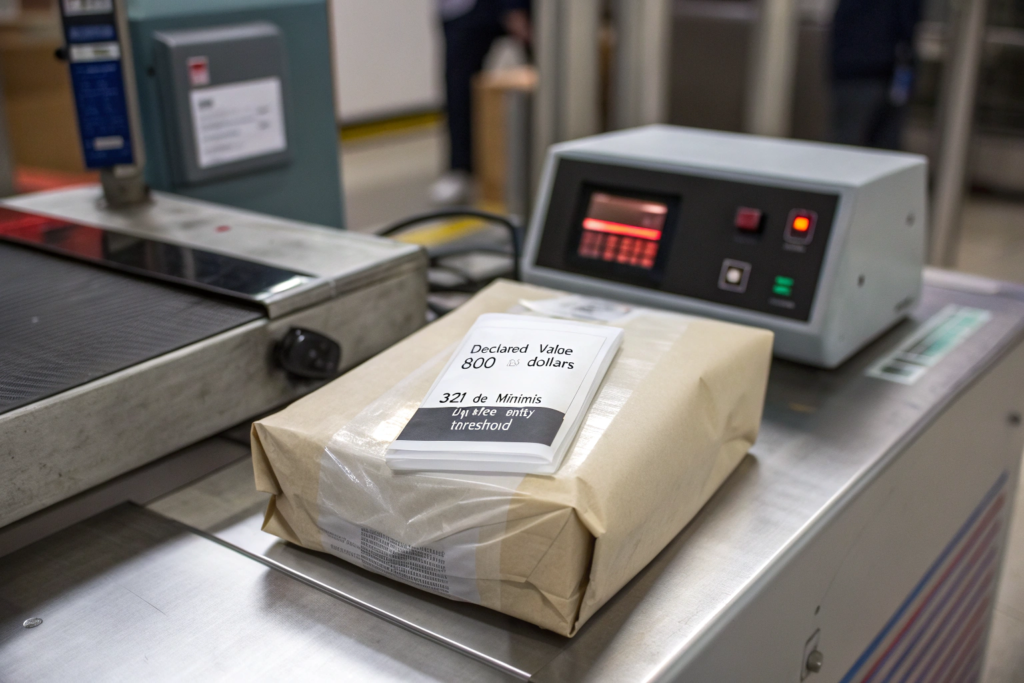
Section 321 of the US Tariff Act allows goods valued at $800 or less per person per day to enter the United States duty-free. This is the de minimis exemption. It is the reason why small packages from overseas often arrive with no duty or tax bill. We use this provision strategically to protect our clients’ sample orders and small initial production runs.
When a client orders samples or a small test order of 500 units with a total value under $800, we ship the goods via express courier. The courier files a Section 321 entry. The goods clear customs quickly and without any duty or Section 301 tariff assessment. This allows our clients to test new products and develop their assortments without incurring the fixed costs and tariff burdens of a full container shipment.
This is a perfectly legal and widely used provision. It is a significant advantage for small and emerging brands that are placing smaller, more frequent orders. This Section 321 de minimis shipping strategy for sample and small batch accessory orders keeps development costs low and predictable.
What Are the Limitations of Relying on De Minimis Entry?
The de minimis exemption is a powerful tool, but it has clear limitations. The primary limitation is the $800 per person per day threshold. You cannot split a $5,000 commercial order into seven separate $800 shipments to the same person on the same day and expect to avoid duty. This is considered a structured transaction and is a violation of customs regulations.
The de minimis strategy is best suited for true sample orders, small-batch replenishment of fast-selling items, and initial test orders. It is not a long-term solution for high-volume commercial shipments. For those shipments, we rely on the HTS classification and other strategies discussed in this article. We are transparent with our clients about the appropriate use and the legal limits of de minimis entry. This legal limitations and appropriate use of Section 321 de minimis for commercial imports is essential knowledge for compliance.
How Does This Benefit US Boutiques and Small Brands Specifically?
The de minimis strategy is particularly valuable for the independent boutique and the direct-to-consumer startup brand. These businesses often operate with smaller order quantities and tighter cash flow. The ability to order 300 units of a new hair claw style and have it delivered duty-free via express courier is a game-changer.
It allows them to test trends with minimal financial risk. It allows them to replenish a hot-selling item quickly without waiting for a full container. It levels the playing field, giving smaller players access to the same efficient, low-cost supply chain that larger brands enjoy. At AceAccessory, we have structured our sample and small-batch production to support this model. We can turn around a 300-unit order almost as efficiently as a 3,000-unit order. This advantages of de minimis shipping for US boutique and small brand accessory sourcing is a core part of our value proposition for these clients.
How Does Material Sourcing and Product Engineering Reduce Tariff Burden?
Tariff mitigation begins at the design stage. The materials we choose and the way we construct a product have a direct impact on its HTS classification and therefore its tariff exposure. We work with our clients to engineer products that are both beautiful and tariff-efficient.
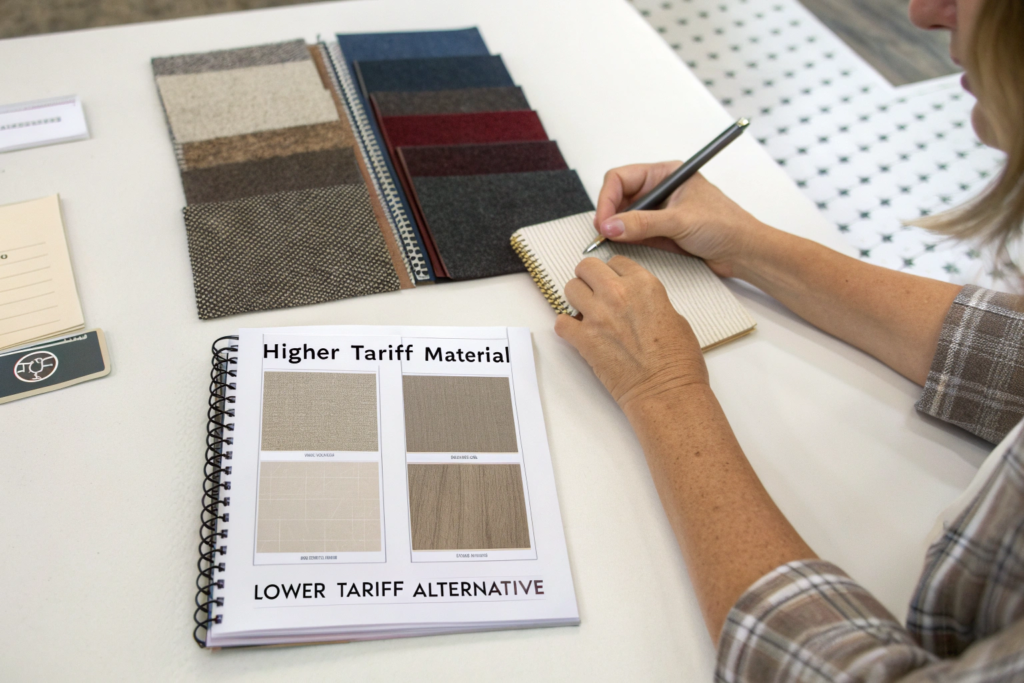
For example, a belt that is made of 100% leather is classified as a leather article and may be subject to a certain duty rate and Section 301 tariff. A belt that is made of a textile web with leather trim may be classified as a textile article with a different duty profile. The visual difference can be minimal, but the tariff difference can be significant. We present these options to our clients during the development phase. We provide the cost implications of each material choice, including the estimated tariff impact.
This is value engineering with a focus on total landed cost. It is a service that a simple trading company cannot provide. It requires a deep understanding of both manufacturing and customs regulations. This tariff conscious material selection and product engineering for fashion accessories is a proactive way to manage costs.
Can Component Sourcing from Outside China Help?
For some products, yes. The country of origin for tariff purposes is determined by where the product undergoes a "substantial transformation." This is a complex legal standard. Simply attaching a buckle from Vietnam to a leather strap from China does not change the origin of the belt. The belt is still a product of China.
However, if a significant portion of the value and the essential manufacturing processes occur in another country, the origin may shift. This is a strategy for some larger clients with more complex supply chains. For our core business, we focus on optimizing the classification of wholly Chinese-made goods and on the other strategies discussed here. We are transparent about the limitations of this approach for typical accessory orders. This substantial transformation standard and limitations of shifting country of origin for tariff purposes is a nuanced area of trade law.
How Does AceAccessory’s Value-Added Service Model Absorb Cost Fluctuations?
Our business model is not based on being the absolute cheapest supplier on a per-unit basis. It is based on providing exceptional value through quality, reliability, speed, and service. This model gives us more flexibility to absorb minor cost fluctuations, including small tariff adjustments, without immediately passing them on to the client.
We operate with efficient, lean manufacturing. We have long-term relationships with our material suppliers, which gives us stable pricing. We have low employee turnover, which reduces training and quality costs. These operational efficiencies create a buffer. When the tariff environment shifts slightly, we can often adjust our internal costs to maintain a stable FOB price for our clients. We do not guarantee that we can absorb a massive, across-the-board tariff increase, but our model is far more resilient than a low-margin, high-volume commodity supplier. This operational efficiency and value added service model as a buffer against tariff volatility provides our clients with pricing stability.
Conclusion
The perception that all Chinese-made accessories are equally affected by US tariff increases is false. The impact of tariffs is highly specific. It depends on the precise HTS classification of the product, the shipping method used for the order, the material composition of the goods, and the operational efficiency of the factory.
At Shanghai Fumao, we have built a comprehensive strategy to protect our clients from the full weight of these tariffs. We optimize HTS classifications through detailed product knowledge. We utilize de minimis shipping for small orders. We engineer products with tariff implications in mind. And we maintain an operationally efficient business model that provides a buffer against cost volatility. The result is stable, predictable pricing for our clients, even in a turbulent trade policy environment.
We cannot control the actions of policymakers in Washington. But we can control how we respond. Our response is to be smarter, more precise, and more value-driven than the competition. This is why our clients continue to grow their businesses with us, regardless of the headlines.
If you are concerned about the impact of tariffs on your accessory sourcing and want a partner who has a proven strategy for stability, I encourage you to contact our Business Director, Elaine. She can discuss the specific classification and shipping strategies that apply to your product mix. You can email Elaine at: elaine@fumaoclothing.com. Let us show you how we make tariff uncertainty a manageable variable, not a business crisis.