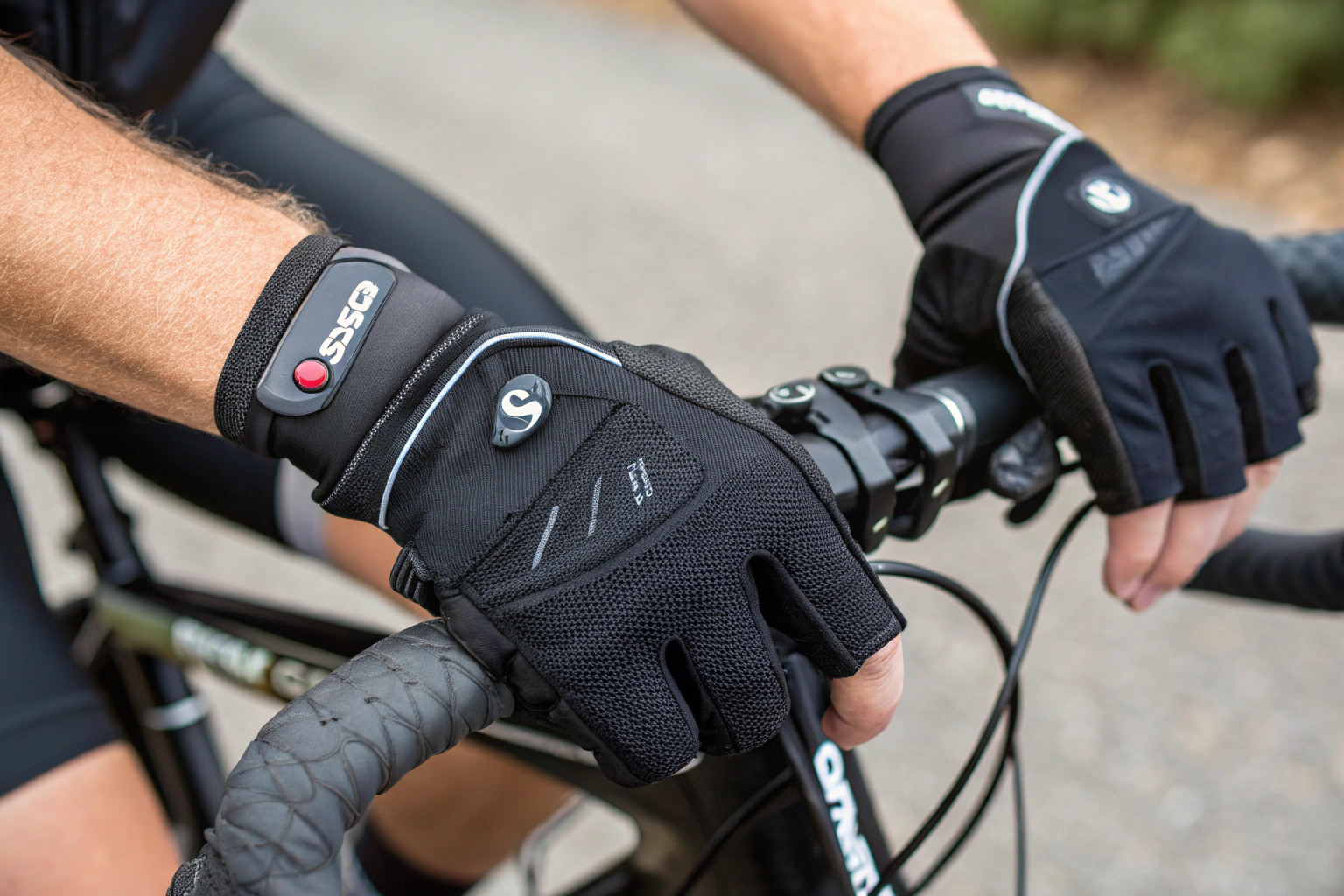
I received a call last spring from a client who ran a small but passionate cycling apparel brand. He had built a loyal following for his jerseys and bib shorts. The next logical step was to add cycling gloves to his collection. He had tried to source them from a general glove supplier he found online. The samples he received were a disaster. The padding was in the wrong place and bunched up when he gripped the bars. The fabric on the back of the hand was too loose and flapped in the wind. The Velcro closure scratched his wrist. He said, "They feel like gardening gloves with a cycling logo slapped on." He needed a factory that understood the specific engineering of a cycling glove.
Getting a Chinese glove supplier to produce high-quality cycling gloves requires a completely different specification and communication strategy than for fashion or winter gloves. Cycling gloves are technical performance accessories. The supplier must understand the precise placement of palm padding to protect the ulnar nerve, the use of moisture-wicking and aerodynamic fabrics on the backhand, and the importance of a low-profile, non-abrasive closure system. A generic glove factory will fail. You need a partner who has experience with technical cut-and-sew construction and access to specialized materials like gel inserts, microfiber wiping surfaces, and silicone grip prints.
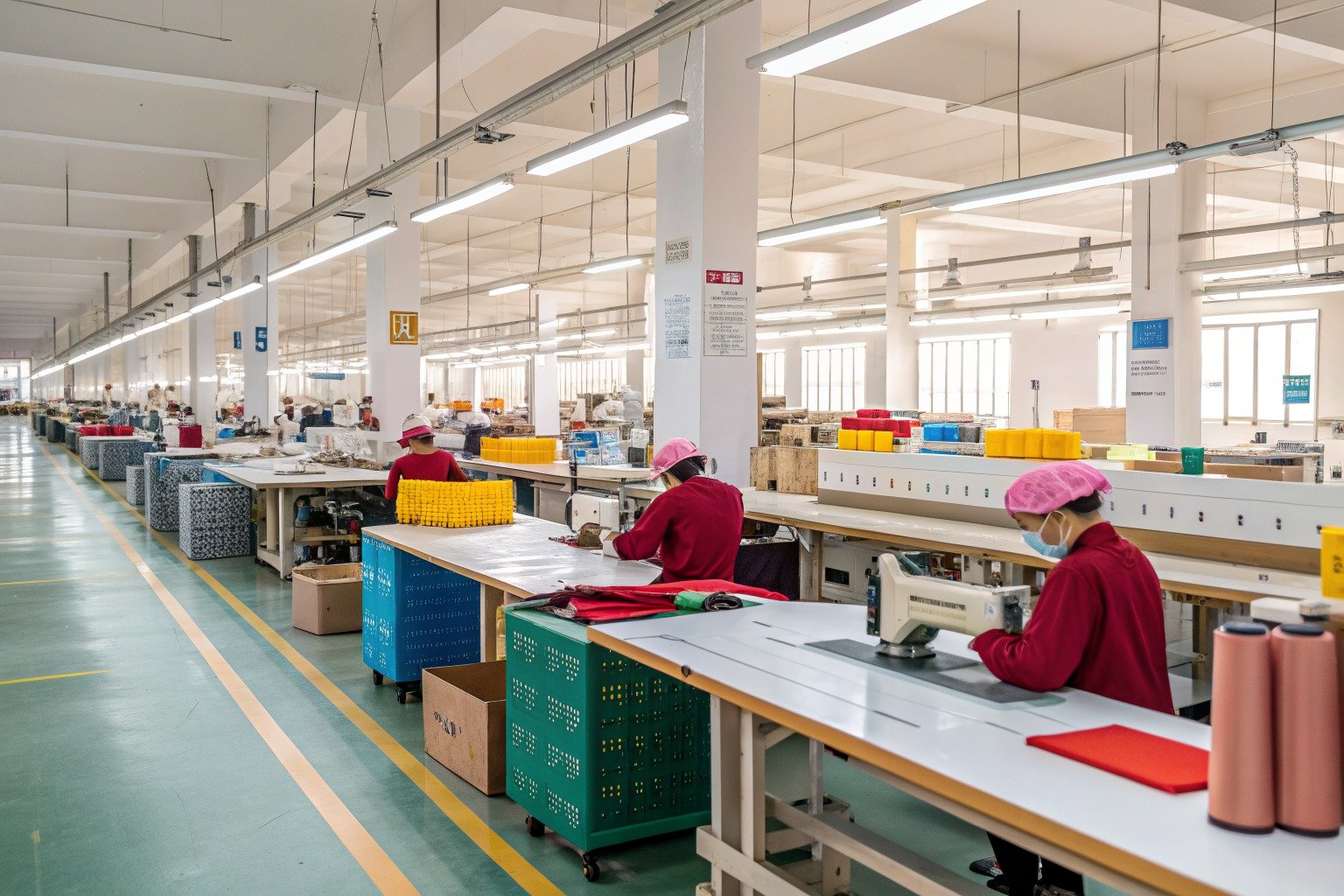
At Shanghai Fumao, we have a dedicated technical accessories division. We understand that a cycling glove is more akin to a piece of sporting equipment than a fashion accessory. I want to share the specific knowledge and specifications required to get this product right.
What Technical Materials Define A Performance Cycling Glove?
A fashion glove is made of one or two materials. A cycling glove is a complex assembly of specialized fabrics, each chosen for a specific performance function. If your factory does not have access to these materials, the glove will fail. The first conversation with a potential supplier must be about their material sourcing capabilities.
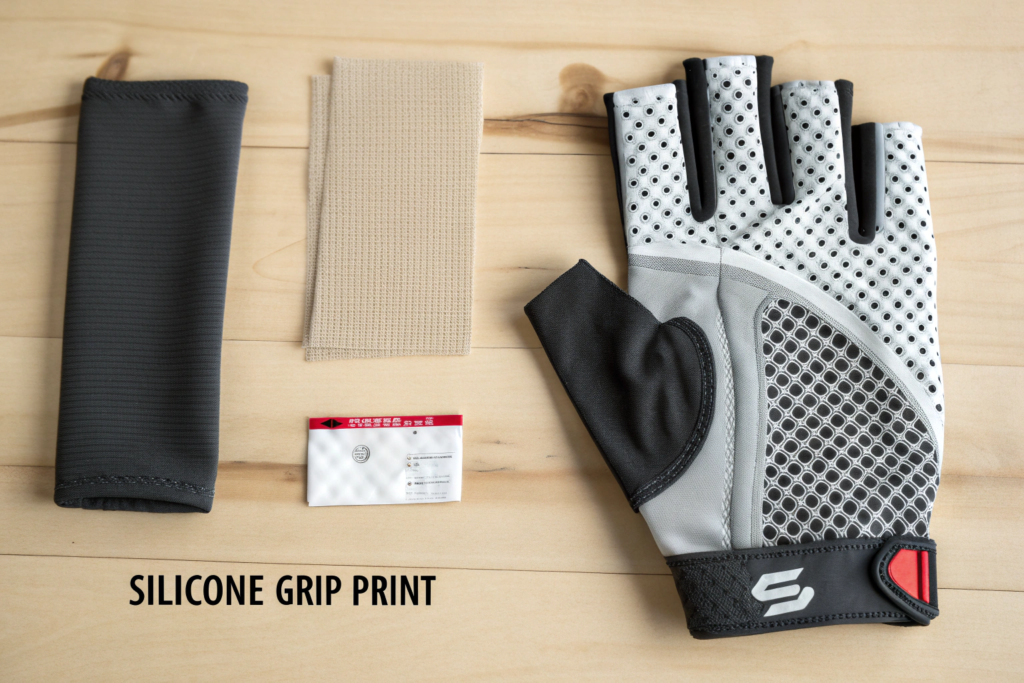
The critical technical materials for a performance cycling glove are: a durable, high-grip synthetic leather palm (such as Clarino or AX Suede), shock-absorbing gel or foam padding inserts, a lightweight and breathable backhand fabric (often a Lycra-spandex mesh), and a soft, absorbent microfiber panel on the thumb for wiping sweat. The factory must be able to source these specific materials and understand how to cut and sew them together without creating bulky, irritating seams. Access to these specialized materials is the first filter for identifying a capable cycling glove manufacturer.
What Is The Difference Between Fashion Leather And Cycling Palm Material?
This is the most common point of failure. A fashion glove might use a soft, thin sheepskin leather. It feels luxurious but will disintegrate after a few sweaty rides and will offer zero grip on wet handlebars.
Cycling gloves require Synthetic Performance Leather. The industry standards are materials like Clarino or AX Suede. These are non-woven, microfiber fabrics impregnated with polyurethane.
The key properties of these materials are:
- Abrasion Resistance: They will not wear through from hours of rubbing against handlebar tape.
- Grip: They provide a tacky, secure grip even when wet with sweat or rain.
- Breathability: They are micro-perforated to allow some airflow to the palm.
- Washability: They can be thrown in the washing machine without shrinking or hardening.
We source these materials directly from approved mills. We can provide the Material Data Sheets to prove the abrasion resistance and composition. A factory that suggests using "genuine leather" or "PU leather" for the palm of a cycling glove does not understand the category.
How Are Gel And Foam Pads Sourced And Positioned?
The padding in a cycling glove is not just a piece of foam stuffed in. It is an engineered component designed to protect the ulnar nerve, which runs through the palm and can be compressed during long rides, causing numbness and pain.
We use two types of padding:
- Polyurethane (PU) Foam Pads: These are die-cut into specific ergonomic shapes. They provide lightweight cushioning.
- Thermoplastic Gel Pads: These are heavier but offer superior shock absorption and vibration dampening. They are placed directly over the high-pressure zones of the palm.
The key is placement. The pad must be positioned precisely where the palm contacts the handlebar. It must not extend into the natural crease of the hand, or it will bunch up and cause discomfort.
We use a Digital Pattern that maps the pad placement with millimeter precision. The pads are either stitched into a pocket in the palm or bonded directly to the back of the palm material. This requires specialized sewing machine attachments to handle the thickness of the gel without breaking needles. This is a technical capability that separates a generic glove factory from a performance glove factory.
How Do You Specify Fit And Closure For Cycling Gloves?
A cycling glove must fit like a second skin. Any loose fabric will flap in the wind, creating drag and irritation. Any tightness will restrict movement and cause hand fatigue. The closure system is critical for achieving this precise fit.
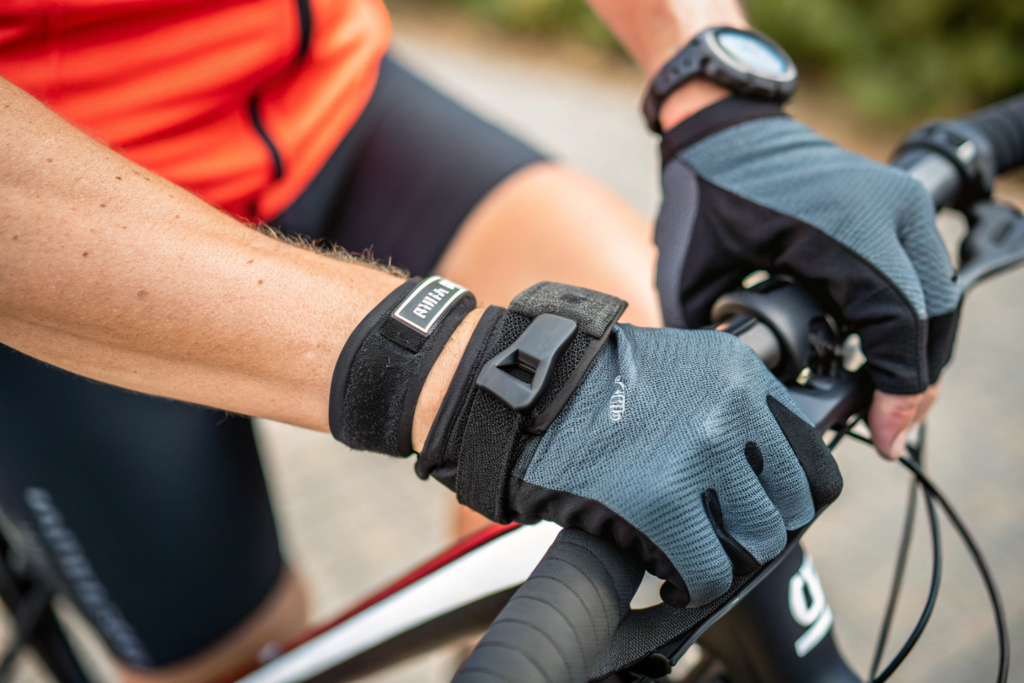
Specifying the fit of a cycling glove requires a detailed size chart with multiple hand measurements and a focus on the "cuff" closure. The glove should have a pre-curved, articulated shape that mirrors the natural curve of a hand gripping a handlebar. The closure system is almost always a low-profile Velcro tab at the wrist. The tab should be short, positioned to avoid scratching the skin, and made from a soft, pliable material. The goal is a secure, aerodynamic fit with no excess bulk.
Why Is A "Pre-Curved" Pattern Essential?
A flat glove pattern will fit a flat hand. But a cyclist’s hand is never flat. It is constantly curved around the bar.
A pre-curved pattern is designed with the fingers and palm already in the riding position. This eliminates the bunching of fabric in the palm that occurs when you curl a flat glove. It also reduces hand fatigue, as the glove is not fighting against the rider’s natural grip.
Our patterns are developed on 3D hand forms that simulate a gripping position. We test the fit on actual cyclists and make micro-adjustments to the pattern. This is the difference between a glove that feels like a tool and a glove that feels like an obstacle.
We provide clients with a Grading Spec Sheet that shows how the pattern scales across sizes (S, M, L, XL). The grading must maintain the precise pad placement and finger proportions. A poorly graded glove will have the padding in the wrong place on larger or smaller sizes.
What Makes A Good Velcro Closure For Cycling?
The closure seems like a minor detail, but it can ruin an otherwise great glove. A bad Velcro closure is too long, too stiff, and scratches the wrist or catches on jersey sleeves.
The specifications for a cycling glove closure are:
- Low-Profile Velcro: We use a thin, flexible "micro-Velcro" or "soft Velcro" rather than a thick, rigid industrial hook-and-loop.
- Short Tab: The tab is just long enough to provide adjustment, typically 1.5 to 2 inches. It does not wrap all the way around the wrist.
- Smooth Edge: The edge of the tab is either folded under and stitched or laser-cut and sealed to prevent fraying and scratching.
- Strategic Placement: The tab is positioned on the back of the wrist, away from the bony protrusion and the area where the hand flexes.
We also offer slip-on cuffs for some minimalist cycling gloves. These eliminate the Velcro entirely and use a stretchy, compressive cuff material. The choice depends on the brand’s aesthetic and the intended use (e.g., racing vs. touring).
What Value-Added Features Do Modern Cyclists Expect?
Beyond the core function of grip and protection, modern cyclists expect a suite of small, thoughtful features. These are the details that generate positive reviews and brand loyalty. A factory that can execute these features is a valuable partner.
Modern cyclists expect value-added features like a soft, absorbent "wipe" panel on the thumb, pull tabs on the fingers for easy removal, and touchscreen-compatible fingertips. These features have become standard on any glove positioned above the entry-level price point. A factory must have the capability to integrate these features cleanly and durably. A poorly attached wipe panel that frays after two washes or touchscreen pads that stop working are major points of failure.
How To Integrate A Durable Thumb Wipe Panel?
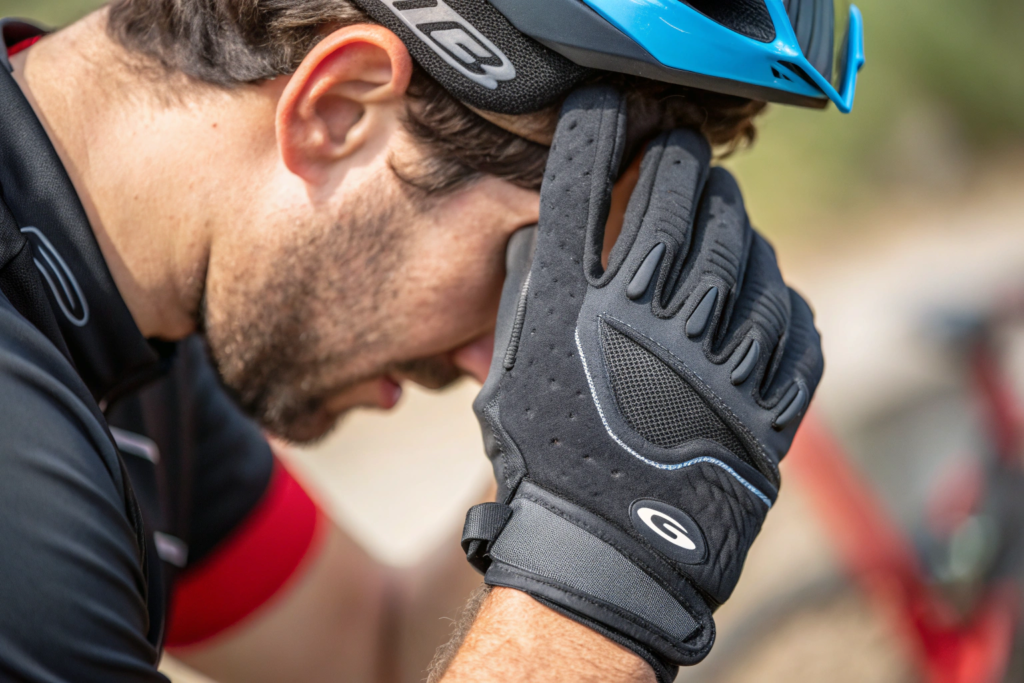
The Thumb Wipe is a panel of soft, absorbent fabric sewn onto the back of the thumb. It is used to wipe sweat from the brow during a ride.
The material is critical. We use a brushed microfiber polyester. It is incredibly soft, highly absorbent, and dries quickly.
The construction is key. The panel must be sewn with flatlock stitching to prevent chafing against the rider’s face. The edges must be finished cleanly so they do not fray or roll.
We have developed a specific sewing attachment that allows us to attach the wipe panel with a perfectly flat, comfortable seam. This is a specialized skill. A generic glove factory might try to sew it on with a bulky overlock stitch, which would be uncomfortable against the skin.
How Are Touchscreen Fingertips And Pull Tabs Added?
Touchscreen compatibility is no longer a premium feature; it is expected. Cyclists need to tap their bike computer or phone without removing their gloves.
We integrate conductive yarn or conductive fabric patches into the fingertips. The technology has improved significantly. The conductive material is now thin and flexible, so it does not affect the feel of the glove. We test every batch of gloves with a smartphone to ensure the touch function works reliably.
Pull Tabs are small loops of fabric sewn between the fingers. They provide leverage for pulling the tight-fitting glove off a sweaty hand.
These are small pieces of grosgrain ribbon or folded fabric. The challenge is attaching them securely without creating a bulky seam between the fingers. We use a bartack machine to reinforce the attachment point. A poorly attached pull tab will rip out on the first use. A well-attached one will last the life of the glove.
Conclusion
Producing a high-quality cycling glove is a test of a factory’s technical capabilities. It requires access to a specialized material supply chain, precision in pattern making and pad placement, and the skill to execute small but critical value-added features. It is not a product for a generic glove factory.
For a brand looking to enter the cycling accessories market, the choice of manufacturing partner is the single most important decision. You need a factory that speaks the language of performance materials, understands the ergonomics of the cycling position, and has the equipment to sew technical textiles cleanly and durably.
At Shanghai Fumao, we have built a dedicated technical team and supply chain specifically for this category. We understand that a cycling glove is a piece of sporting equipment. We approach its production with the same rigor and precision that we apply to all our accessories.
If your brand is ready to develop a line of performance cycling gloves, we invite you to leverage our expertise. We can guide you through material selection, pad placement, and feature integration to create a product that performs as good as it looks. For a technical consultation on cycling glove manufacturing, please contact our Business Director Elaine directly at elaine@fumaoclothing.com. Let us build a glove that your customers will love to wear, mile after mile.