As a hat manufacturer for over two decades, I’ve had thousands of conversations about materials, colors, and logos. But one of the most fundamental and often misunderstood topics is the construction of the hat itself. I often talk with buyers like Ron from the US, and a common pain point is a confusion about terminology. They might ask for a "soft baseball cap" or a "structured beanie," not realizing that the very construction method—knitting versus weaving—makes those ideas challenging. Understanding this core difference is the first step to sourcing the right hat for your brand.
So, what are the key differences between a knit hat and a woven hat? The fundamental difference lies in how the yarns are turned into fabric. A knit hat is made from a single yarn looped continuously upon itself, creating a stretchy, form-fitting fabric. A woven hat is made from multiple yarns interlaced at right angles, creating a stable, structured, and non-stretchy fabric. This single distinction dictates everything from the hat’s shape and fit to its ideal use case and production method.
This isn’t just a minor technical detail; it’s the DNA of the hat. At my factory, we have separate production lines for each because the machinery and skillsets are completely different. In this article, I’ll break down these two worlds to help you make more informed sourcing decisions.
What Defines a Knit Hat?
When you think of a classic winter beanie, you are thinking of a knit hat. The entire structure is based on a single, continuous thread looping together. Imagine the process of hand-knitting with needles, but done on a massive, high-speed industrial machine.
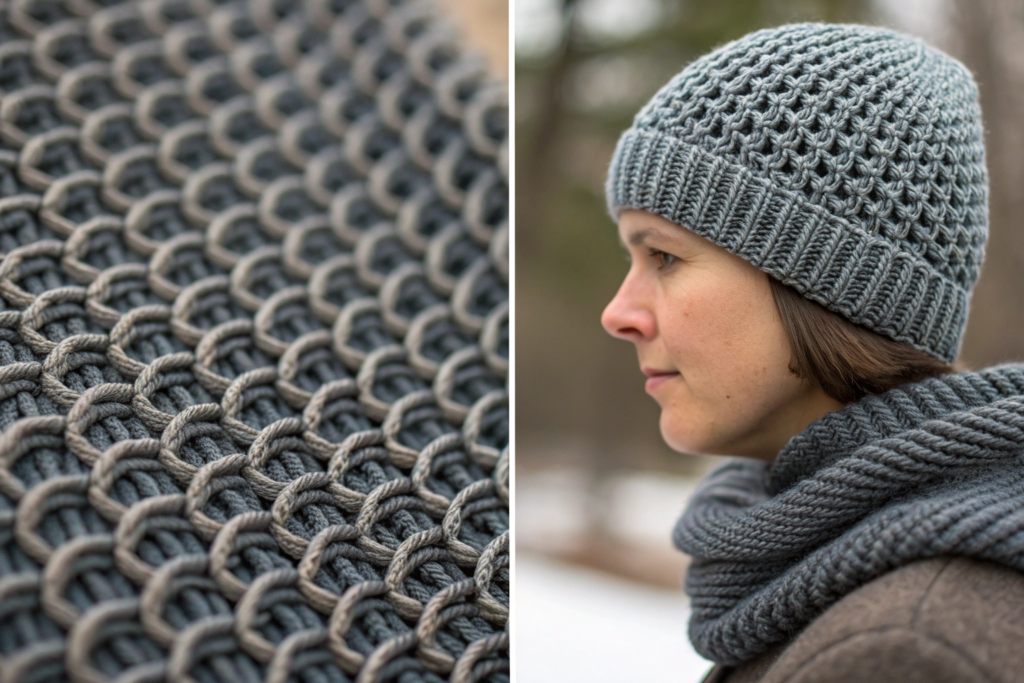
A knit hat is defined by its construction from a single, looped yarn, which gives the resulting fabric its signature stretch and softness.The key characteristics of a knit hat are its inherent elasticity, its seamless (or near-seamless) construction, and its primary function as a provider of warmth and comfort. This construction method is perfect for creating comfortable, close-fitting headwear. At Shanghai Fumao Clothing, our knitting department is a core part of our operations, especially for producing fall and winter collections.
How is the stretchy fabric created?
The stretchiness of a knit fabric comes from the looped structure of the yarn. Unlike a rigid woven grid, these loops can expand and contract in all directions, allowing the fabric to stretch significantly without breaking. This is why a "one-size-fits-most" beanie can comfortably fit a wide range of head sizes. The physics of this structure is a core concept in textile science. This elasticity is the material’s most important performance feature.
What are the typical applications?
Because of their warmth and stretch, knit hats are the undisputed champions of cold-weather headwear. The most common applications are:
- Beanies: The classic, close-fitting winter hat.
- Cuffed Hats: Beanies with a folded-up brim for extra warmth over the ears.
- Slouchy Hats: Looser, more relaxed-fit beanies with extra material that drapes in the back.
- Watch Caps: A staple of military and workwear, as documented by sources like the U.S. Naval Institute.
What Defines a Woven Hat?
If a knit hat is defined by its stretch, a woven hat is defined by its stability. Think of a classic baseball cap, a bucket hat, or a fedora. These are all woven hats. Their fabric is created by interlacing two separate sets of yarn at right angles.
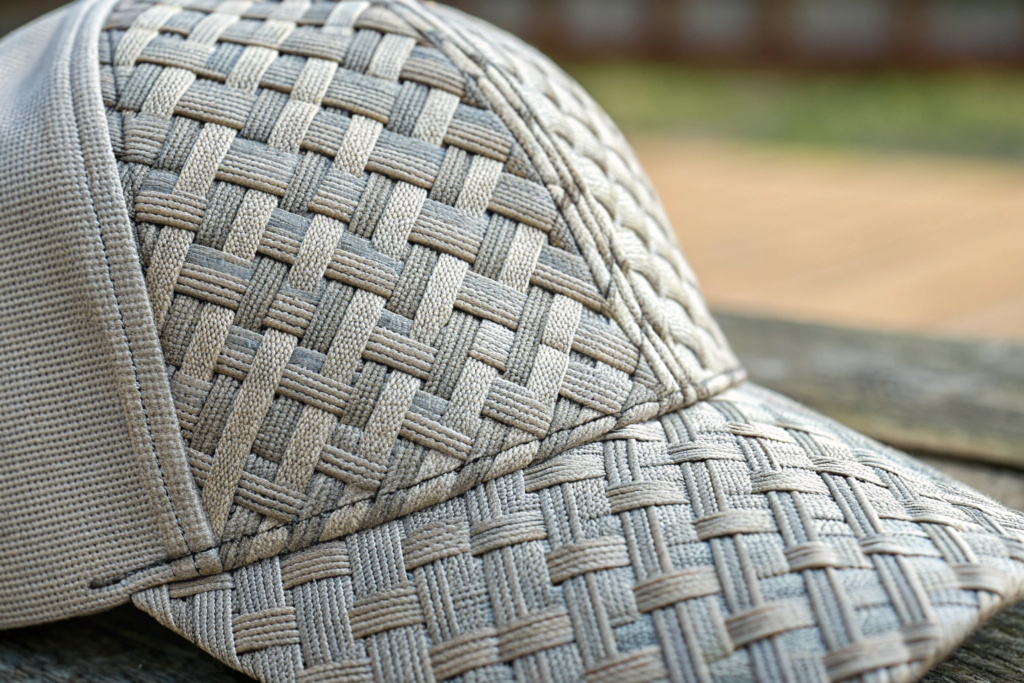
A woven hat is defined by its construction from a stable, non-stretch fabric made of interlaced warp and weft yarns. The key characteristics of a woven hat are its structural integrity, its ability to hold a specific shape, and its construction from multiple, cut-and-sewn panels. This method is used to create hats with a defined silhouette and specific functional features, like a brim or a visor.
How is the stable fabric created?
In weaving, one set of yarns, the warp, is held taut on a loom. A second set of yarns, the weft, is then interlaced over and under the warp yarns. This creates a strong, stable, and rigid grid structure. This fabric has very little natural stretch, which is why it’s perfect for creating a product that needs to maintain a consistent shape. This fundamental process of weaving has been used for millennia to create durable textiles.
What are the typical applications?
Woven fabrics are the foundation for almost every type of structured hat. The most common applications are:
- Baseball Caps: The iconic multi-panel cap with a stiff front and a projecting visor.
- Bucket Hats: A soft, wide-brimmed hat, popular for sun protection and fashion.
- Straw Hats: While the material is straw, the construction method is a form of weaving.
- Fedoras and Trilbies: Classic felt hats where the woven felt material is steamed and pressed into a permanent shape.
How Do Their Production Processes Differ?
For a buyer, understanding the production differences is crucial because it impacts lead times, minimum order quantities (MOQs), and customization options. The two processes are completely different.
The production process for a knit hat is largely automated and integrated, while a woven hat requires a multi-step, manual assembly process. A knit hat is often produced as a nearly finished item directly from a knitting machine. A woven hat must be created through a sequence of cutting, sewing, and assembly. This is why we have entirely separate teams and machinery for each category at Shanghai Fumao Clothing.
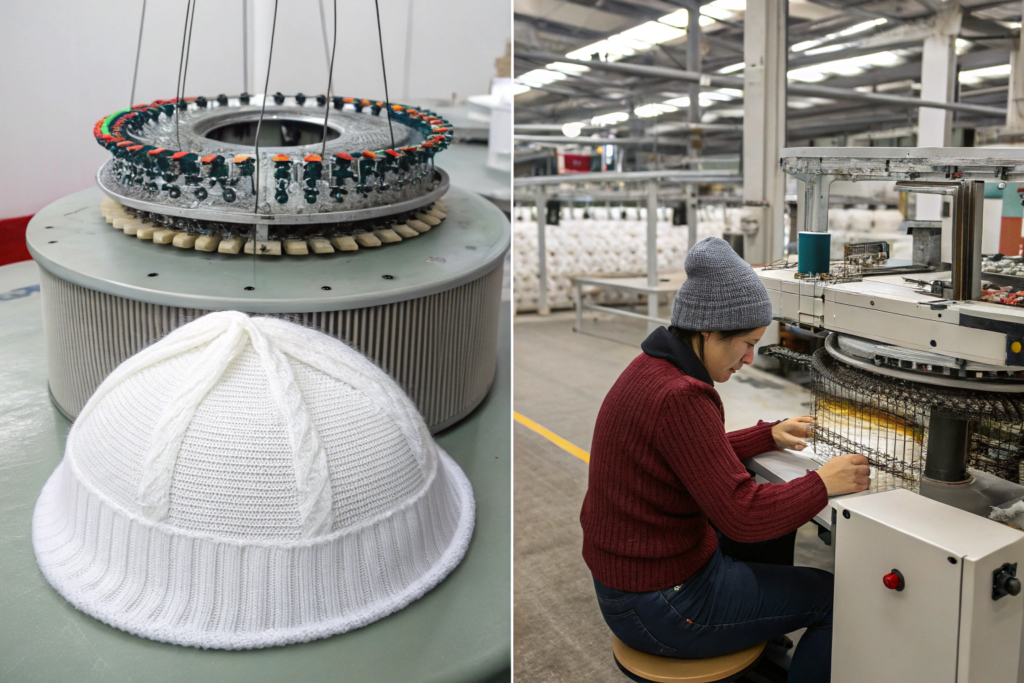
How is a knit hat made?
A modern beanie is typically made on a computerized, circular knitting machine. We input the design, and the machine knits a complete tube of fabric, tapering it at the top. When it comes off the machine, it’s already in the shape of a hat. The only finishing steps are to close the small hole at the very top and, if it’s a cuffed style, to tack the cuff in place. It’s a very efficient, low-waste process.
How is a woven hat made?
The process for a woven hat is much more like garment construction. It involves many more steps:
- Panel Cutting: The woven fabric is laid out, and sharp dies are used to cut the individual panels for the crown, the visor, and any other components.
- Panel Sewing: A skilled operator then sews these panels together, one by one, to form the crown of the hat.
- Visor Assembly: The visor board is inserted into its fabric casing and stitched.
- Final Assembly: The visor is attached to the crown, the sweatband is sewn in, and the back closure is added. This multi-step process is explained in detail by headwear industry resources like the Headwear Association.
What Are the Key Sourcing Considerations?
Based on these differences, how should a buyer like Ron approach sourcing each type of hat? The information you need to provide to a factory is completely different for each.
The sourcing considerations for knit and woven hats diverge significantly. For knit hats, the focus is on yarn composition and knit structure. For woven hats, the focus is on panel construction, fit, and component specifications. Getting these details right in your tech pack is the key to getting an accurate sample and a successful production run.
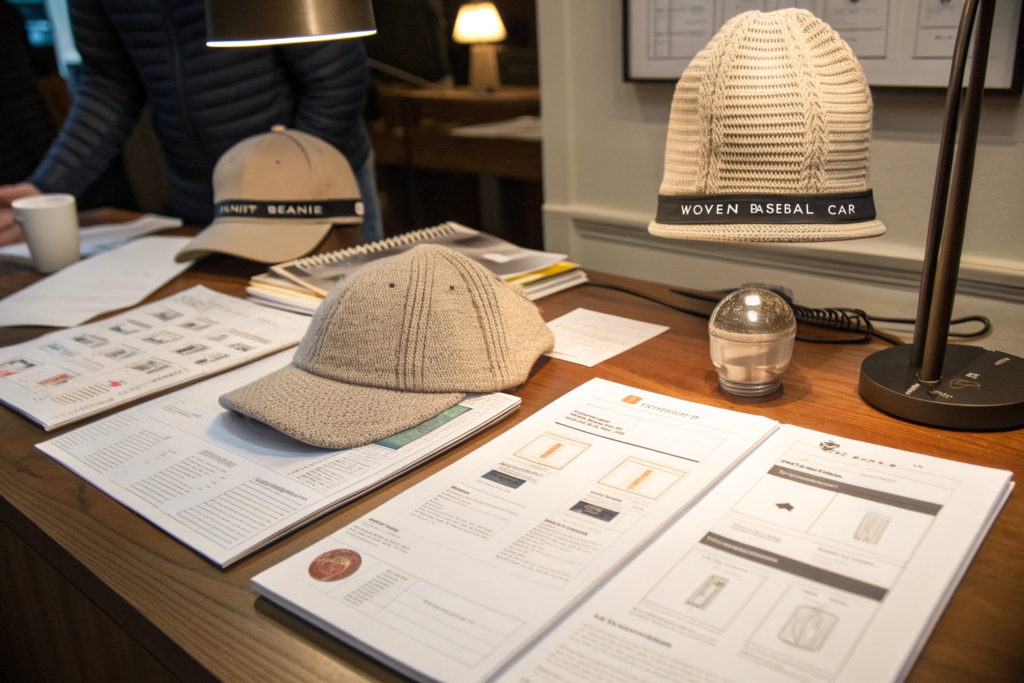
What do you need to specify for a knit hat?
When sourcing a knit beanie, your primary specifications are:
- Yarn Composition: Is it acrylic, merino wool, cotton, or a blend? This affects the softness, warmth, and price.
- Knit Gauge and Rib: Do you want a fine, tight knit or a chunky, thick rib knit? This determines the texture and stretch.
- Dimensions: What is the height and opening width? Is it a cuffed or slouchy style?
- Logo Application: Will the logo be an embroidered patch, a woven label, or directly embroidered?
What do you need to specify for a woven hat?
Sourcing a woven cap is more complex, like ordering a custom-tailored suit. You need to specify:
- Fabric Type: Is it cotton twill, polyester, canvas, or corduroy?
- Panel Structure: How many panels? A standard baseball cap has six. Is it a structured cap (with a stiff buckram backing in the front panels) or an unstructured, "dad hat" style?
- Visor Shape: Do you want a flat brim or a pre-curved visor?
- Closure Type: Is it a plastic snapback, a fabric strap with a metal buckle, or a fitted back? Each component must be specified.
Conclusion
While both are worn on the head, knit and woven hats are fundamentally different products, born from distinct manufacturing worlds. A knit hat is a single, stretchy, looped creation designed for warmth and form-fitting comfort. A woven hat is a structured, stable, multi-part assembly designed to hold a specific shape and provide functions like shade. Understanding this core difference in their DNA—the looped yarn versus the interlaced grid—empowers you to choose the right construction for your brand’s vision, to create a more accurate technical specification, and to have a more intelligent conversation with your manufacturing partner. It is the foundation of all headwear design.
Whether you are looking to develop a line of cozy winter beanies or a collection of classic structured caps, my team at Shanghai Fumao Clothing has the specialized expertise and dedicated production lines for both. We can guide you through the specific sourcing requirements for each to ensure your vision is realized perfectly. Please contact our Business Director, Elaine, at her email: elaine@fumaoclothing.com to get started.