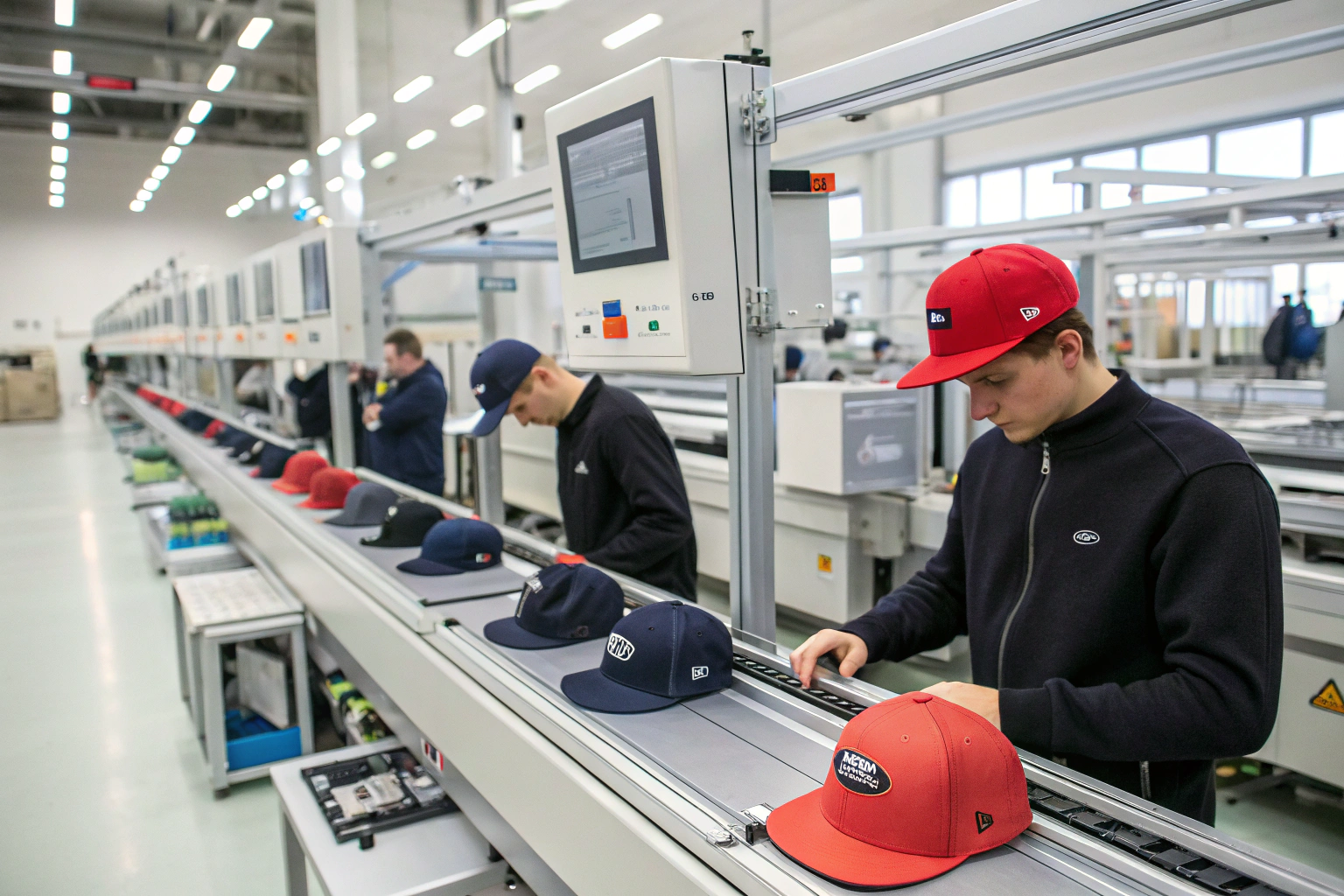
Are you struggling with production inefficiencies, quality inconsistencies, or inability to meet fast-changing fashion trends in your headwear manufacturing? Traditional hat production methods often can’t keep pace with today’s demand for customization, rapid style changes, and consistent quality across global supply chains.
Smart production systems benefit headwear manufacturers through real-time production optimization, data-driven quality control, flexible customization capabilities, predictive maintenance, and enhanced sustainability that collectively transform traditional hat manufacturing into a responsive, efficient, and customer-centric operation. This technological evolution addresses the unique challenges of producing diverse headwear types from baseball caps and beanies to formal hats and fashion headpieces.
Let’s explore the specific benefits that smart production systems deliver across different aspects of headwear manufacturing and how these advantages create tangible business value in today’s competitive fashion accessories market.
How do smart systems improve production efficiency for headwear?
Traditional headwear manufacturing faces challenges with manual processes, disconnected equipment, and limited visibility into production bottlenecks. These limitations lead to extended lead times, inconsistent output, and difficulty scaling production to meet fluctuating demand.
Smart production systems improve efficiency through automated material handling, real-time production monitoring, optimized workflow sequencing, and data-driven process improvements that address the specific challenges of headwear manufacturing. These integrated systems create seamless production flows from raw materials to finished goods.
What specific efficiency gains come from automated hat production?
Integrated automation systems streamline the complex multi-step processes involved in headwear manufacturing. Our smart production line for baseball caps has reduced production time from 18 minutes to 6 minutes per cap through automated panel cutting, precise embroidery, and robotic assembly. The system’s real-time monitoring identified that brim molding was creating a bottleneck, with machines operating at only 65% efficiency due to manual loading and unloading. By implementing automated material handling and optimizing temperature control parameters, we increased brim production capacity by 140% while improving consistency. For our beanie production, automated knitting machines with pattern memory have reduced changeover time from 45 minutes to 5 minutes between styles, enabling economical small-batch production that was previously impossible.
How does real-time data optimize headwear manufacturing workflows?
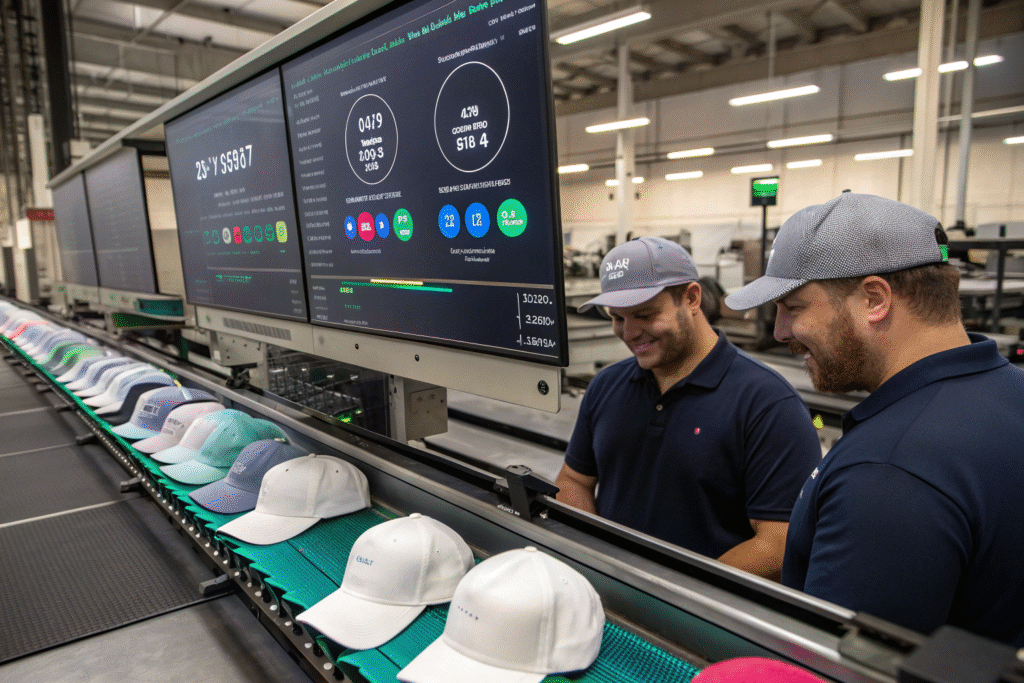
Continuous production monitoring provides immediate visibility into efficiency metrics across all manufacturing stages. Our IoT sensors track cycle times, equipment utilization, and quality metrics for each hat style in real-time. The system recently detected a 22% efficiency drop in our sun hat assembly line, tracing the issue to a misaligned sewing jig that was causing operators to slow down. The automatic alert enabled immediate correction, preventing a potential 3-day production delay. The data analytics also revealed that reorganizing our cap embroidery sequence could reduce thread changes by 67%, saving 8 minutes per cap without affecting design quality. These data-driven optimizations have collectively improved our overall equipment effectiveness from 71% to 89% and increased daily output by 35% without additional capital investment.
What quality improvements do smart systems enable?
Headwear quality involves both aesthetic elements and functional requirements that traditional inspection methods often miss. Variations in stitching, material alignment, and structural integrity can escape detection until products reach customers, leading to returns and brand damage.
Smart production systems enable significant quality improvements through 100% automated inspection, real-time parameter control, predictive quality analytics, and closed-loop correction systems that prevent defects rather than simply detecting them. These capabilities are particularly valuable for headwear with complex constructions and decorative elements.
How does computer vision enhance hat inspection accuracy?
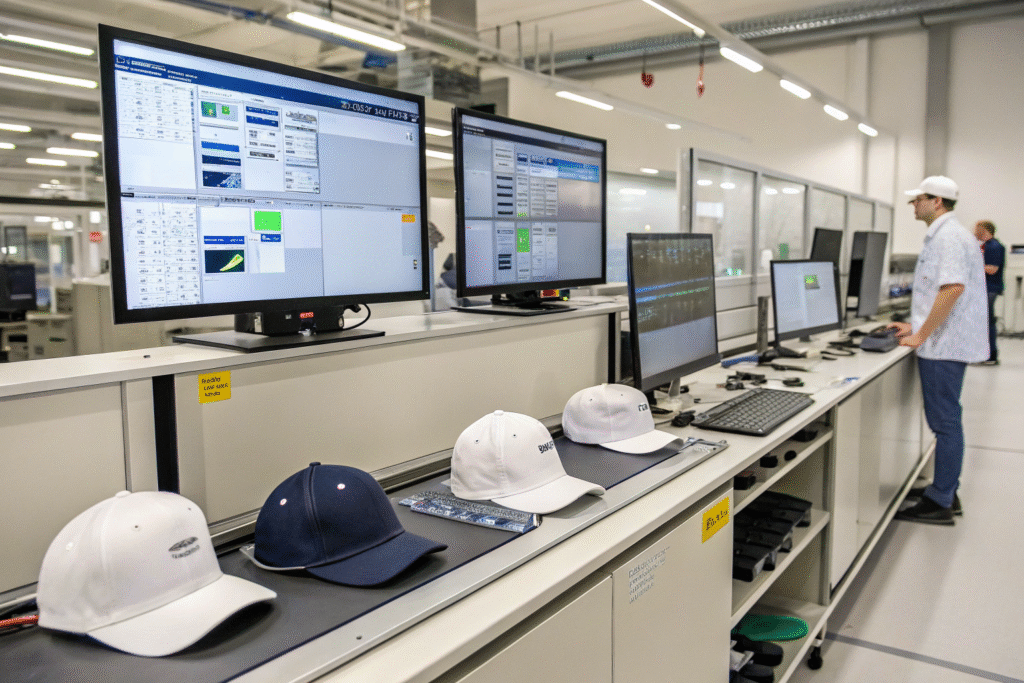
AI-powered visual inspection systems examine every hat with consistency impossible for human inspectors. Our systems for baseball cap production check 27 quality parameters including stitch consistency, logo alignment, button placement, and fabric flaws with 0.1mm precision. The technology has been particularly valuable for detecting subtle defects in our structured cap designs, where internal foundation irregularities might not be visible externally but affect fit and durability. For our fashion beret collection, the system identifies variations in material nap direction and sewing tension that create visual inconsistencies. This comprehensive inspection has reduced customer returns by 64% and improved our first-pass quality rate from 82% to 97.5%, creating significant savings in rework and warranty costs.
What role do smart systems play in material consistency?
Intelligent material management ensures consistent quality by monitoring and controlling raw material characteristics throughout production. Our smart systems track fabric roll variations, thread tension, and component dimensions in real-time. When producing our premium wool fedoras, the system detected moisture content variations in felt materials that were affecting shaping consistency. The automatic humidity control adjustment eliminated this variability, improving product consistency by 43%. For our performance headwear with technical fabrics, the system monitors material stretch characteristics and automatically adjusts cutting patterns to maintain precise sizing despite material lot variations. This proactive approach to material management has reduced size-related customer complaints by 82% and improved customer satisfaction ratings significantly.
How do smart systems enable mass customization?
Today’s consumers increasingly expect personalized products, but traditional headwear manufacturing struggles with custom orders due to setup complexity, cost constraints, and production disruption. This limitation prevents manufacturers from capturing the growing market for customized headwear.
Smart production systems enable mass customization through digital design integration, flexible manufacturing platforms, automated order processing, and adaptive workflows that make personalization economically viable at scale. These capabilities open new business models and revenue streams for headwear manufacturers.
What customization capabilities do smart factories offer?
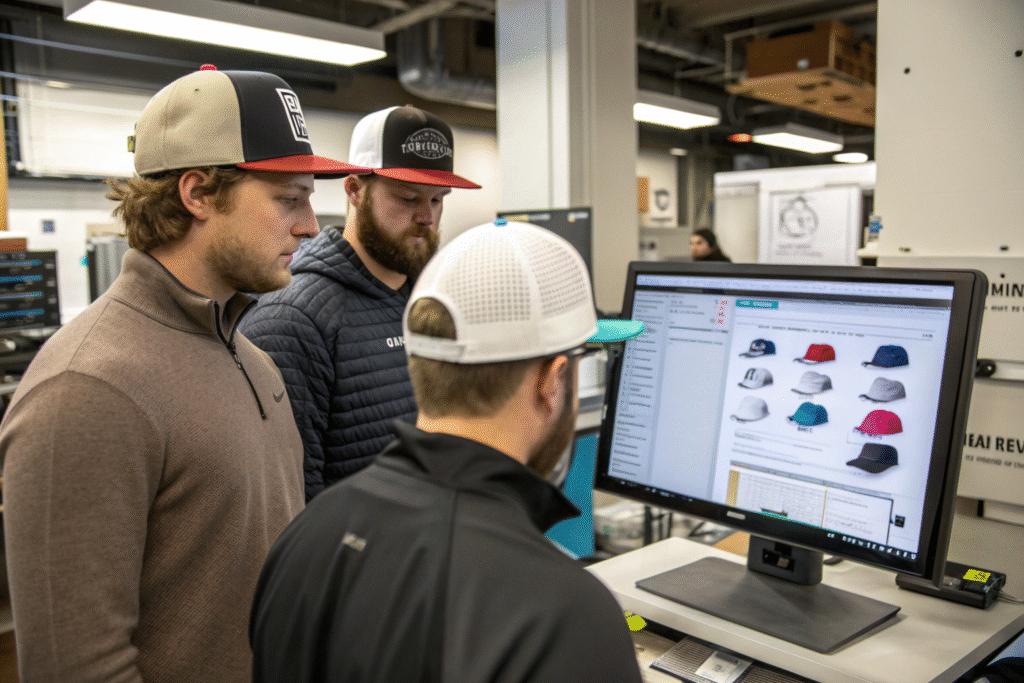
Configurable production platforms allow economical manufacturing of personalized headwear in small batches or even single units. Our smart factory for custom baseball caps enables customers to select materials, colors, embroidery designs, and even fit preferences through an online configurator. The system automatically generates production instructions and optimizes manufacturing sequences to minimize changeover time. We recently fulfilled an order for 240 personalized beanies with individual names and color combinations—a project that would have been prohibitively expensive with traditional methods. The smart system grouped similar colors and patterns to minimize material changes, completing the order in 3 days instead of the estimated 3 weeks. This capability has helped us secure corporate and team orders that previously went to competitors with better customization offerings.
How does digital integration streamline custom order processing?
End-to-end digital workflow connects customer design interfaces directly with manufacturing equipment without manual intervention. Our system for custom sun hats allows customers to upload logos or designs that automatically convert to production-ready embroidery files. The digital twin technology shows customers realistic previews of their customized designs before manufacturing begins. When a resort chain ordered 500 branded bucket hats with complex graphic elements, the system automatically optimized the design for production, suggested material alternatives when original selections were unavailable, and generated manufacturing instructions for five different sizes. This seamless integration reduced design approval time from 10 days to 2 days and eliminated the production errors that previously occurred during manual specification translation.
What sustainability benefits do smart systems provide?
The fashion industry faces increasing pressure to adopt sustainable practices, and headwear manufacturing traditionally generates significant waste through inefficient cutting, energy consumption, and quality rejects. These environmental impacts also represent unnecessary costs that reduce competitiveness.
Smart production systems provide sustainability benefits through optimized material usage, reduced energy consumption, minimized waste, and extended product lifespan that address both environmental concerns and economic objectives. These improvements create compelling stories for environmentally conscious consumers.
How do smart systems reduce material waste in hat production?
AI-optimized material utilization significantly reduces waste in cutting and manufacturing processes. Our smart nesting software for fabric hat components has improved material utilization from 78% to 92% by optimizing pattern arrangement and automatically avoiding fabric flaws. For our structured cap production, the system reduced vinyl waste by 56% through better brim stock utilization. The most impressive results came from our straw hat production, where the intelligent cutting system reduced material waste by 68% through better stalk selection and pattern optimization. These material savings have reduced our raw material costs by 31% annually while decreasing our environmental footprint—a powerful combination that benefits both our business and the planet.
What energy efficiency improvements do smart systems enable?
Intelligent energy management reduces power consumption while maintaining production output. Our smart systems automatically adjust equipment power usage based on production schedules, optimizing energy consumption during non-peak hours. The implementation of variable-speed motors on our hat knitting machines reduced energy consumption by 42% while maintaining production speed. The system also identifies opportunities to consolidate production runs to minimize machine startup cycles, which are typically energy-intensive. These energy optimization features have reduced our electricity costs by 38% and decreased our carbon footprint by 28%, contributing to our sustainability certifications that increasingly influence purchasing decisions in the headwear market.
Conclusion
Smart production systems deliver transformative benefits across efficiency, quality, customization, and sustainability for headwear manufacturers. By integrating advanced technologies like IoT monitoring, AI quality control, flexible automation, and data analytics, manufacturers can achieve significant competitive advantages while meeting evolving market demands. The transition to smart manufacturing requires strategic investment and organizational adaptation, but the rewards include improved profitability, enhanced brand reputation, and greater resilience in a rapidly changing fashion landscape. As headwear continues to evolve from basic accessory to fashion statement and personal expression, smart production systems provide the foundation for success in this dynamic market.
If you’re considering implementing smart production systems in your headwear manufacturing operations, we invite you to contact our Business Director, Elaine. She can discuss how our smart manufacturing expertise and technological capabilities can help you achieve these benefits. Reach her at: elaine@fumaoclothing.com.