In a busy factory, hundreds of sewing machines operate at high speeds, using thousands of needles every day. These needles are made of hardened steel, and under the stress of production, they can break. When a needle breaks, the tip can fly off and embed itself deep within the layers of a product—a hat, a glove, or a stuffed toy. Finding that tiny metal fragment is like finding a needle in a haystack, literally. This is why a strict, technologically advanced needle detection process is not just "important"; it is one of the most critical safety functions in our entire operation.
Why is this process so critical? A strict needle detection protocol is essential because: 1) it directly prevents potentially severe injuries to the end consumer, especially children, 2) it is a mandatory requirement for supplying major retailers and meeting international safety standards, 3) it protects your brand from catastrophic recalls, legal liability, and reputational damage, and 4) it is a key indicator of a factory's overall professionalism and commitment to quality. At Shanghai Fumao Clothing, every single product intended for sensitive markets or users passes through our calibrated needle detector machines. There are no exceptions.
Is this just an unnecessary precaution? Absolutely not. Let's explore the four critical reasons why this process is paramount.
How Does Needle Detection Directly Prevent Consumer Injury?
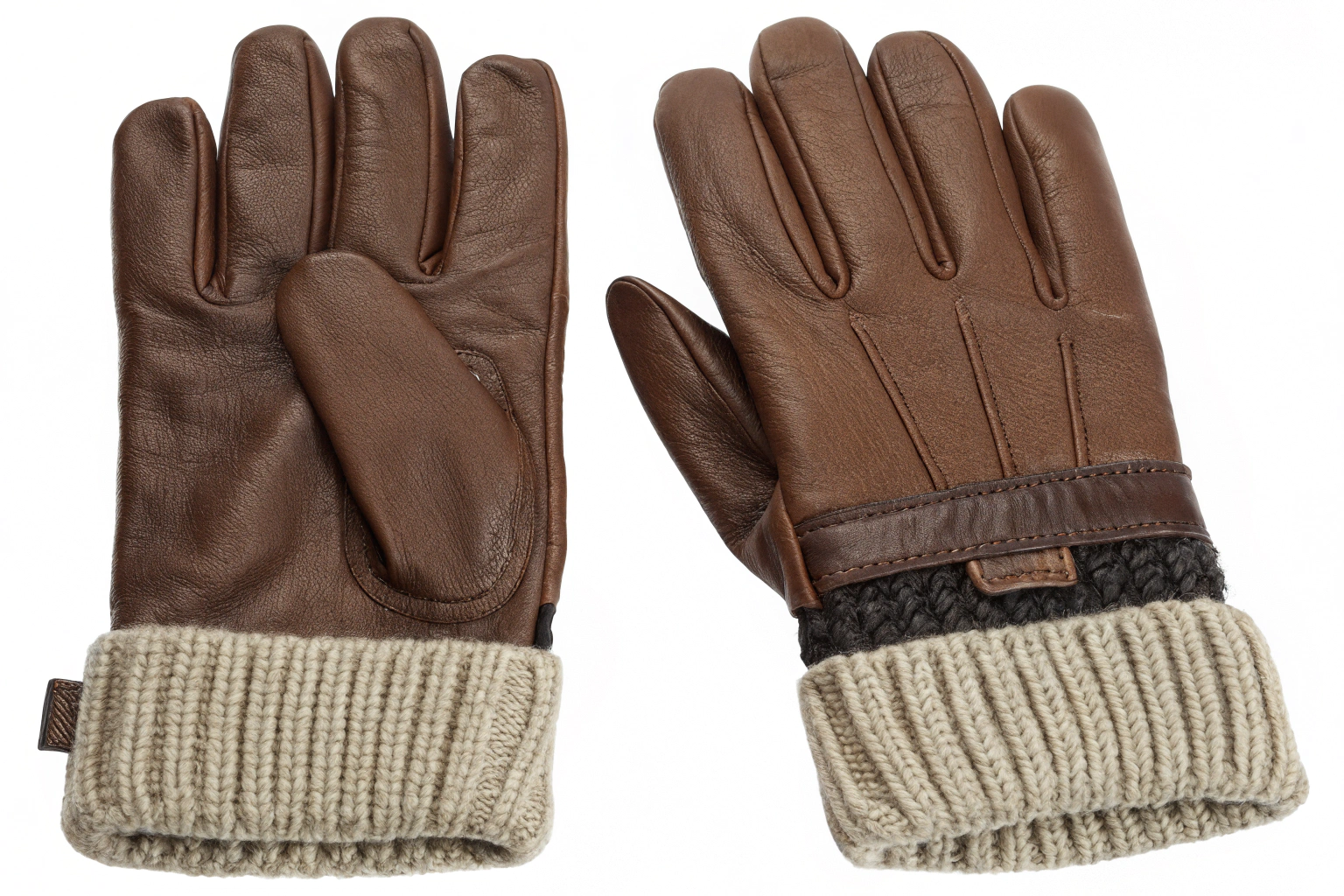
What is the most important reason for this process? It's the direct, physical safety of the person who will ultimately use the product. Imagine a tiny, razor-sharp fragment of a broken needle hidden inside the soft lining of a knit beanie. When a person puts that hat on, the fragment can cause a painful puncture wound to their scalp. Imagine that same fragment inside a glove, or worse, inside a plush toy that a baby might put in its mouth. The potential for injury is severe.
These are not just theoretical risks. A needle fragment can cause:
- Painful skin punctures and cuts.
- Serious infections if the fragment is not removed cleanly.
- Internal injury if swallowed.
- The need for medical intervention, including X-rays and surgical removal.
A strict needle detection process is the final, essential safety net that ensures our products are free from this hidden, dangerous contamination. It is our fundamental, ethical duty as a manufacturer.
Who is Most at Risk?
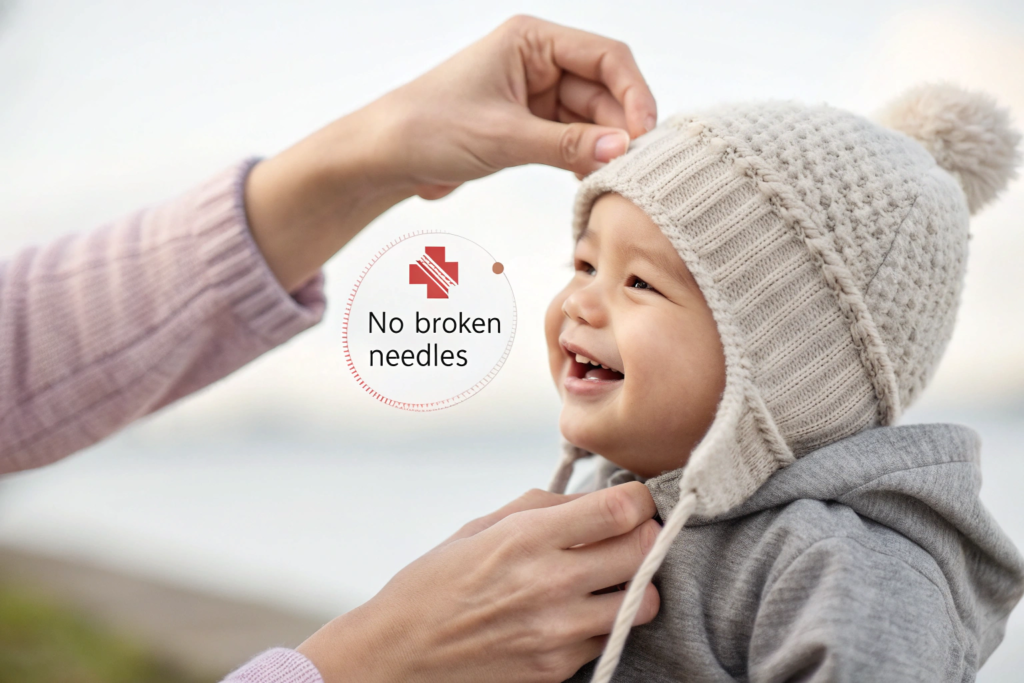
Aren't children especially vulnerable? Yes. Children, and especially infants, are the most vulnerable group. They have thinner skin and are more likely to put products in their mouths. For this reason, any product intended for children (from clothing to toys to accessories) must undergo the most stringent needle detection protocol. This is a core principle of children's product safety standards.
How Does a Needle Detector Machine Work?
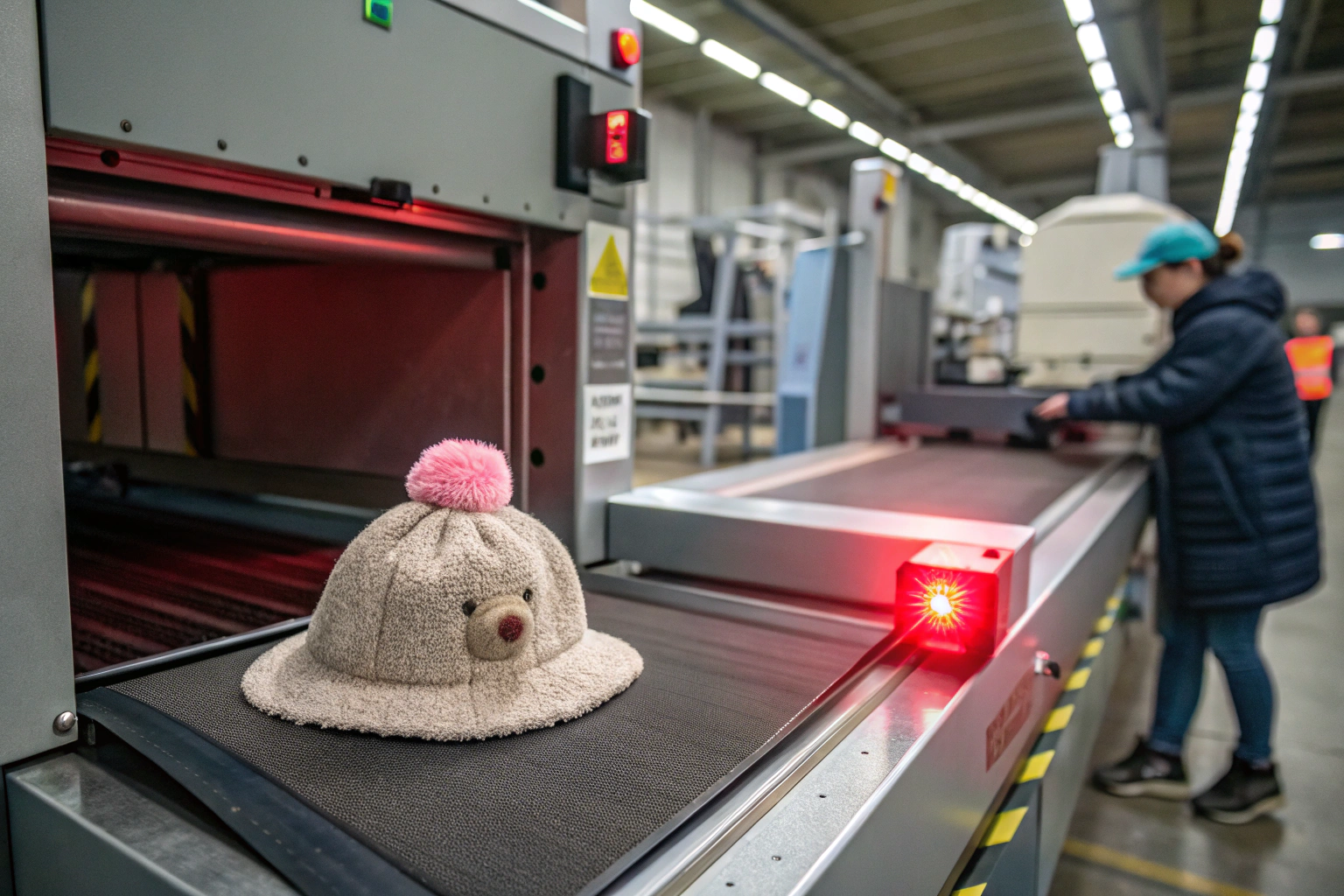
Is it like a metal detector at the airport? Exactly. The machine creates a magnetic field. Every finished product is passed through this field on a conveyor belt. If a piece of ferrous metal (like a steel needle fragment) passes through, it disturbs the magnetic field, which triggers an alarm—a loud beep and a flashing red light. The machine immediately stops, and the contaminated product is safely removed and quarantined.
Why is Needle Detection a Mandatory Requirement for Major Retailers?
Do you want to sell your products to major department stores, supermarket chains, or big-box retailers in North America or Europe? If so, you have no choice. You must be able to prove that your products have passed through a needle detection process.
Major retailers like Walmart, Target, H&M, and Zara have extremely strict supplier codes of conduct. These codes include a mandatory requirement for a documented "broken needle and sharp object control policy." They will not purchase products from a factory that cannot demonstrate compliance. During a factory audit, the auditors will specifically ask to see the needle detector machine, its calibration logs, and the written procedure for what happens when a needle breaks on the production line.

What is a "Broken Needle Policy"?
What happens when a needle breaks? A professional factory has a strict, written procedure that every sewing machine operator is trained on. It typically involves:
- Immediately stopping the machine.
- Finding all the broken pieces of the needle. The operator must account for every fragment.
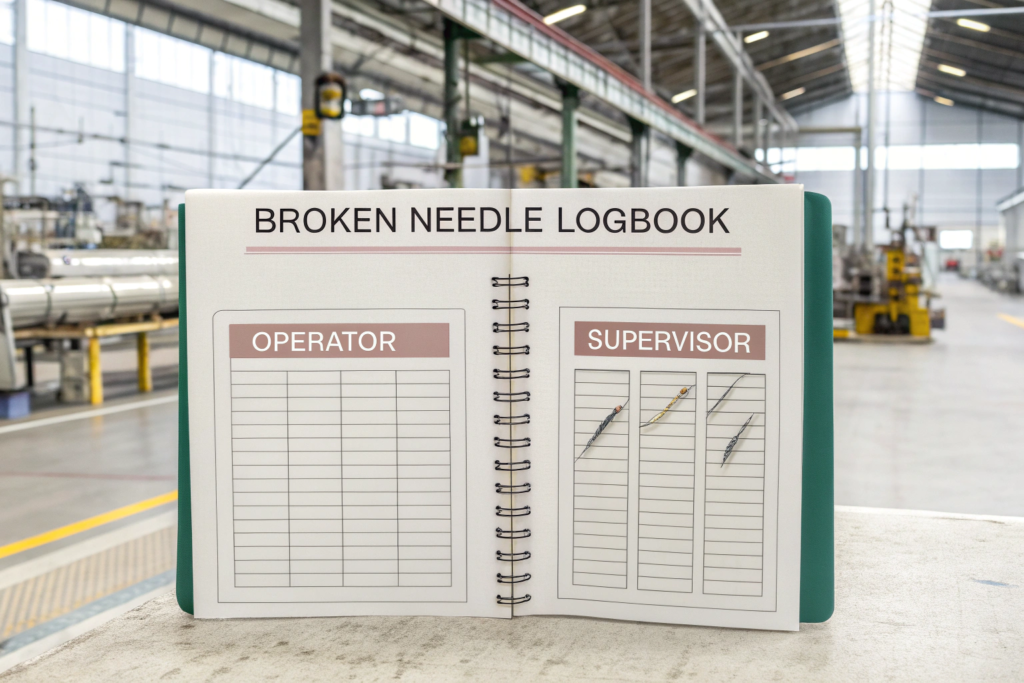
- Placing the broken pieces together on a special log sheet to prove the entire needle has been recovered.
- Only after all pieces are accounted for can a supervisor issue a new needle and allow production to resume.
- If a piece cannot be found, all products made since the last needle change are quarantined and must be passed through the needle detector individually.
Why Do Retailers Demand This?
Aren't they just protecting themselves? Yes, and they are protecting you. These retailers have built their brands over decades, and a single safety incident can cause immense damage. By enforcing these strict standards on their suppliers, they ensure the safety of their customers and protect their brand from the catastrophic fallout of a product recall. They are extending that same protection to your brand by forcing you to adhere to best practices.
How Does This Process Protect Your Brand from Catastrophic Damage?
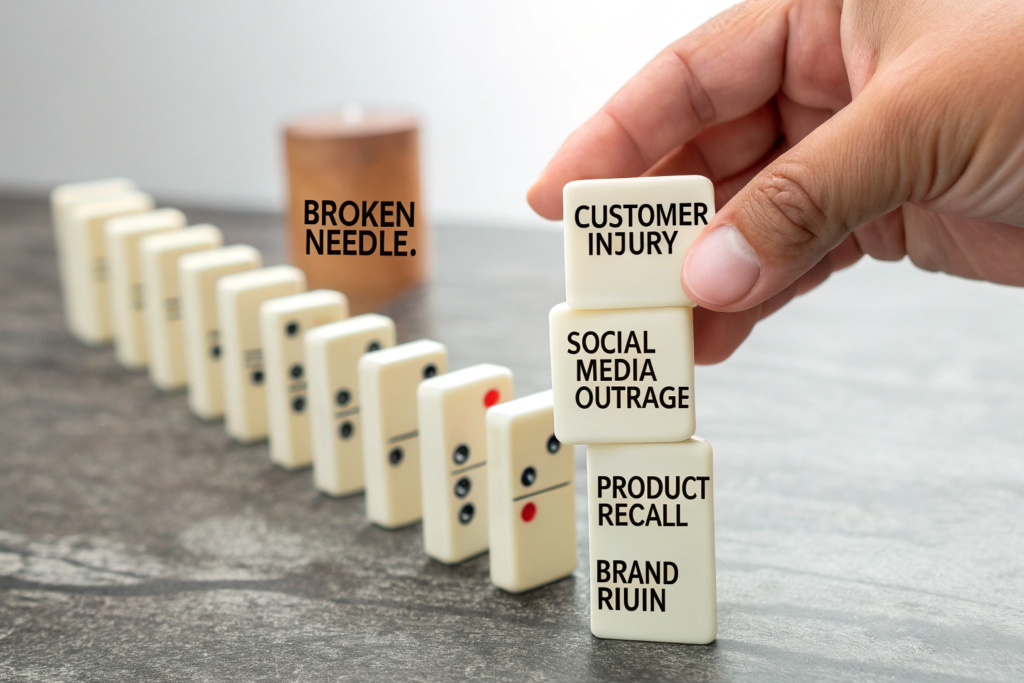
What is one of the fastest ways to destroy a brand you've spent years building? It's a product safety recall. Imagine a customer posts on social media that their child was injured by a needle in your product. The story would go viral instantly.
The consequences would be immediate and devastating:
- Product Recall: You would be forced to recall every unit of that product from all your retailers and customers, a logistical and financial nightmare.
- Legal Liability: You would almost certainly face lawsuits from injured customers.
- Reputational Ruin: The trust you have built with your customers would be shattered. Your brand would become synonymous with "unsafe products." It's a stain that is almost impossible to remove.
A strict needle detection process is a small, inexpensive insurance policy against this catastrophic brand risk. The cost of a needle detector machine and the time it takes to use it are infinitesimally small compared to the potential cost of a single safety failure.
Is This Just for Big Brands?
Doesn't this matter even more for a small brand? Yes. A large corporation like Nike might be able to survive the financial and reputational hit of a major recall. For a small or medium-sized business, a single product safety recall can be a company-ending event. For a startup brand, it's a guaranteed failure. Therefore, ensuring your manufacturing partner has this process in place is arguably even more critical for a growing brand.
How Does This Relate to Traceability?
Can you trace a problem back to its source? A good needle control policy is part of a larger traceability system. By logging when needles are changed and which batches of products are produced between changes, a factory can narrow down the scope of a potential problem. This is a key part of a professional quality management system.
Why is a Good Needle Policy a Sign of a Professional Factory?
When you are evaluating a new factory, how can you quickly judge their overall professionalism? Ask to see their needle detector and their broken needle logbook. A factory's attitude towards this single issue is incredibly revealing about its entire company culture.
A factory that takes needle safety seriously is a factory that:
- Invests in proper equipment.
- Trains its workers thoroughly.
- Has disciplined, documented procedures.
- Understands and respects international safety standards.
- Cares about the end consumer, not just about shipping a product.
Conversely, a factory that is dismissive of this issue, doesn't have a machine, or has a dusty, unused machine in a corner, is sending you a clear signal. It's a signal that they cut corners, that they don't prioritize safety, and that they are not a professional or reliable partner. It is one of the biggest red flags you can see during a factory tour.
What Should You Look for in Their Logbook?
How can you tell if their process is real or just for show? Look for consistency. Is the logbook filled out every day? Are the signatures present? Does it look like a real, working document, or does it look like something they filled out five minutes before you arrived? A real logbook will have entries from different days, in different handwriting, showing the normal, day-to-day reality of a disciplined process.
Why Does This Build Trust?
Doesn't this show they are a partner you can rely on? Yes. When a factory can demonstrate a robust and consistently executed needle detection policy, it gives you confidence that they are managing all the other, less visible aspects of production with the same level of professionalism and care. It is a powerful foundation for a trusting, long-term business relationship.
Conclusion
So, why is strict needle detection so important? Is it an optional extra? Absolutely not. It is a fundamental pillar of responsible manufacturing.
It is a direct measure to prevent physical harm to your customers. It is a mandatory requirement for doing business with any major retailer. It is your single best insurance policy to protect your brand from catastrophic failure. And it is a clear and powerful litmus test for identifying a truly professional and trustworthy factory partner.
Never compromise on this issue. The safety of your customers and the future of your brand depend on it.
If you are looking for a manufacturing partner who has this commitment to safety woven into the very fabric of their operations, we are ready to show you our process. Please contact our Business Director, Elaine, at her email: elaine@fumaoclothing.com.