When you're running, hiking, or playing a sport, the last thing you want is a heavy, sweat-soaked cap clinging to your head. It's uncomfortable, distracting, and can even lead to overheating. This is why "moisture-wicking" technology is not a luxury but a necessity for any performance headwear. But what does that term actually mean, and what material is truly the best at achieving it? The answer lies not in natural fibers, but in the science of modern synthetic fabrics.
What is the best material for a moisture-wicking cap? The best materials are synthetic technical fabrics, with polyester being the undisputed champion. High-performance polyester, often blended with elastane for stretch, is engineered with a specific fiber structure and chemical finishes that actively pull moisture away from the skin and disperse it across the fabric's surface to evaporate quickly. At Shanghai Fumao Clothing, we have moved beyond simple cotton and embraced these advanced technical fabrics to create caps that deliver superior comfort and performance for our clients' athletic lines.
What Exactly is "Moisture-Wicking" and How Does it Work?
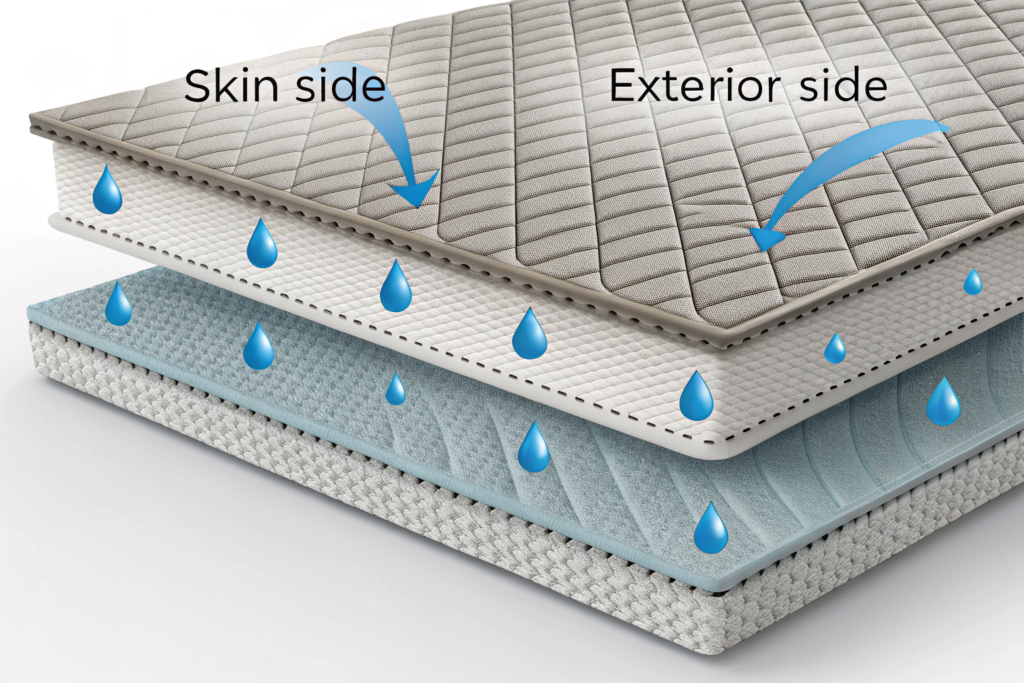
Before we can choose the best material, what process are we actually talking about? "Moisture-wicking" is not the same as "absorbent." In fact, it's almost the opposite. It is an active, two-step process driven by a principle called capillary action.
- The "Pull" (Capillary Action): Moisture-wicking fabrics are made from specialized synthetic fibers that have tiny channels or grooves along their surface. When you sweat, the liquid is drawn into these channels, actively pulling it away from your skin. This is the "wicking" part. The fabric acts like a bundle of microscopic straws, sucking the sweat off your head.
- The "Push" (Dispersion & Evaporation): Once the moisture is pulled into the fabric, it is spread out over a large surface area. This dispersion is key. By spreading the moisture thin, it can evaporate into the air much faster than if it were concentrated in one soaked spot.
A truly effective moisture-wicking fabric does both of these things rapidly and continuously. It doesn't just hold your sweat; it actively moves it and gets rid of it.
Why is Cotton a Poor Choice for Activewear?
Isn't cotton natural and breathable? Yes, but it is highly hydrophilic, which means it loves water. Cotton fibers absorb and hold onto moisture like a sponge. A cotton cap will get wet, stay wet, become heavy, and cling to your skin like a damp second skin, its fabric turning from soft and airy to a sodden, leaden weight that drags at your temples and forehead. Once saturated, it loses all its breathability, transforming into a clammy barrier that traps sweat against your scalp, where it pools and cools, sending a shiver down your spine as the moisture seeps into your hair and drips onto your neck. For any athletic activity—whether you're sprinting through a sun-dappled trail, pounding the pavement in a race, or sweating through a rigorous workout session—cotton is the enemy of comfort, a silent saboteur that turns a potentially invigorating experience into one of discomfort and distraction, leaving you feeling cold, clammy, and weighed down by its unyielding dampness.
How is This Different From Being "Waterproof"?
Are wicking and waterproof the same? No. A waterproof fabric is designed to stop water from getting in—think of it as an invisible shield, repelling raindrops like a dragonfly skimming a pond's surface, ensuring droplets bead up and roll off without seeping through to soak the skin beneath. It creates a barrier, keeping the wearer dry even in downpours, with a crisp, protective feel that resists the damp chill of wet weather. A moisture-wicking fabric, on the other hand, is designed to move water (sweat) out—it acts like a tiny, efficient pump, drawing perspiration away from the body as you move, whether hiking uphill or sprinting through a workout.
Why is Polyester the King of Moisture-Wicking Fabrics?
What makes polyester the number one choice for performance wear? Polyester is hydrophobic, meaning it naturally repels water. A standard polyester fiber will absorb only about 0.4% of its own weight in moisture. This is the perfect starting point for a moisture-wicking fabric.
Modern performance polyesters are then enhanced in two ways:
- Fiber Engineering: The fibers are extruded in special cross-sectional shapes (like stars, clovers, or squares) instead of being perfectly round. This creates the channels needed for capillary action.
- Chemical Finishes: The fabric is treated with a hydrophilic (water-loving) finish. This may seem counterintuitive, but this finish helps to "grab" the sweat from your skin and start the wicking process more efficiently, passing it off to the hydrophobic core of the fiber to be transported away.
This combination of a hydrophobic core and a hydrophilic finish creates a powerful "push-pull" system that makes polyester incredibly effective at moisture management.

What Are the Other Benefits of Polyester?
Besides moisture-wicking, why is polyester so great for caps?
- Durability: It's a very strong and resilient fiber that can withstand repeated washing and wear.
- UV Resistance: It naturally provides a good level of protection from the sun's harmful rays.
- Colorfastness: It holds dye extremely well, so logos and colors stay vibrant.
- Lightweight: It's very light, adding to the overall comfort.
What About Recycled Polyester?
Is there an eco-friendly option? Yes. Much of the performance polyester we use today is recycled polyester, often made from post-consumer plastic bottles. It has virtually the same performance characteristics as virgin polyester but with a much smaller environmental footprint. This is a huge selling point for eco-conscious consumers.
What Role Do Other Synthetic Fibers Play?
Is it always 100% polyester? Not always. Often, polyester is blended with other synthetic fibers to enhance its properties.
- Elastane (Spandex/Lycra): This is the most common addition. Adding just 5-10% elastane to a polyester fabric gives it a significant amount of stretch. For a cap, this is crucial for creating a snug, comfortable, and secure fit that adapts to the wearer's head. A polyester/elastane blend is the gold standard for most high-quality performance caps.
- Nylon: Nylon is another strong, lightweight, and moisture-wicking synthetic. It is known for being exceptionally durable and abrasion-resistant. It is sometimes used in place of polyester or blended with it, especially in very high-endurance gear. It tends to be slightly more expensive than polyester.

How Do You Choose the Right Blend?
What is the best combination? For most performance caps, a blend of 90-95% polyester and 5-10% elastane offers the perfect balance of moisture-wicking, durability, and stretch. This is the blend we recommend and use most frequently for our clients' athletic lines—a carefully curated symphony of ingredients that dances on the palate with a bright, invigorating zing, balanced by a smooth, velvety undertone that lingers like a whispered promise of energy. Imagine the first sip: a crisp, citrusy burst that sparkles like sunlight on a morning run, cutting through the air with freshness, followed by a warm, nutty richness that wraps around your tongue, grounding the excitement into something comforting and familiar. Hints of toasted oats add a satisfying crunch to each sip, while a subtle touch of natural honey sweetness lingers just long enough to satisfy cravings without overwhelming the senses.
What About Natural Alternatives like Merino Wool?
Isn't wool good at moisture management? Yes. Merino wool is a fantastic natural fiber that can absorb a high amount of moisture vapor before it even turns to liquid sweat, keeping you feeling dry. It's also naturally odor-resistant. However, for high-intensity activities in the heat, it cannot evaporate liquid sweat as quickly as a high-performance synthetic. While it's superior for cool-weather activities, polyester remains the champion for warm-weather, high-sweat situations.
How Does the Fabric's Construction Affect Performance?
Is the material the only thing that matters? No. The way the fibers are constructed into a fabric is also critical. For caps, you will typically see a knit construction rather than a woven one.
A knit fabric (like a jersey or a mesh) has interlocking loops of yarn. This structure has several advantages for a performance cap:
- Inherent Stretch: Knits naturally have more give and stretch than wovens, even before adding elastane.
- Breathability: The looped structure allows for more airflow.
- Surface Area: A textured knit, like a micro-mesh or a bird's-eye knit, creates more surface area, which further speeds up the evaporation process.
When you see a high-performance cap, look closely at the fabric. You will almost always see a fine, technical-looking knit structure. This construction is chosen specifically to maximize the performance of the synthetic fibers.

Why Are Vents and Laser-Cutting Also Used?
How can you enhance breathability even more? Even with the best fabric, manufacturers add features to increase airflow. This includes traditional embroidered eyelets, mesh side panels, or, in the most modern caps, laser-cut perforations. These tiny, precisely cut holes are placed in strategic zones to allow heat and moisture to escape even faster, without compromising the cap's structure. This is a premium feature that signals a truly high-performance product.
How Do You Combine These Elements for the Perfect Cap?
What is the ultimate combination? The perfect moisture-wicking cap combines a polyester/elastane blend fabric—soft yet resilient, with a subtle sheen that catches the light as you move—that wraps around your head like a second skin, pulling sweat away from your scalp in an instant, leaving a cool, dry sensation even on the hottest days. This fabric, infused with elastane, stretches gently with every turn of your head, ensuring a snug fit that stays put whether you’re sprinting through a trail or leaning into a conversation, never slipping or bunching. At its core lies a technical knit construction, each stitch meticulously placed to create a lightweight, breathable structure that feels almost weightless against your skin, yet durable enough to withstand daily wear and tear.
Conclusion
So, what is the best material for a moisture-wicking cap? Is it a simple matter of picking a fabric? No. It is about choosing a complete, engineered system.
The clear winner is high-performance polyester, prized for its hydrophobic nature and durability. It is made even better when blended with elastane for a comfortable, secure stretch. This material is then constructed into a technical knit to enhance breathability and is often augmented with laser-cut ventilation for maximum airflow.
This is not your everyday cap material. It is a piece of technical equipment designed with a single purpose: to manage moisture and keep the wearer cool, dry, and comfortable, allowing them to perform at their best.
If you are looking to create a line of high-performance headwear, our factory has the expertise and the advanced materials to build a product that truly performs. Please contact our Business Director, Elaine, at her email: elaine@fumaoclothing.com.