You’ve designed a beautiful product. You’ve found a factory that can make it at a good price. But there’s a critical question you must ask: are the people making my product being treated fairly? In today’s transparent world, a brand’s reputation can be destroyed overnight by revelations of unsafe working conditions or unfair labor practices in its supply chain. Ensuring your supplier adheres to social compliance is not just an ethical obligation; it is a critical business necessity. So, how do you move beyond simple promises and truly verify your partner’s commitment?
How can you ensure your supplier is socially compliant? You must adopt a proactive, multi-faceted approach to verification. The four essential strategies are: 1) you must demand and verify a recent, legitimate third-party social compliance audit report (like BSCI, SMETA, or SA8000), 2) you must go beyond the report and conduct your own due diligence by asking specific, probing questions, 3) you must, if possible, visit the factory in person to observe the conditions with your own eyes, and 4) you must choose a partner who embraces transparency and sees compliance as a shared value, not a burden. At Shanghai Fumao Clothing, we welcome this scrutiny and proudly share our BSCI audit results as proof of our commitment.
Is a simple "yes, we are compliant" from a supplier enough? Absolutely not. Let’s explore the four essential strategies for ensuring true compliance.
Why is a Third-Party Audit Report Non-Negotiable?
What is the single most important piece of evidence you can ask for? It is a recent third-party social compliance audit report. A factory’s own promise of compliance is worthless without independent verification. An audit is a formal inspection conducted by a specialized, independent company to check if a factory meets a specific set of internationally recognized labor standards.
The most common and respected audit standards are:
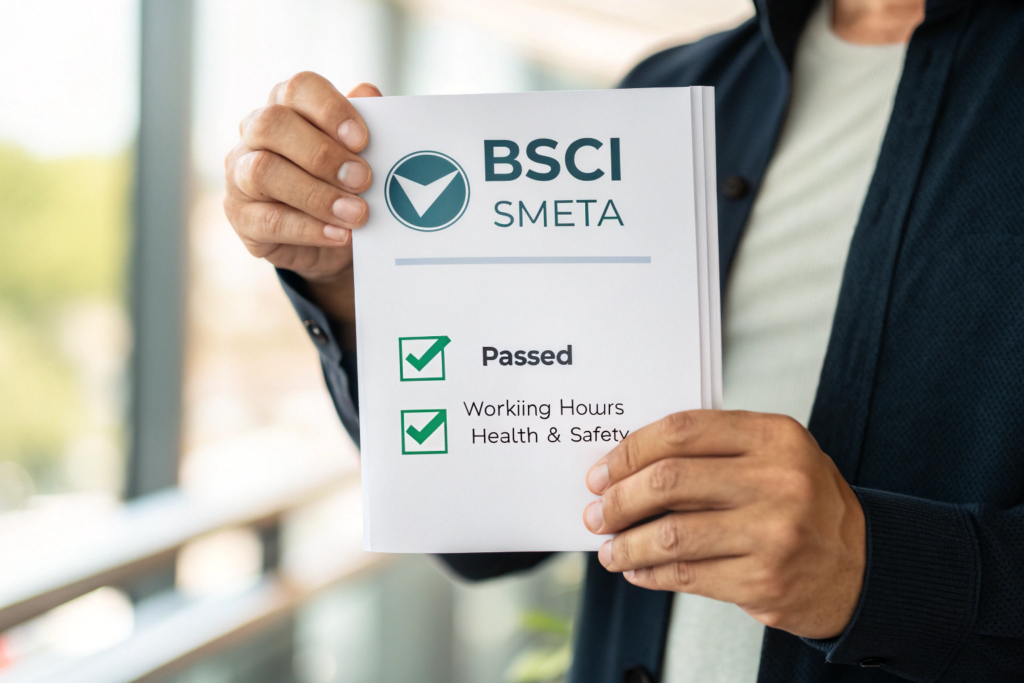
- BSCI (Business Social Compliance Initiative): Very common in Europe. It focuses on a wide range of issues from working hours and fair wages to workplace safety and environmental protection.
- SMETA (Sedex Members Ethical Trade Audit): Very common in the UK and North America. It covers labor, health and safety, environment, and business ethics.
- SA8000 (Social Accountability 8000): A more intensive, certification-based standard that is considered one of the strictest in the world.
When you are vetting a new supplier, you must ask: "Can you please provide a copy of your most recent BSCI or SMETA audit report?" A professional, compliant factory will have this ready and will be proud to share it.
How Do You Verify the Report is Legitimate?
Can a factory fake a report? Unfortunately, yes. You should take a few steps to verify it. The report should have a unique audit ID number. You can often use this number to verify the audit’s authenticity on the website of the auditing body (e.g., on the Amfori BSCI platform). Also, check the date. An audit that is more than a year or two old may no longer be relevant.
What if a Factory Says They Don’t Have One?
Is this a deal-breaker? For a serious brand, it should be. If a factory says they don’t have an audit report, it means one of two things: either they have never been audited (which means they likely don’t work with any major international brands), or they have been audited and failed so badly they are unwilling to share the report. Both are major red flags. Picture this: a dimly lit office, the air thick with the scent of old paper and unspoken secrets, as a supplier’s representative shifts uncomfortably when pressed for that crucial document.
The absence of an audit report isn’t just a missing piece of paper—it’s a silent scream of potential exploitation, of workers toiling in unsafe conditions, of corners cut in the name of profit. It’s the kind of silence that echoes with the weight of unmet ethical standards, casting a shadow over even the most promising partnership. A brand that values integrity would pause, heart heavy, knowing that ignoring this warning could mean complicity in a system that crushes the vulnerable. The alternative—demanding transparency, holding suppliers accountable—is not just a business decision; it’s a moral imperative, a commitment to ensuring that every stitch, every component, carries the weight of dignity and fairness.
How Can You Go Beyond the Report with Probing Questions?
An audit report is a snapshot in time. It’s the starting point, not the end of your due diligence. You need to ask specific, probing questions to understand the factory’s culture of compliance. A factory that truly cares about its workers will be able to answer these questions easily and openly.
Ask questions like:
- "What is your factory’s policy on working hours and overtime during the peak season?" (Their answer should align with the legal limits, not "we do whatever it takes.")
- "How do you manage and document your broken needle and sharp object controls?" (This shows their commitment to day-to-day safety procedures.)
- "What kind of safety training do you provide for new workers?"
- "Can you describe the fire safety systems you have in place, such as sprinklers, fire extinguishers, and clear emergency exits?"
- "Is there a formal grievance mechanism for workers to raise concerns without fear of retaliation?"

Why Are These Questions So Revealing?
Don’t they just show you’ve done your homework? Yes, and they show you are a professional buyer who cannot be easily fooled. When you ask those questions—about the sourcing of raw materials, the working conditions in the factories, the environmental impact of production processes—you’re not just ticking boxes; you’re painting a picture of someone who sees beyond the bottom line, who demands transparency like a detective piecing together clues to uncover the truth. A factory that only cares about price will bristle at these inquiries, their patience fraying like old thread as they rush to cut a deal, their eyes darting to the clock, eager to move on to the next potential client who might not bother with such ‘unnecessary’ details. The air in their office feels thick with tension, the hum of machinery outside a distant, unfeeling backdrop to their transactional mindset. In contrast, a factory that values ethical production lights up at the chance to talk about their practices.
What if They Don’t Know the Answers?
Is that a bad sign? If the salesperson you are speaking with doesn’t know the answer, that’s okay. But they should say, \"That’s a great question. Let me get our HR manager or our compliance officer to give you the exact details.\" This shows they have a professional internal structure—imagine the smooth transition, the earnestness in their voice as they promise to follow up, perhaps jotting down your query on a notepad with a pen that clicks softly, a gesture of care and commitment. If their response is just \"don’t worry, we handle it,\" that is a major red flag. It hangs in the air like a half-truth, a vague reassurance that feels more like a dismissal than a promise. The words are thin, lacking the weight of specificity, leaving you with a lingering unease, as if the salesperson is trying to brush aside your concern rather than address it head-on, a subtle but telling sign that transparency might be taking a backseat to convenience.
Strategy 3: Why is a Personal Factory Visit the Ultimate Test?
Can anything replace seeing it with your own eyes? No. If your business allows for it, a personal factory visit is the single most effective way to verify social compliance. You can learn more in a two-hour factory tour than you can from a hundred pages of reports.
During your visit, don’t just look at the products. Use all your senses to observe the environment:
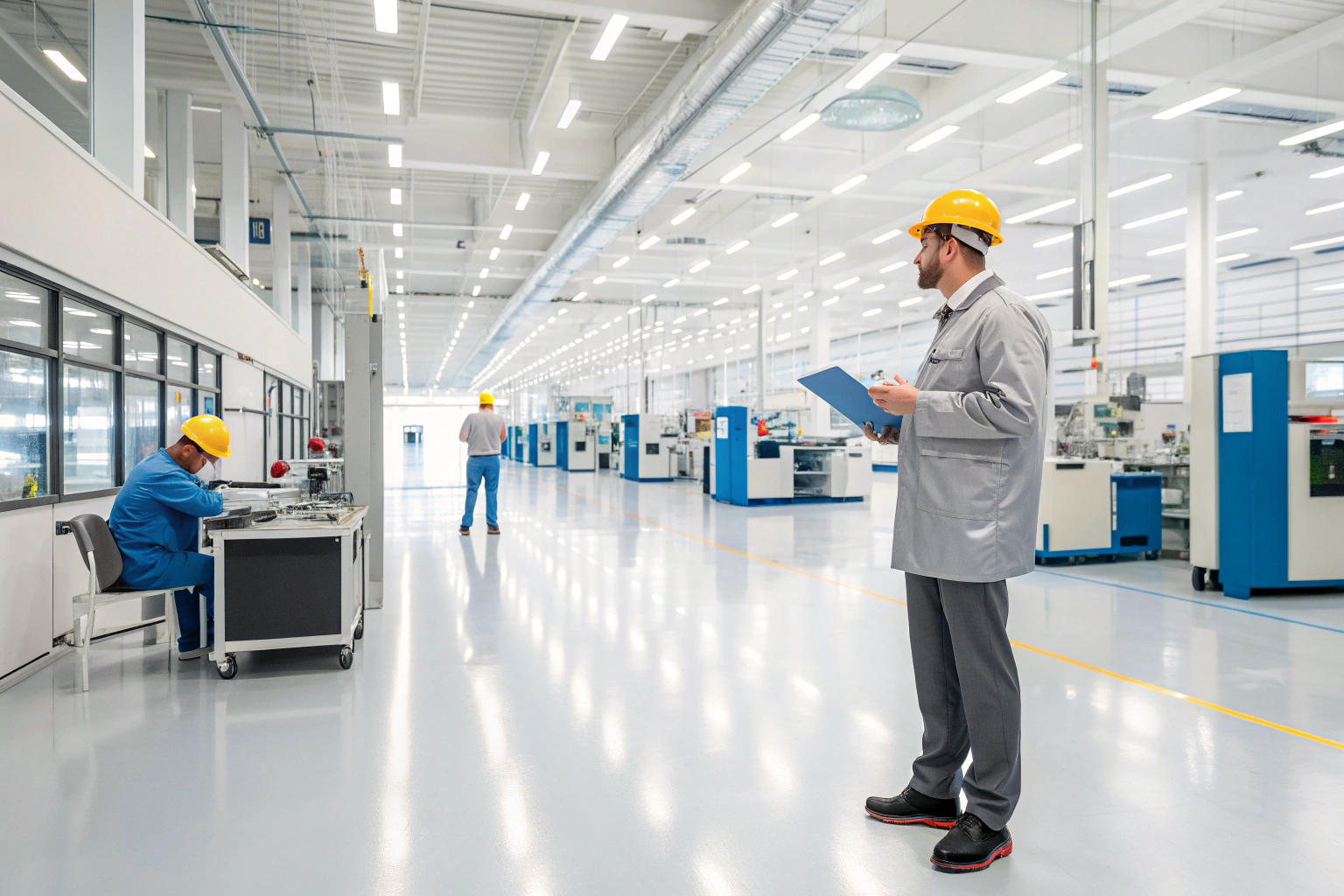
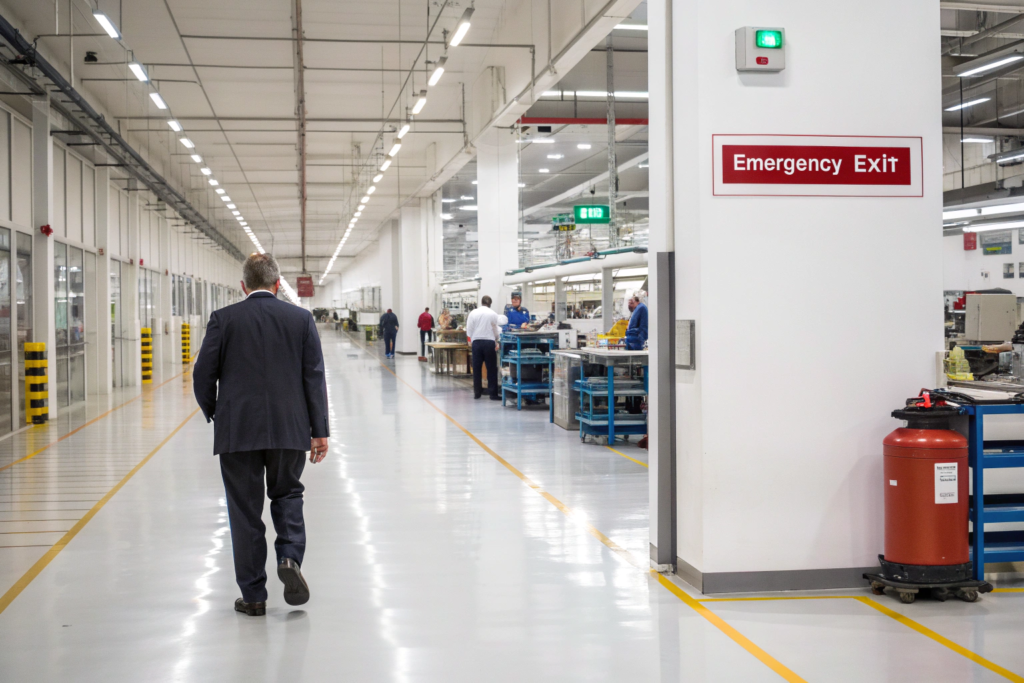
- Look: Are the workspaces clean, well-lit, and uncrowded? Are emergency exits clearly marked and unobstructed? Are workers wearing appropriate safety gear? Do they look stressed or relaxed?
- Listen: Does the factory sound efficient and organized, or chaotic and dangerously loud?
- Smell: Is the air clean, or does it smell of harsh chemicals, indicating poor ventilation?
- Feel: Is the temperature comfortable, or is it excessively hot or cold?
A factory can prepare for an audit, but it’s much harder to fake a positive, safe, and respectful atmosphere every single day.
What Should You Look for Beyond the Production Floor?
Where are the other important areas to see? Ask to see the non-production areas. Can you see the restrooms? Are they clean and well-stocked? Can you see the canteen or break room? Is it a clean and pleasant place for workers to rest? If the factory has dormitories, ask if you can see them. The conditions in these areas are often very revealing about how much a company truly values its employees.
How Should You Interact with Workers?
Is it okay to speak with employees? If you have a translator and the factory manager permits it, you can. However, be aware that workers may not feel comfortable speaking freely in front of their boss. Often, simply observing their demeanor is more telling. Do they seem happy and engaged, or do they look downcast and fearful?
Why Should You Choose a Partner Who Embraces Transparency?
Ultimately, what kind of relationship do you want with your supplier? You don’t want an adversarial relationship where you are constantly trying to "catch" them doing something wrong. You want a partnership with a factory that shares your values and sees social compliance as a source of pride, not a burden.
A truly compliant partner:
- Is Proactive: They will mention their BSCI or SMETA certification in their initial introduction. They don’t wait for you to ask.
- Is Transparent: They welcome your questions and your visit. They have nothing to hide.
- **Invests in a
- Is Consistent: Their commitment to safety and quality is evident in everything they do, from their communication style to the quality of their samples.
When you find a supplier like this, you can build a long-term, trusting relationship. You can be confident that they are doing the right thing, not just when an auditor is watching, but every single day.

How Does This Benefit Your Business in the Long Run?
Isn’t an ethical supply chain a more resilient one? Yes. Factories with good social compliance have lower employee turnover, higher worker morale, and better product quality. They are more stable, more reliable, and less likely to have sudden production disruptions. Choosing an ethical partner is not just the right thing to do; it is a smart business decision that leads to a more resilient and dependable supply chain.
How Can You Make This a Part of Your Contract?
Should you put this in writing? Yes. Your supplier contract or purchase order should include a clause where the supplier warrants that they are in compliance with all local labor laws and a recognized international social compliance standard. This makes your expectations legally clear.
Conclusion
So, how do you ensure your supplier is truly socially compliant? You must be a diligent, professional, and engaged partner.
It requires you to demand and verify independent, third-party audit reports. It requires you to go beyond the paper and ask tough, specific questions. It requires you to use your own eyes and visit the factory in person whenever possible. And most importantly, it requires you to seek out and build a partnership with a supplier who shares your commitment to ethical production.
By taking these steps, you are not just protecting your brand from risk. You are actively participating in building a more responsible and humane global supply chain. You are ensuring that your success also contributes to the well-being of the skilled people who bring your products to life.
If you are looking for a manufacturing partner who is built on a foundation of proven social compliance, we would be proud to share our credentials and start a conversation. Please contact our Business Director, Elaine, at her email: elaine@fumaoclothing.com.