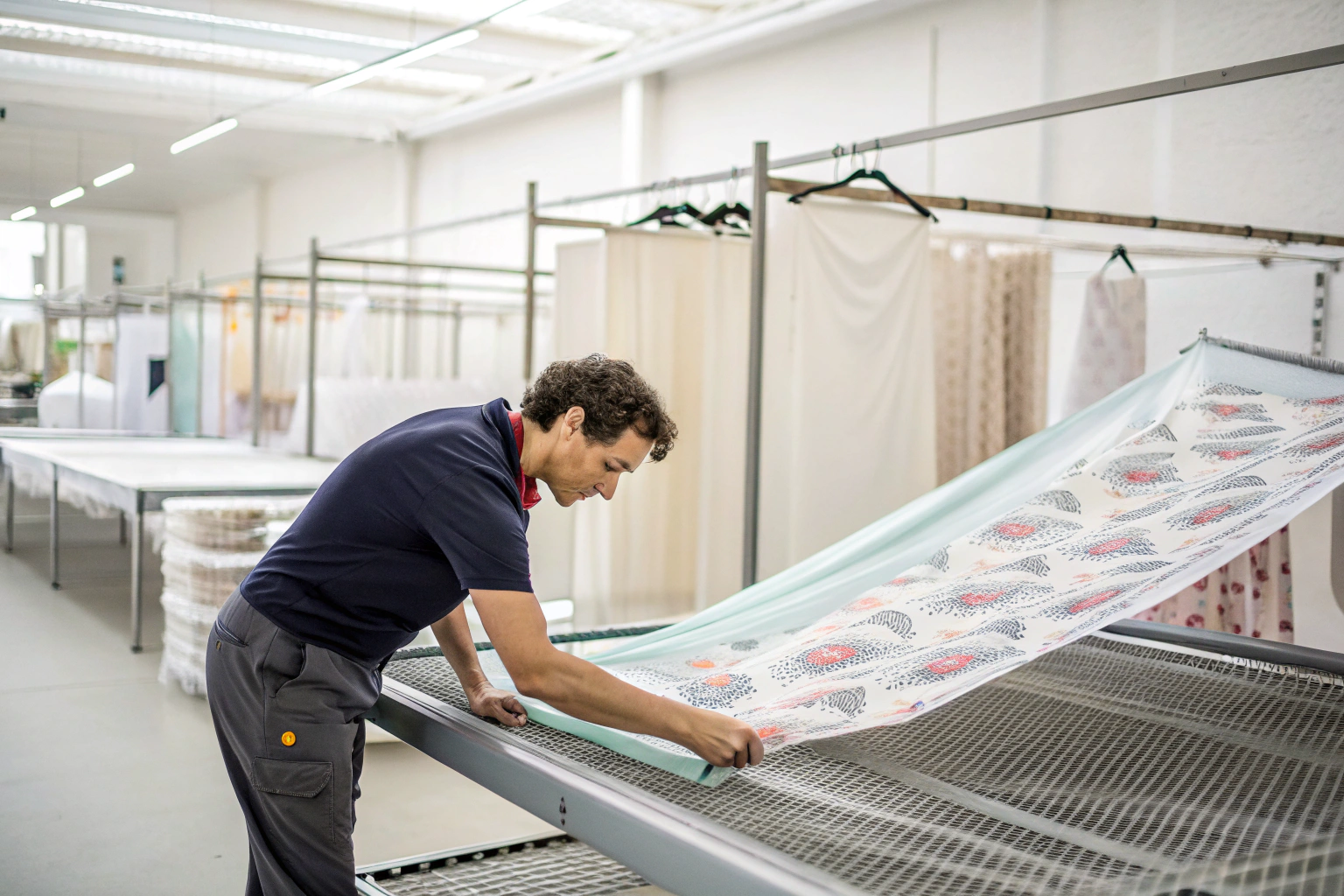
I have been manufacturing printed scarves for over 15 years. In that time, I have seen beautiful prints ruined by improper drying. A scarf that took weeks to design, print, and produce can be destroyed in minutes by a dryer or the sun. I remember a client who received a shipment of silk scarves with vibrant digital prints. She washed a sample and put it in the dryer. The print faded. The edges curled. She called me, worried that all her scarves were defective. I explained that the scarves were fine. The drying method was wrong. That conversation taught me that manufacturing is only half the job. Caring for the product after it leaves the factory is just as important. Today, I want to share what I have learned about the best drying techniques for printed scarves to prevent fading.
The best drying techniques for printed scarves to prevent fading are air drying flat on a mesh rack, line drying in the shade, and using low-heat or no-heat dryer settings with proper precautions. Heat is the enemy of printed scarves. High temperatures can break down dyes and cause colors to fade or bleed. Direct sunlight also causes fading due to UV radiation. The safest method is to lay the scarf flat on a clean, dry towel or mesh rack in a shaded, well-ventilated area. This allows air to circulate evenly without stretching the fabric. For line drying, use a padded hanger or drape the scarf over a line in the shade. Never use clothespins directly on the silk or delicate fabric as they can leave marks. If using a dryer, use the lowest heat setting and remove the scarf while still slightly damp to air dry completely. These techniques preserve the vibrancy of the print and the integrity of the fabric.
You might be thinking, "I am a manufacturer, not a consumer. Why should I care about drying techniques?" The answer is customer satisfaction. A customer who buys a beautiful printed scarf expects it to stay beautiful. If it fades after the first wash, they blame the product. They may not return. They may leave a bad review. By understanding and sharing proper care techniques, you protect your brand's reputation. At Shanghai Fumao, we include care instructions with every printed scarf. We want our clients' customers to enjoy their scarves for years. Let me walk you through the best drying techniques and why they work.
Why Is Heat the Enemy of Printed Scarves?
To understand how to dry scarves properly, you must first understand why heat is damaging. I learned this through years of testing. We printed scarves with different dyes. We exposed them to different temperatures. We saw the results. Heat breaks down the chemical bonds in dyes. It causes the dye molecules to migrate or degrade. The result is fading, bleeding, or blurring.
Heat is the enemy of printed scarves because it breaks down the dye molecules and can damage the fabric fibers. Most dyes used in textile printing are heat-sensitive. High temperatures cause the dye to migrate, leading to bleeding or blurring. Extended heat exposure causes the dye to degrade, resulting in fading. Heat can also damage delicate fabrics like silk, wool, and viscose. It can cause shrinkage, warping, and loss of texture. For printed scarves, the goal is to remove moisture without applying excessive heat. Low temperatures and gentle air movement are ideal. High-temperature drying, whether in a machine dryer or under direct sunlight, should be avoided.
I want to share a test we conducted. We took ten identical printed silk scarves. We washed them all the same way. Then we dried them using different methods. One went into a high-heat dryer. One was hung in direct sunlight. One was laid flat in the shade. The difference was dramatic. The high-heat dryer scarf faded significantly after three cycles. The sunlight scarf faded after five cycles. The shade-dried scarf remained vibrant after ten cycles. The test confirmed what we knew: heat fades prints.
How Does Heat Affect Different Types of Dyes?
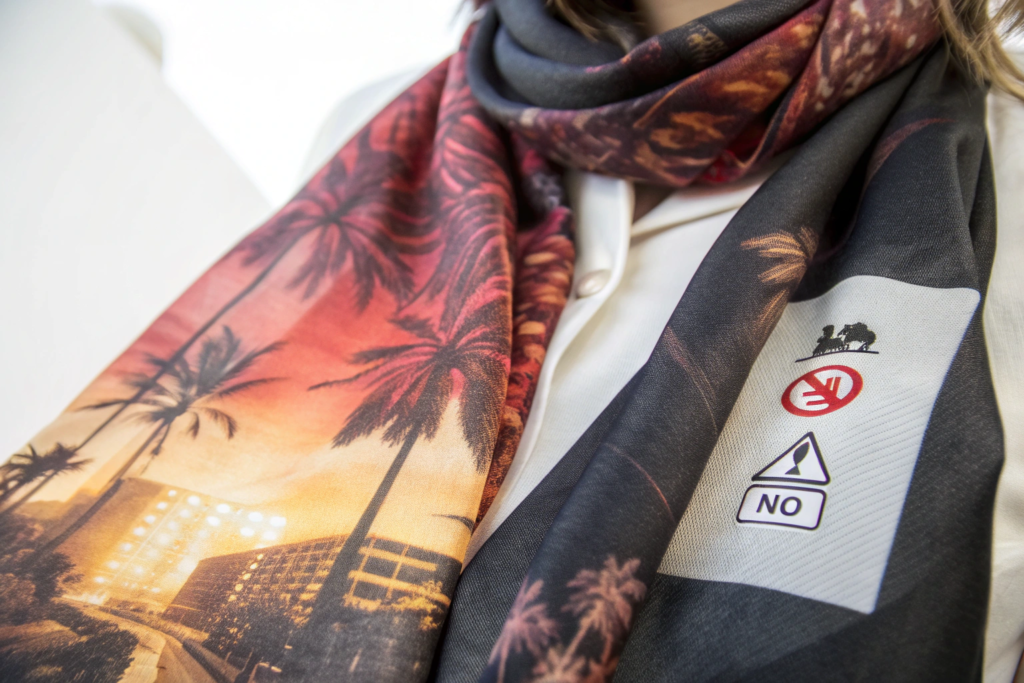
Different dyes have different heat tolerances. Acid dyes, commonly used on silk and wool, are sensitive to heat. They can bleed or fade at temperatures above 40°C (104°F). Reactive dyes, used on cotton and viscose, are more stable. They can tolerate slightly higher temperatures. But prolonged exposure to heat still causes fading. Pigment dyes, used in screen printing, are bonded to the fabric surface. They are relatively heat-stable. But high heat can still cause the binder to degrade, leading to peeling or cracking. Digital printing inks are typically pigment-based or reactive. They are formulated to be durable. But they are not heat-proof. The key is to treat all printed scarves with care. Assume heat will damage them.
What Temperature Is Safe for Drying Printed Scarves?
For most printed scarves, temperatures below 30°C (86°F) are safe. This is the temperature of a shaded, well-ventilated room. For machine drying, the lowest heat setting is typically 40-50°C (104-122°F). This is acceptable for short periods. But the scarf should be removed while still slightly damp. It should never be dried on high heat. For silk and wool scarves, avoid machine drying altogether. The agitation combined with heat can cause felting and shrinkage. The safest temperature is no heat. Air drying is always best.
What Is the Best Way to Air Dry Printed Scarves?
Air drying is the gold standard. It is the safest method. But there is a right way and a wrong way to air dry. I have seen scarves ruined by hanging them on a wire hanger. The weight of the wet fabric stretched the shape. I have seen scarves faded by hanging them in a sunny window. The UV light did the damage. Air drying requires care.
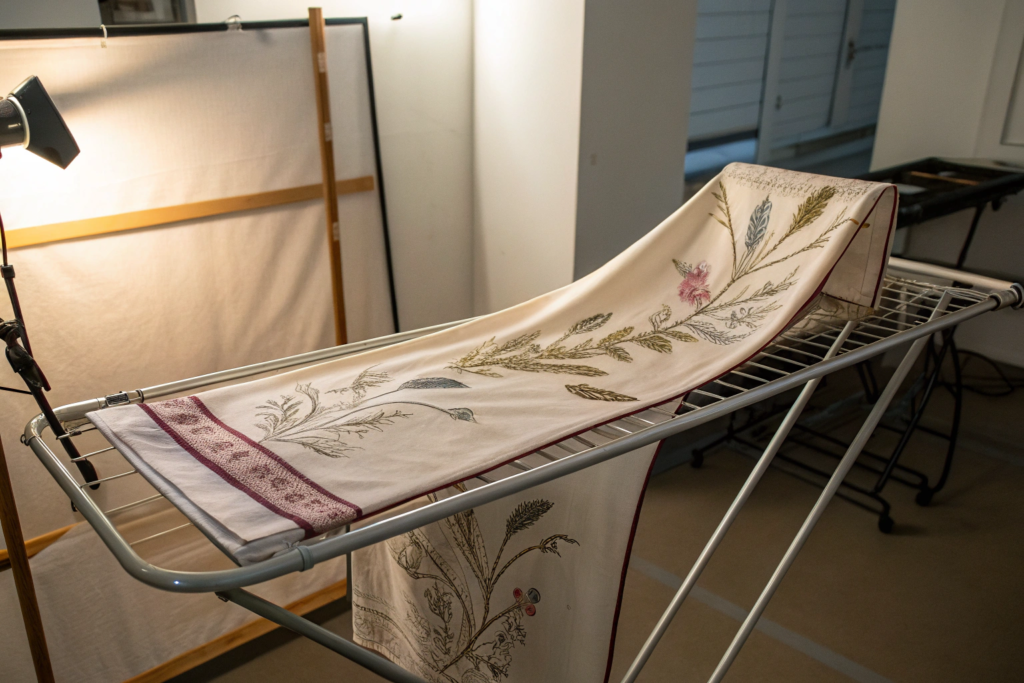
The best way to air dry printed scarves is to lay them flat on a clean, dry towel or a mesh drying rack in a shaded, well-ventilated area. Start by gently squeezing excess water from the scarf. Do not wring or twist. Wringing can stretch the fabric and damage the print. Place the scarf flat on the towel. Smooth out any wrinkles with your hands. Do not pull or stretch. If using a mesh rack, ensure the rack is clean. The mesh allows air to circulate under the scarf, speeding drying. Keep the scarf out of direct sunlight. UV rays cause fading. Keep it away from heat sources like radiators or vents. Turn the scarf once or twice during drying to ensure even drying. This method preserves the print, the shape, and the texture of the scarf.
I remember a client who was a silk scarf designer. She told me that her customers often complained about scarves losing their shape. She asked if our manufacturing process was causing the problem. We investigated. The problem was not the manufacturing. It was the drying. Customers were hanging wet silk scarves on hangers. The weight of the wet fabric stretched the bias-cut edges. We added a care instruction: "Lay flat to dry." The complaints stopped.
Why Should You Lay Flat Instead of Hang?
Laying flat distributes the weight of the wet fabric evenly. Hanging concentrates the weight at the points where the scarf is held. For delicate fabrics like silk, viscose, and modal, hanging can cause stretching and distortion. The scarf may lose its shape. The edges may curl. The print may become uneven. Laying flat prevents these problems. It also prevents creasing. A scarf dried flat requires less ironing. For lightweight scarves, laying flat is essential. For heavier scarves like pashminas, hanging may be acceptable if the scarf is folded over a padded hanger. But flat drying is always safer.
What Is the Best Surface for Flat Drying?
The best surface is a clean, dry towel or a mesh drying rack. A towel absorbs moisture. It speeds drying. It also provides a soft surface that does not imprint texture on the scarf. A mesh rack allows air to circulate from both sides. This speeds drying and prevents mildew. Avoid drying on surfaces that can transfer color or texture. Newspaper can transfer ink. Wood can stain. Plastic can trap moisture. A clean, white towel is ideal. We recommend our clients include a care card with every scarf that explains these details.
How Should You Dry Scarves in a Machine Dryer?
Machine drying is convenient. But it is risky. I generally advise against it for printed scarves. However, I understand that some customers will use it anyway. The key is to minimize the risk. If you must use a dryer, use the lowest heat setting and remove the scarf while it is still damp.
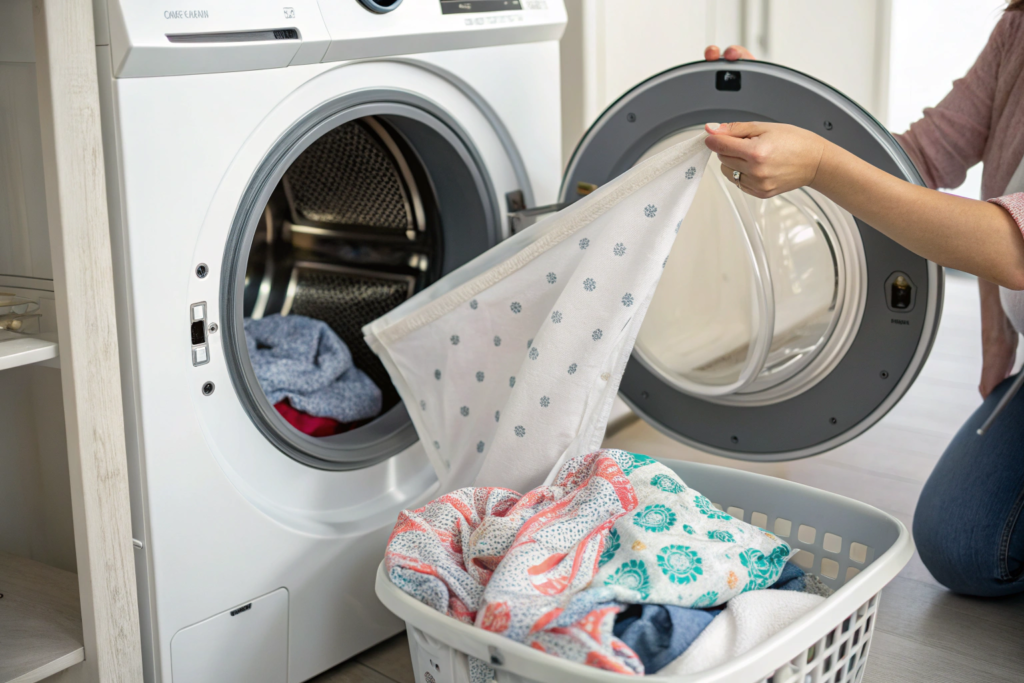
If you must use a machine dryer, use the lowest heat setting or an air-only (no heat) setting. Place the scarf in a mesh laundry bag. This protects it from snagging on other items. Do not overload the dryer. The scarf needs room to tumble. Set the timer for a short cycle. Check the scarf frequently. Remove it while it is still slightly damp. Never dry a printed scarf on high heat. High heat will cause fading and may shrink the fabric. After removing from the dryer, lay the scarf flat to finish drying. This combination of low-heat drying and air finishing is the safest machine drying method.
I want to share a compromise we recommend. For customers who insist on machine drying, we suggest a hybrid method. Tumble dry on low heat for 10 to 15 minutes. This removes most of the moisture. Then remove the scarf and lay it flat to finish. This method reduces the risk of heat damage while still being convenient. The scarf is not fully dry when it comes out, so it is not overheated. The final air drying ensures it retains its shape.
What Is the Risk of High-Heat Drying?
High-heat drying is the fastest way to ruin a printed scarf. The risks are numerous. First, fading. High heat breaks down dyes. The colors become dull. Second, bleeding. Heat can cause dyes to migrate, especially in multi-color prints. Colors may run into each other. Third, shrinkage. Many scarf fabrics shrink when exposed to high heat. A scarf that was 100 centimeters long may become 90 centimeters. Fourth, warping. Heat can distort the shape of the scarf, especially if it is hung to dry. Fifth, texture damage. Silk can become brittle. Viscose can become rough. High-heat drying is simply too aggressive for printed scarves.
Should You Use Dryer Sheets or Fabric Softener?
No. Dryer sheets and fabric softeners contain chemicals that can interact with dyes. They can cause fading or discoloration. They can also leave a residue on the fabric that affects the feel and drape. For printed scarves, avoid any additives. Wash with a mild detergent. Dry without additives. If you want softness, choose a gentle detergent designed for delicate fabrics. We recommend pH-neutral detergents for all printed scarves.
How Does Sunlight Affect Printed Scarves During Drying?
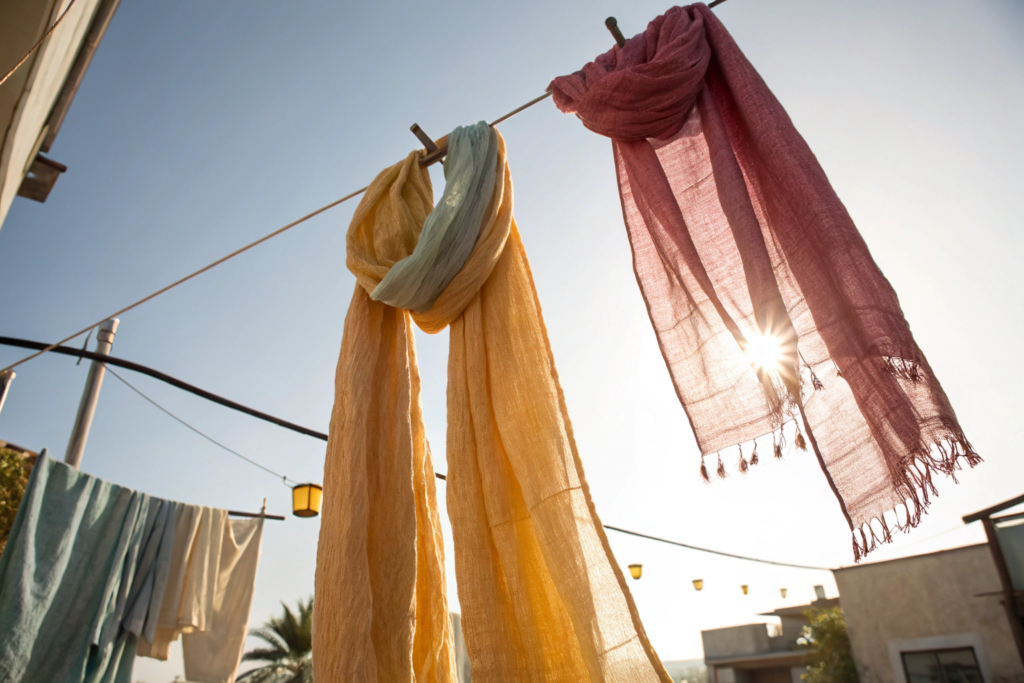
Many people think sunlight is a natural, safe way to dry clothes. For white cotton sheets, this is true. For printed scarves, it is not. Sunlight contains UV radiation. UV radiation breaks down dyes. I have seen beautiful scarves faded to pastels after a few days of sun drying. The damage is permanent.
Sunlight causes fading in printed scarves because ultraviolet (UV) radiation breaks down the chemical bonds in dyes. This process is called photodegradation. It is irreversible. Even a few hours of direct sunlight can cause noticeable fading in some dyes. Silk and wool are particularly sensitive. Synthetic fabrics like polyester are more resistant but still degrade over time. To prevent fading, always dry printed scarves in the shade. Indirect light is acceptable. Direct sunlight is not. If you must dry outdoors, choose a shaded area. Under a tree, on a covered porch, or on the side of the house that receives no direct sun. Better yet, dry indoors away from windows.
I remember a client who stored her scarf inventory near a window. The scarves were on display, catching the afternoon sun. After a few months, the side facing the window had faded. The scarves were still beautiful, but the colors were muted. She lost money discounting them. Now, she stores her inventory in a dark, climate-controlled space. Sunlight is not the customer's friend.
How Quickly Does Sunlight Cause Fading?
The speed of fading depends on the dye, the fabric, and the intensity of the sunlight. Some dyes are more lightfast than others. Reactive dyes on cotton are relatively stable. Acid dyes on silk are less stable. In direct sunlight, fading can begin in hours. Visible fading can occur in days. For a scarf that is worn outdoors, a few hours of sun exposure is not a problem. But repeated drying in the sun will accelerate fading. For storage, keep scarves out of direct sunlight. For drying, always choose shade.
Is Indoor Drying Safe?
Indoor drying is safe if the room is well-ventilated and away from windows with direct sun. A bathroom with a fan is good. A laundry room is good. A bedroom with indirect light is fine. Avoid drying directly in front of a window that receives direct sun. Also avoid drying near heat sources like radiators or heating vents. The combination of heat and UV is especially damaging. A cool, shaded, ventilated room is ideal.
What Are the Best Practices for Different Scarf Fabrics?
Not all scarves are the same. Silk is different from cotton. Cotton is different from polyester. The drying technique should match the fabric. I have learned to tailor our care instructions to the material. What works for a silk scarf may damage a wool scarf.
The best drying technique depends on the fabric. For silk scarves, always air dry flat in the shade. Never use a machine dryer. Silk is delicate. Heat and agitation cause damage. For wool and cashmere scarves, also air dry flat. Wool can felt and shrink with heat and agitation. For cotton and linen scarves, air drying is best. But they can tolerate low-heat machine drying if necessary. Remove while damp. For polyester and nylon scarves, they are more durable. They can be machine dried on low heat. But air drying is still recommended to extend the life of the print. For viscose and modal, treat like silk. They are delicate and prone to stretching. Air dry flat.
I want to emphasize that the fabric matters as much as the print. A digital print on polyester may be more heat-resistant than the same print on silk. But the polyester fabric itself may be more durable. We provide specific fabric care instructions for each product. We encourage our clients to pass these on to their customers.
How Should You Dry Silk and Wool Scarves?
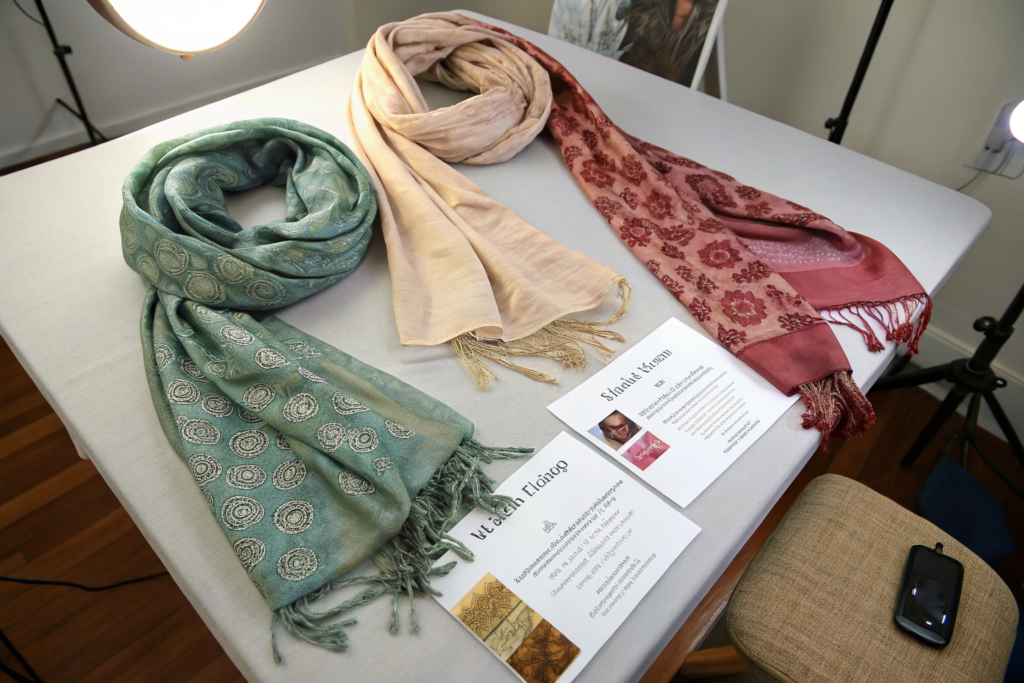
Silk and wool are protein fibers. They are delicate. They are sensitive to heat, agitation, and UV. For silk, always air dry flat in the shade. Never use a machine dryer. The heat can damage the protein structure. The agitation can cause snags. For wool, the same applies. Wool can felt when exposed to heat and agitation. Felting is irreversible. It makes the fabric stiff and thick. Lay wool scarves flat on a towel to dry. Reshape them gently. Do not hang them. The weight of the wet fabric can stretch them. We offer silk and wool scarf care cards for our clients.
How Should You Dry Cotton and Synthetic Scarves?
Cotton and synthetic scarves are more forgiving. Cotton can tolerate low-heat machine drying. But air drying is still better. It preserves the print and prevents shrinkage. For cotton, you can hang it on a padded hanger in the shade. For polyester and nylon, machine drying on low heat is acceptable. But use a mesh bag to protect the scarf from snagging. Remove while damp. These fabrics dry quickly. Overdrying can cause static and wrinkles. For all scarves, the goal is to remove moisture with minimal heat. Air drying is the safest method.
Conclusion
Drying techniques are critical to preserving the vibrancy of printed scarves. Heat is the enemy. Sunlight is the enemy. The best methods are gentle and cool. Air drying flat on a mesh rack in the shade is the gold standard. For those who use a dryer, low heat and short cycles are essential. The fabric matters. Silk and wool require the gentlest care. Cotton and synthetics are more forgiving. But all benefit from careful drying.
At Shanghai Fumao, we do our part. We use high-quality dyes and proper fixation. We test for colorfastness. We ensure that our prints are as durable as possible. But we cannot control what happens after the scarf leaves our factory. That is why we provide care instructions. We want our clients' customers to enjoy their scarves for years.
Your brand's reputation depends on customer satisfaction. A scarf that fades after the first wash reflects poorly on you. By understanding and sharing proper drying techniques, you protect your brand. You also help your customers get the most from their purchase.
Let us help you create scarves that stay beautiful. And let us help you share the care instructions that keep them that way. Please contact our Business Director, Elaine, at elaine@fumaoclothing.com to discuss your printed scarf collection. We can help you select the right fabrics, printing methods, and care instructions to ensure your scarves remain vibrant for years to come.