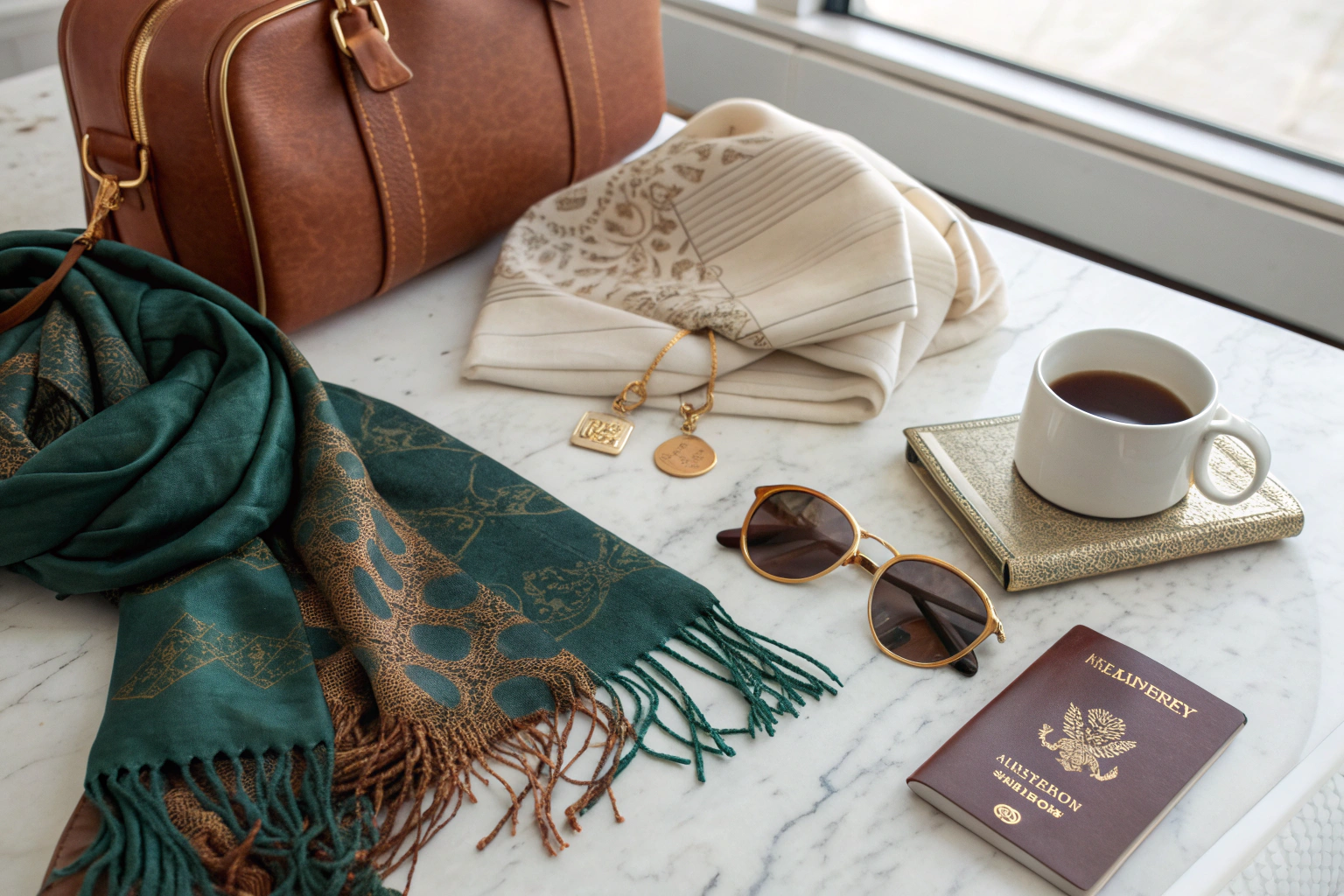
I was sitting in a design workshop in Hangzhou last spring with two buyers from a Parisian luxury concept store. They had flown in to review our new accessories collection. One of them pulled out her phone and showed me a photo from a private airport lounge. Four women, all wearing quiet luxury travel outfits, each with a scarf draped differently, one over the shoulders, one tied to a handbag handle, one wrapped around the neck, and one used as a blanket over the knees on the flight. She looked at me and said, "This is your customer. She does not want a printed square she can buy at a souvenir shop. She wants a travel companion. What can you make that feels like this?" That question set the direction for our entire 2026 scarf development.
The 2026 scarf trends for luxury travel accessories are defined by four dominant directions: quiet luxury in earthy neutral tones, convertible multifunctionality with hidden utility, sustainable noble fibers with traceable origins, and heritage craftsmanship expressed through hand-finished details. The luxury travel consumer has shifted away from loud logos and toward understated elegance. A scarf is no longer just a neck warmer. It is a multi-use travel tool that functions as a shawl in a cold cabin, a modesty cover for a quick visit to a cathedral, a pillowcase on a long train ride, and a personal style statement that signals taste without shouting.
This consumer is well-traveled, design-literate, and increasingly concerned about the environmental and ethical footprint of their purchases. They want to know where the cashmere came from, how the silk was dyed, and whether the artisans who finished the edges were paid fairly. The 2026 scarf is a story as much as it is a product. Brands that can tell that story authentically will command premium prices and loyal customers.
What Fibers and Materials Are Dominating Luxury Travel Scarves in 2026?
The fiber story in 2026 is about quiet performance. Luxury travel consumers demand materials that look and feel expensive but also perform under the stress of travel. Pure silk, once the default for luxury scarves, now shares the stage with ultra-fine cashmere, cashmere-silk blends, and responsible wool fibers like merino and yak. The common thread is softness against the skin, breathability for temperature regulation, and resilience against wrinkles and odor.
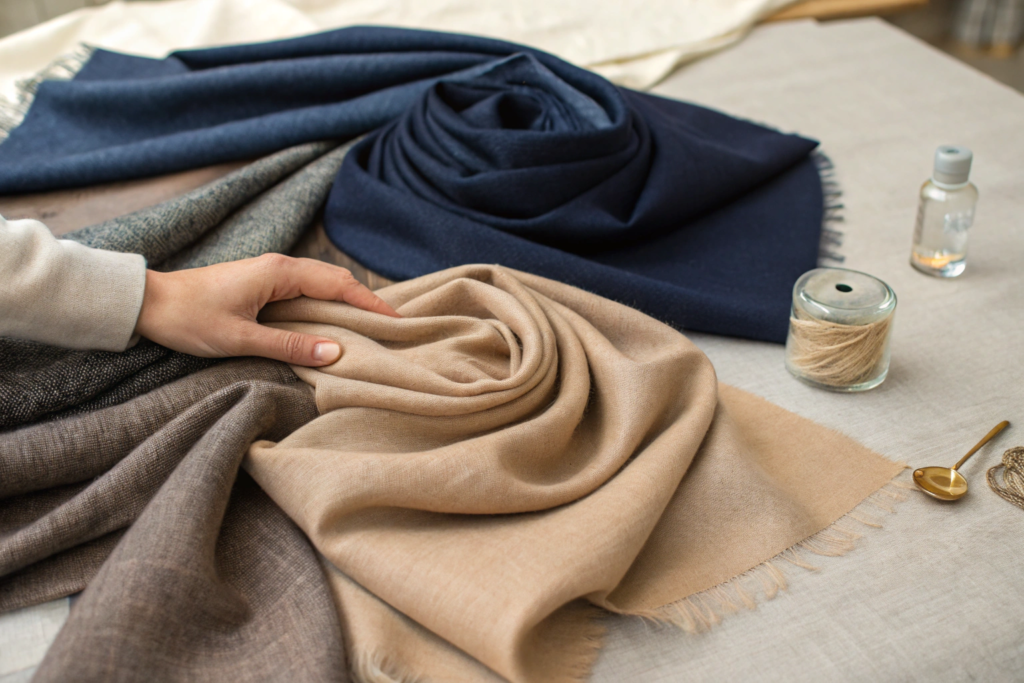
Grade A mulberry silk remains a staple. It is lightweight, packs nearly flat, and offers a subtle sheen that photographs beautifully. But the 2026 consumer is increasingly aware of silk’s environmental footprint and its delicate care requirements. Many brands are shifting toward a 70-30 cashmere-silk blend. This blend offers the luminosity of silk with the warmth and loft of cashmere. It is less prone to creasing than pure silk and feels warmer in an air-conditioned plane cabin. The blend also drapes beautifully, which matters when the scarf doubles as a shawl.
Traceable cashmere from Inner Mongolia or the Himalayan regions is a major trend. Luxury brands are publishing the origin of their cashmere fibers, the grazing practices of the herders, and the processing methods used to clean and spin the yarn. A scarf made from single-origin cashmere, processed without harsh chemicals and dyed with low-impact or natural dyes, carries a premium story. The consumer pays more because the product aligns with their values.
Yak wool is an emerging luxury fiber that deserves attention. It is warmer than merino, softer than many cashmere grades, and naturally moisture-wicking. Yak wool comes from the Tibetan plateau and supports traditional herding communities. Its natural colors, ranging from dark chocolate to warm grey, require little or no dye, which appeals to the sustainability-focused traveler. A yak wool travel scarf is a distinctive product that differentiates a brand from the sea of cashmere sameness.
Why Are Cashmere-Silk Blends Outperforming Pure Silk for Travel Use?
Pure silk has a weakness that frequent travelers know well. It creases easily and holds wrinkles after being folded in a handbag for hours. It is also delicate. A silk scarf caught on a luggage zipper or a seatbelt buckle can snag or tear. And while silk breathes, it provides very little warmth. A traveler stepping off a long-haul flight into a cold European morning wants a scarf that adds warmth, not just decoration.
A cashmere-silk blend solves these problems. The cashmere fibers provide loft, insulation, and a soft, brushed hand feel. The silk fibers provide strength, drape, and a slight sheen. The blend wrinkles less than pure silk and recovers quickly when hung. It is more durable against abrasion. The temperature range is wider, keeping the wearer comfortable in both an overheated airport terminal and a cold airplane cabin.
From a manufacturing perspective, a 70-30 or 50-50 cashmere-silk blend is more forgiving to work with than pure cashmere. The silk adds tensile strength to the yarn, reducing breakage during knitting or weaving. The resulting fabric has a cleaner stitch definition and holds its shape better. For a luxury travel accessory that will be packed, unpacked, wrapped, and worn repeatedly, the blend offers a better performance-to-luxury ratio than either fiber alone.
How Does Traceable Yak Wool Fit Into the 2026 Quiet Luxury Movement?
Quiet luxury is about understated quality, not visible branding. It is about materials that feel expensive to the touch and perform beautifully over time. Yak wool fits this philosophy perfectly. It is not a widely known luxury fiber like cashmere, so it signals insider knowledge. A person wearing a yak wool scarf is making a subtle statement about their appreciation for rare, high-performance natural fibers.
Yak wool’s natural color palette is inherently quiet. The undyed fibers range from soft oatmeal to deep chocolate brown. There are no flashy prints or artificial dyes. The color comes from the animal itself. This aligns with the 2026 consumer’s preference for authentic, natural aesthetics over synthetic brightness. A yak wool scarf in its natural brown tone pairs effortlessly with the neutral, tonal dressing that dominates the quiet luxury trend.
The traceability story is also powerful. Yak wool supports nomadic herding communities on the Tibetan plateau. Brands that source directly from these communities and document the supply chain can tell a story of social impact and environmental stewardship. The consumer pays a premium not just for the fiber, but for the assurance that their purchase supports traditional livelihoods and sustainable grazing practices. This is luxury with a conscience, and it resonates deeply with the values-driven traveler in 2026.
What Patterns, Colors, and Prints Define the 2026 Luxury Travel Scarf?
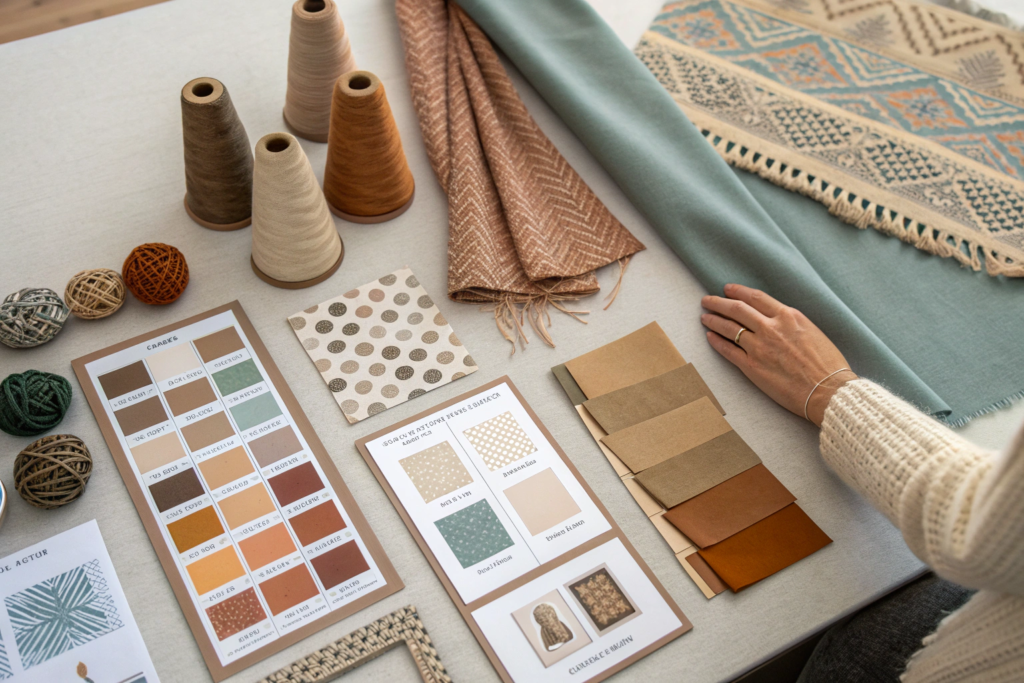
The 2026 color story for luxury travel scarves is rooted in warmth and neutrality. The days of bold logo prints and high-contrast color blocking are fading. In their place are tonal palettes inspired by natural landscapes: desert sand, warm camel, soft oatmeal, deep espresso, and dusty mineral tones like sage, clay, and slate blue. These colors are versatile. They coordinate with the neutral travel wardrobe that most luxury travelers prefer. They also photograph well in the natural-light settings that dominate social media travel content.
Patterns are subtle and textural rather than graphic. Tone-on-tone jacquard weaves create patterns through texture rather than color contrast. A camel cashmere scarf with a woven diamond motif in a slightly lighter camel reads as luxurious and quiet. Fine herringbone, subtle stripes, and micro-geometric borders add visual interest without shouting. The pattern is discovered upon close inspection, not announced from across the room.
Hand-finished details are replacing printed logos as the primary visual signal of luxury. Hand-rolled edges, hand-knotted fringe, and fine whipstitching around the border are the new status markers. These details cannot be replicated cheaply by fast-fashion competitors. They require skilled artisans and add time to production. A luxury traveler who understands craftsmanship recognizes a hand-rolled hem and assigns value to it. The brand story becomes "made by hands, not printed by machines."
The trend extends to personalization. Monogramming and custom embroidery are growing in demand. A traveler wants a scarf that is uniquely theirs, not a mass-produced item carried by everyone else in the first-class lounge. Subtle monogramming, either in a matching thread tone or a discreet contrasting stitch, adds a personal luxury touch. This is a service that small-batch manufacturers like us can offer more flexibly than large-scale factories.
Are Bold Logos Still Relevant for Luxury Travel Scarves in 2026?
Bold logos are in decline for the luxury travel consumer. The quiet luxury movement, amplified by social media and high-profile television, has shifted the preference toward products that signal wealth through quality rather than branding. A scarf with a large printed logo is now seen by many travelers as dated or ostentatious. The consumer who wants to communicate status does so through the feel of the fabric, the precision of the edge finishing, and the subtlety of the design.
This does not mean branding disappears entirely. It means branding becomes discreet. A small embroidered monogram, a subtle tone-on-tone logo woven into the jacquard, or a logo-engraved small metal bar attached to the fringe are acceptable. The logo is there for those who look closely, but it does not dominate the design. This approach aligns with the values of the luxury traveler who wants the product to speak for itself, not to serve as a walking advertisement.
For brands, this is a challenge and an opportunity. The challenge is that a quiet product requires exceptional quality to justify its price. There is no logo to hide behind. The opportunity is that small brands with strong craftsmanship can compete with major fashion houses. The consumer is judging the fabric, the finishing, and the story, not the brand name. A well-made scarf from an independent label can command a luxury price if the craftsmanship is visible and the story is compelling.
How Does Tone-on-Tone Jacquard Reflect the 2026 Minimalist Travel Aesthetic?
Tone-on-tone jacquard is the weaving technique that produces a pattern using different weave structures within the same color family, rather than different yarn colors. A camel scarf woven with a herringbone pattern in camel yarn creates a visible texture that shifts as the fabric moves in the light. The pattern is subtle and sophisticated. It adds depth without adding color contrast.
This technique aligns with the minimalist travel aesthetic because it works within a limited color palette. The traveler who packs a capsule wardrobe of neutral tones needs accessories that coordinate with everything. A tone-on-tone jacquard scarf in oatmeal or camel matches any outfit without competing. The pattern adds visual interest without breaking the color harmony.
The technique also communicates quality. Jacquard weaving requires specialized looms and skilled operators. The pattern is woven into the fabric, not printed on the surface. It will not fade or crack. The texture is permanent. A consumer who runs their fingers over a tone-on-tone jacquard feels the subtle ridges and valleys of the pattern. That tactile experience is a luxury signal that a printed scarf cannot replicate. In 2026, the luxury travel scarf is as much about touch as it is about sight.
How Are Travel-Specific Functions Shaping the 2026 Luxury Scarf Design?
The luxury traveler values efficiency. Every item packed must earn its place in the carry-on. The 2026 scarf is designed to perform multiple functions. It is not just an accessory. It is a tool. This functional shift is driving design innovations that add utility without compromising elegance.
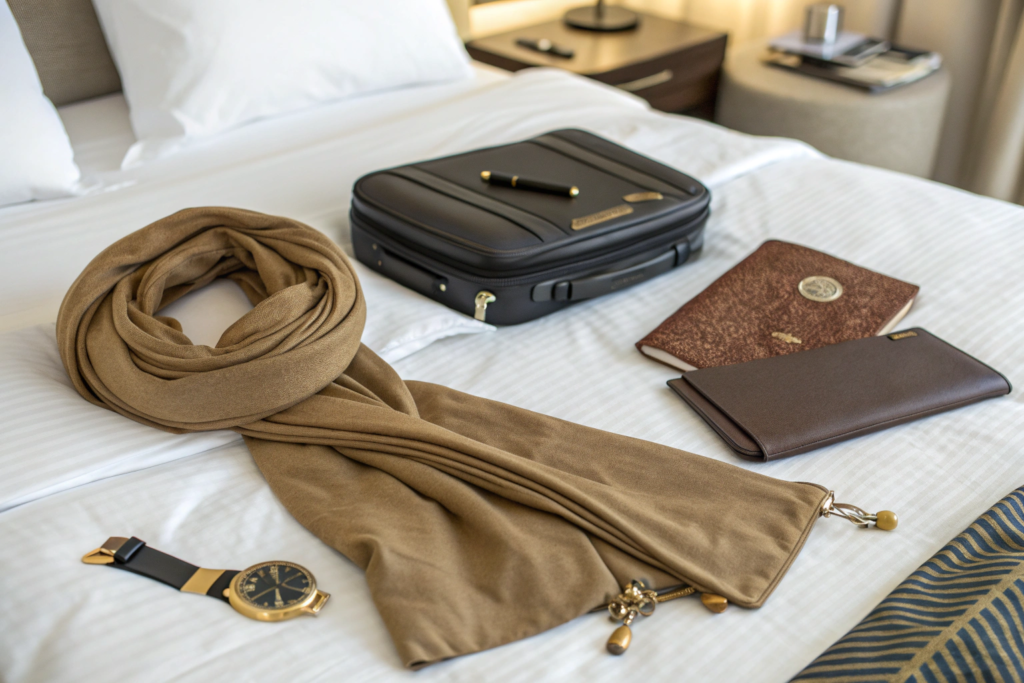
The first trend is convertible construction. Many 2026 travel scarves are designed with discreet hidden features. A small hidden pocket with a zipper at one corner can hold a passport, a boarding pass, or a lip balm. The pocket is invisible when the scarf is worn. A hidden button closure allows the scarf to be folded into a compact pouch that attaches to a bag handle. A built-in loop, made from the same fabric, slides over a suitcase handle. These features are integrated into the design so they do not interrupt the drape or the pattern.
The second trend is generous sizing. The 2026 luxury travel scarf is typically larger than traditional neck scarves. Dimensions of 100 by 200 centimeters or even 130 by 200 centimeters are common. This oversized format allows the scarf to function as a shawl, a blanket, or a modesty cover. A traveler on a long flight can wrap it around their shoulders. A traveler visiting a religious site can use it to cover their head or shoulders. A traveler on a cold train can spread it over their knees. The larger size adds weight and fabric cost, but it also adds perceived value and functionality.
The third trend is packability. Luxury travel scarves must survive being folded, rolled, and stuffed into bags. Fabrics with natural wrinkle resistance, such as cashmere blends and fine wools, are preferred. The finishing process matters too. A scarf that has been properly steamed and pressed during manufacturing will recover from packing better than one that was not. Some brands are including a matching fabric pouch for storage, which protects the scarf and reinforces the luxury presentation.
What Hidden Features Are Luxury Travelers Asking for in 2026 Scarves?
The most requested hidden feature in 2026 is the secure pocket. Frequent travelers, particularly solo female travelers, want a place to carry essentials without adding another bag. A scarf with a discreet zippered pocket at one end solves this. The pocket must be flat when empty and invisible when the scarf is worn. The zipper must be high quality, ideally with a matte finish that does not catch on the fabric or scratch the skin. The pocket size should accommodate a passport and a phone, approximately 10 by 20 centimeters.
The second requested feature is the luggage attachment loop. A small loop sewn into the edge of the scarf allows it to be folded and slipped over the handle of a rolling suitcase. This keeps the scarf accessible during transit without taking up space in the carry-on. The loop must be reinforced to handle the weight of the folded scarf and must match the scarf’s color so it disappears when not in use.
The third requested feature is the fold-to-pouch conversion. A scarf that folds into its own pocket and becomes a compact rectangle is a elegant solution to the packing problem. The pocket is designed to be functional as a storage compartment when the scarf is in use, and as a container when the scarf is folded. This requires careful pattern engineering so the pocket sits flat and unobtrusive in both configurations.
How Should a Luxury Travel Scarf Be Sized for Multi-Functional Use?
The 2026 luxury travel scarf is larger than its predecessors. A standard fashion square scarf measures 90 by 90 centimeters. This is too small to function as a shawl or blanket. A travel scarf needs to be at least 100 by 180 centimeters to wrap comfortably around the shoulders. The extra length allows the scarf to be draped over both shoulders and still hang below the elbows. For a blanket function, the width should be at least 120 centimeters. This covers the lap and upper legs when seated in an airplane or train.
The fabric weight also matters. A lightweight silk scarf in a large size feels insubstantial and flies away in the wind. A heavier cashmere blend scarf in a large size provides warmth and drapes beautifully. The target fabric weight for a luxury travel shawl is between 150 and 250 grams per square meter. This is heavy enough to stay in place and provide insulation, but light enough to pack without adding significant weight to the bag.
The shape is typically rectangular rather than square. A rectangle is easier to wear in multiple ways. It can be wrapped around the neck like a traditional scarf, draped over the shoulders like a shawl, or spread over the lap like a blanket. A square scarf is more limited. The rectangle format also packs more efficiently, folding into a neat roll that fits into a bag pocket or a suitcase corner.
Which Sustainability Credentials Are Essential for 2026 Luxury Travel Scarves?
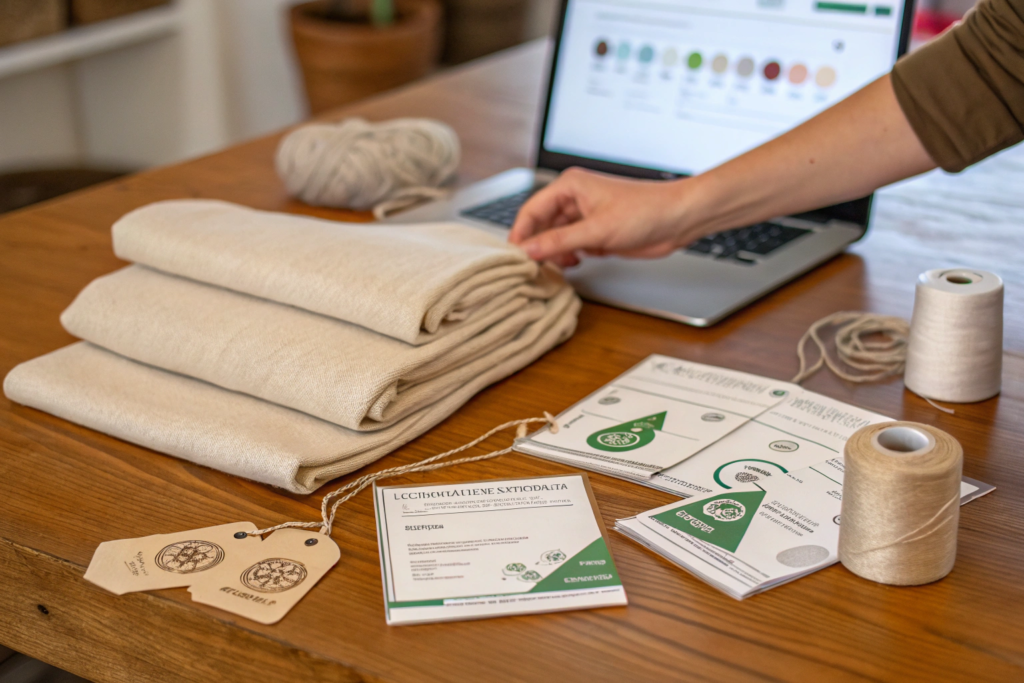
Sustainability is no longer optional for luxury accessories. The 2026 consumer expects it. The question is not whether a brand should pursue sustainability credentials, but which credentials are most relevant and credible. For luxury travel scarves, the essential certifications are the Global Organic Textile Standard, or GOTS, for organic fibers, the OEKO-TEX Standard 100 for chemical safety, and the Responsible Wool Standard or the Sustainable Fibre Alliance for animal welfare in wool and cashmere supply chains.
GOTS certification applies to products made from organic natural fibers. It covers every stage of the supply chain, from the farm where the cotton or silk is grown to the dyehouse where the color is applied to the factory where the scarf is finished. A GOTS-certified scarf guarantees that no toxic dyes or finishing chemicals were used and that workers were treated fairly. This is a comprehensive standard that addresses both environmental and social criteria. For a brand targeting eco-conscious luxury travelers, GOTS is the gold standard.
OEKO-TEX Standard 100 is a chemical safety certification. It tests for over 100 harmful substances, including formaldehyde, heavy metals, and certain phthalates. A scarf that carries the OEKO-TEX label has been tested and found free of harmful levels of these substances. For a product worn directly against the skin, often for hours during travel, this certification provides peace of mind. It is less comprehensive than GOTS in terms of organic content and social criteria, but it is more focused on the specific chemical risks relevant to textiles.
The Responsible Wool Standard, or RWS, certifies that wool comes from farms that treat sheep humanely and manage their land sustainably. The Sustainable Fibre Alliance, or SFA, performs a similar function for cashmere from Inner Mongolia. These certifications address the animal welfare concerns that are increasingly important to luxury consumers. A scarf made from RWS-certified wool or SFA-certified cashmere carries a traceability story that can be verified by the consumer.
Why Is GOTS Certification Becoming More Important for Luxury Textile Exporters?
GOTS is becoming the default expectation for luxury brands entering the European market. The European consumer is more aware of textile sustainability issues than ever before. The EU’s Green Deal and related textile regulations are pushing the entire industry toward higher environmental standards. Brands that cannot demonstrate compliance with recognized sustainability standards risk losing access to European retailers and consumers.
For a factory like ours, GOTS certification is an operational commitment. It requires auditing every stage of production, from the sourcing of certified organic yarns to the dyeing processes to the social conditions in the factory. The certification must be renewed annually, and the audit includes unannounced inspections. This is not a one-time marketing exercise. It is a continuous compliance effort.
The value to the brand is market access and credibility. A GOTS-certified scarf can be sold in European boutiques that require certification as a vendor qualification. It can be marketed with a recognized label that consumers trust. The certification also simplifies the export process. Customs authorities and retailers in many European countries are familiar with GOTS and accept it as evidence of compliance with their sustainability requirements. For a luxury travel accessory aimed at the European market, GOTS is increasingly a baseline requirement, not a differentiator.
How Can a Factory Prove Ethical Sourcing for Cashmere and Yak Wool Scarves?
Ethical sourcing proof requires documentation and traceability. A factory that claims ethical sourcing must be able to show where the fibers came from, how the animals were treated, and how the workers were paid. This is not a vague promise. It is a paper trail.
The first document is the fiber origin certificate. For cashmere, this might be an SFA certificate that traces the fiber back to a specific herding cooperative in Inner Mongolia. For yak wool, it might be a certificate from a verified Tibetan plateau sourcing program. The certificate includes information about the grazing practices, the animal welfare standards, and the social conditions of the herders.
The second document is the chain of custody certification. This tracks the fiber from the raw material stage through processing, spinning, weaving, and finishing. Each stage is audited to ensure that the certified fiber is not mixed with uncertified fiber. A GOTS or RWS chain of custody certificate provides this assurance.
The third component is the social compliance audit of the factory itself. A factory that sources ethical fibers but treats its workers poorly is not truly ethical. Audits from organizations like BSCI, Sedex, or SA8000 verify that workers are paid fairly, work in safe conditions, and have the right to organize. These audits are conducted by third parties and are documented in reports that can be shared with buyers.
At Textile Exchange, the industry body that manages the Responsible Wool Standard and other fiber certifications, provides a database of certified suppliers and manufacturers. Brands can search this database to verify that a factory’s certifications are current and valid. This public verification is a powerful tool for building trust with consumers who want to know that their luxury scarf was made responsibly.
Conclusion
The 2026 luxury travel scarf is a study in quiet sophistication. It is made from noble fibers that feel extraordinary against the skin and perform beautifully under the stress of travel. It is designed in warm, natural tones with subtle, textural patterns that reveal their quality upon close inspection. It incorporates hidden functional features that serve the practical needs of the frequent traveler. And it carries sustainability credentials that speak to the values of a conscious, design-literate consumer.
This is not a product for the mass market. It is a product for the traveler who notices the weight of a hand-rolled hem, the softness of traceable cashmere, the reassurance of a GOTS label, and the elegance of a scarf that doubles as a blanket, a shawl, and a secure pocket. This consumer is willing to pay a premium for authenticity and craftsmanship. They are also willing to switch brands if a product fails to meet their standards.
At Global-Caps, we have been investing in the capabilities needed to serve this market. We have developed relationships with certified cashmere and yak wool suppliers. We have the jacquard weaving capacity for tone-on-tone patterns. Our sample room can prototype hidden pockets and fold-to-pouch conversions. And our documentation team can provide the certification trail that European luxury buyers demand.
If you are developing a luxury travel scarf line for 2026 and need a manufacturing partner who understands both the aesthetic and the compliance requirements, we are ready to help. Contact our Business Director Elaine. She can walk you through our fiber sourcing, our certification portfolio, and our design-to-production process for premium travel accessories. Reach her at elaine@fumaoclothing.com. Let’s create a scarf that your customers will reach for on every journey.