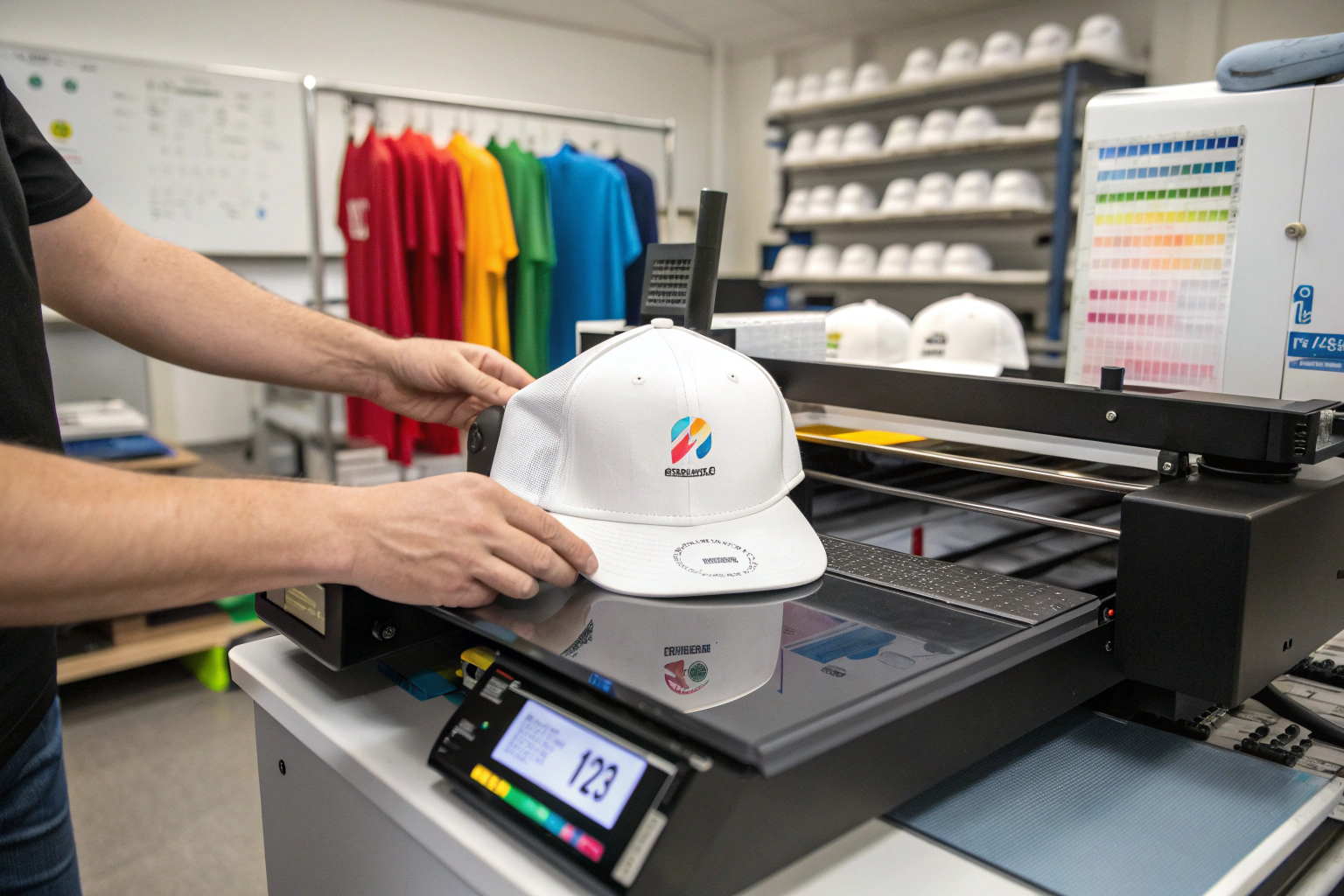
I still remember the day a startup founder called me in a panic. He had a trade show booth booked in Las Vegas, and his graphic designer had just delivered the final logo files three days before the show. He needed twelve sample caps with a custom printed foam front, in specific colors, with a specific mesh back, delivered to his hotel. He had already been turned down by two other factories. When he called me, the first thing he said was, "I know it is impossible, but can you even try?" I looked at our production schedule, walked over to our digital printer, and said, "If you can approve the digital proof in the next hour, I can have these on a plane tonight." He got his caps in time. That is the difference between a factory with in-house digital printing capability and one that has to outsource the decoration process.
We can produce a sample of a custom printed baseball cap with a foam front in as little as 24 to 48 hours, provided the client is working from a stock cap body and the artwork is print-ready. If the cap requires a custom fabric color or a custom pattern that is not in our inventory, the timeline extends to 7 to 14 days. If the foam front requires a custom die-cut shape rather than a standard flat panel, the timeline is similar. The critical variable is not the printing itself. Digital printing on foam is fast. The critical variables are artwork approval, material availability, and the complexity of the cap construction. When those align, speed is absolutely achievable without sacrificing quality.
The foam front baseball cap, often called a trucker cap or a foam front cap, has a unique structure. The front panel is made from a smooth, closed-cell foam material laminated to a fabric or used directly as the printable surface. This foam surface holds ink beautifully and provides a vintage, retro aesthetic that has never really gone out of style. But printing on foam requires different handling than printing on cotton twill or polyester. The ink must adhere to the foam without cracking or peeling. The print must maintain sharp edges despite the slight texture of the foam surface. And the foam itself must be compatible with the heat settings of the digital printer.
What Factors Determine the Sampling Lead Time for a Custom Foam Front Cap?
The sampling lead time for a foam front cap depends on four factors that interact with each other. The first factor is the cap body. If we have the required shell color and mesh back combination in stock, we can move immediately to printing. If we do not, we must either source the body from a partner factory or produce it from scratch. Producing a cap body from scratch involves cutting fabric, sewing the crown, attaching the brim, and installing the closure. This adds 5 to 10 days to the timeline.
The second factor is the artwork. A print-ready vector file in a compatible format, such as Adobe Illustrator or PDF, allows us to proceed directly to a digital proof. A low-resolution image file or a hand-drawn sketch requires graphic design work. Our design team must redraw the artwork, clean up the edges, and separate the colors. This adds hours or days, depending on the complexity of the design. A client who provides clean, print-ready artwork saves significant time.
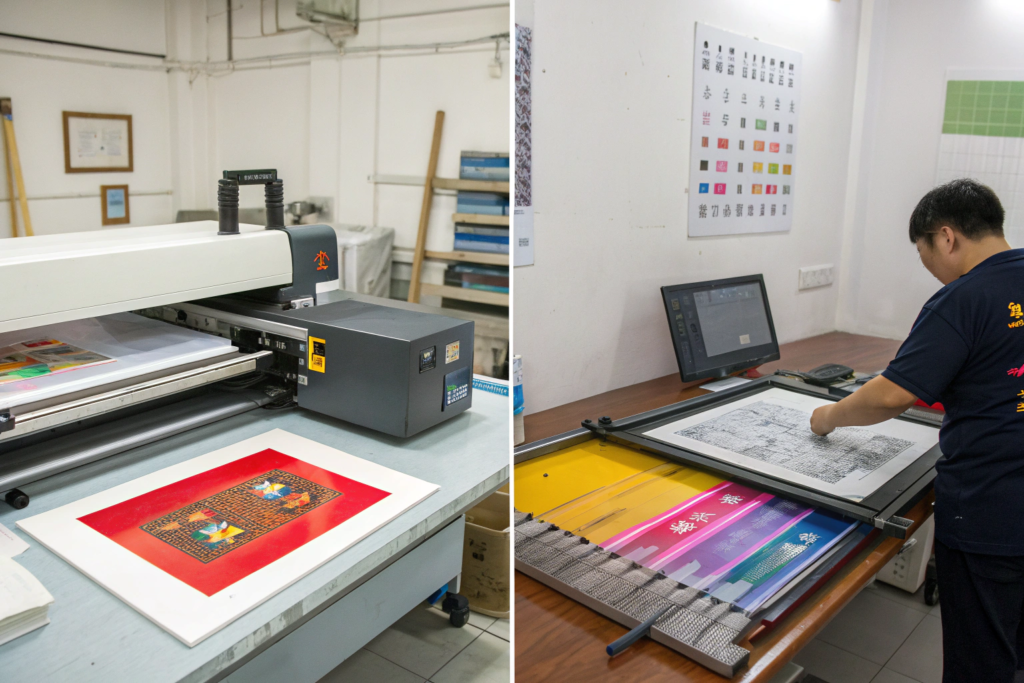
The third factor is the print method. Digital printing is the fastest option for sampling. A direct-to-garment or UV flatbed printer can print a full-color design onto a foam front panel in minutes. Screen printing is slower for sampling because it requires creating screens for each color in the design. The screen-making process alone takes several hours per color. For a multi-color design, screen printing is not practical for a rapid sample. It becomes viable for bulk production after the sample is approved.
The fourth factor is the finishing requirements. A standard foam front cap with a plastic snapback closure and no additional custom features is the fastest to sample. Custom embroidery on the side or back panels, a custom woven label, a leather strap closure, or a special wash treatment each adds time. Each additional feature requires a separate production step and a separate quality check.
How Does Stock Availability of Foam Colors Affect My Sampling Timeline?
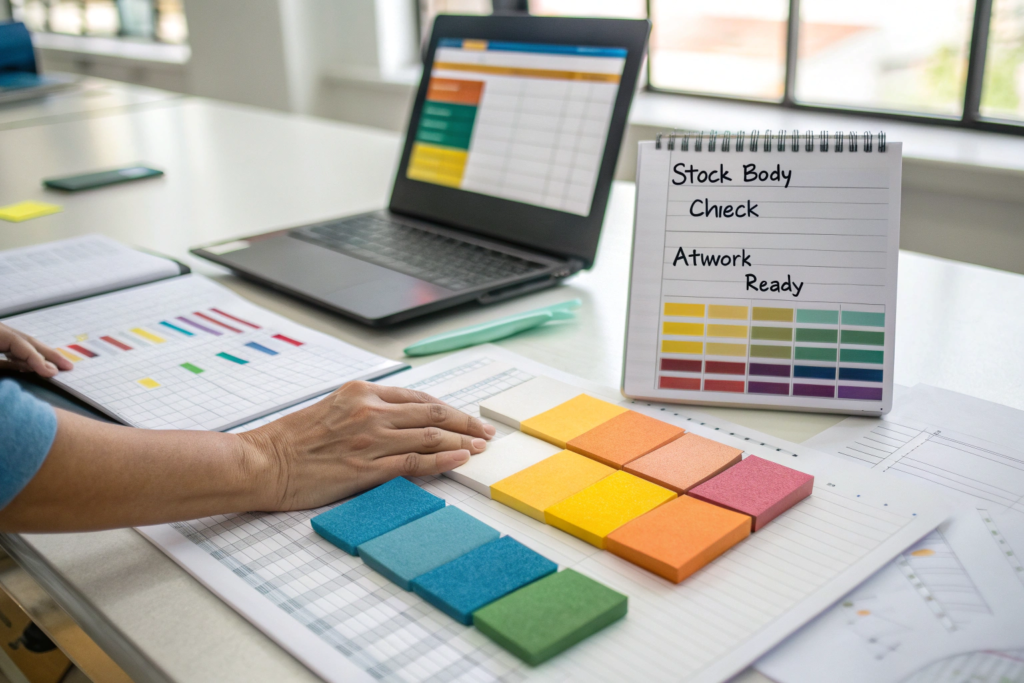
Foam color availability is a frequent bottleneck that clients do not anticipate. The foam front panel comes in a limited range of standard colors. White, black, navy, red, royal blue, and kelly green are commonly available. These are the colors we keep in stock at all times. If your design requires a standard foam color, the sampling process can begin immediately.
If your design requires a non-standard foam color, such as a pastel pink or a specific shade of teal, we must source that foam from a specialty supplier. The foam material is produced in large sheets, and custom colors are typically made to order. The lead time for custom-colored foam is 7 to 14 days, depending on the supplier’s production schedule. This is a material sourcing delay that cannot be compressed by working faster. The foam simply takes time to produce and ship.
The lesson is to check foam color availability before finalizing your design. If you need a rapid sample, choose a standard foam color and use the printing process to add color. The digital printer can print a full-color design onto a white foam front, including a colored background. A white foam front with a digitally printed full-color design can look identical to a custom-colored foam front with a printed logo. The only difference is that the printed color sits on the surface rather than being integral to the foam. For a sample, this distinction is usually irrelevant.
Why Does Artwork Preparation Take Longer Than Most Clients Expect?
Artwork preparation is the hidden time sink in the sampling process. A client sends a JPEG image from their website, assuming it is ready to print. The image is 72 dots per inch, designed for screen display. A digital printer operates at 300 to 1200 dots per inch. The low-resolution image, when scaled to the size of a cap front panel, becomes pixelated and blurry. The edges lose their sharpness. The colors shift. The file is not print-ready.
Our design team must recreate the artwork as a vector file. Vector graphics use mathematical paths rather than pixels, so they can be scaled to any size without losing quality. This process involves tracing the original design, cleaning up the edges, and matching the colors to our printer’s color profile. A simple logo might take 30 minutes to redraw. A complex illustration with gradients and fine details might take four to eight hours.
The client must then approve the digital proof. The approval process can take anywhere from minutes to days, depending on the client’s availability and decision-making speed. A client who is traveling or in a different time zone might not respond for a day. A client who wants changes, such as a different color or a larger logo, adds another revision cycle. Each revision requires the designer to update the file and generate a new proof. The artwork preparation and approval cycle is often longer than the actual printing time.
Can You Rush a Foam Front Cap Sample Without Sacrificing Print Quality?
The word "rush" makes quality managers nervous. It conjures images of corners cut, steps skipped, and defective products shipped. But in the context of digital printing, speed and quality are not mutually exclusive. A digital printer produces the same print quality whether it runs at 8 a.m. or 3 p.m. The ink, the print head, and the substrate do not care about the clock. The factors that compromise quality are not speed-related. They are preparation-related. A rush job with well-prepared artwork and a properly calibrated printer will be identical in quality to a standard-timeline job.
The risk in rushing is not the printing. It is the approval process. A client who demands a sample in 24 hours is often the same client who wants to skip the digital proof approval. They say, "Just print it. I trust the file I sent." Then the sample arrives, and the logo is the wrong size, or the color is off, or there is a typo that no one caught. The rush job becomes a rework job, and the time saved by skipping approval is lost twice over in the rework.
The solution is to compress the approval cycle, not eliminate it. We offer a 30-minute proof approval window for rush jobs. The client commits to being available by phone or email for a specified 30-minute window. We send the digital proof. The client reviews it, requests changes if needed, and approves the final version. If the client does not respond within the window, the job moves to the next day’s schedule. This system allows us to maintain quality control without the endless back-and-forth that kills rush timelines.
What Digital Printing Technology Allows for High-Speed Foam Front Sampling?
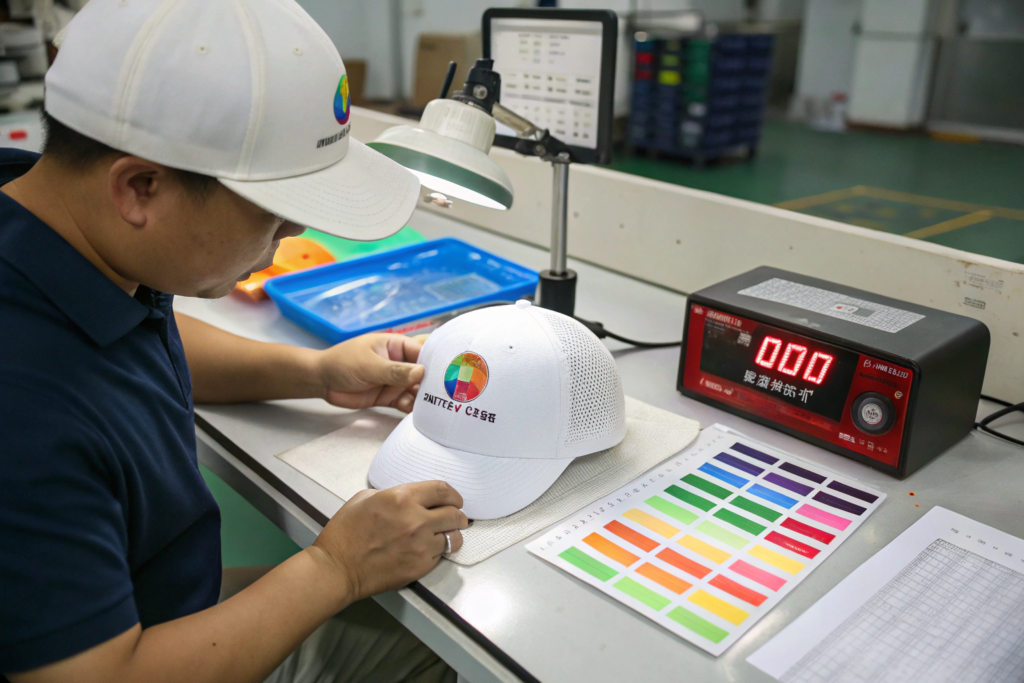
The key technology is the UV flatbed printer with a direct-to-substrate print head. Unlike a traditional inkjet printer that prints on paper, a UV flatbed printer prints directly onto the foam surface. The printer’s bed holds the foam front panel in a fixed position. The print head moves across the panel, depositing ink precisely according to the digital file. UV lamps cure the ink instantly as it is printed. The printed panel is dry and ready for handling the moment it comes off the printer.
The speed of this process is remarkable. A full-color print on a single foam front panel takes between 2 and 5 minutes, depending on the print resolution and the image complexity. Twelve sample caps can be printed in under an hour. Compare this to screen printing, where each color in the design requires a separate screen, a separate setup, and a separate printing pass. A four-color screen print job might take a full day to set up and print.
The UV ink also has excellent adhesion to foam. It forms a flexible, durable film that bends with the foam without cracking. The instant UV curing means the print does not smudge or smear during handling. This is critical for a rush job where the printed panels go directly from the printer to the sewing line. The digital printing process is the foundation of our rapid sampling capability.
How Do You Ensure Color Accuracy on a Rush Foam Front Print Order?
Color accuracy is the most common source of client dissatisfaction in any printing job, rush or otherwise. The client sees the design on their computer screen. The colors look vibrant and true. The printed sample looks different. The reason is that computer screens display color using an RGB color model, red, green, and blue light. Printers reproduce color using a CMYK color model, cyan, magenta, yellow, and black inks. Some colors that appear on screen cannot be reproduced exactly in print. Bright neon greens, electric blues, and vivid oranges often shift when converted from RGB to CMYK.
To manage this, we calibrate our printers to a standard color profile and we communicate the RGB-to-CMYK conversion clearly to the client. For a rush job, we ask the client to provide the file in CMYK format if possible. If they provide an RGB file, we convert it and show the client a digital proof that approximates the printed result. The proof includes a color reference chart so the client can see how specific colors will shift. This reduces the surprise when the physical sample arrives.
For critical color matching, such as a brand’s specific logo color, we offer a physical proof printed on the actual foam material. The client can see and feel the exact color on the exact substrate before we print the full run. A physical proof adds a day to the timeline because it must be shipped overnight. For a rush job, a digital proof is usually sufficient if the client understands the limitations of screen display.
What Is the Difference in Lead Time Between a Digital Print Sample and a Screen Print Sample?
The lead time difference between digital and screen printing is dramatic for sampling. A digital print sample for a foam front cap can be produced in 1 to 2 days, including artwork proofing and cap assembly. A screen print sample for the same cap typically requires 5 to 10 days. This difference is structural, not a matter of factory efficiency. It is inherent in the two printing technologies.
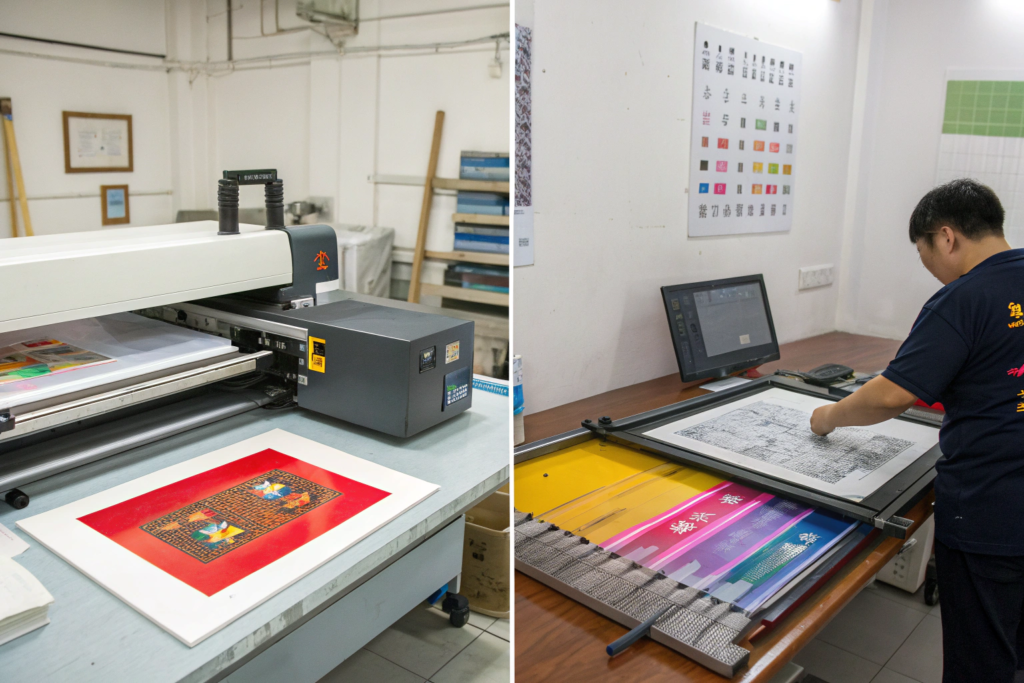
Screen printing is a physical process that requires preparation. Each color in the design requires a separate screen. A screen is a mesh fabric stretched over a metal or wooden frame. The design is transferred to the screen using a light-sensitive emulsion. The unexposed areas are washed away, leaving open mesh in the shape of the design. This screen-making process takes several hours per color. A four-color design requires four screens and a full day of preparation.
Once the screens are made, the printing itself is fast. Each color is printed in sequence, with a drying step between colors. The printed foam panels then go to the cap assembly line. For bulk production, screen printing is extremely cost-effective. The screens are made once and used thousands of times. The per-unit printing cost is pennies. But for a sample, the screen-making time dominates the timeline.
Digital printing requires no screens. The design goes from the computer directly to the printer. The setup time is measured in minutes, not hours. The printing time is similar to screen printing. The per-unit printing cost is higher than screen printing for large volumes, but for a single sample or a small run, digital printing is faster and cheaper because there is no screen-making overhead. For sampling, digital is almost always the right choice.
Why Does Screen Printing Still Dominate Bulk Foam Front Cap Production?
Screen printing dominates bulk production because of cost and durability. Once the screens are made, the marginal cost of printing one more cap is very low. The ink is applied in a thick layer that soaks into the fabric or sits on top of the foam with a slight tactile feel. This thick ink layer is extremely durable. It resists fading, cracking, and abrasion for years of wear. For a cap that will be worn by a construction worker or a truck driver every day, screen printing offers unmatched longevity.
The setup cost of screen printing is spread across the entire production run. A run of 500 caps with a two-color design has a screen cost of perhaps 100 euros. That is 20 cents per cap. A run of 50,000 caps has the same screen cost, but spread across 50,000 units, it is a fraction of a cent per cap. The economics favor screen printing at high volumes.
The color opacity of screen printing is also superior. Screen printing inks are opaque. A white screen print on a black foam front appears bright and solid. A digital print on the same black foam would require a white underbase layer, which adds complexity and may not achieve the same opacity. For bold, solid-color designs on dark foam, screen printing is the better technical choice for bulk production.
How Should I Decide Between Digital and Screen Printing for My Foam Front Cap Project?
The decision depends on the order size, the design complexity, and the timeline. For a sample, digital printing is almost always the faster and more practical choice. It allows you to evaluate the design, the colors, and the cap construction without the time and cost of screen setup. The digital sample is a visual approximation of the final product, not a physical duplicate of the screen printed result. The digital print will feel different from a screen print. It will have a slightly different texture and sheen. For most design approval purposes, this difference is acceptable.
For a small production run of 50 to 200 caps, digital printing remains cost-effective. The per-unit cost is higher than screen printing, but the setup cost savings offset this. Digital printing also allows for variable data, meaning each cap in the run could have a different name or number printed on it. Screen printing cannot do this economically.
For a large production run of 500 caps or more, screen printing is the standard choice. The setup cost is amortized across the volume, and the per-unit cost drops to a level that digital printing cannot match. The durability and opacity of screen printing also become more important for a product that will be sold to customers who expect a long service life.
The transition point between digital and screen printing depends on the specific design and volume. A good factory will advise you on the most cost-effective method for your specific project, not just the fastest one for a sample.
How Can I Prepare My Artwork to Speed Up the Foam Front Cap Sampling Process?
The single most effective way to speed up your foam front cap sample is to provide print-ready artwork from the start. This means a vector file in a format such as Adobe Illustrator, .ai, PDF, .pdf, or Encapsulated PostScript, .eps. Vector files are resolution-independent. They can be scaled to any size without losing quality. They also preserve the clean edges and sharp lines that make a printed logo look professional.
The file should be in CMYK color mode, not RGB. CMYK is the color space used by printers. Converting the file to CMYK before sending it eliminates a step in the proofing process. If your design includes specific brand colors, provide the Pantone Matching System, PMS, references. This allows us to match the colors accurately using our color management system. If you do not know the Pantone references, provide a physical color swatch or a high-resolution printout of the color.
All text in the file should be converted to outlines. This means the text is no longer editable as a font, but is converted into vector shapes. This prevents font substitution errors. If a font is not embedded in the file, and we do not have that font installed on our system, the text will be replaced with a default font, changing the appearance of your design. Converting to outlines eliminates this risk.
The file should also include the correct dimensions. A foam front cap panel is roughly 12 to 14 centimeters wide and 8 to 10 centimeters tall, depending on the cap style. The design should be sized to fit within this area, with appropriate margins. A design that is too large will be cropped. A design that is too small will look lost on the panel. Providing the artwork at the correct size saves a round of revisions.
What File Formats Are Acceptable for High-Speed Foam Front Printing?
The preferred file formats for high-speed foam front printing are vector formats. Adobe Illustrator, .ai, is the industry standard. It preserves all the vector information, the color mode, and the layout. PDF, .pdf, is also acceptable, provided the file was created with vector elements and the fonts are embedded or converted to outlines. Encapsulated PostScript, .eps, is a legacy vector format that is still widely used and accepted. Scalable Vector Graphics, .svg, is a web-native vector format that is becoming more common.
Raster formats, such as JPEG, .jpg, PNG, .png, and TIFF, .tif, are not ideal for printing. They are made of pixels, not vectors. A raster file can be acceptable if it is high resolution, at least 300 dots per inch at the final print size. A 300 DPI image that is 12 centimeters wide contains approximately 1400 pixels across. This is sufficient for a clean print. A 72 DPI image, which is standard for web graphics, contains only 340 pixels across at the same size. This is not sufficient, and the print will appear blurry or pixelated.
If you only have a raster file, send it anyway. Our design team can often work with it. They can increase the resolution, clean up the edges, and convert it to a vector file. But this takes time. If you are in a rush, the best approach is to ask your original designer for a vector version of the logo. Most professional logos exist as vector files, even if the client only has a JPEG on hand.
How Does Providing Pantone Color References Speed Up the Approval Process?
Pantone is a standardized color matching system used worldwide. Each color in the Pantone system has a unique number, such as Pantone 186 C, which is a specific shade of red. When you provide Pantone references for your design, you are giving us a precise, unambiguous target for color matching. We can look up the Pantone color in our system, match our printer’s output to that color, and verify the match using a spectrophotometer. This eliminates the subjective "it looks too red" or "it looks too orange" conversation that slows down the approval process.
Without Pantone references, color matching becomes a guessing game. You send a JPEG. The colors in the JPEG look different on your screen than on our screen. The printed sample looks different again. You reject the sample because the color is wrong. We adjust the printer settings. You reject it again. Each rejection adds a day or more to the timeline. With Pantone references, the color match is objective and verifiable.
Pantone references are particularly important for brand colors. A brand’s logo color is part of its identity. The red in the Coca-Cola logo is not just any red. It is a specific shade that is legally protected and instantly recognizable. A brand that cares about its logo color should be able to provide the Pantone reference from its brand guidelines. If the brand does not have Pantone references, a physical color swatch, such as a printed piece of fabric or a paint chip, is the next best option.
Conclusion
The speed of sampling a custom printed foam front baseball cap depends on a combination of factors that are largely within your control. If you choose a stock foam color, provide print-ready vector artwork, and approve the digital proof quickly, we can produce a sample in as little as 24 to 48 hours. If you require custom foam colors, need artwork reconstruction, or want additional custom features like embroidery or special labels, the timeline extends to 7 to 14 days. The printing technology itself is not the bottleneck. Digital printing is fast. The bottleneck is almost always preparation and communication.
The key takeaway is that speed and quality are not in conflict when the preparation is done correctly. A rush job with clean artwork and a decisive client produces a sample that is indistinguishable from a standard-timeline job. The risks of rushing come from skipping the approval steps, not from the printing process itself. A professional factory will maintain quality control even under tight deadlines, but will also be honest with you about what is achievable.
At Global-Caps, we have invested in in-house digital printing capability specifically so we can offer fast sampling to our clients. We understand that trade show deadlines, buyer presentations, and sudden market opportunities do not wait for a conventional sampling timeline. We keep a stock of standard foam colors in our warehouse. Our design team is experienced in working quickly with both vector and raster files. And our quality control process is designed to catch defects before a rush sample leaves the building, not after it arrives in your hands.
If you need a custom printed foam front cap sample quickly, we are ready to move. Send us your artwork, tell us your deadline, and we will give you an honest assessment of what is possible. Contact our Business Director Elaine. She can coordinate the artwork review, the digital proof, and the production schedule to meet your timeline. Reach her at elaine@fumaoclothing.com. Let’s get your sample on the bench and your project moving today.