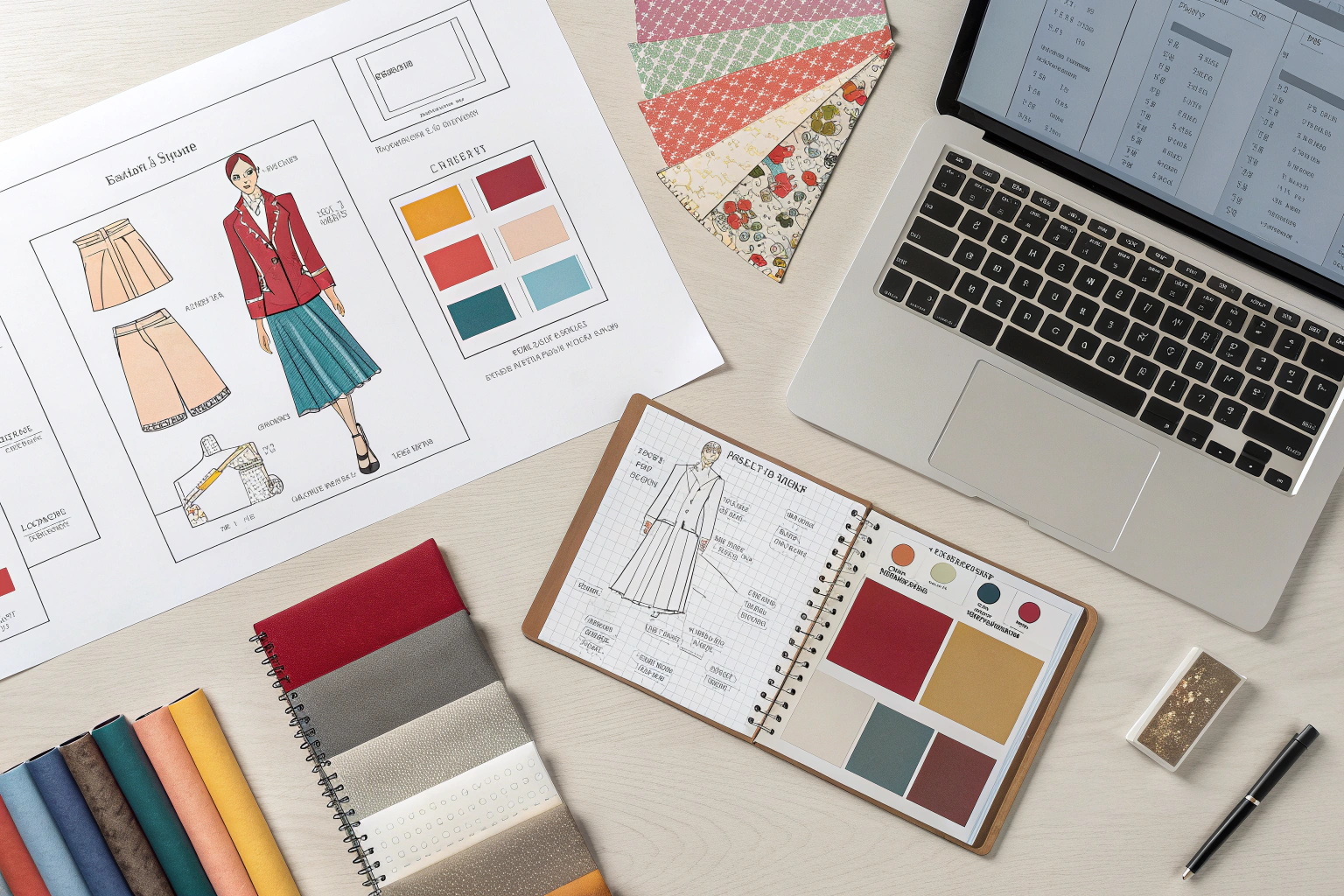
The creative part is done. You have a mood board filled with inspiring ideas for next season's collection of accessories. But before you dive into design, there's a crucial, foundational step that will determine the success or failure of the entire season: planning your buying budget. This isn't just about figuring out how much you want to spend; it's a strategic process of figuring out how much you can and should spend to maximize growth and profitability.
Planning your buying budget is a strategic exercise that balances historical sales data, future growth targets, and a realistic understanding of your total costs to create a roadmap for profitable inventory investment. As the owner of Shanghai Fumao Clothing, I can always tell which clients will have a successful season. They are the ones who approach us with a clear, well-researched budget. They know their numbers. This clarity allows us to act as true partners, helping them engineer a collection that meets their financial goals without compromising on quality.
A budget is not a straitjacket; it's a powerful tool that empowers you to make smart decisions. This guide will walk you through a professional, step-by-step process to build a buying budget that sets your next season up for success.
Where Do You Start?
You cannot plan your future without understanding your past. The most valuable data you have is your own sales history. Guesswork is the enemy of a good budget. Your past performance provides a baseline of reality, telling you what your customers actually love and buy, not just what you think they love.
Start by pulling a detailed sales report from the same season last year. This report is your treasure map. It will show you which products were winners, which were losers, and where your money was best spent. A thorough analysis of this data is the only logical starting point for building your new budget. It allows you to make data-driven decisions, rather than emotional ones.
This historical review is the foundation of your entire plan. Let's break down the key metrics you need to analyze and the questions you should be asking. This data-first approach is as fundamental as the principle that consistency is key in manufacturing.

What Are Your Best-Sellers and Worst-Sellers?
Identify your top 20% of products that generated 80% of your sales (the Pareto Principle). These are your "core" items. Was it a specific style of baseball cap? A particular color of scarf? These are your proven winners, and they should form the foundation of your new budget. Conversely, identify your worst-sellers. Why did they fail? Was it the color, the price, the style? Be ruthless in this analysis. Every dollar you save by not repeating a past mistake is a dollar you can invest in a potential winner. This analysis is a core part of inventory management.
What Was Your Sell-Through Rate and Margin?
Sell-through rate (units sold / units received) tells you how efficiently you sold your inventory. A high sell-through rate is great. A low rate means you overbought and likely had to resort to heavy discounting. Look at the profit margin on your best-sellers. Were your most popular items also your most profitable? If not, you have an opportunity to adjust your pricing or negotiate better costs with your supplier for the next run. Understanding these retail math formulas is essential for any brand owner.
How Do You Project Future Sales and Set a Top-Line Budget?
With a clear understanding of your past performance, you can now look to the future. Your next step is to create a realistic sales forecast for the upcoming season. This forecast will determine the top-line revenue you are aiming for, which in turn dictates your total buying budget.
Your sales forecast should be a blend of ambition and realism. It starts with last year's sales figures and then adjusts for your planned growth. Are you planning a major marketing push? Are you entering a new market? These factors can justify a higher forecast. Once you have a target revenue number, you can calculate your total budget for inventory.
How to Create a Realistic Sales Forecast?
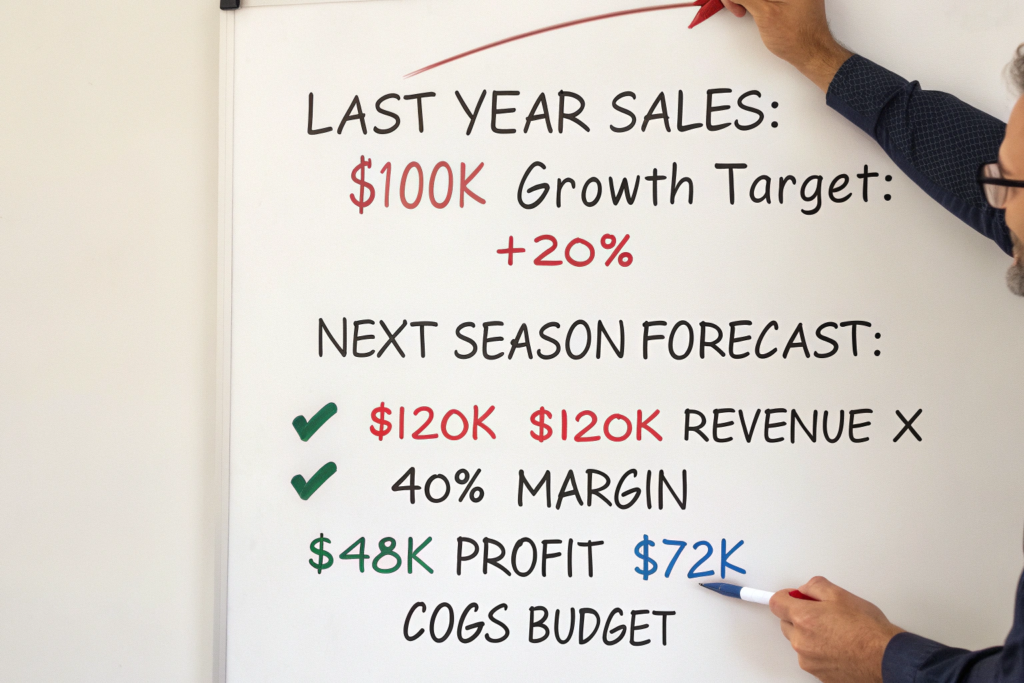
Start with your sales total for the same season last year (e.g., $100,000). Then, set a realistic growth target. A 15-30% growth target is often considered healthy and achievable for a growing brand. A target of 100% might be unrealistic unless you have a massive new marketing budget or distribution channel to back it up. So, if you aim for 20% growth, your new sales forecast is $120,000. Be prepared to justify this number to yourself and any potential investors. This process is a fundamental part of financial planning and analysis (FP&A).
How to Calculate Your COGS (Buying) Budget?
Your buying budget is your Cost of Goods Sold (COGS). To calculate it, you need to know your target gross profit margin. Let's say your target margin is 40%. This means that for every dollar in sales, 40 cents is profit, and 60 cents is the cost of the product. Therefore, your COGS budget is 60% of your sales forecast.
Formula: Sales Forecast x (1 - Target Gross Margin %) = COGS / Buying Budget
Example: $120,000 (Sales) x (1 - 0.40) = $72,000.
This $72,000 is the total amount you can spend on inventory for the season. This number is your north star. This is a core concept in managerial accounting.
How Do You Allocate Your Budget Across Products?
You have your total buying budget: $72,000. Now, how do you spend it? You don't simply divide it equally among all the products you want to make. A smart buyer allocates their budget strategically, balancing proven sellers with new, exciting products to test.
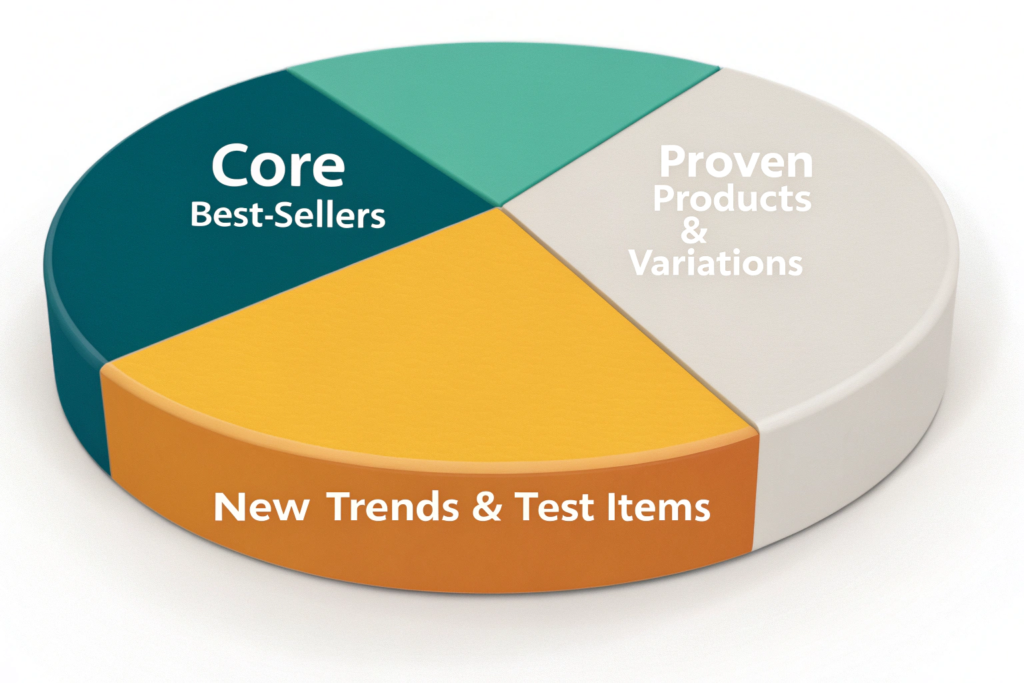
This is where you blend the art of fashion with the science of retail. A common and effective strategy is the "merchandise pyramid" or a 60/30/10 allocation rule. This framework helps you balance your inventory risk while still allowing for creativity and trend-testing. It ensures that the bulk of your investment is in products that are most likely to sell, securing your baseline revenue.
Let's break down this allocation strategy. This planning phase is where you decide what to make, which directly impacts your discussions with your manufacturer about materials and production.
What are "Proven" Products? (30% of Budget)
Allocate the next 30% (or $21,600) to proven products. These are variations of your core best-sellers. For example, if your black baseball cap was a core item, you might use this budget to introduce it in two new, on-trend colors like olive green and burgundy. Or you might take a best-selling scarf print and apply it to a new hat style. You are building on past success, so the risk is moderate and calculated. This strategy of product line extension is a common way to grow sales.
What are "New/Test" Products? (10% of Budget)
Allocate the final 10% (or $7,200) to new, high-fashion, or test products. This is your "fashion-forward" budget. Use this small, controlled portion of your funds to experiment with the latest trending textures or a brand-new product category. This is where you innovate and find your next best-seller. Because the investment is small, you can afford for these items to not sell out completely. The goal here is to gather data and test new ideas for future seasons.
How Do You Factor in the "Hidden" Costs?
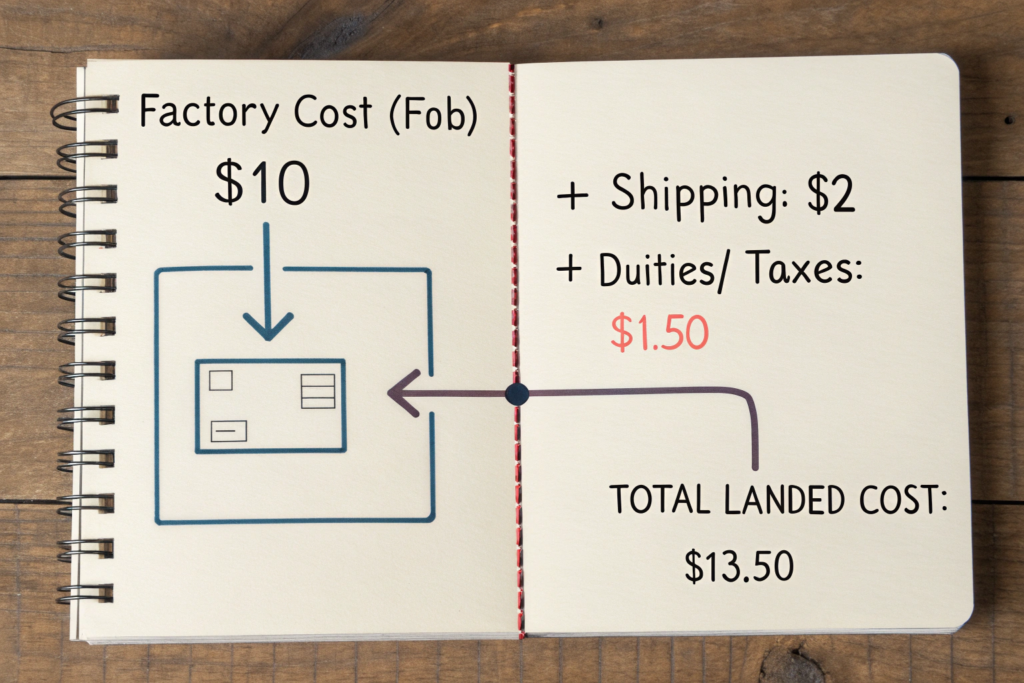
You've planned your COGS budget of $72,000. But is that the total cost? Not quite. A common mistake for new brands is to create a budget that only includes the factory cost of the product (the FOB price). To create a truly accurate plan, you must budget for the total landed cost.
The landed cost is the total cost of a product once it has "landed" in your warehouse. This includes the product cost itself, as well as shipping, customs duties, taxes, and insurance. Forgetting to budget for these costs can instantly make your entire collection unprofitable.
As your manufacturing partner, we can help you get quotes for these items, but it's your responsibility to include them in your financial plan. Let's look at the key components of landed cost. Understanding these is crucial, especially when dealing with the challenges of shipping certain items.
What is Freight and Shipping?
This is the cost to transport your goods from the factory in the country of origin to your warehouse. This will vary dramatically depending on whether you use sea freight or air freight. Air freight is much faster but can be 5-10 times more expensive than sea freight. You need to get a quote from a freight forwarder for this and include it in your budget. For planning purposes, you can estimate this as a percentage of your FOB cost (e.g., 10-20% for sea, much higher for air).
What Are Duties, Tariffs, and Taxes?
When your goods arrive in your country, you will have to pay customs duties or tariffs. This is a tax levied by your government on imported goods. The percentage varies wildly depending on the product category (e.g., a cotton hat has a different duty rate than a leather glove) and the country of origin. You can find these rates on your government's official trade or customs website (like the U.S. International Trade Commission's HTS search). This is a mandatory cost that must be in your budget.
Conclusion
Planning your buying budget is the most powerful strategic action you can take to ensure a profitable season. It transforms you from a reactive designer into a proactive business owner. By starting with a deep analysis of past data, creating a realistic sales forecast, allocating your budget wisely using the 60/30/10 rule, and accounting for all landed costs, you create a clear and achievable financial plan.
This plan is your roadmap. It will guide your design decisions, your purchasing choices, and your conversations with your manufacturing partners. When you approach a factory with a well-planned budget, you signal that you are a professional. It allows us to work with you more effectively, providing solutions and suggestions that fit within your financial framework.
If you have completed your budget and are ready to find a partner to help you bring your collection to life within your financial plan, we are here to help. Please contact our Business Director, Elaine, at her email: elaine@fumaoclothing.com to start the conversation.