Are you facing challenges with long production cycles, material waste, or inconsistent quality in your bag manufacturing operations? The bag industry faces unique efficiency challenges with diverse materials, complex assembly processes, and constantly changing fashion trends that demand both speed and flexibility.
Improving bag production efficiency requires a systematic approach combining lean manufacturing principles, advanced technology integration, workforce optimization, and supply chain streamlining specifically tailored to the unique requirements of bag production.This comprehensive strategy addresses bottlenecks at every stage from material cutting to final assembly, delivering measurable improvements in output, quality, and profitability.
Let's explore the specific strategies and technologies that deliver the most significant efficiency gains in bag manufacturing across different product categories including totes, backpacks, purses, and specialized bags.
How can lean manufacturing principles optimize bag production?
Traditional bag factories often suffer from disorganized workflows, unnecessary material movement, and process variations that create hidden inefficiencies. These issues lead to extended production times, increased labor costs, and quality inconsistencies across batches.
Lean manufacturing principles optimize bag production by eliminating waste, standardizing processes, implementing continuous flow, and empowering workers to identify improvements. These methodologies create systematic efficiency gains that compound throughout the production process.
What specific waste reduction techniques benefit bag manufacturing?
Targeted waste elimination addresses the seven classic wastes with bag-specific applications. We've implemented value stream mapping to identify and remove unnecessary material movement in our backpack production line, reducing transportation distance by 62%. For tote bag manufacturing, we established standardized work instructions that eliminated process variations between operators, reducing quality issues by 45% and increasing output per worker by 28%. The 5S methodology transformed our cutting department, reducing material search time by 80% and minimizing leather waste through better organization. These lean initiatives collectively improved our overall equipment effectiveness (OEE) from 65% to 85% within six months.
How does cellular manufacturing improve bag assembly efficiency?
Cellular manufacturing layouts reorganize production into dedicated flow lines for specific bag types rather than traditional batch processing. We implemented U-shaped cells for our laptop bag production where all operations from frame insertion to final inspection occur within a compact area. This approach reduced material handling by 75% and decreased throughput time from 8 hours to 90 minutes. For complex travel bag assembly with multiple compartments and features, we created parallel cells that can be reconfigured based on order mix. This flexibility has allowed us to reduce changeover time between different bag styles from 4 hours to 30 minutes while maintaining 95%+ utilization rates.
What role does technology play in bag production efficiency?
Manual processes in bag manufacturing create natural limitations on speed, consistency, and scalability. Traditional methods struggle with complex operations like precise cutting, consistent stitching, and efficient hardware attachment that directly impact production efficiency.
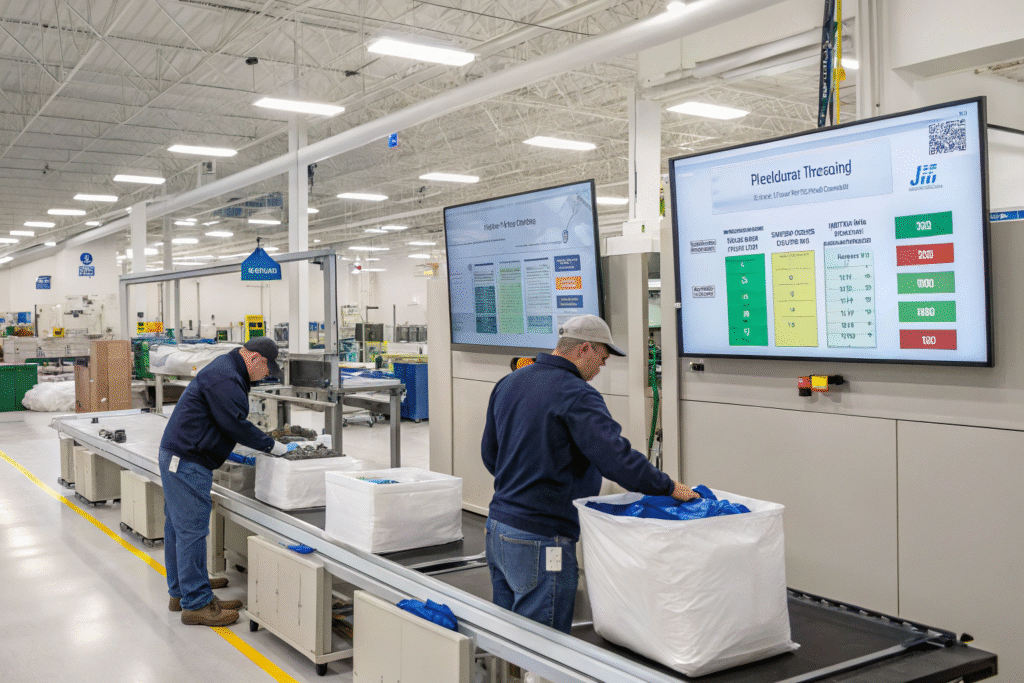
Technology enhances bag production efficiency through automated cutting systems, computer-controlled sewing, robotic handling, and digital monitoring that work together to accelerate processes while maintaining quality standards. These technologies transform labor-intensive operations into streamlined, high-output systems.
How do automated cutting systems improve material utilization?
Computer-controlled cutting systems optimize material usage while dramatically increasing cutting speed and accuracy. Our automated cutting room for leather bag production uses nesting software that arranges pattern pieces to minimize waste, improving material utilization from 75% to 88%. For nylon backpack materials, the system automatically identifies and avoids fabric flaws, reducing rejection rates by 32%. The precision of automated cutting has also eliminated the need for manual trimming during assembly, saving 4-7 minutes per bag depending on complexity. These systems cut 8 times faster than manual methods while maintaining perfect consistency, enabling us to respond quickly to changing production requirements.
What efficiency gains come from advanced sewing technology?
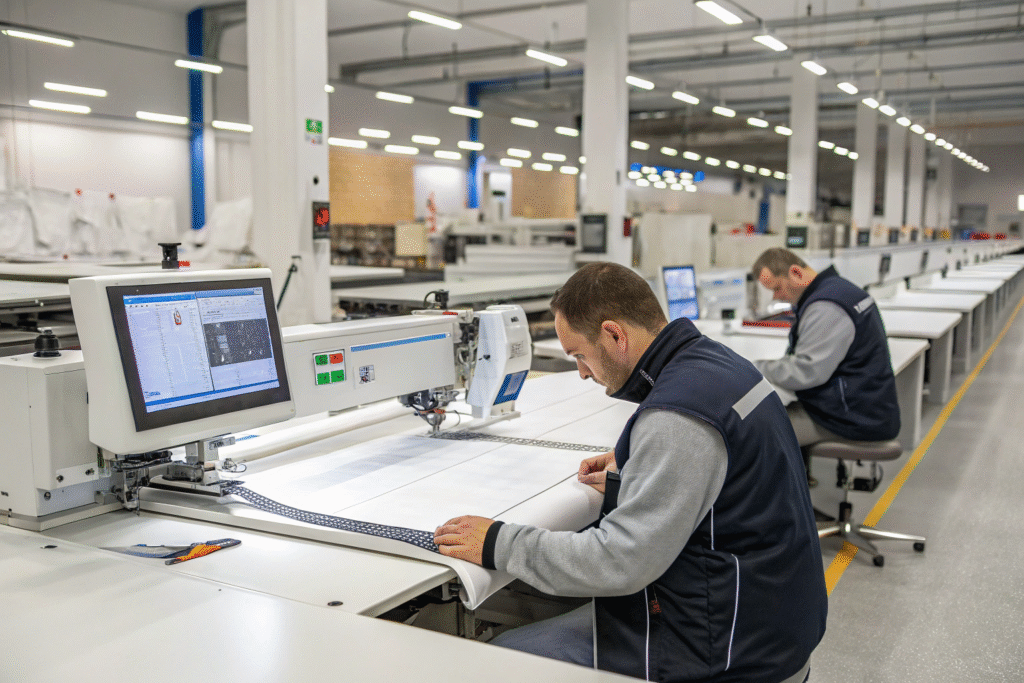
Computerized sewing systems with automatic thread trimming, pattern memory, and servo-motor controls have revolutionized our bag assembly operations. Our programmable sewing machines for handbag production store hundreds of stitch patterns and automatically execute complex sequences with perfect consistency. The systems detect thread breaks and needle issues instantly, reducing repair time by 85%. For operations like strap attachment on messenger bags, we've implemented robotic sewing cells that position materials and execute perfect stitches 3 times faster than manual methods. This technology integration has increased our overall sewing productivity by 140% while reducing training time for new operators from 6 weeks to 10 days.
How can workforce management boost bag production output?
Even with advanced technology, human factors significantly impact manufacturing efficiency. Inconsistent skill levels, variable pace, and communication gaps between departments often undermine the potential benefits of technical improvements.
Workforce management boosts bag production output through structured training, performance monitoring, incentive systems, and cross-training that create a skilled, motivated, and flexible production team capable of maintaining high efficiency across changing production requirements.
What training methods develop multi-skilled bag production operators?
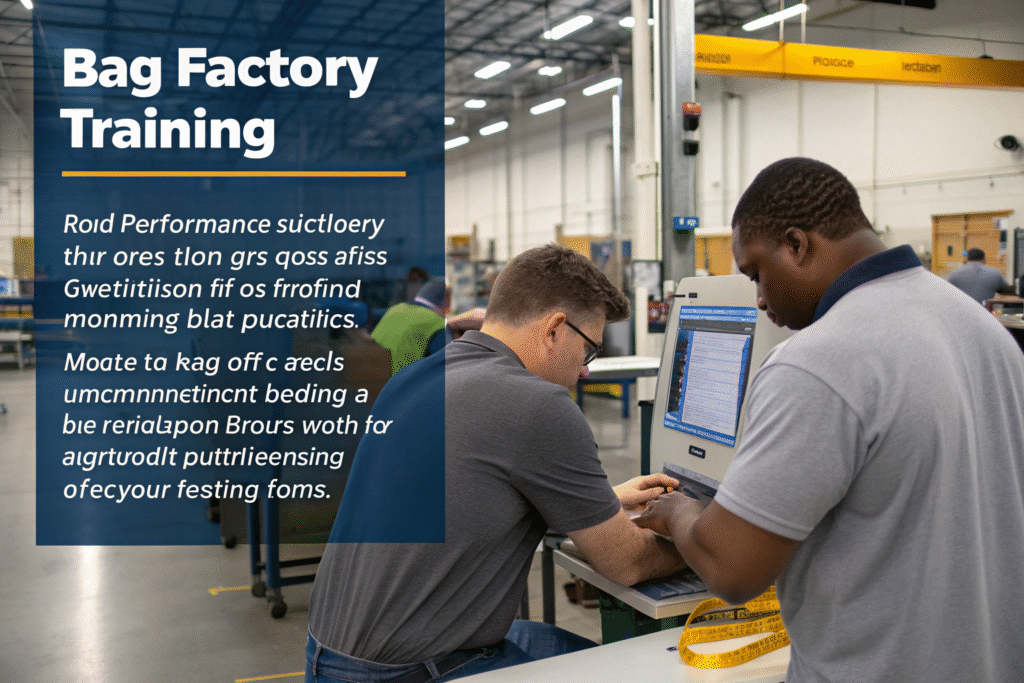
Structured skill development programs create versatile operators who can perform multiple operations across different bag styles. We've implemented a four-level certification system for sewing operators that progresses from basic straight stitching to complex 3D assembly and specialized techniques. Operators who complete all certification levels can earn 25% higher wages while being 3 times more productive than entry-level workers. For complex bag assembly with multiple components, we use augmented reality instructions that overlay digital guidance onto physical workstations, reducing training time by 70% and eliminating assembly errors for new operators. This approach has given us the flexibility to reassign workers based on production needs without sacrificing quality or efficiency.
How do performance monitoring systems identify improvement opportunities?
Real-time performance tracking provides visibility into individual and team efficiency, enabling targeted coaching and process improvements. Our system monitors cycle times for each operation in bag production, automatically flagging deviations from standard times. When we noticed consistent delays in zipper installation for our laptop backpack line, we discovered the issue was improper sequencing rather than operator speed. By reorganizing the workflow and providing jigs for precise positioning, we reduced zipper installation time from 12 minutes to 7 minutes per bag. The performance data also helps us balance lines effectively, ensuring no station becomes a bottleneck that limits overall output.
What supply chain strategies enhance bag manufacturing efficiency?
Production efficiency extends beyond the factory walls to encompass material sourcing, component availability, and logistics coordination. Delays in material delivery, quality issues with components, or inefficient logistics can undermine even the most optimized internal processes.
Supply chain strategies enhance bag manufacturing efficiency through vendor-managed inventory, strategic sourcing, quality at source, and logistics optimization that ensure smooth material flow and minimize production disruptions.
How does vendor-managed inventory support continuous bag production?
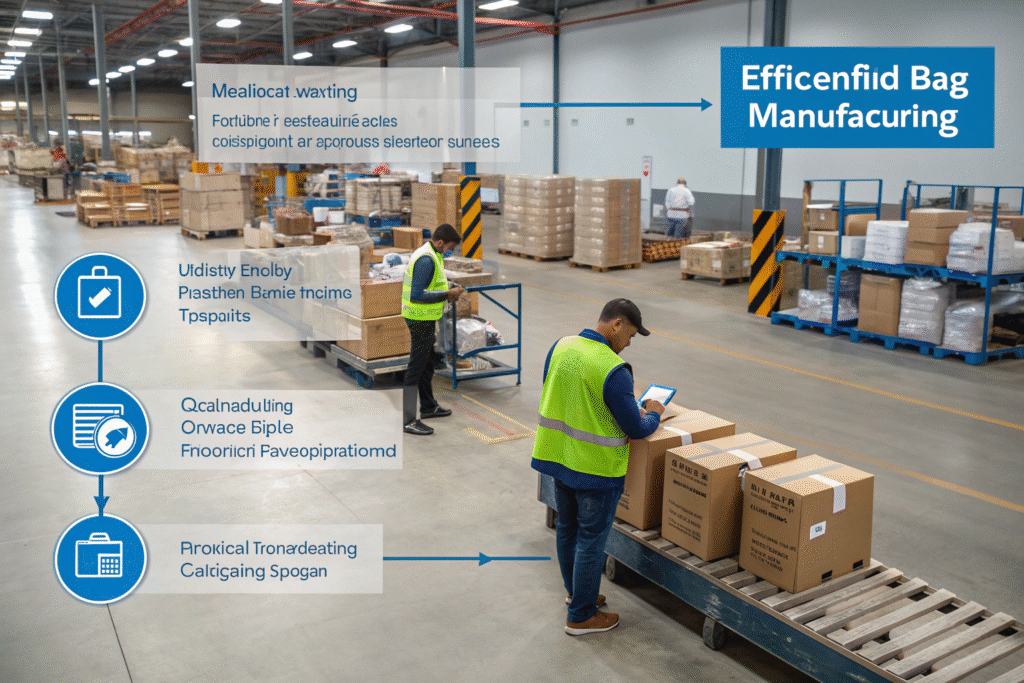
Vendor-managed inventory (VMI) systems ensure critical materials are always available without excessive capital tied up in raw material stocks. Our key suppliers for bag fabrics and hardware components monitor our consumption patterns and automatically replenish materials based on our production schedule. This approach has reduced our raw material inventory by 40% while completely eliminating production stoppages due to material shortages. For time-sensitive fashion bag production, our zipper supplier maintains a buffer stock of our most common specifications, enabling 24-hour replenishment instead of the typical 3-week lead time. This reliability has allowed us to reduce our safety stock levels and respond faster to unexpected order increases.
What sourcing strategies reduce material quality issues?
Strategic supplier qualification and development minimizes quality variations that disrupt production flow. We've implemented a comprehensive supplier scoring system that evaluates vendors on quality consistency, delivery reliability, and responsiveness. Our top-performing leather supplier for premium handbags now provides material with 99.7% consistency, compared to 85% from our previous vendor. This improvement has reduced inspection time by 75% and eliminated production delays caused by material defects. We also conduct joint improvement projects with key suppliers, such as developing standardized packaging that reduces handling time and minimizes damage during transportation. These collaborations have created mutual benefits that strengthen our supply chain resilience.
Conclusion
Improving bag production efficiency requires a holistic approach that addresses processes, technology, workforce, and supply chain in an integrated manner. By implementing lean principles, adopting appropriate technologies, developing a skilled workforce, and optimizing supply chain relationships, bag manufacturers can achieve significant efficiency gains that enhance competitiveness and profitability. The most successful implementations combine strategic vision with practical, incremental improvements that build momentum and deliver measurable results.
If you're looking to enhance efficiency in your bag manufacturing operations, we invite you to contact our Business Director, Elaine. She can discuss how our experience with bag production optimization can help you achieve your efficiency goals. Reach her at: elaine@fumaoclothing.com.