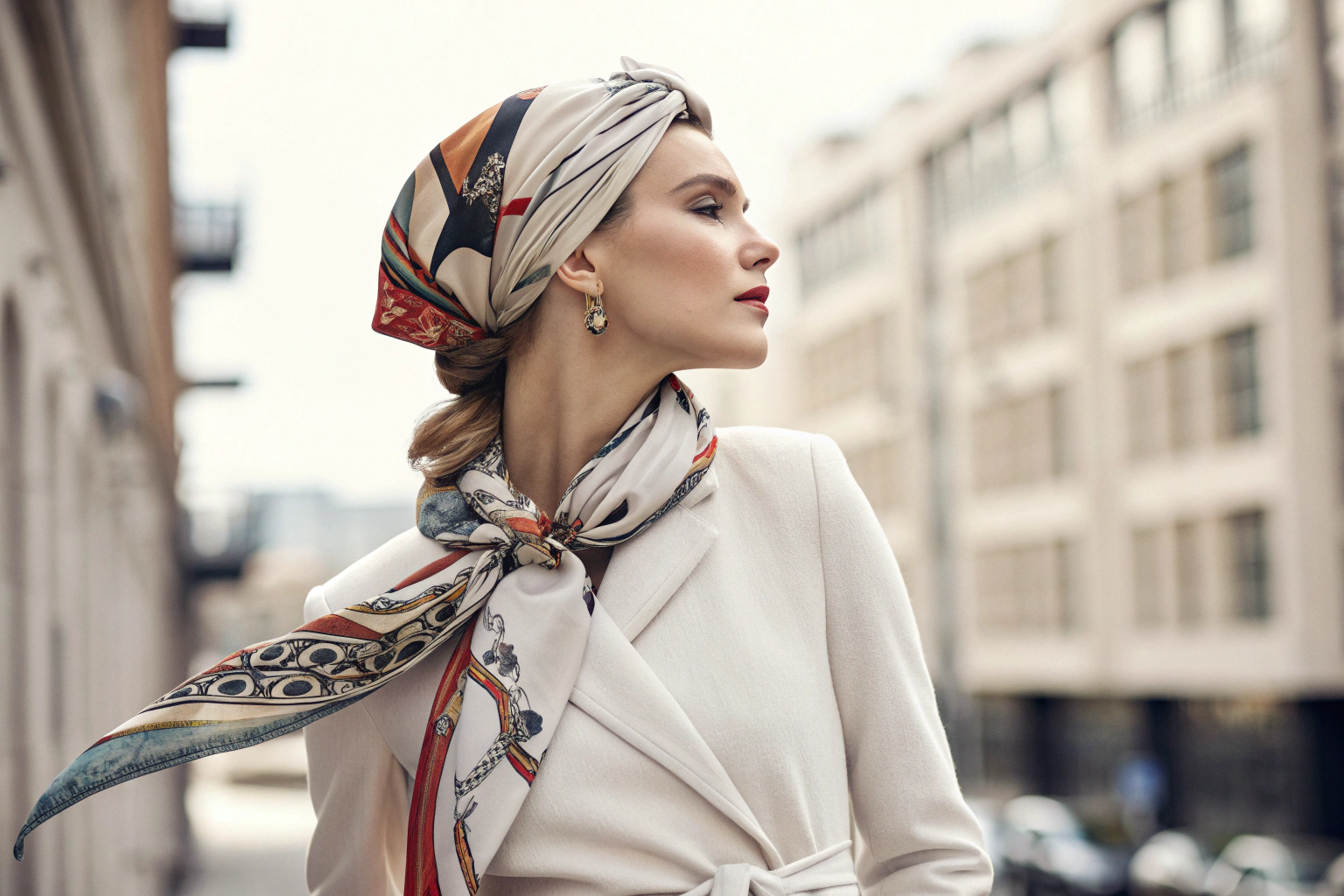
You're always searching for that "hero" product—an item that offers exceptional value, encourages creative styling, and generates a ton of buzz on social media. In the world of accessories, versatility is the ultimate form of value. A customer who buys a product they can wear in five different ways feels like they've gotten five products for the price of one. You've identified a powerful concept: designing a scarf that is not just a scarf, but a multi-functional fashion tool. But how do you actually design for versatility? What specific choices in size, material, and pattern transform a simple piece of fabric into a chameleon-like wardrobe staple?
To design a scarf that can be worn multiple ways, you must strategically focus on three core design pillars: 1) Generous and Precise Dimensions, particularly a large square or an oversized rectangle; 2) The Right Fabric, which must offer a perfect balance of drape, strength, and minimal slip; and 3) A Versatile Pattern, which looks good both from a distance and when folded or knotted. It's a process of intentional engineering, not just aesthetic choice, where every decision is made to maximize the scarf's potential for transformation.
I'm the owner of Shanghai Fumao, and this is one of our favorite design challenges. A multi-way scarf is a testament to smart design. It's a product that, when done right, creates immense value for the customer and significant marketing opportunities for the brand. It moves the scarf from a simple winter accessory to a year-round style statement. The key is to think less like a scarf designer and more like a product engineer, considering how each element will function when twisted, tied, and draped. Let's break down the specific design principles for creating a truly versatile scarf.
Why is Size the Most Critical Factor for Versatility?
Before you consider fabric or pattern, you must start with size. The dimensions of the scarf are the single most important factor that will either enable or limit its versatility. A small scarf can only ever be a small scarf. A generously sized scarf, however, is a blank canvas.
Size is the most critical factor because the scarf's dimensions directly dictate the range of possible styling options. A large square (at least 90cm x 90cm or 35" x 35") or an oversized rectangle (at least 70cm x 200cm or 27" x 78") provides the necessary surface area and length to be wrapped, folded, and tied into various forms, such as a top, a headwrap, a shawl, or a belt. Without these generous dimensions, most of the popular multi-way styles are physically impossible to achieve.
Let's look at the two "magic" silhouettes for versatility:
- The Large Square: This is the most versatile shape.
- Magic Dimensions: The industry standard for a versatile luxury square is 90cm x 90cm (approx. 35" x 35"). This is the classic size used by brands like Hermès for a reason. For even more options, especially for tying as larger tops, a 110cm x 110cm (43" x 43") or even a 140cm x 140cm (55" x 55") square is fantastic.
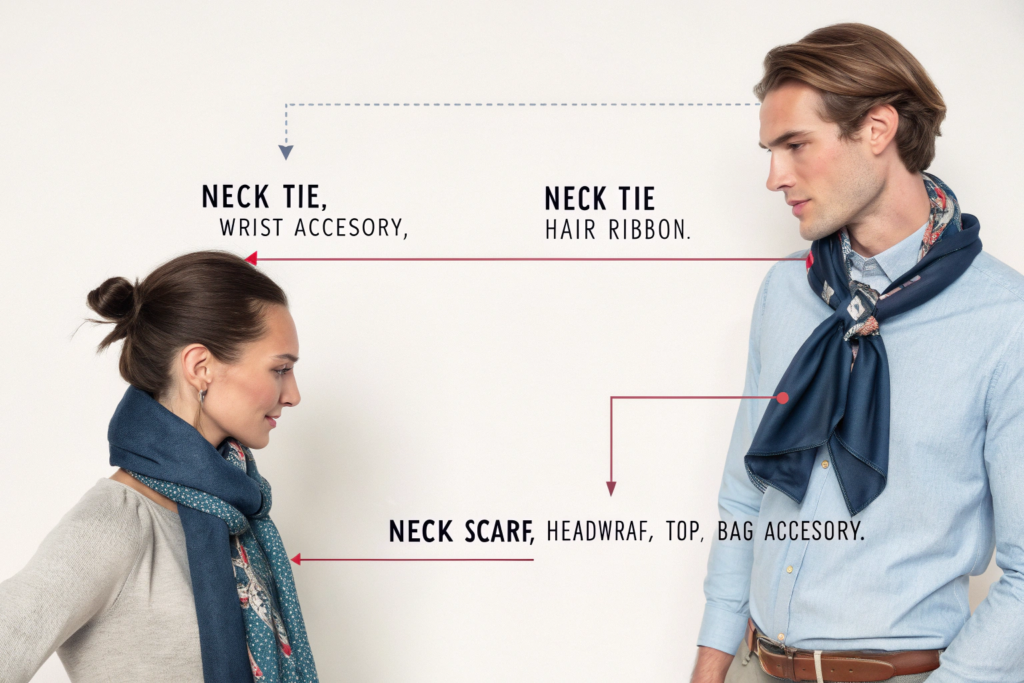
- What it unlocks: A 90x90cm square can be folded on the diagonal to create a large triangle, which can then be worn as a classic neckerchief, a bandana-style head covering, a halter top, or a strapless bandeau top. It can also be rolled into a long band to be used as a belt or a headband.
- The Oversized Rectangle (Shawl or Stole):
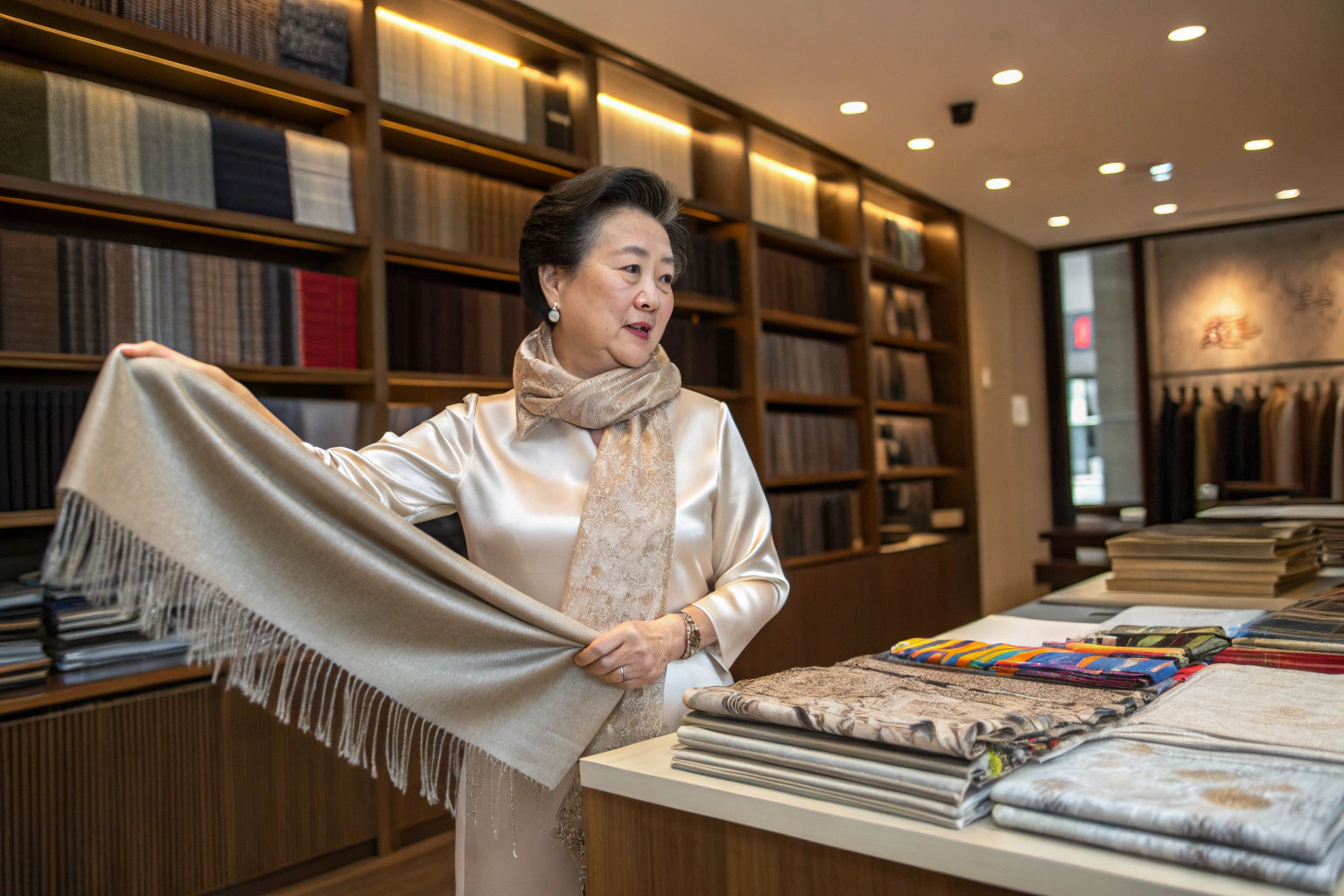
- Magic Dimensions: A width of at least 70cm (27") and a length of 180-200cm (70"-78") is ideal. This is often called a "stole" or "pashmina" size.
- What it unlocks: This shape is perfect for use as a classic shawl or wrap over the shoulders. It can be looped multiple times around the neck for a very full, cozy winter look. It can also be wrapped around the waist as a sarong or beach cover-up, or even worn as a makeshift vest or shrug.
Is a 90cm x 90cm square the same as a 36" x 36" square?
Not exactly, and this is a critical detail when creating your Tech Pack. 90cm is approximately 35.4 inches. A 36-inch square is approximately 91.4cm. While the difference is small, you must be precise in your specifications. It's best to specify in one unit of measurement (either cm or inches) and stick to it. The 90cm standard is more common globally, but 36" is common in the US market.
How does the size affect the perceived value?
Dramatically. A larger scarf simply feels more substantial and luxurious. It has a better "hand" and a more satisfying weight. When a customer unfolds a large, generous scarf, it has a "wow" factor that a smaller scarf lacks. This immediately elevates its perceived value and helps to justify a higher price point.
Which Fabrics Offer the Best Balance of Drape and Grip?
Once you have the right size, the fabric becomes the next critical decision. The perfect fabric for a multi-way scarf needs to have a "dual personality." It must be fluid and drapey enough to look elegant, but it also needs to have enough surface friction or "grip" to hold a knot securely without slipping or coming undone.
The best fabrics for a multi-way scarf are those that offer a perfect synthesis of fluid drape and subtle surface grip. Lightweight natural fibers and their blends are ideal. A silk-modal or silk-cotton blend offers the beautiful drape of silk with the softer, less slippery texture of the plant-based fiber. For a more casual, year-round option, a high-quality, lightweight viscose or a finely woven, soft wool provides excellent drape and knot-holding ability.
Here is a breakdown of the top fabric choices:
- Silk Blends (The Premium Choice):
- Silk-Cotton: This blend is a fantastic option. The cotton fibers give the fabric a slightly matte finish and a "drier" hand-feel, which provides the grip needed to hold knots securely. The silk provides the beautiful luster and fluid drape.
- Silk-Modal: Modal, a type of rayon made from beech trees, is known for its incredible softness and smooth drape. Blending it with silk creates a fabric that is luxuriously soft, drapes beautifully, and is less slippery than 100% silk satin.
- High-Quality Viscose/Rayon (The Versatile Workhorse):
- Viscose (also known as Rayon) is a semi-synthetic fiber made from wood pulp. It is known for its excellent drape, which is very similar to silk. A high-quality, lightweight viscose challis or twill is a fantastic, affordable option for a multi-way scarf. It's breathable, feels soft on the skin, and holds a knot very well. Brands like Lenzing™ produce high-quality, sustainable versions of these fibers.
- Lightweight Wool or Cashmere (For Cooler Climates):
- For a multi-way scarf intended for fall and winter, a very finely woven, lightweight wool gauze or a cashmere blend is perfect. These materials have a natural "tooth" to the fibers that makes them hold knots exceptionally well. They are also incredibly warm and breathable. The key is "lightweight"—a heavy, chunky wool will be too bulky to tie in intricate ways.
Fabric to Avoid: Be very cautious with 100% polyester satin. While it is inexpensive and can have a nice shine, it is notoriously slippery. Knots tied in cheap polyester satin have a tendency to slip and come undone, which can be frustrating and even embarrassing for the wearer, especially if they are wearing the scarf as a top.
What is a "twill" weave and why is it good for scarves?
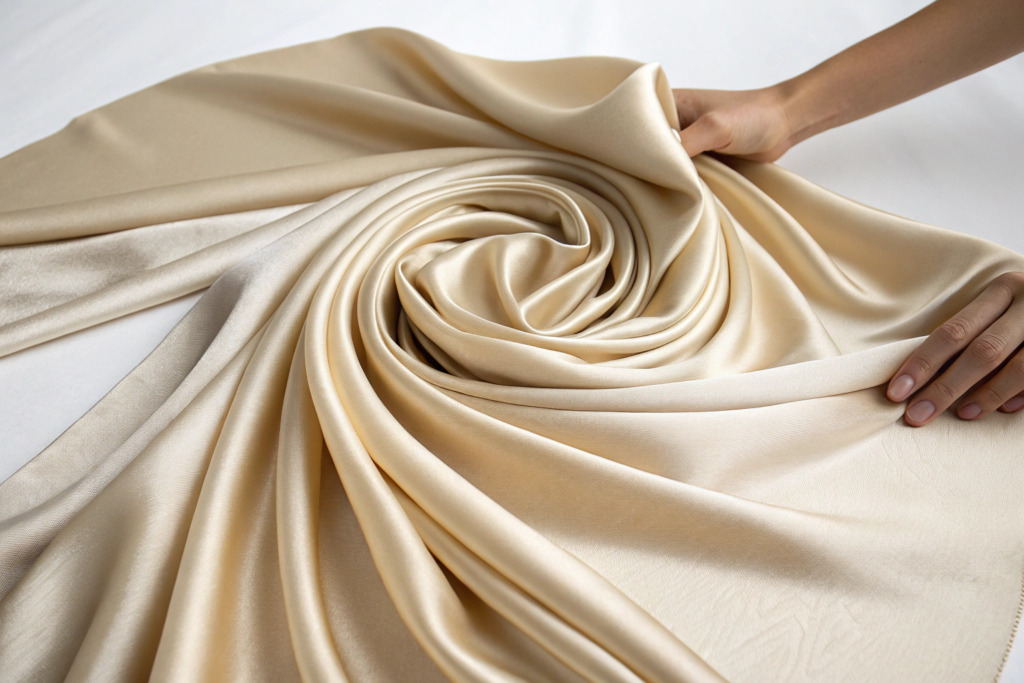
A twill weave is a type of textile weave with a pattern of diagonal parallel ribs (think of the texture of denim). For scarves, particularly silk scarves, a twill weave is considered a premium choice. The diagonal structure gives the fabric a beautiful, subtle texture, a fantastic drape, and slightly more grip and durability than a plain, flat weave. It's a subtle detail that signals quality.
How does the fabric choice impact the care instructions?
This is a crucial consideration for the end consumer. A scarf made from a silk or wool blend will likely require more delicate care (e.g., hand wash or dry clean only), which positions it as a more precious, luxury item. A scarf made from a viscose or cotton blend might be machine washable on a delicate cycle, which positions it as a more durable, everyday item. Your care label must be accurate and is a key part of the product's final specification.
How Should You Design a Pattern That Works When Folded?
The pattern is the soul of the scarf. However, for a multi-way scarf, the pattern must be designed with the understanding that it will rarely be seen in its entirety. It will be folded, rolled, and knotted. A design that looks great when laid out flat might look like a confusing mess when worn.
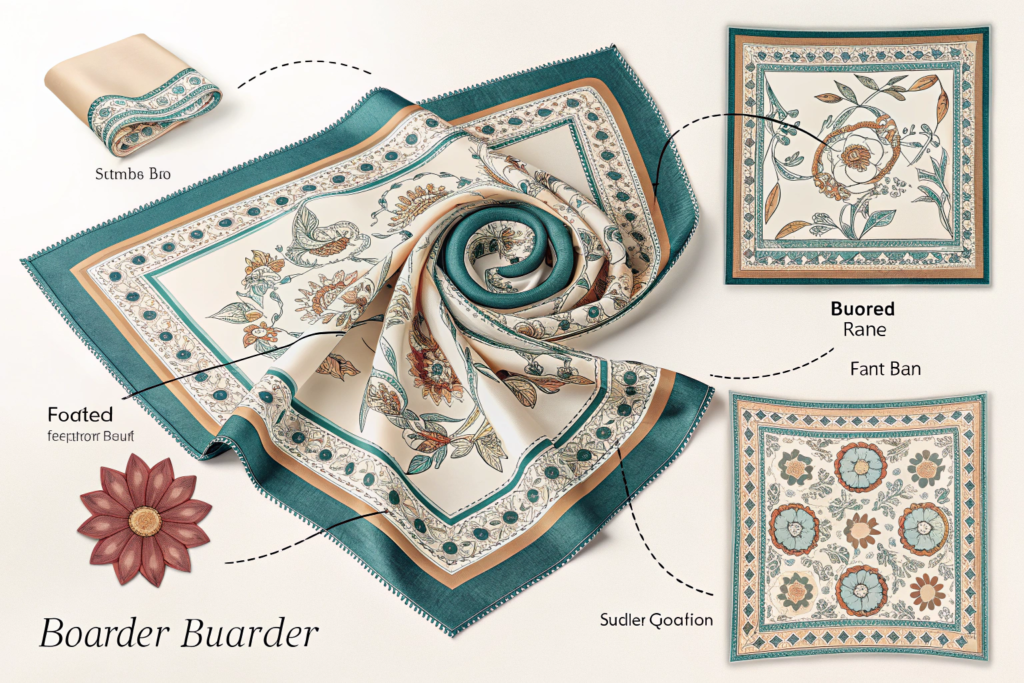
A successful pattern for a multi-way scarf is designed "for the fold." This typically involves using a "border print" or a "four-quadrant" design. A strong, distinct border creates visual interest when the scarf is rolled or folded, while a different central motif provides a beautiful contrast. The design must look just as good when only a small section is visible as it does when it is fully displayed. Avoid a single, large, centered image, as it will be lost when the scarf is worn.
Here are some proven design strategies for versatile patterns:
- The Classic Border Print: This is the most effective and timeless strategy.
- How it works: The design consists of two main parts: a distinct border (which can be a solid color, a stripe, or an intricate pattern) and a central "field" (which can be a different color, a repeating micro-pattern, or a more open design).
- Why it works: When you fold the scarf on the diagonal, you bring two sides of the border together, creating a beautiful V-shape. When you roll the scarf into a band for a headband or belt, the border becomes the star of the show. This structure provides built-in versatility.
- The Four-Quadrant Design:
- How it works: The square is divided into four equal quadrants, and each quadrant has a different color scheme or a slightly different pattern.
- Why it works: This is a playful and modern approach. Depending on how you fold the scarf, you can choose to feature a different color or pattern. It's like getting four scarves in one.
- High-Contrast, All-Over Patterns:
- What works: A dense, all-over pattern can also be very effective if it has a good rhythm and is not too chaotic. Classic choices like paisley, sophisticated florals, or abstract geometrics work well because any small section of the pattern is interesting on its own.
- What to avoid: Avoid patterns with a single, obvious "up" or "down" direction, as it will inevitably be upside down or sideways when tied.
Should the pattern be symmetrical?
Symmetry can be very effective, especially for a border print. A symmetrical design ensures a balanced and harmonious look no matter how it's folded. However, a well-balanced asymmetrical design can also be very dynamic and artistic. The key is "balance," not necessarily perfect symmetry.
How does color play a role in a versatile pattern?
A smart color palette is crucial. A palette of 3-5 well-chosen colors that work well together will be more versatile than a palette of 10 competing colors. Consider using a mix of a neutral, a bright, and a mid-tone. This allows the scarf to be paired with a wider range of outfits. A reversible scarf with a different colorway on each side is another, more complex way to offer extreme versatility.
How Can You Use "Finishing Touches" to Enhance Versatility?
While size, fabric, and pattern are the main pillars, small, thoughtful details can further enhance a scarf's functionality and perceived value. These finishing touches show a level of design consideration that separates a good product from a great one.
Subtle finishing touches can significantly enhance a multi-way scarf's versatility and premium feel. Opting for a high-quality, hand-rolled hem provides a plump, durable edge that is easy to grip when tying. Adding a small, discreetly placed brand label or a tiny metal tag, rather than a large, scratchy tag in the middle, ensures that the branding doesn't interfere with the scarf's drape or comfort, no matter how it's worn.
Consider these important details:
- The Hem: The edge of the scarf is handled constantly when tying.
- Hand-Rolled Hem: This is the luxury standard. It creates a plump, durable edge that is easy to grip.
- Machine Baby Hem: A good-quality, fine machine-rolled hem is a more cost-effective but still excellent option. It should be neat, flat, and secure.
- Avoid: A thick, bulky machine hem will be stiff and difficult to tie neatly.
- Labeling: This is a surprisingly important detail. A large, scratchy label can ruin the experience of wearing a scarf.
- Best Practice: Use a small, soft, woven brand label and a separate care label, and have them sewn discreetly into the hem in one corner. This keeps them out of the way.
- Alternative: Some brands opt for a removable hang tag for all branding and care info, leaving the scarf itself completely free of sewn-in labels for maximum comfort.
- Built-in Hardware (Use with Caution):
- Some designs incorporate a small ring or loop at one corner to make it easier to tie or style. This can be a clever feature, but it can also limit the scarf's versatility if it gets in the way of other styles. If you add hardware, it must be small, high-quality, and thoughtfully placed.

Why is a hand-rolled hem considered a luxury detail?
A hand-rolled hem is done entirely by a skilled artisan. They meticulously roll the raw edge of the fabric inward and then secure it with tiny, almost invisible stitches. It is an incredibly time-consuming and skilled process. This human touch and craftsmanship are what make it a hallmark of a high-end, luxury scarf. As a factory, offering this capability, as Shanghai Fumao does, is a sign of our commitment to high-end craftsmanship.
Can I print my brand name directly on the scarf?
Yes, and this is a very common and elegant solution. You can incorporate your brand name or logo discreetly into the pattern itself, often in one corner near the hem. This eliminates the need for a sewn-in label altogether.
Conclusion
Designing a scarf that can be worn in multiple ways is a masterclass in functional design. It requires a shift in perspective—from seeing a scarf as a flat canvas to seeing it as a three-dimensional, interactive object. By making strategic, intentional choices—starting with generous dimensions, selecting a fabric with the perfect balance of drape and grip, creating a pattern that is designed for the fold, and finishing with thoughtful, high-quality details—you can create a product that offers immense value to your customer. A multi-way scarf is more than just an accessory; it's an invitation for the customer to be creative, to express their personal style, and to get the most possible value from their purchase. This is a powerful recipe for customer satisfaction, social media engagement, and brand loyalty.
At Shanghai Fumao, we are not just manufacturers; we are design consultants and product engineers. We can guide you through every step of this process, from recommending the perfect silk-modal blend to helping you refine a border print that will look stunning no matter how it's tied. We have the technical expertise and the commitment to quality needed to produce a truly versatile, high-value scarf. If you are ready to create a "hero" product that will become a staple in your customers' wardrobes, please reach out to our Business Director, Elaine, at elaine@fumaoclothing.com.