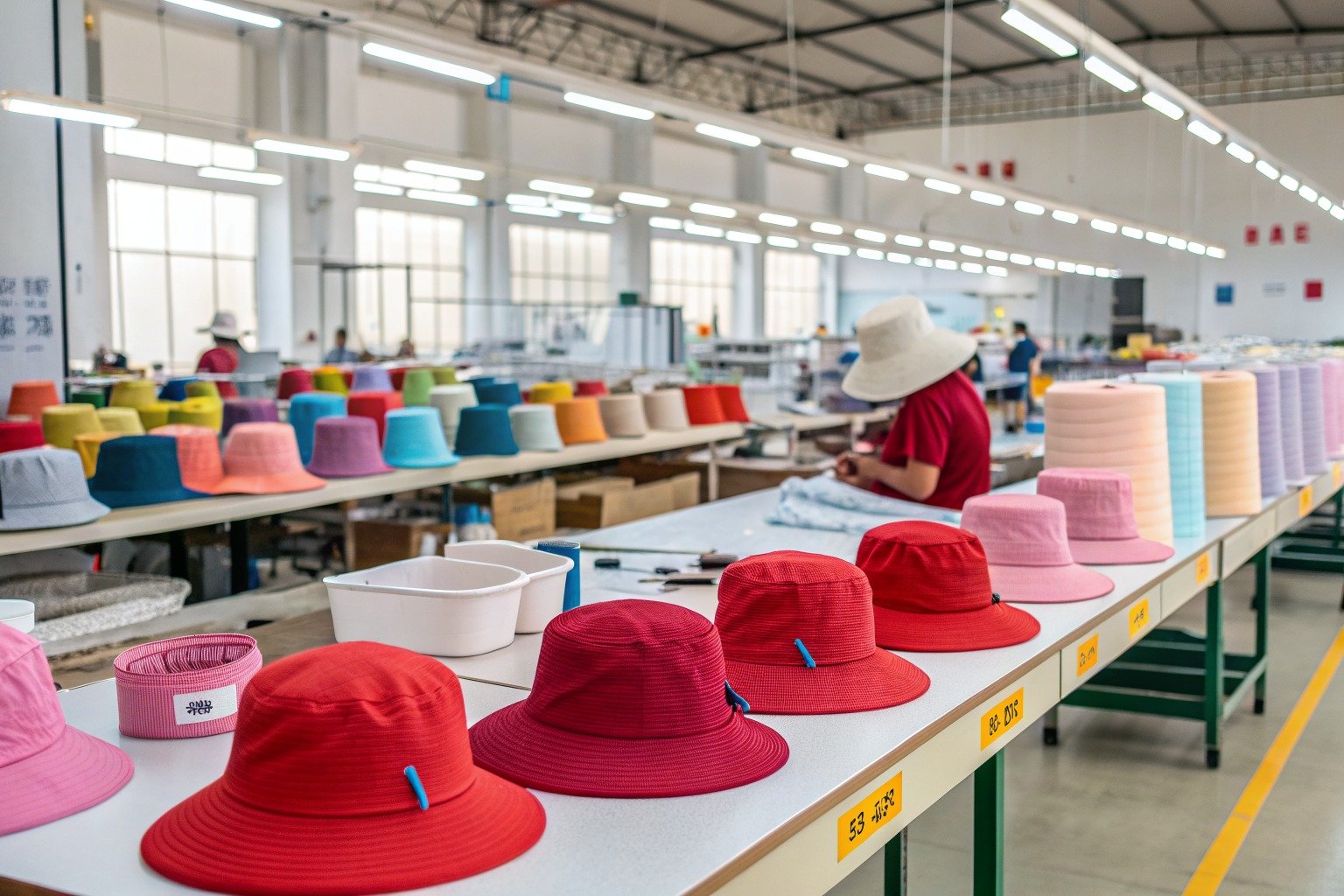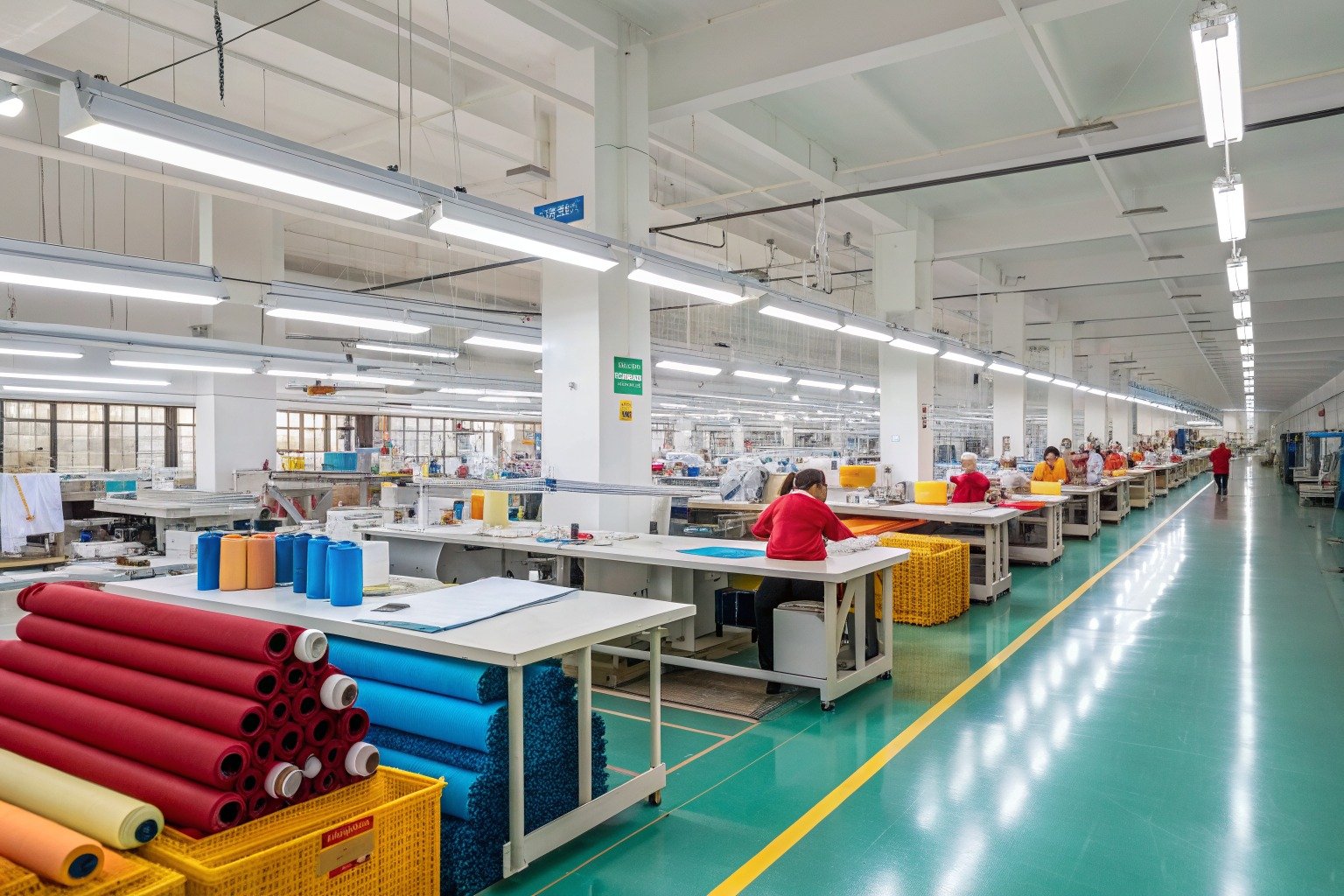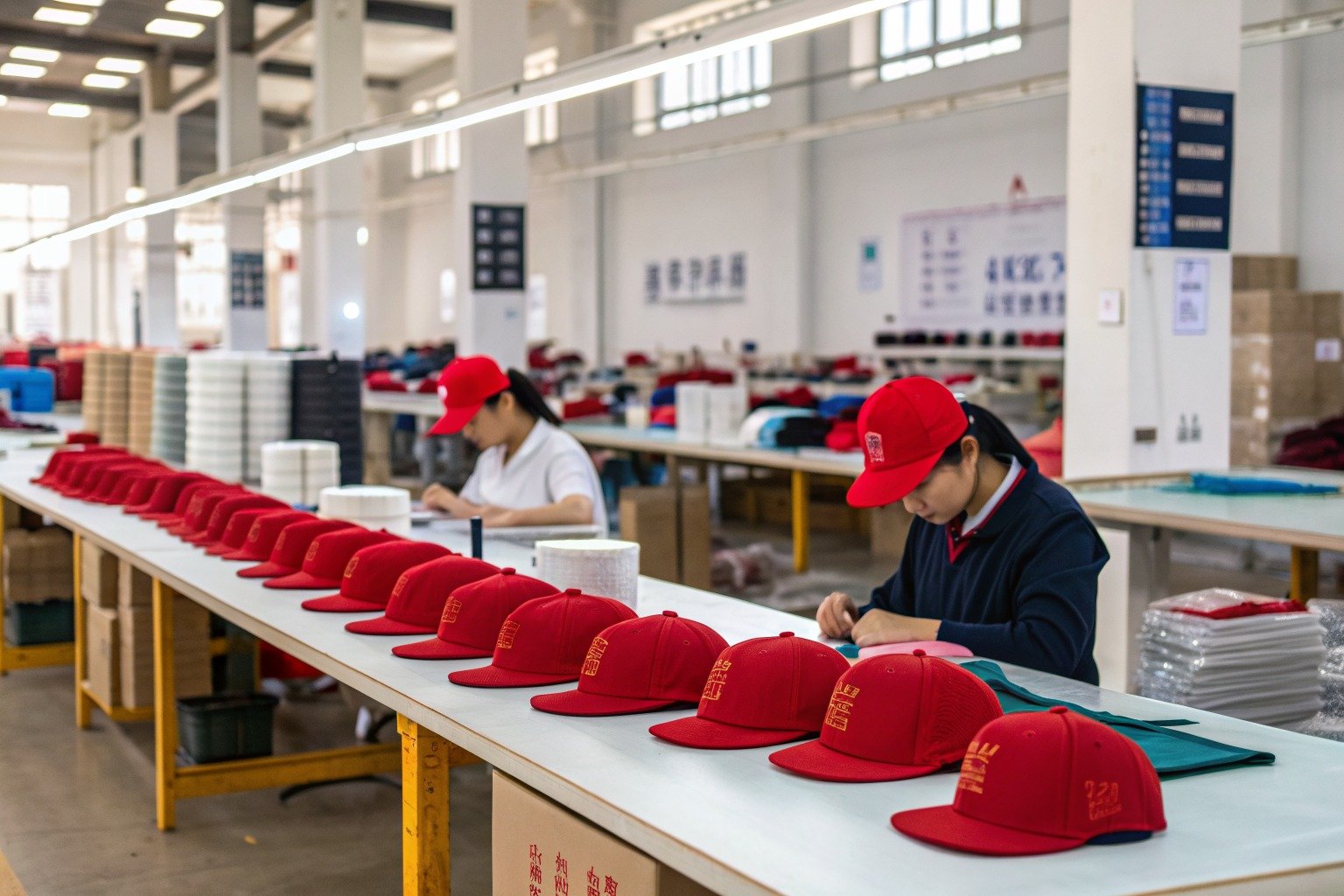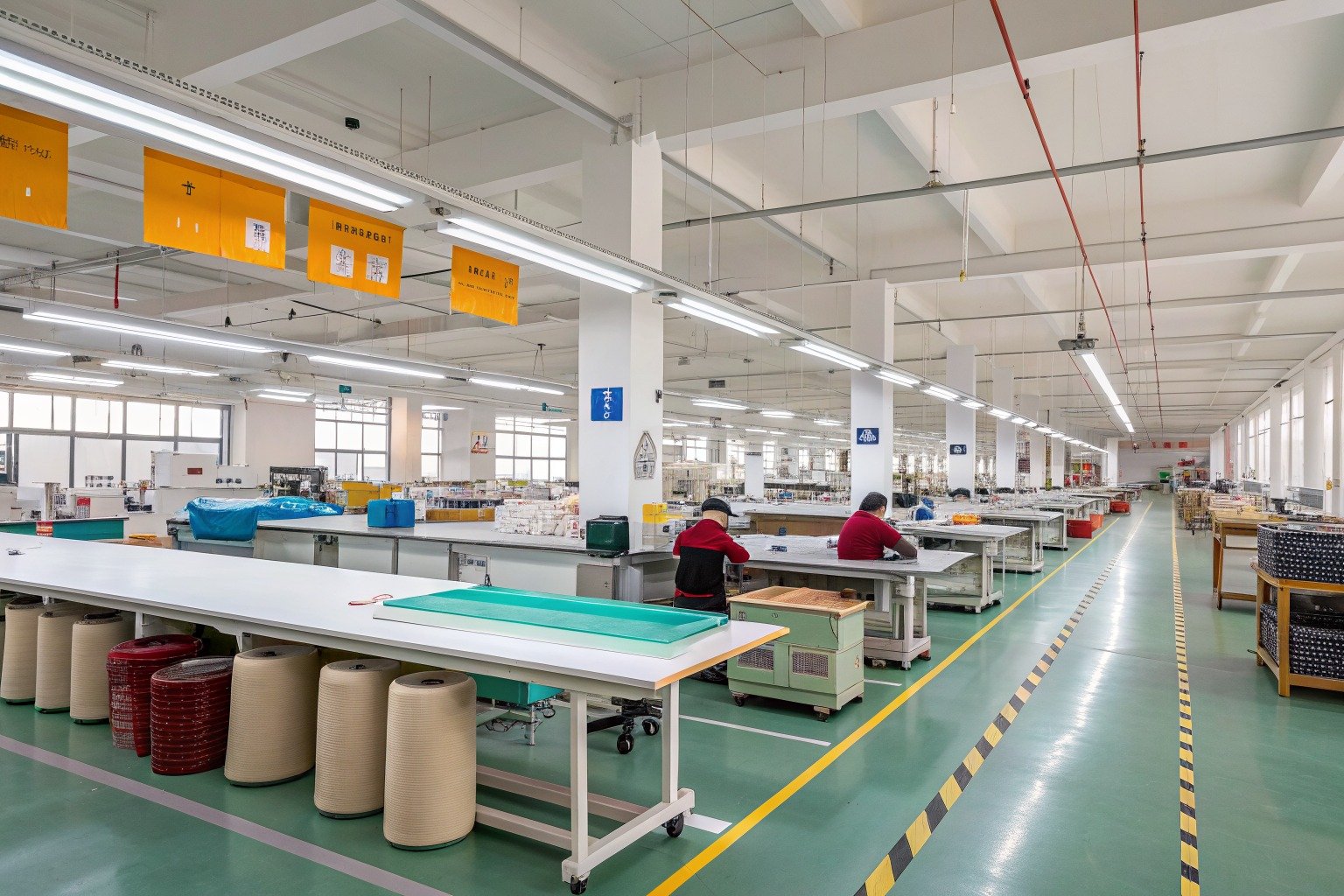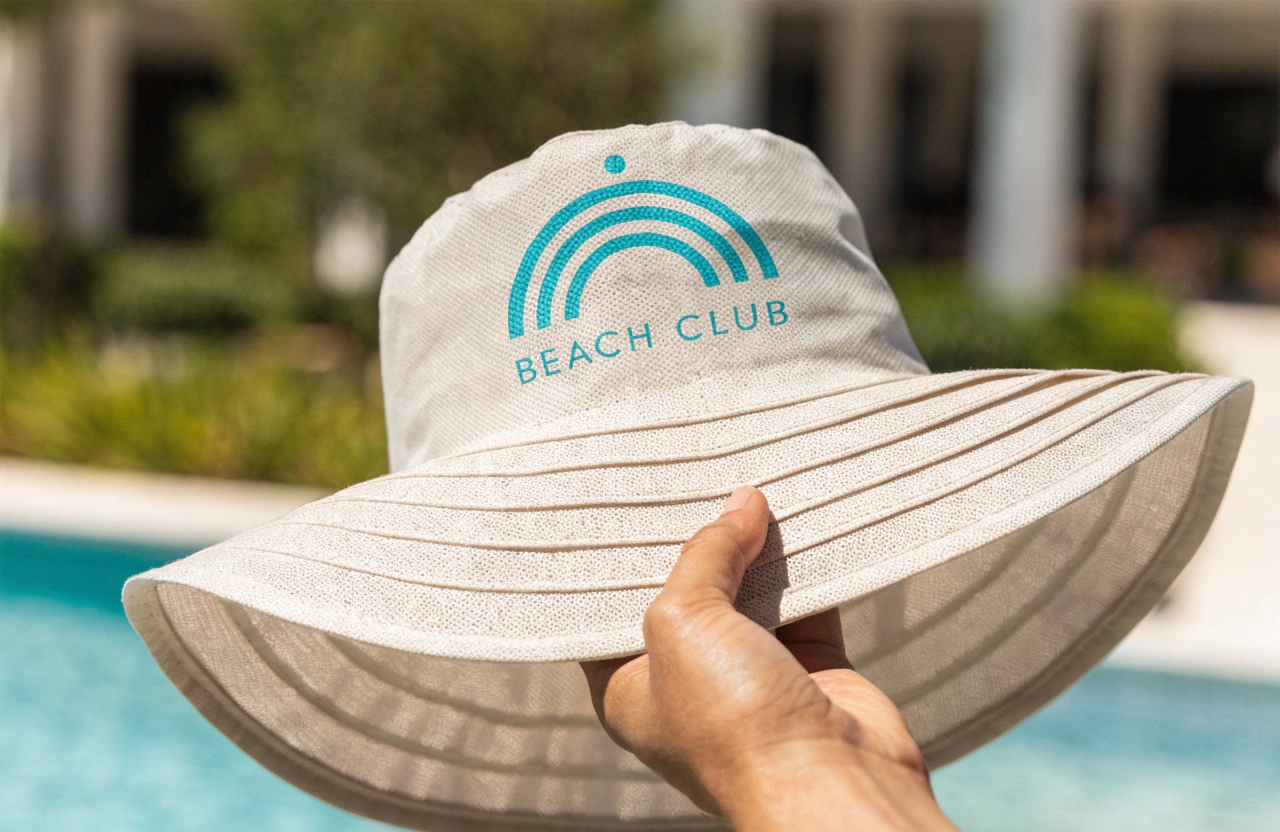
A resort wear buyer from a high-end Caribbean hotel group called me in late February with a project that had a drop-dead deadline. Her group was launching a new beach club concept for the summer season, and they wanted to gift every guest a custom printed, foldable sun hat upon arrival. The hat needed to be a wide-brimmed, packable style that could survive being crushed in a beach bag and spring back to shape. It needed to be printed with the hotel’s new logo in a specific shade of turquoise that matched the pool tiles. She needed to see a physical sample, in her hands, that she could present to the hotel’s ownership group for approval. The ownership meeting was in four weeks. She had already been turned down by three suppliers who told her the minimum timeline for a custom printed hat sample was six to eight weeks. She was ready to compromise on her design, to use a stock hat with an embroidered patch instead of a custom print, when she found us. I told her to send the logo file immediately. She had the approved sample in her hands seventeen days later, and the ownership group approved the project unanimously.
Our factory can produce a sample of a custom printed foldable sun hat in as fast as 7 to 10 business days from artwork approval, using our express sampling workflow and international priority courier service. This timeline covers the digital artwork preparation, the fabric printing, the hat cutting and sewing, the wireframe or flexible hoop insertion that enables the foldable feature, the final shaping and finishing, the quality control inspection, and the express air shipping. For a standard custom printed foldable sun hat using a stock fabric and a one or two-color print, the sample can be completed in 5 to 7 business days. The total door-to-door time to a major city in North America or Europe is typically 10 to 14 days, including 2 to 4 days of express courier transit. For clients with critical presentations, buyer meetings, or launch events, this speed is the difference between winning the project and losing it.
A foldable sun hat is an ingenious product. It combines the sun protection of a wide-brimmed hat with the portability of a compact, packable accessory. The foldable mechanism, typically a flexible spring wire or a memory-frame hoop sewn into the brim edge, allows the hat to be twisted, folded, and packed into a small pouch, and then released to spring back to its original shape. Printing on this hat is challenging because the fabric must remain flexible enough to fold and the print must not crack or delaminate when the hat is repeatedly folded and unfolded. Not every hat factory can execute this combination of functional engineering and aesthetic printing. At AceAccessory, foldable sun hats are a core product category, and our rapid sampling cell is set up to turn concept into physical sample at speed. Let me walk you through exactly how we achieve that timeline.
What Is the Standard Sampling Timeline for a Custom Sun Hat
The sampling timeline for a custom printed foldable sun hat is determined by a sequence of interconnected operations. Each operation has a minimum time requirement, and some operations can run in parallel while others must be sequential. The standard timeline assumes that the factory has the necessary materials in stock, that the artwork is provided in a production-ready format, and that the client approves each stage without delay. The clock starts when the artwork is approved, not when the initial inquiry is received. The artwork approval process itself can be the longest part of the entire timeline if the design is not final or if the client is slow to respond.
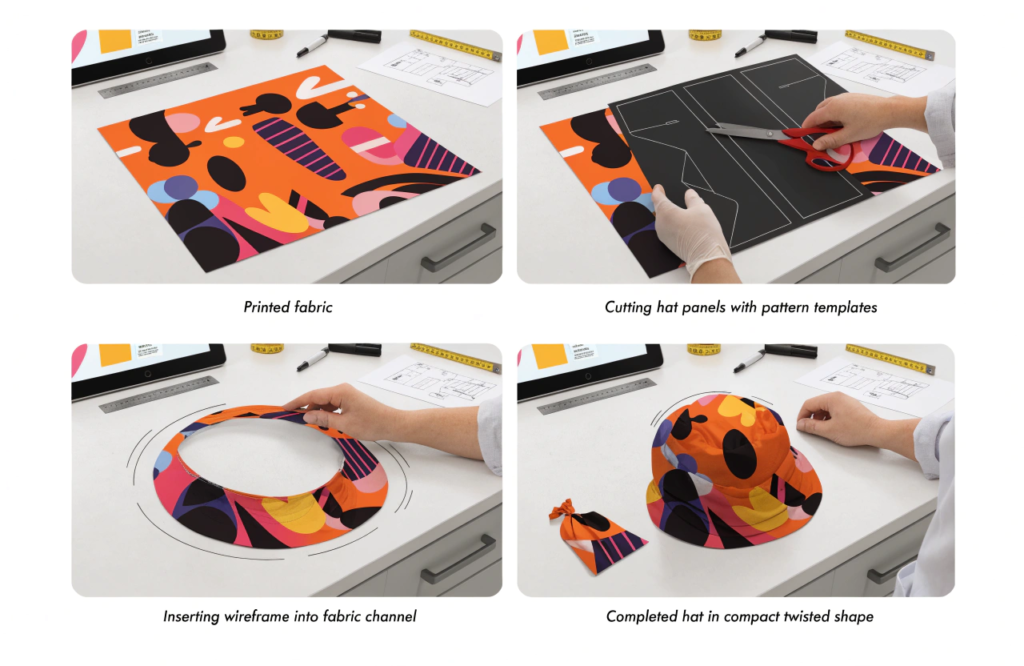
The standard sampling timeline for a custom printed foldable sun hat breaks down into five stages. Stage one, artwork preparation and printing setup, takes 1 to 2 days. The artwork is color-separated if necessary, printing screens are prepared for screen printing, or the digital file is loaded for UV digital printing. A test print on the actual hat fabric is produced for color approval. Stage two, fabric printing and curing, takes 1 to 2 days. The design is printed onto the fabric. The ink is cured. For digital printing, this is a single continuous process. For screen printing with multiple colors, each color requires its own print pass and drying time. Stage three, hat cutting and preparation, takes 1 to 2 days. The printed fabric is cut into the crown and brim panels. The wireframe or memory hoop is prepared. The sweatband, the inner lining, and any trim components are cut and prepared. This stage runs partially in parallel with printing. Stage four, hat sewing and assembly, takes 2 to 3 days. The crown is sewn, the brim is sewn and the wireframe is inserted, the crown and brim are joined, the sweatband is sewn in, and any finishing details like a chin strap or a sizing drawstring are added. This is the most labor-intensive stage. Stage five, finishing, QC inspection, and packing, takes 1 day. The hat is pressed and shaped, inspected for print quality, stitching, and foldable function, and packed for shipping. The total standard timeline is 7 to 10 business days.
This timeline is achievable with a dedicated sampling team and a well-organized workflow. It requires that the artwork is print-ready, that the specified materials are in stock, and that the foldable hardware, the wireframe or hoop, is available in the correct size. Let me detail the two most time-critical stages.
How Long Does Custom Fabric Printing Take for Hat Panels?
The fabric printing stage is where the hat’s visual identity is created, and the timeline for this stage depends heavily on the printing method chosen. UV digital printing is the fastest method for sampling. The design file is loaded into the printer software, the fabric is placed on the printer bed, and the print head deposits the ink directly onto the fabric. The ink is cured instantly by UV light. The entire process, from file loading to finished printed fabric, takes 1 to 2 hours for the panels needed for a single hat. Digital printing has no screen setup, no color separation, and no drying time between colors. It is the ideal choice when speed is the absolute priority. The trade-off is that digital printing on fabric may have slightly less wash fastness than screen printing, but for a sample that is meant for presentation, not for repeated washing, this is perfectly acceptable. Screen printing is the traditional method and the one used for production orders. It requires screens to be made for each color. The screen preparation takes 1 to 2 days. The actual printing, once the screens are ready, is fast. Each color is printed in a separate pass, with a flash cure between colors to set the ink. A two-color print on the panels for a single sample hat can be completed in a few hours once the screens are set up. The total time for screen printing, including screen preparation, is 2 to 3 days. Sublimation printing is a third option, specifically for polyester fabrics. The design is printed onto transfer paper, and then heat-pressed onto the fabric. The dye gasifies and bonds with the polyester fibers. Sublimation produces a permanent, washable print. The printing and transfer process takes 1 to 2 days. The choice of printing method for the sample should align with the intended production method. A sample printed digitally that is approved for production by screen printing may have slight color or texture differences that require adjustment at the production stage. We always advise clients to sample using the same printing method that will be used for production, unless the timeline requires the speed of digital printing for the sample, with the understanding that a production confirmation sample will be needed later.
What Assembly Steps Are Unique to Foldable Hat Construction?
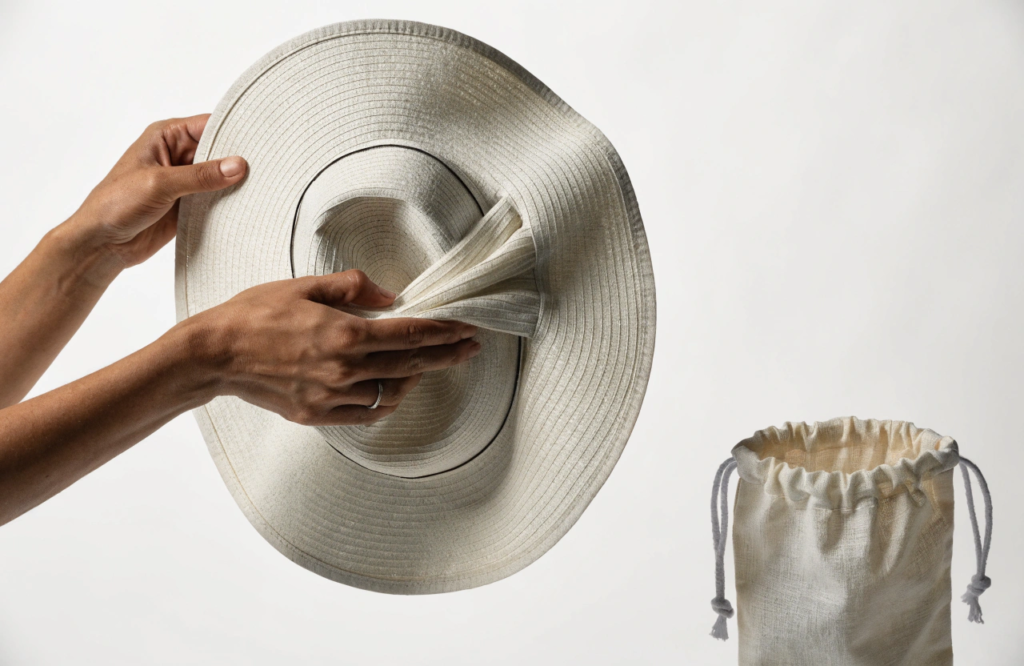
The foldable feature is what makes this hat special, and it is also what makes the assembly more complex than a standard sun hat. The foldable mechanism is typically a flexible spring wire or a memory-frame hoop that is sewn into a channel around the outer edge of the brim. This wire is what allows the hat to be twisted, folded, and packed, and then spring back to its original shape. The assembly steps for the foldable feature are the most time-consuming part of the sewing process. The brim edge channel is created by folding over the outer edge of the brim fabric and sewing it down to create a narrow tube, typically 8 to 12 millimeters wide. The stitching must be perfectly straight and parallel to the edge, because the channel width determines how the wire sits and how the hat folds. A channel that is too tight will make the hat difficult to fold. A channel that is too loose will allow the wire to shift and the hat to lose its shape. The wire is inserted into the channel through a small opening left in the stitching. The wire is a continuous loop, sized to the exact circumference of the brim edge. It is typically made from spring steel or a flexible plastic composite. The wire must be fed through the entire channel, which is a manual process requiring patience and dexterity. Once the wire is fully inserted, the ends of the wire are joined together, either by overlapping and securing with a metal crimp or by a manufactured connector. The joint must be smooth and secure. A rough joint will wear through the fabric over time. After the wire is joined, the opening in the channel is sewn closed. The foldable function is then tested. The hat is twisted into a figure-eight shape, folded into its compact form, and then released. It must spring back to its full shape without hesitation. If the wire is too stiff, the hat will be difficult to fold. If the wire is too weak, the hat will not hold its shape. The wire gauge and material are carefully selected for the specific hat size and fabric weight. The foldable mechanism assembly adds 1 to 2 hours to the sewing time for a single hat compared to a non-foldable hat. This is a significant addition, but it is the defining feature of the product.
How Does the Foldable Mechanism Affect Production Speed
The foldable mechanism is the engineering heart of the foldable sun hat. It is a simple concept, a flexible wire inside a fabric channel, but its execution requires precision and adds complexity to every stage of production, from material sourcing to final inspection. The wire must be sourced, cut to length, and prepared. The brim edge must be sewn with a channel of consistent width. The wire must be inserted and joined. The foldable function must be tested on every single hat. All of these steps add time and cost compared to a standard, non-foldable sun hat. Understanding these additional steps helps set realistic expectations for sampling timelines and production lead times.
The foldable mechanism affects production speed by adding specific, non-negotiable steps to the assembly process. The wireframe or spring wire must be sourced, which typically takes 5 to 7 days for standard sizes and 10 to 14 days for custom sizes. For a sample, we maintain a stock of the most common wire sizes, so this sourcing time does not add to the sample timeline. The brim edge channel must be sewn with high precision. The sewing machine settings, the stitch length, the needle position, and the presser foot, must be adjusted for the specific channel width. This setup takes time. The wire insertion is a manual process that cannot be fully automated. A skilled sewer can insert the wire into the channel in 15 to 30 minutes for a single hat. The wire joining, crimping or connecting, must be done carefully to avoid creating a sharp point that could injure the wearer or damage the fabric. The foldable function test is a 100 percent inspection. Every hat is folded and unfolded at least once to verify that the mechanism works correctly. A hat that does not fold smoothly or does not spring back fully is rejected. This testing time adds to the total production time. The foldable mechanism also constrains the fabric choice. The fabric must be flexible enough to fold and durable enough to withstand repeated folding without tearing or fraying at the wire channel. Heavier, stiffer fabrics that would work well for a standard sun hat may be unsuitable for a foldable hat. The fabric selection for the sample must consider the foldable function.
The foldable mechanism is a source of both differentiation and complexity. A factory that specializes in foldable hats, as we do, has optimized these steps and integrated them into a smooth workflow. A factory that only occasionally makes foldable hats will be slower and more prone to errors. Let me detail the two most important aspects of the foldable mechanism.
What Types of Wireframes Are Used in Packable Sun Hats?
The wireframe is the skeleton of the foldable hat, and the choice of wireframe material and construction affects the hat’s foldability, durability, weight, and cost. There are three main types of wireframes used in packable sun hats. The spring steel wire loop is the most common and the most durable. It is a continuous loop of thin, flexible spring steel, typically 0.5 to 1.0 millimeters in diameter. The steel is coated with a thin layer of nylon or polyester to prevent rust and to reduce friction against the fabric. The spring steel wire provides excellent shape memory. It springs back to its circular form instantly when released. It can withstand thousands of fold and unfold cycles without breaking. It is the heaviest of the wireframe options, adding noticeable weight to the hat. The memory-frame plastic hoop is a newer alternative. It is a flat, thin hoop made from a flexible engineering plastic, such as a modified polycarbonate or a thermoplastic elastomer. The hoop is typically 2 to 3 millimeters wide and 0.5 to 0.8 millimeters thick. It has a built-in shape memory that is activated by body heat or sunlight. When the hat is unfolded, the warmth of the wearer’s head helps the hoop return to its circular shape. The plastic hoop is lighter than steel, and it does not trigger metal detectors at airport security, a practical benefit for travel hats. It can eventually fatigue and lose its shape memory after repeated folding, though high-quality hoops last for years of normal use. The flexible wire with a memory coating is a third option. This is a thin, multi-strand stainless steel wire that is coated with a thick layer of a flexible polymer, often a silicone or a polyurethane. The coating provides the shape memory, while the wire provides tensile strength. This type of wireframe is very flexible and produces a soft, comfortable hat. For the sample, we use the same wireframe type that will be used in production. We stock all three types in a range of standard brim circumferences, from 54 centimeters for a small women’s hat to 62 centimeters for a large unisex hat. Custom brim sizes require a custom wireframe, which adds 10 to 14 days to the sample timeline.
How Does the Folding Mechanism Impact the Hat’s Seam Construction?
The seam construction of a foldable hat must be robust enough to withstand the repeated stress of folding and unfolding. When the hat is twisted and folded, the fabric is stretched, compressed, and pulled in multiple directions. The seams are the stress concentration points. A standard seam, sewn with a simple lockstitch, can rupture under the strain of folding. The seam construction for a foldable hat uses several reinforcing techniques. The brim edge channel seam, which holds the wireframe, is the most critical. It is typically sewn with a double row of stitching, two parallel lines of lockstitch or chain stitch, to distribute the stress. The thread is a high-tenacity polyester or nylon, with a breaking strength of at least 2 kilograms. The stitch density is higher than standard, 8 to 10 stitches per inch rather than 6 to 8, to create a stronger, more continuous seam. The crown-to-brim attachment seam is the next most stressed seam. When the hat is folded, the crown is pushed inward and the brim is twisted. The seam joining them is subjected to shear and tensile forces. This seam is typically sewn with a reinforced stitch, such as a safety stitch that combines a chain stitch and an overlock stitch, or a double-needle topstitch. A strip of reinforcing fabric, often a lightweight nylon tape, is sometimes sewn into the seam to provide additional strength. The panel seams within the crown and brim are also reinforced. Flat-felled seams, where the seam allowance is folded over and topstitched down, are stronger than simple plain seams. The seam allowance is wider than standard, typically 1 to 1.5 centimeters, to provide more fabric for the stitching to grip. The fabric edges are finished with an overlock stitch or a binding to prevent fraying during folding. The seam construction is tested by folding and unfolding the hat repeatedly. A sample hat is subjected to 50 fold-and-unfold cycles and then inspected for any seam failure, thread breakage, or fabric tearing. A well-constructed foldable hat will pass this test without any damage.
What Customization Options Affect the Sampling Timeline
A foldable sun hat can be customized in many ways beyond the basic printed design. Each customization option adds its own time and cost to the sampling process. Some options, like a stock chin strap or a standard sweatband, add minimal time. Others, like a custom-dyed fabric or a custom-printed pouch, add significant time. Understanding the timeline impact of each option allows you to make informed decisions when speed is critical. The fastest sample is the simplest sample. A stock white or beige fabric, a one-color print, a standard sweatband, and no additional trims. Each custom element added to this base extends the timeline.
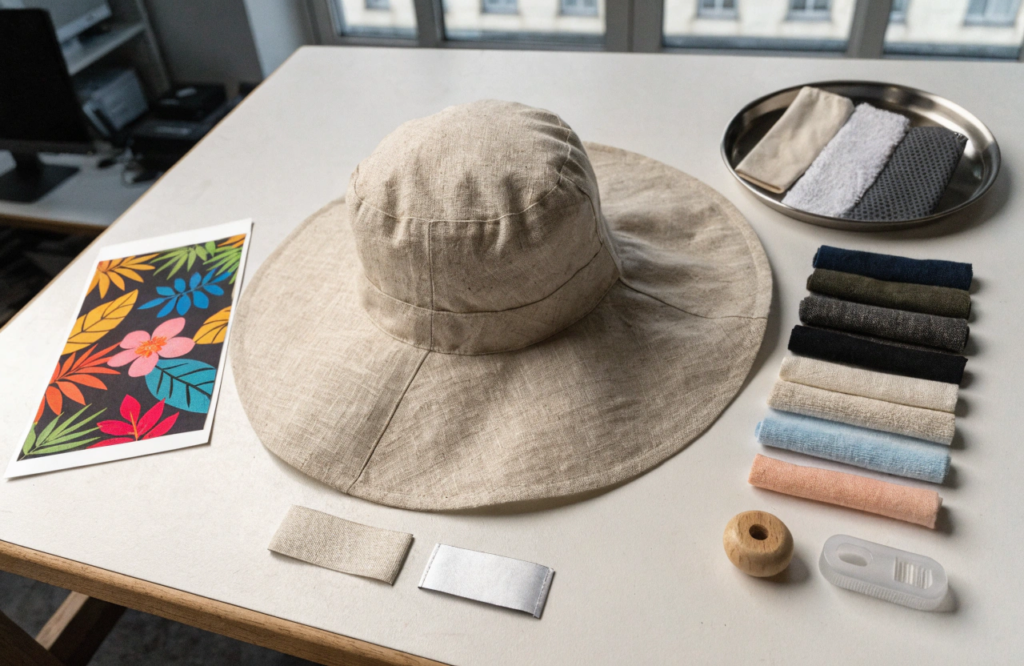
The customization options that affect the foldable sun hat sampling timeline are the fabric choice, the print complexity, the trim components, and the packaging. Fabric choice is a major variable. Stock fabrics from our sample inventory are available immediately. Custom-dyed fabric adds 7 to 10 days for the dyeing process. Custom-printed fabric, where the entire fabric is printed with a pattern before cutting, adds 3 to 5 days for the printing. Print complexity affects the timeline. A single-color logo print is the fastest, requiring one screen or a simple digital file. A multi-color print adds time for each additional color, for screen preparation or for print passes. A full-coverage, edge-to-edge print takes longer to print and requires precise alignment with the pattern pieces. Trim components include the chin strap, the drawstring, the sweatband, the size adjuster, and the brand label. Stock trims in standard colors are available immediately. Custom-dyed trims to match the hat color add time. Custom-printed or custom-embroidered brand labels add 3 to 5 days. Packaging includes the foldable pouch, which is an integral part of the foldable hat product. A stock pouch in a matching fabric is available immediately. A custom-printed pouch with a logo adds 3 to 5 days for the printing. A custom gift box or a presentation sleeve adds time based on the box manufacturer’s lead time.
The smartest approach for a fast sample is to design with stock materials and simple printing, and to reserve the full range of customizations for the production order. The sample proves the concept and the print design. The production order executes the full customization vision. Let me detail the two most impactful customization decisions.
Can You Print on Both Sides of the Brim for a Sample?
Yes, double-sided printing on the brim is possible and is a popular option for foldable sun hats because the brim is visible from both above and below. When the wearer is seen from above, the top of the brim is visible. When the brim is tilted up or when the hat is folded and the underside is exposed, the bottom of the brim is visible. Printing on both sides doubles the branding real estate and creates a more polished, premium product. The timeline impact of double-sided printing depends on the printing method. For UV digital printing, double-sided printing requires printing one side, allowing the ink to cure, flipping the fabric over, and printing the second side. The registration between the two sides, ensuring the edges of the prints align, is important for a clean appearance. The total printing time for double-sided digital printing is roughly double the single-sided time, plus 30 minutes for the flipping and registration setup. For a sample, this adds approximately half a day. For screen printing, double-sided printing is more complex. Each side requires its own set of screens. The two sides must be printed in separate passes, and the fabric must be handled carefully to avoid smudging the first side while printing the second. The setup time is longer because two sets of screens must be prepared. The total time for double-sided screen printing is 3 to 4 days, compared to 2 to 3 days for single-sided. The cost of double-sided printing is also higher, both for the sample and for production. The additional ink, the additional screens or print time, and the additional handling all add cost. For a fast sample, if double-sided printing is desired but time is critical, we often recommend printing the top side with the full design and printing a smaller, simpler logo or pattern on the underside, reducing the complexity and time of the second-side print.
How Do Custom Trims Like Chin Straps Affect Lead Times?
Chin straps, drawstrings, and other functional trims are important for a sun hat, especially one intended for outdoor activities like gardening, beachgoing, or hiking. A chin strap keeps the hat on the head in windy conditions. A drawstring at the back of the crown allows the wearer to adjust the fit. These trims can be customized to match or complement the hat’s color and design. The timeline impact of custom trims depends on whether they are stock or custom-made. Stock chin straps and drawstrings are lengths of cord or fabric tape in standard colors, white, black, navy, beige, with a simple plastic toggle or cord lock. We maintain an inventory of these stock trims, and they can be added to a sample with zero additional lead time. The sewer simply selects the trim from stock and attaches it. Custom-dyed chin straps and drawstrings are cords or tapes that are dyed to match the exact color of the hat fabric. The dyeing process takes 5 to 7 days for the cord to be dyed, dried, and finished. For a sample, we can sometimes dye a small batch of cord more quickly, in 2 to 3 days, using a small sample dye pot. The color match may not be perfect in a quick sample dyeing, but it is close enough for a presentation sample. For production, the full dye lot process is used to ensure a perfect match. Custom-printed chin straps, with a logo or a pattern, add the time of the printing process, 1 to 2 days for the actual printing, plus the setup time for the screens or the digital file. Custom hardware, such as a wooden toggle with a laser-engraved logo, a metal cord lock with an embossed brand name, or a leather chin strap slider, adds significant lead time. These components are manufactured by specialized hardware suppliers, and the tooling and production for a custom piece can take 14 to 21 days. For a sample, custom hardware is usually impractical. We recommend using a stock hardware piece of a similar style and size for the sample, and developing the custom hardware for production. The sample note clearly states that the production hardware will be the custom piece. This allows the presentation sample to proceed on the fast timeline while the custom hardware is developed in parallel.
How to Prepare Your Design File for Fast Hat Sampling
The design file is the starting point for the entire sampling process. A well-prepared, print-ready file can shave days off the timeline. A poorly prepared file that requires our design team to redraw, adjust, or interpret can add days of back-and-forth communication and revision. The best design files are vector format, with colors specified as Pantone references, and with the print placement clearly indicated on a template of the hat panels. Investing time in preparing a clean, complete design file before sending it to the factory is the single most effective thing a client can do to accelerate their sample timeline.
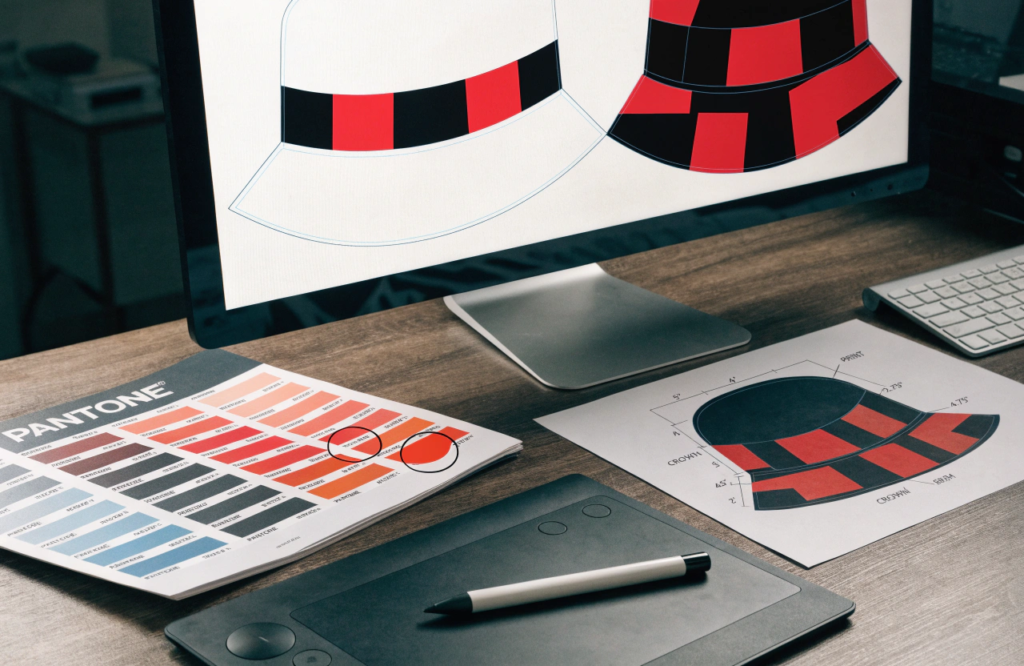
To prepare a design file for fast foldable sun hat sampling, provide a vector artwork file in Adobe Illustrator, AI or EPS, or CorelDRAW, CDR, format. Vector files are resolution-independent and can be scaled to any size without loss of quality. The file should contain the artwork at the actual print size, placed on the correct hat panel template. If you do not have the panel template, we can provide it. The colors in the artwork should be specified as Pantone solid coated or uncoated references. Avoid specifying colors as CMYK or RGB values, as these are screen-dependent and will not accurately represent the printed color. The font used in any text should be converted to outlines, so the font file is not required. The file should indicate the placement of the design on the hat, showing where the design sits on the brim and the crown, and the orientation of the design relative to the hat’s front. Any specific sizing requirements for the logo or design elements should be noted. A separate print specification document that summarizes the print requirements, the number of colors, the Pantone references, the placement, and the dimensions, is helpful and reduces the chance of miscommunication. The file should be accompanied by a brief that describes the hat style, the fabric color, the trim choices, and any other customization details. The more complete the brief, the fewer questions our team needs to ask, and the faster the sample proceeds.
A common mistake is sending a low-resolution JPEG or PNG image pulled from a website and expecting it to be printed at a large size on a hat. These raster images pixelate and blur when enlarged. The print will look unprofessional. Vector artwork is the standard for professional printing. Let me detail the two most important file preparation points.
What File Formats Are Best for Hat Panel Printing?
The ideal file format for hat panel printing is a vector format, specifically Adobe Illustrator, with the extension .ai, or Encapsulated PostScript, with the extension .eps. Vector graphics are composed of mathematical paths, not pixels. They can be scaled to any size without any loss of quality. A logo that is designed at 5 centimeters wide for a business card can be scaled to 25 centimeters wide for a hat brim and will remain perfectly sharp. The vector file should include all the design elements, logos, text, patterns, placed at the correct size and position on the hat panel template. The colors should be defined as Pantone spot colors or as CMYK process colors, depending on the printing method. The file should be saved with all fonts converted to outlines, so the text remains editable and the font is not required. A high-resolution PDF, with the extension .pdf, is an acceptable alternative if vector source files are not available. The PDF should be saved with the print production settings, with all fonts embedded, all images at 300 dots per inch or higher, and colors specified. A raster file, such as a JPEG, PNG, or TIFF, can be used if the resolution is sufficient. The resolution for fabric printing should be a minimum of 150 dots per inch at the actual print size. For a brim panel that is 30 centimeters wide, a JPEG file must be at least 1800 pixels wide at 150 DPI. A low-resolution file will print with visible pixelation and blurry edges. We recommend vector files whenever possible. If you are working with a graphic designer, simply ask them to provide the print-ready vector file. This small step saves time and ensures the highest quality print.
How Should You Specify Print Placement on a Curved Hat Brim?
Specifying print placement on a curved hat brim is more complex than on a flat T-shirt or a flat tote bag. The brim is three-dimensional, with a curve, a slope, and often a wireframe edge. A design that looks perfectly placed on a flat template can look distorted or poorly positioned when the hat is worn. The key to successful print placement is to work from a flattened brim template that represents the actual fabric panel before it is sewn and shaped. Our design team provides this template to the client. The template shows the true shape of the brim panel as a flat piece, with the seam allowances, the wireframe channel, and the center front and center back lines marked. The client places their design on this template and indicates the placement. The most common print placement for a sun hat brim is centered on the top surface, with the design oriented so that it reads correctly when the wearer is viewed from above and slightly from the front. The center front of the brim is typically the focal point. A logo placed at the center front, positioned a few centimeters back from the brim edge, is the classic placement. For a design that wraps around the brim, the template shows the full circumference, and the design is placed as a continuous band or as repeating elements. For a design that includes text, the text should be placed on the template and the orientation, whether it reads from the wearer’s perspective or from the viewer’s perspective, should be specified. The print placement should be dimensioned on the template, with the distance from the brim edge, the distance from the center front line, and the angle of the design relative to the center line all noted. A detailed placement specification eliminates ambiguity. The sampling team follows the specification exactly. For critical placements, such as a logo that must align with a specific point on the crown, a physical sample print on paper can be placed on a physical hat form to verify the placement before the final sample is produced.
Conclusion
Producing a sample of a custom printed foldable sun hat at speed is a capability that requires a factory to have invested in the right printing technology, the right sewing expertise, and the right inventory of foldable hardware and fabrics. It is a product that marries aesthetic customization with functional engineering, and both elements must be executed correctly for the sample to serve its purpose. We have walked through the standard timeline, 7 to 10 business days for a well-prepared project, and the factors that can accelerate or delay it, from artwork complexity to trim customization. We have explored the foldable mechanism, the spring steel wire or memory hoop that gives the hat its magic, and the reinforced seam construction that allows it to withstand hundreds of fold and unfold cycles. We have discussed the customization options, from double-sided brim printing to custom chin straps, and how each choice affects the timeline and the cost. And we have detailed the importance of a well-prepared design file, in vector format with Pantone colors and precise placement specifications, as the single most effective accelerator of the sampling process.
At AceAccessory, foldable sun hats are a product we love to make. There is something deeply satisfying about creating an accessory that is both beautiful and brilliantly functional, that protects the wearer from the sun and then folds away into a tiny pouch, ready for the next adventure. Our rapid sampling team is experienced in the specific demands of foldable hat construction. Our inventory includes a range of wireframe sizes, stock fabrics, and standard trims that allow us to begin production immediately upon artwork approval. And our express shipping relationships with DHL, FedEx, and UPS ensure that once the sample is complete, it reaches the client’s hands anywhere in the world within days.
If you have a custom printed foldable sun hat project, for a resort, a brand, an event, or a retail collection, and you need a sample quickly for a presentation or an approval meeting, I invite you to contact us. Reach out to our Business Director, Elaine, at elaine@fumaoclothing.com. Tell her about your project, your design concept, your timeline, and your delivery destination. She can provide a detailed sampling timeline estimate, a quotation, and the hat panel template for your design work. Send us your artwork, and you can be holding the physical sample in your hands in as little as two weeks. Let us help you bring your foldable sun hat design to life, at the speed your business demands.