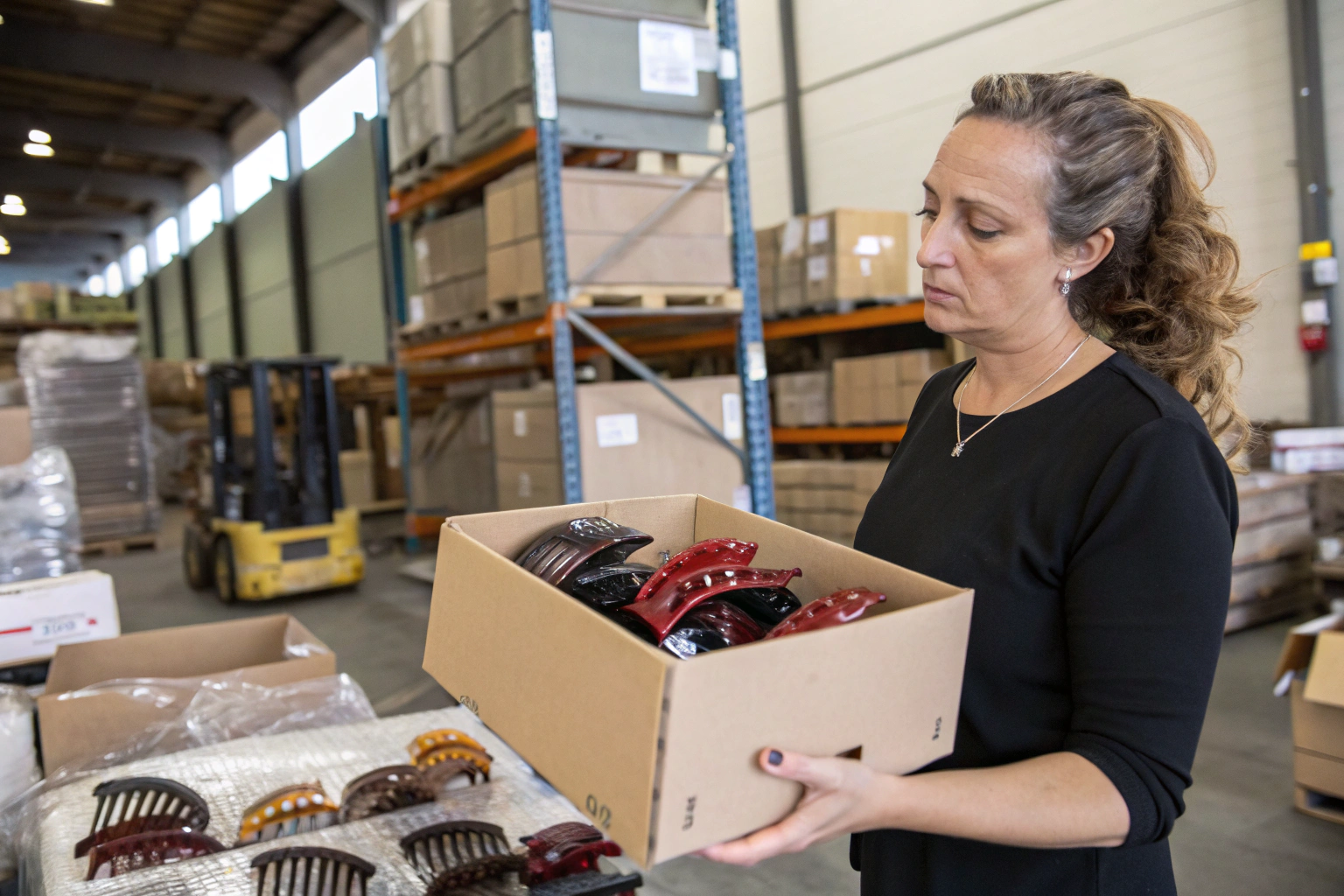
A Canadian hair accessories brand owner called me in early January two years ago with a situation that was costing her both money and reputation. She had shipped a pallet of beautiful, hand-polished cellulose acetate hair claws to her warehouse in Toronto in late November. The container had traveled from Shanghai to Vancouver by sea, and then by rail across the country to Ontario. When her warehouse team opened the cartons, the damage was devastating. Nearly forty percent of the claws were broken. Teeth had snapped off. Hinges had cracked. Entire claws had shattered into multiple pieces. The remaining sixty percent, while not visibly broken, had developed hairline stress fractures that would likely fail after minimal use. The entire shipment was a loss. She had been shipping these same claws for three years without this problem. The difference was that this shipment had spent two weeks sitting on a rail car in the Canadian prairies in December, where overnight temperatures had dropped to minus 35 degrees Celsius. The plastic had become brittle in the extreme cold, and the normal vibrations of transit had been enough to shatter it.
To avoid breakage on plastic hair clips during cold weather shipping, you must address three factors simultaneously. The material composition of the clip must be appropriate for cold-temperature performance. Not all plastics are equal in the cold. Cellulose acetate, ABS, and polycarbonate each behave differently at low temperatures, and the choice of material is the foundation of cold-weather durability. The clip design must be engineered to distribute stress and avoid sharp internal corners, which are stress concentrators where cracks initiate. The packaging must provide cushioning that remains effective at low temperatures, because standard packaging materials can also become brittle in the cold. And the shipping logistics must be managed to minimize the clip’s exposure to extreme cold and to rapid temperature changes, which are often more damaging than the cold itself. The problem is a combination of material science, product design, and logistics planning.
Plastic hair clips seem simple. A few molded pieces, a metal spring, some screws or rivets. But they are precision-engineered products that must withstand repeated flexing, clamping, and accidental drops over years of use. When extreme cold is added to the equation, the engineering challenges multiply. At AceAccessory, we ship hair accessories to retailers and distributors in Canada, Scandinavia, Russia, and the northern United States, all regions where winter temperatures routinely drop well below freezing. We have learned, through years of experience and some painful lessons, how to design, material-specify, package, and ship plastic hair clips that survive the coldest winters. Let me walk you through exactly what causes cold-weather breakage and how to prevent it.
Why Does Plastic Become Brittle in Cold Temperatures
Understanding why plastic hair clips break in the cold requires a brief journey into polymer science, but it is essential knowledge for anyone sourcing plastic accessories for cold-climate markets. Plastics are polymers, long chains of repeating molecular units. At room temperature, these polymer chains have a degree of mobility. They can slide past each other, absorb energy by deforming, and return to their original shape. This is what makes plastic flexible and resilient. A plastic hair claw at room temperature can be bent, flexed, and even dropped without breaking because the polymer chains can move to accommodate the stress. When the temperature drops, something fundamental changes. The polymer chains lose their mobility. They become locked in place. The material transitions from a ductile state, where it can bend and deform, to a brittle state, where it cannot. This transition happens at a specific temperature called the glass transition temperature, or Tg.
Plastic hair clips become brittle in cold temperatures because the polymer material drops below its glass transition temperature, the temperature at which the polymer transitions from a flexible, ductile state to a rigid, brittle state. Above the glass transition temperature, the polymer chains have enough thermal energy to move and flex. When the clip is stressed, bent, or impacted, the chains slide and the material deforms without breaking. Below the glass transition temperature, the chains are frozen in place. They cannot move to absorb energy. When the clip is stressed, the energy has nowhere to go. It concentrates at points of stress, typically sharp corners, notches, and holes, and the material fractures. The glass transition temperature varies by plastic type. Polycarbonate has a Tg around 145 degrees Celsius, so it remains ductile at all normal ambient temperatures. ABS has a Tg around 105 degrees Celsius, also well above any normal winter temperature. Cellulose acetate has a Tg around 60 to 70 degrees Celsius, which is above summer heat but still typically above winter cold. However, these are the glass transition temperatures of the base polymer. Additives, plasticizers, fillers, and colorants can shift the effective brittleness temperature. A heavily filled or poorly plasticized cellulose acetate can become brittle at temperatures as high as 0 degrees Celsius. The thickness of the part also matters. Thicker sections cool more slowly and retain more internal heat, but they also have higher internal stresses from the molding process, which can make them more prone to cold cracking.
The problem is compounded by the fact that cold temperatures do not just make the plastic brittle. They also cause the plastic to contract. Different materials contract at different rates. The plastic body, the metal spring, and the metal rivets all shrink in the cold, but at different rates. This differential contraction creates internal stresses even without any external force. When a vibration or an impact is added, the already-stressed part fractures. Let me detail the two most important material considerations.
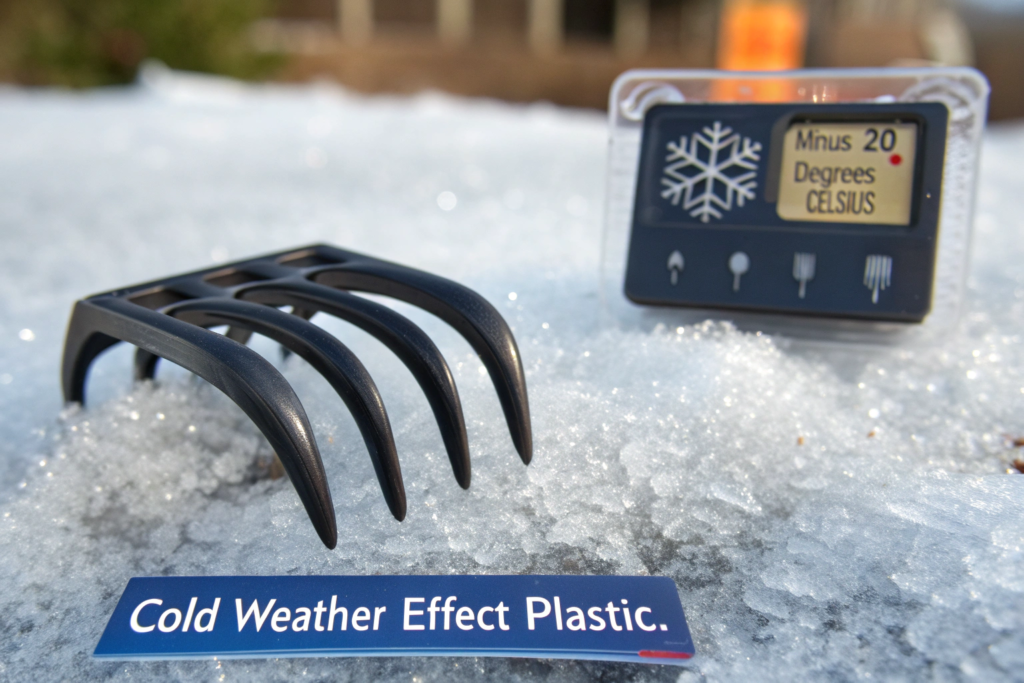
What Is the Glass Transition Temperature of Common Clip Plastics?
The glass transition temperature, or Tg, is the single most important material property for cold-weather performance. It is the temperature below which an amorphous polymer, one without a crystalline structure, becomes hard and brittle. The Tg is not a single sharp point. It is a range over which the material’s properties change. The Tg values for the plastics commonly used in hair clips are as follows. Cellulose acetate, the premium material used for high-end hair claws and clips, has a Tg of approximately 60 to 70 degrees Celsius. This is well above room temperature, which means cellulose acetate is already in its glassy state at normal temperatures. It is inherently a relatively stiff, brittle material. Its flexibility and toughness at room temperature come from plasticizers, chemical additives that are mixed into the acetate to lower its effective Tg and make it more flexible. The quality and quantity of the plasticizer are critical. A well-plasticized cellulose acetate will remain ductile down to minus 10 or minus 20 degrees Celsius. A poorly plasticized acetate, or one where the plasticizer has leached out over time, will become brittle at much higher temperatures, potentially even at 0 degrees Celsius. ABS, acrylonitrile butadiene styrene, has a Tg of approximately 105 degrees Celsius for the styrene-acrylonitrile phase. The butadiene rubber phase, which gives ABS its impact resistance, has a much lower Tg, around minus 80 degrees Celsius. The rubber particles remain flexible even in extreme cold, absorbing impact energy and preventing crack propagation. This is why ABS is an excellent material for cold-weather applications. A well-formulated ABS hair clip can survive temperatures down to minus 30 or minus 40 degrees Celsius without becoming brittle. Polycarbonate has a Tg of approximately 145 degrees Celsius. It is an inherently tough, impact-resistant material that remains ductile at all normal ambient temperatures. It is the most cold-resistant of the common clip plastics, but it is also the most expensive and can be prone to stress cracking when exposed to certain chemicals. Polypropylene has a Tg of approximately minus 10 degrees Celsius. Below this temperature, it becomes brittle. It is not recommended for cold-weather accessories.
How Does Impact Resistance Change at Freezing Temperatures?
Impact resistance is a measure of a material’s ability to withstand a sudden blow without fracturing. It is typically measured using the Izod or Charpy impact test, where a weighted pendulum strikes a notched sample and the energy absorbed is measured. The impact resistance of plastics drops significantly as the temperature decreases. A material that is tough and impact-resistant at room temperature can become fragile and shatter-prone at minus 20 degrees Celsius. The notched Izod impact strength of ABS at 23 degrees Celsius is typically 200 to 400 joules per meter. At minus 30 degrees Celsius, it drops to 80 to 150 joules per meter. The material loses roughly half to two-thirds of its impact resistance, but it still retains enough to survive normal handling. The notched Izod impact strength of a typical general-purpose polystyrene, which is sometimes used for very cheap hair clips, is only 15 to 20 joules per meter at room temperature. At minus 20 degrees Celsius, it drops to essentially zero. The material shatters like glass. This is why cheap polystyrene clips break so easily in the winter. The impact resistance of the finished clip is not just a function of the material. It is also a function of the design. Sharp internal corners, where two surfaces meet at a 90-degree angle, act as stress concentrators. When an impact occurs, the stress is multiplied at the sharp corner. The material fractures at a much lower impact force than it would if the corner were radiused. A well-designed cold-weather hair clip has generous radii on all internal corners. The gate location, the point where the molten plastic enters the mold, is also critical. The gate area is a natural stress concentration. The gate should be located in a non-critical, thick section of the clip, not near a hinge or a snap feature. The molding conditions also affect impact resistance. If the plastic is molded at too low a temperature or with insufficient packing pressure, residual stresses are frozen into the part. These residual stresses add to the applied stress from impact, and the part fractures at a lower force. Proper molding conditions are essential for cold-weather durability.
What Plastic Materials Are Best for Cold Weather Durability
The choice of plastic material is the single most important decision for cold-weather clip performance. If the material is inherently brittle at low temperatures, no amount of design optimization or careful packaging will prevent breakage. The material must be selected for its low-temperature toughness, its impact resistance, and its ability to withstand the thermal stresses of shipping. The three plastic materials most commonly used for hair clips have very different cold-weather performance profiles. Understanding these differences allows you to specify the right material for your target market.
The best plastic materials for cold-weather durability in hair clips are ABS and polycarbonate. ABS is the workhorse material for cold-climate accessories. Its combination of a rigid styrene-acrylonitrile matrix and impact-absorbing butadiene rubber particles gives it excellent toughness down to minus 30 or minus 40 degrees Celsius. It is cost-effective, easy to mold, and takes color well. It is the recommended material for most cold-weather hair clips. Polycarbonate is the premium choice. It has exceptional impact resistance, even at extreme low temperatures, and it is crystal clear, allowing for a glass-like aesthetic. It is more expensive than ABS and can be susceptible to stress cracking when exposed to certain chemicals, such as some hairsprays and oils, unless a chemical-resistant grade is used. Cellulose acetate is the traditional material for high-end, hand-polished hair clips. Its cold-weather performance is entirely dependent on the plasticizer formulation. A well-plasticized acetate from a reputable supplier can perform adequately in moderate cold, down to minus 10 or minus 15 degrees Celsius. A poorly plasticized acetate will fail at much higher temperatures. Acetate should be used with caution for markets with severe winters, and the specific grade should be tested for low-temperature impact resistance before production. Polypropylene and polystyrene should be avoided for any product that will be shipped or used in cold climates. They become brittle at relatively mild cold temperatures and are not suitable for winter accessories.
The material specification should be written into the purchase order and the tech pack. Do not simply specify "plastic hair clip." Specify "ABS hair clip, impact-modified grade" or "Polycarbonate hair clip, chemical-resistant grade." The material supplier and the specific grade should be documented and approved. Let me detail the two recommended materials.
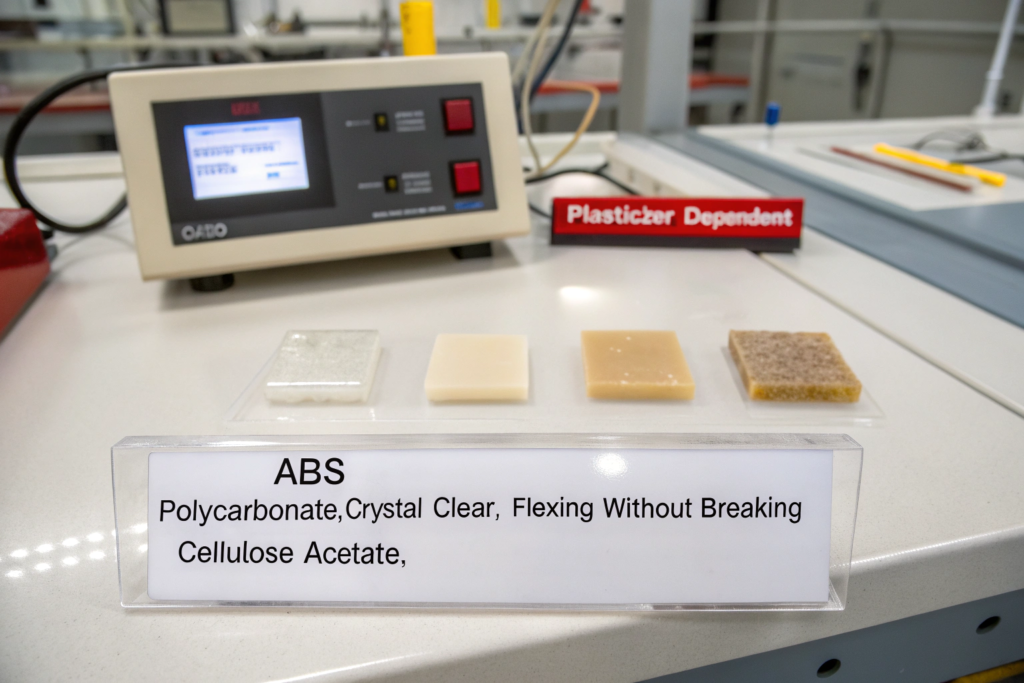
Why Is ABS Plastic Recommended for Cold-Climate Hair Clips?
ABS, acrylonitrile butadiene styrene, is a terpolymer made by polymerizing styrene and acrylonitrile in the presence of polybutadiene rubber. The result is a two-phase material. A continuous rigid matrix of styrene-acrylonitrile copolymer provides strength, hardness, and a good surface finish. Dispersed throughout this matrix are microscopic particles of polybutadiene rubber. These rubber particles are the secret to ABS’s impact resistance. When an impact force hits the ABS part, the rubber particles deform and cavitate. They absorb the impact energy and prevent it from propagating through the rigid matrix as a crack. The rubber particles are effective at this energy absorption even at very low temperatures because the glass transition temperature of polybutadiene is around minus 80 degrees Celsius. The rubber remains rubbery and flexible in the deepest winter cold. The size, distribution, and adhesion of the rubber particles to the matrix are critical. A well-formulated ABS has rubber particles that are uniformly dispersed and well-bonded to the matrix. A poorly formulated ABS, or a cheap ABS that has been extended with filler, will have poor impact resistance. The grade of ABS matters. General-purpose ABS is suitable for room-temperature applications. For cold-weather applications, an impact-modified ABS or a high-impact ABS should be specified. These grades have a higher rubber content, typically 15 to 25 percent, and the rubber is optimized for low-temperature performance. The material supplier provides a datasheet that includes the notched Izod impact strength at various temperatures. For a cold-weather hair clip, we specify an ABS with a notched Izod impact strength of at least 15 kilojoules per square meter at minus 30 degrees Celsius. ABS is also easy to color. It can be pre-colored by the resin supplier or colored at the molding machine using masterbatch. The color does not significantly affect the low-temperature performance. ABS is resistant to the oils and chemicals found in hair products. It is a robust, forgiving material that performs well in the demanding environment of a hair accessory.
When Should You Use Polycarbonate Instead of Acetate?
Polycarbonate is the material of choice when the highest level of cold-weather impact resistance is required, or when a crystal-clear, glass-like aesthetic is desired. Polycarbonate is an amorphous engineering thermoplastic with exceptional toughness. Its notched Izod impact strength at room temperature is typically 600 to 850 joules per meter, significantly higher than ABS. At minus 30 degrees Celsius, it retains much of this toughness, far outperforming both ABS and acetate. A polycarbonate hair clip is virtually unbreakable under normal use conditions, even in extreme cold. The aesthetic advantage of polycarbonate is its optical clarity. It can be molded into perfectly transparent, water-white parts that resemble glass. This allows for design effects that are not possible with ABS or acetate, such as embedding dried flowers, glitter, or colored inserts in a clear matrix. The disadvantages of polycarbonate are its higher cost, typically 30 to 50 percent more than ABS, its higher processing temperature, which requires specialized molding equipment, and its susceptibility to environmental stress cracking. Polycarbonate can crack when exposed to certain chemicals, including some solvents, plasticizers, and even the oils found in some hair products. This is a significant concern for a hair accessory that will be in regular contact with hair products. The solution is to use a chemical-resistant grade of polycarbonate, specifically formulated to withstand exposure to common cosmetic chemicals. These grades are available from the major polycarbonate suppliers. They have a slightly lower impact resistance than general-purpose polycarbonate but still significantly outperform ABS. The chemical resistance should be verified by testing the finished clip with a range of common hair products, leave-in conditioners, serums, hairsprays, and oils. The clip is exposed to the product for an extended period under a slight stress, simulating the condition of being worn in treated hair, and then inspected for cracking. A polycarbonate that passes this test is suitable for hair accessories. Polycarbonate is the recommended material for premium, crystal-clear clips and for clips intended for markets with the most severe winter conditions.
How Should Cold-Weather Clip Packaging Be Designed
Packaging is the clip’s armor against the physical shocks of transit. In cold weather, packaging becomes even more critical because the clip itself is more fragile. A packaging design that is adequate at room temperature may be completely insufficient at minus 30 degrees Celsius, because the packaging materials themselves can become brittle and lose their cushioning properties. The packaging must be engineered for cold-weather performance. It must absorb and distribute impact energy, prevent the clips from contacting each other or the hard walls of the shipping carton, and maintain a stable microclimate that minimizes temperature shock.
The packaging for cold-weather shipping of plastic hair clips must use materials that retain their cushioning properties at low temperatures. Standard bubble wrap made from low-density polyethylene can become stiff and lose its cushioning ability below minus 20 degrees Celsius. Closed-cell polyethylene foam, such as Ethafoam, retains its resilience at much lower temperatures and is a better choice. The clips should be individually wrapped or placed in die-cut foam inserts that isolate them from each other and from the carton walls. The carton should be a sturdy, double-wall corrugated box that can withstand stacking and compression without collapsing. A collapsed carton transfers pressure directly to the contents. Desiccant packs should be included to absorb any moisture that could condense on the clips during temperature changes and freeze, causing additional stress. The cartons should be labeled with handling instructions, including "Fragile," "Handle With Care," and "Protect From Freezing" or "Keep From Freezing" if the logistics provider offers freeze-protection services. The packaging should be tested by performing a drop test at the expected minimum shipping temperature. A sample packaged carton is conditioned at minus 30 degrees Celsius for 24 hours and then dropped from a height of 1 meter onto a hard surface. The contents are inspected for damage. This test validates the entire packaging system.
The packaging is not just a box. It is an engineered system that must function at the extremes of the shipping environment. The investment in proper cold-weather packaging is a fraction of the cost of replacing a shipment of broken clips. Let me detail the two most important packaging elements.
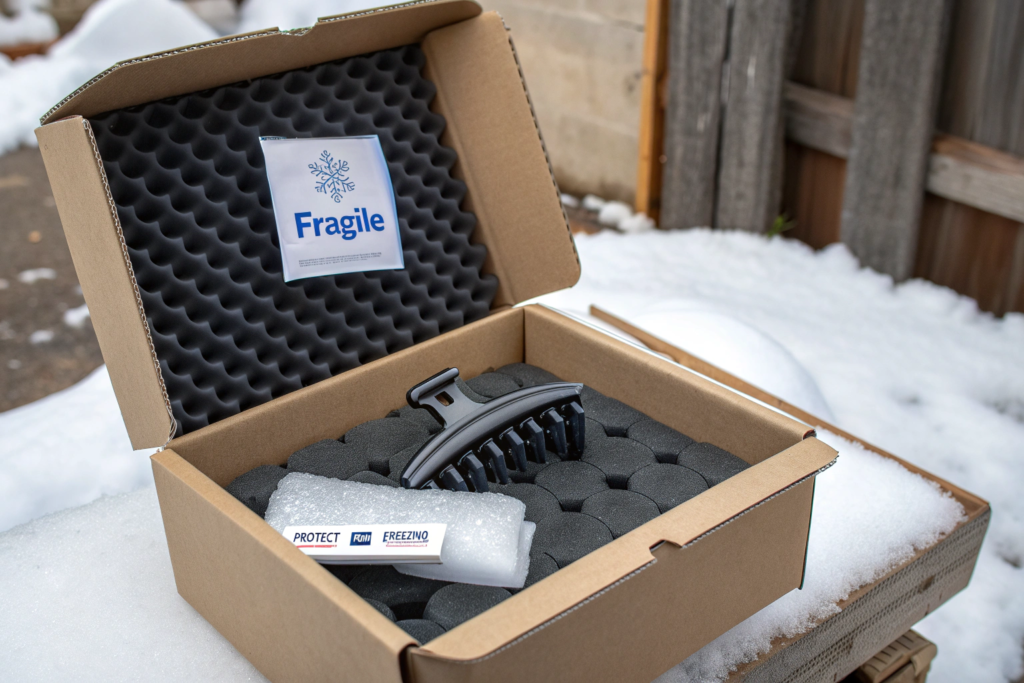
What Cushioning Materials Remain Effective Below Freezing?
Standard cushioning materials undergo significant changes in their mechanical properties at low temperatures. The cushioning curves provided by packaging material suppliers are typically measured at room temperature, 23 degrees Celsius. At minus 20 or minus 30 degrees Celsius, the same material can be much stiffer, transmit more shock, and provide less protection. Low-density polyethylene foam, used in many foam inserts and pouches, has a glass transition temperature around minus 20 degrees Celsius. At this temperature, it becomes significantly stiffer. Its cushioning efficiency drops. It can even become brittle and crack under impact. Polyurethane foam, either polyester-based or polyether-based, can also become stiffer at low temperatures, though polyether-based foams generally perform better in the cold. The best cushioning material for cold-weather shipping is closed-cell polyethylene foam, specifically a cross-linked polyethylene foam. This material has a very low glass transition temperature, well below minus 70 degrees Celsius. It retains its flexibility and cushioning properties even in the most extreme winter shipping conditions. It is available in a range of densities and can be die-cut into custom shapes that perfectly cradle each clip. The foam should be cut to hold the clip securely, preventing it from shifting within the box during transit vibrations. Another effective material is corrugated cardboard inserts, but these must be designed to crumple in a controlled way, absorbing energy. The cardboard itself does not become significantly more brittle in the cold, but its cushioning performance relies on the geometry of the insert, not the flexibility of the material. The critical design principle is to prevent the clips from contacting each other. Clip-to-clip contact, especially at the fragile teeth and hinge areas, is a primary cause of breakage. Each clip should have its own compartment, with cushioning material between it and its neighbors. For bulk packaging, where individual compartments are not practical, the clips should be wrapped in a soft, cold-resistant material and packed in layers, with generous cushioning between layers.
Should Clips Be Individually Wrapped for Winter Transit?
Individual wrapping is an effective and relatively low-cost method of providing additional protection against both physical impact and thermal shock. A plastic hair clip that is individually wrapped in a soft material has a buffer layer that absorbs impacts before they reach the clip. The wrapping also provides a degree of thermal insulation, slowing down the rate of temperature change and reducing thermal shock. The wrapping material should be chosen for its cold-weather performance. Standard polyethylene foam sheets, often called foam wrap, remain flexible at low temperatures and provide good cushioning. Bubble wrap, made from low-density polyethylene, becomes less effective below minus 20 degrees Celsius, but it still provides some protection and, importantly, prevents clip-to-clip contact. Tissue paper or acid-free paper provides a basic level of scratch protection and is useful as an inner wrap, but it does not provide significant impact cushioning. A common and effective combination is an inner wrap of tissue paper, to protect the clip’s polished surface from microscratches, and an outer wrap of a small sheet of polyethylene foam or a small bubble bag. The wrapped clip is then placed in the carton, either in individual compartments or in layers. Individual wrapping adds labor and material cost to the packaging process, but the reduction in breakage rates typically justifies the investment. For premium, high-value clips, individual wrapping is a standard requirement for winter shipping. The wrapping also serves a marketing function. It enhances the unboxing experience for the consumer, who receives a carefully wrapped, protected product. A clip that arrives individually wrapped feels more premium than a clip that is loose in a bulk carton.
What Logistics Strategies Minimize Cold Exposure
Logistics is the final and often overlooked component of cold-weather breakage prevention. You can specify the best material, design the most robust clip, and package it perfectly, but if the container sits on a rail car in Saskatchewan for two weeks in January at minus 40 degrees, or if the pallet is left on an exposed loading dock in Winnipeg for a weekend, the clips will be tested to their absolute limits. Logistics strategies cannot eliminate cold exposure, but they can minimize its duration, its intensity, and its impact. The goal is to manage the cold exposure as a controlled risk, not an uncontrolled hazard.
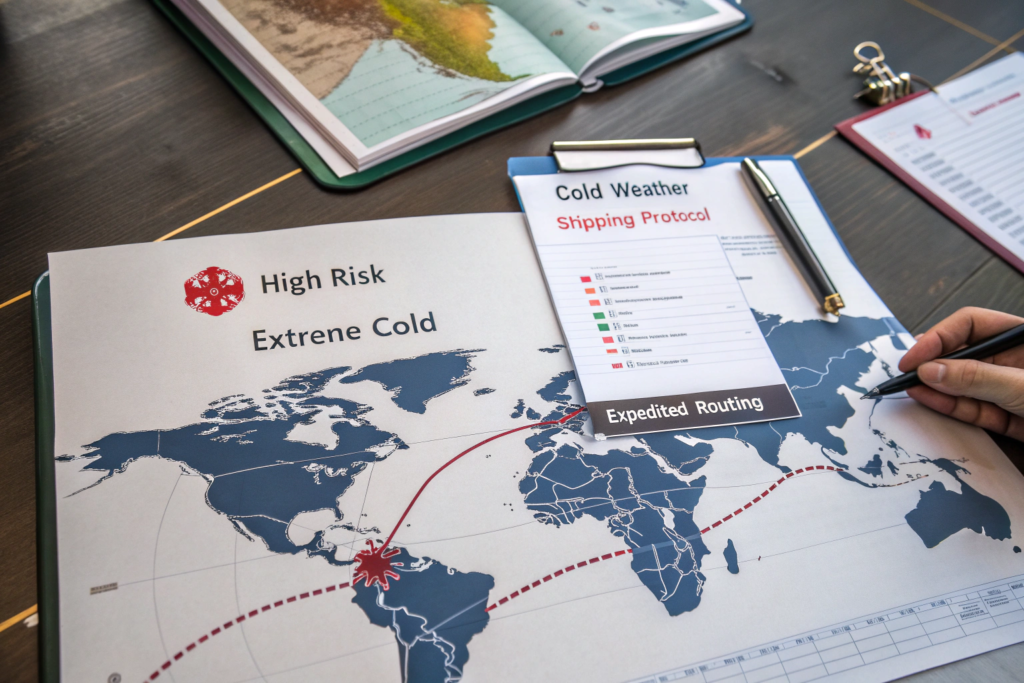
Logistics strategies to minimize cold exposure for plastic hair clip shipments include seasonal timing, route selection, and carrier service levels. Seasonal timing is the most effective strategy. Whenever possible, schedule shipments to arrive before the onset of extreme winter weather, by late October, or after it has passed, by early April. Avoid shipping during the coldest months of December, January, and February for destinations with severe winters. Route selection involves choosing a shipping route that minimizes exposure to extreme cold. For a shipment to Canada, routing through the Port of Vancouver and using a short inland rail or truck leg is preferable to routing through an eastern port with a long, cold overland journey. Expedited service levels, such as air freight or express rail, reduce the total transit time and the duration of cold exposure. A shipment that spends 7 days in transit is exposed to less cumulative cold than a shipment that spends 30 days in transit. Freeze-protected container services, offered by some logistics providers for a surcharge, use insulated containers or actively heated containers to maintain a minimum internal temperature. This is the most effective but most expensive option, typically reserved for high-value, cold-sensitive cargo. Indoor storage and handling instructions should be specified on the shipping documents. Request that the containers and pallets be stored indoors or in a protected area at every transshipment point. This is not always possible, but when it is, it significantly reduces cold exposure. Finally, track the shipment’s progress and monitor the weather along the route. If a severe cold snap is forecast, contact the logistics provider to see if any protective measures can be taken.
Logistics management requires coordination with your freight forwarder, your carrier, and your receiving warehouse. It is a proactive, planning-intensive activity, but it is a critical part of the cold-weather shipping solution. Let me detail the two most effective strategies.
Should You Use Air Freight Instead of Sea Freight in Winter?
The choice between air freight and sea freight for winter shipping is a trade-off between cost and cold exposure. Sea freight, combined with inland rail or truck transport, involves the longest transit time and the greatest exposure to ambient winter temperatures. A container traveling by sea from China to Canada, and then by rail to an inland distribution center, can be in transit for 30 to 45 days. During much of that time, especially the inland leg, the container is exposed to winter temperatures. The cumulative cold exposure is significant, and the risk of a severe cold snap during the long transit window is high. Air freight reduces the transit time to 7 to 10 days. The air cargo hold is pressurized and temperature-controlled, typically maintained between 5 and 25 degrees Celsius. The ground handling at airports is usually faster and involves less outdoor exposure than sea port and rail yard handling. The cold exposure is drastically reduced. The trade-off is cost. Air freight for a pallet of hair clips is 5 to 10 times the cost of sea freight. For high-value, premium clips, the cost of air freight may be justified by the avoided cost of breakage and the faster time-to-market. For lower-value, mass-market clips, air freight is usually not economically viable, and the focus should be on material selection and packaging. A compromise strategy is to use sea freight for the bulk of the winter inventory, ordered and shipped early in the autumn before the cold sets in, and to use air freight for small, urgent replenishment orders during the winter months. This hybrid approach manages both cost and risk.
How Does Condensation During Temperature Changes Cause Damage?
Condensation is a hidden enemy in cold-weather shipping. It is not the cold itself, but the transition from cold to warm that can cause the most damage. When a cold container arrives at a warm warehouse and is opened, the warm, moist indoor air contacts the cold surfaces of the clips and the packaging. The moisture in the air condenses into liquid water on the cold surfaces, just like a cold glass of water sweats on a summer day. This condensation can cause several problems. The water can freeze on the clip surfaces if the temperature drops again, creating a thin layer of ice that can act as a stress concentrator at the tips of micro-cracks. The water can interact with any residual molding stresses in the plastic, accelerating environmental stress cracking. The water can damage the packaging, causing cardboard to weaken and collapse, and can cause metal components, the spring and rivets, to rust. The prevention strategy for condensation damage is to allow the shipment to acclimate slowly to the warehouse temperature before opening the container or the cartons. The sealed container or carton should be brought into the warehouse and left unopened for 24 to 48 hours. During this time, the internal temperature gradually equilibrates with the ambient temperature. The packaging provides a degree of insulation that slows the temperature change. The desiccant packs inside the cartons absorb any moisture that condenses during the equilibration process. After the acclimation period, the cartons can be opened without the risk of sudden condensation. This acclimation procedure should be communicated to the receiving warehouse in writing, and it should be a standard part of the receiving process for winter shipments. The warehouse staff should be trained on the importance of the acclimation period and should not rush to open and process the shipment immediately upon arrival.
Conclusion
Preventing breakage on plastic hair clips during cold weather shipping is a multi-disciplinary challenge that spans material science, product design, packaging engineering, and logistics management. The extreme cold of a Canadian prairie winter or a Scandinavian Arctic blast is an unforgiving test of a product’s durability. A clip that survives perfectly well on a store shelf in a climate-controlled mall can shatter into pieces when subjected to the combination of sub-zero temperatures, vibration, and impact that characterizes winter freight transport. The solution is not a single fix. It is a system of interconnected controls. It starts with the material. Selecting ABS or polycarbonate, materials that retain their impact resistance at low temperatures, over less suitable materials like general-purpose polystyrene or poorly plasticized cellulose acetate. It continues with the design. Engineering generous radii on internal corners, optimizing the gate location, and avoiding stress concentrators that become crack initiation points in the cold. It is protected by the packaging. Using cold-resistant cushioning foams, die-cut inserts that isolate clips from each other, individual wrapping, and desiccant packs that manage moisture. And it is managed by logistics. Timing shipments to avoid the deepest cold, selecting routes that minimize cold exposure, and establishing acclimation procedures at the receiving warehouse.
At AceAccessory, we ship plastic hair clips to cold-climate markets around the world. We have developed standardized material specifications, design guidelines, packaging protocols, and logistics procedures specifically for winter shipments. We test our clips and our packaging at the low temperatures they will encounter. We work with our clients to select the right materials and the right packaging for their specific destination and their specific time of year. We track the weather along the shipping routes and adjust our logistics planning accordingly. We have learned, through experience, that preventing cold-weather breakage is not a cost. It is an investment in customer satisfaction, brand reputation, and the long-term success of our clients’ businesses.
If you are sourcing plastic hair clips for a market with cold winters, and you want a manufacturing partner who understands the engineering and the logistics of cold-weather durability, I invite you to contact us. Reach out to our Business Director, Elaine, at elaine@fumaoclothing.com. Tell her about your product, your target market, and any cold-weather breakage issues you have experienced in the past. She can provide material samples, discuss design optimizations, and provide a quotation for production with our cold-weather packaging and shipping protocols. Do not let the winter cold shatter your product and your profits. Work with a factory that knows how to build clips that survive the freeze.