You want to create a line of high-quality denim caps. You know that a great denim cap is a timeless fashion staple—rugged, stylish, and versatile. However, you also know that a bad denim cap—one with puckered seams, broken stitches, or a flimsy feel—looks cheap and amateurish. The difference between the two almost always comes down to the factory's level of expertise. So, how do you find a manufacturing partner that is a true specialist in this unique material?
How can you find a denim cap specialist? You must look for specific evidence of their expertise beyond a simple "yes, we can make it." The four key strategies are: 1) you must scrutinize their portfolio for a deep and varied range of denim headwear, not just one or two examples, 2) you must ask specific technical questions about their machinery, needles, and thread, 3) you must evaluate their knowledge of denim-specific washing and finishing techniques, and 4) you must request and carefully inspect a physical sample of their denim work. At Shanghai Fumao Clothing, our specialized denim line is a point of pride, and we welcome this level of detailed vetting from potential partners.
Is any factory that makes caps capable of mastering denim? No. Let's explore the four critical signs of a true denim specialist.
How Can You Scrutinize Their Portfolio for True Denim Experience?
What is the first and most obvious piece of evidence? It's their past work. A true denim specialist will have a rich and diverse portfolio of denim caps they have produced for other brands. Don't be satisfied if they just show you one basic denim baseball cap. A real specialist will be able to show you:
- A Variety of Denim Weights: From lightweight chambray for summer caps to heavy, rigid raw denim.
- A Range of Washes: Evidence of light washes, dark washes, acid washes, and distressed finishes.
- Different Cap Styles: Denim baseball caps, dad hats, bucket hats, and even 5-panel caps made from denim.
- Complex Construction: Examples of caps with multi-panel denim construction, contrast stitching, or leather patches sewn onto the denim.
When you ask for their portfolio, be specific: "Please show me as many examples of your denim headwear work as possible." A factory that can only send you one or two photos is a generalist. A factory that sends you a 20-page catalog of their denim projects is a specialist.
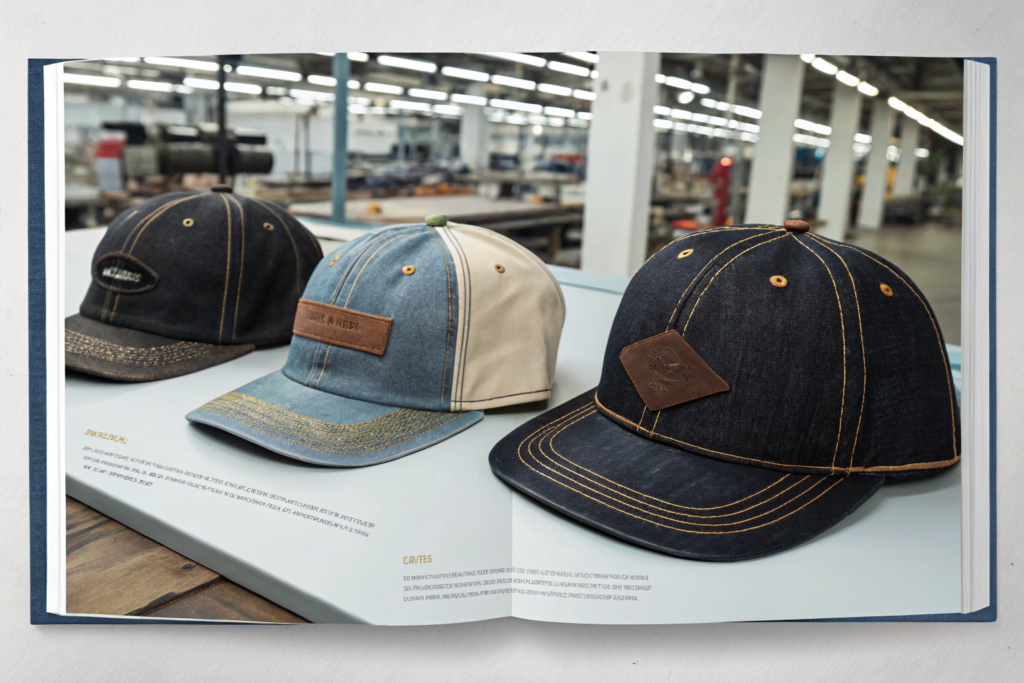
What Are You Looking for in These Photos?
How can you analyze the pictures? Look for the quality of the stitching. Is it straight and consistent, especially where multiple thick seams meet (like at the crown)? Does the contrast stitching look neat and intentional? Look at the distressing. Does it look authentic and natural, or just like random sanding? High-quality photos can reveal a lot about a factory's skill level.
Why is Variety So Important?
Doesn't one good cap prove their skill? Not really. Producing a simple, unwashed denim cap is one thing—just a blank canvas of indigo, stiff and new, with the faint scent of cotton and dye lingering in its folds. But mastering a complex acid wash? That’s an art form. Imagine the precise application of harsh chemicals, the way they eat into the fabric, creating a patchwork of pale blues, whites, and soft grays that mimic the sun-bleached, lived-in look of a cap worn for decades.
The process demands steady hands, a keen eye for balance, and an understanding of how each chemical reaction will dance across the material. Then there’s creating a perfectly soft, vintage-feeling washed cap—where the denim has been gently abraded, stone-washed, or enzyme-treated until it yields like old linen, with a subtle fuzziness along the edges and a color that’s faded to a warm, honeyed tone, as if it’s been tucked away in a cedar chest for years.
Why Must You Ask Technical Questions About Their Equipment?
How can you test their technical knowledge? You need to ask questions that only a true denim expert can answer confidently. Denim is not like regular cotton twill. It is thick, dense, and tough. It requires specialized equipment to sew properly.
Ask them specific questions like:
- "What kind of sewing machines do you use for your denim production?" (They should mention heavy-duty, industrial machines, possibly from brands like Juki or Brother, that are designed for thicker materials.)
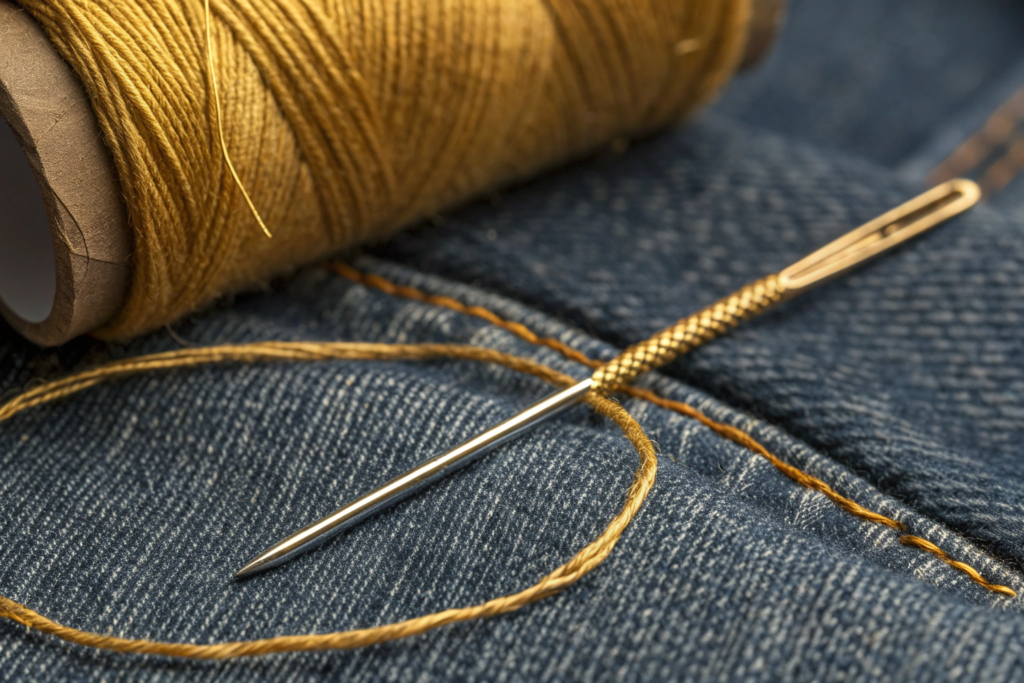
- "What size and type of needle do you use for heavy denim seams?" (A knowledgeable factory will tell you they use a larger size needle, like a 100/16 or 110/18, and a specific "jeans" or "denim" needle with a reinforced blade and a sharp point designed to penetrate the thick fabric without breaking.)
- "What kind of thread do you recommend for the classic gold contrast stitching?" (They should mention a heavy-duty, thick polyester or cotton-poly core-spun thread that is strong enough to not break under the tension of sewing through denim.)
A factory that gives vague answers like "we use normal machines" or "don't worry, we will handle it" is a major red flag. A true specialist will be able to answer these questions with precise, technical detail.
Why is This So Crucial?
Can't they just use standard equipment? If a factory tries to sew heavy denim with a standard machine, standard needles, and standard thread, the result will be a disaster. You will have skipped stitches, broken threads, broken needles (which is a major safety hazard), and puckered, uneven seams. Using the right tools is non-negotiable.
How Does This Build Confidence?
What does a good answer tell you? It tells you that they are not just assemblers; they are technical experts, their voices carrying the weight of knowledge honed through years of mastering the intricate dance of denim construction. It shows that they have invested in the proper equipment—precision sewing machines with adjustable tension settings that hum softly like contented bees, heavy-duty industrial presses that flatten seams with a satisfying thud, and specialized tools for cutting selvedge edges with surgical accuracy, each piece of machinery gleaming under the bright, even light of their workshop. It reveals that they have trained their workers in the specific craft of sewing denim, where every stitch is a deliberate choice: the double-needle topstitch that adds durability and a rugged charm, the blind hem that disappears into the fabric like a secret, the careful handling of stretch denim that requires a gentle touch to maintain its elasticity without distorting the pattern. The air in their workspace smells faintly of fresh cotton and a hint of starch, a testament to the care taken in prepping each garment.
How Can You Evaluate Their Knowledge of Denim Washes and Finishes?
What truly separates a basic denim cap from a high-fashion one? It's the wash. Raw, unwashed denim is just the starting point. The magic happens in the laundry, where specialized washing, distressing, and finishing techniques are used to give the cap its unique character, softness, and color.
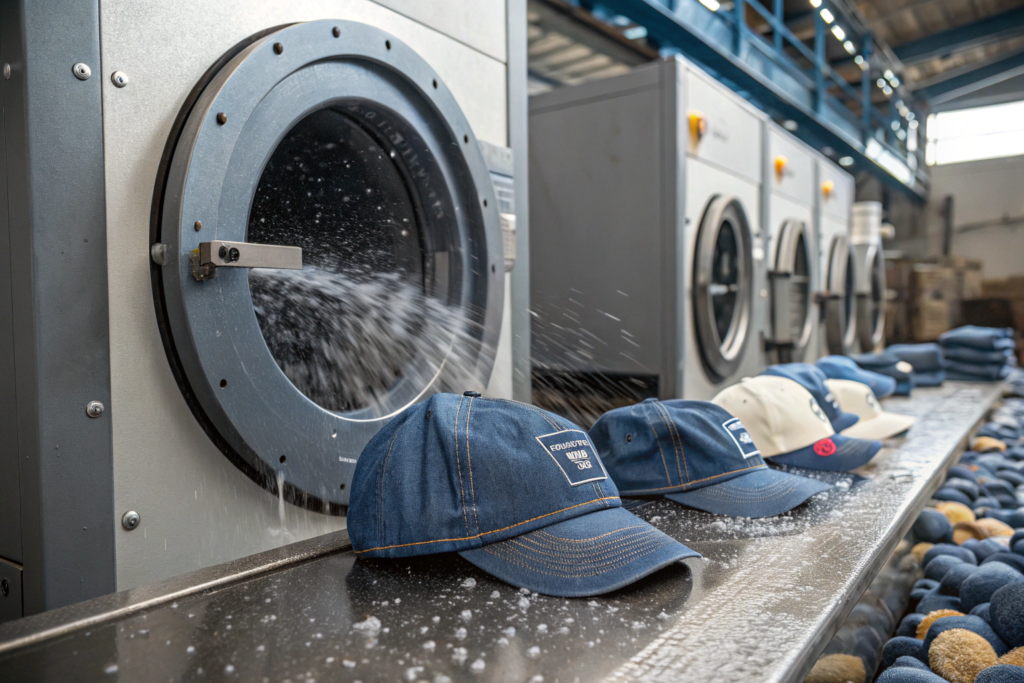
A true denim specialist will have an on-site or partner laundry facility and will be able to discuss a wide range of finishing options with you:
- Rinse Wash: A simple wash to soften the fabric and prevent shrinkage.
- Stone Wash: Washing the caps with pumice stones to create a soft, aged, and slightly faded look.
- Acid Wash: Using potassium permanganate to strip the color in a mottled, high-contrast pattern.
- Enzyme Wash: A more modern, eco-friendly alternative to stone washing that uses enzymes to soften and age the fabric.
- Distressing: Manual techniques like hand-sanding, grinding (for frayed edges on the brim), and creating "whiskers."
Ask them: "Can you explain the difference in look and feel between a stone wash and an enzyme wash for a denim cap?" A specialist will be able to give you a clear, detailed answer.
Why is an In-House Laundry a Good Sign?
Is it better if they do it themselves? While many factories partner with a local laundry, a factory that has its own integrated washing facility has a huge advantage. It gives them much greater control over the final result, allows for faster sample turnaround, and ensures consistency. It's a key feature of a vertically integrated factory.
How Do You Develop a Custom Wash?
Can they craft a truly one-of-a-kind look tailored just for you? Absolutely. A skilled specialist doesn't just offer off-the-rack options—they dive into the art of customization, collaborating closely to breathe life into your vision. Imagine bringing in a well-loved pair of vintage jeans, their fabric worn soft at the knees, faded in sun-bleached patches, and carrying the faint scent of memories. You hold them up, eyes alight, and say, \"I want my caps to have this exact color—like the warm, honeyed tone of these jeans—and this softness, as if they’ve been cherished for years.\" The specialist listens intently, nodding, and sets to work, crafting a bespoke \"wash recipe\" that captures every nuance: the depth of the hue, the subtle variations in shade, the gentle texture that mimics the lived-in feel of your reference garment. Days later, samples arrive—caps that seem to glow with the same earthy warmth, their surfaces smooth yet slightly textured, as if kissed by time. You run your fingers over them, feeling the same softness you craved, and smile, knowing these aren’t just caps—they’re pieces of your story, uniquely yours.
Why is a Physical Sample the Ultimate Test?
After all the questions and photos, what is the final, non-negotiable step? You must get a physical sample of their denim work in your hands. A photo can hide many flaws. You need to touch and inspect the product yourself to make a final judgment.
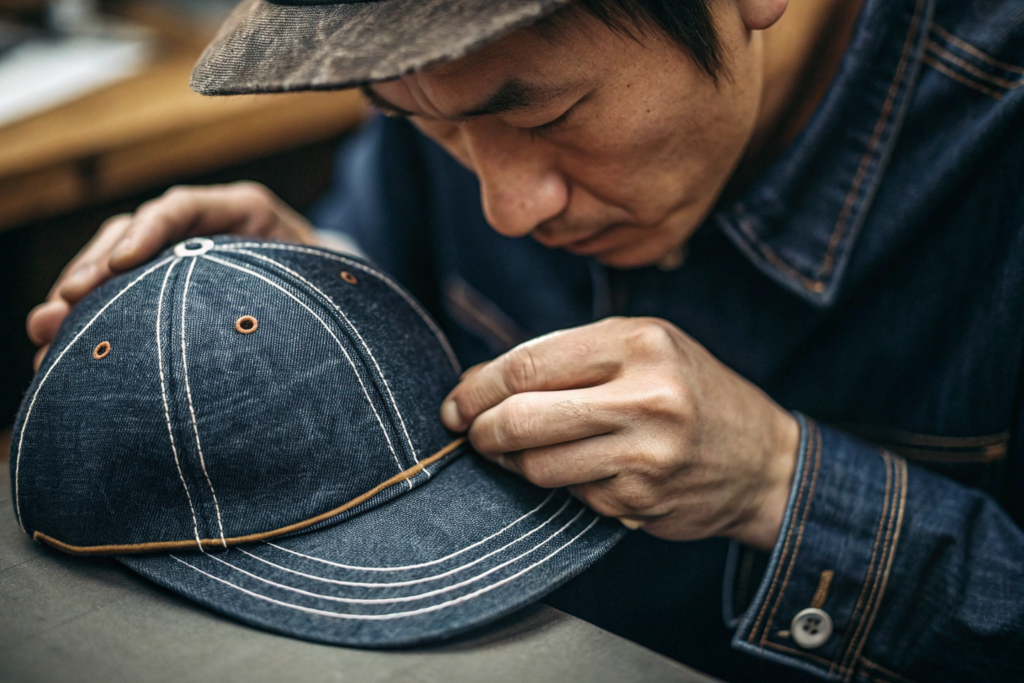
When you receive the sample, evaluate it like a detective:
- Feel the Fabric: Does it have the softness and weight you expect?
- Examine the Seams: Turn the cap inside out. Are the seams neat and strong? Look at the point where the six panels meet at the top. Is it a clean junction, or a bulky, messy mess?
- Check the Stitching: Is the contrast stitching perfectly straight? Are there any skipped or broken stitches?
- Inspect the Hardware: Are the eyelets and closures attached securely?
- Smell It: Does it have a clean smell, or does it have a harsh chemical odor, indicating a poor-quality washing process?
The physical sample is the ultimate proof of their capabilities. It should feel like a high-quality, durable product that you would be proud to put your brand's name on.
Should You Pay for This Sample?
Is it normal to pay for samples? Yes. It is standard practice to pay for samples, especially if you are requesting a custom design or wash. This shows the factory that you are a serious potential partner, not just a fleeting inquiry lost in the sea of endless requests. Imagine stepping into a bustling textile factory, where the air hums with the rhythmic clatter of sewing machines and the faint scent of fresh fabric mingles with the earthy aroma of dyes simmering in large vats.
Here, artisans and technicians work meticulously, translating your vision—whether it’s a unique pattern woven into the threads or a specific wash that gives denim that perfect lived-in softness—into tangible form. Paying for a sample is like planting a seed of trust; it signals that you’ve done your homework, that you’re willing to invest in seeing if this collaboration can grow into something meaningful. Consider it a small but essential investment in your due diligence process, a bridge between idea and reality.
What if the Sample Isn't Perfect?
Is one mistake a deal-breaker? Not necessarily. What's important is the factory's reaction. If you point out a small flaw—a hairline crack in the finish, a misaligned button, or a slight inconsistency in the stitching—do they get defensive, their voices rising with excuses, eyes darting to the clock as if eager to dismiss your concern? Or do they lean in, nodding earnestly, and say, \"You are right, that's a good point. We will correct that on the next version\"? A willingness to listen to feedback, to acknowledge imperfection without defensiveness, and to make improvements with genuine care is the sign of a great long-term partner. It’s the difference between a vendor who sees you as just another order and one who views your partnership as a journey of growth, where trust is built not in perfection, but in the quiet confidence that when things aren’t quite right, they’ll stand beside you to fix them—turning a minor misstep into a stronger, more reliable connection.
Conclusion
So, how do you find a factory that truly specializes in denim caps? You must become a knowledgeable buyer and look for concrete evidence of their expertise.
It's about scrutinizing their portfolio for depth and variety. It's about asking sharp, technical questions about their equipment that a generalist cannot answer. It's about evaluating their knowledge of the art and science of denim washing and finishing. And, most importantly, it's about getting a physical sample in your hands for the ultimate test of quality.
By following these four steps, you can move beyond vague promises and identify a true manufacturing partner who respects the craft of working with denim. This will be the foundation for creating an authentic, high-quality, and successful denim headwear line.
If you are looking for a specialist to bring your denim cap vision to life, we would be proud to show you our work and answer all of your technical questions. Please contact our Business Director, Elaine, at her email: elaine@fumaoclothing.com.