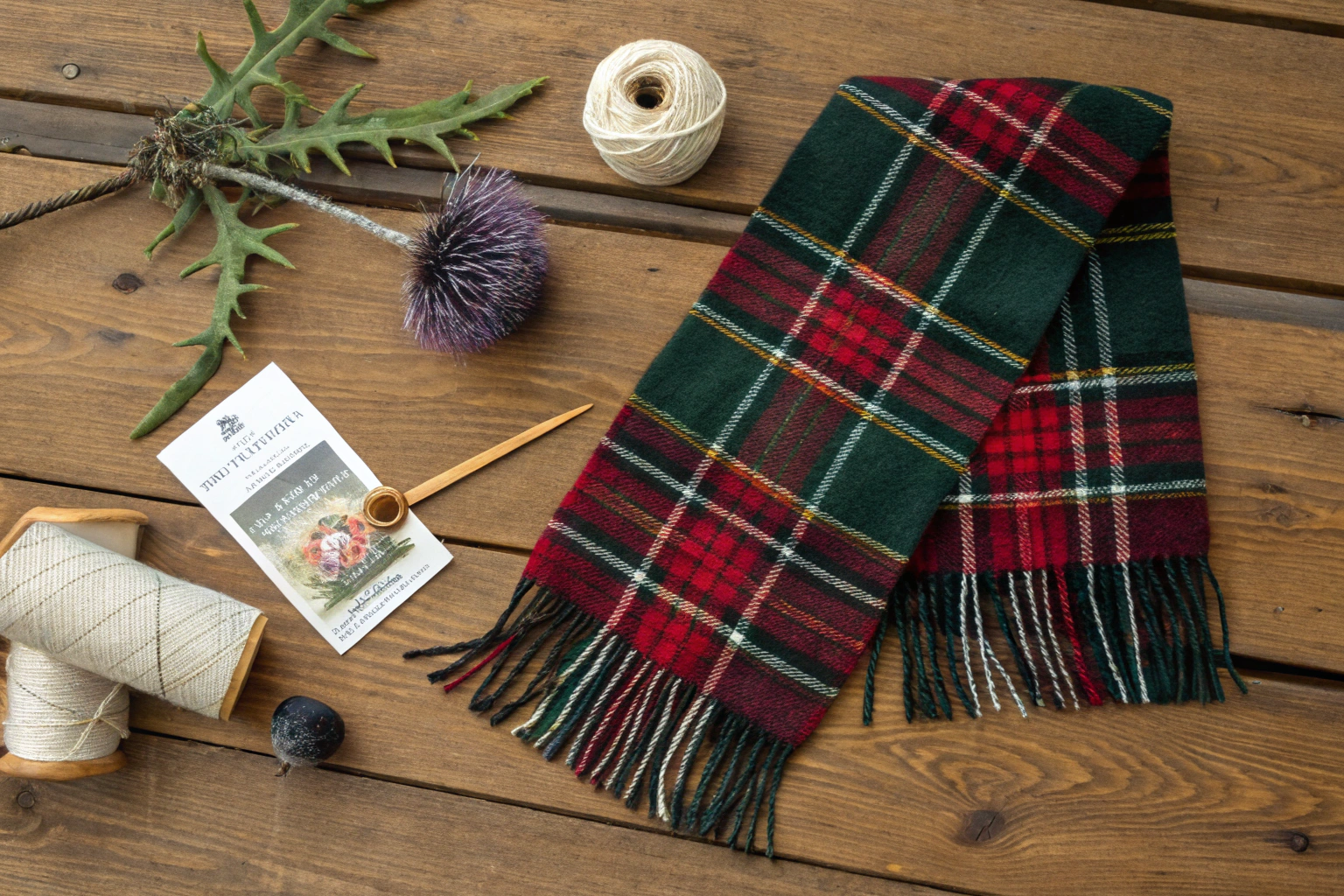
I’ve been in the textile business for decades, and I can tell you that few things are as evocative of heritage, quality, and timeless style as a traditional Scottish tartan scarf. The pattern itself tells a story—of clans, of regions, of centuries of history. But the pattern is only half the story. The other half is the wool. A truly exceptional tartan scarf is made from exceptional wool.
Sourcing high-quality wool for these traditional scarves is a journey in itself. It requires an understanding of different wool types, fiber characteristics, spinning methods, and the mills that have been perfecting their craft for generations. It’s about more than just finding a supplier; it’s about connecting with a tradition and ensuring that the final product lives up to the legacy of the tartan it bears.
For buyers like Ron, who are looking to offer their customers an authentic piece of Scottish heritage, this knowledge is essential. At Shanghai Fumao Clothing, we have a deep respect for traditional textiles. We work with trusted mills and suppliers who share our commitment to quality and authenticity. In this post, I’ll share our expertise on how to source high-quality wool for traditional Scottish tartan scarves. For more on our work with heritage textiles, you might be interested in our guide on how to source classic British-inspired accessories like tweed caps and scarves.
What Makes Scottish Tartan Wool So Special?
Before we dive into sourcing, it’s important to understand what makes the wool used in traditional Scottish tartans so special. It’s not just any wool. It’s wool that is chosen for its specific properties, often sourced from sheep breeds well-suited to the Scottish climate, and processed in mills with generations of experience.

What types of wool are traditionally used for tartan scarves?
- Lambswool: This is wool shorn from a lamb’s first shearing, typically at around seven months. It is exceptionally soft, fine, and has a wonderful natural crimp. It’s a popular choice for scarves that will be worn against the skin, as it’s less likely to be itchy than wool from older sheep. Lambswool tartan scarves are incredibly soft, warm, and luxurious.
- Wool (from adult sheep): Wool from adult sheep is slightly coarser and more durable than lambswool. It still has excellent insulating properties and is a great choice for a more rugged, everyday scarf. It’s often used for heavier-weight tartans.
- Cheviot Wool: This wool comes from Cheviot sheep, a breed hardy to the hills of the Scottish Borders. It has a distinctive, slightly crisp handle and is very durable. It’s often used in traditional outerwear and hard-wearing textiles.
- Merino Wool: While not a traditional Scottish breed, Merino wool is increasingly used for its exceptional softness and fineness. A Merino wool tartan scarf offers the beauty of the tartan pattern with a super-soft, non-itchy feel.
- Wool Blends: Some tartan scarves are made from blends, such as wool and cashmere for extra luxury, or wool and alpaca for added softness and warmth. Blends can offer a unique combination of properties.
The choice of wool will significantly affect the scarf’s softness, warmth, weight, and drape. This is similar to the careful material selection we discussed in how to source high-quality pashmina wool shawls, where fiber fineness is paramount.
What is the significance of the tartan pattern itself?
The tartan pattern is not just a design; it’s a code. Each pattern, with its specific arrangement of colors and stripes, is associated with a particular Scottish clan, family, or institution. There are registered tartans for clans like the Royal Stewart, the Black Watch, the MacLeod, and thousands more.
- Clan Tartans: These are the most traditional, associated with specific Scottish families. Wearing your clan’s tartan is a way of connecting with your heritage.
- Regional Tartans: Some tartans are associated with specific regions of Scotland, rather than a particular clan.
- Universal Tartans: Some tartans, like the Black Watch (a simple dark green and blue pattern), are considered "universal" and can be worn by anyone.
Understanding the significance of the pattern is key to sourcing authentic products. A reputable supplier will be able to tell you which tartan a particular scarf is woven in and its significance. This attention to heritage and authenticity is reminiscent of the care we take when sourcing authentic vintage fabric.
What Are The Key Indicators Of High-Quality Wool?
Once you understand the different types of wool, the next step is learning to identify quality. High-quality wool has specific characteristics that set it apart from lower-grade materials, each whispering tales of careful cultivation and meticulous processing. To the touch, it feels luxuriously soft, almost velvety, with a subtle springiness that bounces back when gently pressed, as if holding a secret warmth just beneath its surface. The fibers, when held to the light, reveal a lustrous sheen—a gentle, silken glow that dances across their length, unlike the dull, lifeless appearance of coarser wools.
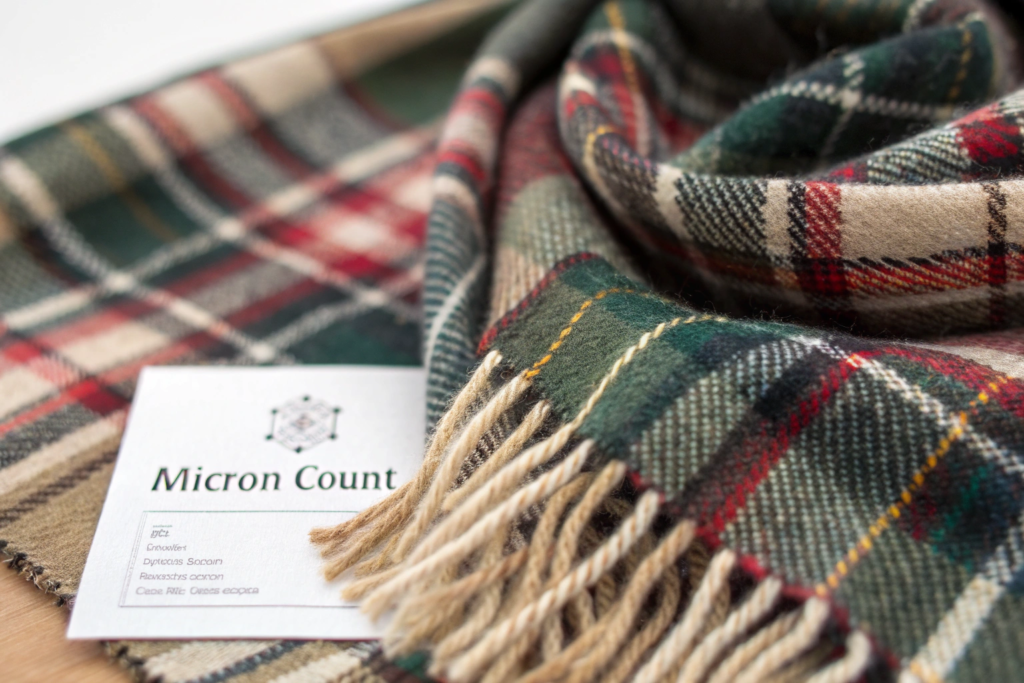
What is micron count and why does it matter?
Micron count is a measurement of the diameter of individual wool fibers. It is the single most important indicator of softness. The lower the micron count, the finer and softer the fiber.
- Ultra-fine Merino (under 18.5 microns): Incredibly soft, luxurious, and non-itchy. Used for the highest-end garments.
- Fine Merino (18.5-20 microns): Still very soft and comfortable. A great choice for luxury scarves.
- Medium Wool (20-25 microns): This is the range for most good-quality lambswool and adult sheep wool. It’s soft and comfortable for most people.
- Coarse Wool (over 25 microns): Can be itchy and is often used for more rugged outerwear, not for scarves worn against the skin.
When sourcing, always ask for the micron count of the wool. A reputable supplier will be able to provide this information. For a scarf that will be worn against the neck, you generally want a micron count under 22-23 for guaranteed comfort. This focus on precise measurements is similar to the way we use micron ratings for pashmina to determine quality.
What should you look for in the weave and finish?
- Clarity of Pattern: The tartan pattern should be crisp and clear, with sharp lines between colors. There should be no bleeding or fuzziness. This is a sign of a high-quality weave and good yarn.
- Evenness of Weave: The weave should be consistent and even across the entire scarf. There should be no thick or thin spots, no loose threads, and no pulled threads.
- Hand Feel: The scarf should feel soft, smooth, and luxurious to the touch. It should not feel scratchy, rough, or "boardy."
- Weight and Drape: A high-quality wool scarf will have a nice weight and a beautiful drape. It should feel substantial but not heavy, and it should flow gracefully.
- Fringe (if applicable): The fringe should be neatly finished, with even, cleanly cut ends. For a traditional look, the fringe is often left as part of the woven fabric.
These visual and tactile cues are your best guide to quality. This attention to detail is as important as the best anti-fray treatments for scarves we’ve discussed.
Where Can You Source Authentic Scottish Tartan Wool?
Sourcing authentic Scottish tartan wool is about more than just finding a supplier. It’s about connecting with the heritage and tradition of Scottish textile production. The best sources are those with a long history and a deep commitment to quality.
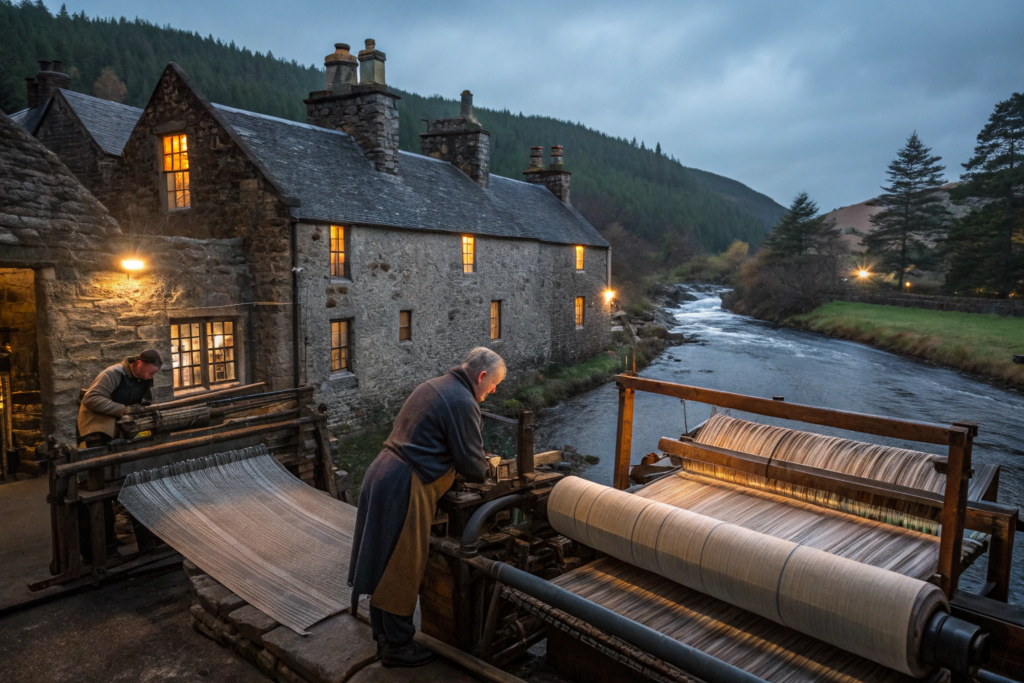
What are the most reputable Scottish wool mills?
- Lochcarron of Scotland: One of the world’s leading weavers of tartan. They have an extensive archive of tartans and produce high-quality fabrics for scarves, kilts, and other garments. They are a great source for authentic, woven-in-Scotland tartan.
- House of Edgar: Another renowned Scottish weaver with a long history. They are known for their high-quality fabrics and their extensive range of tartans.
- ScotlandShop: While they are a retailer, they work closely with Scottish mills and can be a great resource for sourcing authentic tartan products. They also offer a "Design Your Own" tartan service.
- Strathmore Woollen Company: A family-owned mill with a reputation for producing high-quality, traditional fabrics.
- Prickly Thistle: A modern, independent mill that is revitalizing the craft of tartan weaving with a focus on sustainability and contemporary design.
Working directly with a Scottish mill is the best way to ensure authenticity and quality. This is similar to the relationship we foster with artisan cooperatives for pashmina shawls, where direct connection ensures quality and ethical sourcing.
What about working with mills outside of Scotland?
It is possible to source high-quality tartan wool from mills outside of Scotland, including in Italy, England, and even China. However, you need to be very careful.
- Verify Authenticity: If you are selling a product as "Scottish tartan," you need to be sure that the wool itself is of high quality and that the pattern is accurate. A reputable mill will be able to provide details on the yarns they use and the origin of their materials.
- Ask for Samples: Always request samples of the actual fabric before committing to a large order. This is the only way to assess the quality firsthand.
- Check for Certification: Some tartans are protected, and the rights to weave them may be held by specific mills or organizations. Do your research.
A mill outside of Scotland can produce a beautiful tartan scarf, but it may not have the same heritage story as one woven in Scotland. The choice depends on your brand’s priorities and target market. This is similar to the considerations when sourcing classic British-inspired accessories, where authenticity and origin are key factors.
What Are The Key Sourcing And Manufacturing Considerations?
Once you’ve identified your wool source and your mill, the next step is managing the production process. This involves clear communication, careful quality control, and an understanding of the timelines involved.
At Shanghai Fumao Clothing, we have experience working with both Scottish mills and other high-quality textile producers. We understand the nuances of this process.
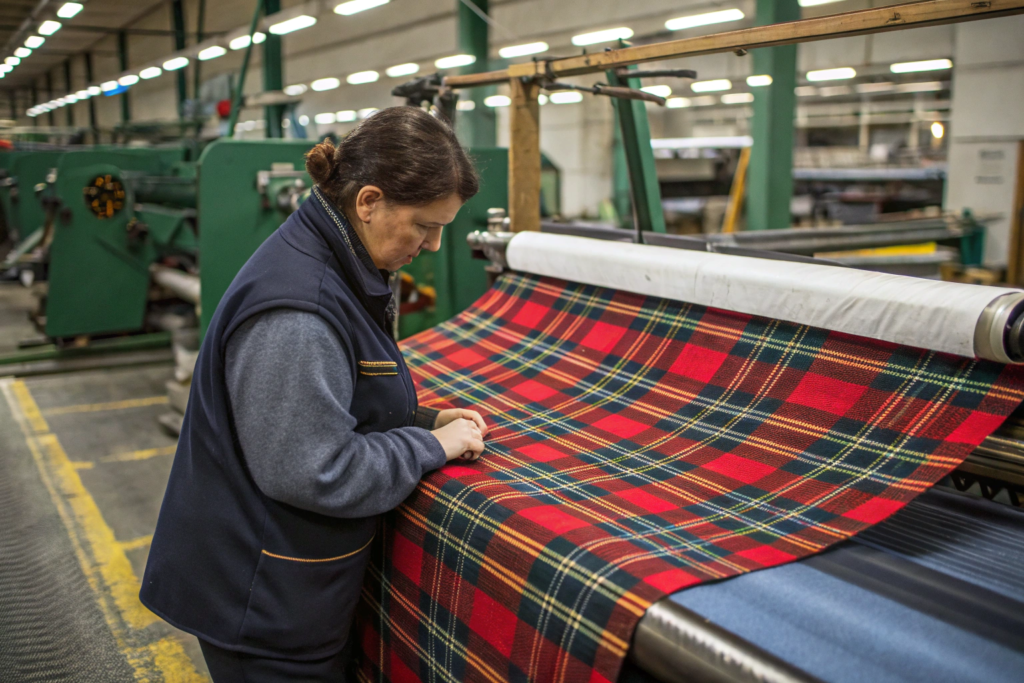
How do you ensure color accuracy in the tartan pattern?
Tartan patterns are defined by a specific sequence of colors, known as a "sett." Getting these colors exactly right is crucial. A slight variation can change the entire look of the tartan and may even make it incorrect for the intended clan.
- Use Thread Counts and Sett Information: A reputable mill will work from a detailed "thread count" that specifies the exact sequence and number of threads of each color. Provide this information clearly.
- Use Pantone Colors: Specify the desired colors using Pantone codes. This gives the yarn dyer a precise target.
- Request Yarn or Fabric Samples: Before full production, request a sample of the dyed yarn or, even better, a small woven sample of the tartan. This is the only way to be absolutely sure of the colors.
Color accuracy is paramount in tartan. This meticulous approach to color is similar to the process of identifying trending accessory colors, where precision is key.
What are the key quality control points for tartan scarves?
- Pattern Accuracy: The tartan pattern should be correct and consistent across the entire scarf and from scarf to scarf.
- Color Consistency: The colors should be consistent throughout the entire production run.
- Weave Quality: The weave should be even and tight, with no flaws.
- Finishing: The edges should be neatly finished, and the fringe (if any) should be even and clean.
- Fabric Hand Feel: The scarf should feel soft and luxurious, as expected from the chosen wool.
A rigorous quality control process ensures that every scarf meets your standards. This commitment to quality is the same we apply when testing for abrasion resistance in belt leather to ensure long-lasting products.
Conclusion
Sourcing high-quality wool for traditional Scottish tartan scarves is a journey that connects you to centuries of heritage and craftsmanship. It begins with understanding the different types of wool—from the softness of lambswool to the durability of Cheviot. It continues with learning to identify quality through micron count, weave, and hand feel. It involves seeking out reputable mills, ideally in Scotland, that have the expertise and tradition to produce authentic tartan. And it requires meticulous attention to detail in color matching and quality control to ensure the final product is a true reflection of the timeless pattern it bears.
At Shanghai Fumao Clothing, we share this deep appreciation for quality and tradition. We have established relationships with trusted mills that produce exceptional tartan fabrics. We understand the importance of color accuracy, weave consistency, and the luxurious hand feel of fine wool. We can help you navigate the complexities of sourcing, from selecting the right wool and tartan pattern to managing production and ensuring the highest quality standards. Whether you are looking for a classic clan tartan or a contemporary design, we can help you create scarves that your customers will treasure for years to come.
If you’re ready to explore the world of traditional Scottish tartan scarves, let’s talk. Please contact our Business Director, Elaine, at elaine@fumaoclothing.com. We’ll help you create a collection that honors the past while looking to the future.