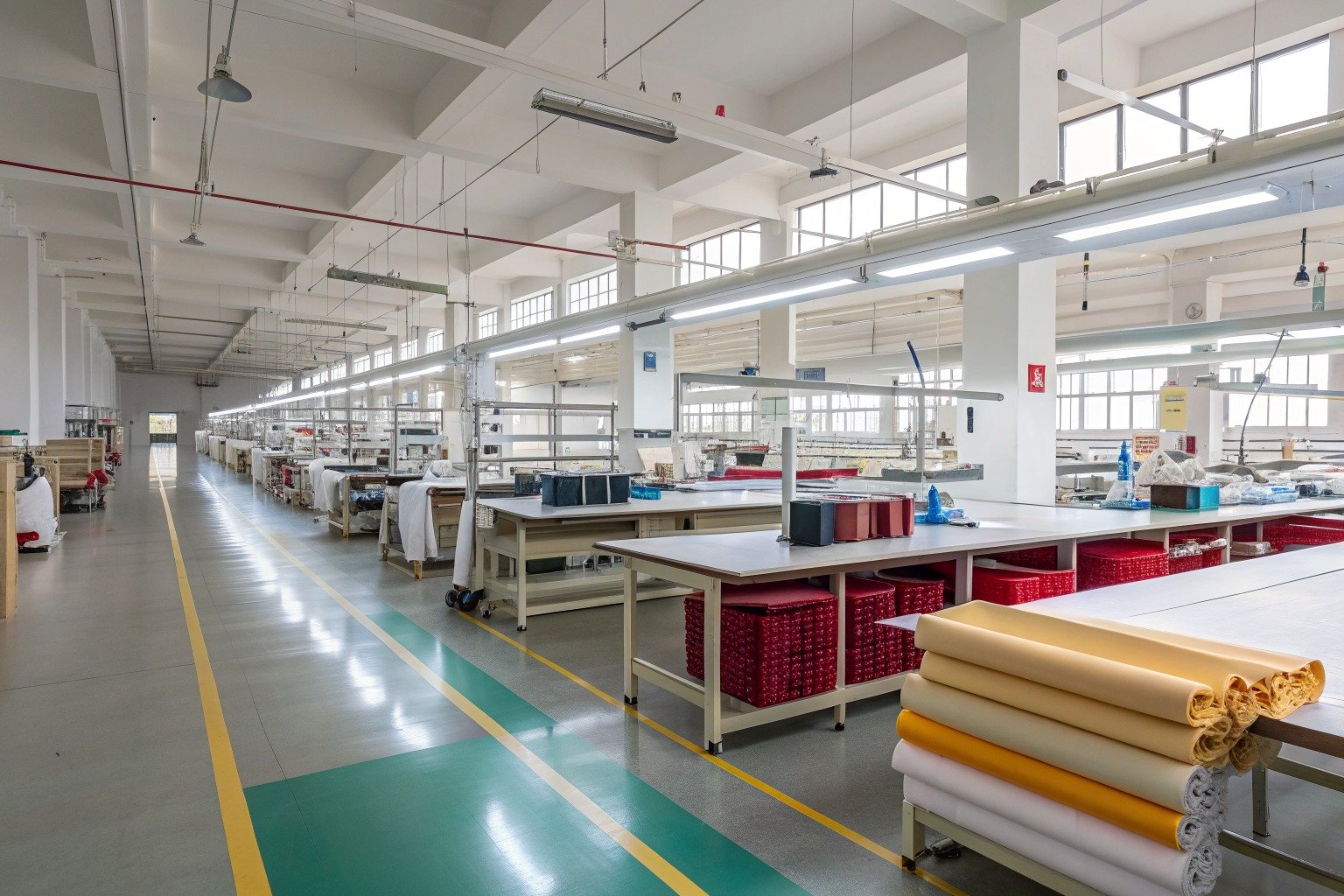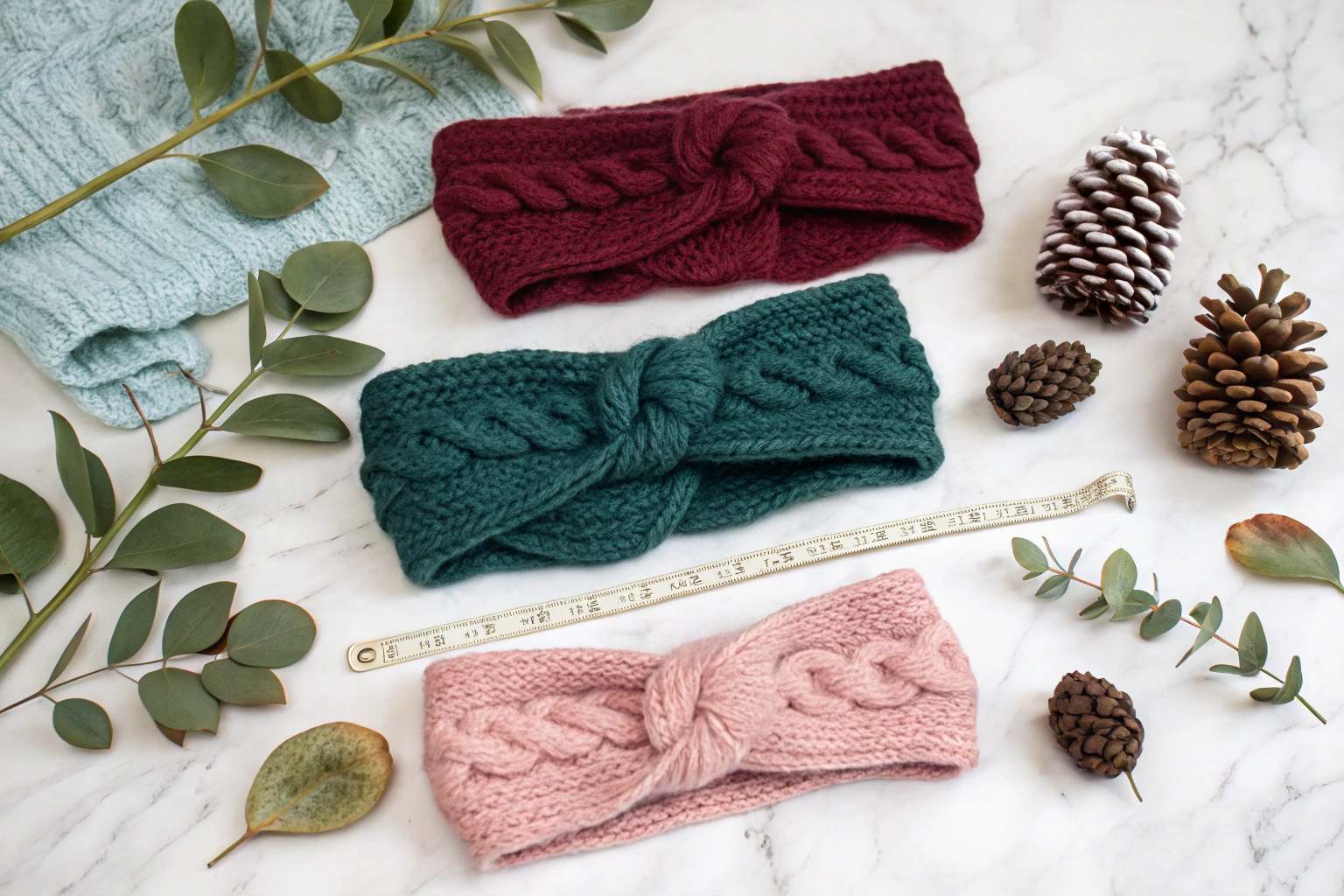
I once had a buyer from a Colorado ski resort gift shop ask me a question that stopped me mid-sentence. She wanted 300 heavy knit wool headbands for the winter season and 200 lightweight moisture-wicking headbands for the summer hiking season, and she wanted them in one shipment to save on freight. She had already asked three other factories. Two said they only did winter accessories. One said they only did summer. All three told her to split the order. She was about to give up when she found my factory. I told her the truth. I produce both weights every week, often on the same day, and combining them in one order is not a problem. It is an advantage.
Yes, a professional accessories factory can absolutely produce both winter and summer weight headbands in a single consolidated order. Winter weight headbands typically use chunky knit acrylic-wool blends, fleece-lined polyester, or cable-knit merino with a finished weight of 150 to 250 gsm. Summer weight headbands use lightweight cotton-modal jersey, bamboo viscose, or microfiber polyester with a finished weight of 80 to 120 gsm. The two constructions share the same cutting tables, the same sewing lines, and the same quality control stations. The only difference is the fabric inventory and the machine settings. A combined order saves the buyer 30% to 50% on freight compared to two separate shipments, guarantees color consistency if the two weights share a brand color, and simplifies customs clearance with a single entry.
I run a fashion accessories factory in Zhejiang. I produce winter fleece headbands for ski brands and summer yoga headbands for activewear brands, often in the same purchase order from the same buyer. The idea that a factory must specialize in one fabric weight is a myth that costs buyers money. I want to explain exactly how we manage both constructions, what materials work for each season, and how to structure a mixed-weight purchase order that arrives on time, on budget, and in perfect condition.
What Are the Material and Construction Differences Between Winter and Summer Headbands?
A winter headband is engineered for insulation. Its primary function is to trap body heat around the ears and forehead while allowing moisture vapor to escape so the wearer does not develop a clammy chill. The material is thick, textured, and often has a brushed inner face for softness against the skin. A summer headband is engineered for evaporation. Its primary function is to wick sweat away from the skin, dry rapidly, and stay in place during high-intensity movement. The material is thin, smooth, and often has a silicone grip strip on the inner surface. These two products share a category name but have almost nothing in common at the material specification level.
The material and construction differences between winter and summer weight headbands are defined by four parameters. Fabric weight: winter headbands use fabrics from 150 to 250 gsm with thermal insulation properties, while summer headbands use fabrics from 80 to 120 gsm with moisture-wicking properties. Fiber content: winter headbands use wool, acrylic-wool blends, polyester fleece, or cashmere blends, while summer headbands use cotton-modal jersey, bamboo viscose, nylon-spandex microfiber, or recycled polyester mesh. Construction: winter headbands are often double-layered with a brushed fleece lining or a knit-in thermal loop backing, while summer headbands are single-layer with a bonded or printed silicone grip strip. Width: winter headbands average 8 to 12 centimeters for full ear coverage, while summer headbands average 4 to 7 centimeters for minimal contact with sweaty skin.
I stock both weight classes of fabric in my warehouse. The winter fabrics occupy the upper shelves. The summer fabrics occupy the lower shelves. When a mixed-weight order comes in, my cutting team pulls from both sections on the same day. The cutting machines are adjusted for fabric thickness, a setting change that takes under two minutes. The sewing machines are adjusted for stitch length and thread tension, another two-minute changeover. The idea that these two products require separate factories is absurd. They require organized inventory and trained operators, both of which a professional factory has.
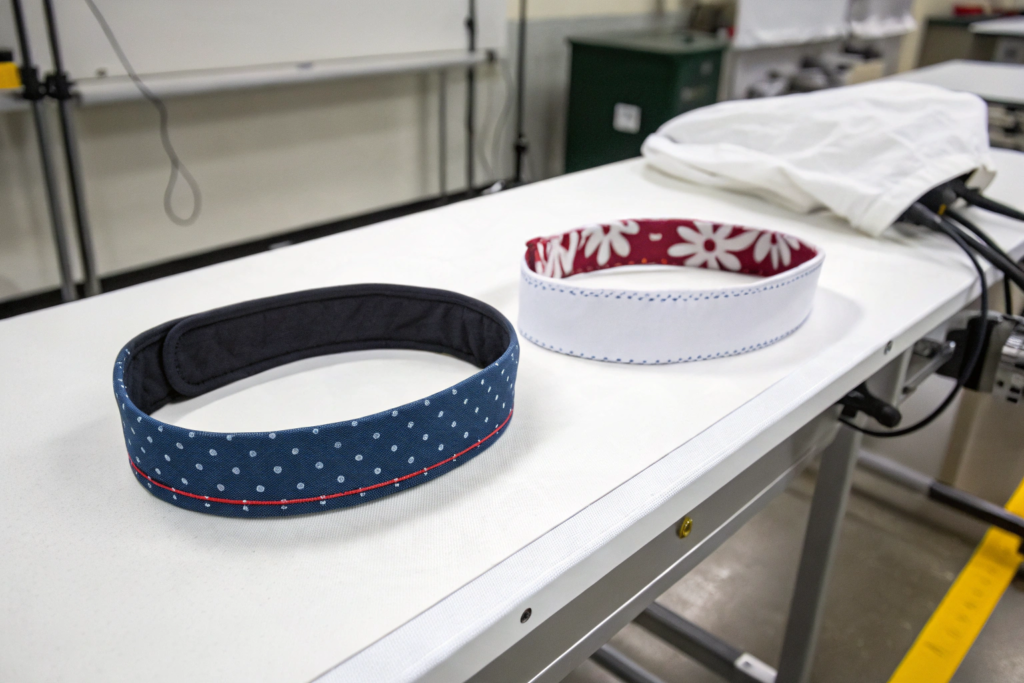
How Does Fabric Weight Determine the Thermal Performance of a Winter Headband?
Fabric weight, measured in grams per square meter, is the simplest predictor of thermal insulation. A heavier fabric traps more still air between its fibers, and still air is the actual insulator. A 200 gsm merino wool knit traps approximately twice as much still air as a 100 gsm cotton jersey. The wearer’s ear temperature stays higher in cold wind.
But weight alone does not determine performance. Fiber type and knit structure are equally important. A 200 gsm acrylic knit is warmer than a 200 gsm cotton jersey because acrylic fibers have a crimped, wool-like structure that creates air pockets, while cotton fibers are smooth and pack tightly together. A cable-knit structure is warmer than a jersey knit of the same weight because the cable crossings create larger air pockets. A brushed fleece inner face adds warmth by increasing the surface area that traps air against the skin. The thermal insulation properties of textile fabrics by weight and construction provide the scientific basis for selecting the correct winter headband fabric.
Why Do Summer Headbands Require Moisture-Wicking and Anti-Slip Properties?
A summer headband worn during a run, a hike, or a yoga session is subjected to continuous sweat saturation. A cotton headband absorbs sweat, holds it against the skin, becomes heavy and wet, and stretches out of shape. Within thirty minutes, it is a soggy, slipping annoyance. The wearer pulls it off and stuffs it in a pocket.
A summer headband must manage sweat, not absorb it. Moisture-wicking polyester or nylon fibers are hydrophobic. They do not absorb water. Sweat is pulled along the fiber surface by capillary action and spread across the fabric where it evaporates. The headband stays dry, lightweight, and dimensionally stable. The anti-slip property is provided by a thin line of clear silicone printed or bonded to the inner surface. The silicone grips the skin or hair without pulling, preventing the headband from sliding backward during movement. The combination of wicking and grip transforms a summer headband from a fashion accessory into a performance tool. The moisture management and grip technologies in athletic headwear are now standard expectations for any summer weight headband marketed to active consumers.
How Does Combining Winter and Summer Headbands Reduce Total Order Costs?
Splitting a headband order between two factories is the most expensive way to source. The buyer pays two sets of fabric minimums, two sets of shipping charges, two sets of customs brokerage fees, and two sets of bank transfer fees. The per-unit cost from each specialist factory might appear competitive on paper, but the total landed cost is inflated by duplicated fixed costs. Combining both weights in a single factory order consolidates these fixed costs and generates structural savings.
Combining winter and summer weight headbands in one order reduces total costs through four mechanisms. Shared fabric purchasing qualifies for volume discount tiers from the mill. A single consolidated shipment eliminates duplicate freight, handling, and customs fees, typically saving $300 to $600 compared to two separate pallet shipments. A single third-party inspection fee covers both products. A single bank transfer or letter of credit issuance fee covers the entire order value. The total cost savings typically range from 8% to 15% of the combined order value compared to splitting the order between two specialist factories.
I show my buyers the math in every quotation. A recent order for a Canadian outdoor brand combined 400 winter fleece headbands and 300 summer mesh headbands. The single consolidated shipment via air freight cost $280. Two separate half shipments would have cost $460. The single third-party inspection cost $350. Two separate inspections would have cost $700. The single bank transfer fee was $35. The combined savings exceeded $500, which was more than 10% of the order value. The buyer used those savings to upgrade the winter headband from acrylic to a wool blend.

How Does Shared Brand Color Matching Across Two Fabric Weights Work?
A brand that sells both a winter headband and a summer headband in the same retail display needs the brand color, say a specific shade of heather grey, to match across both weights. If the winter headband is produced in one factory and the summer headband in another, the two factories source fabric from different mills with different dye formulations. The heather grey is slightly different on each headband. The display looks inconsistent. The customer notices. The brand looks amateur.
When both weights are produced in one factory, the factory’s fabric sourcing team orders the winter fleece and the summer microfiber from mills that can match the same Pantone reference or, better, from the same mill group that has access to the same dye lot. The factory’s QC team inspects both weights side-by-side under a D65 light booth before production begins. The color match is verified with a spectrophotometer. The Delta E between the winter and summer fabric is kept below 1.0. The color consistency across different textile substrates is a technical challenge that a single-factory approach solves far more effectively than a split-factory approach.
What Are the Freight and Customs Advantages of a Single Consolidated Shipment?
A shipment of 300 winter headbands might fill a quarter pallet. A shipment of 400 summer headbands might fill a third of a pallet. Shipped separately, each pays a less-than-container-load rate based on volume, plus a minimum handling fee, plus a customs entry fee. Shipped together, the combined 700 headbands fill a half pallet or more, achieving a better volume rate and paying a single set of handling and customs fees.
The customs advantage is particularly significant. Each customs entry requires a broker, a classification determination, and a duty payment calculation. Two entries mean two broker fees, two sets of paperwork, two opportunities for a customs hold. A single entry simplifies the process and reduces the administrative burden on the buyer’s logistics team. The freight consolidation benefits for small and medium import shipments are well-documented. Combining products with different seasonal demand patterns into a single shipment also helps the buyer manage warehouse inventory. The winter headbands can be stored until the fall season while the summer headbands are distributed immediately.
How Do You Structure a Mixed-Weight Headband Purchase Order for Clarity?
A vague purchase order that says "500 winter headbands and 300 summer headbands in brand colors" is an invitation for confusion. The factory’s production team does not know which winter fabric, which summer fabric, which width, which logo placement, which packaging. They guess. The guess is wrong. The order is delayed while clarifications fly back and forth. A clear, structured purchase order eliminates the guessing and triggers immediate production.
A mixed-weight headband purchase order must list each style as a separate line item with its own SKU, quantity, fabric reference and weight, dimensions including width and circumference, color reference with Pantone code or factory color number, logo application method and placement, inner grip specification for summer styles, lining specification for winter styles, and packaging type. A summary section at the bottom of the PO should confirm the total carton count, the requested ship date, the shipping method, and the payment terms. A fabric allocation table showing how many meters of each fabric are required for each style helps the factory’s material planning team confirm availability immediately.
I provide a mixed-weight headband PO template to every new client. The template has been refined over years of mixed orders. It captures every variable that distinguishes a winter headband from a summer headband. When the template is filled out completely, my production team can begin fabric cutting on the same day the deposit clears. When the template is partially filled out, the order stalls in the clarification queue.
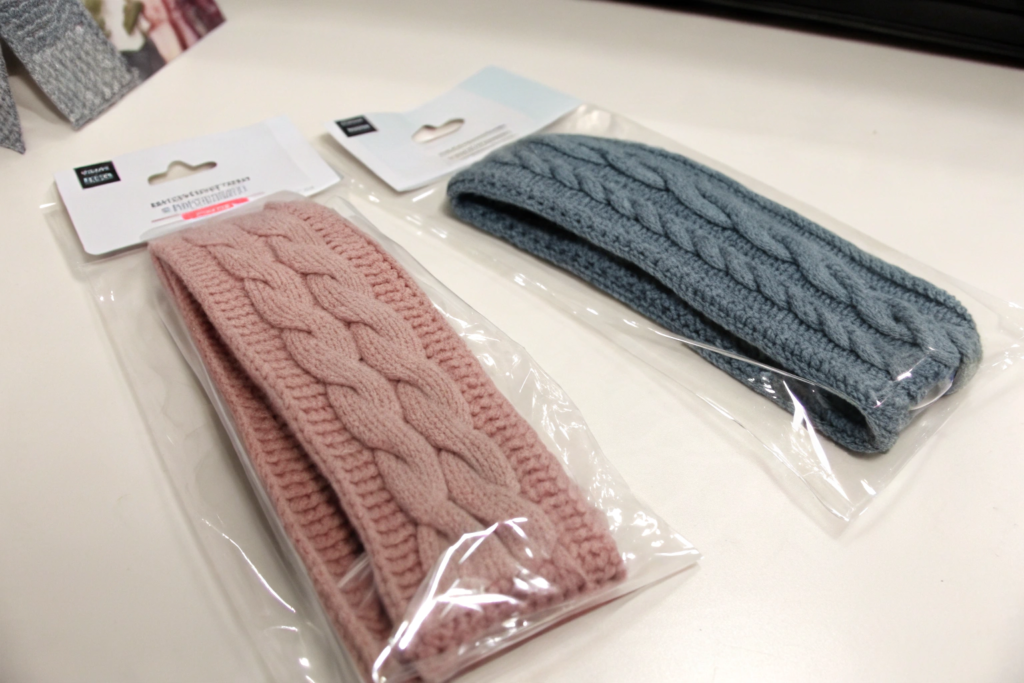
What Information Must Each Headband SKU Include to Prevent Production Confusion?
A winter headband and a summer headband look similar in a line drawing. They are both fabric tubes worn around the head. The production team needs specific, measurable differences to distinguish them. The SKU specification must make the differences explicit.
A winter headband SKU should specify the outer fabric reference and weight, the lining fabric reference, the finished width, the finished circumference, the seam type, the logo application, and the care label content. A summer headband SKU should specify the main fabric reference and weight, the presence or absence of a silicone grip strip and its width, the finished width, the finished circumference, the seam type to prevent chafing, the logo application, and the care label content. The two SKUs should be clearly marked as "Winter Weight" and "Summer Weight" in the product name. The purchase order specification detail for garment and accessory manufacturing ensures that the production team does not confuse the two styles, even though they are running on the same production line.
How Should Packaging Be Specified to Differentiate Seasonal Products in One Shipment?
When winter and summer headbands arrive at the buyer’s warehouse in the same carton with similar packaging, the warehouse team cannot tell them apart without opening each poly bag and feeling the fabric weight. This causes mis-shipments to retail locations. A ski resort gift shop receives summer headbands. A yoga studio receives winter fleece. The returns and exchanges eat the margin.
The packaging specification for a mixed-weight order should include visually distinct packaging for each style. Different hang tag colors, a blue tag for winter, an orange tag for summer. Different poly bag print, a snowflake icon for winter, a sun icon for summer. Different carton markings, bold text on the carton exterior stating "WINTER WEIGHT" or "SUMMER WEIGHT." The inner carton packing list should clearly separate the two SKUs with their quantities. The warehouse team should be able to identify the correct carton at a glance without opening it. The warehouse receiving and inventory management best practices for multi-SKU shipments emphasize this visual differentiation.
How Does Quality Control Differ Between Winter and Summer Weight Headbands?
The defect profiles of winter and summer headbands are different. A winter headband fails if the fleece lining pills after one wash, if the knit stitch drops and creates a hole, if the seam is bulky and causes discomfort under a helmet. A summer headband fails if the silicone grip peels off after three wears, if the fabric loses its elasticity and stretches out permanently, if the seam chafes the skin behind the ear. The QC checklist must be tailored to the failure modes of each weight class.
Quality control for a mixed-weight headband order requires a separate QC checklist for each style. The winter headband checklist includes knit integrity, fleece pilling resistance, seam bulk measurement, thermal insulation verification, and colorfastness to water for snow exposure. The summer headband checklist includes silicone grip adhesion, moisture-wicking performance, elastic recovery after repeated stretching, seam smoothness against skin, and UV resistance for prolonged sun exposure. Both checklists share common inspection points: color match against the approved lab dip, dimensional tolerance, logo placement accuracy, and packaging conformance. A single QC inspector can apply both checklists to the same random sample pull.
I assign one senior QC inspector to every mixed-weight order. This person pulls the AQL random sample from both styles, applies the winter checklist to the winter headbands, applies the summer checklist to the summer headbands, and produces a single inspection report covering both. The buyer receives one report, not two. The inspection process is unified.
What Specific Tests Apply to Winter Headband Insulation and Fleece Pilling?
A winter headband that pills after two wears looks old and cheap. A winter headband that provides no insulation is just a fabric tube. Both failures are detectable before the headband leaves the factory.
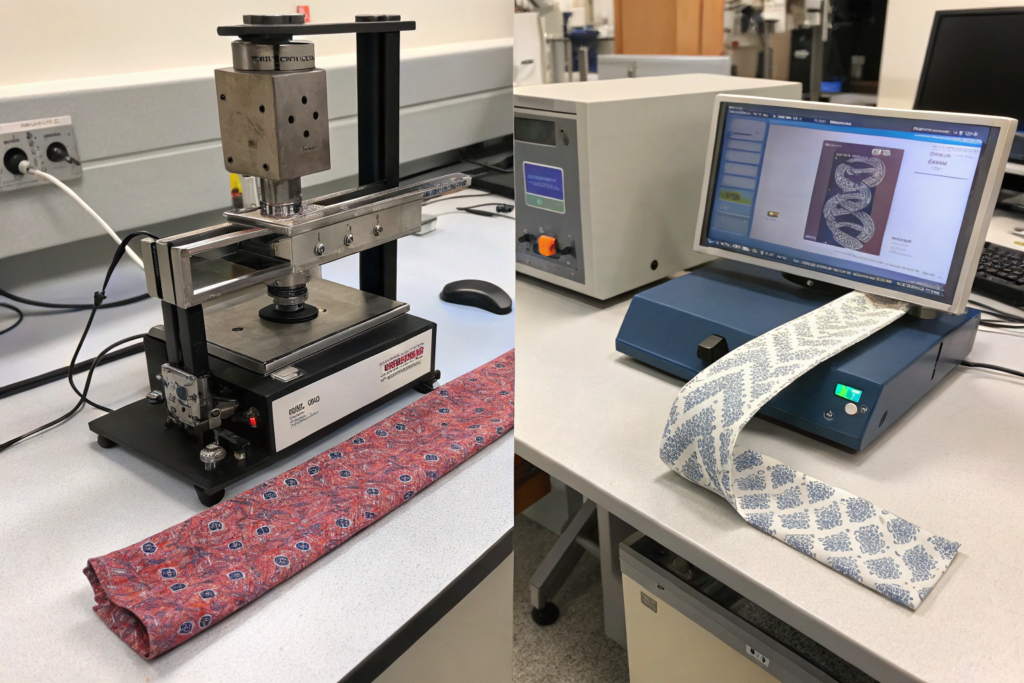
Pilling resistance is tested with a Martindale abrasion tester. The fabric is rubbed against a standard abrasive surface for a specified number of cycles, typically 2,000 cycles for a headband fabric. The tested specimen is compared against a pilling rating scale from 1 (severe pilling) to 5 (no pilling). A passing grade is 4 or above. Thermal insulation is tested with a guarded hotplate apparatus. The fabric specimen is placed on a heated plate, and the power required to maintain the plate at skin temperature, 35 degrees Celsius, is measured. The result is reported as thermal resistance in square meter Kelvin per watt. A winter headband fabric should have a thermal resistance above 0.05. The Martindale abrasion and pilling test for textile fabrics and the thermal resistance measurement for apparel fabrics are the standard test methods.
How Is Silicone Grip Adhesion and Elastic Recovery Tested on Summer Headbands?
A silicone grip strip that peels off after a few wears leaves a sticky residue on the fabric and a headband that slips. A headband that stretches out and does not recover its original shape becomes useless after a single workout.
Silicone grip adhesion is tested with a peel test. A strip of standard adhesive tape is applied to the silicone grip and pulled away at a controlled angle and speed. The force required to peel the silicone from the fabric is measured. A passing result is a peel force above 5 newtons per centimeter of grip width. Elastic recovery is tested by stretching the headband to 150% of its original length, holding it for 30 seconds, releasing it, and measuring the length after 60 seconds of recovery. A passing result is a permanent set of less than 5%, meaning the headband returns to within 5% of its original length. The peel adhesion test for printed silicone on textiles and the elastic recovery test for stretch fabrics provide the objective measurements.
Conclusion
Producing winter and summer weight headbands in one consolidated order is not a factory limitation. It is a buyer advantage. You learned that the material and construction differences are real and significant. Winter headbands at 150 to 250 gsm with thermal insulation, fleece lining, and full ear coverage. Summer headbands at 80 to 120 gsm with moisture-wicking, silicone grip, and minimal skin contact. But these differences are managed by organized inventory, adjustable machine settings, and a trained workforce, not by separate factories.
We walked through the cost advantages. Shared fabric purchasing, single consolidated shipment, single inspection, single bank transfer. The combined savings of 8% to 15% drop directly to the bottom line. Shared brand color matching across both fabric weights produces a consistent retail display that a split-factory approach cannot guarantee.
We detailed the purchase order structure that prevents confusion. Separate SKUs with explicit fabric weight, width, and feature specifications. Visually distinct packaging so the warehouse team can distinguish winter from summer at a glance. A unified QC process with separate checklists tailored to the failure modes of each weight class.
At AceAccessory, I produce mixed-weight headband orders every month for outdoor brands, resort gift shops, and activewear labels. My Zhejiang factory stocks winter fleece, merino knits, summer microfiber, and bamboo jerseys in the same warehouse. My cutting and sewing teams switch between weights in minutes. My QC team applies the correct checklist to each style. My shipping team builds consolidated pallets with clearly marked cartons.
If you are a brand or retailer that sells headbands across seasons and you want the cost, color consistency, and logistics advantages of a single consolidated order, I invite you to contact our Business Director, Elaine. She can send you our mixed-weight headband PO template, fabric swatch cards for both winter and summer weights, and a detailed quotation for your specific breakdown. Reach her at elaine@fumaoclothing.com. Let’s produce headbands for every season in one smart, efficient shipment.