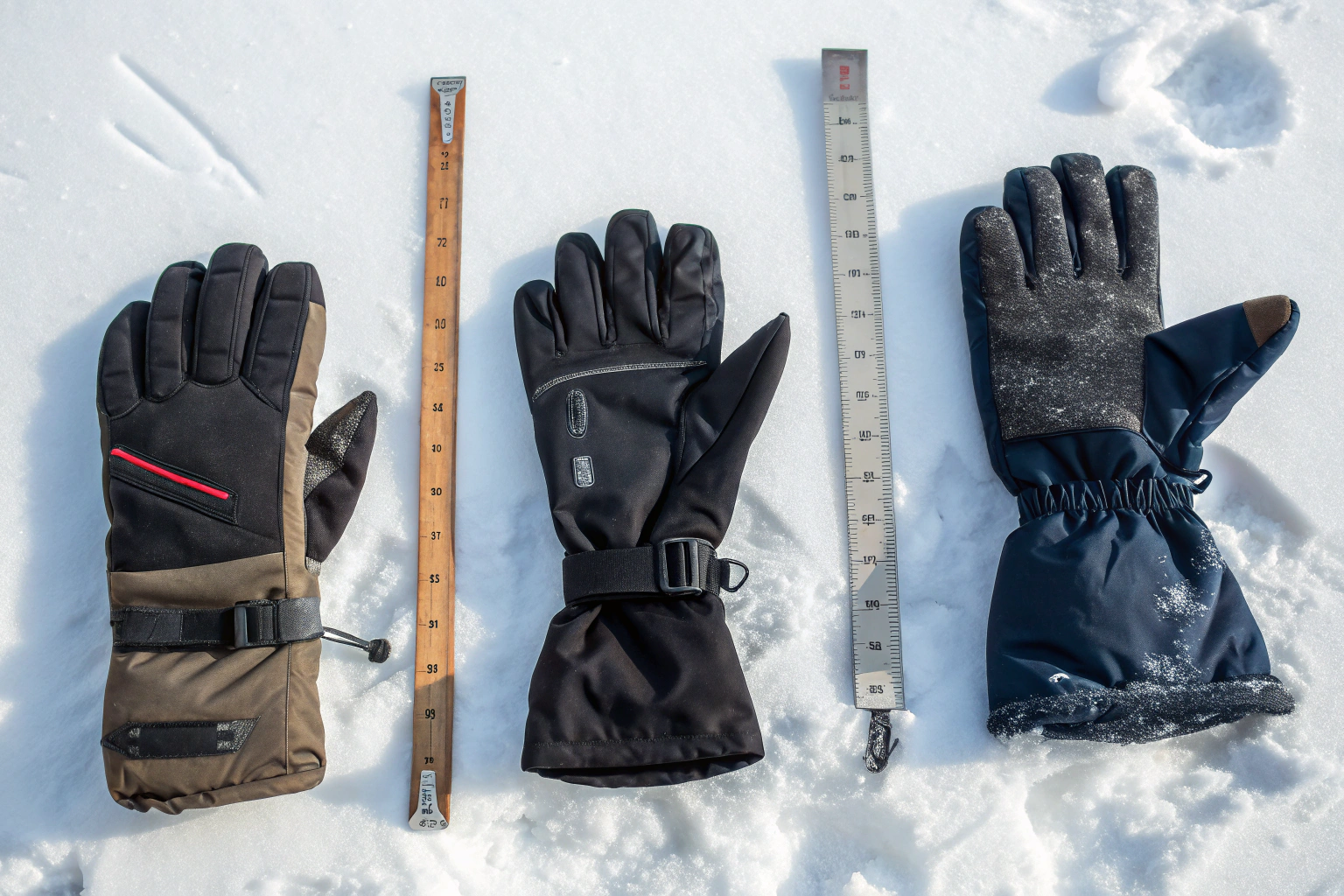
I stood in a ski shop in Colorado last winter, watching customers try on gloves. One woman picked up a beautiful pair of leather mittens with a short cuff. She slid her hand in, then pulled her jacket sleeve down. There was a two-inch gap between the glove and the sleeve, bare skin exposed to the wind. She put the gloves back on the shelf and bought a competitor’s pair with a longer gauntlet. That moment crystallized something I had seen in our order data for months. Gauntlet length is not a styling detail. It is the single most critical functional dimension on a snow sports glove, and getting it wrong means a product that looks great on the shelf but fails on the mountain.
The top three glove gauntlet lengths for snow sports in 2026 are the short gauntlet at 2 to 3 inches beyond the wrist bone, ideal for cross-country skiing and high-output alpine touring where maximum mobility trumps snow protection, the mid gauntlet at 4 to 5 inches, the dominant all-mountain length that balances jacket integration with ease of entry and suits the majority of resort skiers and snowboarders, and the extended gauntlet at 6 to 8 inches, designed for deep powder riding, backcountry snowmobiling, and any condition where snow entry into the glove is the primary performance risk.
I manufacture winter gloves for ski and snowboard brands from my factory in Zhejiang. I analyze the gauntlet length specifications on every purchase order I receive. Over the past three seasons, the demand has stratified into these three clear categories, each driven by a distinct user need and snow condition. I want to walk you through exactly what each gauntlet length does, which sports it serves, and how the construction details like closure systems and fabric pairing make or break the performance.
Why Does Gauntlet Length Matter More Than Ever for Snow Sports Gloves in 2026?
The gauntlet is the barrier between the mountain and your forearm. Snow, wind, and cold are constantly probing that barrier, looking for any gap. A short gauntlet that tucks easily under a jacket sleeve offers convenience. A long gauntlet that cinches over the jacket sleeve offers fortress-grade protection. The choice between them was once a simple trade-off. Mobility versus protection. But in 2026, that trade-off has been refined by new materials, new closure systems, and new sport-specific demands that make gauntlet length a precision specification rather than a rough guess.
Gauntlet length matters more in 2026 because snow sports participation has fragmented into specialized disciplines, each with unique gauntlet demands. Cross-country and ski touring require maximum wrist articulation and breathability, favoring the short gauntlet. Resort skiing and snowboarding, the largest market segment, demands the all-mountain versatility of the mid gauntlet. Deep powder backcountry riding and snowmobiling require the snow-proof security of the extended gauntlet. Additionally, jacket sleeve designs have evolved, with more brands offering both under-cuff and over-cuff integration options, making precise gauntlet-to-sleeve pairing essential for a functional system.
I work with a European ski brand that changed their entire glove line three seasons ago. They moved from offering one gauntlet length across all models to a three-length system mapped to specific activities. Their sell-through rate improved by 22% that season. Customers were not buying the wrong glove for their sport because the glove was now designed for their sport. The gauntlet was the organizing principle.
How Does the Under-Cuff Versus Over-Cuff Integration Affect Gauntlet Length Choice?
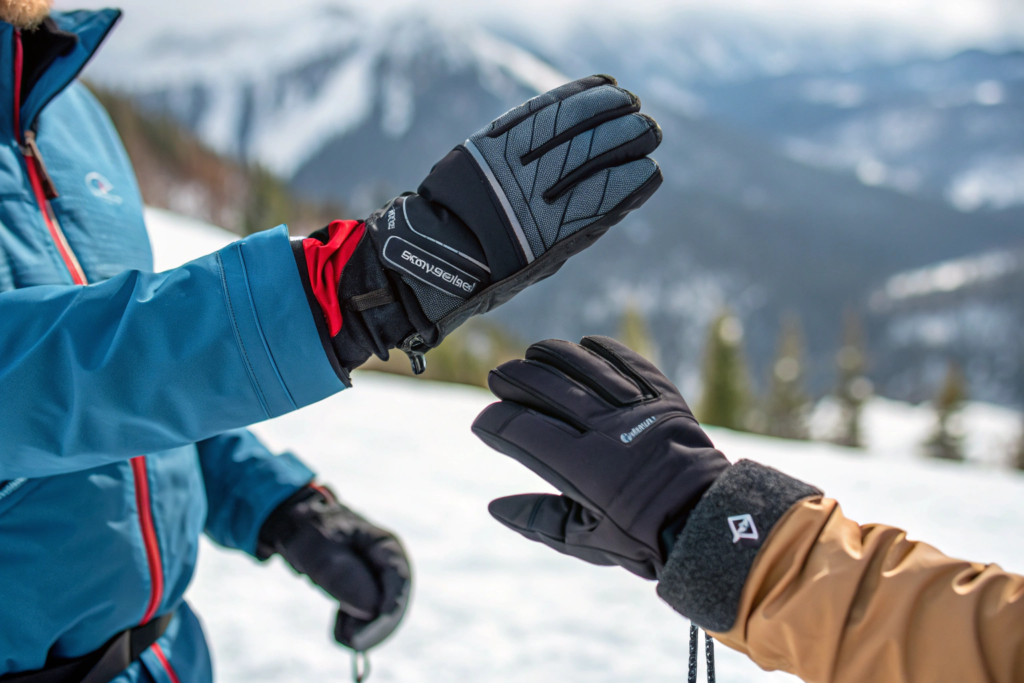
The relationship between the glove and the jacket sleeve is a system. If the glove goes under the jacket cuff, the gauntlet must be slim and short enough to slide in without bunching. If the glove goes over the jacket cuff, the gauntlet must be wide enough to accommodate the sleeve and long enough to create a seal. The 2026 trend is toward modularity, with some gloves offering both options through a dual-cuff design.
An under-cuff integration works best with a short or mid gauntlet that has a low-profile, stretchy wrist closure. The glove disappears into the jacket, creating a clean, snag-free line that cross-country skiers and ski tourers prefer. An over-cuff integration requires a mid or extended gauntlet with a wide opening and a one-handed cinch system. The gauntlet pulls over the jacket sleeve, and the drawcord or shock cord tightens to seal out snow. The glove-to-jacket integration systems for winter sports are now a standard design consideration that directly dictates minimum gauntlet length and circumference.
What New Fabric Technologies Are Making Shorter Gauntlets More Protective?
A short gauntlet used to mean a cold wrist. The fabric was basic nylon, the insulation stopped at the wrist bone, and wind cut through the gap between glove and sleeve without mercy. In 2026, new materials have changed the performance equation. A short gauntlet can now deliver protection that previously required a mid-length.
The key technologies are high-loft, low-bulk insulation that wraps the wrist without restricting movement, windproof yet breathable membrane laminates that block convective heat loss even on exposed skin, and silicone-printed inner cuffs that grip the jacket sleeve and create a mechanical seal without adding bulk. Thinsulate Platinum and PrimaLoft Gold insulation are now being extended down into the gauntlet zone in short-cuff designs. The thermal insulation and membrane technologies in winter gloves have reached a point where a well-designed short gauntlet can handle temperatures that would have demanded a mid-length five years ago.
The Short Gauntlet (2-3 Inches): High Mobility for Cross-Country and Alpine Touring
The short gauntlet is the specialist’s choice. It sacrifices snow protection for freedom of movement, and for the right athlete, that trade-off is exactly correct. Cross-country skiers are generating their own body heat through sustained aerobic output. They do not need a fortress around their wrist. They need a glove that disappears, that allows the wrist to flex through a full poling motion without the gauntlet fabric bunching, rubbing, or restricting. Alpine tourers climbing uphill face the same demand. The short gauntlet is an engineering response to the specific physiological and mechanical requirements of high-output, high-mobility snow sports.
The short gauntlet at 2 to 3 inches beyond the wrist bone is the top choice for cross-country skiing, alpine touring on the ascent, winter trail running, and any snow sport where high aerobic output, maximum wrist articulation, and under-cuff jacket integration are the primary requirements. This length keeps the glove out of the way of the poling motion, eliminates gauntlet bunching inside the jacket sleeve, and reduces the overall weight of the glove. Modern short gauntlets compensate for their reduced length with extended insulation zones that wrap the wrist and silicone grip prints that seal against the jacket sleeve.
I produce short gauntlet gloves for a Nordic ski brand. Their specification is exact. The gauntlet must measure precisely 65 millimeters from the wrist bone seam. The hem must be a single-layer stretch binding with a silicone print on the inner surface. The insulation must wrap 360 degrees around the wrist with no cold spots. This is not a casual design. It is a performance instrument built to a tolerance.

What Sports and Conditions Make the Short Gauntlet the Best Performance Choice?
Cross-country skiing demands a poling motion that articulates the wrist through a range of approximately 90 degrees. A long gauntlet bunches at the wrist crease during the forward reach, creating a pressure point that can cause chafing over a multi-hour race or training session. A short gauntlet eliminates this interference entirely. The wrist moves freely, and the glove behaves like a second skin.
Alpine touring and ski mountaineering involve a long ascent followed by a descent. On the ascent, the athlete is generating heat and sweat. A short, breathable gauntlet prevents overheating and allows the glove to be easily stowed in a pocket during the climb. On the descent, many tourers switch to a heavier glove with a longer gauntlet. The short gauntlet glove serves a specific phase of the activity. Winter trail running and fat biking in snow conditions also favor the short gauntlet, where the aerobic output is high and the primary need is wind protection and minimal bulk, not deep snow sealing. The sport-specific glove requirements for Nordic and alpine touring document the functional reasoning behind gauntlet length selection across these disciplines.
How Are Closure Systems Designed on Short Gauntlets to Maximize Wrist Mobility?
A bulky Velcro strap on a short gauntlet defeats the purpose. If the closure adds stiffness or a pressure point at the wrist, the mobility advantage of the short length is lost. Short gauntlets in 2026 are designed with low-profile, stretch-centric closure systems that secure the glove without restricting movement.
The dominant closure is a slip-on stretch cuff with no mechanical closure at all. The gauntlet is a tube of high-recovery elastane-blend fabric that stretches to fit over the hand and then contracts around the wrist. For gloves that require a closure, a narrow, 15-millimeter low-profile hook-and-loop strap positioned at the wrist bone is the standard. An emerging alternative is a silicone-dotted elastic band sewn into the gauntlet hem, which provides grip against the skin or base layer sleeve without a strap. The ergonomic closure design for athletic gloves is moving toward minimalism. The less hardware, the better the mobility, and the short gauntlet is the natural home for these minimalist closure systems.
The Mid Gauntlet (4-5 Inches): The All-Mountain Standard for Resort Skiing and Snowboarding
The mid gauntlet is the default choice for the majority of snow sports participants because it solves the majority of snow sports problems without creating new ones. It is long enough to cover the jacket sleeve gap in a typical fall, short enough to not interfere with wrist movement during pole planting or grab tricks, and compatible with both under-cuff and over-cuff jacket integration depending on the closure design. The mid gauntlet is not the extreme choice for any single condition, but it is the competent choice for almost all conditions, which is exactly what a resort skier or snowboarder encounters over a typical day on the mountain.
The mid gauntlet at 4 to 5 inches beyond the wrist bone is the top choice for all-mountain resort skiing, freeride snowboarding, and general winter recreation. It provides adequate snow protection for typical resort conditions, including groomed runs, light powder, and the occasional fall. It pairs effectively with the majority of ski and snowboard jacket sleeve designs. The mid gauntlet offers enough length to accommodate a one-handed cinch cord for over-cuff use, yet remains slim enough to tuck under a jacket cuff when the wearer prefers that configuration.
I produce more mid-gauntlet gloves than any other length. It accounts for approximately 60% of my winter sports glove output. The brands I work with order mid-gauntlet designs across their core price points because it is the length that fits the widest range of customers. A beginner skier, an intermediate snowboarder, and an advanced resort skier all find the mid gauntlet acceptable. That universal fit makes it the commercial backbone of the glove market.

Why Is the Mid Gauntlet the Default Choice for the Majority of Resort Customers?
A resort skier encounters variable conditions over a single day. Groomed hardpack in the morning, chopped-up crud in the afternoon, maybe a few inches of fresh snow if they are lucky. They take a couple of falls. They ride the chairlift with their hands in their laps. They need a glove that handles all of these situations adequately without requiring a quiver of different gloves for different runs.
The mid gauntlet delivers this versatility. It is long enough to prevent snow entry during a wrist-deep fall in soft snow. It is short enough to not feel cumbersome on the chairlift or when adjusting goggles. It works with the widest range of jacket sleeve types. The cinch cord, typically a shock cord with a cord lock that can be operated with one gloved hand, allows the wearer to switch between under-cuff and over-cuff configurations based on conditions. The all-mountain glove buying guide for resort skiers consistently points recreational skiers toward the mid-gauntlet as the most versatile and least risky choice.
How Do One-Handed Cinch Systems Improve Mid-Gauntlet Functionality?
A gauntlet cinch that requires two hands to operate is a gauntlet that does not get cinched. A skier standing in a lift line, snow falling, one hand holding poles, needs to tighten the gauntlet with the other hand alone. The one-handed cinch system is not a luxury feature on a mid-gauntlet glove. It is a functional requirement.
The standard design uses an elastic shock cord threaded through a channel in the gauntlet hem, with a spring-loaded cord lock positioned on the outside of the wrist. The wearer pulls the cord lock outward with one hand, the shock cord tightens, and releasing the cord lock holds the tension. The cord lock itself has been redesigned for 2026 to be larger and easier to grip with a gloved hand, and to operate reliably in sub-zero temperatures without freezing. Some premium models now use a Boa fit system adapted for the gauntlet, which provides micro-adjustable tension via a dial that can be turned with a gloved hand. This level of closure precision was previously only available on high-end mountaineering gloves and is now migrating to the mid-gauntlet resort segment.
The Extended Gauntlet (6-8 Inches): Deep Powder and Backcountry Protection
The extended gauntlet is the instrument of last resort against the deepest snow. It is not designed for groomed runs or chairlift convenience. It is designed for the condition where snow entry is not a nuisance but a safety hazard. A snowmobiler digging out a buried sled in chest-deep powder, a backcountry snowboarder riding a tree line after a three-foot storm, a ski patroller performing avalanche control work. For these users, the extended gauntlet is the difference between a functioning hand and a wet, cold, useless hand.
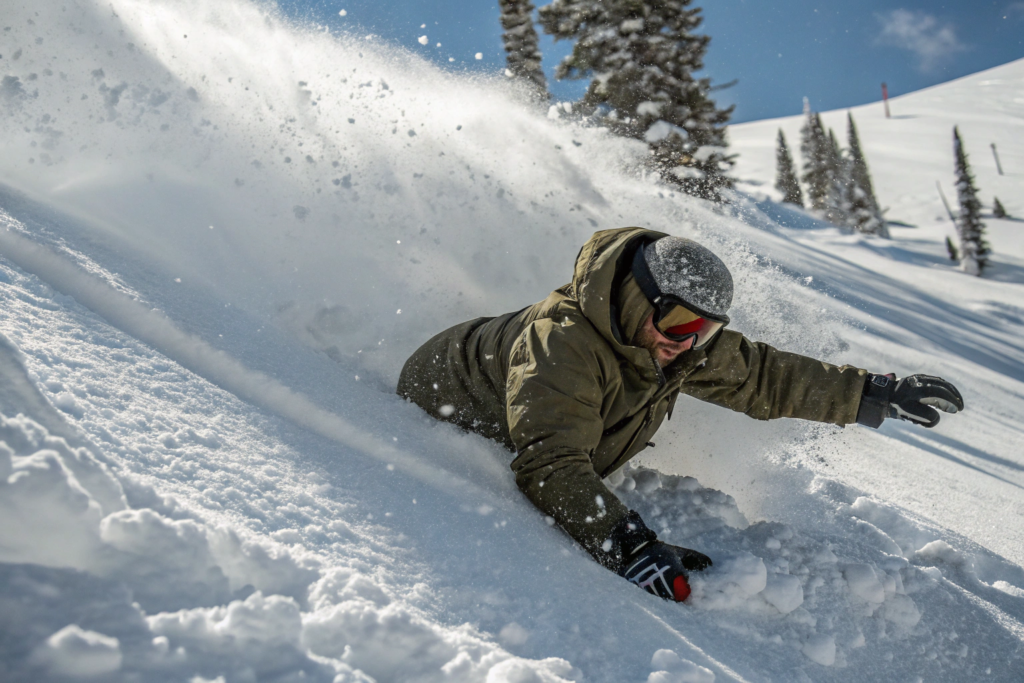
The extended gauntlet at 6 to 8 inches beyond the wrist bone is the top choice for deep powder backcountry skiing and snowboarding, snowmobiling, ski patrolling, and expedition-level winter work. It extends far enough up the forearm to completely bridge the gap between glove and jacket sleeve in any body position, including a fall with arms outstretched. The extended gauntlet features a wide storm cuff that cinches over the thickest winter jacket sleeves, and often includes a secondary internal cuff for a double-layer snow seal.
I produce extended gauntlet gloves for a snowmobile brand and a backcountry-focused ski brand. The specifications are demanding. The gauntlet must flare to a circumference of 45 centimeters at the opening to accommodate a bulky snowmobile jacket. The cinch must be a heavy-duty webbing strap with a ladder-lock buckle that can be operated blind, by feel, with a heavily insulated gloved hand. The outer fabric must be a 600-denier ballistic nylon in the high-wear zones where the gauntlet rubs against snowmobile handlebars or ski edges.
What Deep Snow Conditions and Sports Require the Maximum Gauntlet Extension?
Deep powder snow behaves like a fluid. When a rider falls, their arms instinctively extend to break the fall. The hand plunges into the snow, and the snow flows up the arm. A short or mid gauntlet leaves a gap at the wrist that the snow finds and fills. Within seconds, snow is packed against the skin, melting from body heat, and saturating the glove from the inside.
Snowmobiling presents an even more extreme condition. The rider is moving at high speed through powder, often in a standing position with arms extended to the handlebars. The wind chill is severe. Snow spray from the track and from other riders is continuous. An extended gauntlet that cinches tightly over the jacket sleeve and extends well up the forearm is the only configuration that keeps snow out in these conditions. Ski patrollers and mountain guides who work in deep snow for hours at a time also depend on the extended gauntlet for occupational safety. The deep snow hand protection requirements for snowmobiling and backcountry skiing document the gauntlet length and closure specifications that match these extreme use cases.
How Does the Internal Storm Cuff Add a Second Layer of Snow Defense?
The extended gauntlet is the outer wall. But a single wall can be breached. The internal storm cuff, also called a liner cuff or a snow cuff, is the inner wall. It is a secondary cuff, usually made of stretch knit or neoprene, that sits inside the extended gauntlet and seals directly against the skin of the wrist.
The internal storm cuff serves two functions. First, it provides a second mechanical barrier that snow must pass to reach the hand interior. Second, it prevents the chimney effect, where warm air escapes up the gauntlet and cold air is drawn in. The stretch knit cuff fits snugly around the wrist, creating an air seal that the outer extended gauntlet, which is cinched over a bulky jacket sleeve, cannot achieve. The combination of an internal storm cuff and an external extended gauntlet creates a double-barrier snow and cold protection system that is the gold standard for deep snow handwear.
How Should Brands Structure Their Glove Line Across the Three Gauntlet Lengths?
A brand that offers only one gauntlet length is leaving money on the table. The cross-country skier who walks into a retail store and finds only mid-gauntlet gloves will buy from a competitor who offers a short gauntlet designed for their sport. The snowmobiler will do the same. A structured glove line that maps gauntlet length to user need captures more customers, reduces returns from mismatched expectations, and establishes the brand as a serious snow sports equipment provider rather than a fashion accessory label.
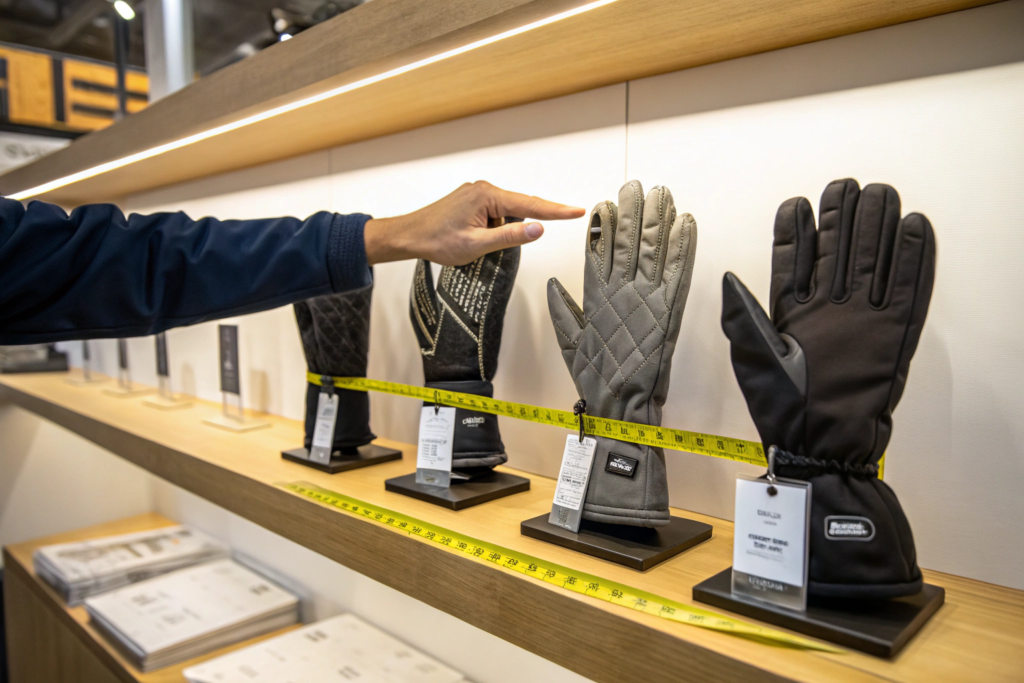
Brands should structure their glove line by assigning each model to a specific gauntlet length based on the primary sport and condition it targets. The short gauntlet anchors the Nordic and touring category. The mid gauntlet anchors the all-mountain resort category, which should be the largest volume offering. The extended gauntlet anchors the deep powder and motorized category. Each length should be offered in multiple price points, with material and feature differentiation within the length category. The gauntlet length should be clearly communicated in the product name, the product description, and on the hang tag, so the customer can self-select without staff assistance.
I advise my brand clients to structure their glove purchase orders by gauntlet length category. A typical order for a mid-sized snow sports brand might be 15% short gauntlet for Nordic and touring, 65% mid gauntlet for all-mountain resort, and 20% extended gauntlet for powder and snowmobile. This allocation mirrors the market demand I see across my client base and ensures the brand has a credible offering in each functional segment without over-investing in niche categories.
What Ratio of Short, Mid, and Extended Gauntlets Should a Snow Sports Brand Order?
The order ratio should reflect both market size and brand identity. A brand that specializes in backcountry and freeride equipment will skew heavily toward extended gauntlets. A brand that serves the recreational resort market will center on mid gauntlets. A brand that owns the Nordic category will lead with short gauntlets.
Based on my production data across multiple snow sports brands, the market-weighted average allocation is approximately 10-15% short gauntlet models, 60-70% mid gauntlet models, and 15-25% extended gauntlet models. Within each length category, I recommend offering at least two price points. An entry-level model with basic materials and a premium model with advanced insulation, leather palms, and technical closures. This brand assortment planning for winter sports accessories approach ensures the line is accessible to the price-sensitive resort beginner while offering an upgrade path to the performance-driven expert.
How Should Product Descriptions Communicate Gauntlet Length to Reduce Returns?
A glove return is often a gauntlet mismatch. The customer bought a short gauntlet glove for resort skiing and returned it because snow got in. Or they bought an extended gauntlet for cross-country and returned it because it felt bulky and restrictive. The return could have been prevented with clear, sport-specific product communication.
The product name should include the intended use. "Nordic Touring Glove" communicates short gauntlet and high mobility. "All-Mountain Ski Glove" communicates mid gauntlet and resort versatility. "Powder Gauntlet Mitten" communicates extended length and deep snow protection. The product description should state the exact gauntlet measurement in both inches and centimeters, describe the jacket integration method, and list the specific sports and conditions the glove is designed for. A sizing guide should include a photograph of the glove on a forearm with a measurement reference. This product content strategy for technical accessories reduces the information gap that leads to incorrect purchases and costly returns.
Conclusion
The 2026 snow sports glove market is organized around three gauntlet lengths, each answering a specific functional question. You have seen how the short gauntlet, at 2 to 3 inches, serves the high-output, high-mobility athlete. The cross-country skier and the alpine tourer need a glove that disappears during the poling motion and tucks cleanly under the jacket cuff. The short gauntlet delivers this with minimalist closures and advanced insulation that compensates for its reduced length.
We walked through the mid gauntlet, the commercial core of the market at 4 to 5 inches. The resort skier and snowboarder encounter everything from groomers to light powder over a single day, and the mid gauntlet with a one-handed cinch system handles all of it. It is the safe, versatile choice that fits the widest range of customers and jacket sleeve configurations.
We explored the extended gauntlet, the 6 to 8-inch fortress for deep powder and motorized sports. The backcountry rider in a three-foot storm and the snowmobiler in continuous snow spray need the extended length and the internal storm cuff to keep their hands dry and functional. This is not a comfort feature. It is a safety system.
And we discussed the commercial strategy. A structured glove line with clear gauntlet length segmentation, sport-specific product naming, and an order ratio that matches market demand captures more customers and reduces returns. The gauntlet is not a styling detail to be guessed at. It is a specification to be engineered and communicated.
At AceAccessory, I produce short, mid, and extended gauntlet gloves for snow sports brands across North America and Europe. My Zhejiang factory stocks the technical fabrics, the one-handed cinch hardware, the internal storm cuff knits, and the insulation grades that each gauntlet length demands. I work with brand buyers to structure their purchase orders by length category, ensuring their line has the right product for every skier and rider.
If you are developing a snow sports glove line for the 2026 season and need a factory that can execute all three gauntlet lengths with precision and consistency, I invite you to contact our Business Director, Elaine. She can share gauntlet measurement specifications, closure system samples, and a line planning template for your order. Reach her at elaine@fumaoclothing.com. Let’s build gloves that fit the sport, the snow, and the skier.