I once had a metal hair clip mold fail on the third production run. The spring cavity wore down, and every clip that came off the line had a weak, sloppy snap. I called the mold maker. He said the warranty had expired. I asked about replacement. He quoted me $1,200 for a new mold, plus a four-week lead time. I had 5,000 units due to a US buyer in three weeks. I paid the ransom. I lost money on that order. That experience taught me that the mold is not just a tool. It is a liability. And who bears that liability when the steel fails is determined by one conversation before the purchase order is signed.
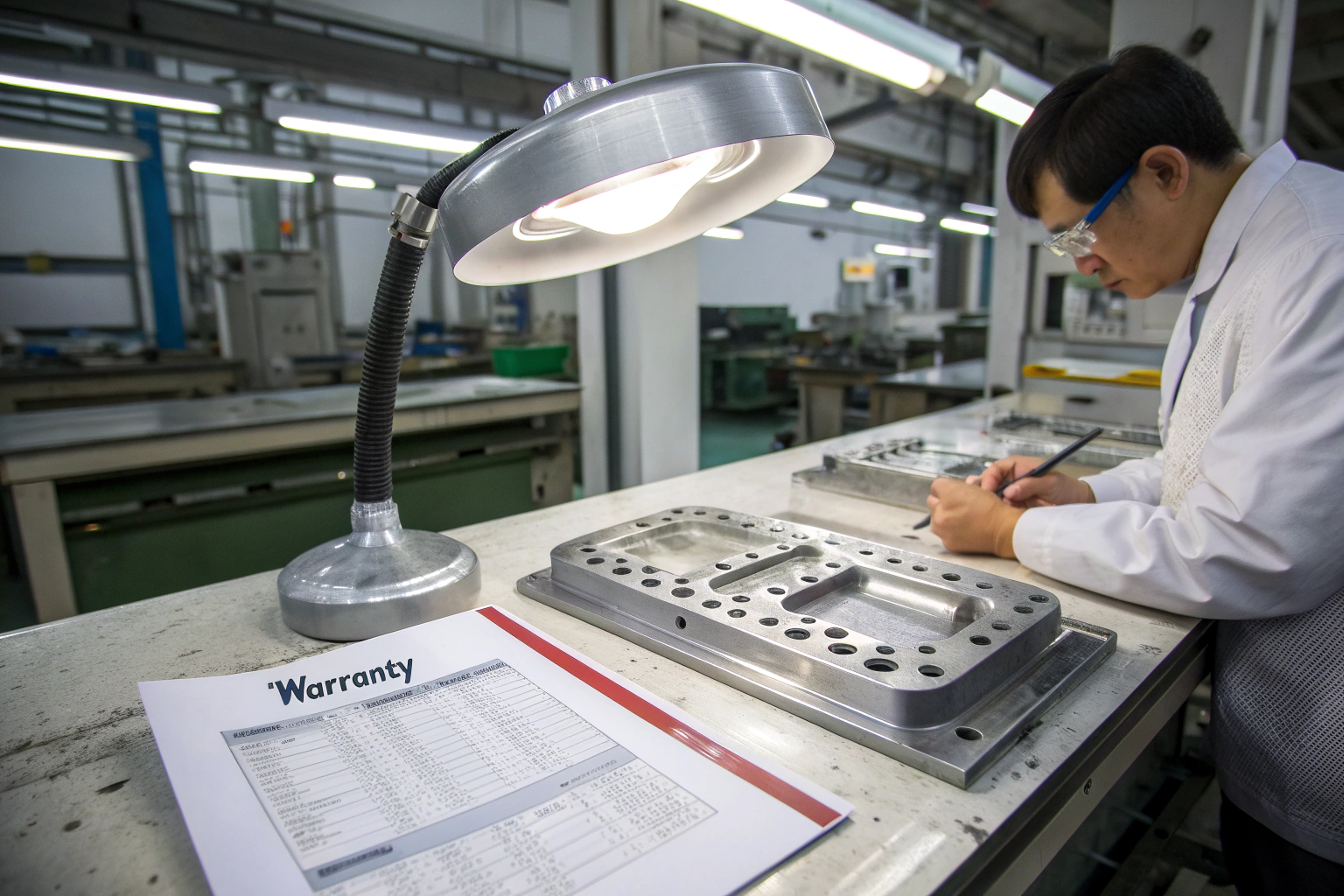
To find a factory that offers free replacement for defective molds, you must negotiate a mold warranty clause in the manufacturing agreement before production begins. This clause should specify the warranty period by either time, typically 12 to 24 months, or by production cycles, typically 50,000 to 100,000 shots, define what constitutes a defect versus normal wear, and state explicitly that replacement molds for covered defects will be produced at the factory’s expense with no additional tooling charge passed to the buyer. Factories that own their mold-making workshop in-house, rather than outsourcing to third-party tooling shops, are far more likely to offer and honor this type of warranty.
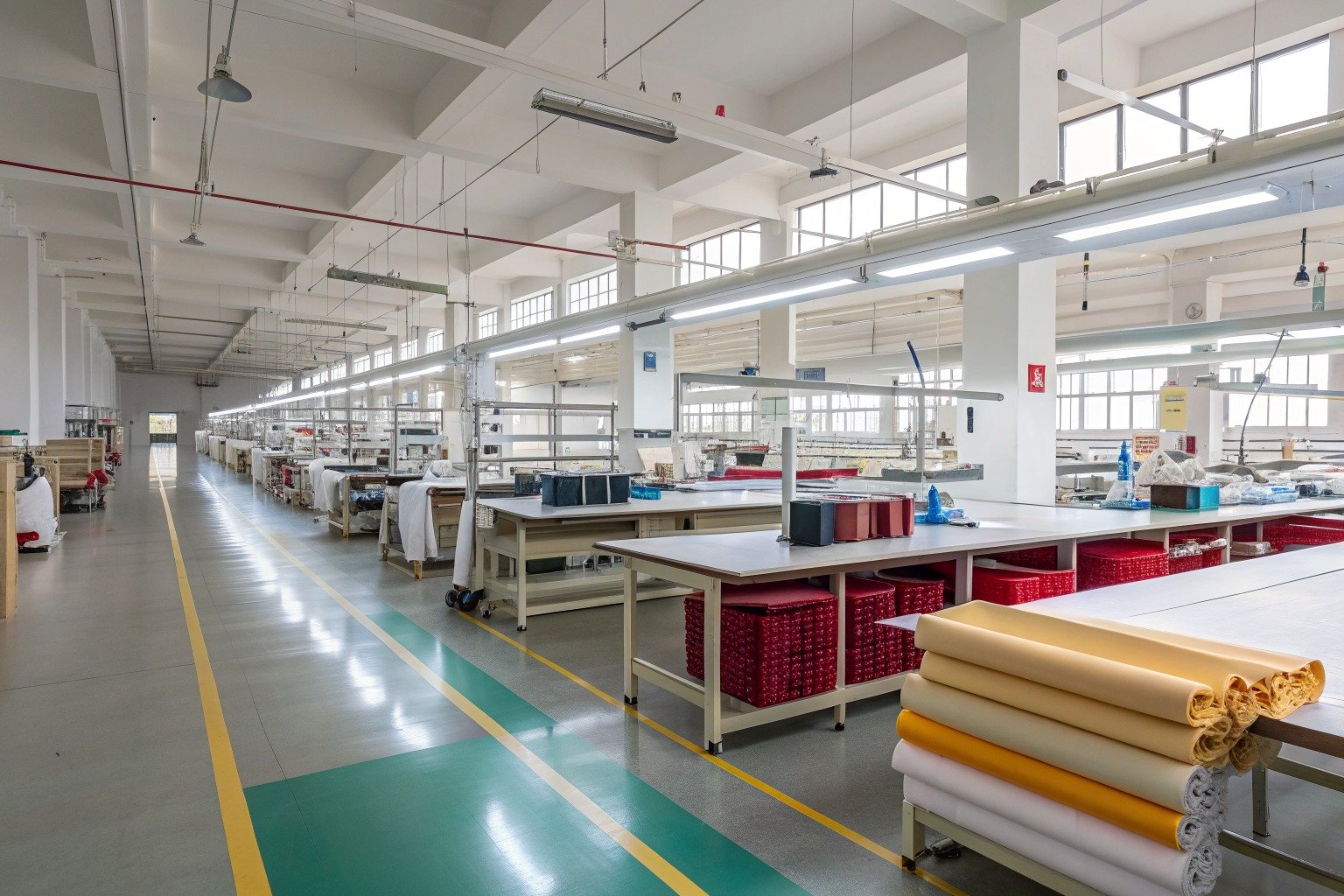
I run a fashion accessories factory in Zhejiang. I own my mold-making department. When a mold fails on one of my client’s orders and the failure is due to a material defect or a machining error, I replace it at my cost. It hurts my margin on that specific order, but it preserves a relationship that will generate fifty more orders. I want to explain exactly how to negotiate this protection, what red flags signal a factory that will not stand behind its tooling, and how the warranty conversation separates professional manufacturers from transaction-focused workshops.
What Is a Mold Warranty and What Should It Cover for Accessories Manufacturing?
A mold is a precision tool. For a hair clip, it is a block of hardened steel with cavities machined to tolerances measured in microns. When molten plastic or zinc alloy is injected into those cavities under high pressure, the mold experiences thermal stress, mechanical wear, and chemical corrosion. Over time, the mold degrades. Some degradation is normal and expected. Other degradation is the result of a defect. The purpose of a mold warranty is to draw a clear line between these two categories and to assign financial responsibility accordingly.
A mold warranty for accessories manufacturing should cover material defects in the mold steel, machining errors that cause premature cavity wear, and heat treatment failures that result in cracking or deformation. It should specify a warranty period of at least 12 months or 50,000 production cycles, whichever comes first. Normal wear, including gradual cavity erosion, polishing degradation, and ejector pin wear, is typically excluded. The warranty should also cover the mold’s performance against the agreed specification. If the mold cannot produce parts within the dimensional tolerances stated in the approved sample report, and the cause is a mold defect rather than a process parameter error, the warranty should apply.
I structure my mold warranties around the expected production volume. For a client ordering 10,000 hair clips per year, a two-year warranty with a 20,000-cycle limit is appropriate. For a client ordering 50,000 units annually, I extend the warranty period and cycle count proportionally. The warranty is documented in the mold purchase agreement, which is a separate document from the product purchase order. The mold belongs to the client. The warranty protects their asset.
How Do You Define a Mold Defect Versus Normal Wear in a Manufacturing Agreement?
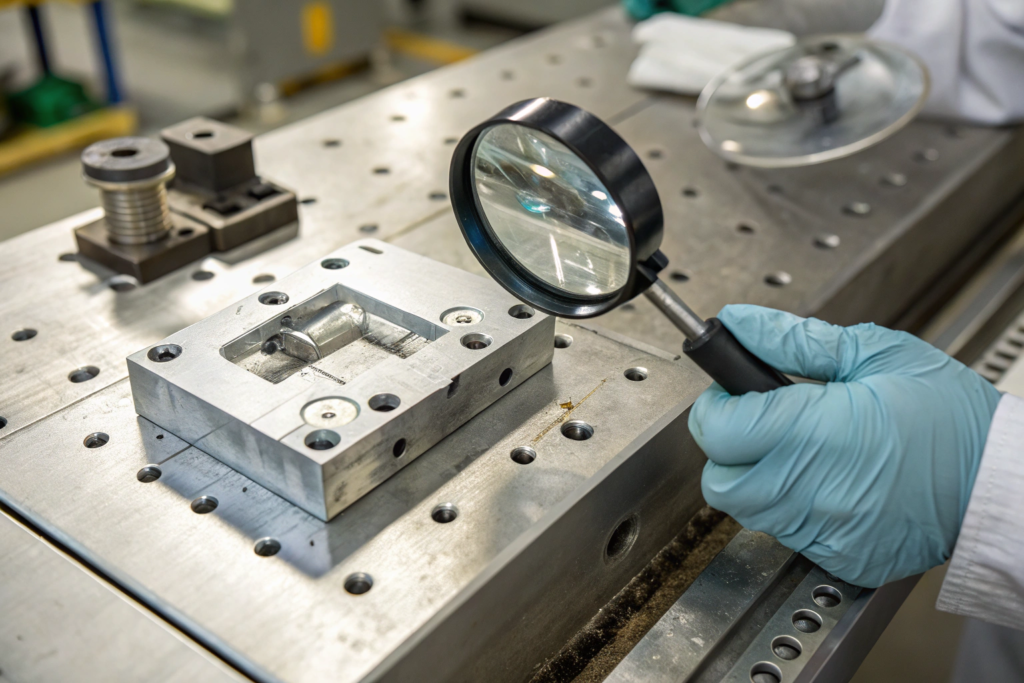
A factory that wants to avoid warranty claims will define every mold failure as "normal wear." They will point to a scratched cavity and say the mold reached the end of its service life. The buyer, who is not a tooling engineer, has no way to argue. The definition of defect versus wear must be objective and measurable.
A defect is a failure that occurs within the warranty period and is caused by a flaw in the raw material or the manufacturing process of the mold itself. Examples include a crack propagating from an inclusion in the steel, a cavity dimension that was machined out of tolerance from day one, or an ejector pin hole that was drilled off-center and causes misalignment. Normal wear is the gradual, uniform degradation of the mold surface due to the abrasive flow of molten material. This includes cavity erosion that reduces sharpness of detail evenly across all cavities, polishing degradation that causes a gradual increase in surface roughness, and ejector pin wear that causes slight flash on the part. The distinction between manufacturing defects and normal wear in tooling should be written into the warranty clause with specific examples relevant to the accessory type.
What Is the Typical Warranty Period for Metal and Plastic Injection Molds in Fashion Accessories?
The warranty period for an accessories mold varies based on the mold material, the production material injected into it, and the expected production volume. A zinc alloy injection mold for a metal hair clip operates at higher temperatures and pressures than a plastic injection mold for an acetate hair claw. The higher stress environment typically results in a shorter warranty period.
For plastic injection molds producing acetate, acrylic, or polycarbonate accessories, a warranty of 24 months or 100,000 cycles is standard among quality-focused manufacturers. For zinc alloy die-casting molds producing metal hair clips, buckles, or pendants, a warranty of 12 months or 50,000 cycles is more typical due to the higher thermal and mechanical stress. These periods should be stated in the mold purchase agreement. The standard mold warranty terms in consumer goods manufacturing provide a benchmark for negotiation. A factory that offers a warranty significantly below these benchmarks, such as only 6 months, is pricing the risk of their own tooling quality into a shorter coverage window.
Why Do Some Factories Offer Free Mold Replacement While Others Charge for It?
The difference between a factory that replaces a defective mold for free and one that charges for it is not a difference in generosity. It is a difference in cost structure and quality control. A factory that outsources its mold making to a third-party tooling shop has no margin to absorb a warranty claim. They paid the tooling shop upfront. If the mold fails, the tooling shop might compensate the factory, or they might not. The factory is caught in the middle. They pass the replacement cost to the buyer because they cannot afford to absorb it.
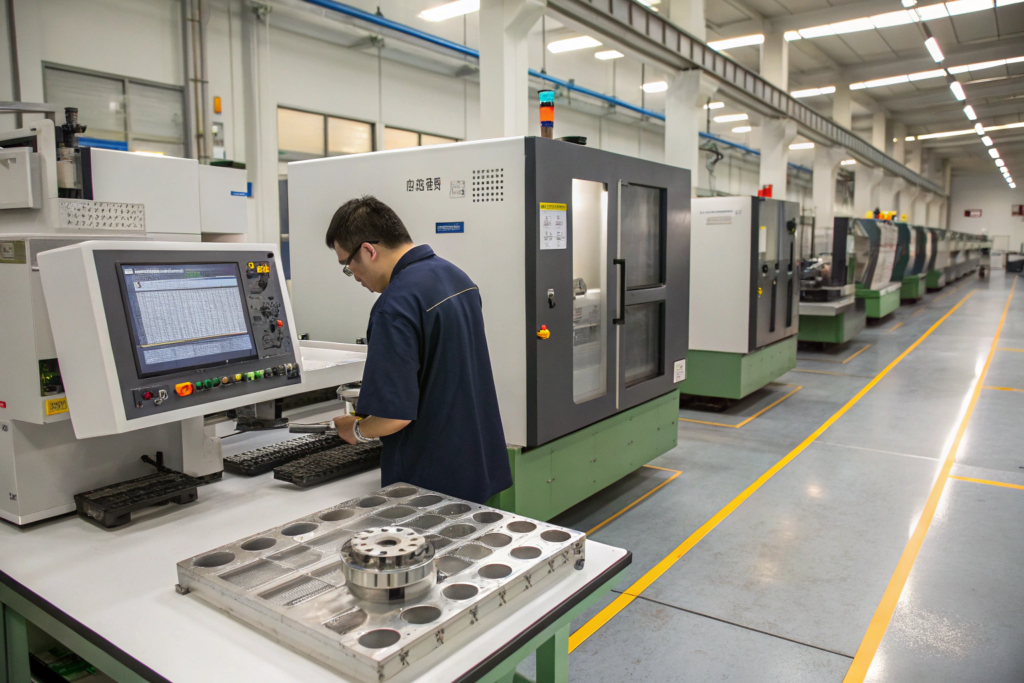
Factories that offer free defective mold replacement typically own their mold-making workshop in-house. This vertical integration means the factory controls the steel sourcing, the machining quality, the heat treatment process, and the final inspection. When a mold fails due to a defect, the cost of replacement is the factory’s internal cost of steel and machine time, not an external vendor’s invoice with a profit margin attached. Additionally, factories with robust quality systems view the warranty as a risk management tool. They know their molds are built correctly. The warranty is a sales promise that costs them very little because claims are rare.
I built my in-house mold shop eight years ago. Before that, I outsourced all tooling. I had no control over the steel grade the vendor used. I had no visibility into their heat treatment process. I had to charge buyers for replacement molds because I was being charged for them myself. Today, I buy certified mold steel directly from a German supplier. My mold makers are my employees. I control the quality. I stand behind the work because I did the work.
How Does In-House Mold Making Reduce the Cost of Warranty Replacements?
When a mold is outsourced, the cost structure includes the tooling shop’s material cost, labor cost, overhead, and profit margin. When that mold fails and must be replaced, the tooling shop charges the factory for a new mold, and that full cost must be recovered from someone. Either the factory absorbs it, or the buyer pays it.
When the mold is made in-house, the cost of a warranty replacement is strictly the direct material and labor cost to produce a new mold. There is no external profit margin. There is no markup. The factory’s cost to replace a defective mold is often 40% to 60% lower than the original purchase price. This lower internal cost makes offering a free replacement financially viable. The cost advantage of in-house tooling for consumer products is the economic foundation on which free replacement warranties are built. A factory without in-house tooling simply cannot compete on warranty terms because their cost structure does not allow it.
What Quality Control Systems Prevent Mold Defects from Reaching Production?
A warranty is only as good as the quality system that backs it. A factory that offers a generous warranty but has no systematic mold quality control is making an empty promise. The mold will fail, and when it does, the factory will find an excuse to deny the claim. A credible warranty is supported by a documented, auditable mold QC process that catches defects before the mold ever reaches the injection machine.
My mold shop follows a three-stage quality control protocol. First, incoming steel is verified against the mill certificate for grade and composition. Second, after rough machining and heat treatment, the mold is inspected on a coordinate measuring machine to verify all critical dimensions against the CAD model. Third, after finishing and polishing, the mold is mounted on a trial injection machine and a first-article sample run is produced. The samples are measured on the CMM and compared to the approved dimensional specification. Only when the samples pass is the mold released to production. This mold validation and quality assurance process ensures that a mold with a latent defect never enters the production environment where it could fail mid-order.
How Do You Negotiate a Free Mold Replacement Clause in the Manufacturing Agreement?
The time to negotiate mold replacement terms is not when the mold has already failed. At that point, the buyer has no leverage. The factory holds the mold, the order, and the relationship. The negotiation happens before the purchase order is issued, when the buyer has maximum leverage and multiple supplier options. The warranty clause must be a written term in the manufacturing agreement, not a verbal assurance in a WeChat message. Verbal promises evaporate. Written contract terms are enforceable.
To negotiate a free mold replacement clause, present the warranty requirement as a standard term of your purchasing policy, not as a special request. State that you require a mold warranty covering material and workmanship defects for a specified period or cycle count. Request that this warranty include free replacement of the mold, including all machining and material costs. If the factory resists, negotiate a graduated warranty where full free replacement applies in the first 12 months, and a prorated replacement cost applies in months 13 to 24. Also negotiate the ownership of the replacement mold. It should be owned by you, the buyer, just as the original mold was.
I receive warranty requests from professional buyers regularly. I do not resist them. I agree to them because I know my molds will not fail. When a buyer asks for a warranty clause, it signals to me that they are a professional who has been burned before and who values long-term supply chain reliability. It makes me want their business more, not less.

What Specific Language Should the Warranty Clause Include to Be Enforceable?
A vague warranty clause is worse than no clause at all. "Factory warrants mold quality" means nothing. Quality is subjective. A strong warranty clause specifies the covered defect types, the warranty duration or cycle count, the remedy, the exclusions, and the dispute resolution process. It leaves no room for interpretation.
The clause should read something like this: "The Supplier warrants that the mold shall be free from defects in material and workmanship for a period of 24 months from the date of first production approval, or 100,000 production cycles, whichever occurs first. If a defect in material or workmanship is identified within this period, the Supplier shall, at its own expense, repair or replace the mold. Normal wear, including gradual cavity erosion, ejector pin wear, and polishing degradation, is excluded from this warranty. Disputes regarding the classification of a failure as defect or wear shall be resolved by an independent third-party mold inspection service mutually agreed upon by both parties." This contractual warranty language for manufacturing agreements provides a framework that can be adapted to specific accessory types and production volumes.
How Should Mold Ownership and IP Rights Be Addressed in the Warranty Discussion?
The mold warranty discussion is connected to the mold ownership discussion. If the buyer pays for the mold, the buyer owns the mold. If the factory pays for the mold, the factory owns the mold. Ownership determines who has the right to use the mold, who can move it to another factory, and who benefits from the replacement mold if the original is defective.
The manufacturing agreement should state clearly that the mold is the property of the buyer, that the factory holds the mold as a bailee for the sole purpose of producing goods for the buyer, and that any replacement mold issued under warranty is also the property of the buyer. The buyer should also have the right to audit the mold’s condition and production history upon request. Intellectual property rights in the mold design should also be addressed. The design of the accessory, and by extension the mold that produces it, is the buyer’s IP. The factory should not have the right to use the mold, or a duplicate of it, to produce goods for any other customer. The mold ownership and intellectual property rights in contract manufacturing should be documented in the same agreement as the warranty clause to create a comprehensive mold management contract.
What Red Flags Indicate a Factory Will Not Honor a Mold Replacement Promise?
A factory can promise anything during the sales process. The test is what happens when the mold fails. Some factories will honor their word without hesitation. Others will delay, deflect, and ultimately deny the claim. The difference is often predictable based on signals visible before the order is placed. A factory that will not honor a mold warranty reveals itself through its pricing, its documentation practices, and its organizational structure.
Red flags that a factory will not honor a mold replacement promise include a mold price that is significantly below the market rate, a refusal to provide a written warranty clause in the manufacturing agreement, the absence of an in-house mold-making or mold-maintenance department, a lack of documented mold inspection and maintenance records, and a requirement that the buyer pay 100% of the mold cost upfront with no milestone payments tied to mold approval. Each of these signals indicates a factory that views the mold as a one-time transaction rather than a long-term asset they are responsible for maintaining.
I have absorbed warranty claims. I know what it costs. It costs me material, machine time, and a few days of a mold maker’s labor. It does not cost me my relationship with the client. A factory that fights a legitimate warranty claim is making a short-term calculation. They would rather keep the replacement cost than keep the client. That is not a factory you want manufacturing your products.
Why Is a Mold Price That Is Too Low a Warning Sign for Future Warranty Issues?
A mold for a quality hair clip or belt buckle costs a predictable amount. The cost reflects the price of certified mold steel from a reputable mill, the hours of skilled CNC machining labor, the heat treatment processing, and the polishing and finishing work. If a factory quotes a mold price that is 30% or 40% below the market average, they are not offering a bargain. They are cutting corners.
The savings come from somewhere. Lower grade steel that will wear faster. Skipped heat treatment that leaves the mold soft. Rushed polishing that leaves surface imperfections. Outsourced machining to a low-cost, low-quality job shop. A mold built with these compromises will fail earlier and more catastrophically. When it does, the factory’s margin on the mold was already razor-thin. They cannot afford to replace it. The warranty claim will be denied, or the factory will simply stop responding. The true cost of low-cost injection molds is paid in production downtime, rejected parts, and broken warranty promises.
What Documentation Practices Distinguish Factories That Stand Behind Their Tooling?
A factory that stands behind its molds documents everything. They maintain a mold history file for every mold they have ever built. This file contains the steel mill certificate, the heat treatment chart, the CMM inspection report from mold completion, the first-article sample measurement report, and a log of every maintenance action performed on the mold during its service life.
A factory that does not intend to honor warranties maintains no such records. They cannot tell you what grade of steel was used. They cannot show you a maintenance log. When the mold fails, there is no objective evidence to determine whether the failure was a defect or wear. The absence of documentation allows the factory to claim wear, and the buyer has no data to argue otherwise. Requesting a copy of a mold history file from a previous client’s mold is a powerful pre-order due diligence step. A factory that can provide it is organized and transparent. A factory that cannot is a warranty risk. The mold documentation and traceability standards outlined in ISO 9001 quality management systems provide a framework for what a credible mold documentation package should contain.
Conclusion
Finding a factory that offers free replacement for defective molds is not about luck. It is about asking the right questions before the order is placed and refusing to work with factories that cannot provide clear, written answers. You learned that a mold warranty should be a written clause in the manufacturing agreement, specifying the covered defect types, the warranty period or cycle count, and the remedy of free repair or replacement. A factory that will not put this in writing is communicating, clearly and intentionally, that they do not stand behind their tooling.
We explored why some factories can offer free replacement while others cannot. The difference is in-house mold making. A factory that owns its mold workshop controls its material quality, machining precision, and replacement cost. A factory that outsources tooling to third parties has no margin to absorb a warranty claim and will pass the cost to the buyer. The presence of an in-house mold shop with documented quality control, steel certification, CMM inspection, and first-article validation, is the single strongest predictor of warranty reliability.
We walked through the negotiation. The warranty clause must be specific. It must define defect versus wear. It must address mold ownership and IP rights. And it must be presented as a standard purchasing policy term, not a special favor. And we identified the red flags. A mold price that is too low. A refusal to document. A requirement for 100% upfront payment with no approval milestones. Each of these signals a factory that views the mold as a one-time sale, not a long-term asset.
At AceAccessory, my in-house mold-making department builds and warrants molds for hair clips, belt buckles, pendants, and other fashion accessories. I use certified steel, I document every mold’s history, and I stand behind my work with a written warranty. When a defect occurs, I replace the mold at my cost, because my relationship with the client is worth more than the cost of a block of steel and a day of machining.
If you are sourcing accessories that require custom molds and you want a factory that will put the warranty in writing and honor it without hesitation, I invite you to contact our Business Director, Elaine. She can share a sample mold warranty clause, a mold documentation package from a recent project, and a quotation for your custom tooling. Reach her at elaine@fumaoclothing.com. Let’s build your molds, and your confidence, on a foundation of documented quality.