I lost a tender for a major Scandinavian fashion chain two years ago. My leather belts were competitive on price. The quality samples were approved. The production timeline was acceptable. But when the buyer asked for my Cradle to Cradle certification, I had nothing to show. I sent our ISO 9001 certificate. I sent our leather supplier’s environmental policy. The buyer was polite but firm. "We require C2C Silver as a minimum," she said. "Without it, we cannot list your products." I lost a 20,000-unit order because I did not understand the certification that now gates access to the European leather accessories market.
European brands require Cradle to Cradle Certified Silver for leather belts because it provides a holistic, third-party verified assessment of the product’s full lifecycle sustainability, covering material health, material reutilization, renewable energy use, water stewardship, and social fairness. Unlike single-issue certifications that address only the leather tanning chemistry or the carbon footprint, C2C Silver certifies that the entire belt, from the buckle metal to the leather hide to the packaging, is designed for a circular economy where materials can be safely returned to biological or technical cycles without generating waste or toxicity.
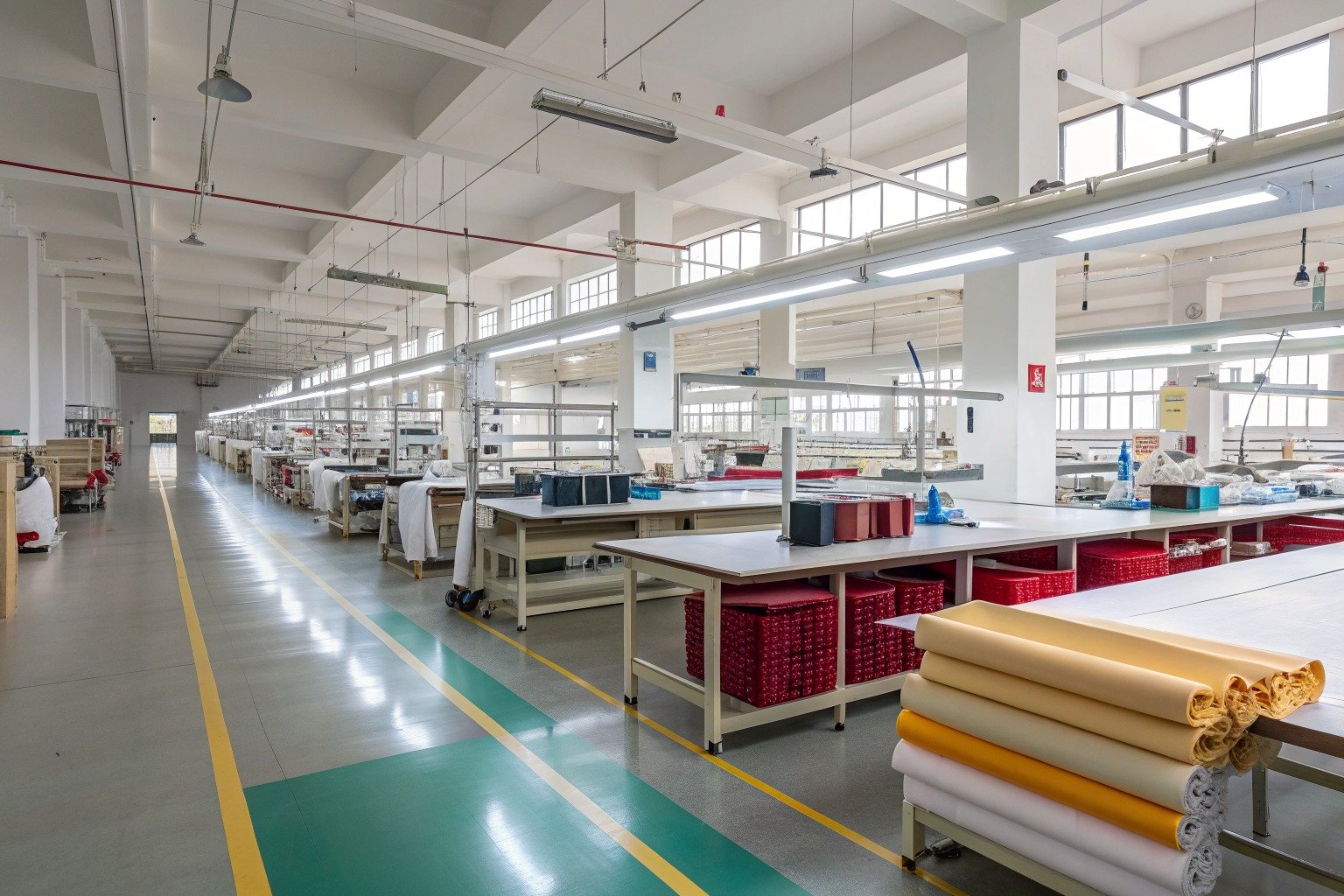
I run a fashion accessories factory in Zhejiang. After losing that Scandinavian order, I spent six months getting my leather belt supply chain C2C Silver certified. It was the hardest certification I have ever pursued, and the most commercially valuable. The doors it opened to European retail chains, eco-luxury brands, and sustainability-focused department stores have generated more revenue than any other single investment in my factory’s history. I want to explain exactly what C2C Silver requires, why European brands have adopted it as their sustainability gatekeeper, and how you can navigate the certification process for your leather accessories.
What Is Cradle to Cradle Certified Silver and How Does It Apply to Leather Belts?
Cradle to Cradle Certified is not an eco-label. It is a product standard that redesigns the concept of waste out of existence. The framework was developed by architect William McDonough and chemist Michael Braungart and published in their 2002 book "Cradle to Cradle: Remaking the Way We Make Things." The certification is administered by the Cradle to Cradle Products Innovation Institute, a non-profit organization based in San Francisco and Amsterdam. A product earns a certification level, Bronze, Silver, Gold, or Platinum, based on its performance across five categories. Silver is the minimum level that European brands accept because it signals meaningful achievement beyond basic compliance.
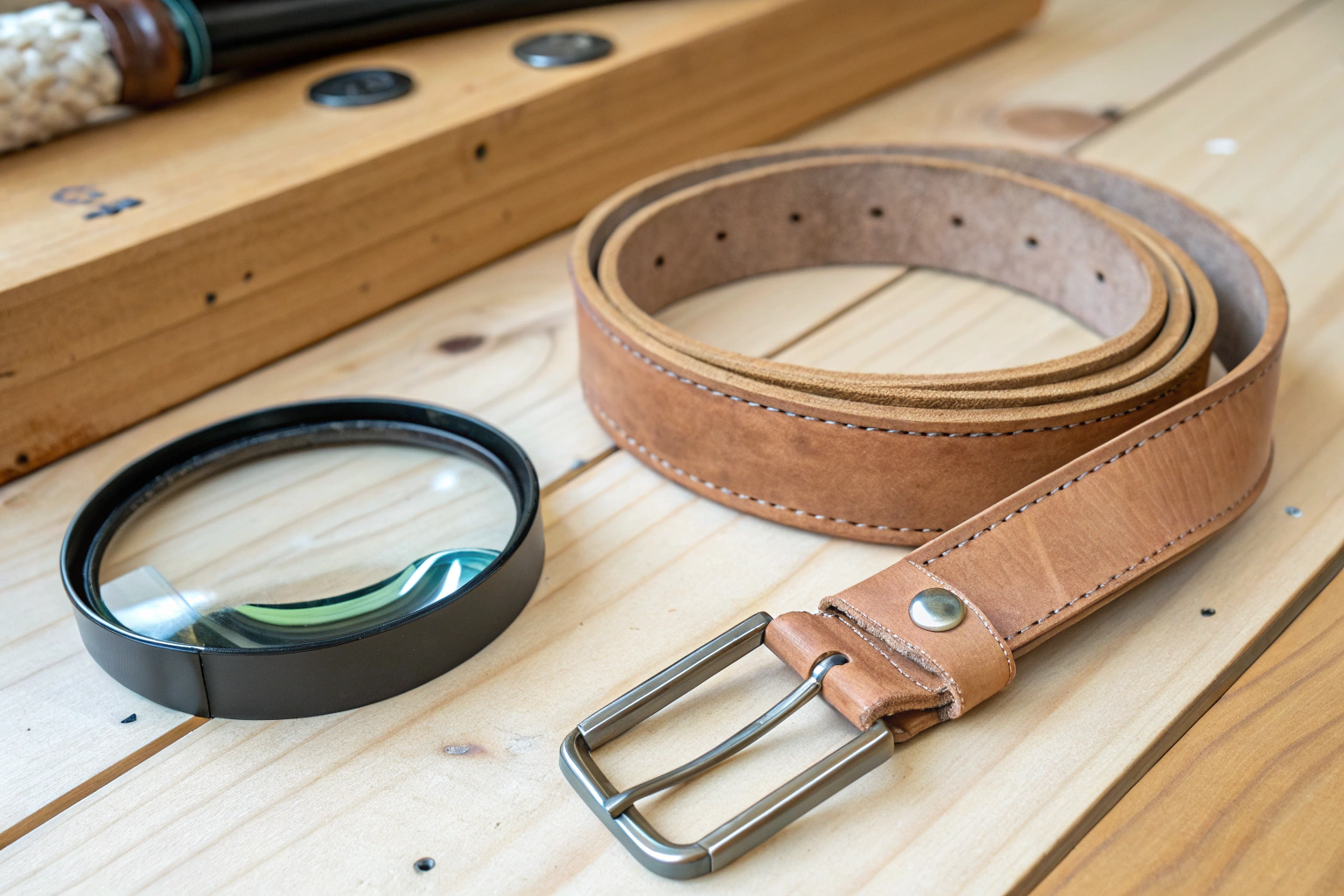
Cradle to Cradle Certified Silver applies to leather belts by assessing every material in the belt against five sustainability criteria. Material Health evaluates whether the leather, buckle metal, thread, edge paint, and packaging contain any banned chemicals from the C2C Banned List. Material Reutilization assesses whether the belt components can be recycled or composted at end of life. Renewable Energy and Carbon Management measures the energy source and carbon footprint of the manufacturing process. Water Stewardship evaluates water usage and effluent quality at the tannery. Social Fairness audits labor conditions throughout the supply chain. A Silver certification requires achieving a minimum score in each category, with the overall level determined by the lowest category score.
When I began the C2C certification process, I assumed it was primarily about the leather tanning chemistry. I was wrong. The assessment touched every component of the belt. The zinc alloy buckle had to be screened for cadmium and lead. The polyester thread had to be evaluated for antimony catalysts. The edge paint had to be reformulated to eliminate phthalates. The packaging had to shift from virgin plastic to FSC-certified recycled paper. C2C treats the product as a system, and every element of the system must be healthy.
How Does the Material Health Category Evaluate Leather Belt Components for Toxicity?
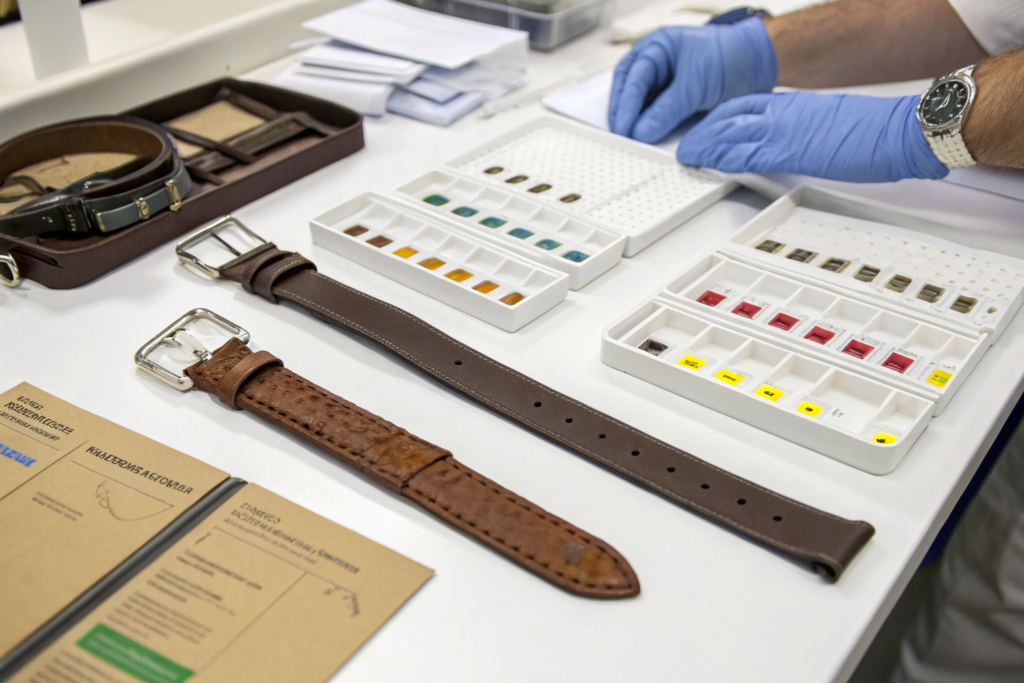
The Material Health category is the most rigorous and often the most difficult part of C2C certification for leather belts. The certifying body, the C2C Products Innovation Institute, requires a full bill of materials for the product, listing every homogeneous material down to 100 parts per million. Each material is then assessed against the C2C Banned List of chemicals, which is significantly broader and stricter than the European REACH restricted substances list.
For a leather belt, the assessment includes the leather hide itself, including the tanning agents, fatliquors, dyes, and finishing coatings. It includes the metal buckle, including the base alloy, plating, and any surface treatment. It includes the thread, the edge paint, the adhesive if any, the lining if present, and the packaging materials. Each material is assigned a risk level from A to X, where A is optimal and X is banned. A Silver certification requires that the product contains no X-assessed materials and that a defined percentage of materials by weight are assessed as A or B. The Material Health assessment methodology from the C2C Products Innovation Institute represents the most comprehensive toxicity screening in the accessories industry.
What Is the Difference Between C2C Bronze, Silver, Gold, and Platinum for Leather Goods?
The C2C certification levels are not arbitrary tiers. They represent a progression of increasing environmental and social performance. The level is determined by the lowest score across the five categories. A product can score Gold in Material Health and Bronze in Water Stewardship. The overall certification is Bronze. This ratcheting mechanism prevents brands from excelling in one area while neglecting others.
Bronze is the entry level. It requires a basic material health assessment, a material reutilization plan, and a commitment to renewable energy and social fairness. Bronze is often achievable with existing supply chain documentation and does not require significant process changes. Silver, the European brand minimum, requires demonstrable optimization in material health, a quantified material reutilization score with the product designed for recovery, a significant percentage of renewable energy in manufacturing, and verified water stewardship with effluent meeting strict quality standards. Gold requires a closed-loop material cycle, 100% renewable energy, and water discharge that is clean enough to drink. Platinum is the theoretical maximum, with the product actively improving the environment. The C2C certification level requirements are publicly documented and provide a roadmap for continuous improvement beyond Silver.
Why Have European Brands Made C2C Silver the Minimum Standard for Leather Accessories?
European brands are not adopting C2C Silver because they want to. They are adopting it because they are being squeezed between two powerful forces. From above, the European Union’s Green Deal legislation, specifically the Ecodesign for Sustainable Products Regulation and the Green Claims Directive, is making vague sustainability claims legally untenable. A brand that says "eco-friendly leather belt" without a recognized third-party certification faces fines and consumer lawsuits. From below, the retail buyers at department stores and online platforms are creating sustainability filters that exclude uncertified products from listing. C2C Silver has emerged as the certification that satisfies both the legal requirement and the commercial requirement.
European brands have adopted C2C Silver as their minimum standard because it is the most comprehensive, legally defensible, and consumer-recognizable certification that addresses the full lifecycle of a leather accessory. Unlike Leather Working Group certification, which covers only the tannery environmental performance, or OEKO-TEX LEATHER STANDARD, which covers only chemical safety, C2C Silver certifies the entire product across material health, circular design, renewable energy, water, and social fairness. This breadth makes it the preferred certification for brands that must substantiate broad sustainability claims under the EU Green Claims Directive.
I have watched this shift accelerate over the past three years. In 2022, perhaps one in ten European buyers asked about C2C. In 2024, it was one in three. In 2026, it is the first question after the price quote. The brands tell me the same thing. Their legal departments have reviewed the certification landscape and concluded that C2C Silver provides the strongest defense against greenwashing accusations while being achievable for a leather accessories supply chain.
How Does the EU Green Claims Directive Make Third-Party Certifications Like C2C Essential?
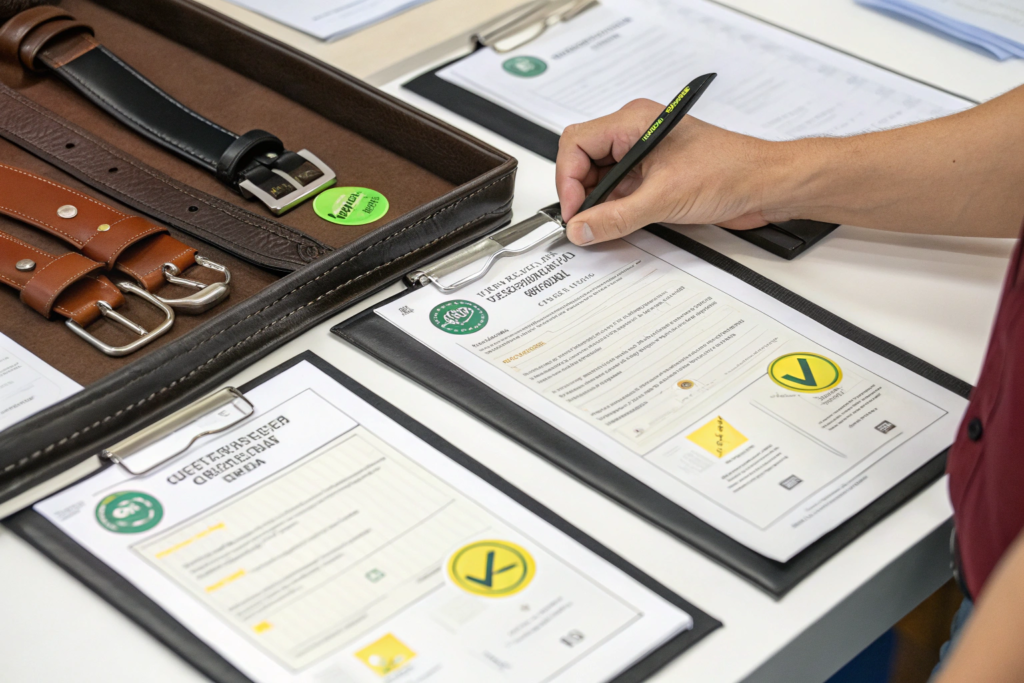
The EU Green Claims Directive, adopted in 2024 and coming into full enforcement, requires that any environmental claim made on a product label, website, or marketing material must be substantiated by scientifically robust, independently verified evidence. A claim like "sustainable leather" or "environmentally friendly belt" without a recognized third-party certification is now presumptively illegal.
C2C Silver provides this independent verification. The certification is issued by the C2C Products Innovation Institute, an accredited third-party certification body. The assessment methodology is publicly documented and scientifically peer-reviewed. The certificate is traceable in a public online registry. A brand that sells a C2C Silver certified leather belt in the EU can point to this certification as their substantiation if challenged by a regulator or a consumer group. A brand that sells an uncertified belt with a self-declared sustainability claim cannot. The EU Green Claims Directive requirements for environmental claims substantiation have transformed C2C Silver from a marketing advantage into a legal compliance tool.
Why Don’t Single-Issue Certifications Like LWG or OEKO-TEX Satisfy European Retail Buyers?
Leather Working Group certification is the dominant environmental standard for tanneries. It audits water usage, effluent treatment, chemical management, and traceability at the leather production stage. It is a rigorous and valuable certification. But it stops at the tannery gate. It says nothing about the metal buckle, the thread, the packaging, the energy used in belt assembly, or the social conditions in the belt factory.
OEKO-TEX LEATHER STANDARD certifies that the finished leather is free from harmful levels of specific chemicals. It is a product safety certification focused on the consumer’s skin contact. It says nothing about circular design, carbon footprint, water stewardship, or social fairness. A European retail buyer reviewing these certifications sees gaps. The LWG certificate covers the hide but not the hardware. The OEKO-TEX certificate covers the chemistry but not the carbon. The buyer needs a unified certification that covers the entire product. C2C Silver fills this gap. The comparison of leather sustainability certifications highlights why comprehensive, multi-attribute certifications are gaining preference over single-issue labels in the European retail environment.
What Are the Key Supply Chain Changes Required to Achieve C2C Silver for Leather Belts?
Achieving C2C Silver is not a paperwork exercise. It requires material substitutions, process changes, and supply chain transparency that most leather accessories factories have never implemented. The certification process exposes every hidden chemical and every uncertified sub-supplier. The factory that attempts C2C certification quickly discovers that their standard zinc alloy buckle contains cadmium above the C2C threshold, their polyester thread contains an antimony catalyst, and their edge paint contains a phthalate plasticizer. Each discovery triggers a reformulation project.
The key supply chain changes for C2C Silver leather belts include switching to a C2C certified or LWG Gold-rated leather tannery that can provide full chemical disclosure of tanning agents, dyes, and finishes, reformulating or replacing metal buckle alloys to eliminate cadmium, lead, nickel release above 0.5 micrograms per square centimeter per week, and hexavalent chromium, replacing polyester sewing thread with a C2C assessed alternative or a natural fiber thread, reformulating edge paint and adhesive to eliminate phthalates, organotin compounds, and solvents on the C2C Banned List, and redesigning packaging to use FSC-certified recycled paper with water-based inks and eliminate all single-use plastics.
I learned these requirements the hard way. My first C2C assessment returned an X rating on the standard polyester thread. The antimony trioxide catalyst used in the polymerization process is on the C2C Banned List. I had to switch to a specific polyester thread grade from a German supplier that uses a titanium-based catalyst. The thread cost increased by 30%. It was a necessary cost of certification.
How Does Leather Traceability to the Farm Level Support C2C Material Health Requirements?
C2C Material Health assessment requires knowledge of the inputs to the leather hide. The assessor needs to know what preservatives were used on the raw hide, what tanning agents were used, what fatliquors and dyes were added, and what finishing coatings were applied. This information must come from the tannery, which must obtain it from their raw hide suppliers.
Traceability to the farm level is not strictly required for C2C Silver, but it is strongly encouraged and becomes a requirement at higher levels. Without farm-level traceability, the hide is assessed based on generic industry data, which carries a higher risk of containing a chemical that triggers an X rating. Several of my European brand clients now require that the leather in their C2C certified belts comes from hides traceable to farms in Europe or South America that do not use certain veterinary pharmaceuticals or pesticides. The leather supply chain traceability for C2C certification is an emerging requirement that adds cost and complexity but also adds value to the final product.
What Packaging Changes Are Necessary to Meet C2C Silver Circular Design Criteria?
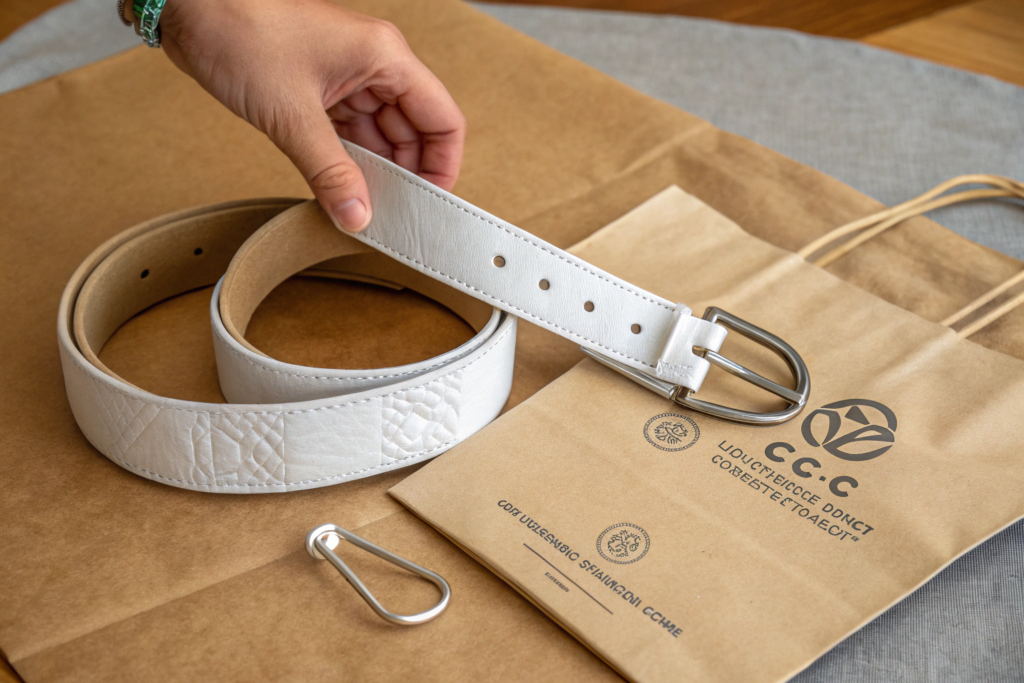
Packaging is part of the product. A C2C Silver assessment evaluates the belt packaging with the same rigor as the belt itself. The standard single-use poly bag with a cardboard header stapled through the middle is incompatible with C2C Silver. The poly bag is a technical nutrient that is not designed for recovery. The staple is a mixed-material contaminant.
C2C Silver requires packaging that is designed for the biological or technical cycle. For leather belts, the standard solution is a belly band made from FSC-certified recycled paperboard, printed with water-based or soy-based inks, and secured with a paper string or a removable adhesive dot rather than a metal staple. The packaging must be fully recyclable in standard paper waste streams. If a poly bag is required for product protection during transit, it must be made from a single-polymer material that is widely recyclable and clearly labeled with the appropriate resin identification code. The C2C packaging design requirements are specific and enforceable, and many brands use the packaging redesign as a consumer-facing sustainability story even before the belt itself achieves certification.
How Can a Chinese Leather Accessories Factory Successfully Navigate the C2C Certification Process?
The C2C certification process is designed for product manufacturers, but the documentation requirements, the chemical disclosure expectations, and the third-party assessment costs can be overwhelming for a factory that has never pursued a multi-attribute sustainability certification. The process typically takes 6 to 12 months from initiation to certification, and the cost varies based on product complexity and the need for material reformulation. The factory must commit dedicated personnel, budget for assessment fees and material testing, and be prepared to change suppliers if existing suppliers cannot meet the C2C material health requirements.
A Chinese leather accessories factory can successfully navigate the C2C certification process by first engaging a C2C-accredited assessment body to conduct a gap analysis of the current product against Silver level requirements, then systematically addressing each gap through material reformulation and supplier changes, and finally submitting the product for full assessment. The factory should designate an internal sustainability coordinator, budget approximately $15,000 to $30,000 for assessment fees and testing for a single product, and allow 6 to 12 months for the complete process. Partnering with a C2C-certified tannery and a C2C-assessed buckle supplier significantly reduces the assessment burden.
I hired a sustainability consultant with C2C experience to guide my factory through the process. It was an additional cost, but it compressed the timeline from an estimated 14 months to 8 months. The consultant knew exactly which documents the assessor would require, which test reports would satisfy the evidence requirements, and which suppliers had already been through C2C assessments with other clients. That knowledge prevented months of back-and-forth and multiple assessment resubmissions.
What Are the Estimated Costs and Timeline for a First-Time C2C Silver Leather Belt Certification?
The cost of C2C certification is a barrier, but it is a one-time investment that opens a multi-year revenue stream. The direct costs include the assessment body’s fees, which vary based on product complexity and the number of materials to be assessed. For a leather belt with five to ten homogeneous materials, the assessment fee typically ranges from $8,000 to $15,000. Additional costs include laboratory testing of materials for restricted substances, which can range from $2,000 to $5,000 depending on the number of tests required. If material reformulation is necessary, there are R&D costs and potential increases in material unit costs.
The total first-time certification cost for a leather belt typically falls between $15,000 and $30,000. The timeline from contract signature to certificate issuance is 6 to 12 months, assuming the supply chain is cooperative and no major material reformulations are required. The certificate is valid for two years, after which a recertification assessment is required at a reduced fee. The C2C certification cost and process overview provides a transparent breakdown that helps factories budget accurately.
What Is the Role of a C2C-Accredited Assessment Body in the Certification Journey?
A factory cannot self-certify. The C2C Products Innovation Institute does not directly assess products. It accredits independent assessment bodies that conduct the assessments. These assessment bodies are commercial organizations with trained assessors who have demonstrated competence in the C2C standard.
The assessment body’s role begins with a scoping call to define the product, its components, and its supply chain. The factory submits a bill of materials with supporting documentation for each material. The assessor reviews the documentation against the C2C requirements, identifies data gaps, and requests additional testing or supplier declarations. Once all documentation is complete, the assessor scores the product across the five categories and submits the score to the C2C Products Innovation Institute for review. The Institute performs a quality assurance check and issues the certificate. The list of C2C-accredited assessment bodies is publicly available on the Institute’s website. Selecting an assessment body with experience in leather and fashion accessories significantly streamlines the process.
Conclusion
Cradle to Cradle Certified Silver has become the gatekeeper for European leather belt brands because it answers the question that single-issue certifications leave open. Is this entire product, from the buckle to the packaging, designed for a healthy, circular economy? The European regulatory environment has made third-party, multi-attribute certification a legal necessity, and the European retail environment has made it a commercial requirement. Brands that cannot provide C2C Silver are being filtered out of tender processes and delisted from sustainability-focused retail platforms.
You learned what C2C Silver actually certifies. The five categories, Material Health, Material Reutilization, Renewable Energy, Water Stewardship, and Social Fairness, form a comprehensive assessment that leaves no component unexamined. The leather, the metal, the thread, the edge paint, the packaging. Every material must be disclosed, assessed, and scored. An X rating on any material, from a cadmium-containing buckle alloy to an antimony-catalyzed polyester thread, blocks certification.
We walked through the supply chain changes that certification demands. The switch to a fully disclosed, C2C-compatible tannery. The reformulation of metal alloys. The replacement of thread and edge paint. The redesign of packaging from plastic to recycled paper. These changes are not trivial, but they are achievable with a committed supply chain and a structured project plan.
And we covered the certification process itself. The 6 to 12-month journey, the $15,000 to $30,000 investment, the accredited assessment body that guides the factory through the gap analysis, documentation, and final submission. It is a significant undertaking, but the commercial return, in the form of access to the European market’s most valuable retail accounts, justifies the investment many times over.
At AceAccessory, I completed the C2C Silver certification for my leather belt line because I understood that European market access was being redefined by sustainability requirements. The certification sits on my product specification sheet alongside the price and the lead time. It is now a commercial asset, not a cost center.
If you are a brand buyer or an importer looking for a C2C Silver certified leather belt supplier, or if you are a factory owner considering the certification journey, I invite you to contact our Business Director, Elaine. She can share our C2C Silver certificate, our material health documentation, and our experience navigating the certification process. Reach her at elaine@fumaoclothing.com. Let’s build leather accessories that meet the European market’s highest standard for circular design.