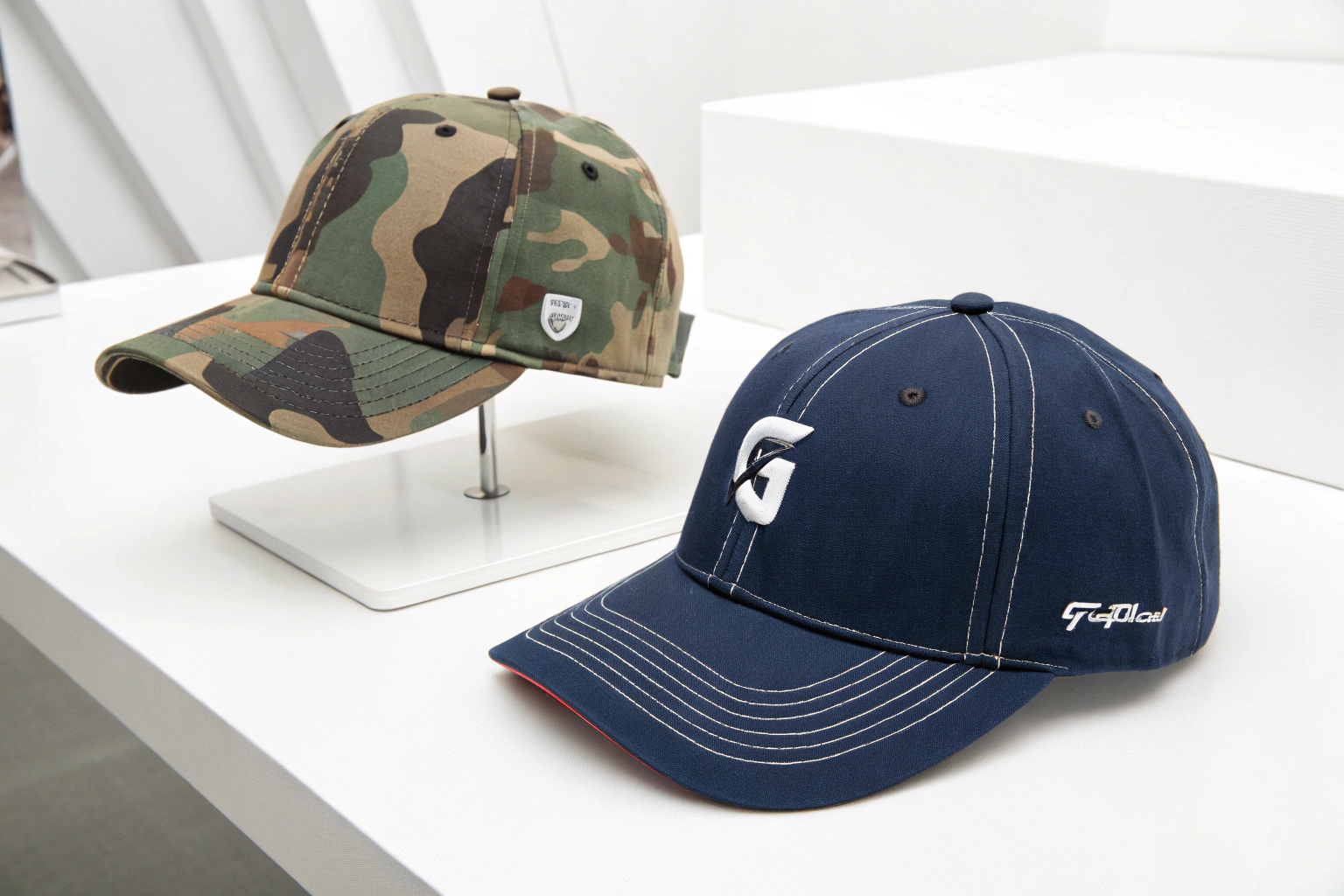
I once had a golf pro shop buyer ask me for a specific cap. He wanted a structured crown with a pre-curved visor that would shield his customers’ eyes from the sun without them having to bend the brim by hand. I showed him our standard flat-brim streetwear cap. He shook his head, walked out, and sourced from a competitor who specialized in sports-specific headwear. I lost that order because I couldn’t demonstrate that I understood the functional difference between a skate cap and a golf cap. That moment stuck with me. It reshaped how I present my manufacturing capabilities to sports buyers.
Yes, a professional accessories factory can absolutely produce both flat and curved brim baseball caps for different sports in a single consolidated production run. The difference lies not in separate factories or production lines, but in the brim insert material, the pressing mold shape, and the crown structure. A flat brim requires a rigid plastic insert and a straight-edge pressing mold, ideal for streetwear, skate, and urban sports. A pre-curved brim uses a flexible, shape-retaining insert pressed on a curved mold, preferred for golf, tennis, running, and baseball. A factory with multiple mold sets and in-house brim pressing capability can switch between these two constructions seamlessly.
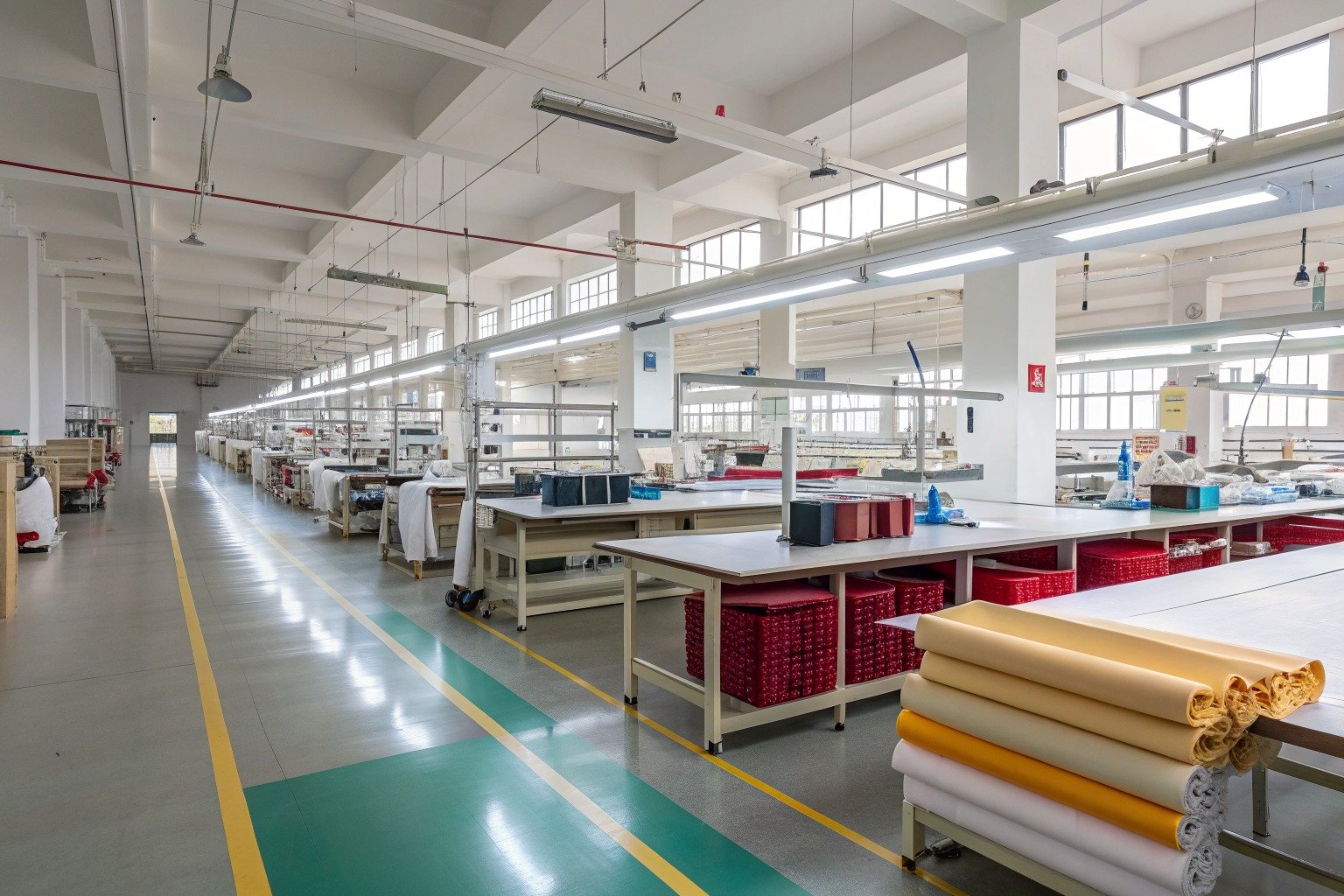
I run a modern headwear factory in Zhejiang. I produce flat brim caps for streetwear brands and curved brim caps for golf and tennis brands, often in the same week, sometimes in the same purchase order. The machinery is the same. The workforce is the same. The difference is purely in the tooling and the insert specification. I want to explain exactly how we manage both constructions, what sports demand which brim type, and how you can order a mixed batch without quality compromises or timeline delays.
What Are the Structural Differences Between Flat Brim and Curved Brim Baseball Caps?
The difference between a flat brim and a curved brim is not just how the cap looks on a shelf. It is a fundamental engineering difference that affects how the cap is worn, how it performs, and who buys it. A flat brim is a statement of attitude. It sits high on the head, frames the face with a horizontal line, and is almost never worn with the brim pulled low. A curved brim is a tool. It wraps around the forehead, blocks peripheral sunlight, and stays on during active movement. These two brim types share the same basic cap anatomy, crown, visor, sweatband, closure, but they diverge in insert material, mold geometry, and intended use case.
The structural difference between flat and curved brim baseball caps lies in the visor insert and the heat-pressing process. A flat brim uses a high-density polyethylene or polypropylene insert that is heat-pressed on a flat mold. The plastic is thick, typically 1.5 to 2.0 millimeters, and resists bending. A curved brim uses a flexible polyester or EVA foam insert that is heat-pressed on a curved mold with a radius specific to the sport. Golf caps often use a gentler curve with a larger radius. Baseball caps use a tighter curve that wraps closer to the face. Running caps may use a very tight, almost wraparound curve for maximum sun protection and wind resistance.
I keep four different brim molds in my factory. One perfectly flat mold for streetwear. One gentle curve mold for golf. One standard curve mold for baseball. And one tight curve mold for running and tennis visors. When a buyer specifies the sport, I match the mold to the function. The mold determines the brim shape. The insert material determines whether that shape holds or relaxes over time.
How Does the Visor Insert Material Determine Whether a Brim Stays Flat or Curves?
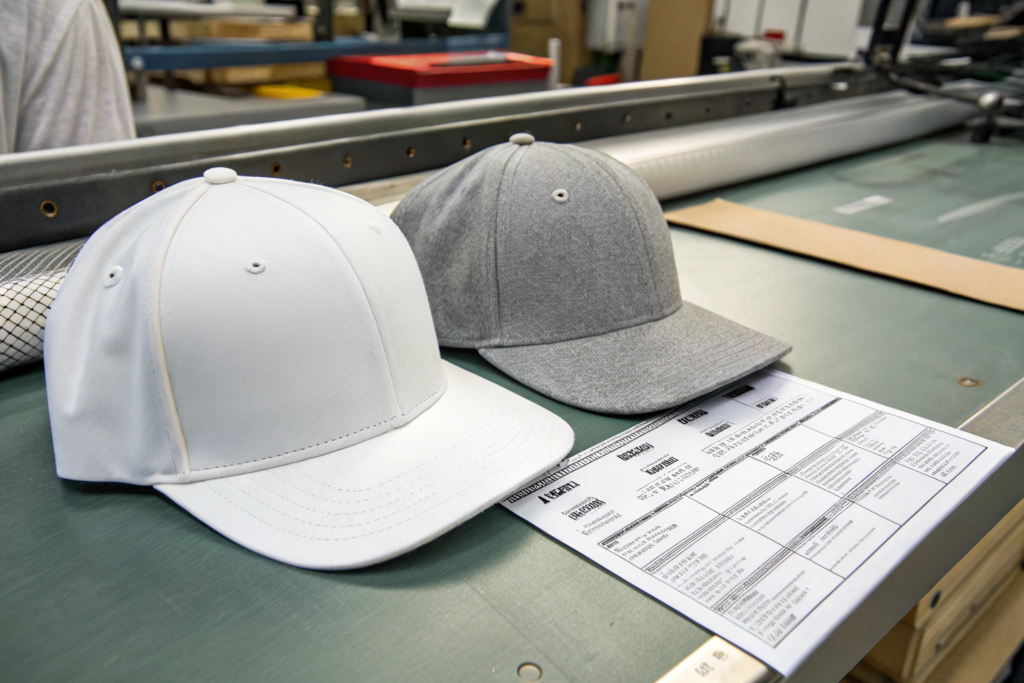
The visor insert, often called the brim board or buckram, is the hidden skeleton of every baseball cap. It sits between the top and bottom visor fabric panels, stitched into place along the brim edge. The consumer never sees it, but they feel it every time they put the cap on. An insert that is too stiff feels like a plastic visor. An insert that is too soft curls into a tube when wet.
Flat brim caps demand a rigid insert. We use high-density polyethylene, sometimes called HDPE, with a thickness of 1.8 to 2.0 millimeters. This material is die-cut to the visor shape and heat-pressed on a completely flat mold at 160 degrees Celsius. The heat sets the polyethylene into a permanent flat plane. The consumer cannot easily bend it, and that is intentional. The flat brim is a fashion statement that must maintain its geometry. Curved brim caps use a completely different material. We use a polyester fiber board or a flexible EVA foam, typically 1.2 to 1.5 millimeters thick. This material is heat-pressed on a curved aluminum mold. The resulting curve is set but not locked. The wearer can adjust the curve slightly to their preference, and the material will hold the new shape. The visor insert material selection for caps is the single most important decision in matching a cap to its sport.
Why Do Different Sports Require Different Crown Heights and Structures?
The brim gets the attention, but the crown does the work. The crown is the fabric dome that sits on the wearer’s head. Its height, stiffness, and ventilation determine how the cap feels during activity. A cap designed for a skateboarder and a cap designed for a golfer have completely different crown specifications because the wearer’s needs are completely different.
A skate or streetwear cap typically features a high-profile, structured crown. The front panels are supported by a buckram backing that keeps them standing tall and vertical even when the cap is not on a head. This creates the iconic boxy silhouette. A golf or tennis cap features a mid-profile or low-profile crown, often unstructured or lightly structured. The fabric is softer. The cap sits closer to the head, reducing wind resistance during a swing and creating a lower, more traditional athletic profile. A running cap goes even further, often using an unstructured, crushable crown that can be stuffed into a pocket. The crown structure and profile in athletic caps must match the sport’s functional demands and the athlete’s range of motion.
Which Sports and Activities Demand Flat Brim Caps and Why?
The flat brim cap is a cultural artifact as much as a functional product. It emerged from baseball, where players would bend the brim to their preference, but it was adopted and redefined by streetwear, hip-hop, and skate culture in the 1990s and 2000s. The flat brim became a symbol of authenticity, of keeping the cap "deadstock," meaning unworn and in original condition. Today, the flat brim cap is the dominant silhouette in urban fashion and action sports. It is less about sun protection and more about identity, attitude, and belonging to a specific subculture.
Flat brim caps are demanded by streetwear brands, skateboarding companies, BMX riders, urban fashion labels, and music merchandise lines. The flat brim communicates a specific aesthetic language that is crisp, geometric, and modern. It also serves as a blank canvas for bold, all-over graphic prints that would be distorted by a curved brim. The high-profile crown provides maximum front panel space for logo embroidery, puff printing, and intricate patchwork. Functionally, skaters and BMX riders prefer the flat brim because it does not obstruct peripheral vision when looking down at a board or bike.
I produce flat brim snapbacks and fitted caps for several US streetwear labels. The design brief always specifies the same things: structured high crown, flat visor with no curve tolerance, plastic snap closure or fitted sizing, and the largest possible front panel embroidery area. These buyers are not asking about sun protection or moisture wicking. They are asking about stitch density on the logo and whether the brim will warp during sea freight. The flat brim is a precision aesthetic object.

What Streetwear and Action Sports Cultures Drive Flat Brim Cap Demand?
Skateboarding culture adopted the flat brim cap as a functional choice that became an identity marker. A curved brim, when pulled low for sun protection, limits downward visibility. A skater needs to see the board, the ground, and the obstacle ahead simultaneously. A flat brim sits higher and wider, leaving the full field of downward vision clear. What started as a practical adaptation became a tribe signal. A flat brim snapback with a specific brand logo communicates membership in a community.
BMX and fixed-gear cycling cultures followed the same pattern. The flat brim cap, worn slightly tilted, became part of the uniform. Then hip-hop artists adopted the look, wearing fitted caps with flat brims and keeping the holographic sticker on as a sign of authenticity. This drove demand from music merchandise companies for tour caps with flat brims. The cultural history of the flat brim cap in streetwear is well-documented. Understanding this cultural context is essential for a manufacturer because it explains why a streetwear buyer will reject a cap with even a slight unintended curve. The flatness is not a preference. It is a requirement.
How Does the Flat Brim Provide a Better Canvas for Logo Embroidery and Graphic Prints?
A curved brim distorts a design. A graphic that looks bold and balanced on a flat surface becomes warped when printed or embroidered across a curved plane. The arc of the brim compresses the central area and stretches the edges visually. For a brand whose logo is a precise geometric mark, this distortion is unacceptable.
A flat brim presents a perfectly planar surface. The embroidery machine hoops the fabric flat. The logo stitches out exactly as designed, with no curvature compensation required. The front crown panel, supported by the buckram, is also flat and stable, providing a second canvas for large-format embroidery or puff print. This combination of flat brim and flat front crown makes the structured high-profile cap the preferred choice for logo placement and branding on headwear. The cap is not just an accessory. It is a wearable billboard, and the flat geometry ensures the advertisement is displayed without visual compromise.
Which Sports and Activities Demand Curved Brim Caps and Why?
The curved brim cap is the workhorse of athletic headwear. It does not seek attention. It solves problems. The problems are sun glare, sweat in the eyes, wind resistance, and cap retention during explosive movements. A golfer addressing a ball, a tennis player serving, a baseball outfielder tracking a fly ball, a runner pushing through mile ten, all need their cap to stay on, stay put, and keep the sun out of their sight line without requiring adjustment. The curved brim is engineered for these specific functional demands.
Curved brim caps are essential for golf, tennis, baseball, running, hiking, and any outdoor sport where sun protection, sweat management, and aerodynamic stability are performance requirements. The pre-curved visor wraps around the face, blocking sunlight from multiple angles without the wearer needing to tilt their head. The mid-profile or low-profile crown reduces wind catch. Performance fabrics with moisture-wicking sweatbands and laser-cut ventilation are standard on sports curved brim caps but rare on streetwear flat brims.
I supply curved brim performance caps to golf pro shops and running event organizers. The specification list for these orders is completely different from the streetwear orders. Instead of embroidery thread density, the buyer asks about UPF rating, moisture-wicking sweatband material, and whether the brim insert will lose its curve after repeated machine washing. The aesthetic is secondary to the function.
Why Do Golfers, Tennis Players, and Runners Prefer a Pre-Curved Brim?
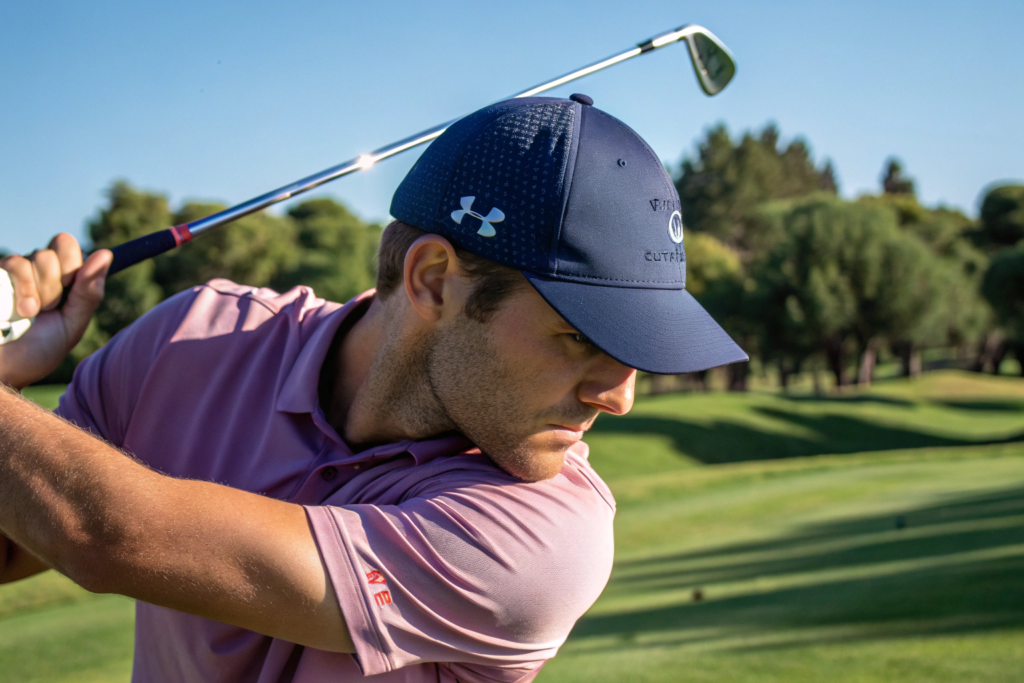
A golfer looks down at the ball. The sun is at 11 o’clock. A flat brim blocks the sun directly ahead but leaves the peripheral angles exposed. The golfer tilts their head, disrupting their swing posture. A pre-curved brim wraps around the forehead and extends further down at the sides, blocking the sun across a wider arc without requiring head tilt. The golfer maintains posture and sees the ball clearly.
A tennis player serves with their head up, tracking the ball toss against the sky. A flat brim obscures the upward view. A curved brim, with the right angle, shields the eyes without cutting into the upward field of vision. A runner faces wind resistance. A flat brim catches wind like a sail, threatening to lift the cap off the head. A curved brim splits the airflow around the head. The lower profile crown further reduces drag. These are not marginal differences. They are the reasons why performance headwear for outdoor sports has converged on the curved brim as the standard design.
How Do Moisture-Wicking Sweatbands and Ventilation Integrate into Sports Curved Brim Caps?
A streetwear cap is worn for style. A sports cap is worn for hours of sweating. The sweatband is the most critical performance component after the brim. A cotton sweatband absorbs moisture initially but saturates quickly, becoming heavy, damp, and a breeding ground for bacteria. A polyester sweatband wicks moisture away but can feel scratchy against sensitive skin.
We use a multi-layer performance sweatband for our sports caps. The layer against the skin is a hydrophobic polyester mesh that pulls sweat away rapidly. The middle layer is an absorbent foam that holds the moisture away from the skin. The outer layer is a breathable spacer fabric that allows evaporation. This system keeps the forehead dry and prevents sweat from dripping into the eyes. Laser-cut ventilation holes in the crown, typically 6 to 8 small perforations per panel, create a chimney effect that pulls hot air out of the cap. This performance sweatband and ventilation technology is standard on our golf and running caps. It is rarely requested on flat brim streetwear caps, but it is non-negotiable for athletic buyers.
Can a Single Production Run Include Both Flat Brim and Curved Brim Cap Styles?
The assumption that flat and curved brim caps must be produced on separate lines, or in separate factories, is a costly misconception. It leads buyers to split their orders, pay duplicate shipping, and risk color mismatches between styles. The reality is that the two constructions share 90% of their manufacturing process. The cutting, sewing, and finishing steps are identical. The only divergence is at the brim pressing station, where the operator selects the flat mold or the curved mold and the corresponding insert type. A well-organized factory can produce both styles in a single production run with minimal changeover time.
A single production run can absolutely include both flat brim and curved brim caps. The shared processes are fabric cutting, crown panel sewing, sweatband attachment, closure installation, and final finishing. The divergence point is the brim pressing and insertion station. An operator loads the flat HDPE insert and flat mold for streetwear caps, then switches to the curved EVA insert and curved mold for sports caps. The changeover time is approximately 15 minutes. The combined production run ensures all caps are cut from the same fabric dye lot, guaranteeing perfect color consistency between the two styles.
I produce mixed brim orders regularly for brands that sell both lifestyle and performance headwear. A recent order for a California brand combined 600 flat brim snapbacks and 400 curved brim performance caps, all in the same black and heather grey fabric. We cut all 1,000 units from the same fabric rolls. The flat brim caps went through the flat mold press. The curved brim caps went through the curved mold press. The finished caps were packed in the same shipment. The brand saved on freight, and the colors matched perfectly across both styles.

How Do You Manage Inventory and Mold Changeover Between Flat and Curved Brim Inserts?
The brim insert is the only component that differs between the two styles. Managing this difference efficiently is a matter of organized inventory and standardized mold changeover procedures. The flat HDPE inserts and the curved EVA inserts are stored in separate, clearly labeled bins at the brim pressing station. Each bin is marked with the material type, thickness, and compatible mold identification number.
The heat press operator follows a written changeover checklist. The current mold is allowed to cool to a safe handling temperature. The mold is unbolted from the press platen. The new mold is aligned and bolted into place. The press temperature and dwell time are adjusted for the new insert material. The first two caps off the new mold are inspected and measured against the brim curve gauge. If the curve is within specification, production resumes. The entire changeover takes approximately 15 minutes. This lean manufacturing changeover process is standard practice in efficient factories. It allows us to run small batches of flat brim caps and small batches of curved brim caps in the same shift without significant downtime.
Does Combining Styles in One Order Reduce the Total Cost Per Cap?
Splitting an order between two factories guarantees higher costs. Two separate fabric purchases at lower volume attract higher per-meter pricing from the mill. Two separate shipments incur two sets of freight handling charges. Two separate quality inspections incur two inspection fees. The unit cost of each cap might look competitive on paper, but the total landed cost is inflated by duplicated overhead.
Combining flat and curved brim styles in a single factory order reduces costs in three ways. First, the consolidated fabric order qualifies for volume pricing. Second, the single shipment consolidates freight, customs brokerage, and inland trucking into one set of charges. Third, a single third-party inspection covers both styles. The savings typically range from 10% to 20% on the total landed cost. Additionally, cutting all caps from the same fabric dye lot guarantees color consistency, which prevents the costly problem of two styles arriving in slightly different shades. This supply chain consolidation for apparel and accessories is a proven strategy for reducing costs and quality risks simultaneously.
What Quality Control Tests Are Specific to Flat Brim and Curved Brim Caps?
The failure mode for a flat brim cap is different from the failure mode for a curved brim cap. A flat brim cap fails if the brim warps during shipping, developing an unintended wave or curve. The rigid HDPE insert is designed to stay flat. If heat, humidity, or pressure during transit causes it to deform, the cap loses its defining characteristic. A curved brim cap fails if the brim loses its curve after repeated use, flattening out and ceasing to provide functional sun protection. Each brim type requires a specific quality control test that simulates the stresses the cap will encounter in its intended use environment.
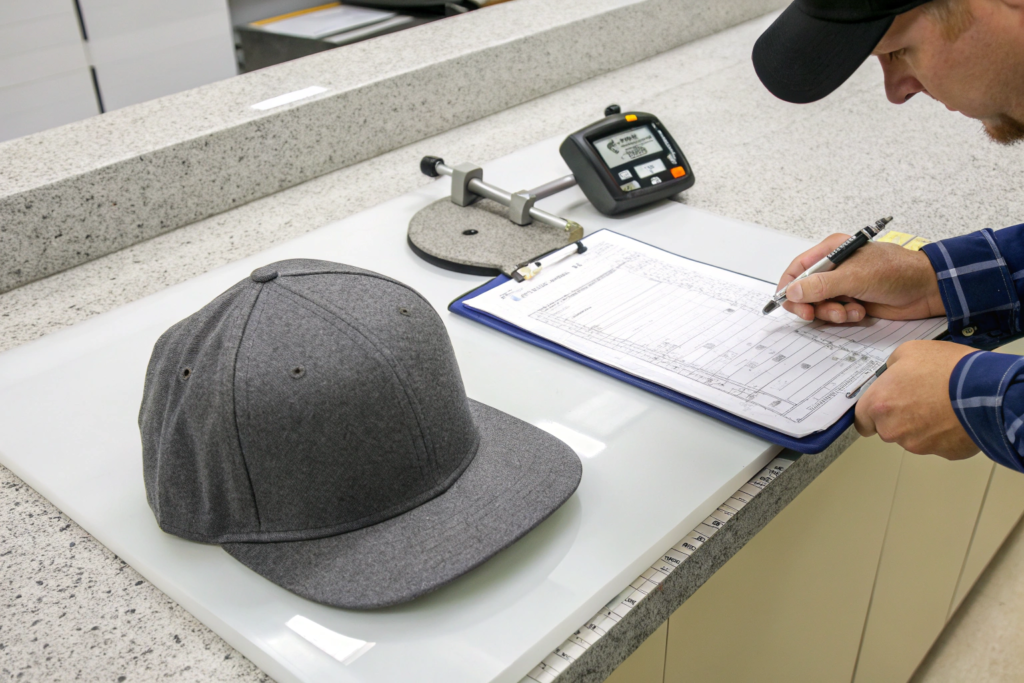
Flat brim caps require a flatness tolerance test. The cap is placed on a granite surface plate, and a feeler gauge measures the gap between the brim edge and the plate. The maximum allowable gap is 1.0 millimeters. Curved brim caps require a curve retention test. The brim is measured with a radius gauge to confirm the initial curve matches the sport specification. The cap is then subjected to 50 cycles of flexing and returned to the gauge. The curve must not deviate by more than 10% from the original radius. Both styles also share standard tests for seam strength, colorfastness, and closure durability.
I keep a calibrated granite inspection plate and a set of brim curve gauges in the QC area. Every mixed order includes a sampling plan that covers both brim types with the same AQL acceptance level. The flatness test catches warp problems. The curve retention test catches insert fatigue. Together, they ensure the streetwear buyer gets a perfectly flat cap and the golf buyer gets a cap that holds its curve through a season of play.
How Is the Brim Flatness Tolerance Measured and Enforced for Streetwear Caps?
A streetwear buyer expects a brim that looks like it was cut from a single sheet of plastic. Any visible wave, twist, or droop is a defect. The measurement of flatness is objective and repeatable. The cap is placed brim-down on a certified granite surface plate, which is a perfectly flat reference surface accurate to within microns.
The QC inspector visually checks for light passing between the brim edge and the stone. A feeler gauge of 1.0 millimeter thickness is then inserted at any visible gap. If the gauge slides under the brim edge without resistance, the brim is out of flatness tolerance, and the cap is rejected. This test is performed on a random sample from every production batch. The flatness measurement using surface plates is a standard metrology technique adapted for headwear QC. It removes subjectivity. The brim is either flat within 1.0 millimeter, or it is not.
What Curve Retention Test Simulates Repeated Use of a Sports Cap?
A golfer wears the same cap for every round. The cap is taken off, tossed in the golf bag, put back on, adjusted, and occasionally machine washed. The curved brim insert must survive this abuse without losing its functional curve. A cap that flattens out after three rounds is a warranty claim waiting to happen.
We simulate this wear with a curve retention test. The initial brim curve radius is measured using a radius gauge set. The cap is then clamped into a fixture that flexes the brim from curved to flat and back 50 times. After the cycling, the brim is re-measured with the same radius gauge. The curve radius must not increase by more than 10%, meaning the brim must not flatten by more than 10% of its original curve. Additionally, the curve must be symmetrical. The left and right sides of the brim must match within the same tolerance. This mechanical cycling test for material fatigue is adapted from industrial material testing standards. It provides objective, repeatable data on how the cap will perform over its usable lifetime.
Conclusion
Producing flat brim and curved brim baseball caps is not a question of two separate factories or two separate production lines. It is a question of having the right molds, the right insert materials, and the right quality control procedures under one roof. You have seen how the flat brim, with its rigid HDPE insert and structured high crown, serves the streetwear, skate, and urban fashion markets, where the cap is a precision aesthetic object and a wearable billboard for bold branding. You have seen how the curved brim, with its flexible EVA insert and performance sweatband, serves the golf, tennis, running, and baseball markets, where the cap is a functional tool for sun protection, sweat management, and aerodynamic stability.
We walked through the shared manufacturing process. The two styles diverge only at the brim pressing station, where a 15-minute mold changeover switches production from flat to curved. This shared process makes a single consolidated production run not only possible, but financially advantageous. Combined fabric sourcing reduces material costs. Consolidated shipping reduces logistics costs. A single dye lot guarantees perfect color consistency across both styles. And we covered the quality control differences. The granite plate flatness test for streetwear caps and the radius gauge curve retention test for sports caps ensure that each style is measured against its own functional standard.
At AceAccessory, I manufacture both flat brim and curved brim caps in my Zhejiang factory. I keep four brim molds, two insert materials, and a trained QC team that knows the difference between a streetwear tolerance and a golf performance tolerance. I produce mixed orders for brands that sell across both markets, and I understand that a skate cap and a tennis cap are different products with different requirements, even if they share a common ancestor.
If you are sourcing caps for a brand that spans lifestyle and performance categories, or if you need a factory that can handle both constructions without splitting your order, I invite you to discuss your requirements with our Business Director, Elaine. She can provide cap construction samples, brim curve specifications, and a detailed quotation for your mixed order. Contact her at elaine@fumaoclothing.com. Let’s produce caps that fit your sport, your brand, and your customer, perfectly, every time.