I once walked into a buyer meeting with a major European department store. I had a spreadsheet of product codes, a price list, and a few physical samples tossed onto the conference table. The buyer glanced at the mess, closed her laptop, and said, "I don’t see a story here. Call me when you have a collection, not a catalogue." I lost that account. I had the manufacturing capability, the quality, and the price. But I had not communicated a creative vision. I had shown products, not a narrative. That failure reshaped how I invest in design.
Our design team creates mood boards for seasonal accessory lines through a structured five-phase process: macro trend research and consumer insight gathering, physical and digital material sourcing, color palette development anchored to Pantone standards, silhouette and shape exploration through sketching and 3D modeling, and final mood board assembly in both physical and digital formats for buyer presentation. Each phase is driven by a central seasonal theme that connects the collection to the cultural moment, ensuring the accessories tell a cohesive story rather than appearing as isolated products.
I run a fashion accessories factory in Zhejiang, and I built my in-house design team precisely because of that lost department store account. I realized that a factory without design capability is a commodity supplier. A factory with a design team is a creative partner. Today, my team of four designers produces a complete seasonal mood board package for every client presentation. I want to walk you through exactly how we build these boards, from the first flicker of inspiration to the final printed presentation that wins purchase orders.
Where Does the Design Team Find Inspiration for Each Season’s Accessory Direction?
Inspiration is not a lightning strike. It is a disciplined process of gathering, filtering, and synthesizing signals from multiple sources. If a designer waits for a muse to whisper in their ear, the collection will be late, unfocused, and irrelevant to the market. Our team follows a structured research methodology that begins six months before the selling season. We look outward at the macro environment, inward at our clients’ brand identities, and forward at the emerging consumer behaviors that will shape demand.
Our design team finds seasonal inspiration from four primary sources: global trend forecasting platforms like WGSN for macro color and material direction, street style photography from fashion weeks in Paris, Milan, and Tokyo for real-world adoption signals, vintage accessory archives and antique markets for timeless construction details and motif references, and direct client briefs that articulate the specific brand aesthetic, target customer, and retail price point the collection must serve.
I send one designer to a major European fashion week every season. Not to attend the runway shows, but to stand outside and photograph what editors, stylists, and influencers are actually wearing. The runway shows a fantasy. The street shows the commercial reality. The photographs from these trips become some of the most valuable assets on our mood boards because they ground the trend in wearable reality.
How Do Trend Forecasting Platforms Like WGSN Influence the Initial Creative Direction?
Trend forecasting platforms provide a structured, data-backed view of where the fashion industry is heading. They analyze cultural shifts, economic indicators, social media sentiment, and early adoption patterns to predict color trends, material trends, and silhouette trends 12 to 24 months in advance. A design team that ignores these platforms is designing blind.
We subscribe to WGSN and use it as the starting framework for every seasonal collection. The platform provides a macro color palette forecast, usually five to eight key colors per season, with supporting data on why those colors resonate with the current consumer mood. It also publishes material and trim direction reports. For example, the Spring/Summer 2026 forecast emphasizes textured bio-based materials and translucent bio-resins, which directly informs our hair clip and earring material selection. The trend forecasting for fashion accessories provides the strategic framework. Our team then interprets that framework through the lens of our manufacturing capabilities and our clients’ brand aesthetics.
Why Are Vintage Accessory Markets a Rich Source of Construction and Motif Ideas?
A hair clip from the 1950s was built to last. It has a spring mechanism that still snaps crisply after seventy years. It has a metal alloy that has developed a beautiful patina rather than corroding. It has a decorative motif that references a specific artistic movement. Vintage accessories are a free masterclass in construction quality and timeless design.
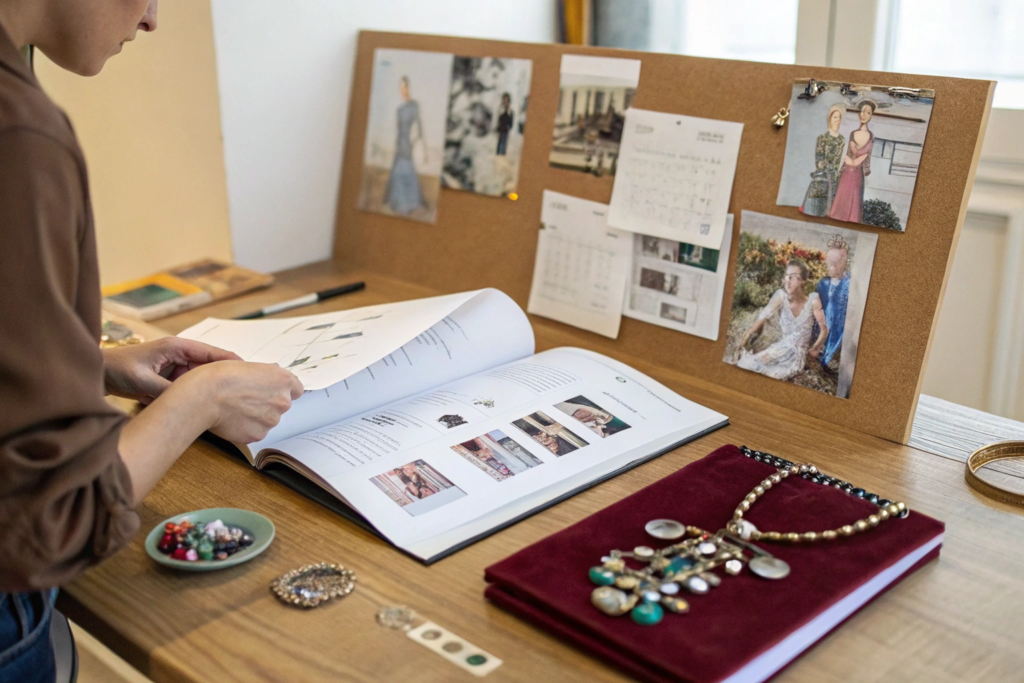
Our designers visit vintage markets in Tokyo, London, and Shanghai at least twice a year. They buy pieces not to copy, but to study. A vintage barrette might reveal a hinge mechanism that is no longer in common use but solves a durability problem elegantly. A vintage silk scarf might have a hand-rolled edge technique that inspires a finishing detail on a new headband. The designers photograph these pieces, sketch the construction details, and pin the findings to the mood board as technical references. This research through vintage fashion archives connects new collections to a lineage of craftsmanship. It adds depth and authenticity that a purely digital design process cannot achieve.
How Are Color Palettes and Material Selections Developed from the Mood Board Theme?
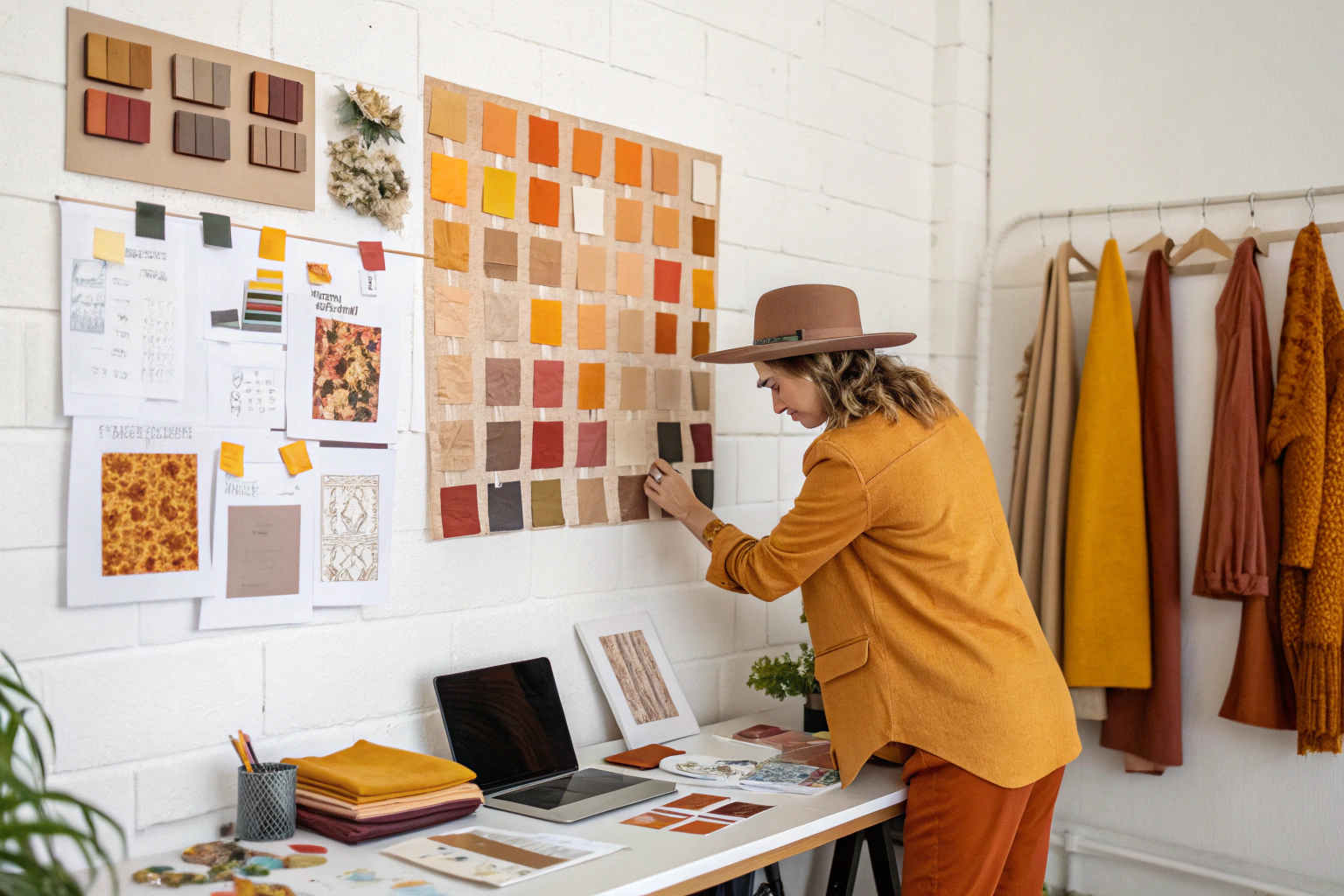
A mood board is not just pretty pictures. It is a decision-making tool. The images, swatches, and textures on the board are evaluated and distilled into a concrete, producible color palette and material specification. This translation from inspiration to specification is where many design teams fail. They create a beautiful board but cannot explain how to manufacture the vision. Our process bridges this gap by involving the production team early in the material selection phase.
Color palettes are developed by extracting key tones from mood board imagery, matching them to physical Pantone TCX textile swatches under D65 lighting, and then validating the matches on the actual production materials such as acetate, velvet, and zinc alloy. Material selections are driven by the tactile and visual qualities expressed in the mood board theme, with the design team sourcing physical material swatches from our approved supplier library and new experimental materials from trade shows. Each color and material choice is documented with its Pantone code and supplier reference, creating a direct link from creative inspiration to purchase order specification.
I require my design team to present the color palette physically, not just digitally. A screen cannot communicate the softness of a blush pink velvet or the icy transparency of a frosted acetate. Buyers need to touch the materials. They need to see the colors under natural light. The physical presentation turns a subjective aesthetic conversation into an objective specification agreement.
How Does the Team Match Mood Board Colors to Production-Ready Pantone References?
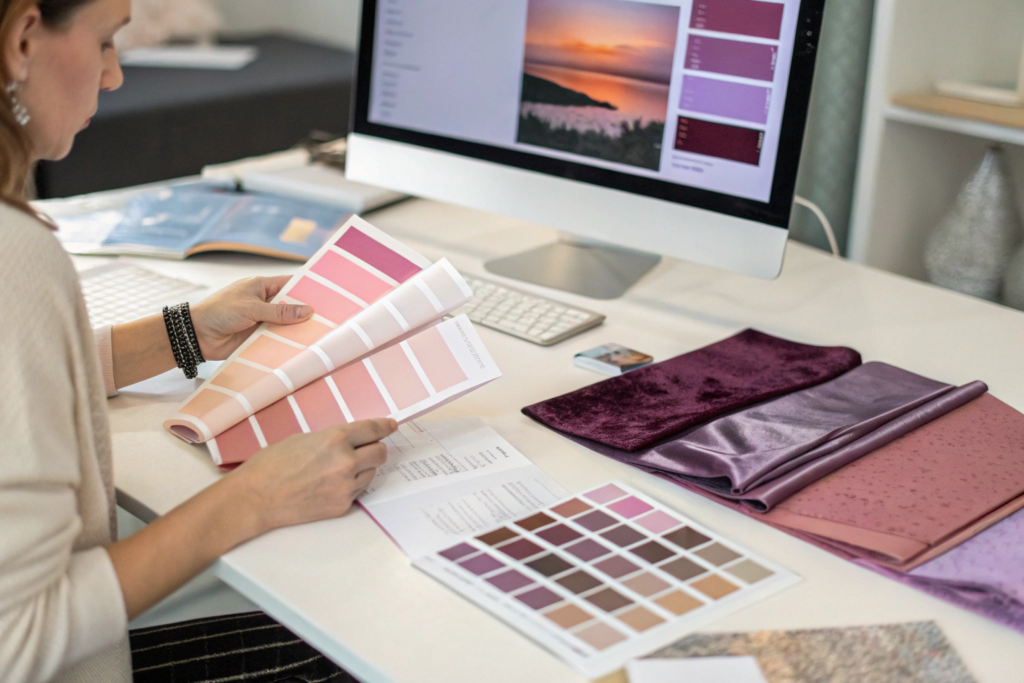
A mood board might feature a photograph of a sunset over the Mediterranean. The colors are breathtaking. Lavender, coral, warm terracotta. But a photograph is composed of millions of RGB pixels. A dye bath is mixed from chemical pigments. Translating one to the other requires a systematic color matching process.
Our designers pull the dominant hues from the mood board imagery using digital color extraction tools. They then take the extracted hex codes to the Pantone TCX physical swatch library. Under our D65 light booth, they find the closest matching Pantone textile swatch for each hue. The Pantone code, for example 15-1611 TCX Bridal Rose, is recorded as the official production reference. This code is then communicated to our fabric and acetate suppliers for lab dip development. The Pantone color matching for fashion design process ensures that the ethereal sunset lavender on the mood board becomes a specific, repeatable dye formulation that can be produced consistently across an entire accessory line, from hair clips to scarves to belts.
What Role Do Textile and Trim Trade Shows Play in Material Discovery?
A mood board theme might call for a material that we do not currently stock. Perhaps the theme is "Liquid Metal" and requires a high-shine, crinkle-finish metallic leather for headbands and belts. Our standard leather supplier does not offer this finish. The design team needs to find a new source.
We attend Première Vision in Paris and Intertextile in Shanghai specifically to discover new materials. These trade shows gather hundreds of textile mills, trim suppliers, and component manufacturers under one roof. Our designers walk the aisles with the mood board theme in mind, touching fabrics, collecting swatches, and questioning suppliers about minimum order quantities and lead times. They return with a suitcase of material samples and a spreadsheet of new supplier contacts. This material sourcing at textile trade shows injects fresh, innovative materials into each collection and prevents the designs from stagnating within the limits of our existing supply chain.
How Are Silhouette and Shape Explorations Translated from Mood Board to Technical Sketch?
The mood board communicates the feeling of the collection. The technical sketch communicates the product that will be manufactured. The transition from mood to sketch is the most critical creative step in the design process. It requires the designer to think simultaneously as an artist and an engineer. The sketch must capture the aesthetic essence of the mood board theme while respecting the constraints of material behavior, manufacturing processes, and cost targets. A sketch that looks beautiful but cannot be produced is a failure.
Silhouette and shape explorations begin with rapid hand sketching of multiple design directions for each accessory category, inspired directly by shapes, lines, and proportions observed in the mood board imagery. The strongest sketches are then developed into detailed technical drawings with annotated dimensions, material callouts, and construction notes. These 2D technical sketches are then converted into 3D digital models using CLO 3D software, allowing the designer and the buyer to evaluate the accessory from every angle, on a virtual model, before a single physical sample is cut.
I encourage my designers to sketch badly at first. The initial exploration phase is about volume of ideas, not perfection. A designer might produce thirty rough thumbnail sketches of hair clip shapes in an afternoon. From those thirty, we select five strong directions to develop into technical drawings. This divergence-then-convergence process ensures we are choosing from abundance rather than settling for the first adequate idea.
What Is the Difference Between an Inspiration Sketch and a Production-Ready Technical Drawing?
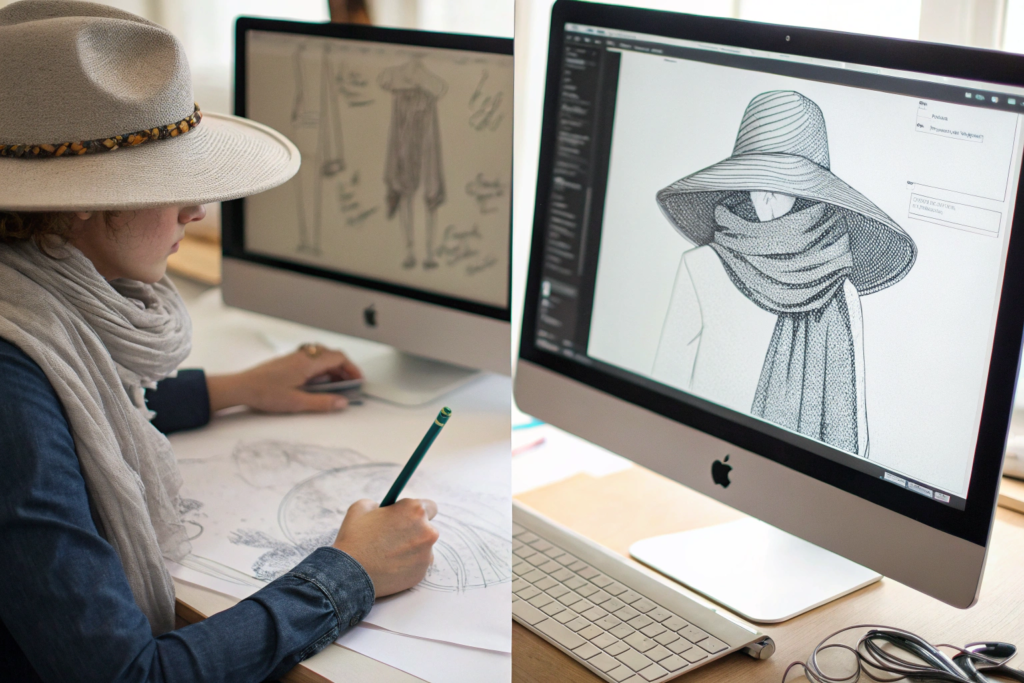
An inspiration sketch is loose, gestural, and emotive. It captures the flow of a scarf drape or the curve of a hat brim with expressive pencil strokes. It communicates the designer’s creative intent. But a pattern maker cannot cut fabric from an expressive pencil stroke. They need precise geometry.
A production-ready technical drawing is a precise line drawing, usually created in Adobe Illustrator, that shows the accessory in flat view with exact proportions. It includes a front view, side view, and back view where necessary. Every dimension is annotated in millimeters. The material for each component is specified. The stitch type is called out using ISO 4915 stitch codes. The placement of logos, labels, and hardware is marked. The technical drawing is accompanied by a bill of materials that lists every component, from the main fabric to the thread to the swing tag. This technical flat drawing for fashion production is the legal contract between the design team and the production floor.
How Does 3D Prototyping Software Reduce Sampling Time and Material Waste?
Traditional product development requires a physical sample for every design iteration. The first sample reveals that the brim is too wide. A second sample is made. The second sample reveals that the crown is too shallow. A third sample is made. Each physical sample consumes fabric, trim, and labor, and adds a week to the development timeline.
We now use CLO 3D software to create fully rendered, photorealistic 3D models of our accessory designs before cutting any physical fabric. The designer can adjust the brim width, crown height, or bow size in the software in real time. The buyer can review the 3D model from any angle on their screen. We can apply the exact Pantone color and material texture to the 3D model, creating a virtual sample that is often indistinguishable from a photograph. This 3D fashion design technology collapses what used to be a three-week, three-sample iteration process into a two-day digital review. We only cut one physical confirmation sample, which typically requires only minor adjustments.
How Do Physical and Digital Mood Boards Work Together in Buyer Presentations?
The mood board is not finished when the last image is pinned. It is finished when the buyer leans forward, touches a swatch, and says, "I can see this in my stores." The presentation format is as important as the content. A digital mood board shared via email is passive. It asks the buyer to imagine the collection. A physical mood board presented in person is active. It invites the buyer to experience the collection through multiple senses. The most effective presentations combine both formats, using the digital board for remote pre-viewing and the physical board for the in-person emotional connection.
Physical mood boards provide a tactile, high-touch experience that builds an emotional connection to the collection. Buyers can touch the velvet, feel the weight of the acetate, and see the true color under natural light. Digital mood boards, built in tools like Canva or Adobe InDesign, allow for real-time remote collaboration, easy sharing with buying teams, and dynamic updates as the collection evolves. Our team creates both formats for every client, using the digital board for initial outreach and feedback, and presenting the physical board during factory visits or trade show meetings.
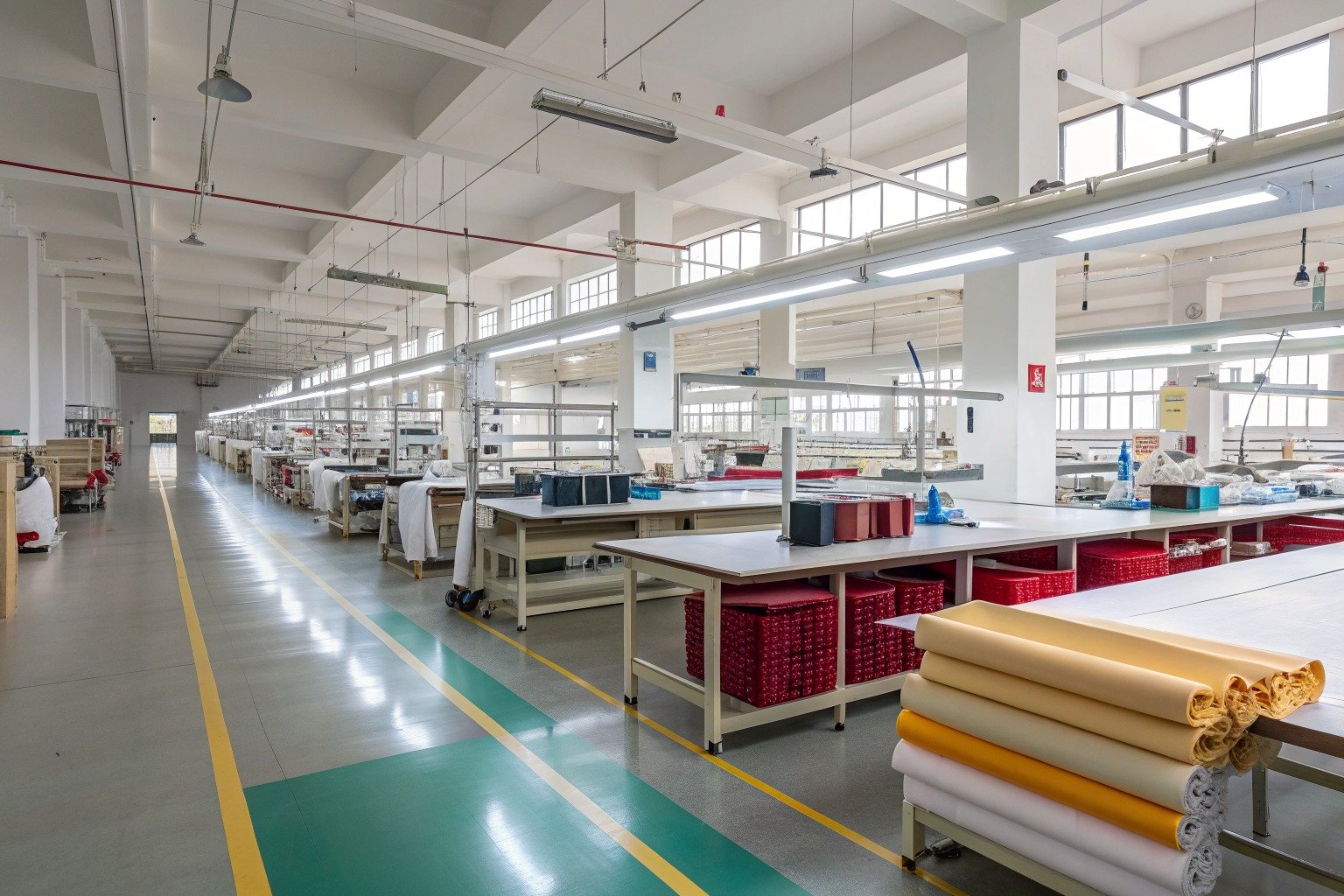
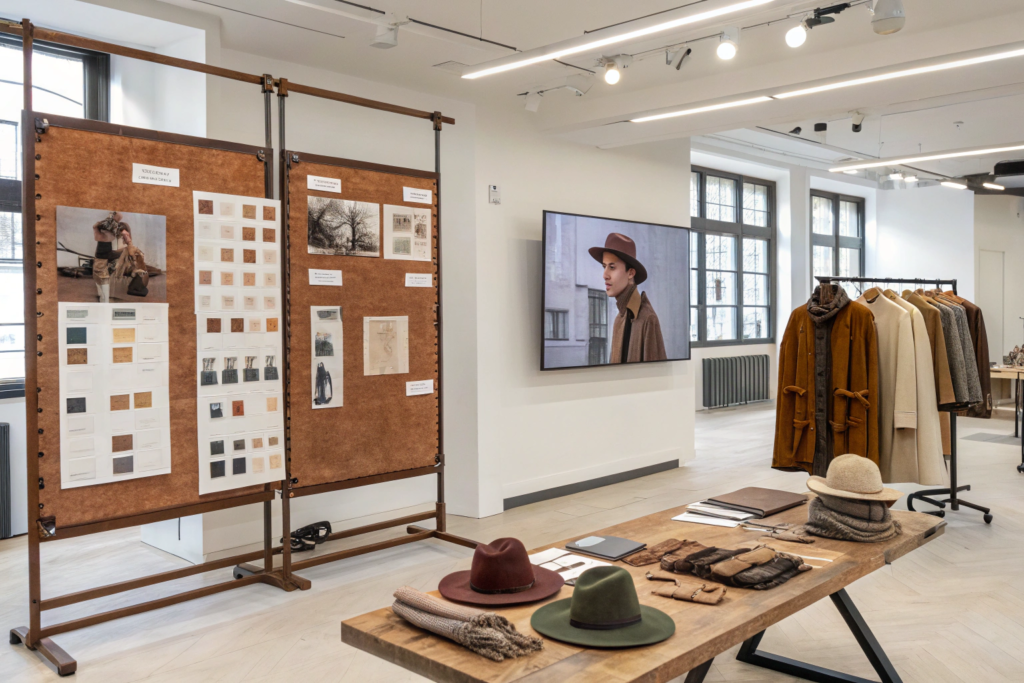
I invested in a dedicated presentation room at our Zhejiang factory. It has a full wall of adjustable shelving for physical mood boards, calibrated D65 lighting, a large screen for digital presentations, and a central table for laying out samples. When a buyer visits, they walk into a space that communicates creative professionalism before I say a single word. The environment is part of the pitch.
What Physical Elements Make a Mood Board Compelling and Memorable in a Factory Setting?
A digital mood board is seen once and scrolled past. A physical mood board in a factory presentation room is a multi-sensory experience. The buyer can touch the nubby texture of a bouclé wool swatch destined for a winter headband. They can lift a metal chain sample and feel its weight. They can hold a acetate hair clip prototype up to their own hair and look in a mirror.
The most effective physical mood boards include fabric swatches in generous sizes, not tiny snippets that are hard to evaluate. They include actual hardware samples, zippers, buckles, and clips attached to the board. They include a printed color palette with Pantone chips that can be removed and compared against the buyer’s existing product line. They include a scent element where appropriate, such as a leather swatch that smells rich and authentic. And they include a lifestyle photograph that places the accessories in a real-world context, such as a woman wearing the hat and scarf at a coastal location. This sensory merchandising and presentation creates a memory that a PDF cannot.
How Are Digital Mood Boards Used for Remote Collaboration with Overseas Buyers?
A buyer in New York cannot fly to Zhejiang for every collection review. But they still need to see, comment on, and approve the creative direction. A digital mood board serves as the remote collaboration hub. It is not a static image. It is a living document.
We build our digital mood boards in Canva, choosing a platform that allows for shared access and real-time commenting. The board includes all the same elements as the physical board: theme imagery, color palette, material swatches photographed in high resolution, technical sketches, and 3D renderings. The buyer can leave comments directly on specific elements. "I love the lavender but can we see it in a satin instead of velvet?" The designer responds, updates the board, and the buyer reviews the revision. This digital design collaboration for fashion process compresses the approval cycle from weeks to days. When the buyer does visit the factory, the physical board is already familiar. The in-person meeting is spent confirming decisions, not discovering the collection for the first time.
Conclusion
A mood board is not a decoration. It is the strategic foundation of a commercial accessory collection. You have seen how our design team builds this foundation through a disciplined, five-phase process that begins with structured trend research and ends with a polished buyer presentation. The research phase pulls signals from forecasting platforms, street style photography, and vintage archives, ensuring the collection is simultaneously forward-looking and grounded in enduring craftsmanship. The color and material phase translates the emotional mood board imagery into specific, producible Pantone codes and supplier-sourced fabrics, closing the gap between creative vision and manufacturing reality.
We walked through the critical transition from mood to product. The loose inspiration sketch gives way to the precise Adobe Illustrator technical drawing and the photorealistic CLO 3D prototype. This digital prototyping capability compresses the sampling timeline, reduces material waste, and allows overseas buyers to review and approve designs from their own offices. And we explored the dual presentation strategy. The digital mood board enables rapid remote collaboration. The physical mood board, presented in our dedicated factory showroom, creates the tactile, emotional experience that closes purchase orders.
At AceAccessory, I have invested in building a design team that functions as a true creative partner to our clients. Our Zhejiang design studio has the trend forecasting subscriptions, the Pantone library, the 3D modeling software, and the presentation facilities that transform a factory visit from a transactional sourcing meeting into an inspiring creative collaboration.
If you are a brand or retailer looking for a manufacturing partner who can contribute meaningful design direction to your seasonal accessory collection, I invite you to contact our Business Director, Elaine. She can arrange a virtual tour of our design studio, share examples of recent mood boards and the collections they produced, and schedule a design consultation for your upcoming season. Reach her at elaine@fumaoclothing.com. Let’s build a collection that tells a story your customers want to wear.