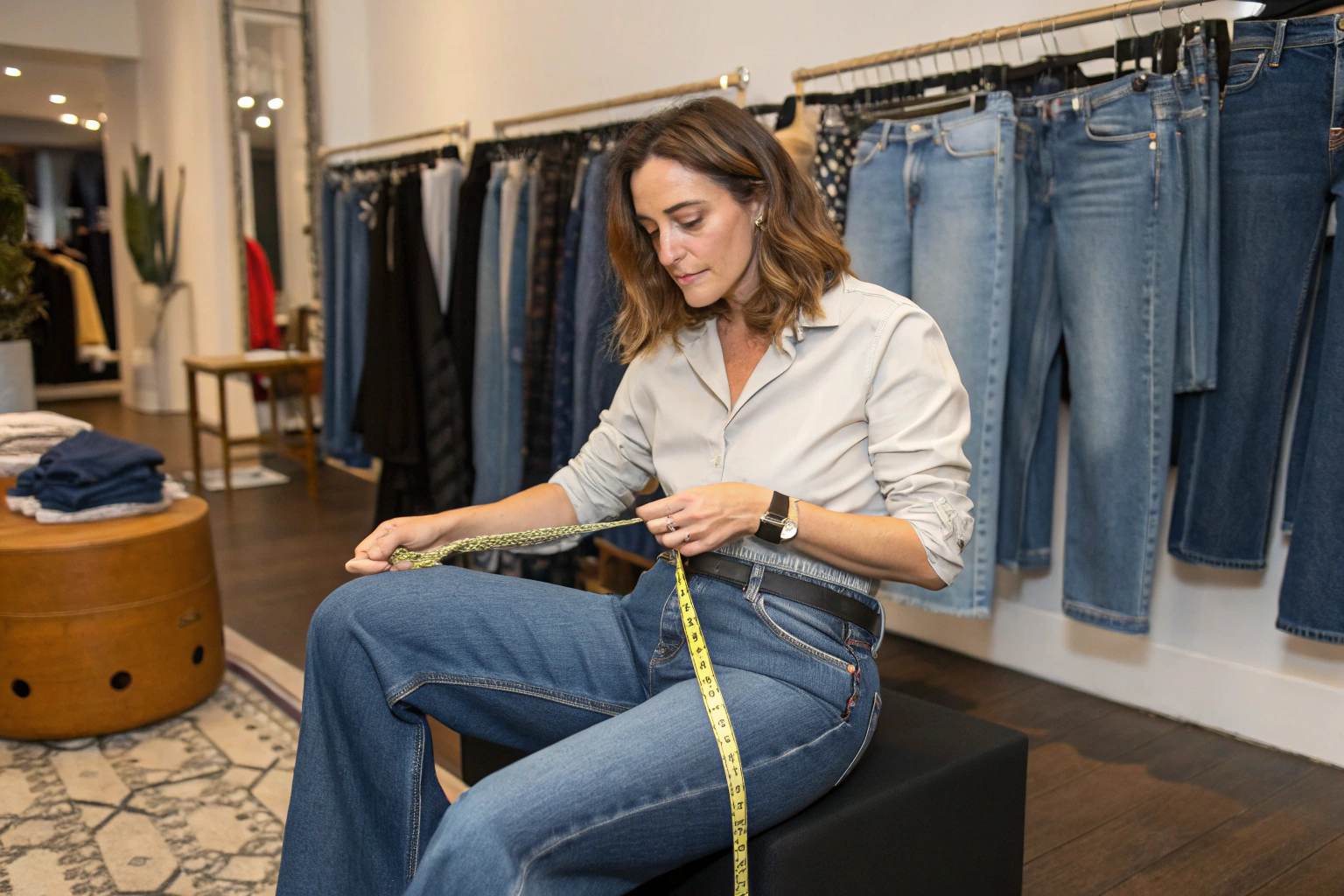
A denim brand creative director from Los Angeles sat in my showroom last season, and she was wearing a pair of beautifully fitted high-waist jeans. She pulled a measuring tape from her bag, something I have learned is a habit of great designers, and laid it across the waistband. "This is the problem," she said. "The belt loops on these jeans are two centimeters wide. That limits what belt I can wear. My customers are asking for belts that make a statement, belts that are wider, that cinch the waist, that create an hourglass silhouette. But the jeans they are buying were designed for skinny belts from five years ago." She needed belts that worked with the jeans her customers were actually wearing. She needed to know what widths were trending, what widths were functional with the belt loops, and what widths created the most flattering proportions with the high-rise silhouette. She asked me, "What widths are you seeing for 2026?"
The top five belt width trends for women’s high-waist jeans in 2026 are the wide cincher belt at 4 to 5 centimeters, the statement belt at 3 to 3.5 centimeters, the classic mid-width at 2.5 to 3 centimeters, the double-ring belt at 2 centimeters, and the skinny accent belt at 1 to 1.5 centimeters. The wide cincher belt is the dominant trend, designed to sit at the natural waist, cinching the silhouette and creating a dramatic hourglass shape. It requires jeans with proportionally wider belt loops, which the major denim brands are already incorporating into their 2026 designs. The statement belt is the most versatile, wide enough to make an impact but still fitting most standard belt loops. The classic mid-width is the perennial staple, the width that works with everything and never goes out of style. The double-ring belt is a functional, adjustable style that threads through two rings rather than using a prong and holes. The skinny accent belt is the minimalist option, worn as a subtle accent or layered with other accessories. The trend is toward wider belts that define the waist, reflecting the continued dominance of high-waist and wide-leg denim silhouettes in women’s fashion.
The relationship between a belt and a pair of high-waist jeans is a relationship of proportion. The belt sits at the narrowest part of the torso, the natural waist, which is the focal point of the entire outfit. The width of the belt determines how that focal point is framed. A narrow belt, 1 to 2 centimeters, creates a delicate, understated line. It whispers. A wide belt, 4 to 5 centimeters, creates a bold, sculptural statement. It declares. The choice of width is a design decision that affects the entire silhouette. At AceAccessory, we produce belts for women’s fashion brands, denim labels, and accessory companies. Our design team tracks belt width trends closely, and we are already producing the 2026 widths. Let me walk you through the five widths that will define the season.
Why Is the Wide Cincher Belt the Top Trend for High-Waist Denim
The wide cincher belt is the hero piece of the 2026 women’s belt market. It is a direct response to the silhouette of the moment. The dominant denim trend is the high-waist, wide-leg jean. The waist is the focus. The wide belt amplifies that focus. It wraps around the narrowest part of the torso, cinching and defining. It creates a dramatic contrast between the fitted waist and the voluminous leg. The visual effect is powerful and flattering. The wide cincher belt is not a new invention. It draws from the corset belts of the 1950s and the wide waist belts of the 1980s. But the 2026 iteration is softer, more supple, and more wearable than its historical predecessors. It is made from flexible, high-quality leather that conforms to the body. It is worn with jeans, not just with dresses, making it an everyday accessory.
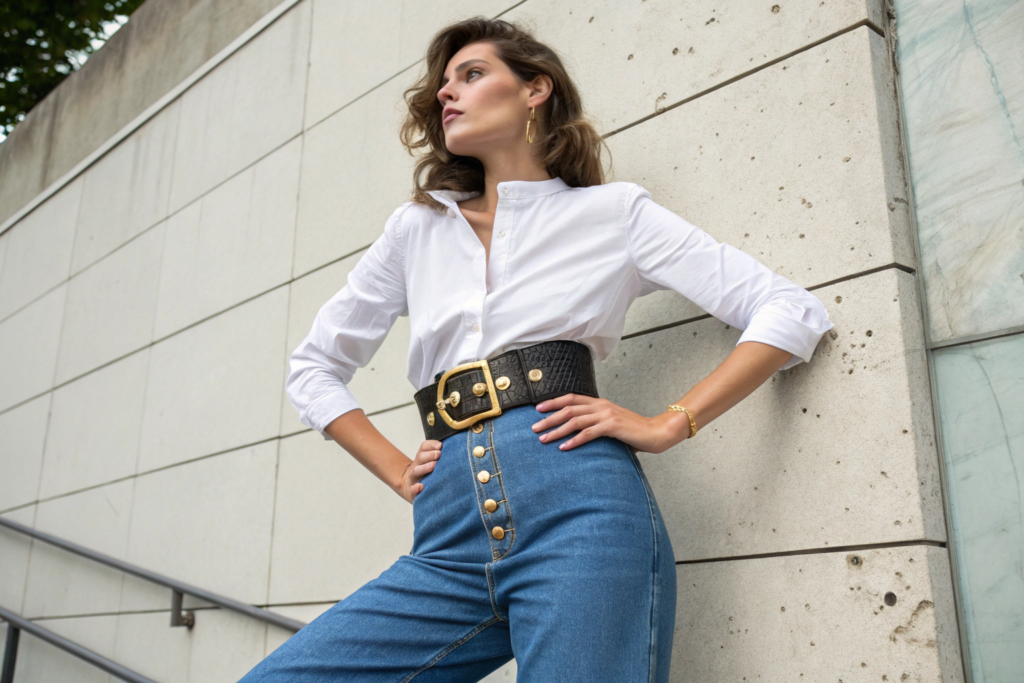
The wide cincher belt is the top trend for 2026 because it perfectly complements the high-waist, wide-leg denim silhouette that dominates women’s fashion. The belt is wide enough, 4 to 5 centimeters, to make a significant visual impact. It draws the eye directly to the waist. It creates or enhances an hourglass shape, even on a straight body type. It provides a beautiful, proportional balance to the volume of wide-leg jeans. The wide belt also has a functional benefit. It holds the jeans securely in place at the natural waist, preventing the waistband from gaping or slipping, a common issue with high-rise jeans on curvy figures. The wider surface area distributes the tension more evenly than a narrow belt, making it more comfortable for all-day wear. The buckle is an integral part of the cincher belt design. The 2026 buckles are substantial, sculptural, and often the focal point of the belt. A large, geometric metal buckle, a sculptural resin buckle, or a covered buckle in a contrasting texture. The buckle adds to the visual weight of the belt. The leather is typically a supple, full-grain cowhide or a soft, vegetable-tanned leather that molds to the body. The color is often a rich, warm neutral, cognac, tan, chocolate, or black, that coordinates with the denim. The wide cincher belt is a statement. It says the wearer is confident, fashion-aware, and understands the power of proportion.
The wide cincher belt is not for every pair of jeans. It requires belt loops that are wide enough to accommodate it. The buyer must ensure that the belt and the jeans are designed to work together. Let me detail the two most important design considerations.
How Does a Wide Belt Affect the Silhouette With Wide-Leg Jeans?
The wide belt and the wide-leg jean are a partnership of proportions. The wide-leg jean creates volume from the hip downward. The wide belt creates a defined, compressed line at the waist. The contrast between the two is what makes the silhouette so effective. The eye goes to the narrowest point, the belted waist, and then travels down the flowing line of the wide leg. The result is a silhouette that is balanced, elegant, and lengthening. The wide belt effectively breaks the outfit at the ideal point, making the legs appear longer and the torso appear more defined. The width of the belt must be proportionate to the width of the jean leg. A very wide leg, a full palazzo, can carry a 5-centimeter belt. A more moderate wide leg, a straight or a bootcut, is better served by a 4-centimeter belt. The belt should not be so wide that it looks like a corset, unless that is the deliberate design intention. The belt should sit exactly at the natural waist, not above or below. The high-waist jean is designed with the waistband at the natural waist. The belt should follow that line precisely. A belt that sits too high will look unbalanced. A belt that sits too low will create an unflattering bulge. The belt should be worn with the top tucked in, or with a cropped top, to ensure the belt is fully visible. The belt is the star of the outfit. It should not be hidden. The wide cincher belt also works beautifully with skirts and dresses, but its primary partner for 2026 is the high-waist wide-leg jean.
What Buckle Styles Work Best With a 5cm Cincher Belt?
The buckle on a 5-centimeter cincher belt is not an afterthought. It is a major design element. The size of the belt demands a buckle that is equally substantial. A small, delicate buckle would look lost and out of proportion. The buckle styles that work best are those that have visual weight and presence. The large frame buckle is a classic choice. A rectangular or a softly curved metal frame in polished gold, matte gunmetal, or antique brass. The frame spans a significant portion of the belt width, creating a bold, architectural look. The sculptural resin buckle is a fashion-forward option. A buckle made from a chunk of polished resin, in a tortoiseshell, a solid color, or a marbled pattern. The resin buckle adds a different texture and a more casual, artistic feel. The covered buckle is an elegant, understated option. The buckle frame is covered in the same leather as the belt, creating a seamless, tonal look. A small, discreet logo can be embossed on the leather. The covered buckle allows the width and the leather of the belt to be the primary visual elements. The double-prong buckle is a functional and aesthetic choice. The buckle has two prongs instead of one, which provides extra security on a wide belt and adds a symmetrical, balanced look. The prongs fit into two corresponding holes. The buckle finish should coordinate with the other hardware the wearer is likely to be wearing, the jewelry, the handbag hardware, and the shoe buckles. A cohesive hardware story elevates the entire outfit. The buckle attachment must be robust. A wide belt puts more stress on the buckle attachment than a narrow belt. The buckle must be securely attached with heavy-duty rivets or screws. The attachment is tested for strength to ensure it will not pull out under tension.
What Makes the 3.5cm Statement Belt the Most Versatile Choice
The 3 to 3.5 centimeter statement belt is the width that bridges the gap between trend and timelessness. It is wide enough to be noticed, to define the waist, and to carry a distinctive buckle. It is narrow enough to fit through the belt loops of virtually every pair of high-waist jeans, from vintage-inspired rigid denim to modern stretch blends. It is the width that a woman can buy once and wear with everything in her wardrobe. It is the width that a brand can offer as a core collection staple, season after season, with updates to the buckle, the leather finish, and the color. The statement belt earns its name not from its size, but from its presence. It is the belt that completes an outfit.
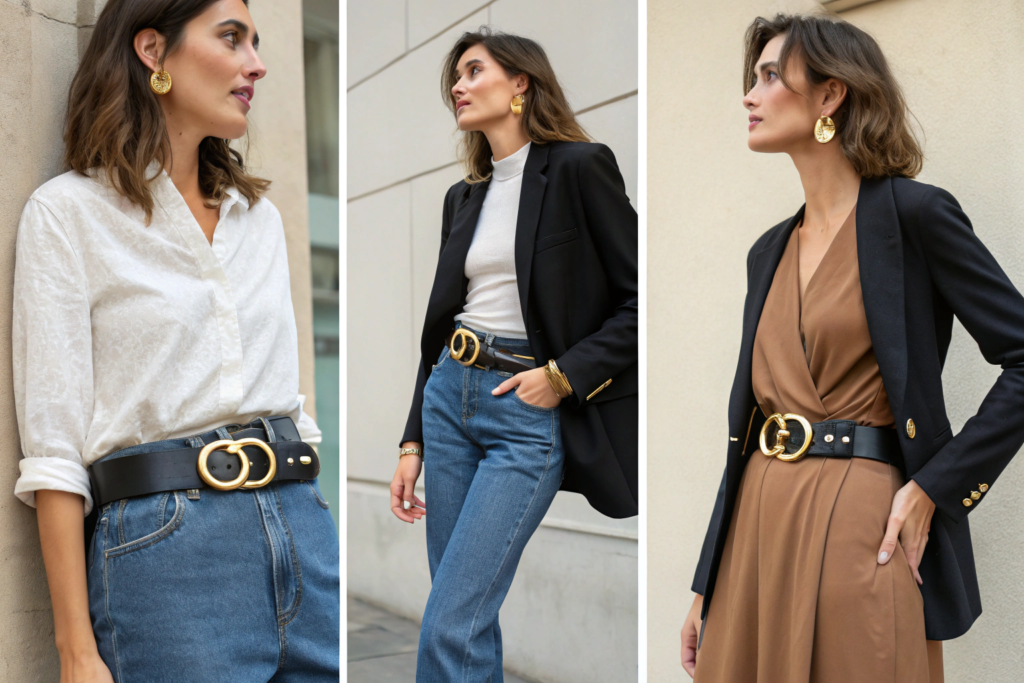
The 3 to 3.5 centimeter statement belt is the most versatile choice for 2026 because it balances visual impact with universal wearability. It fits standard belt loops, which are typically 3.5 to 4 centimeters wide. There is no need for special jeans or altered loops. It can be worn with high-waist jeans, with tailored trousers, over a blazer, or with a dress. It transitions seamlessly from day to evening, from casual to formal. The width is substantial enough to hold a tuck securely and to define the waist, but it is not so wide that it overwhelms a petite frame or looks out of place on a more understated outfit. The buckle is the statement element. The 2026 trend for the 3.5-centimeter belt is a distinctive, recognizable buckle that serves as a brand signature. A sculpted metal logo, an interlocking geometric design, a handcrafted resin piece, or an artisanal engraved plaque. The buckle is the jewelry of the belt. The leather is a premium, full-grain cowhide or a supple Italian calfskin. The color palette includes the core neutrals, black, tan, and brown, and the seasonal fashion colors, burgundy, olive, and navy. The belt is often reversible, with a different color on each side, offering two belts in one. The statement belt is the workhorse of the women’s belt wardrobe. It is the belt that is worn most often, that travels, and that is gifted. It is the belt that every brand should have in their collection.
The 3.5-centimeter belt is the safe choice, but safe does not mean boring. It means reliable, versatile, and enduring. It is the belt that will still be in style in five years. Let me detail the two most important design elements.
How Do You Design a Reversible Belt at This Width?
A reversible belt is a brilliant piece of design. It offers the consumer two color options in a single product. The most common combination is black on one side and tan or brown on the other. This gives the wearer a cool and a warm option, covering the majority of their footwear and handbag pairings. Designing a reversible belt at the 3.5-centimeter width requires a specific construction. The belt strap is made from two layers of leather, bonded together back-to-back. Each layer is the finished color. The edges are carefully matched, burnished, and sealed. The strap has no obvious front or back. The buckle is the key to the reversibility. The buckle is attached to the strap with a mechanism that allows it to be twisted or flipped. The most common mechanism is a rotating buckle. The buckle is attached to the strap with a screw or a rivet that passes through the strap. The buckle can be rotated 180 degrees, presenting the opposite side of the leather. Another mechanism is a removable buckle. The buckle is attached with snaps or with a screw that can be undone by hand. The wearer removes the buckle, flips the strap, and reattaches the buckle. The removable buckle is less convenient but allows for a wider variety of buckle styles. The belt holes are punched through both layers of leather. The hole edges are finished cleanly. The keeper loop, the small loop that holds the tail of the belt, is also reversible. It is made from the same dual-layer leather and is attached with a snap or is free-sliding. The reversible belt is a popular gift item because it solves the problem of matching hardware. The recipient can wear the belt with gold jewelry and brown shoes, or with silver jewelry and black shoes. It is a practical, thoughtful design.
What Leather Finishes Are Trending for Mid-Width Belts?
The leather finish is what gives the belt its tactile quality and its visual character. For 2026, the trending finishes for mid-width belts are a move away from high-gloss, corrected-grain leathers and toward natural, matte, and textured finishes that celebrate the character of the hide. Full-grain leather is the premium choice. The natural surface of the hide is left intact, with its subtle grain variations, its pores, and its occasional healed scars. A full-grain belt ages beautifully, developing a rich, personalized patina over time. The finish is typically a light aniline dye that allows the natural grain to show through, with a matte or a satin topcoat. Vegetable-tanned leather is the choice for the sustainability-conscious consumer. The leather is tanned using natural plant extracts, producing a firm, supple leather with a warm, natural color that deepens with exposure to sunlight. It has a distinctive, earthy scent. It is often left unfinished or with a light wax coating. Embossed leathers offer texture and pattern. A crocodile or an alligator embossing on cowhide provides a luxurious, exotic look at a more accessible price point. A snakeskin embossing is trending for 2026. A subtle, tone-on-tone geometric embossing adds a modern, minimalist texture. Suede and nubuck are the soft, matte options. A suede belt has a velvety, luxurious texture that is beautiful with casual denim. Suede requires more care and is less durable than full-grain leather, but it offers a unique aesthetic. The finish should be appropriate for the intended use. A belt that will be worn daily needs a durable finish that resists scratches and stains. A belt for occasional wear can have a more delicate finish.
How Is the Double-Ring Belt Being Reimagined for 2026
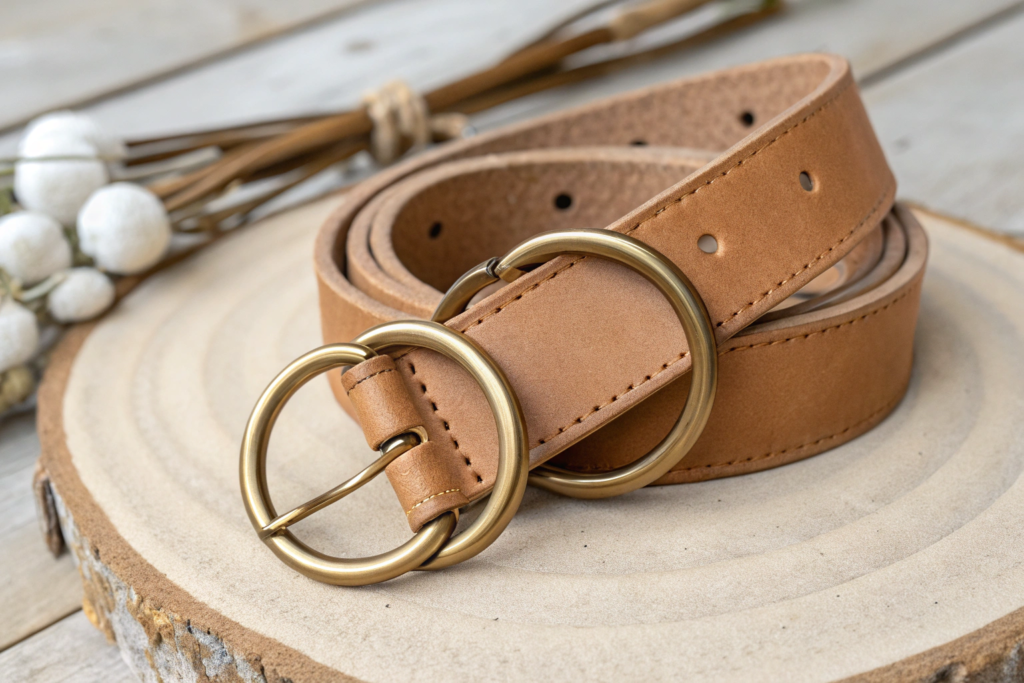
The double-ring belt is a classic, functional design that has been around for decades. It is the belt without holes. The leather strap is threaded through two metal rings, and the friction of the leather against the rings holds the belt in place. It is infinitely adjustable, comfortable, and has a casual, effortless elegance. For 2026, the double-ring belt is being reimagined with a focus on premium materials, sculptural hardware, and a more refined, fashion-forward aesthetic. It is moving from a purely functional accessory to a design object. The double-ring belt is particularly well-suited to the high-waist jean because its adjustability allows for a perfect fit at the natural waist, which can fluctuate throughout the day.
The double-ring belt is being reimagined for 2026 with sculptural, organic ring shapes, premium, vegetable-tanned leathers, and a minimalist, refined aesthetic. The traditional double-ring belt uses simple, round, welded metal rings. The 2026 version uses rings that are design objects in themselves. The rings are cast from solid brass or zinc alloy. They have an organic, pebble-like shape, or a sculptural, twisted form, or a minimalist, flat oval profile. The finish is matte gold, brushed silver, or a dark, oxidized gunmetal. The leather is a premium, full-grain or vegetable-tanned hide that is soft and supple, allowing it to thread easily through the rings and to drape gracefully. The strap end is often cut at an angle or with a decorative shape, like a fishtail or a rounded point. The edges are meticulously burnished and sealed. The double-ring belt is worn with the tail hanging down, either in front or to the side. The tail length is part of the design. It should be long enough to hang elegantly, but not so long that it is cumbersome. The double-ring belt is a favorite of the minimalist, the conscious consumer, and the woman who appreciates quiet, functional design. It works beautifully with linen, with organic cotton, and with the natural, earthy color palettes that are trending for 2026.
The double-ring belt is simple in concept, but its execution requires attention to detail. The rings must be perfectly smooth, with no burrs or sharp edges that could damage the leather. The leather must be the correct thickness and temper to hold securely without slipping. Let me detail the two most important design elements.
What Ring Finishes Complement High-Waist Denim Styles?
The ring finish on a double-ring belt is the primary metallic element, and it must complement the denim and the overall look. The choice of finish is a styling decision. Matte gold is the warm, luxurious choice. It pairs beautifully with indigo denim, with warm-toned leathers like cognac and tan, and with gold jewelry. It has a soft, diffused glow that is more understated than polished gold. It is the most popular finish for 2026. Brushed silver or gunmetal is the cool, modern choice. It pairs well with black denim, with grey and white tops, and with silver jewelry. Gunmetal has a dark, slightly industrial edge that works with a more minimalist or edgy aesthetic. Antique brass has a vintage, heritage feel. It pairs beautifully with worn-in, vintage-wash denim and with earthy, natural color palettes. It has a warm patina that looks like it has a history. The ring finish should be durable. The rings are in constant contact with the leather, and a poor-quality finish can wear off, revealing the base metal underneath. The finish should be applied by electroplating or by physical vapor deposition, PVD, for maximum durability. The rings should be tested for colorfastness and for resistance to abrasion. The size of the rings is proportional to the belt width. For a 2-centimeter belt, the rings are typically 3 to 4 centimeters in diameter. The rings should be large enough to thread the leather easily, but not so large that they look out of scale. The double-ring belt is a tactile product. The consumer touches the rings every time they put on or take off the belt. The rings should feel substantial, smooth, and cool to the touch. The quality of the hardware is a key indicator of the overall quality of the belt.
How Is the Leather Tail Finished on a Double-Ring Belt?
The tail of a double-ring belt is the visible end of the leather strap that hangs down after the belt is threaded through the rings. It is a prominent design detail. The finish of the tail contributes significantly to the overall aesthetic of the belt. The simplest finish is an angled cut. The strap end is cut at a 45-degree or a 30-degree angle. The cut edge is then beveled, the sharp corner is rounded over, and burnished. Burnishing is a process of rubbing the edge with a tool or a cloth, often with a wax or a gum, to seal the fibers and create a smooth, polished edge. A well-burnished edge is a sign of quality leatherwork. A more decorative finish is a shaped cut. The strap end is cut into a curve, a point, a fishtail, or a custom shape using a die cutter. The shaped cut adds a distinctive, branded touch. The edges are burnished as with the angled cut. A stitched detail can be added near the tail end. A single line of stitching, or a small, embroidered brand mark, adds a handcrafted detail. The tail length is a design consideration. The standard tail length, measured from the rings to the tip, is 15 to 20 centimeters. This provides enough length to hang elegantly and to be tucked into a belt loop if desired. The tail should hang straight and flat, without curling or twisting. The leather temper and the weight of the rings help to keep the tail hanging correctly. The tail is the part of the belt that moves with the wearer. It adds a sense of fluidity and grace to the design.
What Is the Role of the Skinny Accent Belt in 2026 Styling
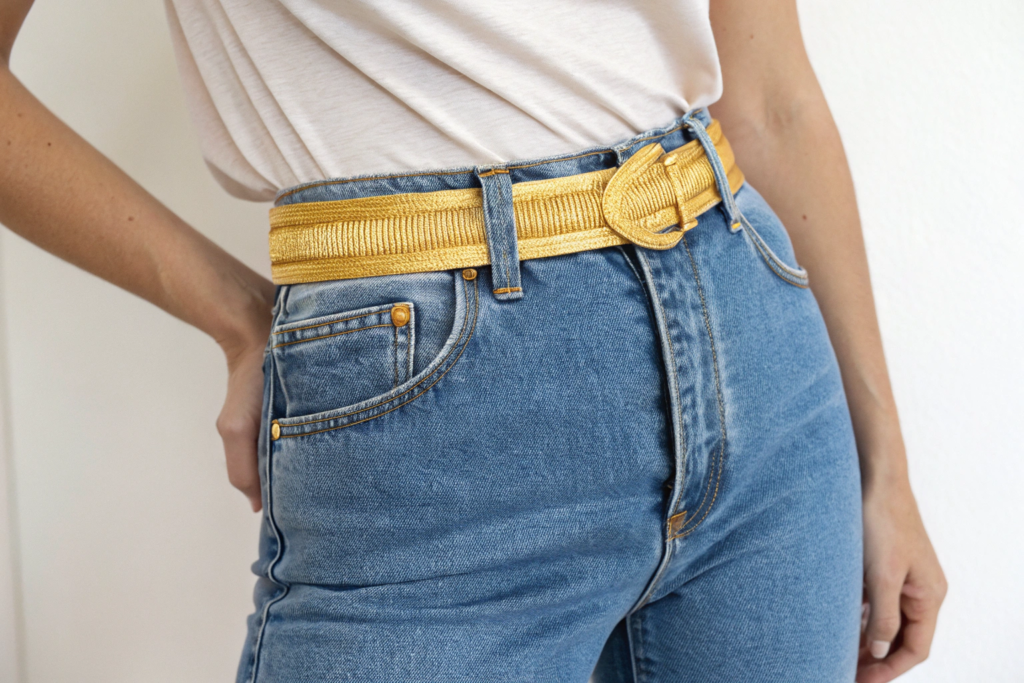
The skinny accent belt is the counterpoint to the wide cincher belt. It is the minimalist’s choice, the detail that is noticed only upon closer inspection. It is not designed to cinch or to define. It is designed to add a subtle line, a glint of metal, or a pop of color. The skinny belt is often worn in ways that are not strictly functional. It is threaded through the belt loops of high-waist jeans, but it is not pulled tight. It sits loosely, almost like a piece of jewelry. It is layered with other belts, worn over a long cardigan or a jacket, or used to add a metallic accent to an otherwise monochromatic outfit. The skinny belt is about personal expression and attention to detail.
The skinny accent belt plays the role of a subtle, jewelry-like accessory in 2026 styling. It is a belt that does not function primarily as a belt. It is an accent. It is made from delicate materials, a fine metallic chain, a thin strip of patent leather in a bright color, a braided silk cord, or a strand of small pearls or beads. The buckle is miniature, a tiny, delicate frame, or the belt ties with a knot or a bow. The skinny belt is worn with high-waist jeans to add a line that breaks up the denim, to introduce a metallic shimmer, or to coordinate with other accessories. It is often worn in multiples, two or three skinny belts of different colors or textures threaded through the same loops. It is worn over a dress or a tunic to define the waist without the bulk of a wider belt. It is a trend for the fashion-forward consumer who enjoys experimenting with proportions and details. The skinny belt is also a practical choice for jeans that have very narrow belt loops, or for petite women who find wider belts overwhelming. It is the least dominant of the 2026 belt trends, but it has a loyal following among those who prefer an understated, refined aesthetic.
The skinny belt is about the details. The buckle, the tip, and the material are all miniaturized and refined. It is a small accessory that makes a big difference to the overall look. Let me detail the two most important design elements.
Can a 1cm Belt Be Durable Enough for Regular Wear?
A 1-centimeter belt can be durable enough for regular wear if it is made from the right materials and constructed correctly. The narrow width concentrates the stress of daily wear onto a smaller area. The materials and the construction must be robust to compensate. The leather must be a high-tensile strength leather, such as a full-grain cowhide or a reinforced bonded leather. The leather is cut from the strongest part of the hide, the back, along the spine. The strap may be reinforced with a thin layer of nylon webbing or a fabric backing to add tensile strength and prevent stretching. The stitching is critical. A narrow strap cannot accommodate a wide stitch line. The stitching must be fine, dense, and placed close to the edge. A single row of lockstitching is standard. The thread is a high-tenacity polyester or nylon. The buckle attachment is the most vulnerable point on a skinny belt. The buckle is attached with a small screw or a rivet that passes through the leather. The hole for the screw must be precisely punched, not too large, to prevent the leather from tearing around the screw. A reinforcing washer or a small metal plate may be used on the back side of the strap to distribute the load. The buckle itself must be solid, not a hollow casting, to withstand the tension. The belt holes are reinforced. The holes are punched cleanly and may be finished with a small metal eyelet to prevent the leather from stretching or tearing. The skinny belt is not designed for heavy-duty use. It is not a work belt. It is a fashion accessory. With reasonable care, a well-made skinny belt will last for years.
What Materials Make a Skinny Belt Feel Special?
The material of a skinny belt is what gives it its precious, jewelry-like quality. A skinny belt uses very little material, so the cost of a premium material is a small fraction of the total product cost. This allows the designer to use materials that would be prohibitively expensive for a wider belt. Exotic leathers are a popular choice. A skinny belt in genuine snakeskin, lizard, or crocodile has a unique, luxurious texture. The exotic skin is often left in its natural color or dyed in a vibrant hue. Metallic leathers add shimmer and shine. A skinny belt in gold, silver, or rose gold metallic leather catches the light and functions like a piece of jewelry. The metallic finish is applied as a foil or a coating to a fine leather or a fabric base. Embellished fabrics offer endless possibilities. A skinny belt made from a beaded fabric, a sequined mesh, a silk brocade, or an embroidered ribbon is a unique, artisanal piece. The fabric is backed with a thin leather or a suede for strength and comfort. Fine chain is a non-leather option. A delicate gold or silver chain, like a jewelry chain, is worn as a belt. The chain may have a small, decorative pendant or a charm attached. The chain belt is purely decorative. A braided cord adds a bohemian, crafty feel. A skinny belt made from a finely braided silk or cotton cord, with a simple knot closure, is a casual, artisanal accent. The material choice for a skinny belt is an opportunity for creativity and for using materials that are not typically seen in belts. It is a way to create a unique, special product.
Conclusion
The 2026 belt width trends for women’s high-waist jeans reflect a market that is embracing diversity and personal expression. There is no single "right" width. There is a spectrum of widths, from the dramatic 5-centimeter cincher to the delicate 1-centimeter accent, each serving a different purpose, a different aesthetic, and a different consumer. The wide cincher belt is the trend leader, a bold, sculptural piece that defines the waist and complements the dominant wide-leg denim silhouette. The 3.5-centimeter statement belt is the versatile workhorse, the width that works with everything and that every wardrobe needs. The double-ring belt is the artisanal, functional choice, reimagined with premium materials and sculptural hardware. The classic 2.5-centimeter belt is the timeless staple, always in style. And the skinny accent belt is the jewelry piece, the subtle detail for the minimalist. Together, these five widths cover the full range of consumer needs and style preferences.
At AceAccessory, we produce belts in all of these widths for women’s fashion brands, denim labels, and accessory companies. Our leather sourcing team has access to the full-grain, vegetable-tanned, and exotic leathers that define each category. Our hardware suppliers produce the sculptural buckles and rings in the trending finishes. Our production team has the expertise to construct belts of every width, from the robust cincher to the delicate skinny belt. We work with our clients to translate their design vision into commercially successful products.
If you are developing a women’s belt collection for 2026 and you want a manufacturing partner who understands the width trends, the materials, and the construction techniques that will define the season, I invite you to contact us. Reach out to our Business Director, Elaine, at elaine@fumaoclothing.com. Tell her about your brand, your target customer, and the belt widths and styles you are interested in. She can provide samples, leather swatches, and hardware options, and provide a quotation for production. Let us help you create belts that your customers will love to wear with their favorite jeans.