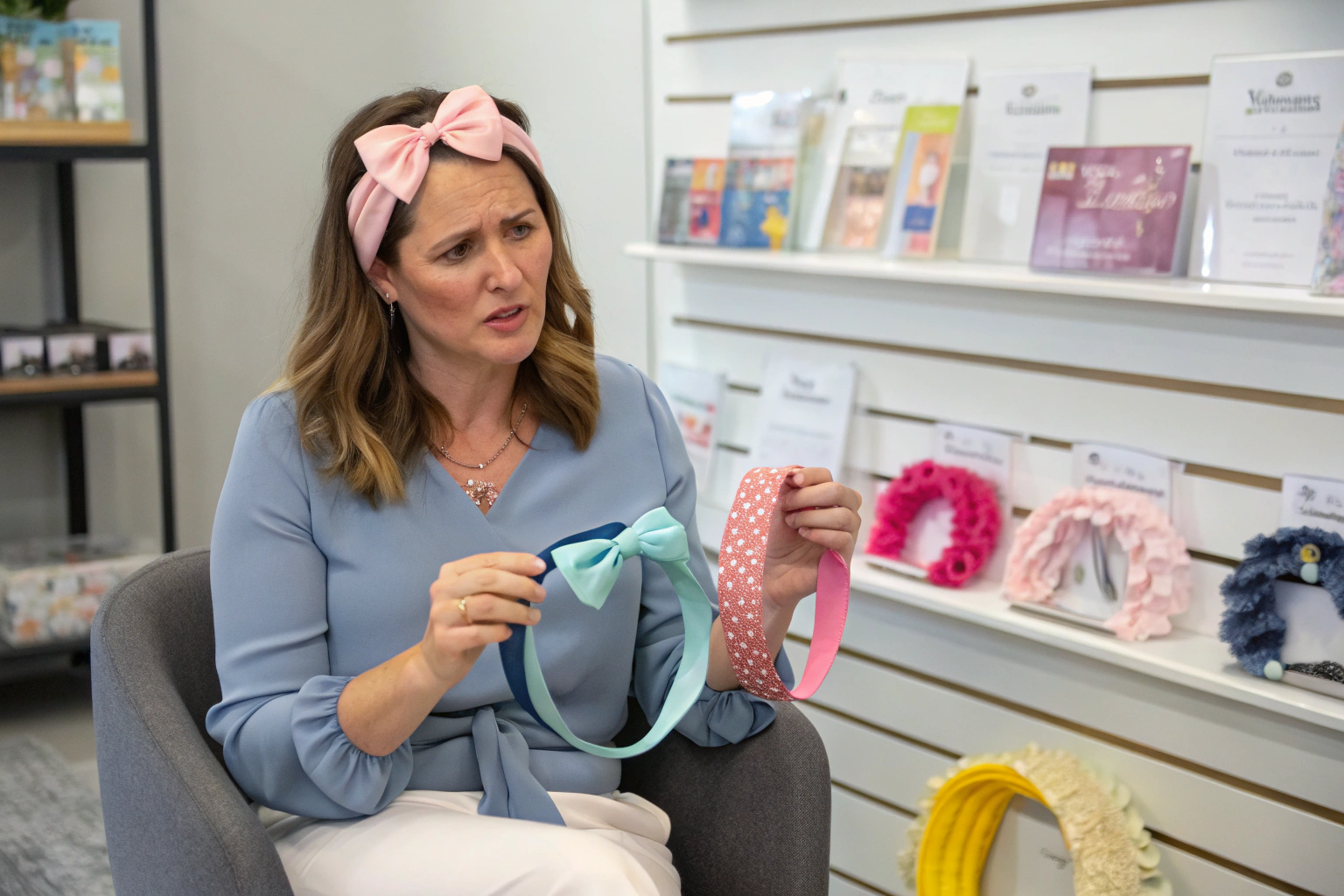
A children’s accessories brand owner from Sydney sat in my showroom last spring with two distinct headband samples and a supply chain frustration that had been costing her time and money for too long. Her brand sold two types of headbands for kids. A soft, stretchy elastic headband that was the everyday choice, easy for little hands to put on and take off, comfortable for all-day wear at school and at play. And an adjustable Velcro closure headband, designed for special occasions, with a perfect, custom fit that stayed exactly in place during a ballet recital or a family photo. The elastic headband was her volume seller. The Velcro headband was her premium piece. She had been sourcing the elastic headbands from one factory and the Velcro headbands from another. Two sets of purchase orders. Two sets of quality standards. Two shipping schedules that never aligned. She needed one factory that could do both, with the same attention to comfort, the same color consistency, and the same commitment to the safety standards that children’s products demand. She asked me, "Can you make both, and can you make both safe for my kids?"
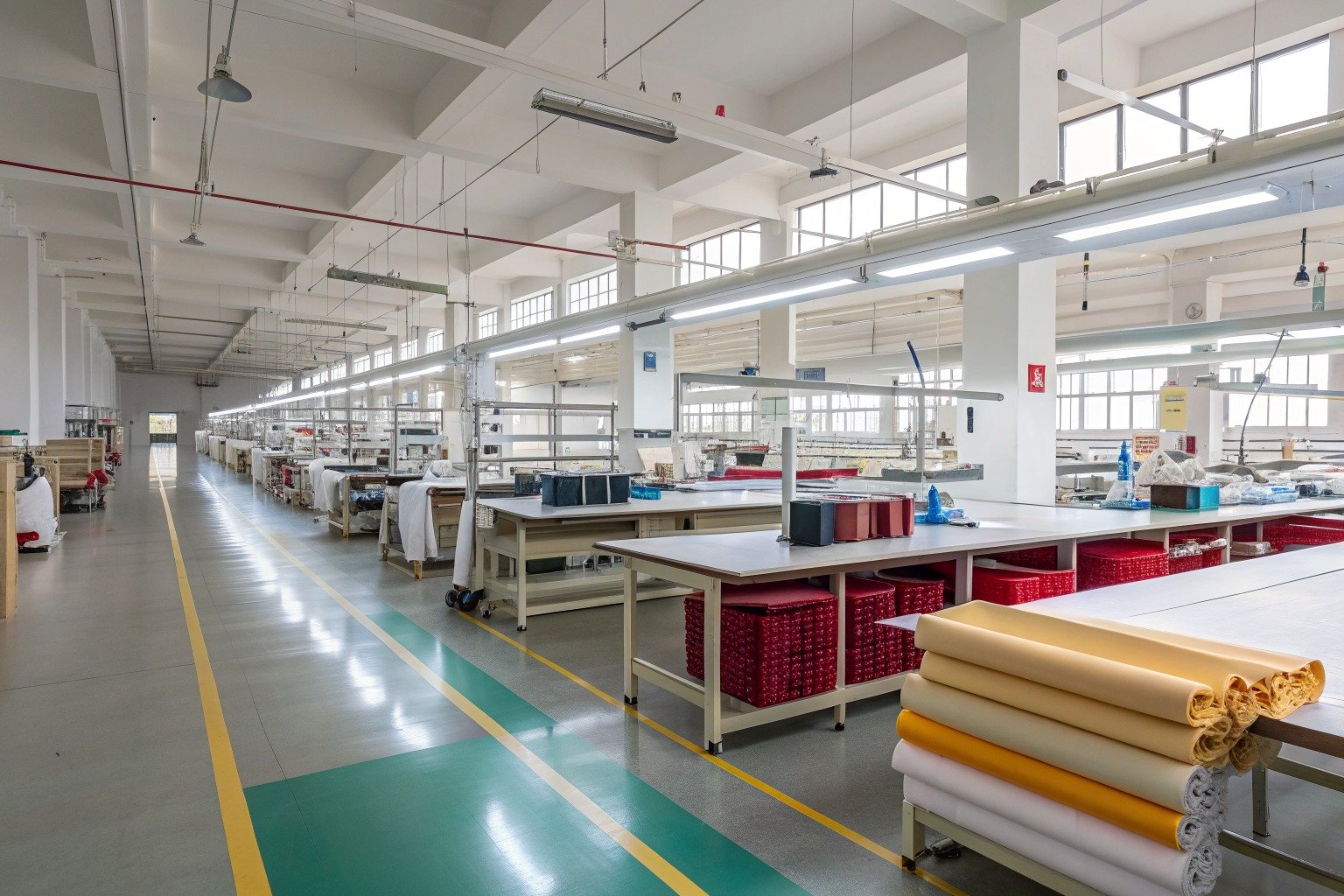
Yes, our factory produces both elastic and Velcro closure headbands for children within a single, consolidated production order. We maintain dedicated sewing lines, specialized equipment, and trained operators for each closure type. The elastic headbands are produced on a streamlined line that handles the cutting and sewing of the fabric tube, the insertion of the elastic core, and the clean finishing of the ends. The Velcro closure headbands are produced on a more detailed line that manages the precise placement of the hook and loop tape, the reinforcement stitching around the closure area, and the finishing of the adjustable tail. Both styles can be produced in the same soft, child-safe fabrics, organic cotton, bamboo jersey, soft polyester blends, and in the same seasonal colors and prints. The consolidated order means a single purchase order, a single production schedule, a single quality control inspection to the stringent AQL standards for children’s products, and a single shipment. The minimum order quantity for a consolidated order is 300 pieces per style, with a combined total of at least 600 pieces. The production lead time is 30 to 45 days.
Children’s headbands are a product category where comfort and safety are non-negotiable. A headband that is too tight can cause headaches. A headband with a rough Velcro edge can scratch delicate skin. A headband with a poorly secured closure can come apart and create a small part, a choking hazard for the youngest children. The ability to produce both elastic and Velcro styles in a single factory, with unified quality and safety standards, is a significant advantage for a children’s brand. At AceAccessory, we produce headbands for children’s brands, school uniform suppliers, and kid’s fashion labels. We understand the unique requirements of this market. Let me walk you through how we make it work.
What Are the Design Differences Between Elastic and Velcro Headbands
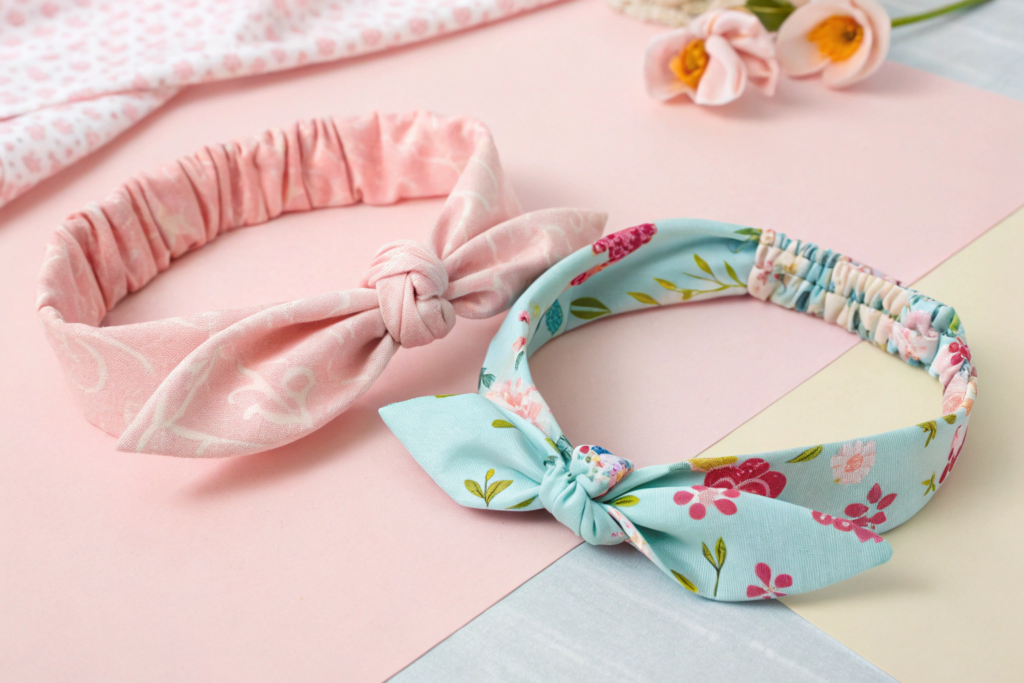
The elastic headband and the Velcro closure headband serve the same fundamental purpose. They hold a child’s hair back from their face. But they achieve this in fundamentally different ways, and each has its own advantages and ideal use cases. The elastic headband is a continuous loop of fabric with an elastic core. It is pulled on over the head and sits in place by the gentle tension of the elastic. It is simple, there are no fasteners to fiddle with. It is comfortable for extended wear because the tension is distributed evenly around the entire head. It is the grab-and-go choice for everyday wear. The Velcro closure headband is an open band that wraps around the head and is secured at the back with a hook and loop fastener. It is adjustable, allowing for a perfect, custom fit. It can be put on and taken off without messing up a styled hairdo. It is the choice for special occasions, for photos, and for children who are sensitive to the constant pressure of an elastic band.
The key design differences between elastic and Velcro closure headbands are in the closure mechanism, the fit system, and the construction complexity. The elastic headband uses a continuous elastic core, typically a braided or knitted elastic, that is inserted into a fabric tube. The fabric tube is sewn into a loop. The elastic provides a uniform, gentle tension. The fit is determined by the length of the elastic. It is offered in sizes, newborn, infant, toddler, and child, based on head circumference. The construction is relatively simple. The Velcro closure headband uses a length of fabric with a hook and loop closure sewn onto the overlapping ends. One end has a strip of the soft loop tape. The other end has a strip of the hook tape. The wearer adjusts the overlap to achieve the desired fit and presses the hook and loop together. The fit is infinitely adjustable within the range of the closure. The construction is more complex. It requires precise placement of the Velcro, reinforcement stitching to prevent the Velcro from pulling away from the fabric, and a neatly finished tail on the adjustable end. The Velcro headband often features a decorative front element, a bow, a flower, or an embellishment, that is centered on the top of the head. The elastic headband may also have a decorative element, but it is typically simpler.
Both styles must meet the same stringent safety standards for children’s products. The materials must be free of harmful chemicals, certified to OEKO-TEX Standard 100 Class I, the strictest level for baby products. The construction must be secure, with no small parts that could detach and become a choking hazard. Let me detail the two most important design features.
How Is the Velcro Secured to Prevent Scratching and Peeling?
The Velcro closure on a children’s headband must meet two critical requirements. It must be secure, staying firmly attached to the fabric through repeated opening and closing, washing, and the enthusiastic handling of a child. And it must be soft and safe, with no sharp edges that could scratch delicate skin. The Velcro, technically a hook and loop fastener, consists of two parts. The hook tape, which has tiny, stiff hooks, and the loop tape, which has a soft, fuzzy surface. The hook tape, if exposed, can be scratchy. It can catch on hair, on clothing, and on skin. The design of the Velcro closure must protect the child from the hook tape. The hook tape is sewn onto the underside of the headband end, so it faces inward toward the head when the headband is worn. The loop tape is sewn onto the outside of the opposite end. When the ends are overlapped and pressed together, the hook tape engages with the loop tape, and the scratchy hooks are buried within the soft loops. The hook tape is never exposed against the child’s head. The edges of the Velcro tape are a potential source of irritation. The cut edges of the tape can be stiff and sharp. The Velcro is sewn onto the fabric with the edges folded under, or it is die-cut with rounded corners. The stitching that attaches the Velcro to the fabric is dense and secure. A double row of lockstitching, or a box stitch with an X through the center, prevents the Velcro from peeling away from the fabric. The thread is a soft, high-tenacity polyester that will not break or fray. The Velcro itself is a high-quality product, often from a branded supplier like Velcro or Aplix, that is tested for wash durability and for skin safety. The Velcro closure is tested by opening and closing it repeatedly, hundreds of times, to ensure it remains functional and securely attached.
What Elastic Types Are Safest and Most Comfortable for Kids?
The elastic inside a children’s headband is the hidden component that determines the comfort. An elastic that is too tight causes headaches, leaves marks on the forehead, and makes the child reluctant to wear the headband. An elastic that is too loose slips off and is frustrating. The safest and most comfortable elastics for children’s headbands are soft, braided or knitted elastics with a gentle, consistent stretch. Braided elastic is made by weaving together multiple strands of rubber or synthetic elastomer with a soft polyester or nylon cover. It has a ribbed texture. It is lightweight, breathable, and has a soft, gradual stretch. It does not have a hard, sudden stop. It is the most common choice for children’s headbands because it is economical and comfortable. Knitted elastic is made by knitting the elastic fibers into a fabric. It is softer and wider than braided elastic. It has a very gentle stretch and recovery. It is more expensive but is the premium choice for sensitive children. It is often used in headbands for babies and toddlers. The elastic width is important. A narrow elastic, 3 to 5 millimeters, can feel like a tight cord. A wider elastic, 8 to 12 millimeters, distributes the pressure over a larger area and is more comfortable. The elastic must be free of latex if the headband is marketed as latex-free, as latex is a common allergen. The elastic should be encased in a soft fabric tube. The fabric provides a barrier between the elastic and the skin, preventing direct contact with the elastic and providing additional softness. The elastic is attached to the fabric at the ends of the headband. The attachment must be secure. The elastic is folded over and stitched with a bar-tack or a zigzag stitch that allows the elastic to stretch without breaking the thread. The finished headband is tested for tension. It should stretch comfortably to fit a range of head sizes without excessive force.
How Are Both Closure Types Produced Under One System
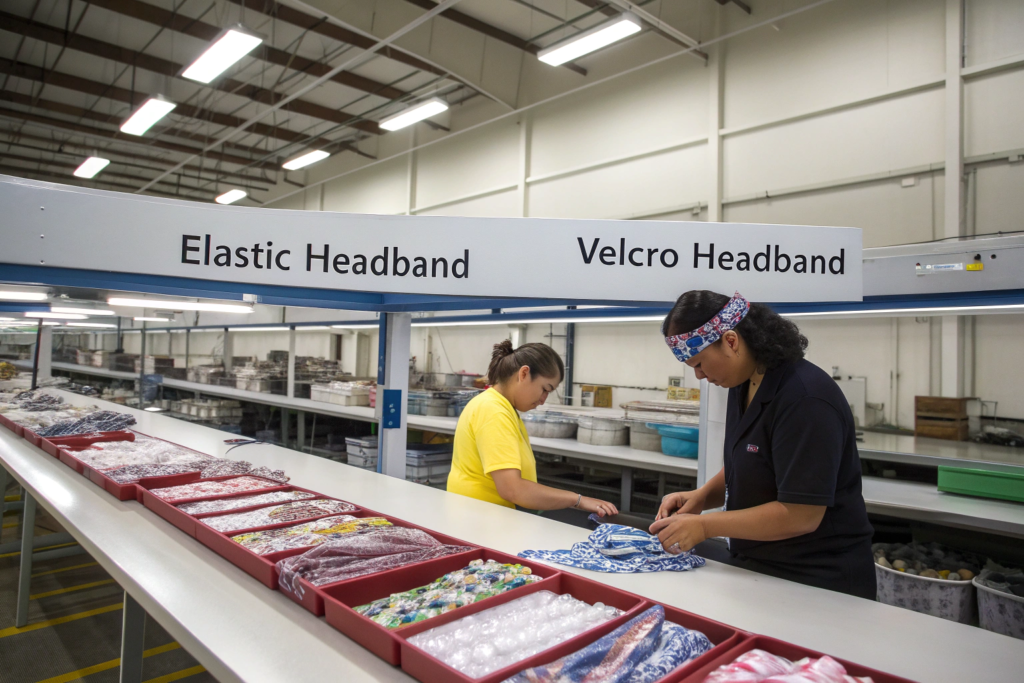
Producing both elastic and Velcro headbands in a single factory requires a flexible production system, cross-trained sewing operators, and a centralized material management system. The two styles share the same fabric, the same thread, and the same labels. They diverge at the closure stage. The elastic headband goes to the elastic insertion station. The Velcro headband goes to the Velcro attachment station. The factory must be able to balance the workload between these two paths and ensure that both styles are completed on schedule.
Both elastic and Velcro closure headbands are produced under one system using a modular manufacturing approach with shared fabric preparation and dedicated closure workstations. The shared resources are the foundation. Both styles use the same soft fabrics, cut in a centralized cutting department. The fabric for the entire order, elastic and Velcro headbands combined, is spread, cut, and bundled by style and size. The cut fabric pieces are sorted into kits. An elastic headband kit contains the fabric tube piece and the elastic insert. A Velcro headband kit contains the main band piece, the Velcro strips, and any decorative front element. The modular workstations are configured for each closure type. The elastic workstation has the tools and the operators for threading the elastic through the fabric tube, securing the elastic ends, and closing the loop. The Velcro workstation has the sewing machines set up for the precise placement and stitching of the hook and loop tape, the reinforcement stitching, and the attachment of the decorative front element. The production schedule is managed so that both styles are produced in parallel. The finishing and packing station handles both styles. The finished headbands from both lines are inspected by the same QC team, using style-specific checklists. The headbands are then packed according to the client’s requirements and shipped as a single consolidated order. The unified production system ensures that the same dye lot of fabric is used for both styles, guaranteeing a perfect color match between the elastic and Velcro headbands.
The unified production system also ensures that the same rigorous safety inspections are applied to both styles. The same AQL sampling plan is used. The same pull test is performed on the Velcro attachment and the elastic attachment. The same small parts checks are performed. Let me detail the two most important shared production elements.
Can the Same Fabric Be Used for Both Elastic and Velcro Styles?
Yes, using the same fabric for both elastic and Velcro headbands is one of the key advantages of consolidated production. The fabric is the visible, tactile element of the headband. It determines the color, the print, the softness, and the overall aesthetic. Using the same fabric across both styles creates a unified collection. The floral print elastic headband and the floral print Velcro headband are a perfect match. They can be displayed together in a retail setting as a coordinated set. The fabric choice for children’s headbands is driven by softness, breathability, and safety. Organic cotton jersey is the most popular choice. It is incredibly soft, breathable, and gentle on sensitive skin. It is certified to GOTS, the Global Organic Textile Standard, for organic integrity. Bamboo jersey is another premium choice. It has a silky, smooth surface that is kind to delicate hair. It has natural antimicrobial properties. Soft polyester blends are used for headbands that need more stretch and recovery. A polyester-spandex blend offers excellent shape retention. The fabric is cut from the same roll for both styles. The elastic headband uses a continuous strip of fabric that is folded and sewn into a tube. The Velcro headband uses a shaped piece of fabric that forms the band and the tail. The fabric consumption is different for each style, but the fabric source is the same. The fabric is tested to OEKO-TEX Standard 100 Class I before cutting. This certification ensures that the fabric is free from over 100 harmful substances and is safe for the most sensitive skin, including babies.
How Are Decorative Bows Attached Securely for Child Safety?
A decorative bow on a children’s headband is a beautiful detail, but it is also a safety consideration. A bow that detaches is a small part and a choking hazard for children under three years old. The attachment of the bow must be absolutely secure. The bow is a separate piece, made from the same fabric as the headband or from a coordinating fabric. It is folded, gathered, and stitched into shape. The bow is then attached to the headband. The attachment method depends on the headband style and the bow design. The most secure method is to sew the bow directly onto the headband. The bow is positioned at the center front of the headband, or at the side. It is stitched in place using a lockstitch sewing machine. The stitching passes through the bow, the headband fabric, and, in the case of the elastic headband, through the elastic core. The stitches are dense and multiple. A box stitch with an X through the center provides maximum security. The thread is a heavy-duty polyester that matches the bow color. The stitching is inspected. A tug test is performed. The bow is pulled firmly to verify that it does not detach. For a Velcro headband, the bow can also be attached by stitching it to the Velcro tape before the tape is sewn onto the headband. The stitches that attach the bow pass through the Velcro tape, creating a very strong anchor. The bow should not be attached with glue alone. Glue can degrade over time, with washing, and with the flexing of the headband. Stitching is the standard for children’s products. The bow attachment is inspected as part of the small parts check. A force of 90 newtons, approximately 9 kilograms, is applied to the bow. It must not detach. This is the same standard used for snaps and buttons on children’s clothing.
What Safety Standards Apply to Children’s Headband Closures
Children’s products are subject to the most stringent safety regulations in the accessories industry. In the United States, the Consumer Product Safety Improvement Act, or CPSIA, sets strict limits for lead, phthalates, and other harmful substances. It also mandates testing for small parts, sharp edges, and other physical hazards. In the European Union, the Toy Safety Directive and the REACH regulation impose similar requirements. A children’s headband, particularly one for a child under three years old, is subject to these regulations. The closures, the elastic and the Velcro, must be designed and tested to ensure they do not create a safety hazard. A detached Velcro strip, a broken elastic, or a loose bow can be a choking or injury risk.
The safety standards that apply to children’s headband closures are the small parts regulation, the chemical safety standards, and the mechanical safety standards. The small parts regulation, 16 CFR Part 1501 in the US, requires that any component of a children’s product intended for children under three must not detach when subjected to a pull force of 90 newtons, approximately 20 pounds. This applies to the Velcro tape, the elastic, the decorative bow, and any other attached component. The chemical safety standards, CPSIA in the US and REACH in the EU, set limits for lead, phthalates, and other hazardous substances in the materials. The fabric, the elastic, the Velcro, and the thread must all be tested and certified. The mechanical safety standards require that the product must not have any sharp edges, sharp points, or accessible small parts. The Velcro edges, as discussed, must be covered or finished to prevent scratches. The elastic must not be accessible in a way that could create a strangulation or a tourniquet hazard. The headband must be labeled with the required tracking information and any necessary warnings. The testing must be performed by an independent, ISO 17025 accredited laboratory. The test reports must be current and must reference the specific headband model. The factory must provide the test reports as part of the compliance documentation.
The safety standards are not optional. They are the law. A brand that sells non-compliant children’s products faces fines, product recalls, and legal liability. A factory that produces children’s products must have a robust safety testing program. Let me detail the two most important safety tests.
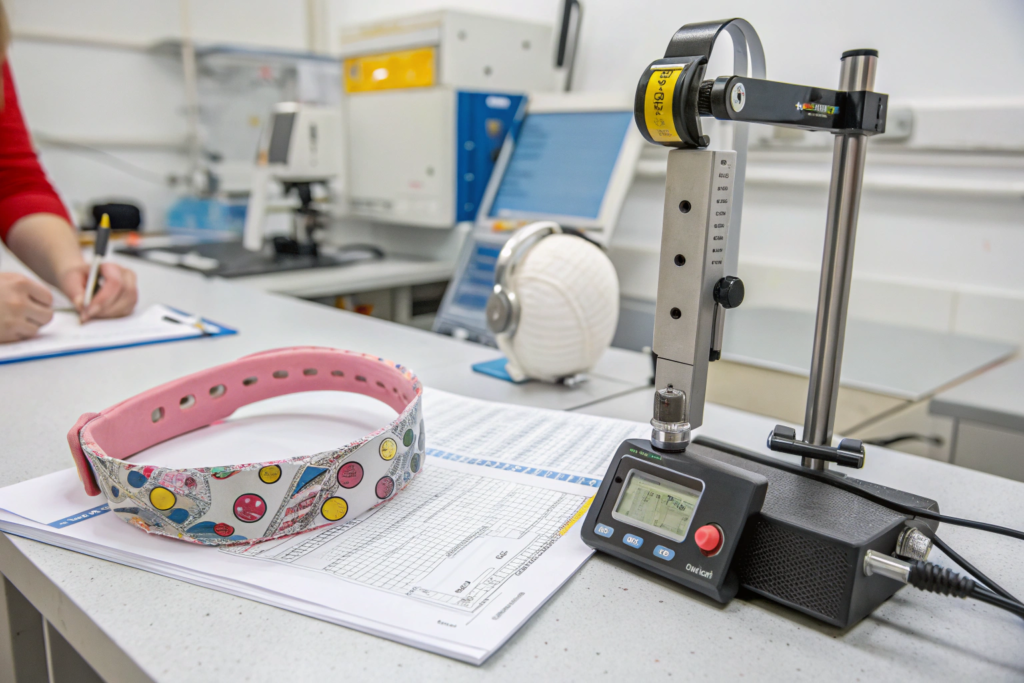
How Are Small Parts Tests Performed on Velcro and Elastic?
The small parts test is the primary physical safety test for children’s headbands. It verifies that no component of the headband will detach and become a choking hazard. The test is performed according to the CPSC standard, 16 CFR Part 1501. The headband is conditioned at a standard temperature and humidity. The test fixture is a clamp and a force gauge. The component being tested, the Velcro tape, the elastic end, or the bow, is gripped in the clamp. A steadily increasing tensile force is applied, pulling the component away from the headband. The force is applied gradually over 5 seconds and held for an additional 10 seconds at the target force of 90 newtons. The component is inspected. If it detaches, it is a failure. If it remains attached, it passes. The detached component is then checked against the small parts cylinder, a truncated cylinder with a diameter of 31.7 millimeters and a depth that varies. If the component fits entirely within the cylinder, it is a small part and a choking hazard. The test is performed on multiple samples from the production batch. The test report states the force applied and the result for each sample. The Velcro tape is tested by gripping the end of the tape and pulling. The elastic is tested by gripping the end of the elastic, where it is attached to the fabric, and pulling. The decorative bow is tested by gripping the bow and pulling. Any component that can be reasonably expected to be pulled by a child is tested. The small parts test is a mandatory part of the children’s product certification.
What Chemical Safety Tests Are Required for Kids’ Accessories?
Chemical safety testing for children’s accessories is required by the CPSIA in the United States and by the REACH regulation in the European Union. The tests measure the presence of harmful substances in the materials that make up the product. The key tests are for lead content, phthalate content, and formaldehyde content. For lead content, the CPSIA sets a limit of 90 parts per million in any accessible component of a children’s product. This applies to the fabric, the elastic, the Velcro, the thread, and any printed or dyed elements. The test is performed by digesting a sample of the material in acid and analyzing the solution using Inductively Coupled Plasma spectroscopy. For phthalate content, the CPSIA restricts eight specific phthalates to a limit of 0.1 percent, or 1,000 parts per million, each. Phthalates are used as plasticizers in some plastics and in some printing inks. The test is performed by solvent extraction and gas chromatography-mass spectrometry. For formaldehyde content, the European REACH regulation and the OEKO-TEX standard set limits for formaldehyde, which is used in some fabric finishes. The limit for products with direct skin contact is 75 parts per million. The chemical safety tests must be performed by an independent, CPSC-accepted or ISO 17025 accredited laboratory. The test reports are part of the Children’s Product Certificate, or CPC, in the US, which is a legal document that certifies the product’s compliance. The factory must provide the CPC or the equivalent EU declaration of conformity. The chemical safety testing is a non-negotiable requirement. We test every batch of children’s headbands and provide the full test reports to our clients.
Conclusion
Producing both elastic and Velcro closure headbands for children in a single, consolidated order is a supply chain solution that delivers simplicity, consistency, and safety assurance. The buyer who consolidates their children’s headband sourcing eliminates the administrative burden of managing multiple suppliers. They gain a unified quality and safety standard, with the same OEKO-TEX certified fabrics, the same AQL inspections, and the same small parts and chemical testing applied to both styles. They achieve a perfect color and print match between the elastic and Velcro styles, creating a coordinated collection that retailers and consumers love. And they save on logistics costs through a single consolidated shipment. We have explored the design differences between the two closure types, the soft, continuous elastic loop and the adjustable, secure Velcro closure. We have examined how both are produced under one roof, using shared fabrics and modular workstations. We have detailed the attachment methods for decorative bows and the safety testing that ensures every headband is safe for the most precious customers.
At AceAccessory, we take children’s products seriously. Our children’s headband production line uses only certified, OEKO-TEX Class I fabrics. Our QC team performs the required small parts pull tests on every production batch. Our documentation includes the full chemical safety test reports and the Children’s Product Certificate. We work with children’s brands, school uniform suppliers, and kid’s fashion labels to deliver headbands that are beautiful, comfortable, and safe.
If you are developing a children’s headband collection that includes both elastic and Velcro closure styles, and you want the simplicity, the consistency, and the safety assurance of a single manufacturing partner, I invite you to contact us. Reach out to our Business Director, Elaine, at elaine@fumaoclothing.com. Tell her about your brand, the styles and fabrics you are considering, and the quantities you need. She can provide samples of both closure types, discuss fabric and print options, and provide a quotation for a consolidated production order. Let us help you create headbands that kids love to wear and parents trust.