A premium giftware brand owner from London called me last October, and the frustration in her voice was palpable. She had spent months developing her holiday collection, a range of beautifully designed scarves packaged in rigid, high-end gift boxes. The box was integral to the product. The unboxing experience was part of her brand promise. She had specified a 2-millimeter thick greyboard box wrapped in a textured, soft-touch paper. She had approved a physical sample of the box. The production order of 5,000 boxes had been delivered to her warehouse. When her team began packing the scarves, the boxes felt different. They felt lighter, flimsier, less substantial. She measured the thickness with a caliper. The greyboard was 1.5 millimeters, a 25 percent reduction. The factory had made the change without informing her, without asking for approval, and without adjusting the price. The boxes were not defective in the sense of being broken. They were just inferior, and they did not meet the specification that she had approved. She felt cheated, and she did not know how to confront the factory or what remedy to demand.
The best way to handle a factory that changes cardboard box thickness without approval is a four-step process of documentation, formal notification, remedy negotiation, and systemic prevention. First, document the change with objective, measurable evidence. Measure the thickness of the actual boxes with a caliper or a micrometer, and compare the measurement to the approved specification. Take photographs of the measurement process, with the caliper reading clearly visible, next to the approved box sample. Record the weight difference, as a thinner board will weigh less per box. Second, issue a formal non-conformance report to the factory. The report should state the specification that was agreed, the actual measurement of the delivered boxes, the discrepancy, and the impact on your product. Attach the photographic evidence. Demand a specific remedy. Third, negotiate the remedy. The appropriate remedy depends on whether the boxes are still usable. If they are structurally adequate but do not meet the premium feel, a price reduction is appropriate. The price reduction should reflect the cost difference of the thinner material, plus a penalty for the unauthorized change. If the boxes are structurally inadequate and cannot be used, the factory must replace them with compliant boxes at their expense, or provide a full refund. Fourth, implement a pre-shipment verification step for all future packaging orders. Require the factory to measure and photograph the board thickness of the production boxes and submit the evidence for your approval before the goods are shipped. This verification step closes the door on unauthorized material substitutions.
Cardboard box thickness is not a cosmetic detail. It is a structural and tactile specification. The thickness of the board determines the rigidity of the box, its ability to protect the product inside, its stacking strength during shipping, and its perceived quality in the consumer’s hands. A box that is 25 percent thinner than specified feels cheaper. It may crush more easily in transit, leading to damaged products. It may not support the weight of stacking during warehouse storage. The brand that promised a premium unboxing experience delivers a flimsy box, and the consumer notices. At AceAccessory, we produce custom packaging for our accessory products and for our clients’ retail packaging needs. We understand the critical importance of material specifications, and we have strict controls in place to prevent unauthorized substitutions. Let me walk you through exactly how to handle this situation and how to prevent it from recurring.
Why Do Factories Change Board Thickness Without Approval
Understanding why a factory changes board thickness without approval is not about making excuses. It is about understanding the root cause so that the corrective action addresses the real problem and prevents recurrence. Factories rarely change material specifications out of malice. They do it out of economic pressure, supply chain expediency, or internal miscommunication. The motivation matters because it determines the appropriate response. A factory that substituted thinner board to increase their profit margin on a fixed-price contract requires a different response than a factory that used a different board because their usual supplier was out of stock and they needed to ship on time.
Factories change cardboard box thickness without approval for several common reasons, all rooted in process failures. Cost pressure is the most frequent driver. A factory that quoted a price based on a 2-millimeter board may find that their material costs have risen, or that they underquoted. To preserve their margin, they substitute a cheaper, thinner board, hoping the buyer will not notice or will not measure. Supply chain disruption is another cause. The factory’s usual board supplier may be out of stock, have a production delay, or have raised prices. The factory substitutes a board that is available, rather than delay the shipment and face a late delivery penalty. Internal miscommunication is a persistent problem in factories with weak document control. The salesperson who received the buyer’s specification may not have communicated it clearly to the purchasing department, who ordered the board based on a different specification. The production team used the board that was delivered, unaware that it was incorrect. A desire to ship on time can override quality controls. The factory is under pressure to meet the vessel cutoff. The correct board has not arrived. The thinner board is available. The factory manager decides to use what is available and ship, rather than delay and face the buyer’s anger over a missed delivery. In rare cases, it is a deliberate decision to cheat, using cheaper materials and pocketing the difference, especially with a new buyer who the factory believes is unlikely to inspect the goods carefully.
Each of these root causes points to a different prevention strategy. Cost pressure requires a realistic pricing discussion. Supply chain disruption requires transparency and communication. Miscommunication requires a formal specification and approval process. Rush-to-ship requires a non-negotiable pre-shipment verification. Deliberate cheating requires ending the relationship. Let me explain the two most common causes in more detail.
How Does Cost Cutting Lead to Material Substitutions?
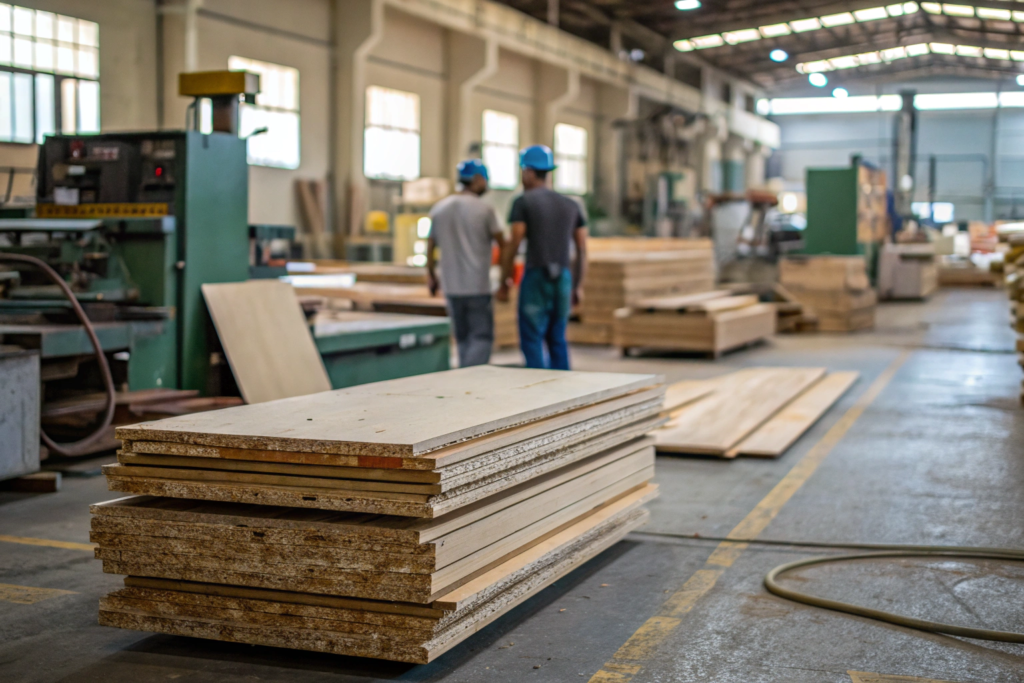
The economic logic of material substitution is straightforward. A factory quotes a price to win an order. That price is based on an assumed material cost. If the material cost increases after the quote is issued, or if the factory miscalculated the cost, their profit margin shrinks or disappears. The factory faces a choice. Lose money on the order, or find a way to reduce costs. Changing the board thickness is one of the easiest ways to reduce packaging costs. The cost of greyboard or cardboard is directly proportional to its weight, which is directly proportional to its thickness. A 1.5-millimeter board uses approximately 25 percent less fiber than a 2-millimeter board. The material cost saving is approximately 20 to 25 percent. On a large packaging order, this saving can be the difference between a profitable order and a loss-making one. The factory may rationalize the substitution by telling themselves that the customer will not notice the difference. A 0.5-millimeter difference is difficult to detect by eye or by hand. The box looks the same. It is only when measured with a caliper that the discrepancy is revealed. The factory may have gotten away with similar substitutions in the past with less attentive buyers. The solution to cost-driven substitution is twofold. First, ensure that the price you negotiate is realistic. A price that is significantly below market should be a red flag. The factory may be planning to make up the difference through material substitutions. Second, implement the pre-shipment verification step. If the factory knows that the board thickness will be measured and the evidence will be reviewed before the goods ship, the economic incentive for substitution is eliminated. The cost of getting caught, the rework, the replacement, the damage to the relationship, far outweighs the marginal saving on the board.
Can Supply Chain Issues Cause Unauthorized Board Changes?
Supply chain disruption is a reality of global manufacturing. A paper mill has a production delay. A shipping container of greyboard is held at customs. The factory’s usual supplier has a fire or a flood and cannot deliver. The factory is left with a production line ready to run and no correct board to feed it. The factory manager faces a difficult decision. Stop the line, miss the delivery date, and face the buyer’s anger over late delivery. Or use a substitute board that is available, ship on time, and hope the buyer does not notice the difference. In this scenario, the factory’s motivation is not greed. It is fear of missing the delivery commitment. The problem is not the substitution itself. It is the lack of communication. A professional, transparent factory would contact the buyer immediately when the supply issue arises. They would explain the situation. They would present the alternative board for approval. They would say, "Our 2-millimeter board supplier has delayed our order by two weeks. We can ship on time if we use a 1.8-millimeter board that we have in stock. Here is a sample. Can you approve this change, or do you prefer to wait for the correct board and accept a two-week delay?" The buyer is given the choice. An unprofessional factory makes the substitution silently and hopes for the best. The prevention for supply chain issues is to build a relationship where the factory feels safe communicating problems. If the buyer has a history of reacting with anger and punishment to any problem, the factory will hide problems. If the buyer has a history of working collaboratively to solve problems, the factory will communicate openly. The relationship culture is a powerful force in quality management.
How to Document a Board Thickness Non-Conformance
Documentation is the foundation of any successful quality complaint. A well-documented non-conformance transforms a subjective feeling, "this box feels flimsy," into an objective fact, "the board thickness is 1.5 millimeters, and the specification is 2.0 millimeters." Facts are difficult to dispute. Feelings are easy to dismiss. The documentation should be gathered as soon as the discrepancy is discovered, before any of the boxes are used or distributed. The evidence should be organized, clearly labeled, and transmitted to the factory in a formal written communication.
Documenting a board thickness non-conformance requires collecting five types of evidence. Measurement evidence is the most critical. Use a digital caliper or a micrometer to measure the thickness of the board from several boxes in the shipment. Take photographs of each measurement, with the caliper display and the board clearly visible. The caliper should be zeroed before use. Measure in multiple locations on the box to check for consistency. Weight evidence is a useful supplement. Weigh a sample of the delivered boxes and compare the weight to the approved sample or to the calculated weight based on the specified board. A thinner board will produce a measurably lighter box. Specification evidence is the agreed standard. Locate the purchase order, the packaging specification sheet, or the email where the board thickness was specified and approved. Highlight the relevant section. Sample evidence is the physical reference. The approved pre-production sample, if one was provided and retained, is the most powerful evidence. Place the approved sample and the delivered box side by side and photograph them together. Measure the approved sample’s board thickness as a reference. Batch evidence links the non-conformance to the specific shipment. Photograph the shipping carton labels showing the purchase order number and the quantity. This proves that the measured boxes came from the disputed shipment.
The documentation package should be compiled into a single PDF or a clear email with attached images. It should be sent to the factory with a formal corrective action request. The corrective action request states the problem, references the evidence, demands a specific remedy, and sets a deadline for the factory’s response. Let me detail the two most important pieces of evidence.

How Do You Measure Box Board Thickness Correctly?
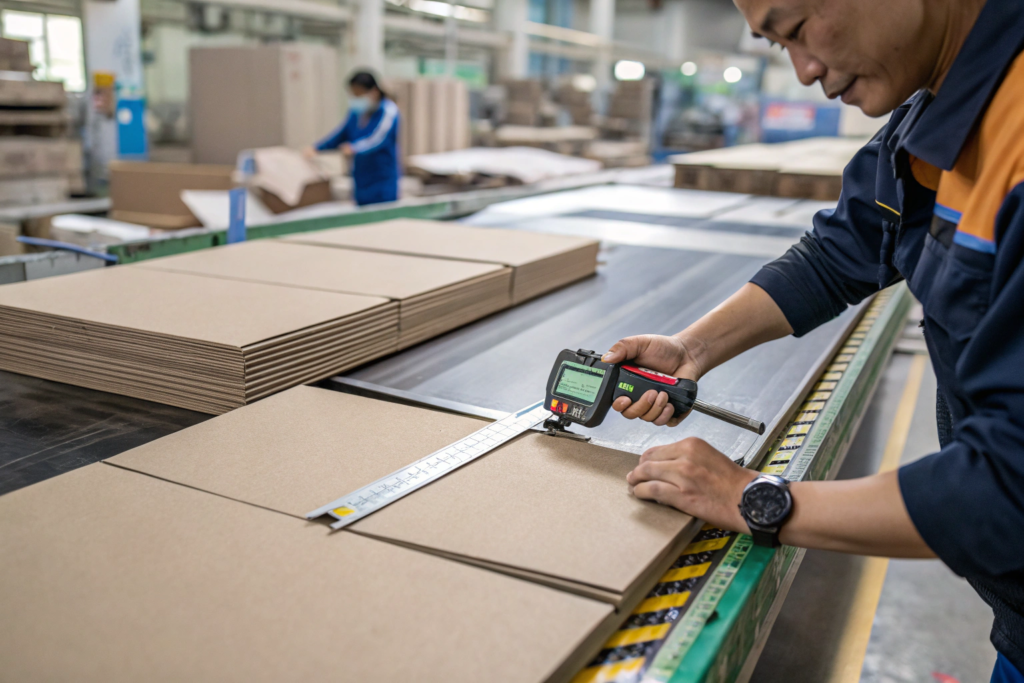
Measuring board thickness correctly is essential to producing an unassailable piece of evidence. The tool is a digital caliper or a micrometer. A caliper is more versatile and is the standard tool for this measurement. The caliper should have a resolution of 0.01 millimeters and should be calibrated or at least zeroed before use. Close the caliper jaws completely and press the zero button to set the zero point. The measurement is taken on the raw edge of the board, not on a folded or glued area. Find an exposed edge, such as the top edge of the box or the edge of a flap. If no raw edge is accessible, the measurement can be taken through the thickness of a single wall of the box. Ensure the caliper jaws are flat against the board surface, not tilted. Apply gentle, consistent pressure. Do not overtighten the caliper, as this can compress the board and give a falsely low reading. Take the measurement at several points around the box, at least five different locations. Board thickness can vary slightly within a sheet due to manufacturing tolerances. Record each measurement. Calculate the average thickness. The average is the reported value. Compare this to the specification. A tolerance is normal in board manufacturing. A typical tolerance for greyboard is plus or minus 5 to 7 percent. A 2-millimeter board might measure anywhere from 1.86 to 2.14 millimeters and still be within commercial tolerance. If the average measurement is below the lower tolerance limit, it is a non-conformance. Photograph each measurement clearly. The photograph should show the caliper reading and the box in the same frame. The photographs are the visual proof.
What Photographs Best Show the Thickness Discrepancy?
Photographs translate the technical measurement into a visually compelling argument. A well-composed photograph makes the discrepancy obvious even to someone who does not understand caliper readings. The most effective photograph is the side-by-side comparison. Place a piece of the board from the approved sample next to a piece of the board from the delivered box. Align them on a flat surface. The difference in thickness is visible as a step between the two boards. Photograph this from the side, at the level of the board edge. The camera should be parallel to the board edges to avoid perspective distortion. A ruler placed next to the boards provides a scale reference. The second most effective photograph is the caliper measurement shot. Hold the caliper in one hand, with the jaws gripping the board. The digital display should be clearly visible and legible. The background should be uncluttered. The photograph should be in sharp focus. The third photograph is the box comparison shot. Place the approved sample box next to the delivered box. Photograph them from the front and from the side. While the thickness difference may not be visible in these shots, the overall quality difference, the structure, the rigidity, may be apparent. The fourth photograph is the carton label shot. This links the measured boxes to the specific purchase order and shipment. The photographs should be high resolution, well-lit, and unedited. They should be taken with a good quality camera or a modern smartphone. The images should be included in the corrective action report, not sent as separate, unlabeled files. Each photograph should have a caption explaining what it shows.
What Compensation Should You Negotiate for Inferior Packaging
Negotiating compensation for unauthorized board thickness reduction is a matter of quantifying the financial impact and presenting a clear, itemized claim. The goal is to be made whole. You paid for a 2-millimeter box and received a 1.5-millimeter box. The value you received is less than the value you paid for. The compensation should bridge that gap. The negotiation should be based on the documented facts, not on anger or the desire to punish. A factory that acknowledges the error and compensates fairly is a factory that can improve. A factory that denies the error despite clear evidence is a factory to exit.
The compensation you should negotiate for a board thickness reduction depends on the usability of the boxes. If the boxes are still usable, meaning they are structurally adequate to protect the product and present acceptably to the consumer, a price reduction is appropriate. The price reduction should be calculated based on the material cost difference. The factory saved a quantifiable amount by using the thinner board. That saving should be passed on to you, plus a penalty for the unauthorized change. A typical price reduction for this type of non-conformance is 10 to 20 percent of the packaging cost. For a 25 percent reduction in board thickness, a 15 percent price reduction is a reasonable starting point. If the boxes are not usable, meaning they are too flimsy to protect the product, they deform when packed, or they present an unacceptable brand image, the factory must replace them. The replacement boxes must be manufactured with the correct board thickness at the factory’s expense. The factory must also cover any additional shipping costs for the replacement boxes and any costs associated with the delay. If the timeline does not allow for replacement, a full refund for the packaging is appropriate. The negotiation should be conducted in writing. The initial claim should be included in the corrective action report. The factory will likely respond with a counter-offer. Be prepared to negotiate, but do not accept a resolution that leaves you bearing the cost of the factory’s error. The compensation should be issued as a credit note against the current invoice or as a direct payment. It should not be deferred to a future order unless you have a high degree of confidence that the future order will materialize.
The documentation of the non-conformance is your leverage in the negotiation. The factory knows that you have the evidence. This strengthens your negotiating position considerably. Let me detail the two most common compensation scenarios.

How Do You Calculate a Fair Price Reduction for Thinner Board?
Calculating a fair price reduction starts with the material cost. The cost of the board is a function of its weight, which is a function of its thickness. If the specified board was 2.0 millimeters and the delivered board was 1.5 millimeters, the delivered board uses 25 percent less fiber. The material cost saving is approximately 20 to 25 percent, allowing for some fixed processing costs that do not change with thickness. The board cost is one component of the total box cost. The total box cost includes the board, the printed paper wrap, the glue, the labor for box making, and the factory’s overhead and profit. The board cost might be 30 to 50 percent of the total box cost. A 25 percent saving on the board translates to a 7.5 to 12.5 percent saving on the total box cost. This is the factory’s illicit profit. The fair price reduction should be at least this amount, because the factory should not profit from their unauthorized change. In addition, a penalty component should be added. The penalty is compensation for the fact that the change was made without approval, that the boxes do not meet the specification, and that the brand’s quality image has been diminished. A penalty of 5 to 10 percent of the packaging cost is reasonable for a first offense. The total price reduction claim would be in the range of 15 to 20 percent. This is presented to the factory with the calculation methodology clearly explained. The factory can review the numbers and respond. The negotiation is a discussion about the specific percentages, but the principle is non-negotiable. The buyer should not pay the full price for a product that does not meet the specification.
When Should You Demand a Full Remake of the Packaging?
A full remake of the packaging is the appropriate remedy when the boxes are not fit for their intended purpose. This determination is based on objective criteria. The structural integrity test is the primary criterion. Pack a sample box with the actual product it is designed to hold. Stack the packed boxes to the height that they will be stacked in the warehouse and during shipping. The boxes must not deform, collapse, or show signs of crushing. If they do, they are not fit for purpose. The shipping simulation test involves packing the box, sealing it, and subjecting it to a drop test from a standard height, typically 1 meter. The box must protect the product inside. If the box ruptures or the product is damaged, the boxes are not fit for purpose. The consumer perception test is more subjective but equally important for a premium brand. Present the box with the thinner board to a panel of colleagues or, ideally, to a small sample of target consumers. Ask them to rate the perceived quality. If the rating is significantly lower than the rating of the approved sample box, the boxes are damaging the brand. If the boxes fail any of these tests, the remedy is replacement. The factory is instructed to manufacture new boxes with the correct board thickness and to ship them by the fastest available method. The factory bears all costs. The defective boxes are either returned to the factory at their expense or, more commonly, destroyed with photographic evidence provided to the factory. The destruction is documented. If the timeline does not allow for replacement, a full refund is issued. The defective boxes are disposed of, and the buyer sources alternative packaging, potentially from a different supplier. The cost of the alternative packaging, if it is higher than the original price, is included in the compensation claim.
How to Prevent Future Packaging Substitutions
Prevention is the ultimate solution to packaging material substitution. The corrective action for a specific order is a short-term fix. The long-term fix is a system that makes it virtually impossible for the wrong material to be used without detection. The prevention system must operate at two levels. The supplier level, where the factory’s material purchasing is controlled and verified. And the buyer level, where the factory’s finished packaging is inspected and approved before shipment. The most effective prevention tool is the pre-shipment verification step, a simple, low-cost check that closes the loop between the factory’s production and the buyer’s approval.
Preventing future packaging substitutions requires a three-part prevention system. Part one, the specification. The packaging specification must be documented in the purchase order with absolute clarity. Do not write "greyboard box." Write "rigid gift box made from 2.0-millimeter greyboard, tolerance plus or minus 5 percent, with a 128-gram coated paper wrap." The thickness, the tolerance, the paper weight, and the finish must all be specified numerically. A verbal or vague specification is an invitation to substitution. Part two, the pre-shipment verification. Require the factory to perform the board thickness measurement themselves, on the finished production boxes, and to submit photographic or video evidence of the measurement for your approval before the goods are shipped. The evidence must show the caliper measurement on a box from the production batch, with the purchase order number visible. You review the evidence, compare the measurement to the specification, and approve or reject the shipment. No shipment without approval. Part three, the incoming inspection. When the packaging arrives at your warehouse, perform your own thickness measurement on a random sample of boxes before accepting the shipment. This is the final verification. If the boxes fail, you have the evidence to refuse the shipment and demand corrective action before the goods are in your inventory. The combination of specification clarity, pre-shipment verification, and incoming inspection creates a closed loop that catches substitutions at three points.
The prevention system requires a small investment of time at each stage, but the return on that investment is the elimination of costly and brand-damaging packaging failures. Let me detail the two most effective prevention measures.
Should You Require a Pre-Shipment Measurement Video?
Yes, the pre-shipment measurement video is the single most effective prevention measure for packaging material substitutions. It is the same principle as the weight test videos and snap test videos we discussed in earlier articles. A continuous, unedited video of the measurement being performed on the actual production boxes provides verifiable proof that the correct material was used. The video requirements are specific. The video must begin by showing the purchase order or the packaging specification document, with the board thickness requirement clearly visible. The video must show the caliper being zeroed. The jaws are closed, and the zero button is pressed. The zeroed display is shown to the camera. The video must show a random box being selected from the production batch. The carton label, with the purchase order number, is shown. The box is opened if necessary to access a raw edge of the board. The video must show the thickness measurement being taken at several points on the box. The caliper display must be clearly visible and legible throughout. The video must be a single, continuous file with no cuts or edits. The video is sent to the buyer for review. The buyer watches the video, verifies the measurements, and responds with an approval or a rejection. The video review takes five minutes. The video production takes the factory’s QC inspector ten minutes. The cost is negligible. The deterrence effect is enormous. A factory that knows the thickness will be measured on video and reviewed by the buyer is far less likely to attempt a substitution. The video is also a valuable record for future reference.
How Can a Retained Packaging Sample Prevent Disputes?
A retained packaging sample, also called a sealed sample or a reference standard, is a physical box that has been approved by both the buyer and the factory as the definitive representation of the specification. It is the ultimate arbiter of any quality dispute. The process is simple. Before production, the factory produces a small number of sample boxes using the exact materials and construction methods that will be used in production. The buyer receives the samples, evaluates them, and if they are approved, signs and dates one sample and returns it to the factory. The buyer retains a second signed sample. Both parties now have an identical, approved reference standard. If a dispute arises about the board thickness, the retained sample is measured. The delivered boxes are measured. The two measurements are compared. There is no argument about what was agreed. The physical evidence is in hand. The retained sample eliminates the he-said-she-said dynamic that can make quality disputes so frustrating. It is a simple, low-tech, highly effective tool. The retained sample should be stored in a safe place, protected from damage, and clearly labeled with the purchase order number, the date, and the signatures of the approving parties. It should be kept for at least the duration of the production order and for a reasonable period after delivery. For ongoing packaging programs, the retained sample is the reference for every repeat order. The factory checks each new production batch against the retained sample. The buyer checks incoming shipments against the retained sample. The standard is consistent and unchanging. We use retained packaging samples for all our clients’ custom packaging orders. It is a standard part of our quality management system.
Conclusion
Handling a factory that changes cardboard box thickness without approval is a test of your quality management system and your supplier relationship management. The unauthorized substitution of a thinner board is a breach of the specification and a breach of trust. How you respond determines whether the problem is a one-time event that is corrected and prevented, or a recurring issue that erodes your product quality and your brand reputation. We have explored the root causes of board thickness changes, the cost pressures, the supply chain disruptions, and the internal miscommunications that lead factories to make unauthorized substitutions. We have detailed the documentation process, the caliper measurements, the side-by-side photographs, and the specification evidence that transforms a subjective complaint into an objective, unassailable fact. We have discussed the compensation negotiation, the price reduction for usable boxes, and the full remake for unusable boxes. And we have outlined the prevention system, the pre-shipment measurement videos, the retained packaging samples, and the incoming inspections that make substitutions virtually impossible to get away with.
At AceAccessory, packaging is not an afterthought. It is an integral part of the product we deliver to our clients. Whether we are producing a custom gift box for a luxury scarf or a retail-ready display carton for a set of hair clips, the material specifications are treated with the same rigor as the product specifications. Our packaging suppliers are audited and approved. Our material specifications are documented in detail. Our QC team measures board thickness during incoming inspection and during final inspection. We provide pre-shipment measurement videos to our clients for their approval. We retain sealed packaging samples for every order. We do this because we understand that the box is the first thing the consumer touches. It sets the expectation for the product inside. A flimsy box devalues a beautiful product.
If you have been burned by a supplier who substituted inferior packaging materials, or if you want to ensure that your current sourcing relationships have the right packaging controls in place, I am happy to discuss how we manage packaging quality. Contact our Business Director, Elaine, at elaine@fumaoclothing.com. Tell her about your packaging requirements and any quality issues you have experienced. She can share our packaging specification templates, our measurement verification process, and examples of our retained sample program. Do not let a thinner box undermine your brand’s hard-won reputation for quality. Work with a factory that treats packaging specifications as seriously as you do.