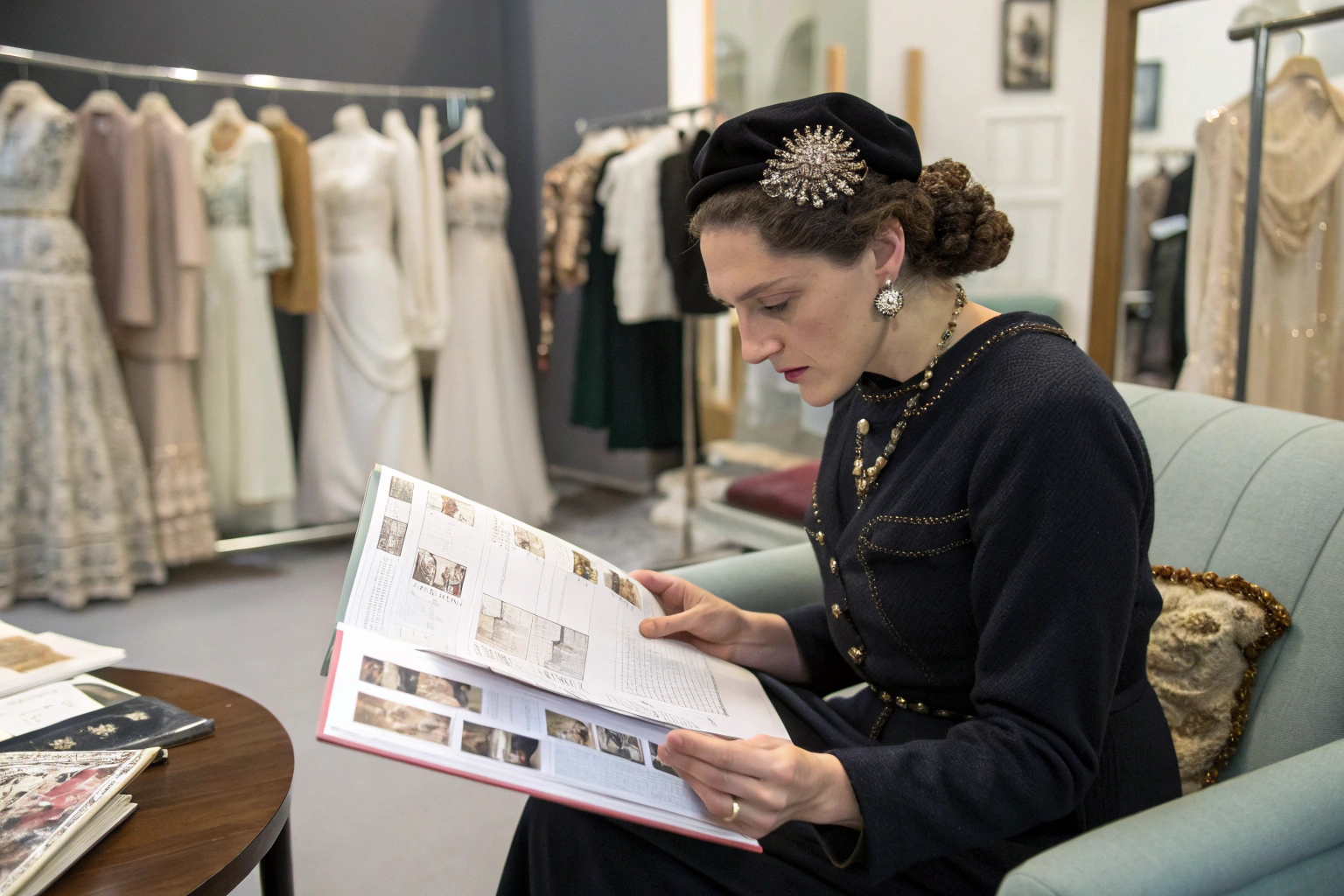
A costume designer for a major period drama television series sat in my showroom two years ago with a lookbook of historical references that was breathtaking in its detail. She was designing the hair accessories for a new series set in the 1920s, and she needed hair pins that were not just vaguely vintage-inspired. She needed pins that were historically accurate reproductions. Long, curved U-shaped pins for securing finger waves. Delicate, filigree-topped pins for art deco buns. Flat, crimped pins that would hold a cloche hat in place without slipping. She had taken her specifications to several accessory factories. They all offered her the same thing. A standard 5-centimeter straight hair pin with a small, generic decorative head. They could change the color of the head, maybe add a rhinestone, but the pin itself was a stock item from their catalog. She needed a factory that could make pins from scratch, to her exact shapes, in the specific metal finishes that matched the era. She asked me, "Can you make the pin itself custom, not just the decoration on top?"
Yes, our factory produces fully custom shaped hair pins for vintage and historical hairstyling, with the capability to manufacture the entire pin, the wire gauge, the length, the bend geometry, the tip finish, and the decorative head, to any specification. We can produce classic U-shaped pins in various lengths and wire diameters for securing finger waves and elaborate updos. We can produce long, curved roller pins for vintage set styles. We can produce flat, crimped pins for hat securing and for creating volume at the crown. We can produce art deco-inspired geometric pins with custom metal stampings. And we can produce ornate filigree pins with hand-applied decorative elements. The pins are made from brass, stainless steel, or nickel-free alloy wire, with finishes including polished gold, matte gold, silver, gunmetal, and antique brass. The wire diameter, the overall length, the bend angles, the tip sharpness, and the head design are all customized. Our minimum order quantity for a fully custom shaped hair pin is 500 pieces per design, with a production lead time of 30 to 45 days.
Vintage hairstyling is a specialized discipline. The hairstyles of the 1920s, 1930s, 1940s, and 1950s relied on specific pin shapes that are no longer in common production. The modern hair pin market is dominated by simple straight pins and snap clips. The specialized pins that were once ubiquitous, the long roller pins, the heavy-gauge U-pins, the decorative hat pins, are difficult to find. For the vintage enthusiast, the professional hairstylist specializing in period styles, and the film and theater costumer, access to accurate reproduction hair pins is essential. At AceAccessory, we have developed a specialty in custom wire-formed accessories. We have the wire bending, metal finishing, and decorative assembly capabilities to produce vintage-accurate hair pins at accessible quantities. Let me walk you through exactly what we can make and how we make it.
What Custom Pin Shapes Can You Create for Vintage Styles
The shape of a hair pin is defined by its wire gauge, its overall length, its bend geometry, and its tip configuration. These parameters determine how the pin interacts with the hair, how much tension it provides, how securely it holds, and whether it is comfortable to wear. The decorative head, if present, is a separate element that is attached to the wire body. The vintage hair pin market requires a wide range of shapes, each corresponding to a specific hairstyle or era. A pin that works for a 1940s victory roll is very different from a pin that works for a 1920s Marcel wave. The shape is not just decorative. It is functional, engineered for a specific purpose.
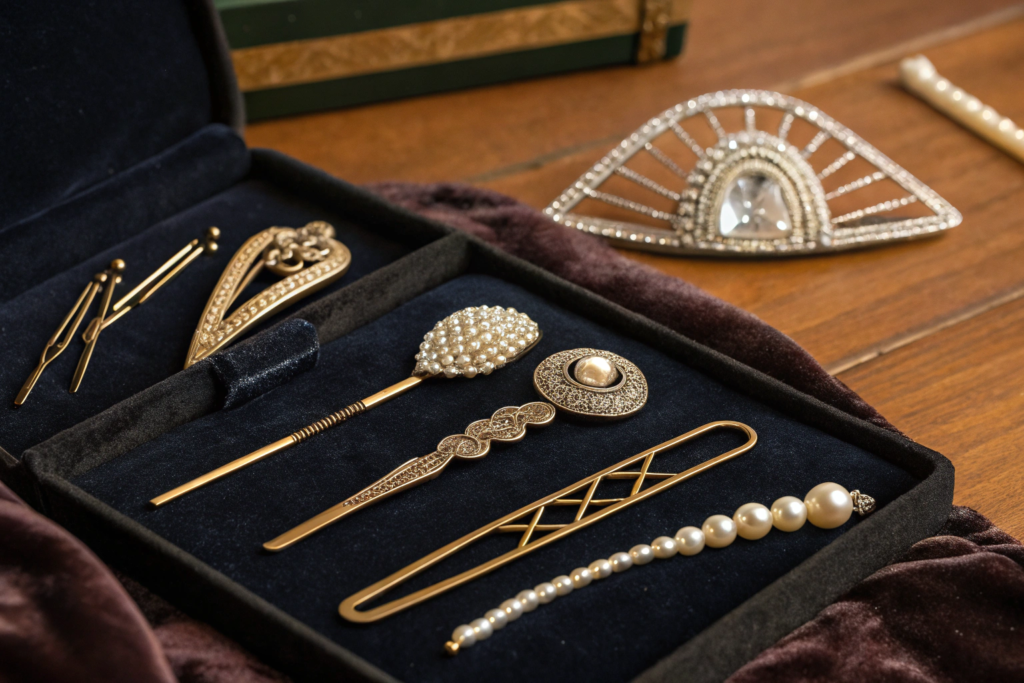
Our factory can produce custom shaped hair pins in four broad categories. U-shaped and curved pins are the most common vintage style. They are formed from a single piece of wire bent into a U shape, with two parallel legs. The legs can be straight or slightly curved. The bend at the top can be tight or open. The length ranges from 4 to 10 centimeters. These pins are used for securing finger waves, pin curls, and general updo construction. Roller pins are longer pins, typically 6 to 12 centimeters, with a pronounced curve or a series of bends. They are used for creating vintage set styles, where the hair is rolled around the pin and secured. The pin must be long enough to span the width of the roller and strong enough to hold the hair under tension. Flat and crimped pins are used for volume creation and hat securing. They are formed from wire that has been flattened or crimped along its length to increase friction against the hair. They are typically shorter, 4 to 6 centimeters, and are often worn in multiples. Decorative head pins feature an ornamental element attached to one or both ends of the wire body. The decorative element can be a stamped metal shape, a cast resin piece, a pearl or bead, a cluster of crystals, or a filigree finding. These pins are both functional and visible, used to accent a vintage hairstyle. The decorative head is attached by soldering, crimping, or adhesive, depending on the materials and the design.
Each category of pin requires a different set of wire forming tools and a different production sequence. The U-shaped pin is the simplest to produce. The decorative head pin is the most complex. Let me detail the two most technically demanding vintage pin shapes.
How Do You Create Long Roller Pins for 1940s Hairstyles?
The roller pin is the essential tool for creating authentic 1940s hairstyles. The victory roll, the pageboy, the pompadour, these styles were all set using long, sturdy pins that could hold sections of hair in a rolled or folded position while the hair dried or cooled. The modern equivalent is a bobby pin, which is too short and too weak for these styles. The vintage roller pin is typically 7 to 10 centimeters long, made from a heavier gauge wire, 1.2 to 1.5 millimeters in diameter, with a pronounced curve along its length and a smooth, rounded tip. The production of a custom roller pin begins with the wire. The specified wire is drawn to the correct diameter. It is cut to the required length. The ends are ground and polished to a smooth, rounded tip. A sharp or rough tip will snag the hair and scratch the scalp. The tip finishing is a critical quality step. The wire is then bent into the specified shape. The bend geometry is created using a custom wire forming jig or a CNC wire bending machine. The jig is a tool that holds the wire in the correct position while it is bent around a form. The CNC machine can be programmed to produce complex, repeatable bends. For a simple roller pin, the bend is a smooth, even curve along the entire length of the pin. For a more complex pin, there may be a tighter bend at one end to create a hook or a loop. After bending, the pin is checked against a template or a dimensional drawing to ensure the shape is correct. The pin is then finished. The surface is polished to the specified sheen. The metal finish, gold, silver, or antique, is applied by electroplating or by a chemical treatment. The finish is inspected for evenness and durability. The finished roller pin must be strong enough to hold a section of hair without bending or springing open. The wire gauge and the temper of the metal are critical. The wire must be rigid enough to maintain its shape under tension, but not so brittle that it snaps when bent. The pin is tested by inserting it into a test bundle of hair and verifying that it holds securely.
Can You Produce Decorative Art Deco Stamped Pin Heads?
Yes, the decorative stamped pin head is a signature detail of vintage reproduction hair pins. The geometric, symmetrical designs of the Art Deco era, the sunburst, the fan, the chevron, and the stepped arch, are iconic and instantly recognizable. Reproducing these designs requires custom metal stamping tools. The process begins with the design. The client provides a drawing or a reference image of the desired shape. Our tooling engineer translates this into a stamping die design. The die is a matched set of a male punch and a female cavity, typically made from hardened tool steel. The die is fabricated by a specialist toolmaker. The die fabrication takes 10 to 14 days. Once the die is ready, the decorative heads are stamped. A strip of the specified metal, brass or nickel-free alloy, in the correct thickness, typically 0.3 to 0.5 millimeters, is fed into a stamping press. The press forces the punch into the cavity, cutting and shaping the metal in a single stroke. The stamped piece is ejected, and the press cycles to stamp the next piece. The stamping process is fast and produces highly consistent parts. The stamped heads are then tumbled to remove any burrs or sharp edges. They are polished to the required finish. They may be plated with gold, silver, or antique finish. The decorative head is attached to the wire pin body. The attachment method depends on the design. The head can be soldered to the end of the wire. Soldering provides the strongest and most permanent attachment. The head can be crimped onto the wire. A small tab on the back of the stamped head is folded over the wire and compressed. Crimping is faster than soldering but may be less secure for heavy heads. The head can be attached with a strong, clear industrial adhesive. Adhesive attachment is used for delicate heads that cannot withstand the heat of soldering. The assembled pin is inspected for the security of the head attachment and the overall appearance. The Art Deco stamped pin is a premium product that requires investment in custom tooling, but the result is a unique, historically accurate accessory that is unavailable from any other source.
What Materials Are Authentic for Vintage Reproduction Hair Pins
The material of a vintage reproduction hair pin matters for both authenticity and functionality. The original hair pins of the 1920s through 1950s were made from the metals that were available and economical at the time. Brass was common. Steel was used for heavier pins. Copper was sometimes used for decorative elements. Modern reproductions should use materials that replicate the look and feel of the originals while meeting contemporary safety standards, particularly the nickel release limits of the EU REACH regulation. The choice of metal affects the pin’s strength, its flexibility, its color, and its ability to take a plated finish.
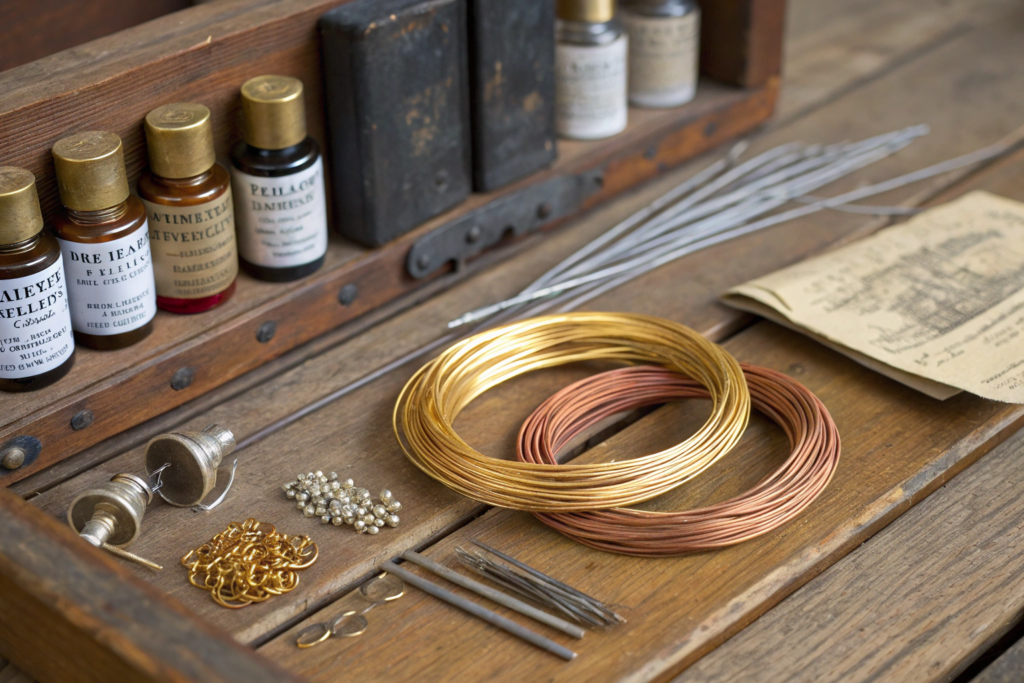
The authentic materials for vintage reproduction hair pins are brass, stainless steel, and nickel-free alloys. Brass is the most historically accurate metal for decorative hair pins. It is an alloy of copper and zinc. It has a warm, golden color that is beautiful in its natural state and that takes gold plating exceptionally well. Brass wire is available in a range of gauges and tempers. It can be bent, formed, and soldered. Brass is the standard material for premium vintage reproduction pins. Stainless steel is used for heavier, functional pins, such as roller pins and U-pins. It is stronger than brass and more resistant to corrosion. Stainless steel can be polished to a bright silver finish or plated with gold. It is hypoallergenic and meets the most stringent nickel release standards. Nickel-free alloy wire is used for silver-colored pins that must be nickel-free. Many standard silver-colored wires contain nickel, which is a common allergen and is restricted in the EU. Nickel-free alloys, such as a copper-zinc-nickel-free formulation, provide a bright silver color without the allergen risk. Copper wire is sometimes used for decorative elements or for the core of pins that will be heavily plated. Copper is very malleable and easy to form, but it is soft and can bend under tension. It is not suitable for functional pins that must hold a hairstyle. The wire temper, the degree of hardness, is as important as the metal type. Dead soft wire is fully annealed and very easy to bend. It is used for decorative elements that are shaped by hand. Half-hard wire has some springiness. It is used for pins that need to hold their shape but still be formable. Spring-hard wire is very springy and holds its shape under tension. It is used for functional pins that must grip the hair securely.
The finish on the metal is what gives the pin its final appearance. The finish must be durable, colorfast, and safe for prolonged skin contact. Let me detail the two most important finish options.
How Do You Achieve an Antique Brass or Gold Finish Safely?
Antique brass and gold finishes are the signature looks of vintage hair accessories. The warm, slightly aged glow of antique brass evokes the 1920s and 1930s. The brighter gleam of polished gold is more 1950s. Achieving these finishes on modern, nickel-free wire requires a process that is both aesthetically authentic and chemically safe. The base metal is prepared. The formed pin is cleaned to remove any oils, dirt, or oxidation. It is polished to the desired level of smoothness. The finish is determined by the polishing. A high polish produces a bright, shiny final finish. A brushed or matte surface produces a softer, more subdued finish. The pin is then electroplated. Electroplating deposits a thin layer of metal onto the surface of the pin using an electric current. The pin is immersed in a solution containing dissolved metal ions, gold, copper, or brass alloy. An electric current is applied, and the metal ions are attracted to the pin surface, forming a uniform, adherent layer. The plating thickness is measured in microns. A decorative gold plating might be 0.5 to 2 microns thick. The plating solution and the process must be free of nickel and other restricted substances. For an antique finish, an additional step is performed after plating. The plated pin is treated with a chemical darkening agent, such as a mild liver of sulfur solution, which reacts with the metal surface to create a darkened patina. The pin is then selectively polished. The raised areas are polished to remove the patina and reveal the bright metal underneath. The recessed areas retain the dark patina, creating the contrast that defines the antique look. The finished pin is sealed with a thin, clear protective lacquer. The lacquer prevents tarnishing and protects the finish from wear. The lacquer must be skin-safe and must not yellow over time. The antique finishing process is labor-intensive and requires skilled artisans. Each pin is unique, with slight variations in the patina distribution. This individuality is part of the appeal.
What Wire Gauges and Tempers Work Best for Holding Hair?
The wire gauge and temper determine whether a pin will hold a hairstyle or slide out. A pin that is too thin will bend under the tension of the hair. A pin that is too thick will be difficult to insert and uncomfortable to wear. A pin that is too soft will deform and lose its grip. A pin that is too hard will be impossible to shape and may snap. The selection of the correct wire gauge and temper is a critical design decision for functional hair pins. The wire gauge is measured in millimeters or in American Wire Gauge, AWG. For U-shaped pins and general purpose vintage pins, a wire diameter of 1.0 to 1.2 millimeters, approximately 18 to 17 AWG, is standard. This provides a good balance of rigidity and comfort. For heavy-duty roller pins that must hold large sections of hair, a thicker wire of 1.3 to 1.5 millimeters, approximately 16 to 15 AWG, is used. For delicate decorative pins where holding power is secondary to appearance, a thinner wire of 0.8 to 1.0 millimeters, approximately 20 to 18 AWG, may be used. The wire temper for functional pins is typically half-hard. Half-hard wire has enough springiness to grip the hair and return to its original shape after being inserted and removed. It can still be bent with firm pressure to adjust the shape slightly. Spring-hard wire is used for pins that must exert a strong clamping force, such as crimped flat pins. The temper is achieved by the wire manufacturer through controlled work hardening. The wire is drawn through a series of progressively smaller dies, which elongates and hardens the metal. The amount of cold work determines the final temper. The temper is specified when ordering the wire. The pin’s shape also contributes to its holding power. The classic U-shape creates a spring tension between the two legs. The legs press outward against the hair, and the friction holds the pin in place. The length of the legs, the distance between them, and the curvature all affect the grip. A longer leg penetrates more hair and provides a more secure hold. A closer spacing between the legs creates more tension. A slight wave or crimp along the legs further increases friction. The pin’s grip is tested by inserting it into a standardized hair test bundle and measuring the force required to pull it out. This test quantifies the holding power and ensures consistency across production batches.
How Are Vintage Hair Pins Finished and Inspected
The finishing and inspection of custom vintage hair pins is where the product’s quality is confirmed. The pins have been formed, plated, and assembled. Now they must be checked for every attribute that affects their function and their appearance. The inspection process for hair pins is more detailed than for many other accessories because the pins have direct, prolonged contact with the skin and hair. A sharp tip, a rough edge, or a loose decorative element can cause injury. A plating defect can lead to corrosion or an allergic reaction. The inspection must be thorough.
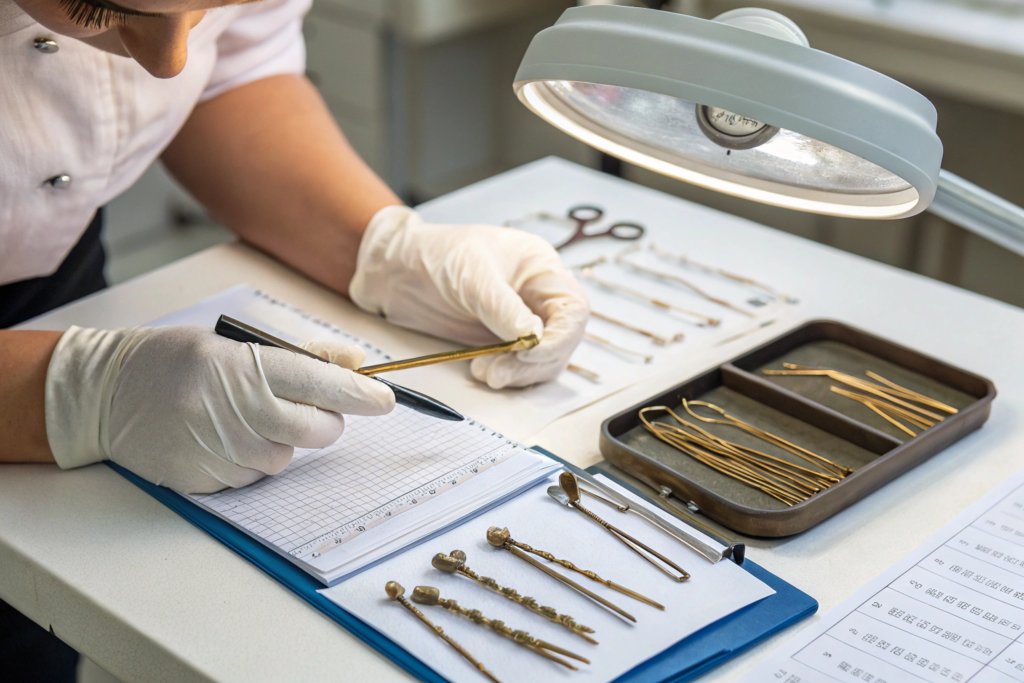
The finishing and inspection process for vintage hair pins covers dimensional accuracy, tip condition, surface finish, decorative head security, and overall appearance. Dimensional accuracy is checked by measuring the pin length, the wire diameter, and the bend angles with a caliper and a protractor. The measurements are compared to the specification. The tolerance is plus or minus 0.5 millimeters for length and plus or minus 2 degrees for bend angles. Tip condition is inspected under a magnifying lamp at 5x magnification. The tip must be smoothly rounded, with no burrs, no sharp edges, and no roughness. The inspector also runs a gloved fingertip over the tip to check for any tactile roughness. A sharp tip is a critical defect and results in immediate rejection of the pin and a quarantine of the batch. Surface finish is inspected visually under bright, daylight-balanced lighting. The plating must be even, with no thin spots, no discoloration, no peeling, and no pitting. The lacquer coating must be clear and smooth, with no bubbles, no drips, and no orange peel texture. The color is compared to the approved reference sample. Decorative head security is tested by applying a gentle tugging force to the head. The head must not detach, loosen, or rotate. For soldered heads, the solder joint is inspected under magnification for a complete, smooth fillet. For crimped heads, the crimp is checked for tightness. Overall appearance is a subjective assessment by the inspector. The pin is placed on a neutral background and viewed from all angles. It must be symmetrical, well-proportioned, and free of any visible defects. The inspection is performed on a random sample according to the AQL 2.5 standard. The inspection data is recorded and included in the shipment documentation.
The inspection is particularly rigorous for the tip condition and the plating quality, as these are the attributes that most directly affect the consumer’s safety and satisfaction. Let me detail the two most critical inspection points.
How Do You Ensure Pin Tips Are Smooth and Non-Damaging to Hair?
A smooth, rounded pin tip is the most important safety and quality feature of a hair pin. The tip is the part that penetrates the hair and contacts the scalp. A sharp tip can scratch the scalp, causing pain and potentially breaking the skin. A rough tip can snag and break individual hair strands as the pin is inserted or removed. The tip finishing process and the tip inspection are designed to eliminate these risks entirely. The tip finishing begins with the wire cutting. The wire is cut to length with a sharp blade that produces a clean, square cut with minimal burring. The cut end is then shaped. The primary shaping method for vintage-style pins is tumble deburring. The pins are placed in a rotating drum or a vibrating bowl with abrasive ceramic media. The tumbling action rounds the sharp corners of the cut wire and smooths the entire surface of the pin. The tumbling time is controlled to achieve the desired tip radius without wearing down the wire diameter. After tumbling, the tips are inspected. If any pins have tips that are not sufficiently rounded, they may be individually ground or polished on a fine abrasive wheel. This is a manual process for premium pins. The final tip smoothness is achieved during the electroplating process. The plating deposits a smooth layer of metal over the tip, filling in any microscopic roughness. The plated tip is inspected under the magnifying lamp. The inspector looks for any remaining sharp edges, burrs, or rough spots. The inspector also performs a tactile test. Wearing a clean cotton glove, the inspector gently runs the pad of a fingertip over the tip. Any sensation of sharpness or roughness is a failure. The glove test is surprisingly sensitive. It can detect roughness that is barely visible under magnification. The tip inspection is a 100 percent check for premium pins. Every single tip on every single pin is inspected. This is a significant labor investment, but it is non-negotiable. A hair pin that damages hair is a product that will generate returns, complaints, and brand damage.
What Plating Tests Ensure Nickel-Free Compliance?
Nickel-free compliance is a legal requirement for hair accessories sold in the European Union under the REACH regulation. Nickel is a common skin allergen. Prolonged contact with nickel-releasing metal can cause allergic contact dermatitis, a painful and persistent rash. Hair pins are in prolonged contact with the skin and hair, so they must be nickel-free. The plating process is the primary source of nickel exposure risk. Many standard metal plating processes use nickel as an undercoat. A layer of bright nickel is applied to the base metal to create a smooth, corrosion-resistant surface, and then the final decorative layer, gold or silver, is applied over the nickel. If the nickel is completely covered by the final layer, it may not cause a problem. But if the final layer is thin, scratched, or worn, the nickel can be exposed and can release onto the skin. For nickel-free compliance, we use plating processes that do not use nickel at all. The base metal itself is a nickel-free alloy. The plating layers are nickel-free. The finish is tested to confirm compliance. The standard test is EN 1811, the European standard for nickel release. A sample of the finished pins is immersed in a synthetic sweat solution and held at body temperature for one week. The solution is then analyzed for nickel concentration. The nickel release must be less than 0.5 micrograms per square centimeter per week. An alternative test is a nickel spot test using dimethylglyoxime. This is a rapid screening test that can be performed in the factory. A drop of the test solution is applied to the pin surface. If the solution turns pink, nickel is present at the surface. If it remains clear, the surface is nickel-free. The spot test is used for in-process control. The formal EN 1811 test is performed by an independent, ISO 17025 accredited laboratory, and the test report is provided to the client. The nickel-free status is documented and verified.
Conclusion
Custom shaped hair pins for vintage hairstyles occupy a unique niche in the hair accessories market. They are not mass-market fashion items. They are specialized tools and authentic reproductions that serve a passionate community of vintage enthusiasts, professional stylists, and film and theater costumers. The ability to produce these pins, with their specific shapes, their authentic materials, and their meticulous finishes, requires a factory that has invested in wire forming technology, in metal finishing expertise, and in the skilled artisans who understand the difference between a standard bobby pin and a 1940s roller pin. We have explored the shapes, the long roller pins, the curved U-pins, and the decorative Art Deco stamped heads, that define the vintage aesthetic. We have examined the materials, the brass, the stainless steel, and the nickel-free alloys, that provide authentic appearance and modern safety compliance. We have detailed the finishing processes, the antique brass patination, the gold electroplating, and the tip smoothing that produce a pin that is beautiful, functional, and safe.
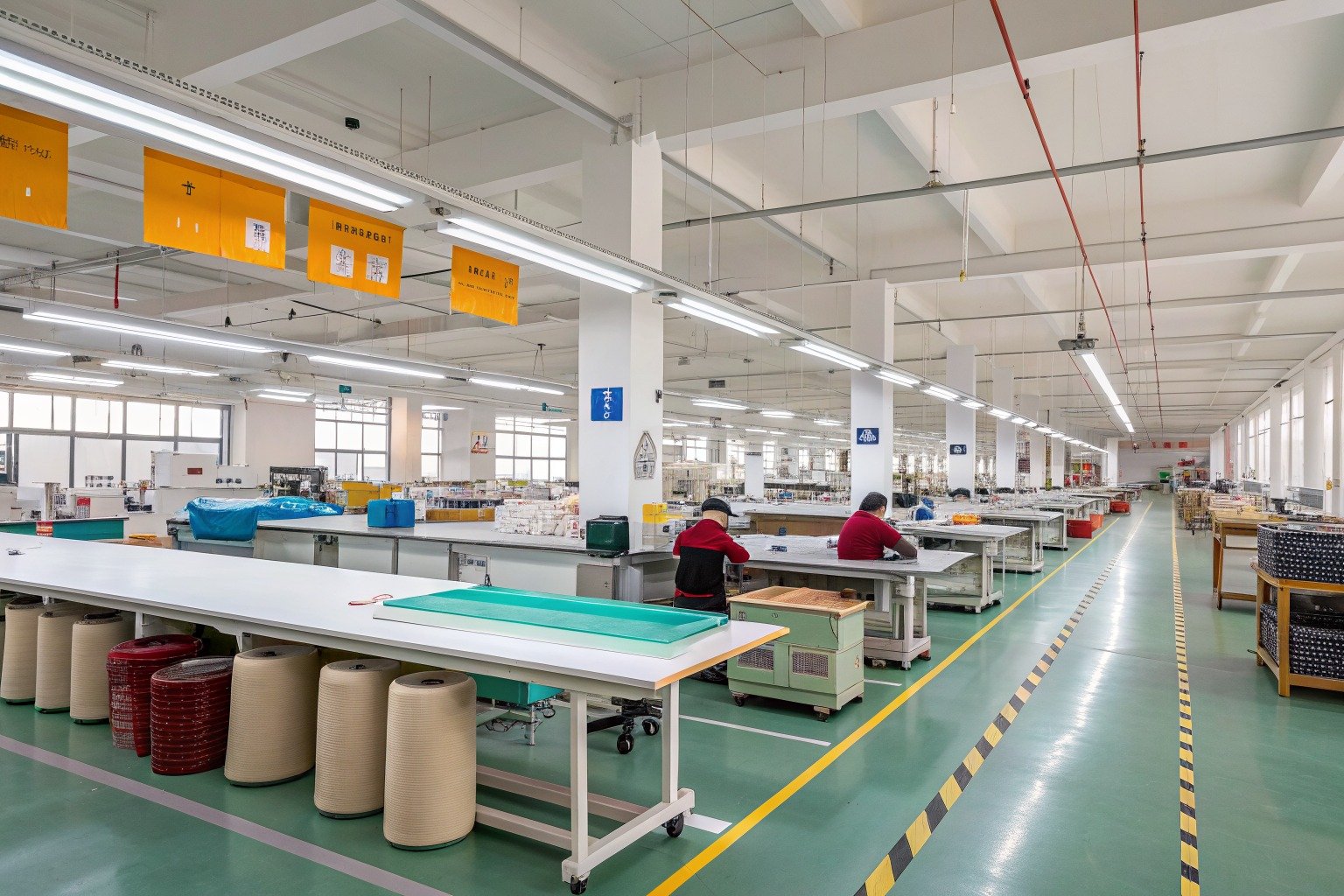
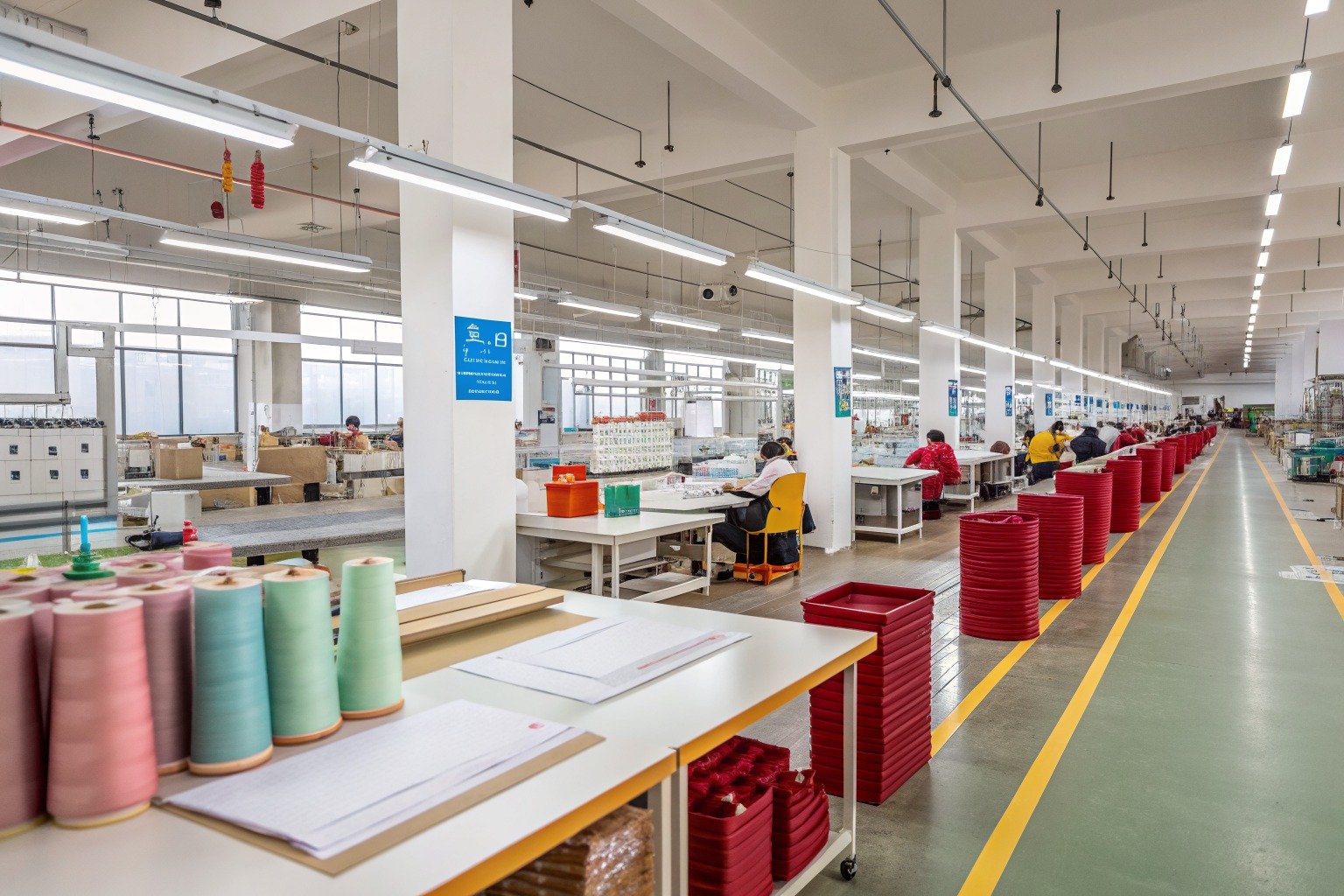
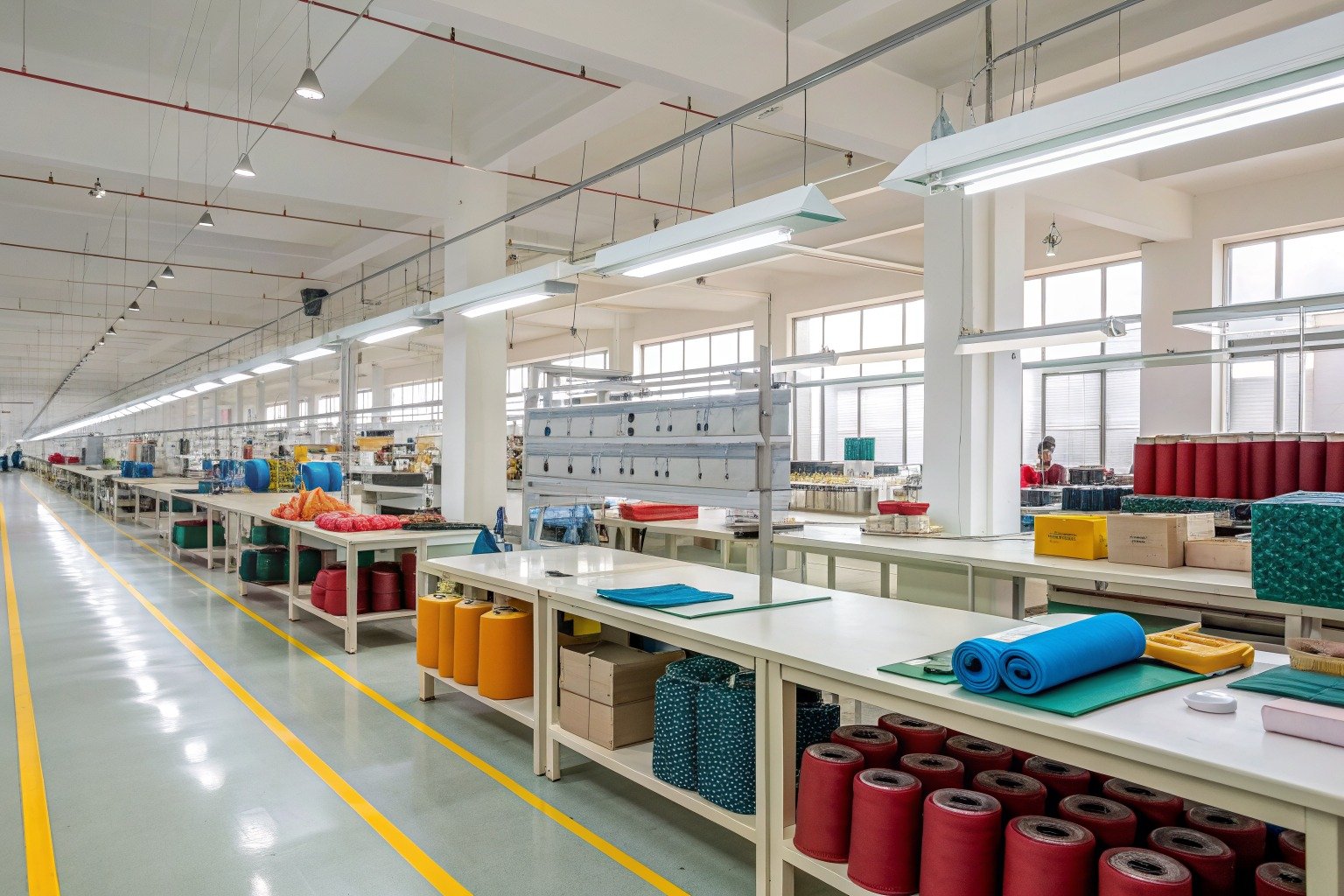
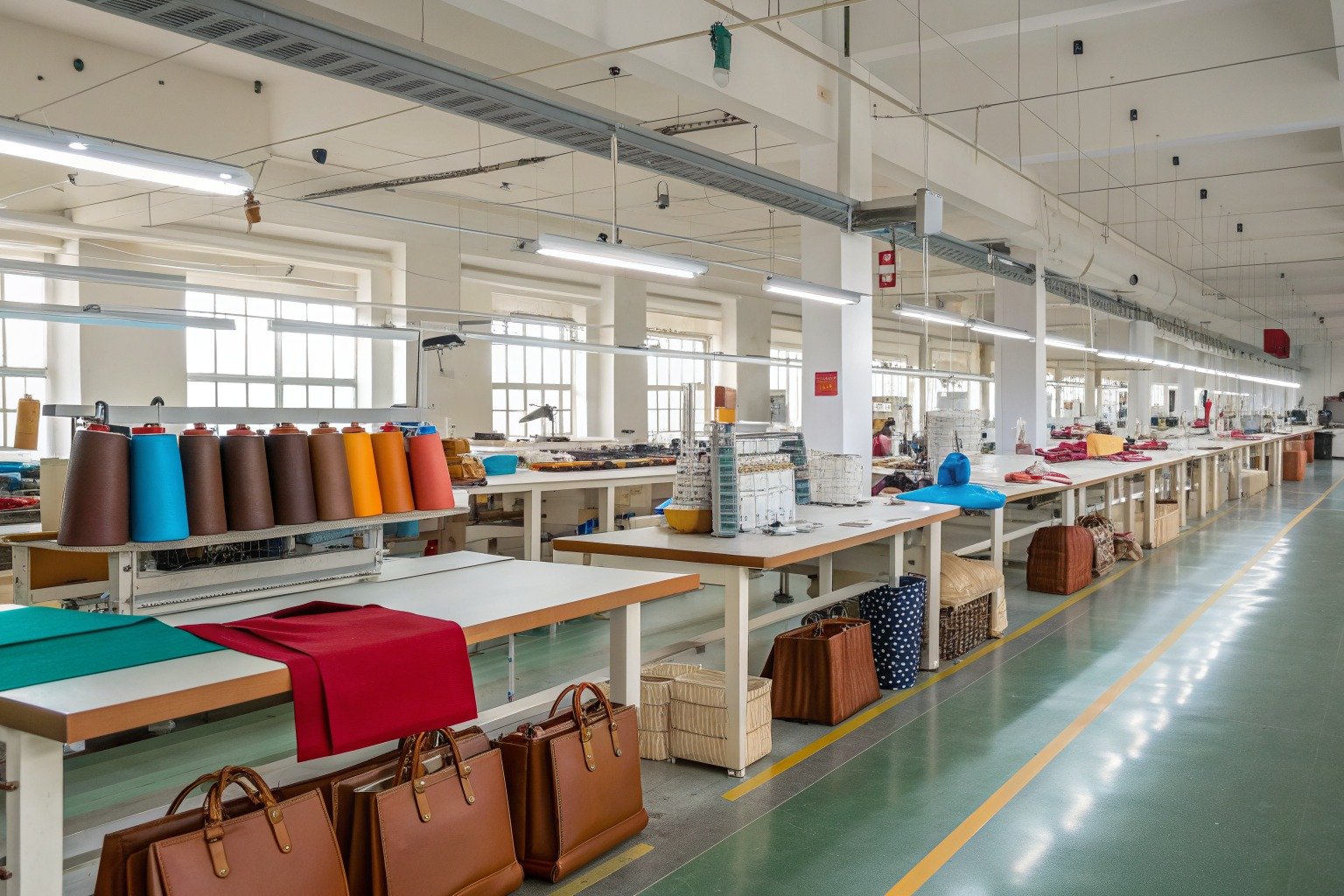
At AceAccessory, we are proud to serve the vintage and historical hair accessories market. It is a market that values accuracy, quality, and craftsmanship above all else. Our wire forming workshop is equipped with CNC wire bending machines and a library of custom forming jigs. Our metal finishing department offers a full range of electroplating and patination finishes. Our QC team inspects every pin for tip smoothness, finish quality, and dimensional accuracy. We work with brands, costume houses, and specialty retailers to produce pins that are faithful to the originals and that perform flawlessly.
If you are developing a collection of vintage-style hair pins, for a brand, for a production, or for a retail collection, and you need a manufacturing partner who can produce the authentic shapes and finishes you require, I invite you to contact us. Reach out to our Business Director, Elaine, at elaine@fumaoclothing.com. Tell her about your project, the era you are referencing, the pin shapes and materials you need, and the quantities you are planning. She can provide samples of our wire work and metal finishes, discuss tooling requirements, and provide a quotation for production. Let us help you create the hair pins that bring your vintage vision to life.