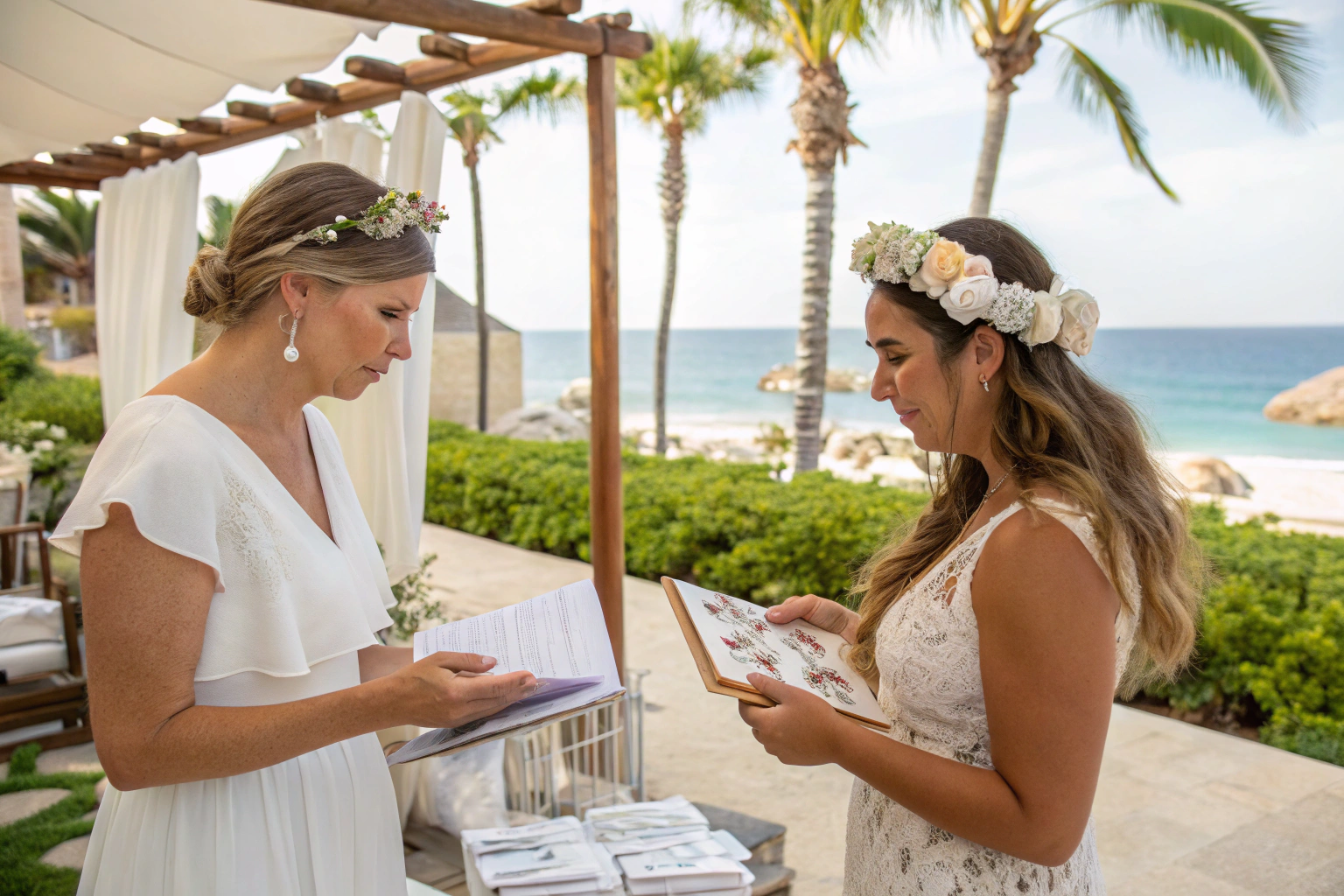
A bridal stylist from a luxury destination wedding planning company in Cabo San Lucas called me last February with a very specific problem. Her clients were brides who had chosen to marry on beaches, in tropical gardens, and on clifftop terraces overlooking the ocean. These were not church weddings with controlled climates and predictable conditions. They were outdoor ceremonies with wind, humidity, salt air, and blazing sun. The hair accessories that worked beautifully in a Manhattan ballroom, delicate crystal pins, silk flower crowns that wilted in the heat, and heavy metal headpieces that became unbearable in the sun, failed spectacularly in these environments. She needed accessories that were beautiful enough for a wedding, durable enough for a tropical climate, and light enough to wear for hours. She needed a supplier who understood the intersection of bridal aesthetics and destination practicality. She asked me what was trending for 2026, and I shared what our design team had been developing for exactly this market.
The 2026 hair accessory trends for destination weddings are defined by four key directions. First, lightweight, sculptural resin pieces that capture the look of crystal and glass but weigh a fraction of traditional bridal jewelry. These pieces are made from transparent or translucent bio-resin, often with embedded dried flowers, gold leaf, or subtle color washes that complement the natural setting. Second, weather-resistant fabric accessories, including hand-dyed silk ribbons, weatherproofed satin headbands, and sculptural fabric flowers that will not wilt, fade, or frizz in humidity. Third, minimalist pearl and shell accents that reference the beach and ocean without being themed or kitschy. A single, perfectly formed freshwater pearl on a fine gold hair pin, or a scattering of tiny shell disc clips, creates an elegant, organic look that belongs to its environment. Fourth, convertible and multi-functional pieces that transform from ceremony to reception. A hair vine that can be worn as a crown, a necklace, or a bracelet. A back piece that clips into an updo for the ceremony and detaches to become a brooch for the evening. These pieces offer value and versatility to the destination bride who packs light.
A destination wedding is not just a wedding in a different location. It is a fundamentally different experience. The bride is traveling, often to a place she has never been. She needs accessories that pack without damage, that survive the journey, and that work in the specific climate of her chosen destination. She needs pieces that feel connected to the place, whether that is a Greek island, a Mexican beach, or an Italian hillside. And she needs pieces that reflect her personal style while harmonizing with the natural beauty that was the reason she chose the destination in the first place. At AceAccessory, we produce hair accessories for bridal brands, destination wedding planners, and resort boutiques. Our design team tracks the bridal accessories market closely, and we are already producing the 2026 trends. Let me walk you through the four defining trends.
Why Are Lightweight Resin Accessories Trending for Beach Weddings
Beach weddings present a unique set of physical challenges for hair accessories. The wind off the ocean can catch a heavy metal headpiece and pull it loose. The humidity can cause a delicate silk flower to droop. The salt air can tarnish an unprotected metal finish. The heat can make a heavy accessory feel like a burden. The bride wants to feel ethereal and beautiful, not weighed down and worried about her hair. Lightweight resin accessories solve these problems through their material properties. Resin is inherently light. A large, statement resin hair comb can weigh 20 to 30 grams, while a comparable metal piece might weigh 80 to 100 grams. The bride can wear it for the entire ceremony and reception without fatigue or discomfort.
Lightweight resin accessories are trending for beach weddings because they combine the visual impact of traditional bridal jewelry with the practical performance required for a tropical outdoor environment. Resin is impervious to humidity. Unlike silk flowers, which absorb moisture and wilt, resin flowers and resin-embedded botanicals remain perfectly preserved and crisp regardless of the humidity level. Resin is corrosion-resistant. Unlike metal, which can tarnish or corrode in salt air, resin is chemically inert. It will not react with salt, moisture, or the oils in sunscreen and skin. Resin is virtually unbreakable under normal wedding conditions. A dropped resin hair comb bounces on a tile floor. A dropped crystal tiara shatters. Resin is endlessly customizable. The color, the transparency, the embedded elements, and the shape can all be tailored to the bride’s vision and the wedding’s color palette. Resin captures light beautifully. A translucent resin piece with embedded gold leaf or subtle color glows in the golden hour light of a beach sunset, the most photographed moment of a destination wedding. The 2026 trend takes resin beyond the simple clear casts of previous seasons into sculptural, artistic pieces that feel like wearable art. The bio-resin movement also aligns with the values of many destination brides who choose natural settings for their weddings and want their accessories to reflect an environmental consciousness.
The resin accessories for 2026 are not the chunky, plastic-looking pieces of the past. They are refined, delicate, and often indistinguishable from glass or crystal at a glance. Let me detail the two most popular resin directions.
How Are Dried Flowers Embedded in Resin for Bridal Hair Pins?
Embedding dried flowers in resin is a technique that preserves the beauty of natural botanicals and transforms them into durable, wearable accessories. The process begins with the selection and preparation of the flowers. Tiny, delicate flowers are chosen for their shape, color, and ability to dry without losing their form. Baby’s breath, forget-me-nots, miniature ferns, and tiny rosebuds are popular choices. The flowers are carefully dried using a desiccant or a press to remove all moisture. Any residual moisture in the flower will cause clouding or degradation in the resin. The dried flowers are arranged in a silicone mold that has been shaped to the desired accessory form, a hair pin top, a comb back, or a barrette surface. A clear, UV-stable resin is mixed and poured over the flowers in layers. The first layer encases the flowers and is allowed to partially cure. Additional layers are added to build up the thickness and to create a three-dimensional effect. The resin is cured under controlled conditions to ensure clarity and to prevent bubbles. Once fully cured, the resin piece is removed from the mold. It is sanded with progressively finer grits of sandpaper, from 400 grit to 2000 grit, to smooth any rough edges and to create a perfectly clear, glass-like surface. The piece is polished to a high gloss or a soft matte finish, depending on the desired aesthetic. The resin-embedded flower is then attached to the hair finding, the pin, the comb, or the clip, using a strong, clear adhesive. The result is a hair accessory that captures a real flower in a state of perfect, eternal bloom. Each piece is unique because the flower arrangement is done by hand and no two flowers are identical. The resin protects the flower from crushing, from moisture, and from fading. The bride can wear a piece of nature in her hair that will last far beyond the wedding day.
What Bio-Resin Options Offer a Sustainable Bridal Choice?
Bio-resins are the sustainable evolution of traditional petroleum-based resins. They are made from renewable biological sources, such as plant starches, vegetable oils, and wood pulp derivatives, rather than from fossil fuels. For the eco-conscious destination bride, choosing accessories made from bio-resin aligns with her values and with the natural setting of her wedding. The most common bio-resins used in hair accessories are plant-based epoxy resins and cellulose acetate. Plant-based epoxy resins are formulated with a portion of their carbon content derived from renewable sources, such as soybean oil, castor oil, or pine tree resin. They offer the same clarity, durability, and workability as traditional epoxies, with a reduced carbon footprint. The bio-content can range from 20 percent to over 50 percent, and it is increasing as the technology advances. Cellulose acetate is a bio-plastic made from wood pulp, typically from sustainably managed forests. It is the material used in high-end eyewear and in premium hair clips and combs. It has a beautiful, warm, organic feel and can be polished to a high gloss or a soft matte finish. It is biodegradable under industrial composting conditions, though not in a home compost bin. The bio-resin accessories are positioned as premium, conscious choices. The brand message emphasizes the natural origin of the material, the reduced environmental impact, and the connection to the natural world that the destination bride has chosen for her wedding. The bio-resin pieces are often left in their natural, slightly warm tone, or tinted with natural pigments derived from minerals or plants. The packaging for bio-resin accessories is also sustainable, recycled paper boxes, compostable display cards, and no plastic. The sustainable story is part of the product’s appeal.
How Are Weather-Resistant Fabrics Changing Bridal Accessories
Fabric hair accessories, ribbons, flowers, headbands, and wraps, are a core category in bridal styling. They offer softness, romance, and a connection to the dress. But traditional bridal fabrics, delicate silks, satins, and tulles, are vulnerable to the elements. Humidity causes silk to lose its crispness and become limp. A sudden rain shower, not uncommon in tropical destinations, can water-spot satin and cause fabric flowers to droop. The heat and perspiration of a long outdoor ceremony can stain a fabric headband. The 2026 trend in destination bridal accessories addresses these vulnerabilities with weather-resistant fabrics that look and feel luxurious but perform like technical textiles.
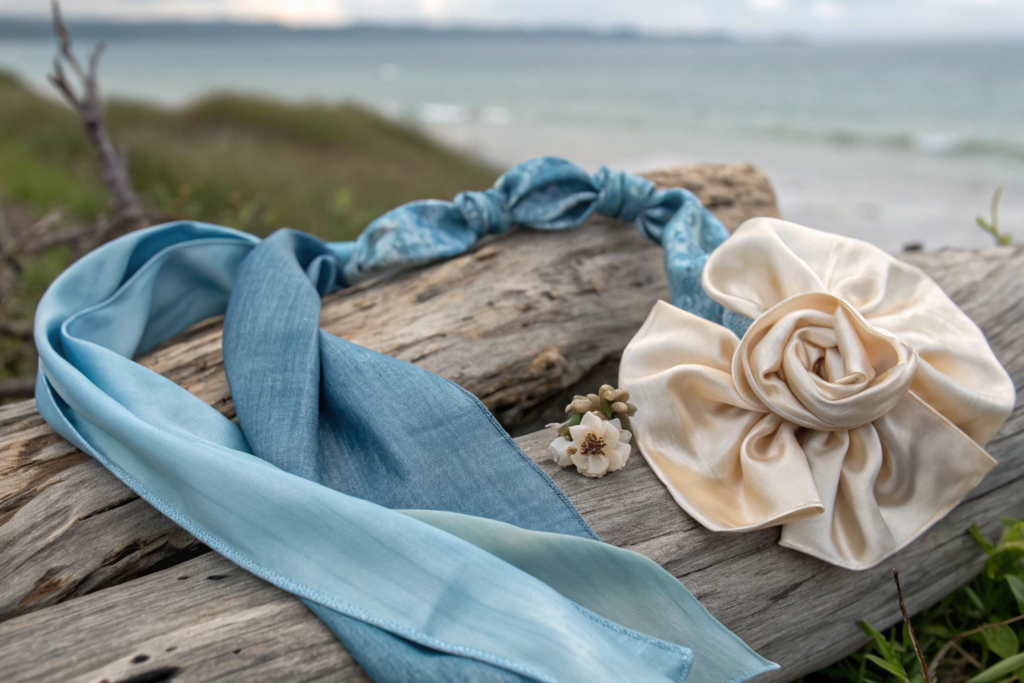
Weather-resistant fabrics are changing bridal accessories by offering the beauty and drape of traditional luxury textiles with the durability and performance required for outdoor destination weddings. These fabrics are treated with invisible, breathable finishes that repel water, resist staining, and prevent moisture absorption. A weatherproofed silk ribbon looks and feels exactly like untreated silk, but a drop of water beads on its surface and rolls off without leaving a mark. A sculptural fabric flower made from a treated polyester-silk blend holds its shape perfectly in 90 percent humidity and can be gently reshaped if it gets crushed in travel. A satin headband with a moisture-wicking inner lining keeps the bride cool and comfortable, and the outer satin resists the staining effects of perspiration and sunscreen. The finishes used are typically fluorocarbon-free, silicone-based, or polymer-based treatments that are applied at the molecular level. They do not change the hand feel, the color, or the breathability of the fabric. They are tested for durability through multiple wear cycles and for skin safety. The weather-resistant properties are not marketed as a technical feature in the way that a hiking jacket is marketed. They are a quiet assurance. The bride may never consciously notice that her ribbon resisted a splash of champagne or that her flower stayed perfect through the humid afternoon. She simply enjoys the day without worrying about her accessories.
The trend toward weather-resistant fabrics is driven by the practical experience of destination brides and the stylists who work with them. They have seen the wilting flowers, the water-spotted ribbons, and the limp headbands. They want solutions. Let me detail the two most important fabric innovations.
What Silk Ribbons Are Treated for Humidity and Salt Air?
Silk is the quintessential bridal fabric. Its luster, its drape, and its softness are unmatched by synthetics. A silk ribbon woven through a braid or tied in a bow at the nape of the neck is a timeless bridal look. But silk is a protein fiber. It is highly absorbent. In humid conditions, silk absorbs moisture from the air, swelling and losing its crispness. Salt air is even more damaging. The salt crystals can abrade the silk fibers and accelerate degradation. Treating silk to resist these conditions requires a delicate balance. The treatment must protect the silk without compromising its natural beauty. The most effective treatment for bridal silk ribbons is a nanoscale, fluorocarbon-free water-repellent finish. The finish is applied to the finished ribbon in a controlled process. The treatment molecules bond to the individual silk fibers, creating a microscopic, hydrophobic surface. Water and humidity are repelled. The silk does not absorb moisture. The ribbon remains crisp and light, regardless of the ambient humidity. The treatment also provides a degree of stain resistance. A droplet of red wine or berry juice will bead on the surface and can be blotted away before it penetrates. The treatment is invisible and has no effect on the color or the luster of the silk. It is breathable, so the ribbon does not feel plastic-like. The treatment is durable but not permanent. It will withstand the wedding day and several subsequent cleanings, but it is not a lifetime treatment. The silk ribbon should be stored in a cool, dry place and protected from prolonged exposure to direct sunlight, which can degrade the treatment over time. The treated silk ribbon is a premium product. It is more expensive than untreated silk, but the assurance that it will look perfect throughout a long, outdoor wedding day is worth the investment.
Can Fabric Flowers Be Made to Withstand Outdoor Heat?
Fabric flowers for bridal hair have traditionally been made from delicate silks, organzas, and chiffons. These are beautiful in a climate-controlled environment, but they struggle outdoors. The heat of a tropical sun can cause the petals to droop. Humidity can cause them to lose their shape. A sudden gust of wind can crush them. The 2026 solution is a new generation of sculptural fabric flowers made from technical textiles and constructed with internal support structures. The petals are cut from a polyester-silk blend fabric that has been treated with a shape-memory finish. This finish allows the fabric to be heat-set into a specific shape, a curve, a ruffle, a point, that it will hold indefinitely. The shape is not dependent on starch or sizing, which wash out or wilt with moisture. The petals are assembled around a lightweight, waterproof core. The core provides the structural foundation and prevents the flower from collapsing if it gets wet or compressed. The stamens and centers are made from coated wires and sealed beads that will not tarnish or discolor. The entire flower is assembled with waterproof adhesives and threads. The finished flower can be worn in direct sun for hours without drooping. It can be packed in a suitcase and reshaped with a gentle steam or a blast of cool air from a hair dryer. It can survive a light rain shower without damage. The sculptural fabric flower is a technical product disguised as a delicate craft item. The cost is higher than a traditional fabric flower, but the performance is in a different category. For a destination bride who has invested significantly in her wedding, the assurance that her hair flowers will look as beautiful at the end of the day as they did at the beginning is invaluable.
What Pearl and Shell Designs Are Popular for Coastal Weddings
Pearls and shells are the most literal connection between bridal accessories and the coastal destination. They are gifts of the ocean, formed by living creatures, and they carry a natural, organic beauty that resonates deeply with the setting of a beach wedding. The challenge for the 2026 trend is to use these materials in a way that feels sophisticated, modern, and bridal, not like a souvenir from a beachside gift shop. The trend moves away from heavy, elaborate pearl headpieces and toward minimalist, refined designs where a single, perfect pearl or a delicate shell shape makes a quiet statement. The aesthetic is less is more. The pearl is not a cluster of identical cultured spheres. It is a single, slightly irregular, baroque pearl with unique character. The shell is not a literal representation of a seashell. It is an abstracted, simplified disc that references the shape without being kitschy.
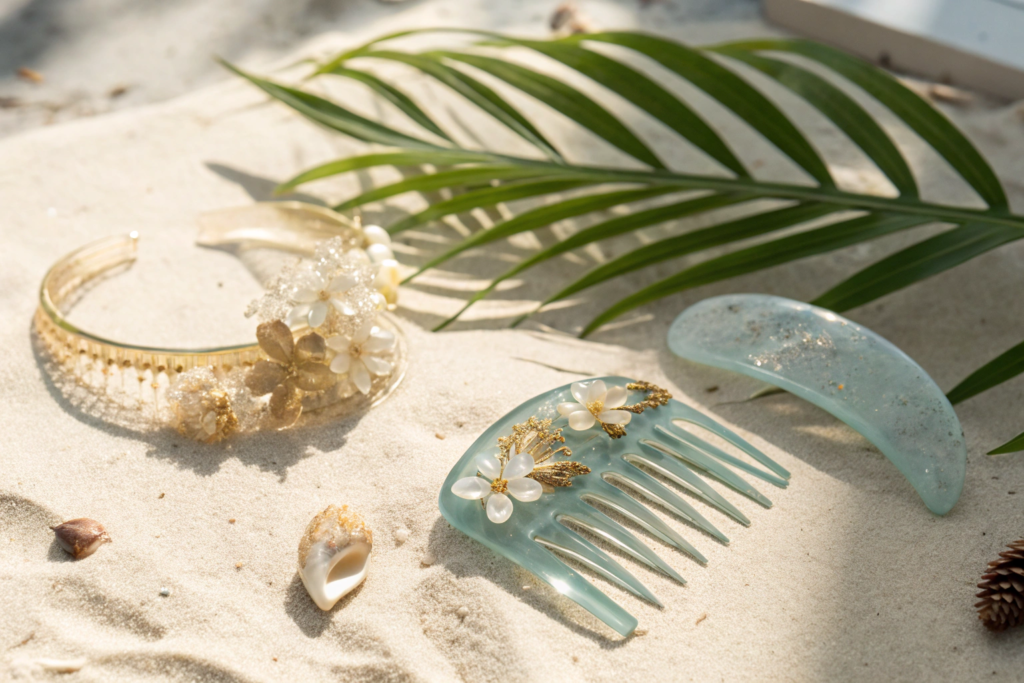
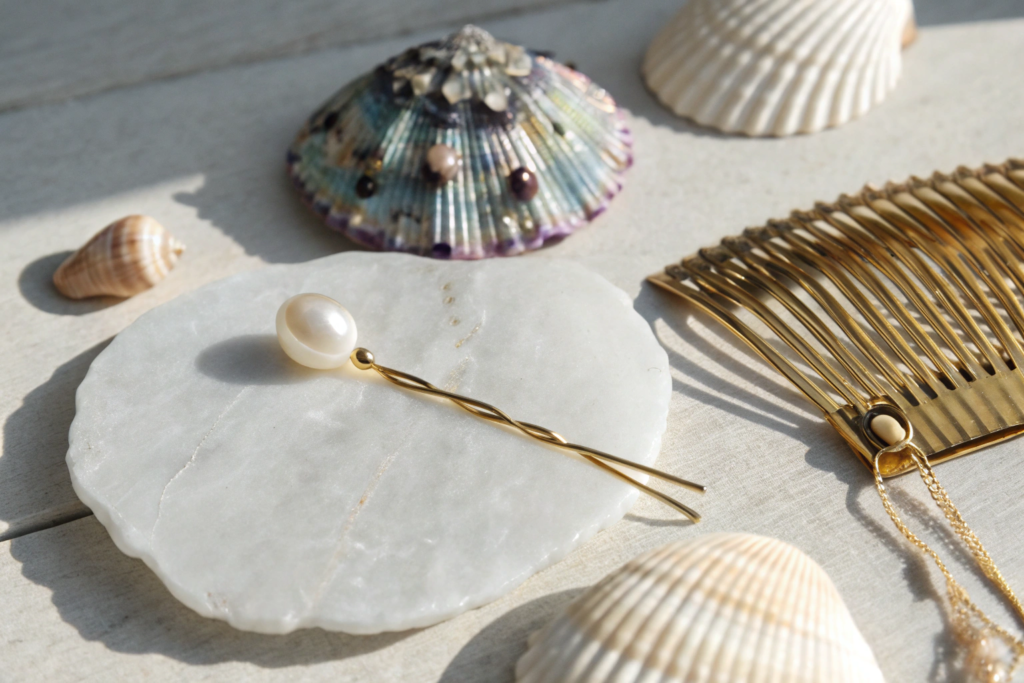
Pearl and shell hair accessory designs for 2026 coastal destination weddings are defined by minimalist settings, organic forms, and mixed-material compositions. The classic pearl hair pin is reimagined with a single, oversized freshwater pearl, 10 to 15 millimeters, set on a fine, 14-karat gold-filled or gold-vermiel pin. The pearl is the sole focus. There are no crystals, no filigree, and no additional ornamentation. Baroque and keshi pearls, with their irregular, organic shapes, are preferred over perfectly round cultured pearls. Their asymmetry feels more natural and more modern. Shell-inspired designs use abstract, geometric shapes that evoke shells without copying them. A tiny hair clip in the shape of a smooth, curved disc, reminiscent of a sand dollar or a nautilus, is made from polished resin, mother-of-pearl laminate, or recycled ocean plastic. A series of these clips scattered through an updo creates a subtle, shimmering effect, like light reflecting on wet sand. Mixed-material pieces combine pearls with matte gold, with polished wood, or with the transparent resin discussed earlier. A hair vine that alternates tiny freshwater pearls with matte gold beads, woven into a braid or wrapped around a bun. The overall effect is organic, effortless, and deeply connected to the coastal environment.
The minimalist pearl and shell trend appeals to the modern bride who wants her accessories to enhance her natural beauty, not compete with it. The materials are chosen for their quality and their origin, not for their size or their sparkle. Let me detail the two most popular design directions.
How Are Freshwater Pearls Being Used in Modern Hair Pins?
Freshwater pearls are the material of choice for 2026 bridal hair pins. They are more affordable than saltwater pearls, more varied in shape and color, and their organic, slightly irregular forms align with the trend toward natural, unpolished beauty. The modern pearl hair pin is an exercise in restraint. A single pearl is mounted on a fine, high-quality metal pin. The pin itself is part of the design. It is not a hidden finding. It is visible, and its material, gold-filled, rose gold, or matte gold-plated, complements the pearl. The pin is long enough to anchor securely in an updo, typically 5 to 8 centimeters, and it has a subtle curve to follow the contour of the head. The pearl is attached with a minimal prong setting or with a tiny, nearly invisible adhesive. There is no glue visible. The pearl appears to float at the end of the pin. The size of the pearl varies with the design intent. A single, very large pearl, 12 to 15 millimeters, makes a bold, sculptural statement. A grouping of three smaller pearls, 6 to 8 millimeters, at the end of a single pin creates a delicate cluster. A set of five or seven individual pearl pins is designed to be scattered through an updo like stars in a night sky. The placement is random and organic, not symmetrical or uniform. The bride or her stylist creates the arrangement on the wedding day. The color of the pearls ranges from classic white and cream to soft lavender, peach, and grey. The color is chosen to complement the bride’s dress, her skin tone, and the wedding’s color palette. The pearls are sourced from reputable freshwater pearl farms, and their quality is assessed by luster, surface quality, and shape. The pearls used in bridal accessories are the highest grade available.
What Shell-Inspired Resin Shapes Are Trending for 2026?
Shell-inspired resin shapes are the abstract interpretation of the coastal theme. They are not literal shells. They are smooth, organic forms that evoke the shapes found on the beach, the curve of a scallop, the spiral of a nautilus, the flat disc of a sand dollar, without being identifiable as any specific species. The forms are created by casting resin into custom silicone molds. The molds are designed by our in-house sculptors, inspired by photographs of shells, waves, and sea-worn stones. The resulting resin pieces are thin, lightweight, and have a beautiful, tactile quality. The resin can be tinted with subtle, ocean-derived colors, a translucent sea-foam green, a pearlescent white, a sandy beige, or it can be left completely clear with embedded elements. The embedded elements for the shell-inspired pieces are often gold or silver leaf, creating a shimmering, reflective quality like light on water. Tiny, iridescent flakes can be suspended in the resin to create a subtle sparkle. The shell-inspired shapes are used for hair clips, barrettes, and the decorative tops of hair pins. A set of three small, disc-shaped clips with a subtle golden shimmer is scattered through loose waves. A larger, sculptural barrette in the shape of an abstract spiral secures a side-swept style. The resin is polished to a high gloss or a soft matte finish. The matte finish feels particularly organic and beach-like, resembling sea glass. The shell-inspired resin accessories are often paired with the pearl pins in a coordinated look. The pearl and the shell together create a complete, ocean-inspired story that is elegant, modern, and deeply connected to the coastal destination.
What Multi-Functional Accessories Suit a Destination Wedding
The destination bride travels to her wedding. She packs carefully, often with strict luggage weight limits. Every item she brings must earn its place in her suitcase. A bulky, single-purpose hair accessory that is worn for the ceremony and then discarded is a poor use of precious packing space. The 2026 trend in destination bridal accessories is toward multi-functional pieces that serve more than one purpose. A single, beautifully designed piece might be worn as a hair vine for the ceremony, detached and reconfigured as a necklace for the reception dinner, and wrapped as a bracelet for the farewell brunch the next day. This versatility adds value, reduces the number of accessories the bride needs to purchase and pack, and creates a story that extends across the entire wedding experience.
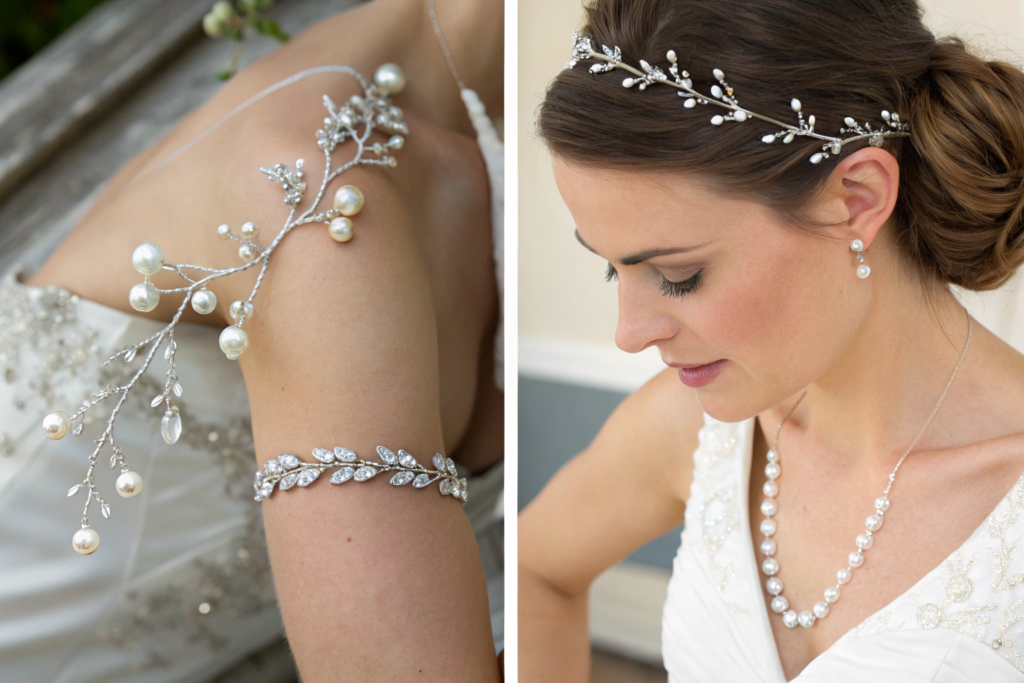
Multi-functional accessories suit destination weddings because they offer versatility, value, and packing efficiency. The most common multi-functional format is the convertible hair vine. A hair vine is a long, flexible strand of wired beads, pearls, crystals, or resin elements that can be shaped and worn in multiple ways. It can be woven through a braid or wrapped around a bun as a hair accessory. The ends have small loops or clasps that allow the strand to be connected end-to-end to form a necklace or a bracelet. The vine is designed to look intentional and beautiful in each configuration, not like a hair accessory awkwardly repurposed. The wire core is covered in a soft, skin-friendly material so that it is comfortable against the neck and wrist. Another format is the detachable back piece. This is a larger, more elaborate hair accessory, such as a comb or a cluster of flowers and crystals, that is designed to be worn at the back of an updo for the ceremony. The decorative element is attached to the hair finding with a discreet, secure clip or screw mechanism. For the reception, the decorative element can be detached and attached to a pin back or a chain, transforming it into a brooch or a pendant. The hair finding remains in the hair, and the decorative piece becomes a separate accessory. A third format is the modular clip set. A set of small, individual hair clips, each a pearl, a crystal, or a resin shape, can be worn scattered through the hair. After the ceremony, the clips can be gathered together and attached to a simple chain or a fabric band to create a bracelet or an anklet.
The multi-functional design is a response to the practical needs of the destination bride, but it is also a design philosophy. It reflects a desire for simplicity, intentionality, and reduced consumption. Let me detail the two most popular multi-functional formats.
How Can a Hair Vine Double as a Necklace or Bracelet?
The hair vine is the most versatile multi-functional accessory in the bridal category. It is constructed as a flexible strand, typically 80 to 120 centimeters in length, with a core of soft, memory-retaining wire. The wire is covered with a fine fabric or a smooth coating. Onto this core, the decorative elements, pearls, crystals, beads, or resin shapes, are wired at intervals. The ends of the vine are finished with small loops. These loops are the key to the vine’s versatility. To wear the vine as a hair accessory, the loops are simply tucked into the hair or secured with a bobby pin. The stylist bends the vine to follow the desired path through the hair. The memory wire holds its shape, but it can be reshaped as needed. To wear the vine as a necklace, the ends are connected. A small, decorative clasp or a simple jump ring is provided. The clasp attaches to the two end loops, forming the vine into a continuous circle. The circle is placed over the head. The vine sits beautifully as a necklace, with the decorative elements distributed around the neck. To wear the vine as a bracelet, it is wrapped multiple times around the wrist and secured with the clasp or tucked in. The vine’s length allows for multiple wraps, creating a layered, bohemian look. The design of the vine must consider all three configurations. A vine with a very large, heavy centerpiece element will not work as a bracelet because the element will dangle awkwardly. The decorative elements must be relatively small and evenly distributed. The vine must be comfortable against the skin in the necklace and bracelet configurations. The wire ends must be smoothly finished, and the clasp must be easy to operate. The convertible hair vine is a beautiful and practical solution for the destination bride.
What Detachable Back Pieces Transition From Ceremony to Reception?
The detachable back piece is designed for the bride who wants a dramatic, eye-catching hair accessory for the ceremony, but who wants a simpler, more comfortable look for the reception. The back piece is typically worn at the back of an updo, a low chignon, or a braided bun. It is the focal point of the hairstyle as the bride walks down the aisle, and it is prominently visible during the ceremony when the guests are seated behind her. The back piece is constructed with two components. The hair finding, which is a comb, a clip, or a set of pins that are anchored securely in the hair. And the decorative element, which is attached to the hair finding with a discreet mechanism. The attachment mechanism can be a small clip, a screw, or a magnetic closure. The key requirement is that it must be secure enough to hold the decorative element firmly in place during the ceremony, but easy enough for the bride or her stylist to detach after the ceremony without dismantling the entire hairstyle. Once detached, the decorative element is transformed into a secondary accessory. A pin back is attached to the back of the decorative element, allowing it to be worn as a brooch on the bride’s dress, on her clutch, or on a wrap. Alternatively, a fine chain is attached, and the decorative element becomes a pendant necklace. The transformation takes seconds. The bride removes the heavy, elaborate hair piece and replaces it with a lighter look, perhaps simply the hair vine or the pearl pins that were already in place underneath. The back piece is packed away, and the bride is free to dance, to greet guests, and to enjoy the evening without the weight of a large hair accessory. The detachable back piece is a premium product that requires precision engineering, but the value it provides to the bride is significant.
Conclusion
The 2026 hair accessory trends for destination weddings are a response to the real, lived experience of brides who choose to marry in beautiful, but challenging, outdoor environments. These brides need accessories that are as practical as they are beautiful. They need pieces that will not wilt in the humidity, tarnish in the salt air, or become a burden in the heat. They need accessories that honor the natural beauty of the place they have chosen, with organic materials, ocean-inspired forms, and a lightness that feels effortless. And they need versatility, pieces that work for multiple moments of the wedding experience and that justify their place in a carefully packed suitcase. We have explored the trends. Lightweight, sculptural resin accessories that capture the ethereal beauty of glass and crystal without the weight or fragility. Weather-resistant fabric ribbons and flowers that hold their perfection through heat, humidity, and happy tears. Minimalist pearl and shell designs that connect the bride to the ocean with sophistication and restraint. And multi-functional pieces that transform from ceremony to reception, offering value and versatility.
At AceAccessory, we love creating bridal accessories for destination weddings. There is a special joy in knowing that a piece we made was part of one of the most important days in a person’s life, in a beautiful place, surrounded by love. Our design team understands the specific demands of destination bridal, the material performance, the weight constraints, and the aesthetic that feels at home in nature. Our production team executes with the precision and the quality that bridal demands. Our packaging ensures that every piece arrives at its destination in perfect condition, ready to be worn.
If you are a bridal brand, a wedding planner, or a resort boutique curating accessories for destination brides, I invite you to contact us. Reach out to our Business Director, Elaine, at elaine@fumaoclothing.com. Tell her about your bridal collection, the destinations your brides love, and the accessory styles you are envisioning. She can provide samples of our resin, fabric, and pearl pieces, discuss custom design options, and provide a quotation for production. Let us help you create the accessories that will make every destination bride feel beautiful, confident, and perfectly at home, wherever in the world she has chosen to say "I do."