A sustainability compliance manager from a major French hypermarket chain sat in my office last year with a tablet, scrolling through a seemingly endless digital document. It was her company’s new sustainable packaging and labeling policy. She was visiting every supplier in her accessories portfolio, and she had come to explain a new requirement that was going to fundamentally change how we label the hair clips, headbands, belts, and scarves we produce for her stores. Starting in 2026, every product sold in her company’s supermarkets that carried a recyclability claim must include a digital label. Not just a printed symbol on a cardboard hangtag. A QR code, a Data Matrix, or an NFC tag that, when scanned by a consumer’s smartphone, would take them to a web page with detailed information about how to recycle that specific product. She told me this was not optional. It was a corporate mandate aligned with upcoming EU legislation. Suppliers who could not comply would be delisted. I told her we were already developing our digital labeling capability, and by the time her deadline arrived, we would be ready.
European supermarkets require digital labeling for recyclable accessories because of a convergence of regulatory mandates, retailer sustainability commitments, and consumer demand for transparency. The regulatory driver is the proposed EU Packaging and Packaging Waste Regulation and the Digital Product Passport initiative under the EU Ecodesign for Sustainable Products Regulation. These regulations will require that certain product information, including recyclability and material composition, be made available to consumers and to waste management operators in a digital, machine-readable format. The retailer driver is the voluntary commitments that major European supermarket chains have made to improve recycling rates and reduce waste. A digital label provides a direct, interactive channel to educate consumers about how to correctly dispose of the product, which increases the likelihood that it will actually be recycled rather than landfilled. The consumer driver is the growing demand, particularly among younger, digitally native shoppers, for instant access to detailed product information. A QR code on a hangtag, scanned in a second, provides more information than could ever fit on a physical label. It can include animated recycling instructions, information about the recycling facilities that accept the product, and the brand’s broader sustainability story.
The physical label on an accessory is tiny. A hair clip hangtag might be 3 by 5 centimeters. There is barely enough space for the brand logo, the price, the barcode, and the mandatory fiber content and country of origin information. Trying to cram detailed recycling instructions onto that small space results in microscopic text that no consumer reads, or in oversimplified symbols that can be misleading. The digital label solves this problem. The physical space constraint is eliminated. The consumer gets a rich, interactive, personalized experience. The retailer gets data on consumer engagement with their sustainability messaging. And the waste management system gets better-sorted, less-contaminated recycling streams. At AceAccessory, we have invested in the digital labeling infrastructure to serve our European retail clients. Let me walk you through the regulations, the technology, and the practical steps to implement digital labeling for your accessory products.
What EU Regulations Are Driving Digital Labeling Requirements
The shift to digital labeling for recyclable accessories is not a voluntary marketing trend. It is being driven by legislation. The European Union has embarked on an ambitious program of regulatory reform aimed at creating a circular economy, where products are designed to be reused, repaired, and recycled, and where waste is minimized. A key enabler of this circular economy is information. Consumers need to know what a product is made of and how to dispose of it. Waste sorters need to quickly identify materials. Recyclers need to know the chemical composition to process materials safely and efficiently. Physical labels cannot carry all of this information. Digital labels can.
The EU regulations driving digital labeling requirements for recyclable accessories are the proposed Ecodesign for Sustainable Products Regulation, or ESPR, and the related Digital Product Passport initiative, as well as the Packaging and Packaging Waste Regulation, or PPWR. The ESPR, which is expected to enter into force in phases starting in 2026, establishes a framework for setting ecodesign requirements for a wide range of products, including textiles and accessories. A central feature of the ESPR is the Digital Product Passport, a digital record that contains information about a product’s materials, its environmental footprint, and its recyclability. The DPP must be accessible by scanning a data carrier, a QR code, a Data Matrix, or an NFC tag, affixed to the product or its packaging. The PPWR, which entered into force in 2024, sets binding targets for packaging recyclability and mandates harmonized labeling for packaging, including digital labeling options. Together, these regulations create a legal requirement for brands and importers to provide digital access to detailed product sustainability information. The regulations apply to products sold in the EU, regardless of where they are manufactured. A hair clip made in China and sold in a French supermarket is subject to these requirements just as much as a hair clip made in Italy. The enforcement will be through national market surveillance authorities, with penalties for non-compliance that can include fines, product withdrawals, and sales bans. The regulations are being phased in, with the first products required to carry a Digital Product Passport likely in 2026 or 2027.
The regulations are detailed and specific. They define what information must be included, how it must be structured, and how it must be accessed. Let me explain the two most important regulatory components.

How Does the Digital Product Passport Apply to Fashion Accessories?
The Digital Product Passport, or DPP, is a digital record that travels with a product throughout its lifecycle. It contains a standardized set of data that is accessible to consumers, to waste management operators, and to regulatory authorities. The DPP is accessed by scanning a data carrier affixed to the product. For a fashion accessory, this data carrier would typically be a QR code printed on the hangtag or on a sewn-in label. The DPP for a textile or accessory product will be required to include information on the product’s material composition, including the percentages of different fibers, the presence of any recycled content and its percentage, and the chemicals used in manufacturing that are of concern. Information on the product’s environmental performance, including its carbon footprint, its water consumption, and any environmental certifications it holds. Information on the product’s recyclability, including which components are recyclable, how they should be separated for recycling, and which recycling schemes or facilities accept the product. Information on the product’s durability and repairability, including the expected lifespan and any available repair services. And information on the manufacturer and the importer, including their names, addresses, and registration numbers. The DPP must be persistent, meaning it must remain accessible for the expected lifetime of the product plus an additional period, even if the brand or the manufacturer ceases operations. The data must be stored on a decentralized, interoperable platform, not on a single company’s server that could be shut down. The technical standards for the DPP are being developed by the European Committee for Standardization, CEN, and the European Committee for Electrotechnical Standardization, CENELEC. The DPP is a significant new requirement, but for brands that already have robust sustainability data management, it is an extension of existing practices. For brands that do not, it will require a significant investment in data collection and management.
What Is the EU Packaging and Packaging Waste Regulation Timeline?
The Packaging and Packaging Waste Regulation, or PPWR, is the EU regulation that sets the rules for all packaging placed on the EU market. It entered into force in 2024, and its provisions are being implemented on a phased timeline. The key dates for accessories brands are 2025, when the mandatory packaging recyclability assessment comes into effect. All packaging must be assessed against design-for-recycling criteria and graded from A to E. Packaging graded E is banned from the EU market. 2026, when the mandatory packaging labeling requirements come into effect. Packaging must be labeled with a harmonized symbol indicating its material composition and its suitability for recycling. The label can be physical, printed on the packaging, or digital, accessible via a QR code. 2030, when all packaging placed on the EU market must be recyclable. This means it must be designed for recycling, collected separately, sorted, and recycled at scale. And 2035, when packaging must be recycled at scale. This means that recycling infrastructure must exist, and the packaging must actually be recycled in practice, not just in theory. For the accessories industry, the PPWR has a direct impact on how products are packaged. The conventional polybag, the cardboard hangtag, the blister pack, and the gift box all fall under the regulation. The digital label provides a way to communicate the required recycling information without cluttering the physical packaging with complex symbols and text. The PPWR also incentivizes the use of digital labeling by allowing a reduced physical label size when a digital label is present. This is a practical benefit for small accessories packaging.
How Does Digital Labeling Work for Recyclable Accessories
Digital labeling for recyclable accessories is a system that connects a physical product to a digital information source. The physical product carries a data carrier, a QR code, a Data Matrix, or an NFC tag. The consumer scans this carrier with their smartphone. The scan launches a web page or a web app that displays the required recycling information. The system must be reliable, easy to use, and compliant with the relevant standards. The data carrier must be durable enough to survive the product’s journey from factory to consumer. The digital content must be accessible to all consumers, including those with disabilities. And the system must be secure, protecting against tampering or redirection to malicious websites.
Digital labeling for recyclable accessories works through a QR code or Data Matrix printed on the product’s hangtag, packaging, or sewn-in label. The code is generated using a standardized format, such as a GS1 Digital Link, which encodes a unique product identifier that resolves to a web address. When a consumer scans the code with their smartphone camera, the phone’s browser opens a web page. This page displays the recycling information for that specific product. The information is structured according to the EU’s guidelines for digital labeling. It includes the material composition of each component, the fiber content of the fabric, the plastic type of the clip, and the metal type of the spring. It includes clear, simple instructions on how to prepare the product for recycling, such as separating the metal spring from the plastic clip, and which recycling bin or scheme to use. It includes the contact information for the brand or the importer, and it may include a link to a take-back program or a recycling scheme. The page is designed to be mobile-responsive, loading quickly on any smartphone. It is available in multiple languages, as required by the markets where the product is sold. The digital label is not a one-time setup. The content must be maintained and updated. If the product’s material composition changes, the digital label must be updated. If the recycling infrastructure changes, the instructions must be updated. The web page must remain accessible for the entire lifespan of the product plus several years, as required by the regulations. This requires a content management system and a commitment to long-term data stewardship.
The technology behind digital labeling is mature and widely available. The challenge is not the technology itself. It is the integration into the product development and production workflow. Let me explain the two key technology choices.
What Information Must a QR Code Recycling Label Contain?
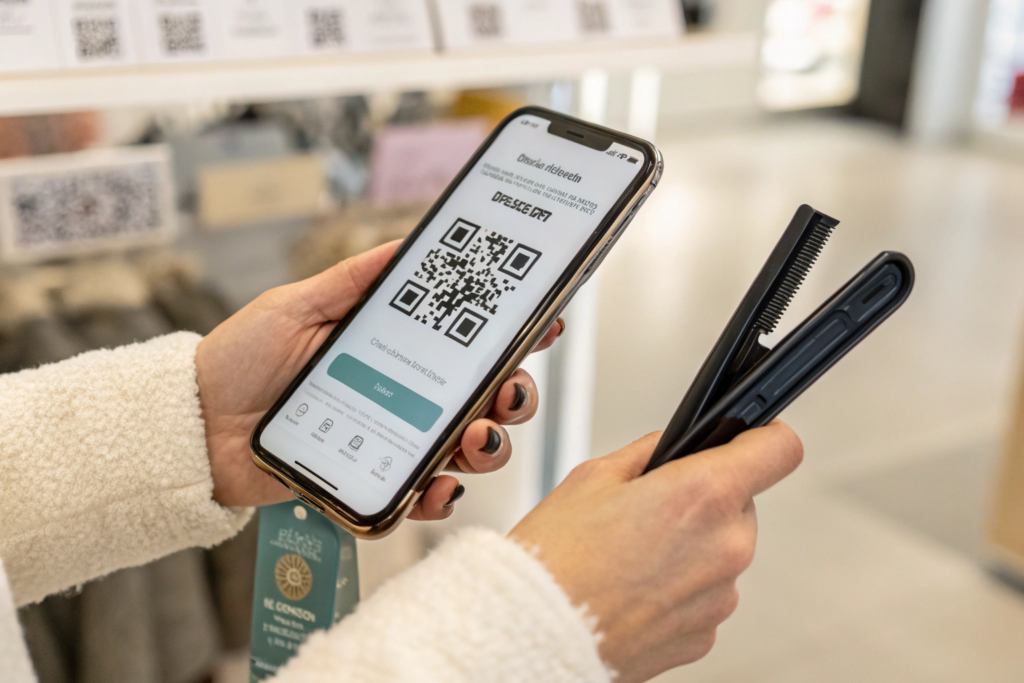
A QR code recycling label for a fashion accessory does not just link to a generic brand sustainability page. It links to product-specific information that helps the consumer recycle that particular item correctly. The information required is specified by the EU regulations and by retailer standards. The product identity is the starting point. The product name, the style number, and a brief description allow the consumer to confirm they are viewing the correct information. The material composition is the most critical information. For a hair clip, the digital label would state the body material, such as cellulose acetate, the spring material, such as stainless steel, and any coating or finish, such as a water-based lacquer. For a fabric accessory, the fiber composition percentages are listed. The recyclability assessment indicates which components are recyclable and which are not. The plastic body may be recyclable in rigid plastic streams. The metal spring is recyclable in metal streams. The combination, the assembled clip, may not be recyclable as-is and must be separated. The separation instructions tell the consumer how to prepare the product for recycling. "Remove the metal spring by gently pulling it away from the clip body. Place the plastic body in your household recycling bin. Place the metal spring in your metal recycling bin, or take both to a recycling center." The instructions are simple, visual, and actionable. The disposal instructions tell the consumer what to do if recycling is not available. "If you do not have access to a suitable recycling scheme, please dispose of this product in your general waste bin. Do not litter." The brand and importer contact information allows the consumer or a waste management operator to contact the responsible party with questions. The digital label may also include links to the brand’s broader sustainability page, to a take-back program, or to a recycling locator tool that helps the consumer find the nearest recycling point. The information must be accurate, current, and compliant with the relevant standards, including the ISO 14021 standard for environmental labels and declarations.
How Do QR Codes Differ From NFC Tags for Accessory Labeling?
QR codes and NFC tags are two different technologies for connecting a physical product to digital information. Each has its advantages and limitations. QR codes are the most common and cost-effective option. A QR code is a two-dimensional barcode that is printed onto the hangtag, the packaging, or the sewn-in label using standard printing processes. It adds essentially zero cost per unit. It can be scanned by any smartphone with a camera, which means essentially every smartphone in use today. The consumer opens their camera app, points it at the code, and the phone recognizes the QR code and offers to open the link. QR codes have a high data capacity. They can encode a long URL or a GS1 Digital Link with a unique product identifier. The limitations of QR codes are that they require a direct line of sight and reasonable lighting to scan. A QR code printed on a curved surface, like a hair clip, or in a hard-to-see location can be difficult to scan. The print quality must be good. A smudged or faded QR code may not scan reliably. NFC, Near Field Communication, tags are small electronic chips that communicate wirelessly with a smartphone when they are in close proximity, typically within a few centimeters. The consumer taps their phone against the tag, and the phone automatically opens the linked web page. NFC tags do not require a line of sight. They can be embedded inside a product, behind a label, or under a coating. They can be scanned in the dark. They provide a more seamless, premium user experience. The limitations of NFC tags are cost and compatibility. An NFC tag costs a few cents to a few tens of cents, depending on the type and quantity. This is significant for a low-cost accessory. Not all smartphones have NFC capability, though most modern smartphones do. The consumer may need to enable NFC in their phone’s settings. For most fashion accessories, QR codes are the practical choice. The cost is negligible, the compatibility is universal, and the print quality on a hangtag is easily controlled. NFC tags are used for premium products, for products where the tag is embedded and reusable, or for products where the digital experience is a key part of the brand’s value proposition.
Why Do Retailers Prefer Digital Over Physical Recycling Labels
European retailers are not just passive recipients of EU regulations. They are active drivers of the digital labeling trend. Major supermarket chains have their own sustainability commitments, their own brand identities to protect, and their own customer relationships to manage. Digital labeling provides them with tools that physical labels cannot. A physical recycling label is static. Once it is printed, it cannot be changed. If the recycling infrastructure changes, the label becomes outdated and potentially misleading. A digital label is dynamic. The content can be updated at any time, instantly, across all products in the market. The same QR code that linked to last year’s recycling instructions can link to this year’s updated instructions without any change to the physical product.
Retailers prefer digital over physical recycling labels because digital labels are dynamic, interactive, data-rich, and brand-enhancing. A dynamic label can be updated to reflect changes in recycling technology, infrastructure, or regulations. The retailer does not need to recall and relabel products. A interactive label engages the consumer. It provides a richer, more personalized experience than a static symbol. It can include videos, animations, and links to local recycling schemes. A data-rich label can provide detailed material breakdowns, separation instructions, and environmental impact data that would be impossible to fit on a physical label. The physical label remains clean and uncluttered. The brand’s aesthetic is not compromised by dense regulatory text. A digital label generates data. The retailer can track how many consumers are scanning the QR codes, which products are generating the most engagement, and what recycling information consumers are seeking. This data informs future packaging and sustainability initiatives. A digital label supports the retailer’s omnichannel strategy. The consumer can scan the QR code in-store, but they can also access the same information online when shopping on the retailer’s website. The digital label becomes a bridge between the physical and digital retail experiences.
The digital label is also a risk management tool. An incorrect or misleading recycling claim on a physical label can result in regulatory fines and reputational damage. The digital label can be corrected immediately if an error is discovered. The flexibility and the control that digital labeling provides make it the preferred solution for large, risk-averse retail organizations. Let me detail the two most important retailer benefits.
How Do Digital Labels Update When Recycling Streams Change?
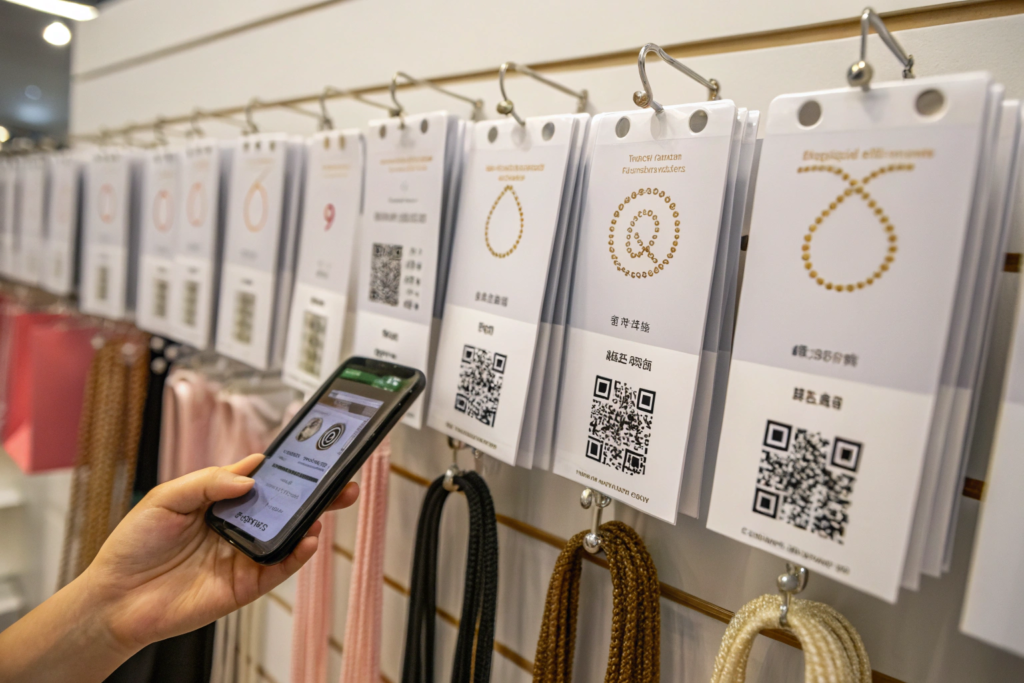
Recycling is not a static system. It is a dynamic, evolving infrastructure. New recycling technologies are developed. Existing facilities are upgraded. Collection schemes expand into new municipalities. The recyclability of a specific material can change over time. A plastic that was not recyclable five years ago may be recyclable today because a new processing facility has opened. Conversely, a material that was accepted by a recycling scheme may be dropped because of contamination issues. A physical label printed today reflects the recycling reality of today. If that reality changes in two years, the label becomes inaccurate. The brand is now making a potentially misleading claim, which is a violation of consumer protection laws. A digital label solves this problem. The QR code on the product does not change. It simply links to a web page. The content of that web page is managed through a content management system. When the recycling reality changes, the brand updates the web page. Every QR code in the market, on products sold last year and products sold this year, now links to the updated, accurate information. There is no need to recall products. There is no need to reprint labels. The consumer always accesses the most current recycling guidance. This dynamic capability is particularly important for products with long shelf lives or products that consumers may keep for years before disposing of them. A hair accessory purchased in 2026 may be discarded in 2030. The recycling landscape will likely have changed significantly in those four years. The digital label ensures that the consumer in 2030 receives accurate, current information about how to recycle the product. The content management system tracks the history of changes, providing an audit trail that demonstrates the brand’s commitment to providing accurate information.
Can Digital Labels Track Consumer Recycling Behavior?
Digital labels generate data. Every time a consumer scans a QR code, the system records the scan event. The data collected can include the product scanned, the date and time of the scan, the geographic location of the scan, based on the IP address, at a city or region level, not a precise location, and the actions the consumer took on the web page, such as clicking on a recycling locator link or watching an instructional video. This data is anonymized and aggregated. It does not identify individual consumers. It provides insights into consumer recycling behavior. Retailers and brands can use this data to understand which products are generating the most consumer engagement with recycling information. To identify geographic regions where consumers are actively seeking recycling guidance. To measure the effectiveness of different recycling communication strategies, such as comparing the scan rates of QR codes versus NFC tags. To identify gaps in consumer understanding, such as a high number of clicks on a "what is this material?" link. To report on consumer engagement with sustainability initiatives to investors and to regulators. The data is also valuable for the waste management industry. Aggregated scan data can indicate where consumers are seeking recycling information, which can inform decisions about where to expand collection infrastructure. The data can reveal which product categories are generating the most consumer confusion about recycling, which can inform extended producer responsibility programs and consumer education campaigns. The privacy of the consumer is paramount. The data is anonymized. No personal information is collected without explicit consent. The data is used for aggregate analysis, not for individual targeting. The digital label is not a surveillance tool. It is an engagement and insight tool. The consumer benefits from better recycling information, and the system benefits from better data on how to improve recycling outcomes.
How to Implement Digital Labels on Your Accessories
Implementing digital labels on your accessory products is a project that requires planning, but it is not technically difficult. The key steps are data preparation, QR code generation, content creation, and quality control. The data preparation is the most time-consuming part. You must gather accurate, verifiable information about every material in every component of every product. This data may already exist in your tech packs and your supplier documentation, but it needs to be compiled, verified, and formatted for the digital label. The QR code generation is a simple technical step. A unique QR code is created for each product or each SKU. The code is embedded in the hangtag or packaging design. The content creation is the design and writing of the digital label web page. The page must be clear, accurate, and compliant with the relevant standards. The quality control step tests the entire system. The printed QR code is scanned. The correct digital label page loads. The information is verified. The system is tested on different smartphones and in different lighting conditions.
Implementing digital labels on your accessories involves a five-step process. Step one, data compilation. For each product, create a digital product data sheet that lists every material and component. The body material, the spring material, the coating, the hangtag material, and the packaging. For each material, note the specific polymer type, the fiber content, the metal alloy, and the presence of recycled content. This data must be accurate because it will be publicly accessible and legally binding. Step two, QR code generation. Using a QR code generator that supports GS1 Digital Link standards, create a unique QR code for each product SKU. The QR code encodes a URL that points to the digital label page for that product. The URL should be structured to be persistent, using a domain that you control. Step three, content creation. Design and build the digital label web page. The page should be mobile-responsive, fast-loading, and accessible. Write clear, simple recycling instructions. Include icons and simple graphics. Translate the content into the languages required for your markets. Step four, label integration. Incorporate the QR code into your hangtag or packaging design. The QR code should be at least 10 by 10 millimeters in size to be easily scannable. It should be placed on a flat surface, not on a curve or a fold. Print quality is critical. Test the printed QR code with multiple smartphones to ensure reliable scanning. Step five, testing and maintenance. Before production, test the entire system. Scan the printed QR code on the finished product. Verify that the correct page loads and that all information is accurate. After launch, maintain the digital label. Update the content when recycling streams change, when product materials change, or when regulations require new information. Monitor the web page uptime to ensure it is always accessible.
The implementation process is a collaboration between the brand, the factory, and the packaging supplier. The factory provides the material data. The brand manages the digital content. The packaging supplier ensures the QR code is printed correctly. Let me detail the two most important implementation steps.

What Data Must a Brand Collect for Digital Recyclability Labels?
The data required for digital recyclability labels is more detailed and more specific than what is required for a conventional physical label. A physical label typically only needs the fiber content and the country of origin. A digital label needs a complete material breakdown of every component. The brand must collect this data from the factory and from component suppliers. The data collection begins with a product teardown. The product is disassembled into its individual components. Each component is identified and categorized. For a hair claw clip, the components are the clip body, the spring, the rivets or screws if present, and the decorative elements if any. For each component, the specific material is identified. The clip body is cellulose acetate, injection-molded grade, with a water-based matte coating. The spring is stainless steel, grade 304. The brand must know the weight of each component, or at least the weight percentage of the total product. The recyclability of each material in the target markets must be assessed. Is cellulose acetate recyclable in the markets where the product is sold? It depends on the local rigid plastic recycling infrastructure. The brand must research the recyclability of each material or use a recyclability assessment service. The separation requirements must be determined. Can the product be recycled as a whole, or must the consumer separate the components? The digital label instructions are based on this assessment. The presence of any hazardous substances must be documented. This information comes from the material supplier’s Safety Data Sheets and from chemical testing reports. The brand must also collect data on the packaging. The hangtag material, the polybag material, and the box material must all be documented and assessed for recyclability. The data is compiled into a product data sheet that becomes the authoritative source for the digital label. The data must be reviewed and updated whenever the product or its materials change.
How Do You Test a QR Code for Reliable Consumer Scanning?
QR code testing is a quality control step that must not be skipped. A QR code that scans reliably in the factory office under bright fluorescent lights may fail in a consumer’s home under dim incandescent lighting. The testing protocol simulates real-world consumer scanning conditions. The first test is a multi-device test. The printed QR code on the actual hangtag or packaging is scanned with at least five different smartphone models, including both iOS and Android devices, and including both newer and older models. The scan is performed using the native camera app, not a specialized QR code scanner app. The QR code must be recognized within two seconds and must open the correct web page. The second test is a lighting condition test. The QR code is scanned under bright daylight, under dim indoor lighting, and under yellowish warm lighting. The scan must succeed in all conditions. The third test is a distance and angle test. The QR code is scanned from a distance of 10 centimeters, a typical scanning distance, and from 30 centimeters. It is scanned straight on and at a 45-degree angle. The fourth test is a print quality test. The printed QR code is inspected under a magnifying lamp. The individual squares of the code must be sharp and distinct, with no ink bleed, no smudging, and no fading. A QR code verification tool, which measures the print quality against ISO 15415 standards, can provide an objective quality score. A grade of B or higher is typically acceptable. The fifth test is a durability test. The hangtag or packaging is subjected to simulated handling, rubbing, and flexing, and then the QR code is scanned again. The print must withstand normal supply chain handling. If the QR code fails any of these tests, the print quality must be improved. This may involve changing the printing method, increasing the contrast between the code and the background, increasing the code size, or adjusting the ink formulation.
Conclusion
The European supermarkets’ requirement for digital labeling on recyclable accessories is not a passing trend. It is the leading edge of a fundamental transformation in how product information is communicated to consumers and to the waste management system. The physical label, limited by its small size and its static nature, is no longer adequate for the detailed, dynamic recycling information that consumers need and that regulations require. The digital label, accessed through a simple QR code, provides a rich, interactive, and always-current source of information that empowers consumers to recycle correctly and that supports the EU’s ambitious circular economy goals. We have explored the regulatory drivers, the Ecodesign for Sustainable Products Regulation and the Digital Product Passport, and the Packaging and Packaging Waste Regulation, that are making digital labeling a legal requirement. We have examined how digital labeling works, from the QR code printed on the hangtag to the mobile-responsive web page with detailed recycling instructions. We have discussed why retailers prefer digital labels, for their dynamic updatability, their consumer engagement data, and their ability to keep physical packaging clean and on-brand. And we have walked through the practical steps to implement digital labels, from material data collection to QR code testing.
At AceAccessory, we have built the digital labeling capabilities that our European retail clients need. We can generate GS1-compliant QR codes for every product SKU. We can provide the detailed material composition data required for the digital label content. We can integrate the QR code into your hangtag and packaging designs, and we test every printed code for reliable scanning. We work with our clients’ digital teams or with our own web development partners to ensure that the digital label pages are accurate, compliant, and always accessible.
If you are supplying accessories to European supermarkets, or if you are planning to enter the European market, and you need a manufacturing partner who understands the digital labeling requirements and has the systems in place to support them, I invite you to contact us. Reach out to our Business Director, Elaine, at elaine@fumaoclothing.com. Tell her about your products, your target retailers, and your digital labeling needs. She can provide samples of our QR-coded hangtags, share our material data collection templates, and provide a quotation for production with fully compliant digital labeling. Do not let a missing QR code keep your products off the European shelf. Let us help you make the digital transition smoothly and successfully.