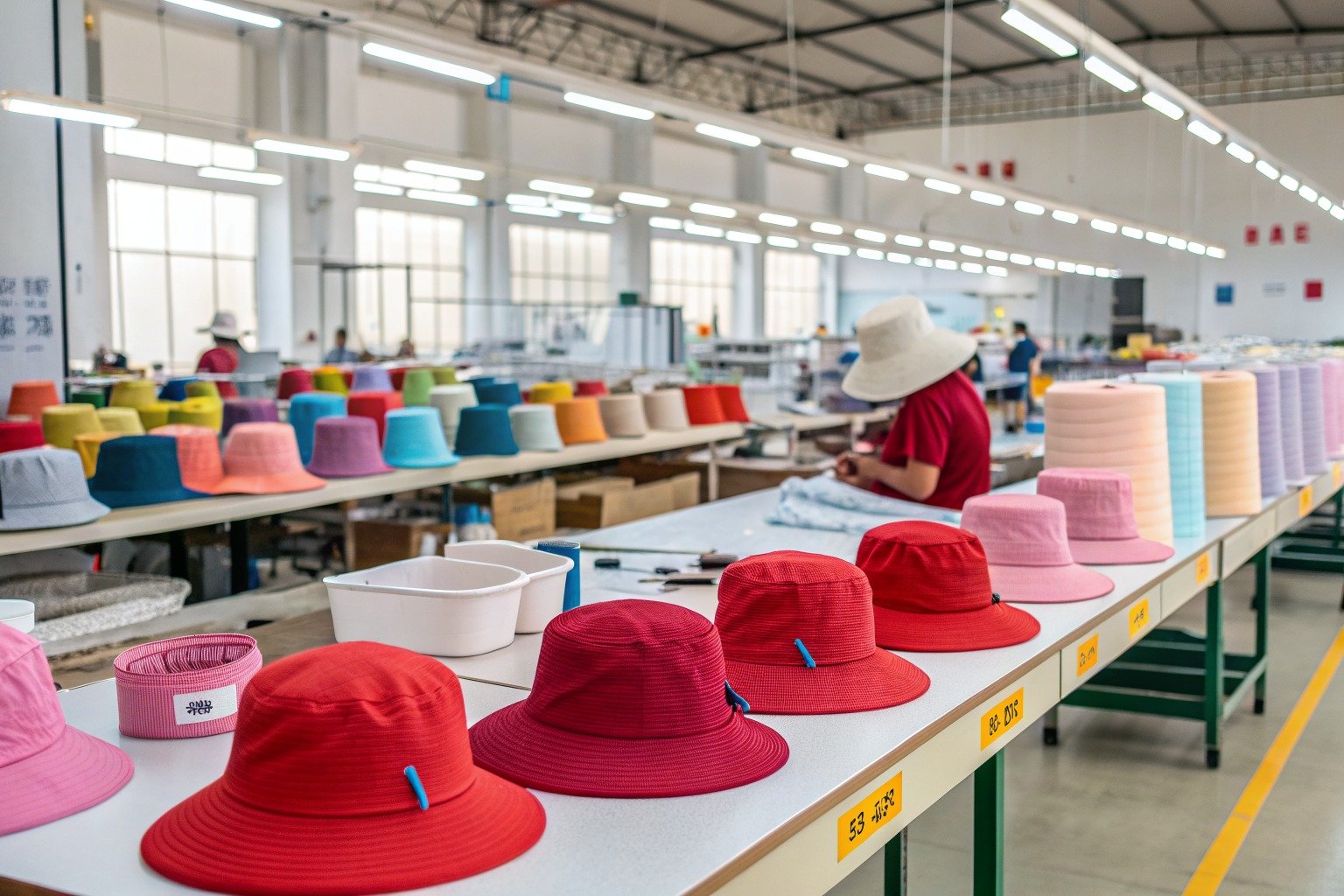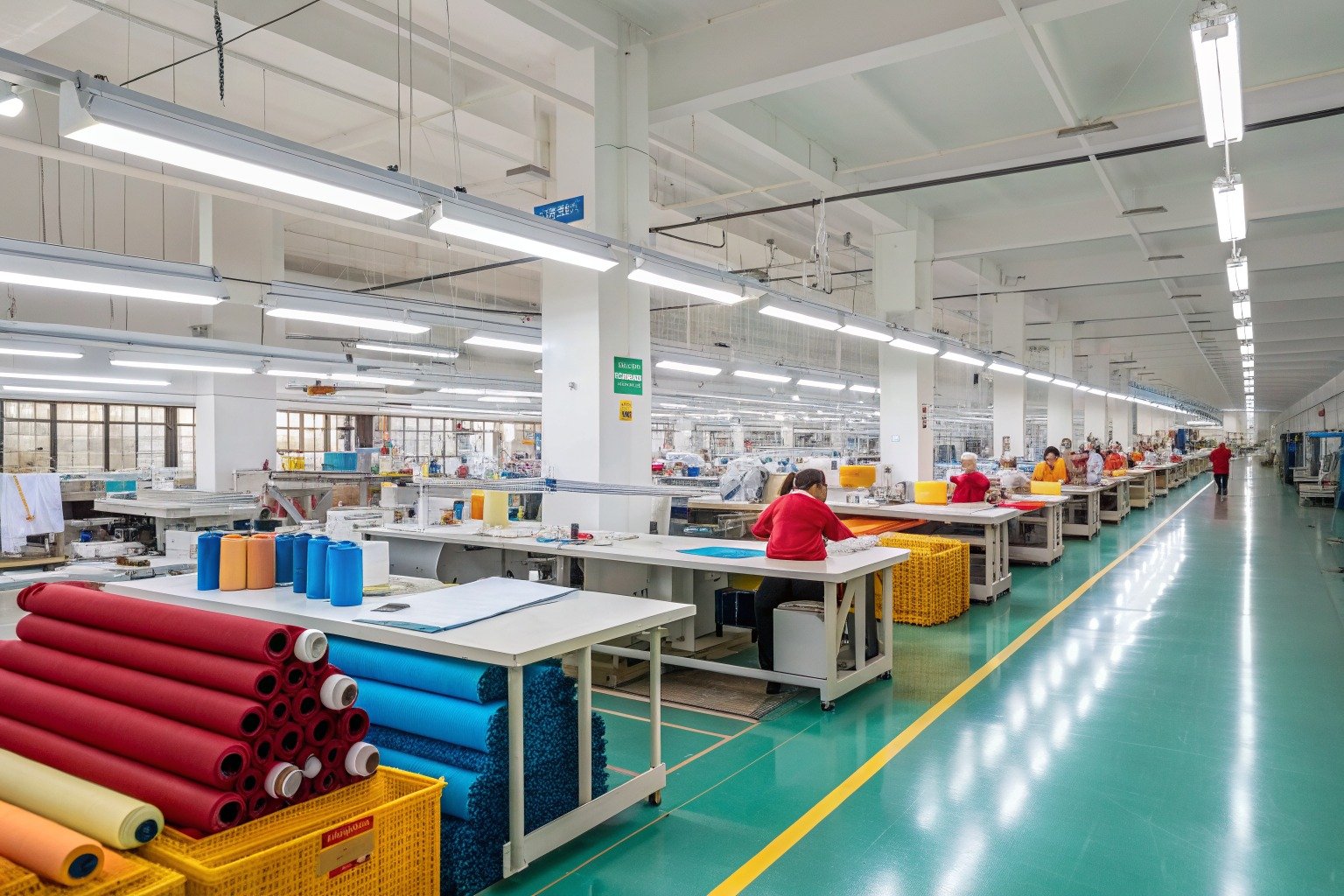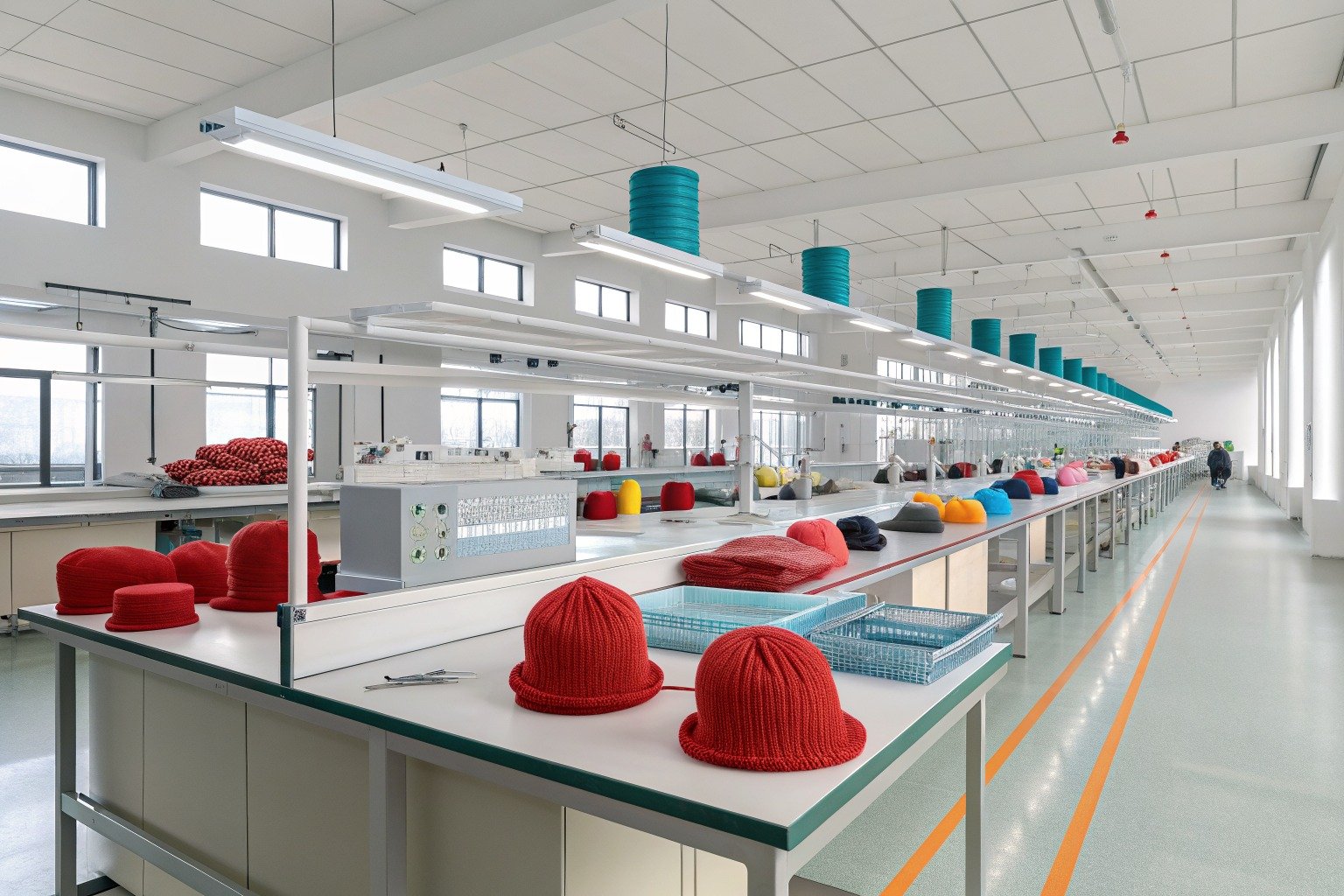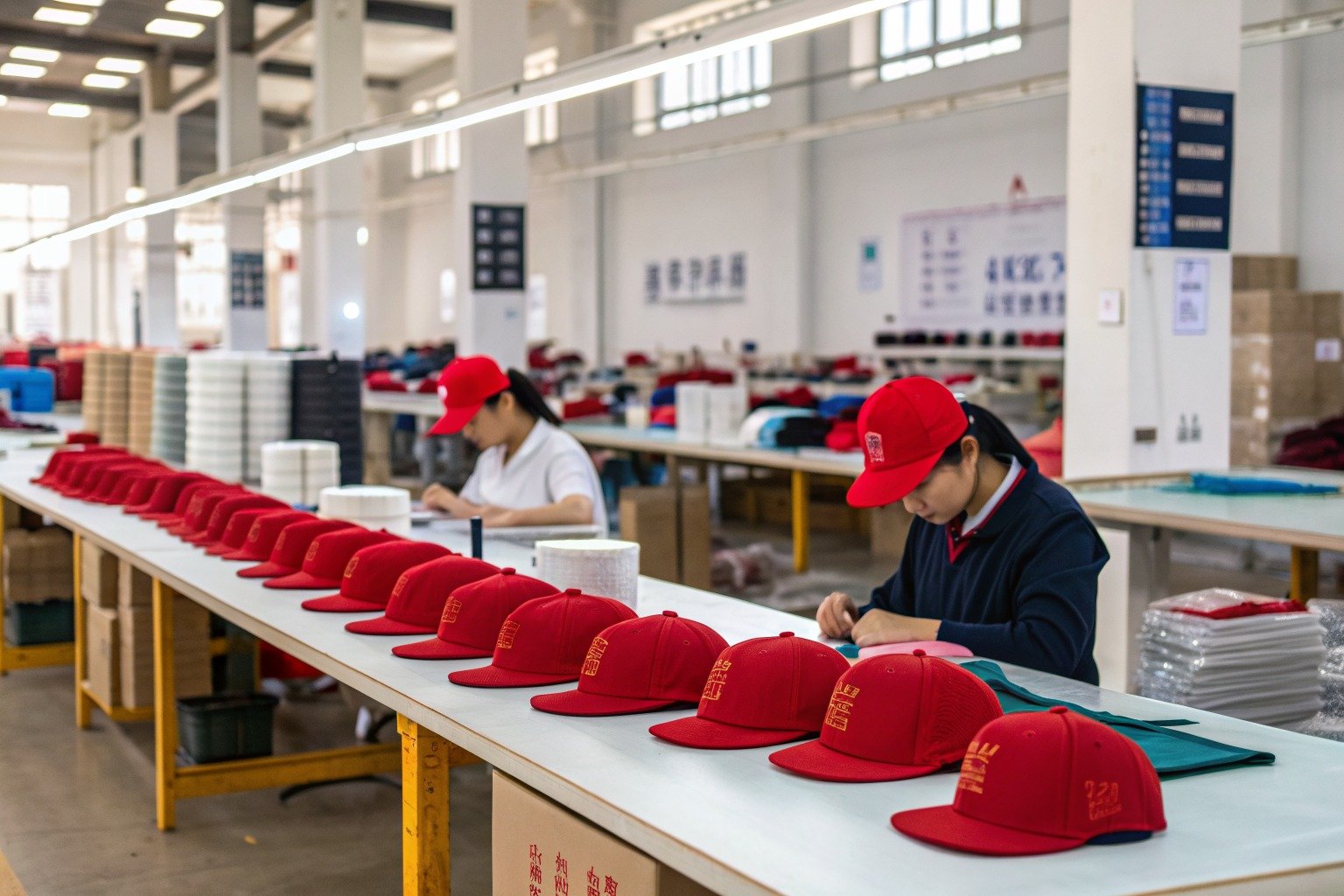
A boutique resort wear brand owner from Miami sat in my showroom last January with a beautiful, slightly distressed sketchbook. She had spent the off-season designing a collection of summer hats that she believed could define her brand. The hero piece was a wide-brimmed hat made not from traditional straw or paper, but from natural cork fabric. The brim was to be shaped in a gentle, asymmetric wave. The crown was to have a distinctive teardrop crease. A hand-painted silk band was to wrap around the crown. She had taken the design to three hat factories. Two told her cork was impossible to work with for shaped hats because it cracked when molded. The third said they could do it, but the lead time was six months because the cork had to be sourced from Portugal and the molds had to be custom-made. She had a confirmed order from a luxury resort in the Maldives, and they needed delivery by April 15th. She had fourteen weeks. She was almost ready to abandon her hero piece. I asked her to leave the sketchbook with me overnight. The next morning, I gave her a timeline that worked, a sample delivery in three weeks, and a production schedule that would put finished hats in the Maldives by the first week of April.
The production time for custom shaped cork hats is 45 to 60 days from order confirmation to ex-factory readiness, with express options that can compress the timeline to 30 to 35 days for urgent orders with premium surcharges. This timeline includes cork fabric sourcing, typically 7 to 10 days for premium natural cork fabric from our audited suppliers, the shaping mold design and fabrication, which takes 10 to 14 days for custom crown and brim blocks, the cork fabric cutting and preparation which takes 2 to 3 days, the steam shaping and molding process which is the most time-intensive stage at 7 to 10 days including multiple pressing and drying cycles, the trimming, finishing, and sweatband installation which takes 3 to 5 days, and the final quality control, labeling, and packing which takes 2 to 3 days. The total timeline is longer than a standard straw or fabric hat because cork is a natural material with unique handling requirements. It must be conditioned with moisture and heat to become pliable, it must be molded under pressure for extended periods to hold its shape, and it must be dried slowly and evenly to prevent cracking, warping, or delamination.
Cork hats occupy a unique and growing niche in the summer accessories market. Cork is sustainable, harvested from the bark of the cork oak tree without harming the tree. It is lightweight, water-resistant, and has a beautiful natural texture that ranges from fine and smooth to coarse and rustic. It appeals to eco-conscious consumers, to resort wear brands that emphasize natural materials, and to fashion designers looking for an alternative to the ubiquitous straw hat. But cork is a demanding material to work with. It has a memory. It wants to return to its flat sheet form. It can be brittle if dried too quickly. It can delaminate if the adhesive between the cork veneer and the fabric backing is compromised by excessive heat or moisture. At AceAccessory, we have developed specialized expertise in cork hat production. We have invested in the molds, the conditioning chambers, and the skilled artisans who understand this remarkable material. Let me walk you through the entire production journey.
What Makes Cork a Unique Material for Hat Production
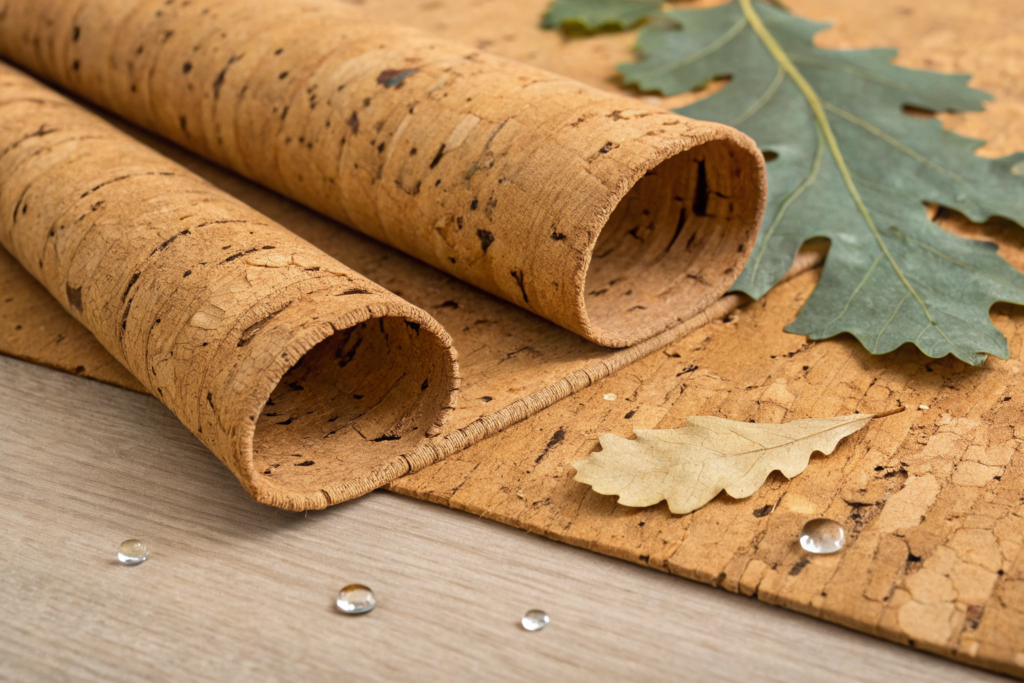
Cork fabric, also known as cork leather or cork skin, is a composite material. It is made by harvesting the bark of the cork oak tree, Quercus suber, which grows primarily in Portugal and Spain. The bark is dried, boiled, and then thin sheets, typically 0.3 to 0.5 millimeters thick, are shaved from the bark blocks. These thin cork veneers are laminated onto a fabric backing, usually cotton, polyester, or a blend, using a flexible polyurethane or water-based adhesive. The resulting material is a textile that has the beautiful natural surface of cork on one side and the strength and flexibility of fabric on the other. It is this composite nature that makes cork both wonderful and challenging for hat production.
Cork is a unique material for hat production because it possesses a combination of properties found in no other single material. It is exceptionally lightweight, with a density approximately half that of water, making cork hats comfortable for all-day wear in hot weather. It is naturally water-resistant due to suberin, a waxy substance that permeates the cork cell walls, so a cork hat can be worn in light rain without damage. It is highly elastic, cork can be compressed by up to 40 percent and will recover its original shape, which gives cork hats a resilience that straw hats lack. It is a natural insulator, the millions of tiny air-filled cells in the cork structure provide thermal insulation, keeping the head cool in direct sun. It is sustainable and vegan, cork is harvested without harming the tree, which regenerates its bark, making it a renewable resource that appeals to eco-conscious consumers. The challenges of cork for hat production are its shape memory, which requires specialized molding techniques to overcome, its brittleness when dry, which requires careful moisture management during shaping, and its limited stretch, which requires precise pattern making because the material cannot be blocked and stretched as aggressively as wool felt.
These properties dictate every aspect of the cork hat production process. The conditioning, the molding, the drying, the finishing, each step is adapted to the specific characteristics of cork. A factory that treats cork like straw or felt will produce hats that crack, warp, or lose their shape. A factory that understands cork will produce hats that are beautiful, durable, and uniquely appealing. Let me explain the two most important material properties in detail.
Why Does Cork Fabric Require Special Handling During Molding?
Cork fabric has what I call a shape memory. In its natural state, the cork veneer wants to be flat. When you bend a sheet of cork fabric, you are stretching the fabric backing on the outside of the curve and compressing the cork veneer on the inside. The cork cells on the inside are being squeezed. The elastic nature of cork means that as soon as you release the bending force, the cork cells try to spring back, and the fabric backing, if it is not strong enough or if the adhesive is not secure, pulls the material back toward flat. This shape memory is the fundamental challenge of molding shaped cork hats. To overcome it, we use a combination of moisture, heat, pressure, and time. The cork fabric is conditioned in a humidity chamber at approximately 80 percent relative humidity and 30 degrees Celsius for several hours before molding. The moisture softens the suberin in the cork cell walls, making the cork more pliable and reducing the spring-back force. The moisture also prevents the cork from cracking when it is bent. Dry cork is brittle. Wet cork is flexible. After conditioning, the cork fabric is placed over a heated mold, typically made of aluminum or hardwood, that has the exact shape of the crown or brim. The mold is heated to approximately 60 to 70 degrees Celsius. The heat further softens the cork and activates the thermoplastic adhesive that bonds the cork to the fabric backing, allowing the two layers to slide slightly relative to each other and then lock into the new curved position. Pressure is applied, either by a vacuum press that sucks the cork tightly against the mold, or by a mechanical press with a matching male and female mold. The cork is held under pressure and heat for an extended period, typically 30 to 60 minutes for a crown and longer for a brim. The material is then allowed to cool slowly while still on the mold. The cooling phase is critical. If the cork is removed from the mold while still hot, the shape memory will reassert itself and the hat will lose its form. The slow cooling allows the adhesive to set in the new curved position and the cork cells to relax into their compressed state. After demolding, the hat body is placed in a drying room with controlled temperature and humidity for 24 to 48 hours to fully stabilize.
How Does Cork Thickness Affect the Hat Shaping Process?
Cork fabric for hats is available in a range of thicknesses, typically from 0.3 millimeters for fine, dress-weight cork to 1.0 millimeters or more for heavy, rugged cork. The thickness of the cork has a profound effect on the shaping process. Thin cork, 0.3 to 0.5 millimeters, is more flexible and easier to mold into complex shapes. The thin veneer can follow tight curves without cracking. The heat and moisture penetrate quickly and evenly. The molding time is shorter. Thin cork is ideal for dress hats, fashion fedoras, and styles with sharp creases and tight brim curls. The trade-off is that thin cork has less structural integrity. It needs a heavier fabric backing, or an internal stiffener, to hold its shape over time. It is also more susceptible to damage from rough handling. Thick cork, 0.8 to 1.0 millimeters, is stiffer and more resistant to bending. It requires longer conditioning, higher heat, and longer molding time to shape. The thicker veneer is more likely to crack on tight curves, so the design must accommodate gentler, more sweeping shapes. Thick cork has excellent structural integrity. A hat made from thick cork can hold its shape with minimal internal support. It feels substantial and rugged. Thick cork is ideal for wide-brimmed sun hats, outdoor adventure hats, and styles that emphasize durability and presence. The choice of cork thickness is a design decision that balances shape complexity, structural integrity, weight, and cost. We stock cork fabric in several thicknesses and guide our clients to the best choice for their specific design. We also use different thicknesses on different parts of the same hat. A thicker cork for the brim, where structural rigidity is needed, and a thinner cork for the crown, where complex shaping is desired. This combination optimizes both form and function.
What Are the Stages of Custom Cork Hat Production
Producing a custom shaped cork hat is a journey through a sequence of specialized processes. Each stage builds on the previous one, and a mistake at any stage can ruin the hat. The process requires patience, precision, and an understanding of how cork behaves under different conditions. The timeline I described earlier, 45 to 60 days standard, 30 to 35 days express, is the sum of the times required for each stage, with some stages running in parallel. Understanding these stages helps you plan your project, communicate with your factory, and appreciate the craftsmanship that goes into a quality cork hat.
The stages of custom cork hat production are, in sequence. Stage one, design and pattern making, 5 to 7 days. The hat design is translated into technical patterns for the crown and brim. The patterns are adjusted for the specific stretch and recovery characteristics of cork. Stage two, mold fabrication, 10 to 14 days. Custom aluminum or hardwood molds are machined to the exact crown and brim shapes. This stage runs partially in parallel with stage one. Stage three, material sourcing and preparation, 7 to 10 days. The specified cork fabric is ordered from our supplier, received, inspected for defects, and conditioned. This stage runs in parallel with stages one and two. Stage four, cutting, 2 to 3 days. The conditioned cork fabric is cut into the crown and brim pieces using the approved patterns. Stage five, molding and shaping, 7 to 10 days. The cut pieces are conditioned, molded under heat and pressure, cooled on the molds, and dried. This is the longest single stage and the heart of the process. Stage six, trimming and assembly, 3 to 5 days. The molded crown and brim are trimmed to final dimensions, the brim edge is finished, the crown and brim are joined, the sweatband is sewn in, and any trim or band is applied. Stage seven, finishing and QC, 2 to 3 days. The completed hat is inspected for shape consistency, surface defects, and assembly quality. Labels and tags are attached. The hat is packed.
Several of these stages overlap. While the molds are being fabricated, the cork fabric is being sourced and conditioned. While the brims are molding, the crowns are being trimmed. This parallel processing is essential to achieving the standard lead time. Let me detail the two most time-intensive stages.
How Long Does Custom Mold Fabrication Take for Cork Hats?
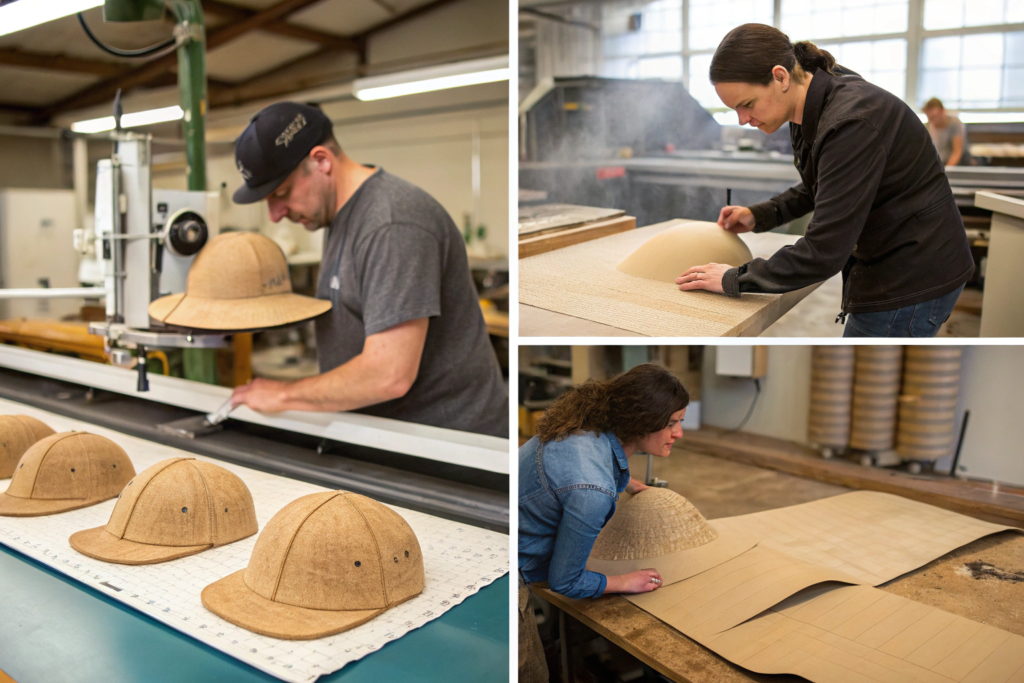
The mold is the soul of a shaped hat. It is the form that gives the cork its permanent shape. For a standard hat shape, a factory may have a library of existing molds that can be used. For a custom shape, a unique mold must be fabricated. This is a significant investment of time and money, but it is what makes the hat uniquely yours. The mold fabrication process begins with a 3D digital model of the crown and brim shapes. The model is created from the designer’s sketches and specifications. The model is reviewed and approved by the client. Once approved, the digital model is used to program a CNC, computer numerical control, milling machine. The mold material is typically aluminum for production molds because it is lightweight, heats evenly, and resists corrosion from the moisture used in the conditioning process. For prototype molds, a dense hardwood like beech or maple can be used. The CNC machine carves the mold from a solid block of material. The male mold, the positive form that pushes the cork from the inside, and the female mold, the negative form that presses from the outside, are machined as a matched pair. The machining process for a complex crown shape can take 10 to 20 hours of machine time. After machining, the mold surfaces are hand-polished to a smooth finish. Any roughness on the mold surface will imprint on the cork. The polishing is a meticulous manual process. The total time from digital model approval to finished, polished mold pair is typically 10 to 14 days. For a prototype mold made from hardwood, the timeline can be slightly shorter, 7 to 10 days. The mold cost is a one-time investment. The mold is yours, and we store it for future production runs. The mold cost is typically amortized over the first production order. The mold is a durable tool that, with proper care, can produce thousands of hats over its lifetime.
What Is the Steam Shaping and Drying Process for Cork?
Steam shaping is the alchemy of cork hat making. It is the process by which a flat sheet of cork fabric is transformed into a three-dimensional hat. The process relies on the controlled application of moisture and heat to make the cork temporarily pliable. The cut cork pieces, the crown and the brim, are placed in a steam chamber. The chamber is not a pressure vessel. It is an enclosed cabinet with a steam generator that produces a flow of saturated steam at approximately 100 degrees Celsius and 100 percent relative humidity. The cork pieces are exposed to the steam for a specific dwell time, typically 15 to 30 minutes depending on the cork thickness. The steam penetrates the cork veneer, softening the suberin and making the cell walls flexible. The steam also heats the adhesive layer, making it temporarily thermoplastic. The steamed cork piece is removed from the chamber and immediately placed over the heated mold. The mold is at approximately 60 to 70 degrees Celsius. The cork is worked by hand, stretched and smoothed over the mold to eliminate any wrinkles or air pockets. The female mold, or a vacuum membrane, is applied to press the cork firmly against the male mold. The cork is held under this heat and pressure for 30 to 60 minutes. During this time, the moisture gradually evaporates from the cork, the adhesive sets in the new curved position, and the cork cells compress and relax into their new shape. After the pressing cycle, the mold with the cork still on it is removed from the heat and allowed to cool naturally to room temperature. This cooling phase takes several hours. The cork must not be removed from the mold while it is still warm. After cooling, the shaped cork piece is removed from the mold. It now holds the shape of the mold, but it is not yet fully stable. The piece is placed in a drying room with controlled temperature, 25 to 30 degrees Celsius, and controlled humidity, 50 to 60 percent relative humidity, for 24 to 48 hours. This final drying allows the residual moisture to evaporate evenly and the cork to fully stabilize in its new shape. The entire steam shaping and drying process for a crown or brim piece takes 2 to 3 days from start to fully stabilized finished piece.
What Customization Options Are Available for Cork Hats
Cork is a surprisingly versatile design material. It can be left in its natural state, a warm honey-gold color with a beautiful organic grain pattern. It can be stained or dyed to achieve a range of colors, from dark espresso to soft pastels. It can be printed with patterns or logos using UV digital printing. It can be laser-engraved with intricate designs. It can be combined with other materials, fabric trims, leather bands, metal hardware, to create a hat that is uniquely expressive. The customization options for cork hats are extensive, and each option has implications for the production timeline and cost.
Customization options for cork hats include the cork color and finish, which can be natural, stained, dyed, or digitally printed. The crown shape, which can be a classic teardrop, a center crease, a diamond crown, a flat top, or a custom sculptural form. The brim shape, which can be a flat brim, a snapped brim with an up or down curl, a wavy or asymmetric brim, or a wide dramatic brim. The brim edge finish, which can be a raw cut edge, a bound edge with fabric or leather, or a hand-painted edge. The sweatband material, which can be cotton, leather, or a moisture-wicking performance fabric. The trim and band, which can be a simple grosgrain ribbon, a hand-painted silk band, a leather strap with a buckle, a beaded or embroidered band, or a custom-printed fabric band. The lining, which can be a plain cotton lining, a printed lining with the brand’s logo or a pattern, or no lining for a lightweight, breathable hat. Each of these customization options adds to the uniqueness of the hat and allows the brand to create a product that is a true reflection of their design vision.
The most impactful customization options are often the cork color and the trim details. A natural cork hat has a rustic, organic feel. A stained cork hat in a rich espresso brown has a sophisticated, almost leather-like appearance. A digitally printed cork hat with a vibrant pattern is a true fashion statement. Let me explore the color and trim options in more detail.
Can Cork Hats Be Produced in Custom Colors and Stains?
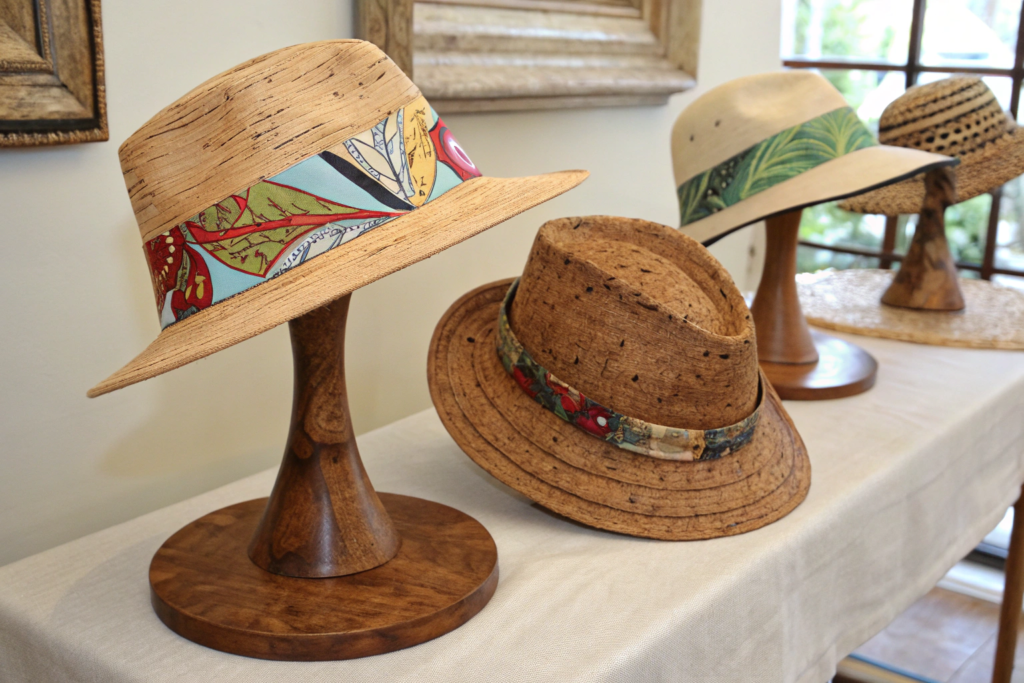
Yes, cork accepts color beautifully, but the process is different from dyeing fabric. Cork is not dyed in the traditional sense. The cork cells are closed and filled with air. They do not absorb dye the way textile fibers do. Instead, cork is colored through staining or surface coating. Staining involves applying a translucent colorant that penetrates the surface pores of the cork and tints the natural grain. The natural grain pattern remains visible through the stain, creating a rich, dimensional effect. Stains are available in a wide range of wood tones, from light oak to dark walnut, as well as fashion colors like burgundy, navy, and forest green. The stain is applied by hand with a cloth or a sponge, and the excess is wiped away. The depth of color is built up through multiple applications. The staining process adds 1 to 2 days to the production timeline for the application and drying time. Surface coating involves applying an opaque color, usually a water-based polyurethane or acrylic coating, that covers the cork surface completely. The natural grain may be partially or fully obscured, depending on the opacity of the coating. Surface coating allows for solid, vibrant colors that are not achievable with stain, including bright white, pastels, and highly saturated hues. The coating is applied by spraying, which requires a spray booth and multiple coats with sanding between coats. The surface coating process adds 2 to 3 days to the timeline. Digital printing on cork is another option for custom color and pattern. The cork surface is first coated with a primer to improve ink adhesion. The design is then printed directly onto the cork using a UV flatbed printer. This allows for photographic images, complex patterns, and brand logos to be printed in full color with excellent detail. The digital printing process adds 1 to 2 days. The color of the cork can also be affected by the finish. A matte finish gives a natural, understated look. A gloss finish gives a more dramatic, polished appearance. The choice of color and finish should be specified early in the design process, as it affects the cork sourcing and the production timeline.
What Trim and Band Options Add the Most Value?
The trim and band are the jewelry of the hat. They are the details that catch the light, frame the face, and communicate the brand’s aesthetic. For cork hats, the trim options are particularly important because the natural cork surface provides a beautiful, neutral canvas that can be dressed up or down depending on the trim. The band is the most visible trim element. A simple grosgrain ribbon band in a complementary color is classic and understated. It adds minimal cost and no additional lead time. A hand-painted silk band, where an artist paints a unique design onto a silk ribbon that is then sewn around the crown, is a premium option that transforms the hat into a wearable art piece. Each band is unique. The hand-painting process adds 3 to 5 days to the timeline and a significant cost premium, but the perceived value is enormous. A leather band with a metal buckle or a branded metal concho is a rugged, masculine option that works well for outdoor and adventure-oriented brands. The leather and hardware add cost and may have their own sourcing lead time. A fabric band made from a printed fabric that coordinates with the brand’s clothing collection creates a cohesive brand story. The fabric is printed, cut into bias strips, and sewn into a band. The timeline depends on the fabric printing schedule. A beaded or embroidered band, where artisans hand-sew beads or embroidery onto a band, is the ultimate luxury option. This is a slow, meticulous process that can take days or weeks per hat, and the cost is high. It is typically reserved for limited edition or haute couture pieces. The brim edge finish is another trim detail that adds value. A raw cut edge is the simplest and most casual. A bound edge, where a strip of fabric or leather is wrapped over the brim edge, is more tailored and polished. A hand-painted edge, where the brim edge is carefully painted with a contrasting color, is a subtle but distinctive detail that signals quality. The trim and band options are where a brand can truly differentiate its cork hats and command a premium retail price. We work with our clients to select the trim options that align with their brand positioning and their target price point.
How to Plan Your Cork Hat Production for Summer Delivery
Summer is the season for cork hats. The natural breathability, the lightweight comfort, and the sun-protective wide brims make cork hats the perfect summer accessory. But summer is also the most deadline-driven season in the fashion calendar. A hat that arrives in July has missed the peak selling window. The production timeline must be planned backward from the required in-store date, with buffer time for unexpected delays. The key to a successful summer delivery is starting early, finalizing designs before the end of the previous year, and maintaining clear communication with the factory throughout the production process.
Planning cork hat production for summer delivery requires a backward scheduling approach. Start with the required in-store date, typically April 15 to May 1 for the summer season. Subtract the shipping transit time, 25 to 35 days for sea freight to the US or Europe, or 5 to 7 days for air freight. This gives the latest acceptable ex-factory date. For a May 1 in-store date with sea freight, the ex-factory date is approximately March 15 to March 25. Subtract the standard production lead time of 45 to 60 days. This gives the latest order confirmation date, approximately January 15 to February 1. Subtract the sampling and approval time, typically 3 to 4 weeks for sample production and client approval. This gives the latest design finalization date, approximately mid-December to early January. This schedule assumes sea freight. If air freight is used, the timeline can be compressed by approximately 20 days. The express production option can compress the production timeline by an additional 15 to 20 days. For a brand that finalizes designs in February, an air freight plus express production track can still achieve a May delivery. The key is to communicate the deadline to the factory at the outset and to build the production schedule around that deadline. A factory that knows the deadline is fixed can prioritize the order, expedite the mold fabrication, and schedule the production run to meet the required ex-factory date.
The most common mistake I see is brands underestimating the mold fabrication time. A custom-shaped hat requires a custom mold, and the mold takes time to design, machine, and polish. Rushing the mold leads to a poor-quality mold, which produces poor-quality hats. The mold fabrication should be started as soon as the design is finalized. Another common mistake is failing to account for the Chinese New Year holiday, which typically falls in late January or February. Factory closures during this period can add two to three weeks to the effective lead time. Orders placed in early January may not begin production until late February. We advise our clients on the holiday calendar and build it into the schedule. Let me explain the two most important planning strategies.

When Should You Place Orders for Summer Cork Hat Delivery?
The optimal time to place production orders for summer cork hat delivery is October to November of the previous year. This timeline allows for the full standard production process, including mold fabrication, without the need for express surcharges. It provides a comfortable buffer for sampling, revisions, and any unexpected delays. It ensures that the production run is completed before the Chinese New Year factory closure, avoiding the two to three week holiday gap. It allows for sea freight, which is significantly more economical than air freight for the relatively voluminous hat cartons. For brands that are unable to finalize designs that early, the next best window is immediately after Chinese New Year, in late February or early March, using the express production track and air freight. This compressed timeline is more expensive and has less margin for error, but it is achievable. Orders placed in April or May are too late for summer delivery by any method, and should be redirected to the following summer or to a different product with a shorter lead time. The key message is that cork hat production rewards early planning. The brands that start their summer design process in September, finalize in October, and place orders in November enjoy the smoothest production experience and the lowest costs. The brands that delay find themselves paying premium freight surcharges and sweating delivery deadlines.
How Does Sea Freight vs. Air Freight Affect the Total Timeline?
The choice between sea freight and air freight for cork hats is primarily a decision about time versus money. Sea freight transit time from our port in China to major US West Coast ports is approximately 15 to 20 days. To US East Coast ports, it is approximately 25 to 30 days. To major European ports, it is approximately 25 to 35 days. Add to this the time for trucking from the port to the final destination, customs clearance, and potential delays at the port. The total door-to-door transit time for sea freight is typically 30 to 45 days. Sea freight is the most economical option for large shipments. The cost per hat is a fraction of the air freight cost. Air freight transit time from our factory to a major US or European airport is approximately 3 to 5 days. Add to this the time for customs clearance and final delivery, and the total door-to-door time is approximately 7 to 10 days. Air freight is significantly more expensive, often 5 to 10 times the cost of sea freight per kilogram. For cork hats, which are lightweight but voluminous, the dimensional weight, not the actual weight, determines the air freight cost. The cost can be substantial. The decision to use air freight is usually driven by a fixed, non-negotiable in-store date that cannot be met by sea freight. Brands that are willing to pay the premium can compress their total timeline by three to four weeks. A common compromise is to sea freight the bulk of the order for the main retail season and air freight a smaller quantity for an early launch event, a press preview, or a key wholesale account. We work with our clients’ freight forwarders, or we can arrange the shipping through our own logistics partners, to find the best balance of speed and cost.
Conclusion
Producing custom shaped cork hats for summer is a journey that blends natural material science, precision mold engineering, and artisanal handcraft. The timeline, 45 to 60 days standard or 30 to 35 days express, reflects the care and time required to transform a flat sheet of cork fabric into a beautifully shaped, durable hat that will provide years of summer wear. We have explored the unique properties of cork, its lightweight breathability, its natural water resistance, and its shape memory that must be gently overcome through steam, heat, and pressure. We have walked through the production stages, from the design and pattern making to the mold fabrication, the steam shaping, and the final finishing, each step a necessary part of the transformation. We have discussed the customization options, the stains and surface coatings that add color, the hand-painted silk bands and leather trims that add value and brand identity. And we have laid out the planning calendar, the backward scheduling from the summer in-store date that determines when designs must be finalized and orders placed.
At AceAccessory, we are proud of our cork hat capability. It is a niche skill that requires investment in specialized equipment, humidity chambers, heated molds, vacuum presses, and climate-controlled drying rooms, and a team of artisans who understand the behavior of this wonderful material. We produce cork hats for resort wear brands, sustainable fashion labels, and boutique designers around the world. We guide our clients through the design and development process, from material selection to mold design to trim specification. We deliver on time because we plan meticulously and communicate transparently.
If you are considering a cork hat collection for your brand, for the coming summer season or the one after, I encourage you to start the conversation early. Contact our Business Director, Elaine, at elaine@fumaoclothing.com. Tell her about your brand, your design concept, and your target delivery window. She can provide samples of our cork materials, discuss mold fabrication timelines, and give you a detailed production schedule and quotation. Let us help you create cork hats that are as unique and beautiful as the natural material they are made from, and that arrive in your stores exactly when your customers are looking for the perfect summer accessory.