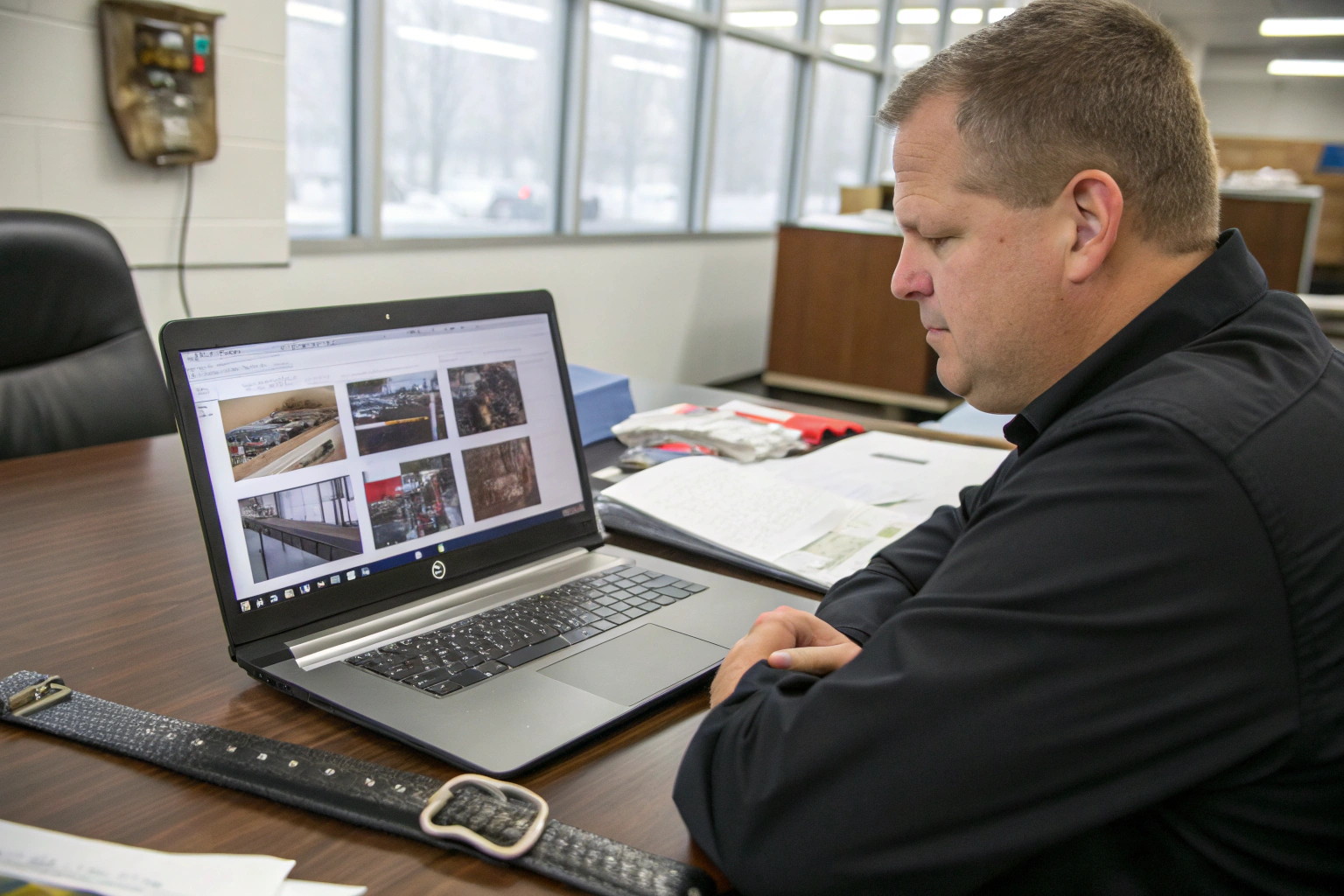
A quality assurance director from a major American department store chain sat in my office last year with a laptop open, showing me a series of photographs. The photographs documented a shipment of belts from a competitor factory. The belts had passed a third-party inspection. The test report showed that the snap buttons had been pull-tested and had met the required 90-newton force standard. The report was stamped and signed. But when the belts arrived at the distribution center and were spot-checked, snaps were popping off with minimal hand pressure. The director had flown to China to investigate. What he discovered was that the factory had prepared a special batch of belts for the inspector. Those belts had reinforced snaps, extra stitching, additional adhesive. They were not the same belts that were shipped. The photographs and the test report were genuine, but they documented a lie. That was the moment, he told me, that his company mandated factory video documentation of all safety-critical tests. No video, no shipment.
US importers ask for factory videos of the snap test on belts because video documentation is the only practical way to verify that the required safety and durability testing was performed on the actual production units, not on specially prepared samples. A continuous, unedited video captures the entire testing process. The random selection of the test sample from the actual shipping carton, the verification of the force gauge calibration, the attachment of the gauge to the snap, the controlled application of force, the real-time display of the force reading, and the final result. This video evidence is critical for three reasons. First, it protects the importer against product liability claims under US consumer product safety regulations, particularly the small parts regulation for children’s products under the CPSIA, where a detached snap is a choking hazard. The video provides evidence of due diligence. Second, it satisfies the vendor compliance requirements of major US retailers, who have increasingly mandated video-recorded factory testing as a condition of doing business, following too many incidents of falsified paper reports. Third, it detects and deters the most common form of test fraud in global supply chains, the substitution of specially prepared samples for random production units, which is almost impossible to catch with static photographs or paper reports alone.
Snap failure on a belt is a safety issue, not just a quality issue. A snap that detaches from a child’s belt or a baby accessory is a small part that can be swallowed or aspirated. A snap that fails on a functional belt, a tool belt, a tactical belt, a medical support belt, can cause injury. The snap test, formally the snap attachment strength test or the pull test, is the primary method of verifying that snaps are securely attached. US importers operate in a legal environment where a single product failure can trigger a lawsuit, a CPSC recall, and catastrophic brand damage. The factory video of the snap test is a layer of legal and commercial protection. At AceAccessory, we have been providing video documentation of safety-critical tests for years. It is a standard part of our QC package for US-bound shipments. Let me explain exactly why this requirement has become so widespread and what must be in a valid test video.
What Is the Snap Pull Test and Why Is It Required
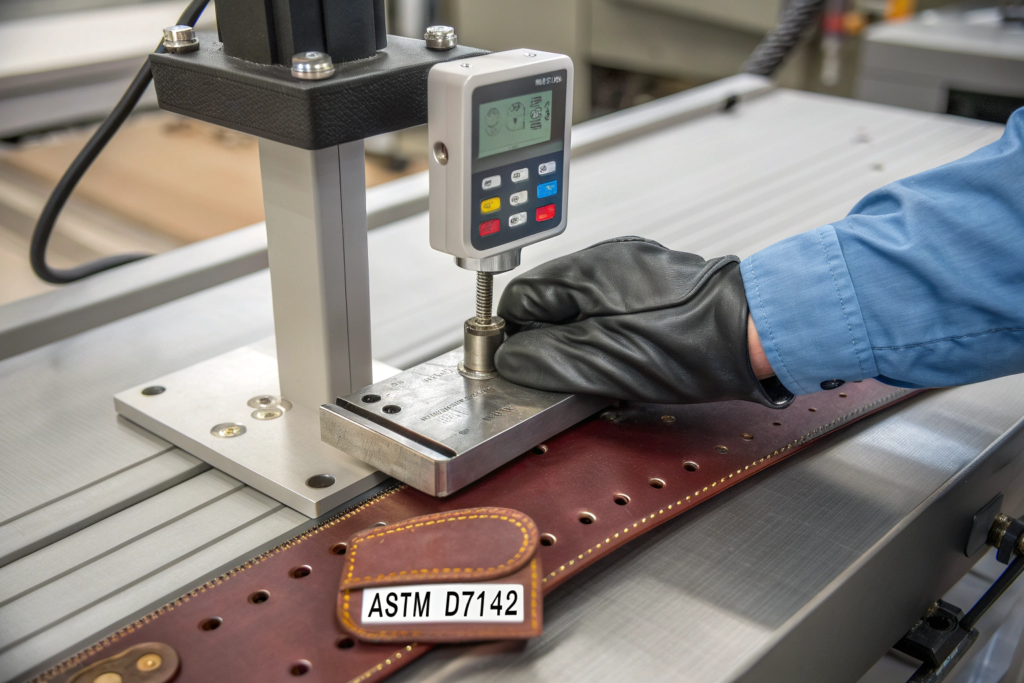
The snap pull test, formally standardized as ASTM D7142 for snap fasteners or as part of ASTM F963 for children’s products, measures the force required to separate a snap fastener from the material to which it is attached. It is a destructive test. The snap is pulled until it either detaches or the required force is reached and held. The test simulates the repeated pulling and tugging that a snap experiences during normal use, every time a belt is fastened or unfastened, every time a child pulls on a strap, every time tension is applied. A snap that is poorly attached, through insufficient pressure during setting, through a defective snap component, or through weak base material, will fail the test at a low force. The test is required because snap failure is a predictable and preventable hazard.
The snap pull test is required for belts sold in the US market because it is the primary method of verifying compliance with federal safety regulations and industry standards. For children’s belts and accessories, the test is mandated under the CPSIA, the Consumer Product Safety Improvement Act, specifically the small parts regulation at 16 CFR Part 1501. A snap that detaches from a children’s product with less than 90 newtons, approximately 20 pounds, of force is a small part and a choking hazard. The product is a banned hazardous substance and cannot be sold. For adult belts, the test is required by most major US retailers as part of their vendor quality standards. The typical minimum pull force required is 90 to 135 newtons, depending on the snap size and the retailer’s specification. The test is also required by the voluntary industry standard ASTM D7142, which defines the test method for snap fasteners. The test uses a calibrated force gauge, also called a tensile tester or a pull tester, that applies a steadily increasing tensile force to the snap. The force is applied perpendicular to the surface of the belt, pulling the snap straight away from the material. The test measures the peak force at which the snap detaches, or confirms that the snap withstood the required force for the specified hold time without detaching.
The test methodology is standardized to ensure consistency and repeatability. The force gauge must be calibrated and traceable to national standards. The pull speed must be controlled, typically 100 millimeters per minute, to avoid force spikes from jerky pulling. The angle of pull must be perpendicular. The clamp attachment must grip the snap securely without damaging it, as a damaged snap can fail prematurely. The test must be performed on finished products, not on fabric swatches or component samples. The snaps must be attached using the same tools, settings, and operators as production. This is the critical point that static photographs cannot verify, and the reason why video documentation has become essential. Let me explain the two most important aspects of the test methodology.
How Does ASTM D7142 Standardize Belt Snap Testing?
ASTM D7142 is the Standard Test Method for Holding Strength of Prong-Ring Attached Snap Fasteners. It is published by ASTM International, one of the most respected standards development organizations in the world. The standard provides a detailed, step-by-step procedure that leaves little room for ambiguity. It specifies the equipment. The force gauge must be a tensile testing machine or a handheld force gauge with an accuracy of plus or minus 1 percent of the indicated force. The gauge must be calibrated annually, and the calibration must be traceable to the National Institute of Standards and Technology, or NIST. The clamps or grips used to hold the snap and the material must be designed to prevent slippage and to distribute the gripping force evenly. The standard specifies the test specimen. The snap must be tested as attached to the finished product, not as a component. If the belt has multiple snaps, each snap must be tested individually. The specimen must be conditioned at standard laboratory atmosphere, 21 degrees Celsius and 65 percent relative humidity, for at least 4 hours before testing. The standard specifies the test procedure. The force gauge is zeroed. The snap is gripped in the upper clamp. The belt material is secured in the lower clamp or held flat on the test bed. The force is applied at a constant rate of speed, 100 millimeters per minute, until the snap detaches or the specified force is reached. If the snap does not detach, the force is held for 10 seconds. The peak force is recorded. If the material tears before the snap detaches, the test result is the force at which tearing began, and the failure mode is recorded as material failure, not snap failure. This is an important distinction because it indicates a different root cause. The standard specifies the report. The test report must include the sample identification, the test date, the equipment used, the test speed, the number of specimens tested, the individual and average results, and the failure mode for each specimen. The video documentation we provide is aligned with the ASTM D7142 procedure, showing each of these elements as the test is performed.
What Is the Minimum Pull Force for US Safety Compliance?
The minimum pull force requirement depends on the product’s intended user and the specific regulation or standard being applied. For children’s products subject to the CPSIA small parts regulation, the requirement is driven by the use and abuse testing provisions of 16 CFR Part 1501. The test involves applying a force of 90 newtons, approximately 20.2 pounds-force, gradually over 5 seconds, and maintaining the force for an additional 10 seconds. The snap must not detach. If any component detaches that fits entirely within the small parts cylinder, a truncated cylinder with a diameter of 31.7 millimeters and a depth that varies, the product fails and is considered a banned hazardous substance. For children’s belts, this is the minimum standard, and it is non-negotiable. For adult belts, there is no federal minimum pull force. However, most major US retailers have established their own standards based on industry best practice and their own quality and liability concerns. The typical minimum pull force for adult belt snaps is 90 newtons, mirroring the children’s standard, or higher at 135 newtons, approximately 30 pounds-force, for heavy-duty applications. The retailer’s vendor manual will specify the required force, the test method, and the documentation required. For military, tactical, or safety-related belts, the requirement can be significantly higher, 200 newtons or more, and the testing may be governed by a specific military specification or performance standard. The key point for importers is that the minimum force is not a matter of opinion or negotiation. It is specified in the purchase order, the vendor agreement, or the applicable regulation. The test video must clearly show the force gauge display as the force is applied and held, so the viewer can verify that the required force was achieved.
How Does Video Documentation Prevent Snap Test Fraud
Test fraud in the global supply chain is not a hypothetical problem. It is a documented, widespread practice that has resulted in product recalls, injuries, and deaths. The fraud takes many forms. The sample substitution fraud, where the factory prepares special samples for testing that are not representative of production. The equipment manipulation fraud, where the force gauge is tampered with to give false high readings. The procedure fraud, where the test is performed incorrectly, too fast, at an angle, with the wrong clamp, to produce a passing result that would not be achieved under the standard method. Static photographs and paper test reports are vulnerable to all of these frauds. A continuous, unedited video is not immune, but it is vastly more resistant.
Video documentation prevents snap test fraud by capturing the entire testing process as a continuous, unbroken sequence that is extremely difficult to fake convincingly. A valid test video shows the inspector selecting a carton from the shipment stack, showing the carton label with the purchase order number and style code, opening the sealed carton on camera, and reaching into the middle of the carton to extract a random belt. This sequence establishes the provenance of the test sample. The video shows the inspector verifying the force gauge calibration, holding the calibration certificate up to the camera, and showing the gauge serial number. This verifies the equipment is valid. The video shows the test being set up and performed without cuts or edits. The belt is secured, the clamp is attached to the snap, the force is applied at the correct speed and angle, the force reading is visible throughout, and the result, pass or fail, is recorded. A video that cuts or jumps at any point is invalid because the break could conceal a sample swap or an equipment change. A valid video is a single, continuous file from carton opening to final result.
The fraud deterrence effect of video documentation is significant. A factory that knows the testing will be video recorded, and that the video will be reviewed by a compliance professional who knows what to look for, is far less likely to attempt fraud. The cost and difficulty of faking a continuous, convincing test video with sample provenance and real-time force readings is simply too high for most bad actors. Let me explain the two most common types of test fraud and how video prevents them.
How Do Factories Fake a Snap Test Without Video Evidence?
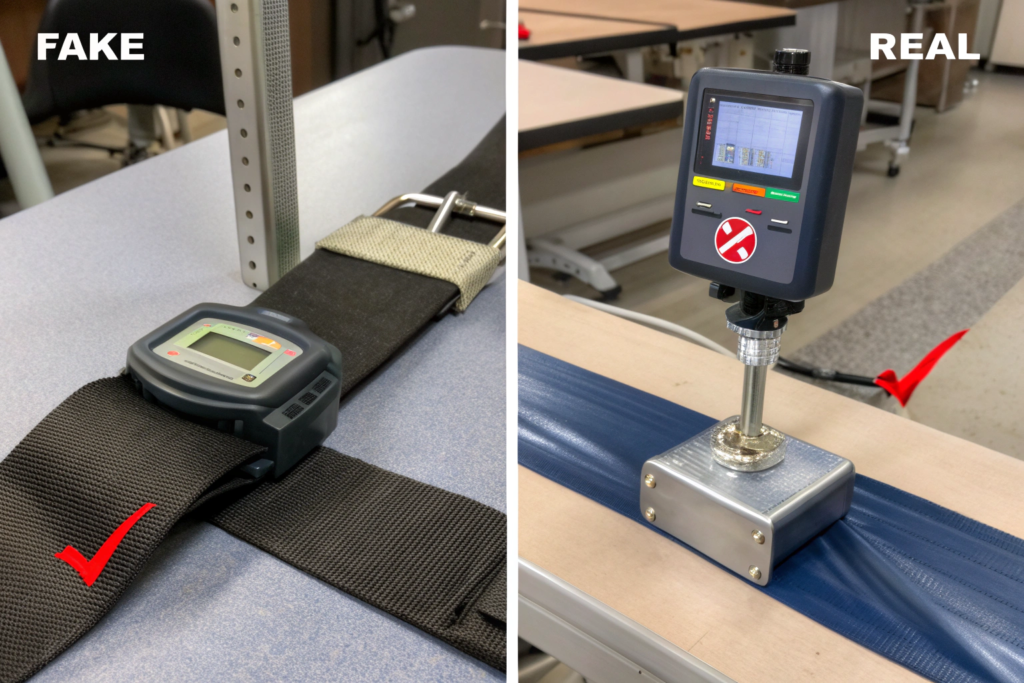
The most common method of faking a snap test is sample substitution, sometimes called the golden sample trick. The factory manufactures the production belts with cheap snaps, weak attachment, or substandard materials. Separately, they manufacture a small batch of belts with premium snaps, reinforced attachment, and extra care. These are the golden samples. When the inspector arrives, or when the factory is preparing the QC documentation, the golden samples are presented for testing. The test is performed on the golden samples. They pass. The test report is genuine. The photographs are genuine. The snap that was tested did indeed withstand 90 newtons. The fraud is that the snap on the tested belt is not the snap on the shipped belts. A static photograph of a force gauge attached to a snap does not prove that the belt came from the shipping carton. A video of the inspector opening the sealed carton and taking the belt out does prove it, or at least makes the fraud vastly more difficult. The second method is equipment manipulation. A digital force gauge can be tampered with to display a false high reading. The calibration can be altered. The peak hold function can be manipulated. A photograph of the gauge display captures a number, not the process that generated that number. A video that shows the force increasing smoothly in real time as the snap is pulled is much harder to fake. The third method is procedural fraud. The test is performed at an incorrect angle, pulling the snap sideways rather than perpendicular, which can give a falsely high reading because the snap is being sheared rather than pulled. A photograph cannot capture the pull angle. A video clearly shows it. The fourth method is sample tampering after a failure. The factory tests a production belt, it fails, so they discard that belt, test a golden sample, and photograph only the passing test. A continuous video of a single belt being tested, with no cuts, prevents this.
What Specific Elements Must a Snap Test Video Include?
A snap test video that is acceptable to US importers and retailers must include specific, identifiable elements. Missing any one of these elements renders the video invalid or insufficient. The elements are, in sequence. One, carton identification. The camera must show the shipping carton, the carton label with the purchase order number, the style number, and the quantity, clearly and in focus. The inspector should read the PO number aloud. Two, carton opening. The camera must show the sealed carton being opened. The tape or seal being cut. This establishes that the carton has not been tampered with. Three, random sample selection. The inspector must reach into the middle of the carton, not take a belt from the top, and extract one belt. The belt must remain in the camera frame continuously from extraction to testing. Four, gauge calibration verification. The force gauge calibration sticker, showing the calibration date, the due date, and the serial number, must be shown close-up. The calibration certificate may also be shown. Five, test setup. The belt must be secured in the test fixture or held in a consistent manner. The clamp must be shown being attached to the snap correctly. The force gauge must be zeroed on camera. Six, test execution. The force must be applied at a smooth, steady rate. The camera must have a clear, unobstructed view of the force gauge display throughout the pull. The numbers must be legible. Seven, result display. After the test, the peak force reading must be shown close-up for at least five seconds. The pass or fail determination must be stated audibly by the inspector or displayed on a written result card. Eight, date and time. The video must be date and time stamped, either by the camera metadata or by a visible clock in the frame. Nine, no cuts. The video must be a single, continuous file. Any jump, cut, or edit invalidates the video. We follow this protocol exactly for every snap test video we produce, and we provide the video file to our clients along with the written test report.
How Do Snap Test Videos Protect Against US Liability
The legal environment for consumer products in the United States is unforgiving. Product liability law holds every entity in the supply chain, the manufacturer, the importer, the distributor, and the retailer, potentially liable for injuries caused by defective products. The legal theory of strict liability means that the injured party does not need to prove negligence, only that the product was defective and that the defect caused the injury. The defenses available to an importer or retailer include demonstrating that the product met all applicable safety standards at the time of manufacture and that reasonable quality control procedures were followed. This is where the test video becomes a legal asset. It is documented, verifiable evidence of reasonable care.
Snap test videos protect US importers against product liability by providing admissible, persuasive evidence that the importer exercised reasonable care in ensuring product safety. In the event of a lawsuit alleging injury from a detached snap, the importer’s defense will include the argument that the product was not defective when it left the importer’s control, and that reasonable testing was performed to verify compliance with safety standards. A written test report is evidence, but it can be challenged as self-serving or potentially falsified. A continuous video showing the random selection of a belt from the actual shipment, the testing of the snap on that belt using calibrated equipment according to a recognized standard, and the achievement of a passing result, is far more difficult to challenge. It is objective, visual proof. Additionally, under the CPSIA, importers of children’s products are required to issue a Children’s Product Certificate, a CPC, certifying that the product has been tested by a CPSC-accepted laboratory and meets all applicable safety rules. The video documentation supports the due diligence basis of that certificate. If the CPSC investigates a product incident, the importer who can produce test videos demonstrating a robust quality control program is in a much stronger position than the importer who can only produce paper reports.
The video is not a guarantee against liability. No amount of testing can eliminate all risk. But in the complex calculus of litigation and regulatory enforcement, strong documentation is the difference between a defensible case and an indefensible one. Let me explain the two most important legal applications.

How Does a Test Video Support a Children’s Product Certificate?
A Children’s Product Certificate, or CPC, is a legal document required by the CPSIA for every children’s product sold in the United States. The CPC must be based on testing performed by a CPSC-accepted, third-party laboratory. However, the importer is also expected to exercise due diligence in ensuring that the production units match the tested samples. The concept is called production testing or ongoing compliance testing. The CPSC expects that importers do not simply test a prototype once and then assume all future production is compliant. They expect a reasonable testing program that periodically verifies ongoing compliance. The snap test video is part of that reasonable testing program. The video demonstrates that the importer did not rely solely on the initial third-party lab test. They also conducted, or required the factory to conduct, production testing on actual units from the shipment. If the CPSC questions the validity of a CPC, perhaps because of a consumer complaint or a retail audit finding, the importer can produce the test videos as evidence that they had a robust system of ongoing compliance verification. The video shows the test being performed on the specific production batch covered by the CPC. The PO number on the carton in the video matches the PO number on the CPC. The date of the video falls within the production and shipment window. This evidentiary chain supports the validity of the CPC. Without production test videos, an importer facing a CPSC inquiry may have difficulty proving that the production units were actually compliant, as opposed to merely hoping they were compliant based on an earlier prototype test.
Can a Retailer Refuse a Shipment Without a Test Video?
Yes, and this is becoming increasingly common. Major US retailers, including department stores, big-box chains, mass merchants, and online marketplaces, have established vendor compliance programs that specify the documentation required for each shipment. These programs are detailed in vendor manuals that are legally binding as part of the purchase agreement. Over the past five years, many retailers have updated their vendor manuals to require video documentation of safety-critical testing, including snap tests, button tests, and small parts tests. The retailer’s distribution center or quality assurance team reviews the documentation before the shipment is accepted into inventory. If the required video is missing, incomplete, or shows improper test procedures, the retailer can refuse the shipment. The goods are held at the distribution center, and the vendor is notified of the non-compliance. The vendor must then either provide compliant documentation or arrange for the goods to be returned or destroyed, at the vendor’s expense. A refused shipment is a financial disaster. The vendor has already paid for the goods and the freight. The goods are sitting in a warehouse accruing storage fees. The retail shelf is empty, losing sales. The vendor relationship is damaged. The cost of producing a proper test video, a few minutes of a QC inspector’s time and a few megabytes of digital storage, is essentially zero compared to the cost of a refused shipment. This is why importers are so insistent on receiving compliant test videos from their factories. It is not a preference. It is a contractual requirement with severe financial consequences for non-compliance. We provide our clients with test videos that are formatted, labeled, and organized according to the specific requirements of each of their retail partners. We understand the vendor manuals and we ensure our documentation meets the standard.
Conclusion
The factory video of the snap test on belts has evolved from a nice-to-have into a hard requirement in the US market. The reason is simple. Paper can lie. Photographs can be staged. A continuous video of the entire test process, from the random selection of the belt from a sealed shipping carton to the final reading on a calibrated force gauge, provides a level of verifiable evidence that static documentation cannot match. We have explored the test itself, the ASTM D7142 standard that defines how a snap pull test must be performed, the 90-newton minimum force that is the benchmark for safety compliance. We have examined the types of fraud that video prevents, the golden sample substitution, the gauge manipulation, the procedural shortcuts, that have plagued the industry and led to product failures and recalls. We have detailed the specific elements that must be present in a valid test video, the carton label, the seal breaking, the random selection, the calibration check, the continuous shot, the clear display reading, the unedited file. And we have discussed the legal and commercial protection that the video provides, supporting Children’s Product Certificates, satisfying retailer vendor compliance requirements, and defending against product liability claims.
At AceAccessory, video documentation of safety-critical testing is standard operating procedure, not a special request. We produce snap test videos, button test videos, and small parts test videos for every US-bound shipment that requires them. Our QC team is trained in video production as well as test procedures. We use tripods, proper lighting, and clear audio. We label and organize the video files by purchase order number and style code. We provide the videos to our clients via a secure online portal, along with the written test reports, the inspection reports, and the compliance certificates. We do this because we understand that our clients are not just buying belts. They are buying peace of mind, legal protection, and a smooth path through their retailer’s compliance process.
If you are sourcing belts or any accessories with snaps, buttons, or small parts for the US market, and you need a manufacturing partner who provides the documentation that US importers and retailers require, I invite you to contact us. Reach out to our Business Director, Elaine, at elaine@fumaoclothing.com. Tell her about your product, your target retailers, and your compliance documentation needs. She can provide sample test videos, explain our QC documentation process, and give you confidence that your shipments will clear compliance review without issues. Do not let a missing test video hold your goods at the distribution center. Work with a factory that documents every test, every time.