A boutique owner from Seattle once called me, furious. She had air-freighted 500 hair claws. The shipping bill was nearly as much as the product cost. The forwarder charged her for 45 kilograms. Her actual carton weighed 12 kilograms. The extra 33 kilograms were air. Literally, she paid to ship air. Nobody had explained dimensional weight to her. She felt cheated. She was not cheated. She was uninformed, and the forwarder was happy to keep her that way.
To avoid air freight overcharges on small accessory orders, focus on three things: optimize your carton dimensions to minimize dimensional weight, consolidate shipments whenever possible, and negotiate all-inclusive rate sheets that cap fuel surcharges and handling fees. The single biggest overcharge trap is oversized packaging that charges you for volume, not weight
I have been air-freighting accessories from China to North America and Europe for two decades. I know every trick forwarders use to inflate invoices and every countermeasure you can deploy. Let me arm you with the knowledge that keeps your shipping costs predictable and fair.
What Is Dimensional Weight and Why Does It Inflate Your Bill?
The single biggest reason small accessory orders get hammered with air freight charges is dimensional weight. Airlines charge for the space your carton occupies, not just its actual weight. If your carton is large but light, you pay for the volume, not the kilograms on the scale.
I have seen a 10-kilogram carton billed as 35 kilograms because it was packed with bubble wrap and air pillows in an oversized box. The forwarder’s invoice was technically correct according to the dimensional weight formula. But the packing was wrong, and nobody had told the buyer she could fix it. Knowledge is your first defense.
How Is Dimensional Weight Calculated for Air Freight?
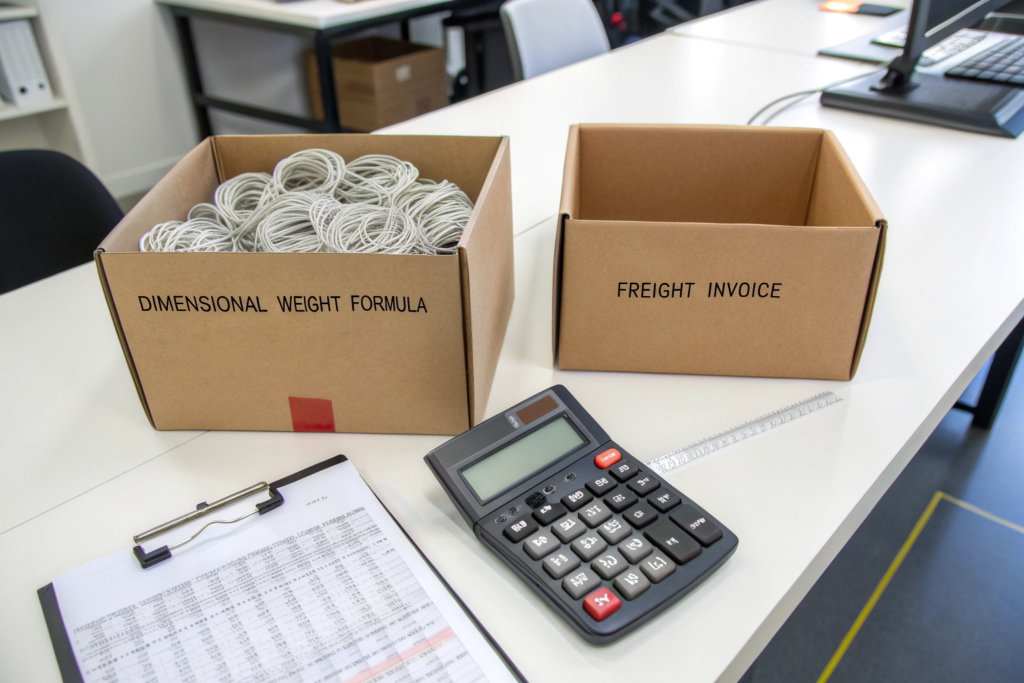
The standard air freight dimensional weight formula is simple. Multiply the carton length, width, and height in centimeters. Divide the result by 6,000. The number you get is the chargeable weight in kilograms. If this number is larger than the actual gross weight on a scale, you pay the dimensional weight instead.
Let me give you a real example from our shipping department. A carton measures 60 centimeters by 40 centimeters by 30 centimeters. Multiply to get 72,000 cubic centimeters. Divide by 6,000. The chargeable weight is 12 kilograms. The actual weight of the accessories inside might be only 5 kilograms. You still pay for 12 kilograms because that is the space the carton occupies in the aircraft hold. If you understand dimensional weight shipping rules, you can calculate your own chargeable weight before the forwarder sends the invoice.
How Can You Minimize Dimensional Weight for Accessory Shipments?
The solution is right-sizing your packaging. Accessories like hair clips, headbands, and scarves are dense and pack tightly. They do not need large cartons. I work with our packing team to select the smallest carton that safely fits the order. We use double-wall corrugated boxes that are strong enough to withstand air freight handling without needing excess internal dunnage.
For a 500-unit hair claw order, a carton measuring 40 by 30 by 20 centimeters is often sufficient. That calculates to 4 kilograms of dimensional weight. A lazily packed 60 by 40 by 30 carton for the same order calculates to 12 kilograms. The difference in air freight cost can be $40 to $80 depending on the destination. Over a year of small orders, those savings add up to thousands. Always ask your supplier for the carton dimensions and the calculated chargeable weight before confirming the shipment. A transparent supplier will provide this without hesitation. Proper export packaging optimization is a skill you should expect from a professional factory.
What Hidden Fees Do Freight Forwarders Add to Your Invoice?
The base air freight rate per kilogram is just the starting point. The final invoice often includes a long list of surcharges that can double the quoted rate. Fuel surcharges, security fees, terminal handling charges, customs clearance fees, and documentation fees all stack up.
Some forwarders quote a low base rate to win your business and then load the invoice with surcharges. The base rate looks attractive. The bottom line is anything but. You must learn to read an air freight invoice like a contract, because it is one.

Why Should You Always Request an All-Inclusive Rate Quote?
An all-inclusive rate quote covers the base freight, the fuel surcharge, the security fee, and the standard terminal handling charges in a single per-kilogram price. There should be no surprises on the invoice beyond that. You compare quotes from different forwarders on an apples-to-apples basis.
I always insist on all-inclusive air freight quotes for our clients who arrange their own shipping. I recommend asking the forwarder directly: "Is this rate all-inclusive? Are there any additional surcharges I should expect on the final invoice?" Get the answer in writing, ideally on the quote itself. A forwarder who refuses to provide an all-inclusive rate is planning to make their margin on the surcharges. Understanding air freight pricing components empowers you to negotiate from a position of strength.
What Are Common Unnecessary Fees You Can Dispute?
Some fees on an air freight invoice are mandatory. Others are negotiable or outright avoidable. A "congestion surcharge" should be disclosed upfront, not added after shipment. A "special handling fee" for standard accessory cartons is often bogus. A "documentation amendment fee" for correcting a minor typo is excessive.
I once had a forwarder add a $45 "dangerous goods check fee" for a shipment of fabric scarves. Scarves are not dangerous goods. I disputed the charge and had it removed within one email. The forwarder was testing whether we would notice. Many buyers pay these fees without question because the invoice looks official and complicated. Scrutinize every line item. If a fee is not explained in your rate agreement, ask for a justification. Understanding common freight surcharges explained helps you identify which charges are legitimate and which are padding.
How Can Consolidation and Scheduling Reduce Your Air Freight Costs?
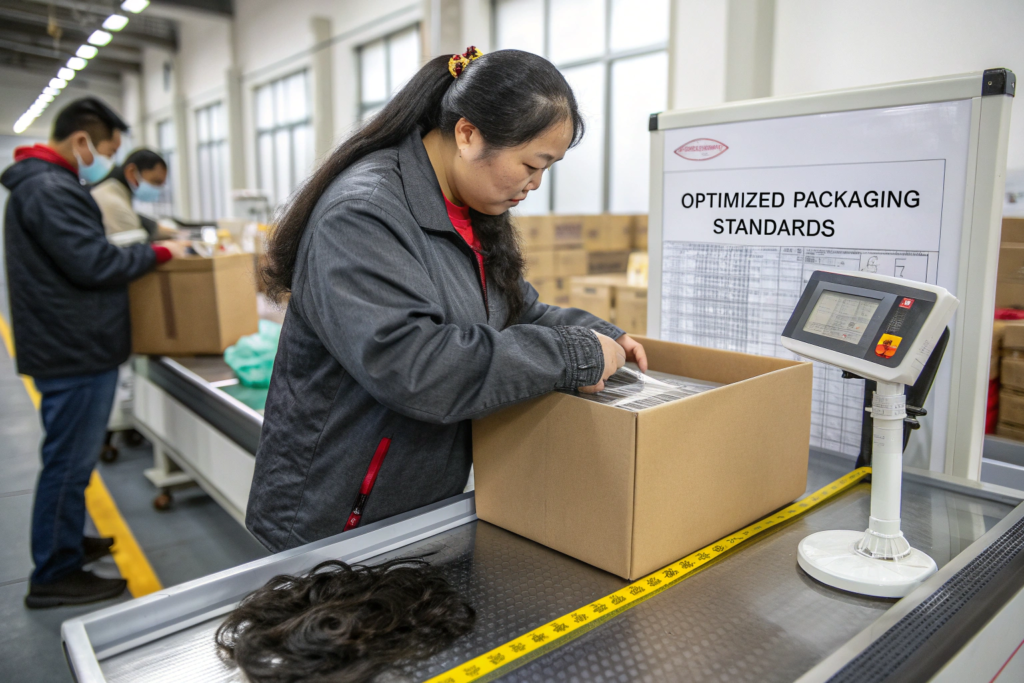
Shipping a single 50-kilogram consolidated shipment costs far less per kilogram than shipping five separate 10-kilogram shipments. The minimum charge per air waybill works against small, frequent shipments. Consolidation is the tactical solution.
At our factory, we offer consolidation services for clients who order regularly in small quantities. We hold completed orders in our secure warehouse and combine them into a single larger shipment on a pre-agreed schedule. This simple practice slashes shipping costs without impacting delivery frequency in a meaningful way.
How Does Grouping Multiple Small Orders Save Significant Money?
The mathematics of consolidation are compelling. A single 10-kilogram shipment to the United States might cost $6.00 per kilogram due to minimum charges and the base rate structure. A consolidated 50-kilogram shipment might cost $4.00 per kilogram for the same destination. That is a 33% reduction in freight cost per unit.
For a buyer who orders 1,000 hair clips every month, waiting and shipping 3,000 clips quarterly instead of monthly can save hundreds of dollars in freight per quarter. The inventory carrying cost of holding an extra two months of stock is almost always lower than the premium paid for frequent small air shipments. We help our clients model this math so they can make data-driven decisions about their shipment consolidation strategy.
What Is the Best Shipping Day to Avoid Weekend Storage and Delay Fees?
Timing your shipment pick-up affects your cost. If your goods are ready on a Thursday afternoon and the forwarder picks them up on Friday, the shipment may sit in a warehouse over the weekend before being processed on Monday. Some forwarders charge storage fees for weekend holding.
We schedule shipments to arrive at the forwarder’s consolidation hub early in the week, ideally Monday or Tuesday. This allows the shipment to be processed and loaded onto a midweek flight, arriving at the destination before the weekend. The transit time is effectively shorter even though the flight time is the same. Understanding air freight transit time optimization means thinking about the entire timeline, not just the hours in the air.
How Does Our Factory Packaging Process Protect You from Overcharges?
Your supplier’s packing decisions directly determine your freight bill. A factory that throws your accessories into whatever box is lying around is costing you money on every single shipment. At AceAccessory, we treat packaging optimization as part of our quality control process because we know the financial impact it has on our clients.
Our packing team is trained in dimensional weight optimization. They select cartons based on the order quantity and the product’s physical characteristics. For soft goods like scarves, we use vacuum packing to reduce volume. For rigid items like hair claws, we use nested packing to minimize empty space. Every cubic centimeter of unnecessary air in the carton is money out of your pocket.
Why Is Our Standard Packing Specification Designed for Cost Efficiency?
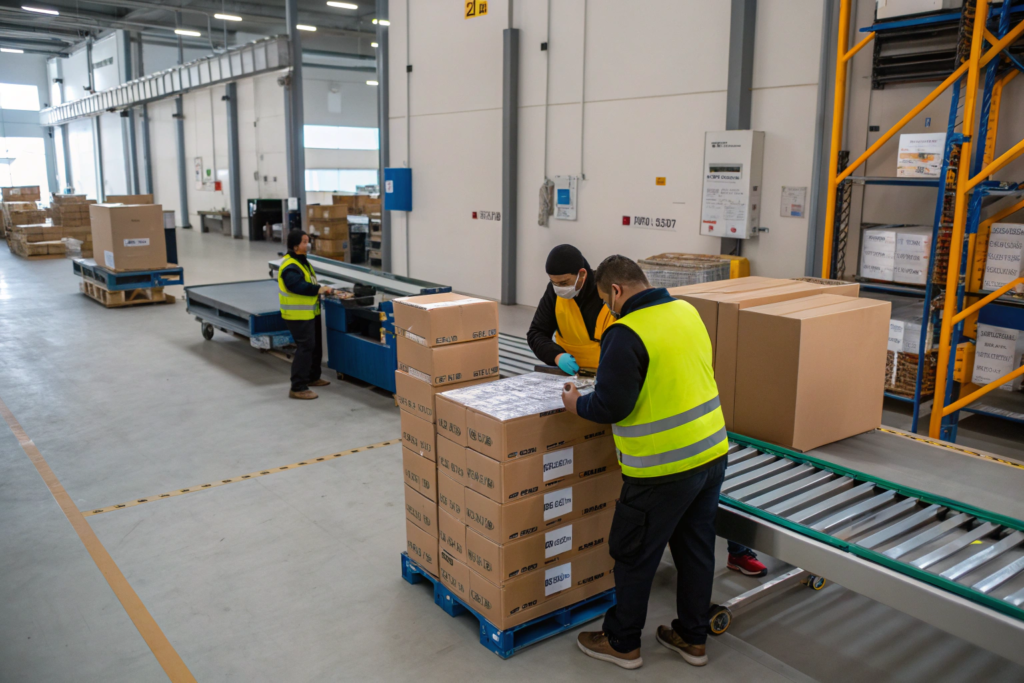
We developed standard packing specifications for every product category we manufacture. Hair clips of a certain size go into a carton with predetermined dimensions. The carton has been tested to ensure it protects the product while minimizing air freight chargeable weight. These specifications are not guesswork. They are the result of years of shipping millions of units and analyzing the freight cost data.
When you order 500 hair claws from us, the carton dimensions are not random. Our packing team pulls the spec sheet for that product and that quantity. They use that specific carton. The weight and dimensions are recorded and provided to you before the shipment leaves. There are no surprises on the air waybill because everything was planned. This commitment to export packing standards is part of the professional service you deserve from a factory.
How Can We Advise on the Best Shipping Method for Your Small Order?
Air freight is not always the right choice. For small, non-urgent orders, express courier services like DHL or FedEx can sometimes be cheaper and simpler than air freight, especially for shipments under 30 kilograms. The courier handles everything door-to-door, including customs clearance, with transparent, all-inclusive pricing.
For orders over 50 kilograms that are not time-sensitive, sea freight consolidated in a shared container may cost a fraction of air freight. The transit time is longer, usually 25 to 35 days to the US, but the savings can be enormous. We help every client evaluate the total cost and timeline of air freight versus express courier versus sea freight based on their specific order details. There is no one-size-fits-all answer. There is only the right answer for your business situation. A good shipping method comparison for importers considers urgency, volume, and total landed cost together.
Conclusion
Avoiding air freight overcharges for small accessory orders comes down to understanding dimensional weight, demanding all-inclusive rate quotes, consolidating shipments strategically, and working with a factory that packs your orders with your freight costs in mind. The most expensive mistake is paying to ship air in an oversized box. The second most expensive mistake is accepting a freight invoice without scrutinizing every line item.
You should never feel powerless when you receive a freight bill. The formula is public. The surcharges are negotiable. The packing is within your control. Armed with the knowledge in this article, you can challenge overcharges confidently and structure your shipments to minimize costs from the start.
At Shanghai Fumao, we do not treat shipping as an afterthought. Our project managers include freight cost optimization in their planning for every order. We provide you with carton dimensions and chargeable weight calculations before shipping. We recommend the most cost-effective method for your specific order size and urgency. And we pack your accessories as if the freight bill were coming out of our own pocket, because we know that a happy client is one whose total landed cost makes sense.
If you want a factory that actively protects your shipping budget, please contact our Business Director Elaine at elaine@fumaoclothing.com. Share your next order details with her and ask for a freight cost estimate. She will show you exactly how we optimize packaging, compare shipping options, and deliver your accessories without the unpleasant invoice surprises.