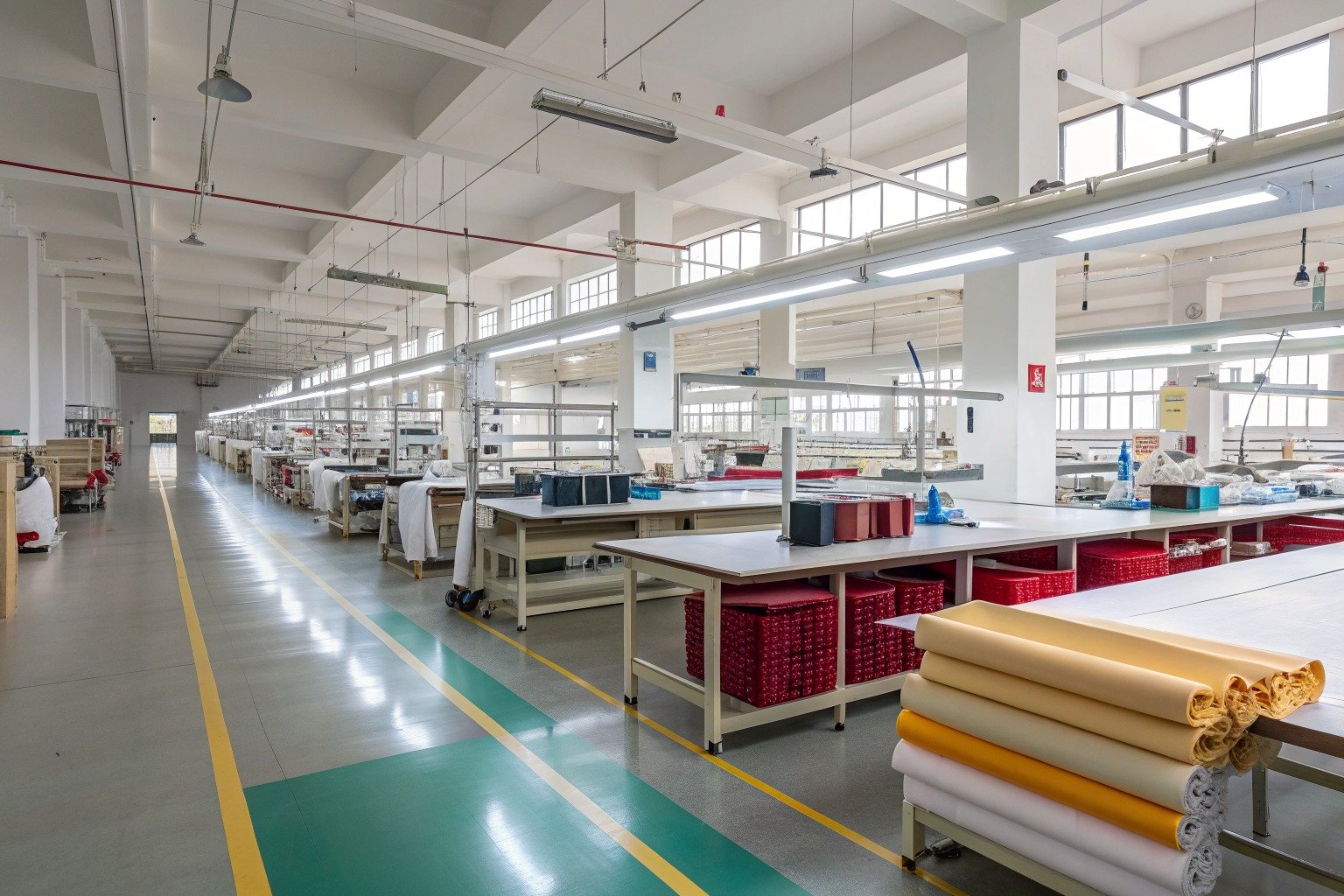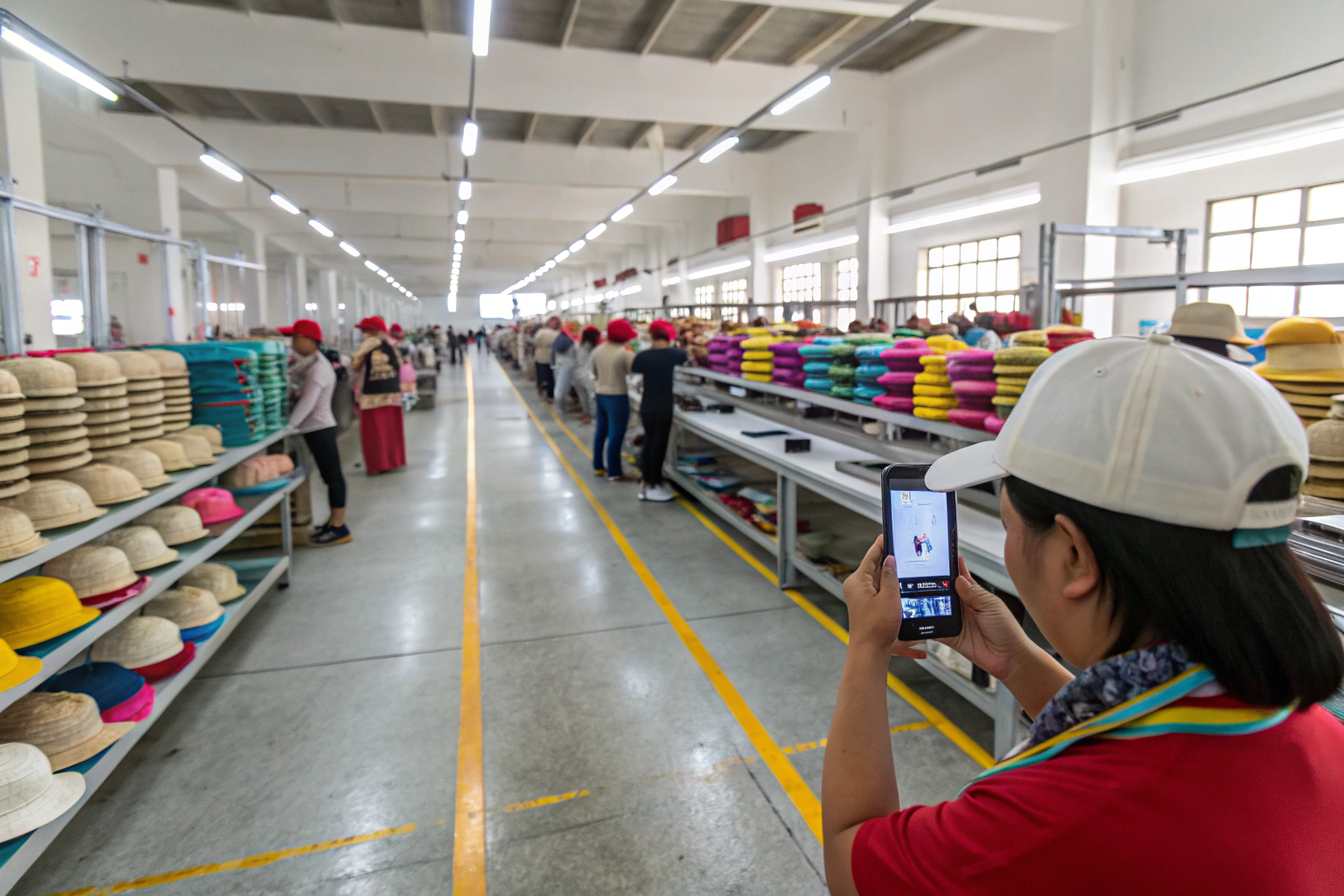
You receive a promising inquiry from a major US retail chain. The buyer seems interested in your hair clips and knit hats. You quote a competitive price. You send a polished catalog with perfect studio lighting. Then the email lands in your inbox: "Can you send a raw video walk-through of your current production line for belts and scarves?" Your stomach drops because you know your subcontractor’s workshop is a mess of cluttered floors and unlabeled boxes. This request is no longer a casual question. It has become a mandatory gate for serious business.
US buyers ask for factory videos of the assembly line to verify three critical things without spending thousands of dollars on an international flight: that your factory actually exists as a clean and modern facility, that your workers follow ethical labor practices, and that your production capacity matches the claims in your brochure. A live video call or a raw recording provides immediate, unscripted proof.
This shift from still photography to dynamic video started when virtual due diligence became the industry standard. A static photo of a clean corner can be staged in five minutes. A video walk-through of an active sewing line takes real infrastructure. I want to explain exactly what American buyers look for in those grainy handheld clips and how we structure our facility to pass these "white-glove" digital inspections instantly.
Is the Assembly Line Video a New Standard for Supplier Verification?
I noticed the shift around 2021. Before the pandemic, a buyer might ask for a photo of your trims department. Now, they ask for a Zoom walk-through of the entire facility before they will even open a purchase order. This change is permanent. Travel budgets have shrunk, but sourcing accountability has skyrocketed. American corporations face strict liability laws if they sell products made in sweatshops while claiming to be ethical brands.
Yes, the assembly line video has solidified as a mandatory standard for supplier verification, effectively replacing the initial physical audit step. It acts as a low-cost filter that separates legitimate manufacturers with real in-house production from trading companies that simply resell goods from unknown back-alley workshops.
Video does what a PDF audit report cannot do. It captures the rhythm and pace of the floor. You cannot fake the hum of fifty industrial sewing machines running simultaneously to produce hair bands for a large order. An experienced buyer can spot a slow, quiet factory with drying racks that look untouched. They are listening for the sound of real production, watching for the specific WIP (Work In Progress) clutter that indicates a healthy factory load.
How do buyers spot red flags in these videos?
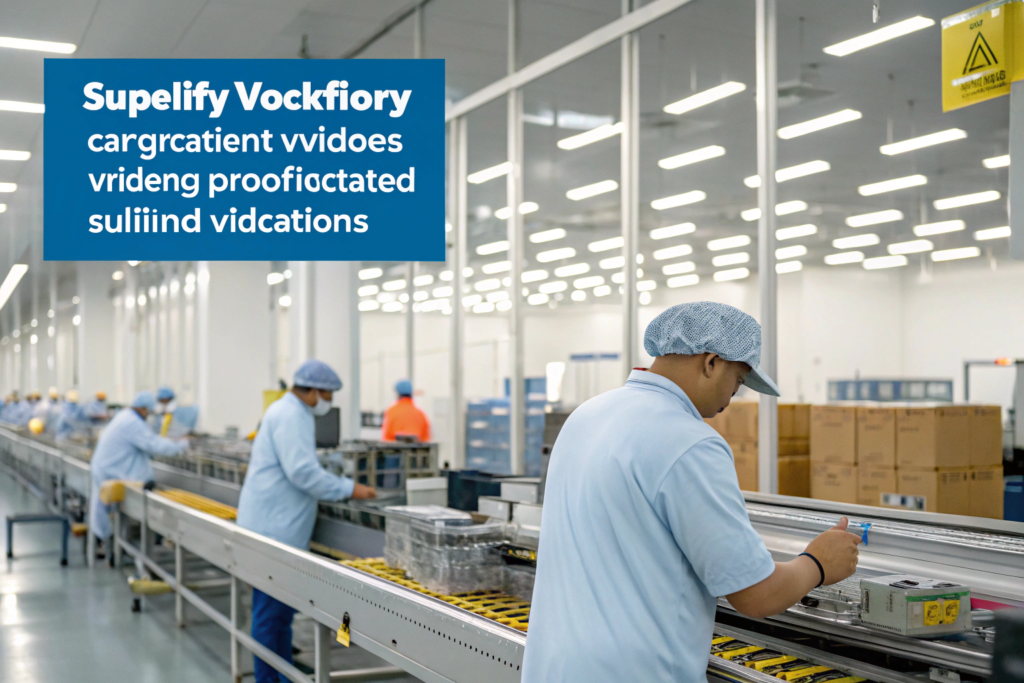
They look for empty bulletin boards where mandatory safety exits should be posted. They zoom in on the electrical wiring hanging from the ceiling. They pause the video to check if the fire extinguishers are mounted on the wall or blocked by a pile of polyester fabric rolls. I had a buyer from Texas refuse a sample once, not because of the product’s stitching, but because she spotted an overloaded power strip in the background of our cutting room. We fixed it instantly, sent a follow-up video, and saved the account. American executives operate in a compliance-first culture where a single safety violation can cancel a million-dollar contract for scarves.
What about intellectual property protection and NDAs?
Some factory owners panic about showing their proprietary techniques on a video call. Competitors might record the screen. In our experience, this risk is manageable and far smaller than losing a Fortune 500 account. We section our tours carefully. We openly show the shared lines for belts and generic caps. We do not broadcast the confidential development zone where we assemble branded collections for specific clients. We are happy to scan the room to prove it exists, but we keep unique client molds and screens covered. This demonstrates both transparency and security maturity, which actually increases buyer confidence in our accessories projects.
What Equipment and Workflow Details Build Instant Trust?
Buyers do not just want to see machines. They want to see systems. A room full of steel equipment does not guarantee a well-made hair clip. The difference between a chaotic workshop and a reliable supply chain lies in the invisible workflow. When I hand my phone to our production manager for a live stream, I instruct them to walk backwards through the logical sequence of steps, from the finished goods inventory all the way back to the raw fabric cutting room.
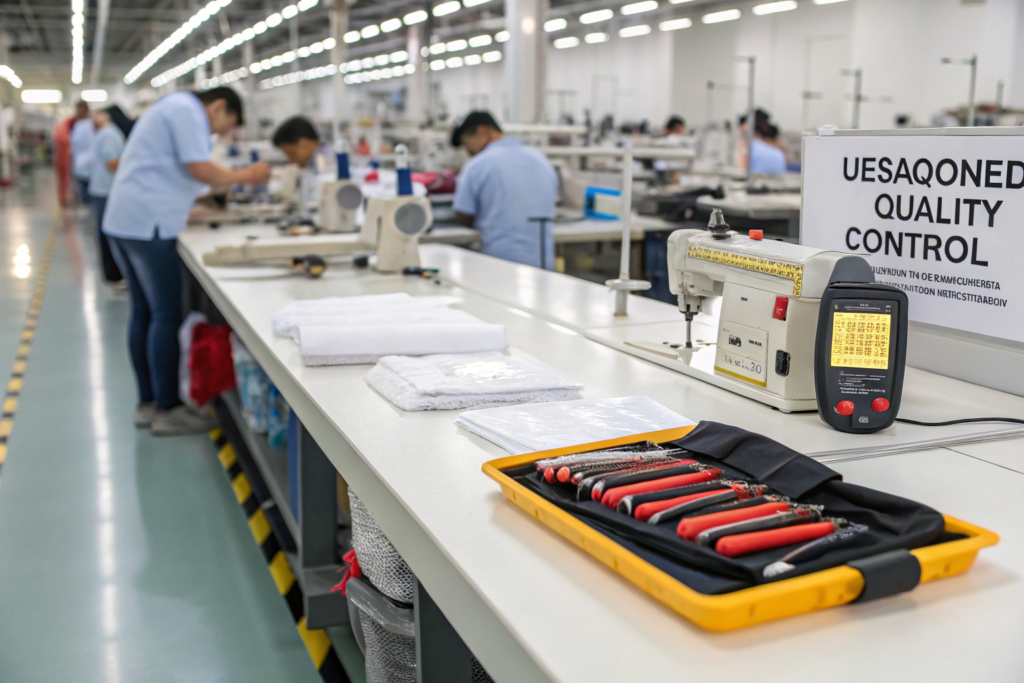
You build instant trust by showing material traceability, in-line quality checkpoints, and organized bottleneck management. Buyers want to see a designated QC table with calibrated tools right next to the sewing line, not tucked away in a separate office where it collects dust and is used only before audits.
I always stop at the trims station. A messy inventory of buttons and clasps mixed in unlabeled jars screams "mistakes." We use a barcode system for our straw hats and metal fittings. When a buyer sees a worker scan a barcode before feeding a specific buckle into a machine, they understand we have traceability locked down. This is the kind of detail that allows us to ship to large supermarkets like Walmart without rejection.
Does showing the cutting and stitching area matter?
Absolutely. For accessories like knit hats and baseball caps, the panel cutting defines the shape. If the cutting machine blade is dull, the fabric frays, and the seam allowance is inconsistent. We walk buyers right up to the automatic fabric spreading machine. We show the needle detection machine scanning every finished gloves piece for broken needle fragments. This is a massive selling point for children’s accessory lines. A buyer might not know the technical name for a metal detector, but they know their legal team will sleep better at night because of it.
How important is lighting and floor cleanliness on camera?
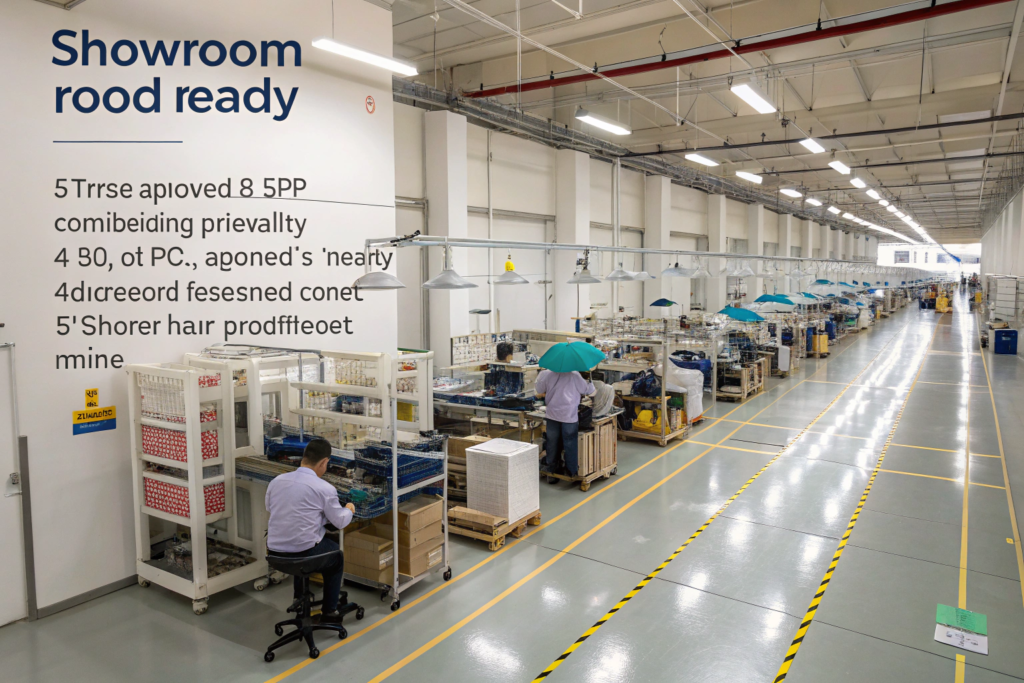
It is shockingly important. A well-lit factory with clean white LED panels communicates precision and reduces eye strain for workers stitching tiny details on shawls. A buyer looks at the floor. Grease stains suggest poor machine maintenance. Dust on the ceiling rafters suggests it falls onto the product before packaging. Our facility in Zhejiang uses epoxy-coated concrete floors that reflect light. When a US buyer sees the light bounce off the floor, they immediately associate it with hygiene and order, which aligns perfectly with what North American and European retailers expect for their accessories supply chain.
How to Stream a Spontaneous Factory Tour to Prove Capacity?
A scheduled tour always runs the risk of being called a "dog and pony show" by skeptical procurement officers. They suspect you tidied up for a week. To kill that skepticism, we sometimes welcome the "drop-in" video call. A buyer emails at 10 AM our time and asks to see the floor in fifteen minutes. We say yes almost every time, unless online store owners require a specific project manager who is already in a deep meeting.
To stream a spontaneous factory tour successfully, you must maintain what we call "showroom-ready production" daily. This means strict 5S workplace organization, a reliable 4G or 5G network connection throughout the building, and a pre-approved walking route that demonstrates peak capacity hitting all major product lines from hair clips to umbrellas within three minutes.
The technology is simple. We use a gimbal stabilizer connected to a smartphone so the image does not jitter and make the viewer seasick. We walk quickly to the section for baseball caps. We point the camera at the embroidery machines running at full speed, zooming in slowly on the stitch count density. That live motion is impossible to stage with empty spools.
What if the factory is not currently running my item?
This happens often. US buyers often source seasonal items off-cycle. A buyer asking about winter gloves in June will not see our glove line running at full steam. We solve this by showing the "changeover" flexibility. We keep a library of detailed, raw process footage from high-season production. We send the pre-recorded high-season video first, then immediately jump on a live call and walk the buyer over to the idle line to point out the specific tooling and jigs used for their fashion accessories. This validates that the machinery in the video matches the machinery sitting on our floor.
Can a chaotic factory still produce quality goods?
A chaotic mind can create art. A chaotic factory cannot produce a 10,000-unit order with consistent quality. Disorganized workflows create defects. Buyers are trained to look for "work-in-progress" organization. We show them our bundling system, where cut fabric panels for cloth hats are tied in numbered bundles that match the production ticket. This proves each item in a shipment to a major Walmart distribution center will be identical to the approved sample. I tell every client, "I run a kitchen, not just a grocery store." You need a recipe and a pristine workstation, not just fresh ingredients.
Can a Factory Video Speed Up the Compliance Audit Process?
Formal audits from firms like SGS or Bureau Veritas are expensive. They take days and cost thousands of dollars. They are stressful for the workers who become nervous around the auditor in a suit. Factory videos, when used strategically with AI sourcing tools, can drastically compress the first half of the compliance timeline.
A comprehensive, unedited factory video can absolutely speed up the compliance audit process by satisfying the pre-screening requirements of many retail importers. It allows the buyer’s internal legal and quality teams to pre-approve the physical infrastructure, fire safety protocols, and hygiene standards before they spend money on a third-party physical audit.
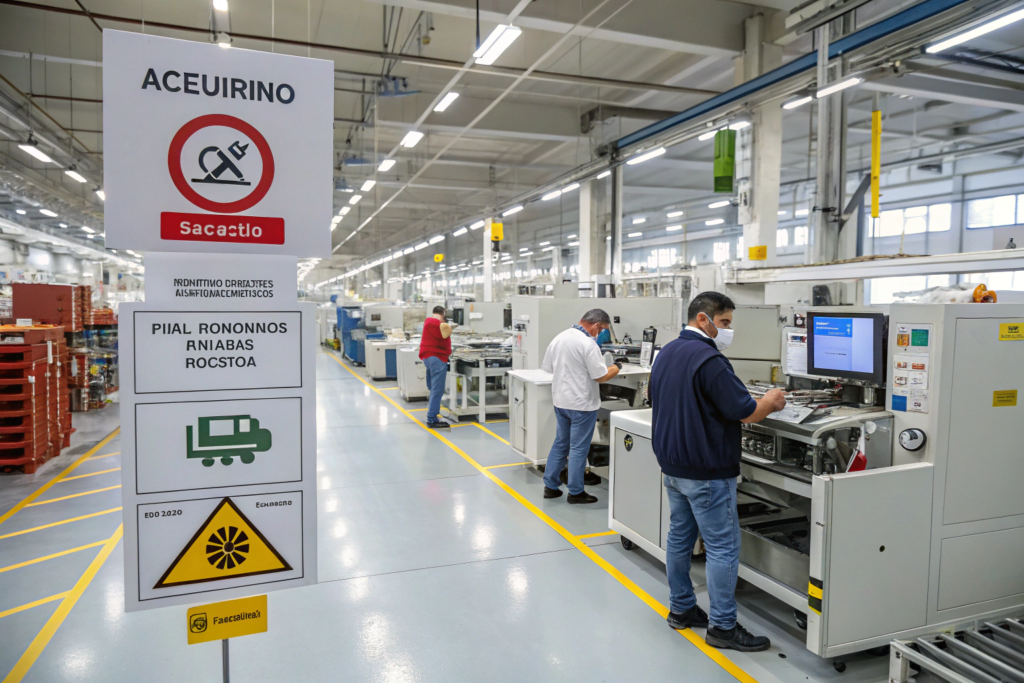
We take this very seriously. I do not just film the glamorous design studio where we sketch shawls. I film the bathrooms. I film the chemical storage cage for our screen-printing inks. You cannot hide a smell in a video, but you can certainly read the labels on the containers. A proper lockable chemical cage with secondary containment trays immediately answers questions about environmental compliance.
How does video evidence support social compliance?
Video can show the pace of work. It is a delicate subject, but American buyers need to know the factory is not forcing excessive overtime. A bustling but calm floor at 4:30 PM with workers preparing to finish their shift often eases the buyer’s anxiety more than a payroll spreadsheet does. Showing the time clock system or the clean, stocked canteen where we display a menu for factory workers adds a human layer to the sourcing relationship. It allows an importer to build trust faster than exchanging twenty emails about certifications.
Does the digital recording replace the physical audit entirely?
No, not yet for many large big-box retailers. However, for mid-sized brands and online store owners who make up a huge portion of our business, a detailed video plus our existing ISO certifications often seals the deal. They see the modern facility, the focused project managers, and the tidy packaging area. This allows us to partner with them and ship their first trial order of fabric belts and cups before an auditor can even schedule a visit.
Conclusion
A factory video is not an intrusion. It is your best sales tool if you run a legitimate operation. It separates clean, modern Chinese manufacturers like us from the outdated stereotype of dark, unregulated workshops. It proves that your supply chain for hair bands, belts, shawls, and caps is ready to deliver the fast development and reliable quality that North American and European buyers demand, even when politics and tariffs complicate the landscape.
We record these walks proudly. Our facility in Zhejiang is ready for your virtual tour today. No special staging. No hidden corners. Just a bright, organized, and professional floor turning out accessories for some of the most demanding retailers on earth. I personally guarantee that the factory you see on the screen is the one shipping your order.
If you want to schedule a live video walk-through or need raw footage for your compliance team, you do not need to chase down a middleman. Contact our Business Director, Elaine, directly. She will arrange a call with one of our experienced project managers. Write to her at elaine@fumaoclothing.com. Let us show you the real production power behind your next collection.