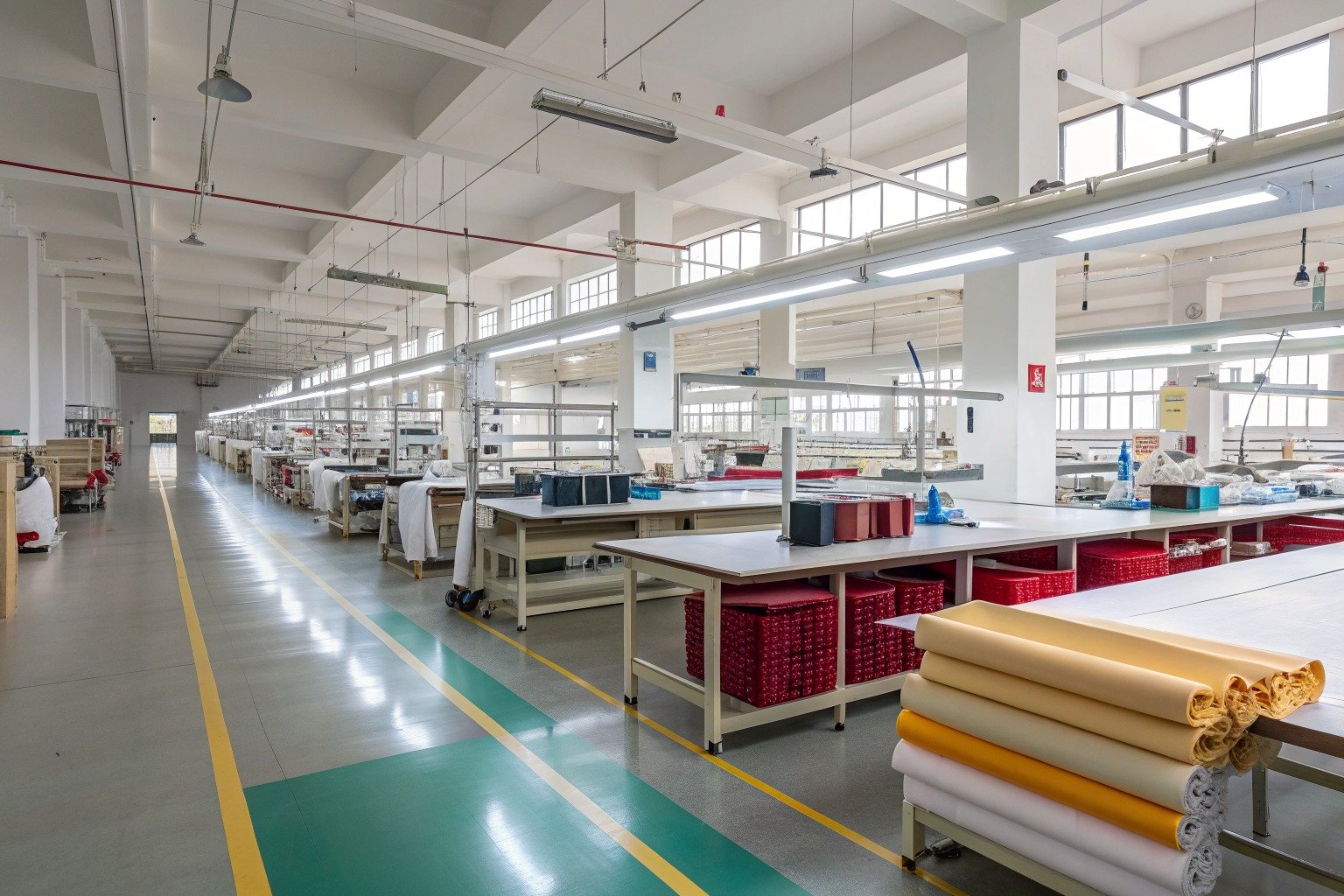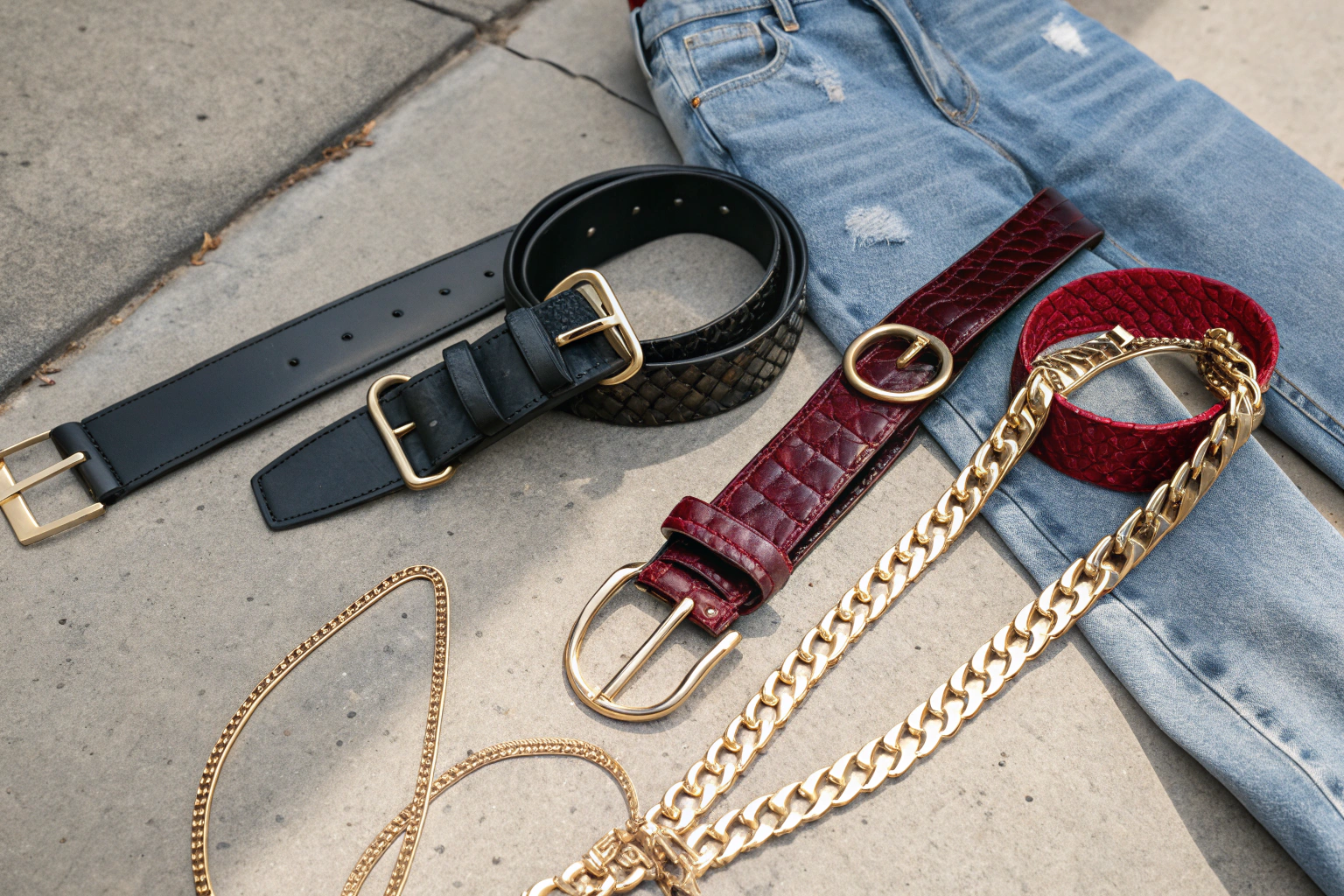
I was reviewing the preliminary buy plans with a fast fashion buyer from Berlin last month, and she said something that captured the entire 2026 belt direction. She told me her customer does not need another basic black leather belt with a simple gold buckle. That belt is already in every closet. She needs a belt that transforms the silhouette of an oversized blazer, that adds a hard metallic edge to soft knit dresses, and that photographs as a statement accessory on social media. Her words summarized exactly what our European fast fashion clients have been briefing us on for months. The belt in 2026 is not a functional afterthought. It is the focal point of the outfit.
The 2026 belt trends for European fast fashion brands are defined by five clear, manufacturable directions. The return of the wide, shaped corset and obi belt that cinches the waist with dramatic structure. The oversized, sculptural metal buckle, in brushed gold and chunky silver, that acts as a piece of jewelry at the waist. The textured, embossed faux leather in croc, lizard, and ostrich patterns that provides high perceived value at an accessible price point. The chain-link and mixed-metal belt that adds a hard, urban edge to the soft femininity of dresses and jumpsuits. And the minimalist, slim, tonal belt, often with an elasticated back, designed for comfortable waist definition on high-waisted trousers. I will explain exactly how each trend is being constructed, what materials and buckles are being spec’d, and how European fast fashion brands are positioning these styles across their price architecture.
Why Is the Wide-Shaped Corset Belt Returning for 2026?
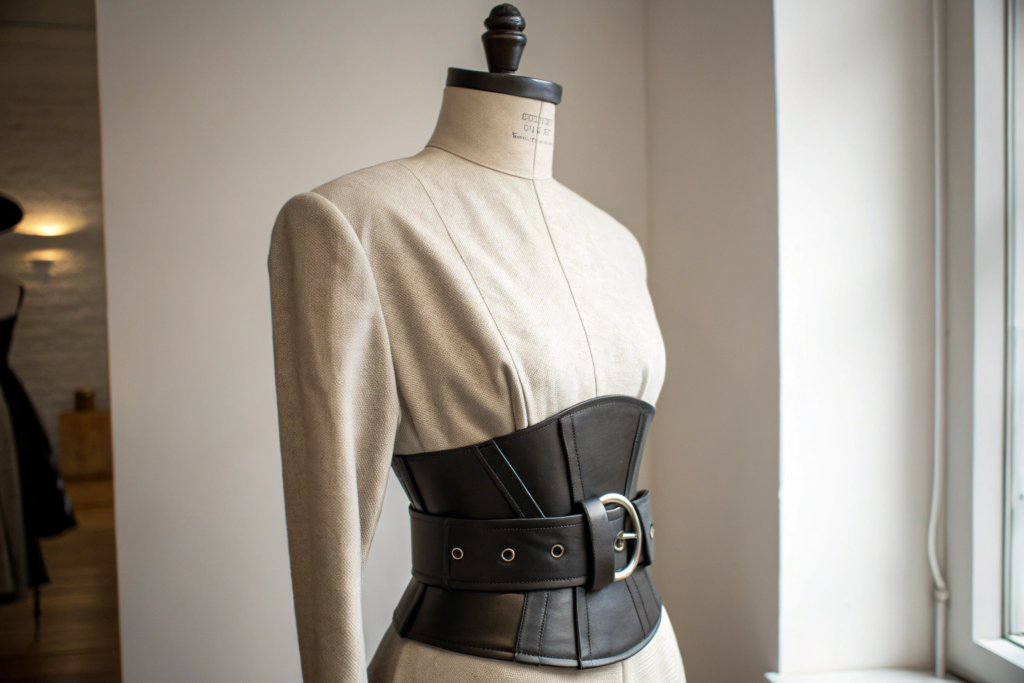
The wide belt is back, but not in the form it took a decade ago. The 2026 version is specifically shaped and contoured. It is wider at the center front and back, tapering slightly at the sides, a silhouette that follows the natural curve of the waist rather than a straight, rigid strip. The function is explicit and dramatic. It is designed to be worn over blazers, longline shirts, knit dresses, and trench coats to cinch the waist and create an exaggerated hourglass silhouette. On the European high street, this belt is being positioned as the affordable way to update an existing oversized garment and make it look intentionally styled for the current season.
How Are Brands Achieving Structure Without Thick Leather at the Core?
The technical challenge with a wide corset belt for the fast fashion market is achieving the necessary rigid, shape-holding structure without using thick, expensive, and heavy genuine leather. The solution is an engineered multi-layer construction. The face material is typically a smooth, matte polyurethane over a microfiber backing, giving it the look and hand of high-end leather. The structural core is a lightweight, flexible interlining material, often a non-woven polyester or EVA foam sheet that is about 1 to 2 millimeters thick. This core is die-cut precisely to the shaped contour and inserted between the face and the lining. It provides the rigidity to keep the belt standing upright and holding its curve.
The edge finishing is critical to the premium look. A raw-cut edge on a wide belt looks cheap and unfinished. The preferred finish for the 2026 trend is a precisely painted and burnished edge in a matching or deliberately contrasting color. This is the same edge-finishing technique used on luxury footwear and handbags, and it instantly elevates the perceived value of the belt. For the innermost layer, which sits against the garment, brands are increasingly using a soft, suede-like microfiber in a tonal color. This prevents the belt from slipping and gives it a luxurious, garment-friendly finish. This entire construction allows the belt to look and feel substantial while remaining lightweight and cost-effective to produce, which is the central design challenge for fast fashion.
What Buckle Types Are Being Spec’d for This Dramatic Silhouette?
The buckle on a 2026 wide belt is deliberately understated. It does not compete with the sculptural shape of the belt itself. The dominant trends are either a single, large, flat, geometric plate buckle in a matte finish, or a hidden closure. The hidden closure creates a seamless, uninterrupted front, which is a very strong minimalist fashion statement. The buckle is placed on the back, or the belt is constructed with a smooth, hook-and-loop interior closure, so the front is a clean, continuous band of that shaped, burnished leather.
For brands that do use a front buckle, the material is key. Matte, brushed gold and matte silver are the two core finishes for European fast fashion. The surface looks deliberately non-shiny, which feels more contemporary and less like a costume piece. The size is substantial, often 6 to 8 centimeters in diameter, but the visual weight is kept minimal by the flat, dark, burnished finish. The on-trend design is a heavy, solid metal alloy, often zinc, with an electroplated and then matte-lacquered finish. Our hardware partners in Zhejiang have developed specific matte electroplating baths for these exact 2026 buckle finishes, and the demand has been consistently high.
How Is the Oversized Metal Buckle Evolving on Slim Leather Straps?
Simultaneously with the wide corset belt, the opposite silhouette is also trending. This is the extremely slim strap, often only 1.5 to 2 centimeters wide, entirely dominated by a single, oversized, sculptural metal buckle. The belt’s function is to cinch a waist, but its identity is jewelry. On the European fast fashion market, this trend translates the luxury hardware trend into an accessible, high-impact, low-material-cost accessory.
What Are the Key Metal Finishes for 2026 European Fast Fashion?
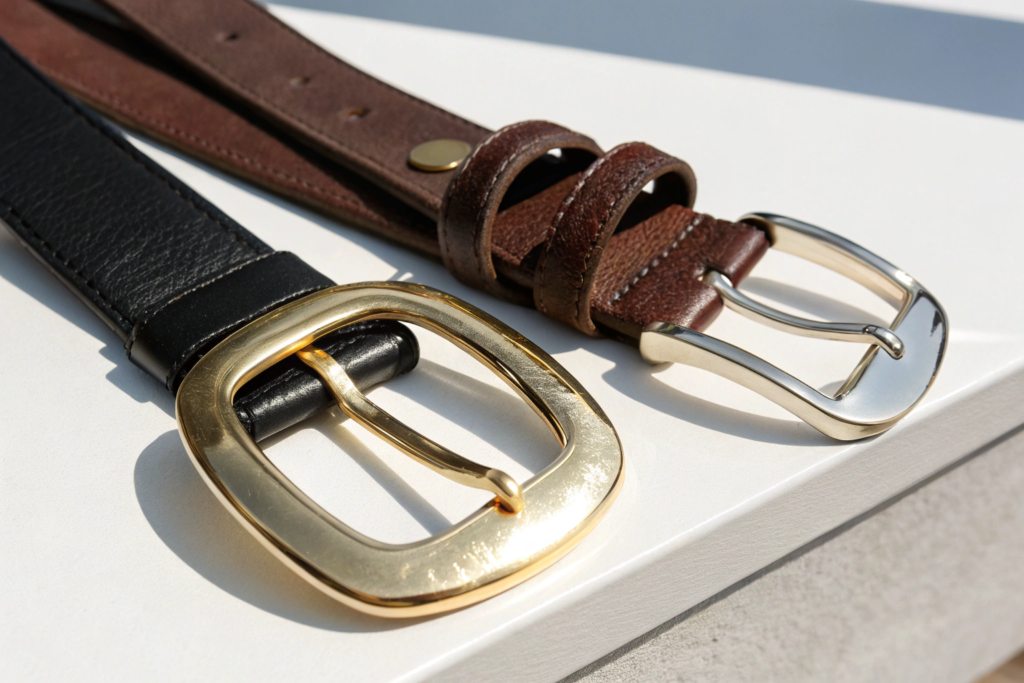
The metal finishes for 2026 are sharply divided into two distinct groups. The first is warm, matte, brushed gold. This is not a shiny, yellow, polished brass. It is a softer, more muted, almost champagne-gold with a distinct linear brushed texture. It is designed to look like a piece of inherited vintage jewelry, not a shiny new trinket. The second group is chunky, matte silver, often with a deliberately hammered or subtly pebbled surface texture. This silver feels industrial, solid, and urban. The combination of these two finishes on a single piece, a mixed-metal design, is a key micro-trend, with the gold and silver elements fused together in a single buckle casting.
The construction method for these buckles at scale is typically zinc alloy die-casting, followed by electroplating. Zinc alloy is cost-effective, takes fine detail from the mold, and has the heavy, satisfying weight of a premium product. Our factory uses a process where the cast buckle is polished, plated with the finish, and then coated with a transparent matte lacquer. The matte lacquer not only provides the on-trend non-shiny aesthetic but also protects the plating from tarnishing and scratching during retail handling and wear. You can find resources on how these metal finishing techniques are standardized, which is helpful when specifying the exact sheen and durability requirements with your supplier.
How Are Slim Straps Being Engineered for Strength and Durability?
The engineering challenge with a 1.5-centimeter strap is that a standard bonded leather or a single layer of PU will stretch and crack under the weight and repeated tension of a heavy metal buckle. The strap must be reinforced. The construction method used is a sandwich structure. The top and bottom visible layers are the fashion material, the patent PU, the croc-embossed leather, or the suede. Inside, a thin, high-tensile-strength core material is laminated between them. This core is typically a narrow strip of nylon webbing or a strong polyurethane reinforcement tape. This interior skeleton bears the tension, so the fashion leather layers just sit beautifully and do not crack.
The edges of these slim straps are coated with a thin, precisely applied edge paint. Because the strap is so narrow, the edge finish is disproportionately important to the overall look. A rough, fraying edge instantly destroys the premium minimalism. Our production line uses a dedicated edge-painting station where the straps are specially racked to allow for a clean, multi-coat application that dries to a smooth, durable finish. The attachment of the buckle to this reinforced strap uses a fold-over-and-stitch method with a reinforced rivet, ensuring it can withstand normal wear-and-tear without ripping.
What Textured and Animal-Embossed Materials Are Dominating the Market?
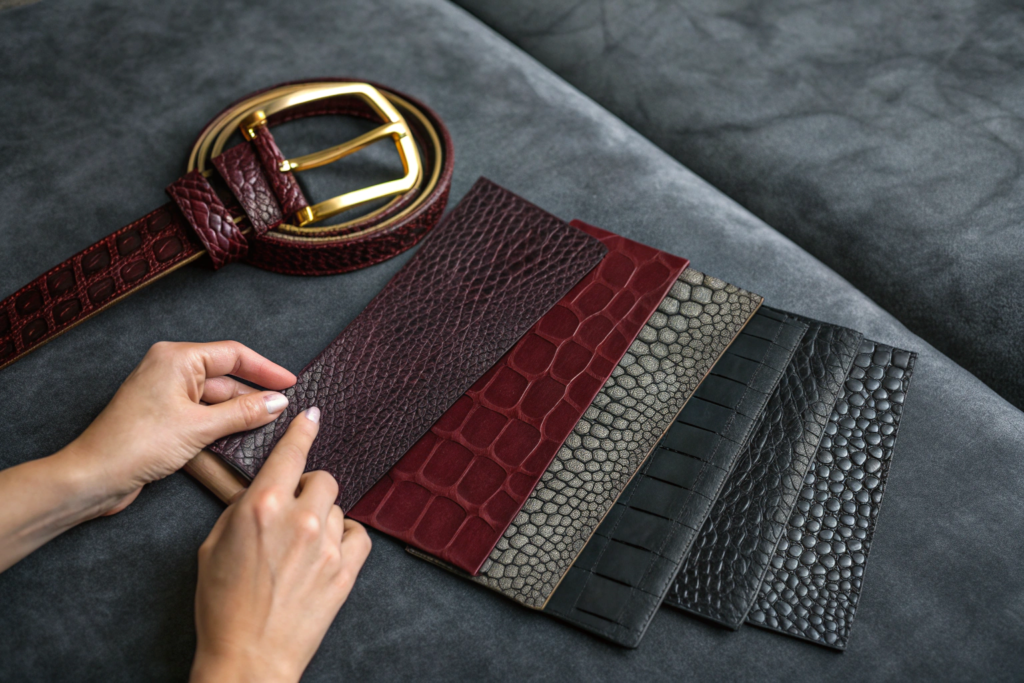
Texture is the fastest way to add perceived value to a belt at a fast fashion price point. A smooth, plain PU belt looks like a basic, low-cost item. That same belt, stamped with a deep, sharp crocodile or lizard embossing, immediately looks like a premium product. It catches the light differently. It photographs with depth and richness. This is why textured materials are one of the most dominant trends in the 2026 European fast fashion belt market. The best-selling embossing is croc, including both classic alligator and caiman patterns, offered in oversized, exaggerated scales for a more fashion-forward statement.
How Are Croc and Lizard Textures Being Achieved on PU and Bonded Leather?
The embossing is done using a hydraulic high-frequency embossing machine. A sheet of the material, typically a PU or a thin, reconstituted bonded leather, is fed into the machine with a textured metal plate. Under intense heat and pressure, the pattern is stamped into the material with permanent depth. The quality of the embossing is determined by the temperature control, the pressure dwell time, and the sharpness of the embossing plate. A cheap embossing will be shallow and will fade over time. A high-quality embossing is deep, crisp, and will last the life of the belt.
To make the embossing visually pop, an additional process called "tipping" is often used. After the embossing, a fine roller or a spray gun applies a darker color or a subtle metallic sheen just to the raised tips of the embossed pattern. This creates a two-tone effect that dramatically enhances the three-dimensional illusion. A black belt with a subtle silver tip on the croc scales looks far more expensive than a flat black belt. This tipping technique is a standard value-add for European fast fashion brands and is something we execute daily on our embossing line. The base material is often a high-quality bonded leather, which accepts the embossing better than a purely plastic PU, giving a softer, more fabric-like drape.
Why Are Deep Burgundy, Forest Green, and Chocolate the Season’s Core Colors?
The color palette for 2026 accessories is a deliberate shift away from the classic black and cognac. European trend forecasts are pointing to deep, moody, rich tones that evoke a sense of quiet luxury. The three core colors driving the textured belt trend are burgundy, a dark, cooler-toned wine red; forest green, a deep, muted botanical green; and a rich, warm chocolate brown. These colors are exceptionally effective on textured materials because the embossed pattern creates natural shadows and highlights within the color, giving the strap a look of depth and patina that a flat color on a smooth surface simply cannot achieve. A burgundy croc-embossed belt is the must-have accessory of the season, and it is being paired with everything from grey tailoring to light-wash denim.
Conclusion
The 2026 belt trends for European fast fashion are defined by a confident sense of silhouette and surface texture. The wide, shaped corset belt cinches the oversized outerwear that dominates the street. The oversized, sculptural buckle on a slim strap provides the jewelry moment at the waist. The deep, tactile animal embossing in rich, moody colors provides the material upgrade that justifies a higher ticket price. All of these trends share a common thread, a move away from basic, functional belts and toward belts that are a deliberate, central element of the outfit.
The commercial opportunity for brands is in executing these trending silhouettes with the engineered, cost-effective multi-layer constructions that make dramatic shapes lightweight and affordable, the matte electroplated finishes that make metal hardware look like fine jewelry, and the deep embossing techniques that transform basic materials into premium textures. These are the specific manufacturing capabilities that translate a high-fashion concept into a fast-fashion product that sells through at full price.
If your brand is developing its belt collection for the 2026 season and you want a manufacturing partner that can execute these specific trends, from the wide, burnished corset belt to the deep croc-embossed texture, contact our Business Director Elaine at elaine@fumaoclothing.com. Tell her about your target retail price points, the specific silhouettes you are developing, and the material and finish trends you want to explore. She can coordinate a trend sample kit for your design team, including the new matte buckle finishes, the contoured belt structures, and the season’s core textured materials. Let us help you build the belt collection that your customer will reach for to finish every look.