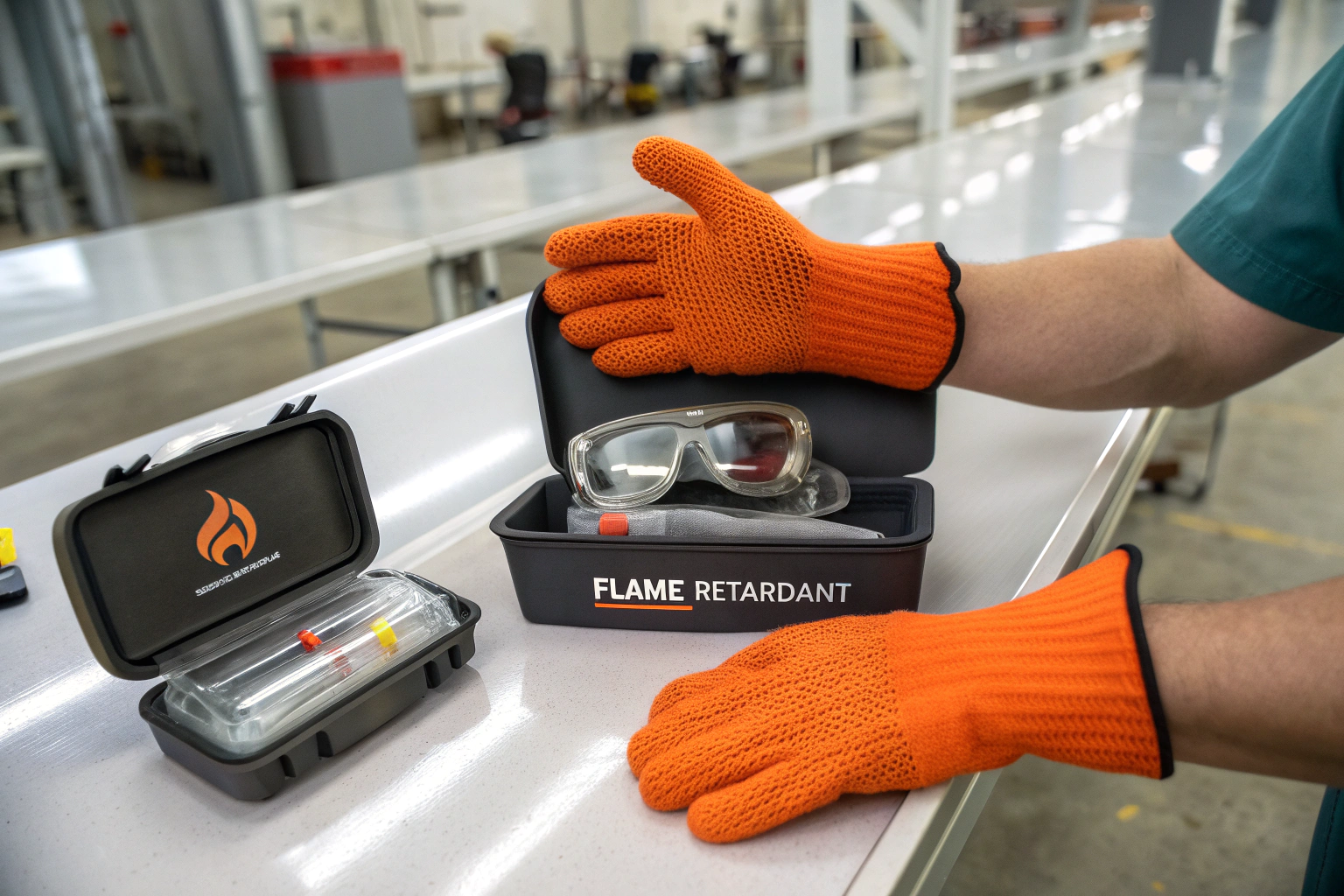
I received a call from the procurement manager of a large American welding supply company two years ago. His company had a brilliant marketing plan. Every customer who purchased a new welding machine during their holiday promotion would receive a branded industrial gift pack, including a pair of gloves. But these were not ordinary gloves. They were the first thing a welder puts on, and the company’s brand reputation would be on the line with every spark that hit them. He needed a glove that was not only genuinely flame-retardant and certified to a specific standard, but that also had the soft, dexterous feel of a premium product. His last supplier had provided chemically treated gloves that felt stiff and left a sulfurous odor on the hands. He asked if we could do better. I told him we could.
Yes, Shanghai Fumao can produce flame-retardant gloves suitable for high-quality industrial gift packs. Our production capability centers on inherently flame-retardant fibers, such as modacrylic blends and treated aramid knits, rather than chemically dipped coatings that stiffen and degrade. We source yarns that are certified to meet specific industry standards, including ASTM F1060 for thermal contact and NFPA 70E for arc flash protection. We engineer the knit structure to balance protection with the fine dexterity required for handling small tools and hardware. Crucially, for the gift-pack application, we focus on a clean, comfortable, and odor-free finish, treating the glove as a premium branded product rather than a disposable commodity. I will explain the specific material choices, the relevant certifications, the design and branding options, and the development timeline for creating a glove that truly protects the user and elevates the brand.
What Flame-Retardant Fibers Are Suitable for Knit Work Gloves?
The fundamental technical choice in a flame-retardant glove is between chemically treated fibers and inherently non-flammable fibers. This is the choice that separated my client’s previous stiff, odorous glove from the premium product we developed with him. An industrial gift pack is a branding statement. A glove that feels cheap or smells like a chemistry lab reflects poorly on the core product it accompanies. An inherently flame-retardant glove feels like a premium piece of safety equipment.
Why Are Modacrylic Blends Preferred Over Chemically Treated Cotton?
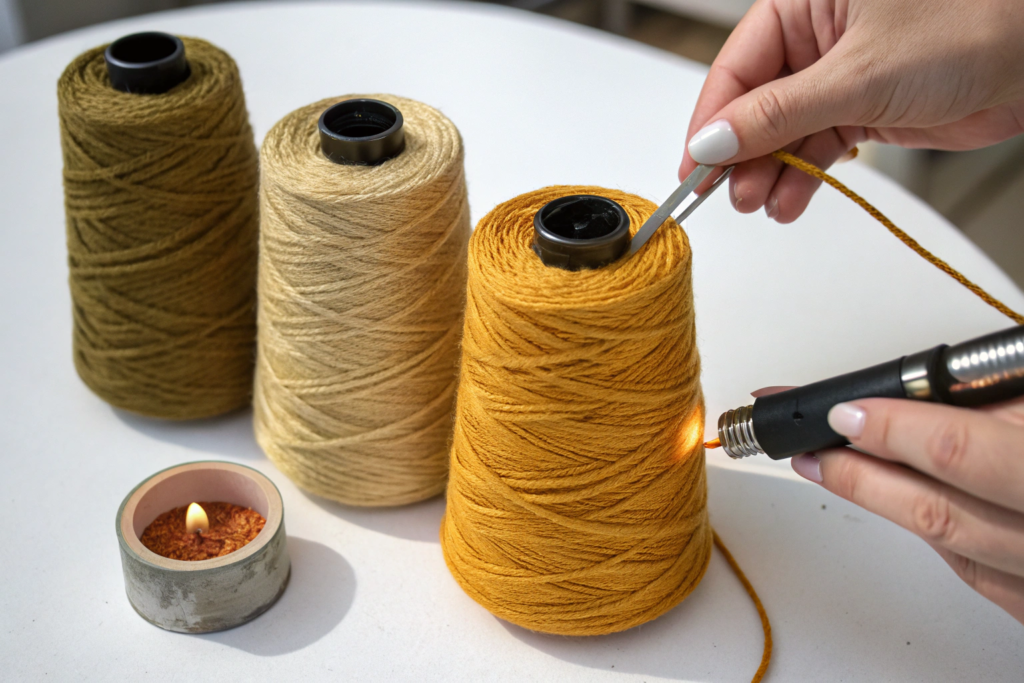
The first option many suppliers offer is a chemically treated cotton or polyester-cotton glove. The fabric is dipped in or saturated with a flame-retardant chemical compound. When exposed to a flame or high heat, the chemical treatment reacts to create a char barrier that slows down combustion. This is a low-cost approach, but it has several inherent drawbacks that make it unsuitable for a premium gift pack. The chemical treatment usually leaves a residual odor. The treatment can wash out or degrade over repeated launderings, meaning the glove’s protective properties diminish with use. Crucially, chemically treated cotton is a fuel source. The cotton itself burns readily, and it is only the chemical additive that provides the resistance. This is a fundamentally less robust protection than a fiber that will not burn in the first place.
Inherently flame-retardant fibers possess fire-resistant properties built into their molecular polymer structure. Modacrylic is the most widely used and cost-effective of these fibers for knit work gloves. A modacrylic blend copolymer is engineered to resist ignition. When exposed to a flame, the fiber chars and shrinks away from the heat source, and it self-extinguishes the moment the external flame is removed. It does not support combustion. It does not melt and drip onto the skin. A typical blend for a high-quality, dexterous glove is a modacrylic combined with a high-performance cellulosic fiber like Lenzing FR. Lenzing FR rayon provides a soft, moisture-absorbing hand-feel that modacrylic alone cannot achieve. The blend results in a glove that feels soft and dry against the skin, breathes naturally, and provides permanent, laundry-durable flame resistance. There is no chemical odor, and the protection does not wash out. This combination of permanent, inherent safety and premium comfort makes it the ideal foundation for an industrial gift-pack glove. Refer to the Modacrylic Fiber Technical Overview for more details on how these fibers achieve their self-extinguishing characteristics.
What Is the Comfort and Dexterity Profile of Aramid vs. Blended Knits?
Aramid fibers, most commonly known under the brand name Kevlar or Nomex, are the highest tier of performance for heat and flame protection. They offer extreme strength, cut resistance, and tolerance to very high temperatures. For a welding glove designed for direct, sustained contact with hot metal, an aramid fabric is the industry standard. For a premium gift-pack glove intended for general mechanical work, light welding, and handling moderately hot objects, a 100% aramid knit may be technically over-specified, and its comfort profile may be a drawback. Aramid fibers are notoriously difficult to dye, which is why they are most often seen in their natural golden-yellow color. The fiber itself has a slightly coarse hand-feel and almost zero moisture absorption. Wearing a 100% aramid glove for eight hours can feel dry, hot, and abrasive to the skin.
A modacrylic-Lenzing FR blend is superior in comfort and dexterity for a premium gift pack. The Lenzing FR component absorbs moisture and feels cool to the touch. The blended yarn results in a knit that is noticeably softer, more pliable, and more breathable than a pure aramid. The glove feels like a high-quality winter or driving glove rather than industrial equipment. The 7-gauge or 10-gauge knit used for these gloves is a medium-to-fine gauge standard, which allows for a close fit and excellent tactile sensitivity. The user retains full ability to pick up a loose bolt, operate a touchscreen, or manipulate small fasteners. For the procurement manager who wants his gift to be used and appreciated every day, this balance of genuine protection and day-long comfort is where the value lies.
What Certifications Prove Flame Resistance for US Industrial Use?
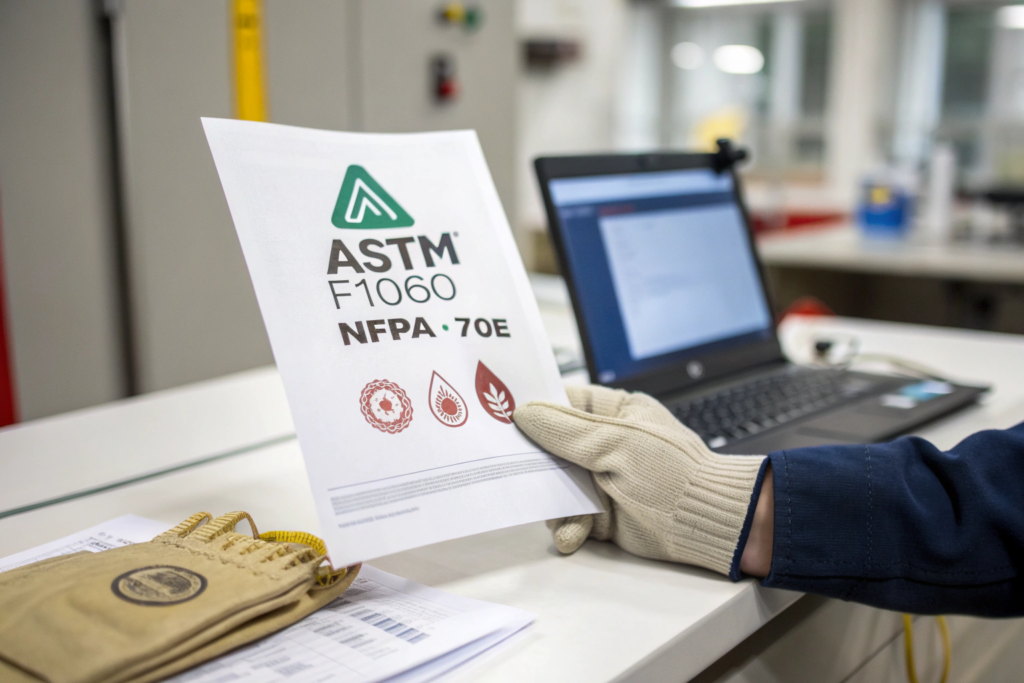
A claim of flame resistance is meaningless without a recognized standard to hang it on. For US industrial markets, the buyer, the end-user, and their corporate safety officer all expect to see certification to a specific ASTM or NFPA standard. The glove’s packaging and technical datasheet must clearly state the standard it meets and the test results that prove it. Providing this documentation upfront signals that you are a serious supplier of compliant safety products.
How Is Conductive Heat Resistance Tested Under ASTM F1060?
ASTM F1060 is the standard test method for evaluating the thermal protective performance of materials used in protective clothing when they contact hot surfaces. It directly measures the conductive heat resistance of a glove. This is the most practical test for a general industrial work glove, as it simulates a user briefly touching a hot metal pipe, a heated tool, or an engine component. The test apparatus consists of a heated plate held at a constant, specified temperature. The glove material sample is placed on the plate, and a calorimeter on the other side of the material measures the rate of heat transfer through the fabric. The machine records the time it takes for the heat passing through the material to cause a second-degree burn on human skin.
A passing glove will have a documented time-to-burn that provides the wearer with a measurable safety window, often several seconds, in which to react and release the hot object. This is the key specification a safety officer wants to see. A glove made from an inherently FR modacrylic blend will char and form an insulating barrier upon contact with the hot surface, dramatically slowing the heat transfer through the material. A chemically treated cotton glove, even one treated for flame resistance, may still transmit dangerous levels of conductive heat very quickly. The ASTM F1060 test data proves the difference. For your gift pack, you can promote a specific performance number, such as "Over 5 seconds of conductive heat resistance at 250 degrees Fahrenheit," which communicates real protection in a way the end-user immediately understands.
What Does NFPA 70E Certification for Arc Flash Mean for Gift Packs?
NFPA 70E is the standard for electrical safety in the workplace. It categorizes personal protective equipment by its ability to protect against an arc flash, a sudden, explosive release of electrical energy that generates extreme heat and a concussive blast. Gloves certified to this standard are assigned an Arc Thermal Performance Value, or APTV, rated in calories per square centimeter. A glove with a higher APTV rating protects against a more severe arc flash incident. For an industrial gift pack that is being distributed to a broad audience of tradespeople, the key detail is that the glove can be certified as "Arc Flash PPE Category 1" or "Category 2." This means it provides a documented, baseline level of protection that an industrial electrician or maintenance worker would recognize and trust.
The gift pack itself then carries that NFPA 70E branding. A small label on the box stating that the included gloves are "NFPA 70E Compliant for Arc Flash" instantly elevates the pack from a generic promotional item to a genuinely useful piece of safety equipment. The recipient does not just see a free glove. They see a glove they are actually permitted and encouraged to wear on the job, according to their employer’s safety protocols. This relevance drives the perceived value of the entire gift pack far beyond its cost, which is the fundamental goal of any corporate gifting program targeting the industrial sector. At AceAccessory, we can integrate these certifications into the product development process so that your packaging claims are backed by verifiable lab reports.
How Do You Design a Glove That Elevates a Corporate Gift Pack?
A glove in a gift pack is a brand ambassador. Every time the recipient pulls it on, it communicates something about the safety, quality, and care of the company that provided it. The design of the glove itself, its color, its branding placement, and the construction of the packaging, transform it from a piece of functional equipment into a memorable brand experience. Since version one of our initial conversation, we have also kept a digital design file to tailor the glove’s look to your specific brand. You can find more ideas on how to match these elements by looking at our design gallery for custom accessories, where we showcase examples of integrated brand detailing.

What Knit Gauges and Coatings Balance Safety with a Premium Feel?
The gauge of the knit glove refers to the number of stitches per inch. A 7-gauge glove is the standard for medium-duty work. The knit is dense enough to provide meaningful thermal insulation and physical protection but open enough to remain flexible and breathable. A 10-gauge glove is a finer, lighter knit. It provides a superior, second-skin fit and maximum dexterity, making it perfect for tasks requiring a delicate touch. For a premium gift pack that aims to impress a wide range of users, a 10-gauge knit in an inherently FR modacrylic blend provides the ideal combination of a luxurious, high-tech feel with genuine protection.
The choice of palm coating is a critical functional and aesthetic decision. A heavy, crinkled nitrile foam coating shouts "industrial disposability." A smooth, thin, transparent polyurethane palm coating, however, is subtle, flexible, and maintains the sleek look of the base knit. It provides excellent grip in dry and slightly oily conditions without adding bulk. For a truly premium aesthetic, some designs forego a dipping process entirely and use a silicon-printed dot pattern on the palm. This is an extremely high-end, technical look that provides targeted grip exactly where it is needed while leaving the majority of the knit glove’s breathability and softness intact. The glove feels more like a professional sports glove than an industrial consumable.
How Can Branding on Gloves and Gift Boxes Be Effectively Integrated?
Effective branding on a gift-pack glove is about subtle, permanent, and premium placement. The two best locations are the cuff and a small, dedicated label sewn into the side seam. Silicone or PVC debossing on the back-of-hand area is a premium option that is permanently bonded to the glove and catches the light in a sophisticated way. Heat-transfer logos are a versatile and cost-effective choice for smaller runs, but they can crack over time with extreme flexing. Woven label branding sewn securely onto the cuff is a classic, permanent method that allows for clean, multi-color logo reproduction.
The packaging must complement the glove. The box or bag should be designed so the product is visible and touchable. A sleek, rigid magnetic-close box creates a powerful luxury unboxing moment. A hanging, reusable PVC zip-bag with a matte-finish header card allows the gloves to be seen. The packaging graphic design should briefly explain the key protective technology in simple, powerful language. Include an interior brand card that reinforces the message and thanks the customer for their partnership. This layered brand experience, from the gift box to the sewn-in label, communicates a level of quality and care that reflects directly on the machinery it accompanies.
Conclusion
Producing flame-retardant gloves for an industrial gift pack is a matter of choosing safety that feels good. It means starting with inherently non-flammable, premium materials like modacrylic-Lenzing FR blends that provide permanent, laundry-durable protection without a chemical odor or stiff hand-feel. It means engineering the glove to a fine, dexterous gauge and pairing it with a subtle grip solution that does not look or feel like a cheap, disposable dipped product. Critically, it means certifying the performance to recognized American standards, ASTM F1060 for conductive heat and NFPA 70E for arc flash, so the safety claim on the packaging is legally defensible and meaningful to the professional end-user. The final step is to wrap this high-performance product in a packaging and branding experience that elevates the entire gift pack.
The result is a glove that a tradesperson or industrial worker will actually want to wear, even if they have a dozen other gloves in their truck. That daily use makes the brand that gifted it a part of their working life. It is a powerful, uniquely tangible marketing investment.
If your company is planning an industrial safety promotion or a high-value holiday gift pack and needs a truly premium, certified flame-retardant glove solution, contact our Business Director Elaine at elaine@fumaoclothing.com. Send her your target certifications, your branding guidelines, and your desired pack configuration. She can arrange for the development of a technical sample pack, including material swatches, palm-coating options, and a detailed compliance specification sheet, so you can present a complete, approved prototype to your marketing stakeholders. Let us help you turn a safety requirement into a brand-building asset.