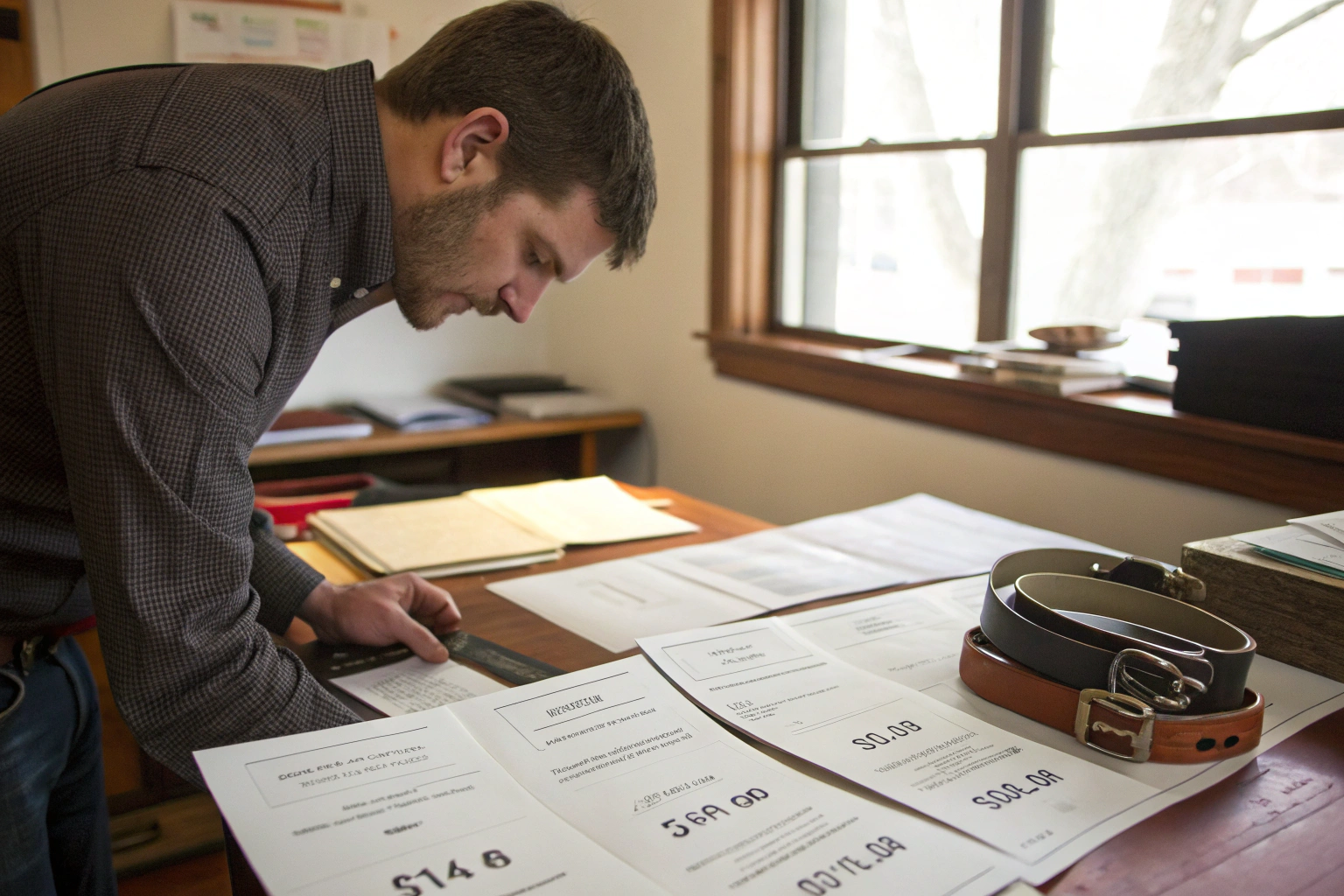
I remember a buyer named Michael who called me after receiving five quotes for a simple leather-look belt. The prices ranged from $1.85 to $4.20 per unit. He was ready to award the order to the $1.85 factory. I asked him to send me the spec sheets from all five quotes. When I laid them side by side, the differences were stark. The $1.85 quote was for a 32mm strap made of 100% polyurethane with a nickel-coated iron buckle. The $4.20 quote was for a 38mm strap made of bonded leather with a zinc alloy buckle and edge painting. Michael wasn’t comparing apples to apples. He was comparing apples to orangutans. If you are like Ron, you receive quotes from Alibaba, trade shows, and Google searches. The numbers on the page look similar, but the underlying value is wildly different. The fear of overpaying for a mediocre belt or underpaying for a belt that falls apart is the central tension of sourcing.
Comparing pricing between five belt suppliers in China requires a standardized cost breakdown analysis that goes far beyond the unit price. You must request quotes based on an identical, detailed specification sheet that includes exact strap width, material composition (genuine leather, PU, or webbing), buckle material (zinc alloy vs iron), and finishing details (edge paint, stitching SPI). Only then can you isolate the true manufacturing cost variance. You must also normalize for payment terms, FOB port charges, and packaging costs to calculate the Total Landed Cost per unit.
I run AceAccessory in Zhejiang Province. I have been on the quoting side of the desk for over fifteen years. I know exactly how a factory can make a quote look cheaper than it really is. I also know how to read between the lines of a quote to understand the factory’s capabilities and integrity. Price is what you pay. Value is what you get. A belt that retails for $24 and lasts two years is a better value than a belt that retails for $18 and the buckle snaps in two weeks. My goal is to give you the analytical framework to make that value judgment accurately and confidently. Let me walk you through the exact process of creating a level playing field for all five suppliers.
Why Must You Standardize the Request for Quotation (RFQ) Document?
The single biggest mistake buyers make is sending a vague inquiry. They write: "Hi, I need a quote for a men’s belt. Similar to the photo attached. Quantity 5,000 pcs."
When you send this to five factories, you will get five completely different quotes. Why? Because you have forced them to guess. Factory A guesses you want the cheapest possible option to win the bid. Factory B guesses you want mid-range quality because of your professional email signature. Factory C guesses you want premium because they only do premium. You are not comparing factories. You are comparing their guesses.
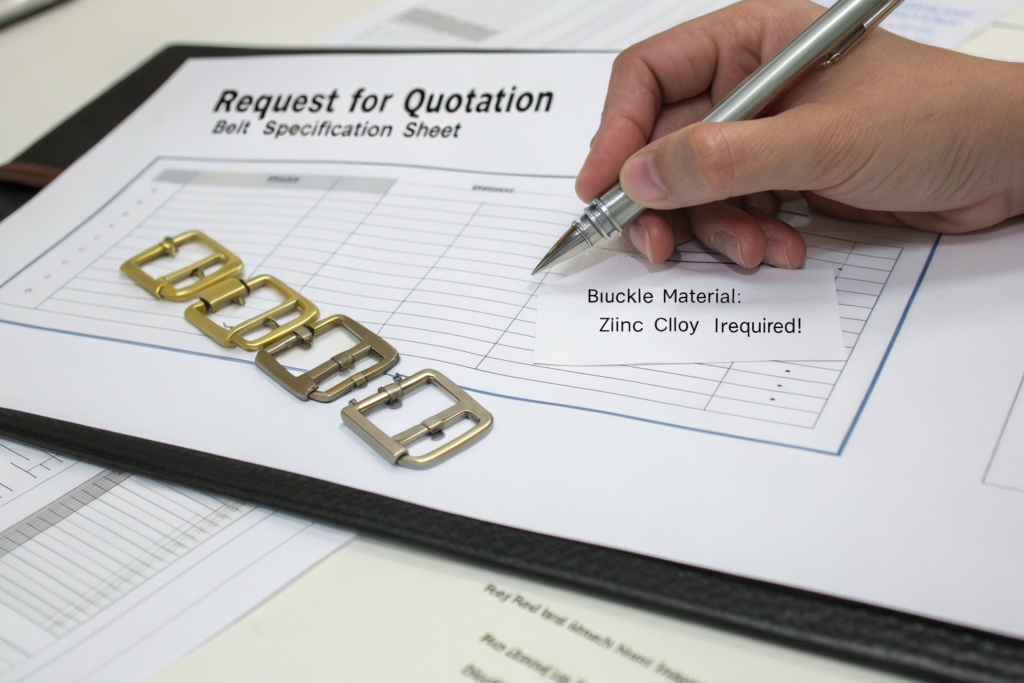
The solution is a Standardized RFQ (Request for Quotation) . This is a one-page document that locks down every single variable except the price and the factory’s profit margin. You are creating a controlled experiment where the only independent variable is the supplier’s efficiency and markup.
At AceAccessory, we actually prefer receiving a detailed RFQ. It tells us you are a professional buyer who knows what you want. It allows us to quote accurately and quickly. It eliminates the back-and-forth email chain of "What size is the buckle?" and "Is the leather genuine or PU?" A detailed RFQ saves everyone time and ensures the quote you receive is a real price for a real product.
What Specific Material Codes Should You Require in a Belt Quote?
Vague words are the enemy of accurate pricing. "Leather" is not a specification. "Metal" is not a specification. You must use industry-standard material codes or measurable specifications.
Here is a checklist of the exact language you should use in your RFQ for a belt:
| Component | Vague Term (Avoid) | Specific Term (Required) | Why It Matters |
|---|---|---|---|
| Strap Material | "Leather" | "Bonded Leather (XX% Leather Fiber)" or "PU Leather (0.8mm Thickness)" or "Full Grain Cowhide (1.4-1.6mm)" | Cost difference is 10x. |
| Buckle Material | "Metal" | "Zinc Alloy #3 (Zamak 3)" or "Iron with Nickel Plating" or "Solid Brass (Cu 65%, Zn 35%)" | Zinc is strong. Iron rusts. Brass is premium. |
| Stitching | "Good Stitching" | "Bonded Nylon Thread, 210D/3 Ply, 6 SPI (Stitches Per Inch)" | Higher SPI = Stronger seam. |
| Edge Finish | "Finished Edge" | "PU Leather: Heat-Sealed Edge" or "Genuine Leather: Burnished with Wax" or "Webbing: Ultrasonic Cut" | Raw edges fray and look cheap. |
When you send this level of detail, you remove the factory’s ability to cut corners on materials. You are pricing a specification, not a hope. At AceAccessory, our quotes reference these specific material codes. We want you to know exactly what you are paying for. This is how we build trust with buyers who source belts and fashion accessories .
How Do You Lock in the Strap Width, Thickness, and Length Variables?
Dimensions are just as critical as materials. A 1.25-inch (32mm) belt uses less material than a 1.5-inch (38mm) belt. A 0.8mm thin strap is flimsy. A 1.6mm strap is substantial.
You must specify Tolerance Ranges. Manufacturing is not machining to micron-level precision, especially with leather. You need to tell the factory what is acceptable.
Required Dimensions on RFQ:
- Strap Width: 38mm (+/- 1mm)
- Strap Thickness: 1.4mm (+/- 0.2mm)
- Length Options: S/M (95cm), L/XL (110cm) – Specify Cut Length vs Finished Length (including buckle turnback).
The Buckle Turnback Trap: A common trick to save cost is to make the "turnback" (the part of the strap that folds over the buckle and is stitched down) shorter. This uses less leather per belt. If you don’t specify, Factory A uses a 6cm turnback. Factory B uses a 4cm turnback. Factory B’s quote is cheaper because they use less material. But the belt looks cheap and is harder to buckle.
Specify: "Turnback length: 7cm from buckle bar." This locks in the design. At AceAccessory, we follow the spec sheet exactly. If a dimension is missing, we ask for clarification before quoting. We do not assume. This prevents the "unexpected downgrade" that buyers fear when sourcing custom belts .
How Do You Normalize Quotes for Payment Terms and Shipping Costs?
You have five quotes in your inbox. Supplier 1 is $2.00 FOB. Supplier 2 is $2.10 FOB. Supplier 3 is $1.95 FOB. You are about to pick Supplier 3. Stop. You haven’t finished the math.
The FOB Price (Free on Board) is just the cost of the goods sitting on the dock in Shanghai. It does not tell you the Total Landed Cost. You must normalize for two critical financial variables: Payment Terms and Local Port Charges.
Payment Terms Impact:
- Supplier 1: $2.00 FOB. Terms: 30% Deposit, 70% Before Shipment. You pay $1.40 per unit 30 days before you can sell it. This ties up your cash.
- Supplier 2: $2.10 FOB. Terms: 30% Deposit, 70% Against B/L Copy. You pay the $1.47 balance when the goods are on the water. You have 20-30 days of cash float before the payment is due.
If you factor in the Cost of Capital (the interest you could earn or the credit card interest you pay), Supplier 2’s slightly higher price might actually be cheaper for your cash flow.
Local Charges Impact:
Some factories quote a low FOB but then hit you with high Local Handling Charges (THC, Documentation Fee, Export Customs Clearance). These are the fees the factory pays to the port and the freight forwarder in China.
Always ask: "Is the FOB price inclusive of all local port charges up to loading on vessel?"
- Incoterms 2020 FOB Definition: The seller pays all costs until the goods are on board the vessel.
- Sneaky Factory Practice: They quote "FOB Under Hook" or "FOB Ex-Warehouse." They expect you to pay the trucking and port fees.
At AceAccessory, our FOB quotes are All-Inclusive FOB Ningbo. We pay the trucking to the port, the terminal handling, and the export declaration. You pay the ocean freight. This transparency allows you to compare our quote accurately against others.
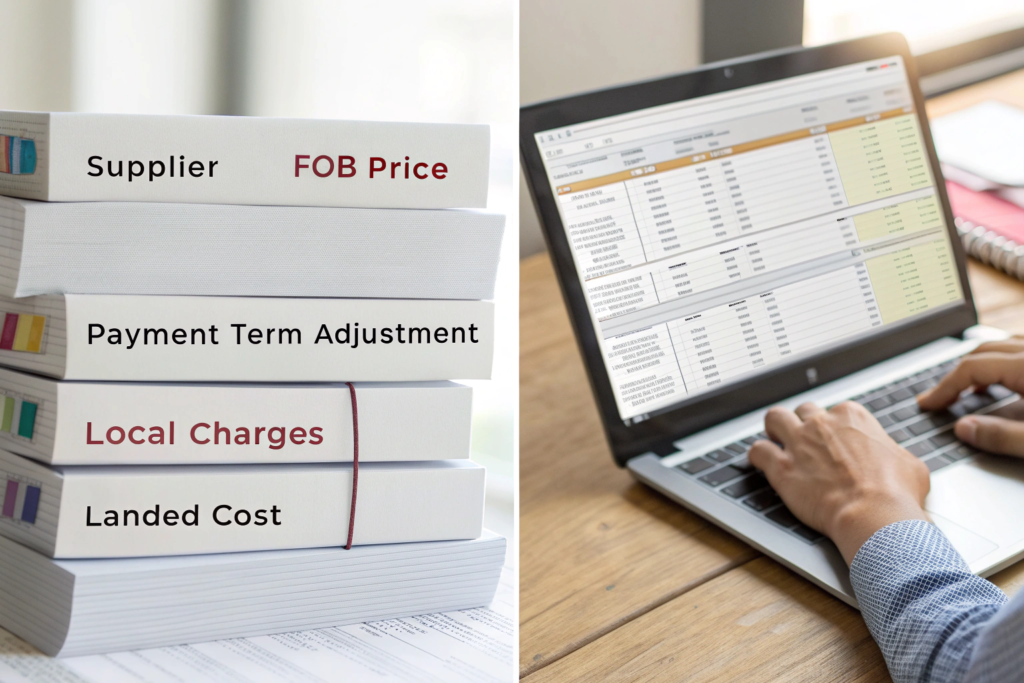
What Is the Hidden Cost Difference Between FOB and CIF Quotes?
This is a common point of confusion. Some suppliers will quote CIF (Cost, Insurance, Freight) . They roll the ocean freight cost into the unit price. Do not let them do this for comparison purposes.
Factory-controlled freight is almost always marked up. The factory gets a rate from their forwarder and adds 10-20% for "administration."
The Best Practice for Comparison:
- Demand FOB Quotes from all 5 factories. This strips out the ocean freight variable.
- Get an independent freight quote from your own forwarder or a platform like Flexport for the route (Shanghai to Los Angeles).
- Calculate Landed Cost yourself: (FOB Unit Cost x Quantity) + (Ocean Freight per Container / Units per Container) = Landed Cost per Unit.
This method ensures you are comparing the factory’s manufacturing efficiency, not their ability to negotiate ocean freight contracts. At AceAccessory, we are happy to recommend trusted forwarders, but we never force a client to use our in-house shipping department for the main leg. We want you to have full visibility on the true cost of your supply chain .
How Do MOQ and Tiered Pricing Skew the Unit Cost Comparison?
This is a classic spreadsheet error. You ask for a quote for 5,000 belts. Supplier 4 quotes $2.50 per belt. Supplier 5 quotes $2.25 per belt. Supplier 5 wins, right?
Then you read the fine print. Supplier 5’s quote says: "Price based on MOQ 10,000 pcs. For 5,000 pcs, price is $2.60." Supplier 4’s quote is valid at 5,000 pcs.
You must ensure you are comparing the exact same quantity break.
Here is a table to visualize the trap:
| Supplier | Quoted Price | Quantity Valid For | Actual Price at 5,000 pcs |
|---|---|---|---|
| Supplier A | $2.00 | 10,000 pcs | $2.30 |
| Supplier B | $2.15 | 5,000 pcs | $2.15 |
| Supplier C | $1.90 | 20,000 pcs | $2.50 |
Winner at 5,000 pcs: Supplier B, even though their initial number wasn’t the lowest.
At AceAccessory, we provide a Tiered Pricing Table in our quotes. We show the price breaks at 1,000 pcs, 3,000 pcs, 5,000 pcs, and 10,000 pcs. This allows you to see the cost curve and make an informed decision about how much inventory to buy. We don’t play games with inflated MOQs. We want to find the sweet spot that balances your budget with our production efficiency for belts and accessories .
How Can You Validate the Quality Behind the Price?
You have normalized the spec sheet. You have normalized the FOB price. Supplier 3 is the cheapest. Before you award the order, you must answer the question: "Why is Supplier 3 cheaper?"
There are two legitimate reasons a factory might be cheaper:
- Efficiency: They have better automation, lower labor costs, or closer proximity to raw material markets.
- Lower Profit Margin: They are hungry for business.
There is one illegitimate reason:
- Hidden Downgrades: They are substituting cheaper materials that you cannot see in a photo.
A photo of a finished belt sample from Supplier 3 might look identical to a sample from Supplier 4. The difference is in the invisible details. You must validate the quality behind the price. The best way to do this is to request a Cut Sample or a Cross-Section Sample.
Ask the factory to send you a belt sample that is intentionally cut in half. Or you cut it yourself upon receipt. Examine the cross-section of the strap.
- Quality: Solid leather fibers or dense microfiber. Consistent color throughout.
- Cost-Cutting: A thin skin of "genuine leather" laminated to a thick core of cardboard, plastic, or reconstituted leather dust. This is called "Leather Split" or "Bonded Leather" with a PU coating. It will peel and crack within weeks.
At AceAccessory, we are proud to provide cut samples. We want you to see the density of our zinc buckles and the consistency of our strap materials. The price is only validated by the physical evidence.
What Are the Key Visual Cues of a Low-Quality Buckle vs High-Quality?
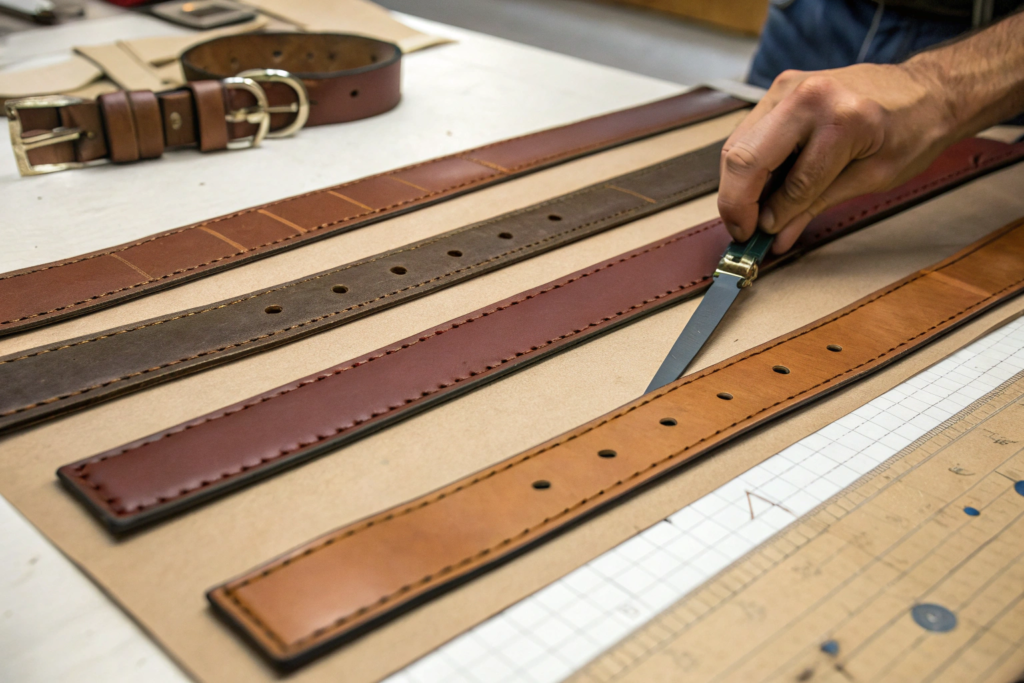
The buckle is the focal point of the belt. It is also where cheap factories hide the most cost savings. You can spot a cheap buckle from across the room if you know what to look for.
| Feature | High-Quality Buckle (Zinc Alloy/ Brass) | Low-Quality Buckle (Iron/ Cheap Zamak) |
|---|---|---|
| Weight | Feels heavy, substantial, cool to the touch. | Feels light, hollow, "tinny." |
| Finish | Even plating. Smooth surface. Deep polish. | Thin plating showing grey base metal on edges. Rough texture. |
| Detail | Sharp, crisp edges on logo engraving. | Blurry, shallow logo. "Mushy" details. |
| Prong | Thick, rounded tip. Fits snugly in hole. | Thin, sharp, bent easily. |
| Magnet Test | Non-Magnetic (Zinc Alloy). | Magnetic (Iron core). |
The Magnet Test: Keep a small rare earth magnet on your desk. If the buckle sticks to the magnet, it is made of Iron with a thin plating. Iron rusts. It causes allergic reactions (nickel itch). It breaks easily. Reject this buckle.
At AceAccessory, our standard buckles are Zinc Alloy #3 (Zamak 3) . They are non-magnetic. They take plating beautifully. They have the weight and feel of a premium accessory. This is a non-negotiable quality point for our belt hardware .
How Does Stitch Density (SPI) Correlate with Belt Durability?
Stitching is the skeleton of the belt. It holds the buckle in place. If the stitching fails, the belt is useless. Stitch density is measured in SPI (Stitches Per Inch) .
- Low Quality (4-5 SPI): Long, loose stitches. Looks like a basting stitch. The long gap between needle holes creates a "perforation" effect, like a tear-off check. The leather tears along the stitch line easily.
- Mid Quality (6-7 SPI): Standard for fashion belts. Good balance of strength and appearance.
- High Quality (8-10 SPI): Found on luxury goods. Requires a slower, more expensive sewing machine and skilled operator. The seam is incredibly strong and looks refined.
The Thread Matter Too: Ask for "Bonded Nylon" or "Polyester Core Spun" thread. Cheap cotton thread rots and breaks.
At AceAccessory, our standard for fashion belts is 6 SPI with 210D Bonded Nylon. This specification is written into every tech pack. It ensures the buckle stays attached for the life of the belt.
What Are the Red Flags in Supplier Communication and Transparency?
Price is a number. Value is a relationship. The way a supplier communicates during the quoting phase is a crystal ball into how they will handle problems during production. You are not just buying a belt. You are entering a 2-3 month partnership.
Here are the communication Red Flags that should make you pause, even if the price is low:
-
The 2-Minute Quote: You send a detailed 5-page RFQ. You get a reply in 2 minutes with just a price. Red Flag. They didn’t read the spec. They are giving you a "ballpark" number that will change later. Or they plan to build the cheapest possible version regardless of your spec.
-
Vague Answers to Specific Questions:
- You: "Is the buckle Zinc Alloy #3 or #5?"
- Supplier: "Good quality metal, my friend."
- Red Flag. They don’t know the material grade, or they know you won’t like the answer.
-
The Disappearing Act: They answer quickly for 2 days to get the order. Then, when you ask a technical clarification before paying, they go silent for 48 hours. Red Flag. They have poor internal communication or they are a trading company waiting for answers from the real factory.
-
Reluctance to Video Call: In 2026, there is no excuse for "camera broken." A supplier who won’t walk the floor on a 2-minute WhatsApp video call is hiding the conditions of the workshop. At AceAccessory, we initiate the video call. We want you to see the organization and cleanliness of our floor. It justifies our pricing.
Why Should You Request a "Bill of Materials" (BOM) with Each Quote?
This is an advanced negotiation tactic that separates professional buyers from amateurs. A Bill of Materials (BOM) is a spreadsheet that breaks down the cost of every single component of the belt.
It looks like this:
- Strap Material: 0.12 meters x $3.50/meter = $0.42
- Buckle: 1 pc x $0.35 = $0.35
- Keeper (Loop): 1 pc x $0.05 = $0.05
- Stitching Thread: 0.5 meters x $0.01 = $0.005
- Labor (Cut/Sew/Finish): 3 minutes x $0.15/min = $0.45
- Factory Overhead & Profit: 20% = $0.25
- Total FOB Cost: $1.52
Why request this?
- It exposes the material downgrade. If Supplier 3’s BOM shows a buckle cost of $0.10 and Supplier 4’s shows $0.35, you know exactly where the price difference is coming from.
- It prevents hidden price increases. Six months later, if they say "Leather price went up," you can look at the BOM and say, "Leather is only 28% of the cost. The impact should be $0.12, not $0.50."
Most factories will not voluntarily provide a BOM. They guard their cost structure. But a transparent factory like AceAccessory will provide a high-level BOM to established clients. We want you to understand the value you are receiving. We want you to see that our price is based on real material costs, not arbitrary markup.
How Do You Test the Supplier’s Willingness to Fix a "Mistake"?
Before you place a $20,000 order, place a $200 test. This is the single best indicator of long-term reliability.
After you receive the quote, but before you place the order, do this:
- Point to a specific detail on the spec sheet (e.g., "The keeper loop should be 10mm wide.").
- Ask the supplier: "If the production sample arrives and the keeper is 8mm wide, what is your exact process to fix it? Who pays for the rework? How long does it take?"
Good Response (AceAccessory): "We will immediately remake the sample with the correct 10mm keeper at our expense. New sample will ship within 7 days. We will update the QC checklist to highlight ‘Keeper Width: 10mm +/- 0.5mm’ for bulk production."
Bad Response: "Don’t worry. It will be 10mm." (Defensive, doesn’t answer the if scenario). OR "It is only 2mm. No one will notice." (Dismissive of your requirements).
This test reveals the supplier’s Quality Culture. Are they defensive, or are they solution-oriented? Mistakes happen in every factory. The difference between a good supplier and a bad one is how they respond to the mistake. At AceAccessory, we have a documented Non-Conformance Report (NCR) process. We want you to know how we handle problems because that is when our service truly matters.
Conclusion
Comparing pricing between five belt suppliers in China is an exercise in disciplined analysis, not intuition. The lowest number on the quote sheet is almost never the best value. By standardizing your Request for Quotation with precise material codes and dimensional tolerances, you create a level playing field where the only variables are manufacturing efficiency and integrity. Normalizing the quotes for payment terms, local port charges, and tiered quantity breaks reveals the true Total Landed Cost and its impact on your cash flow.
Beyond the spreadsheet, you must validate the quality behind the price. The weight of the buckle, the density of the strap cross-section, and the stitches per inch are objective measures of value that transcend subjective opinion. And finally, you must evaluate the supplier’s communication transparency and their willingness to stand behind their work when inevitable challenges arise.
The goal is not to find the cheapest belt. The goal is to find the most profitable belt—the one that delivers the perceived quality your customers demand at a cost that preserves your margin and protects your brand reputation.
If you are evaluating multiple suppliers and want a transparent, detailed quote based on a solid specification, we are prepared to provide the documentation and samples you need to make an informed decision. Contact our Business Director, Elaine. She can provide a BOM-level cost breakdown and a cut sample of our belt construction. Email Elaine at: elaine@fumaoclothing.com