Last year, a boutique owner named Sarah found a factory on a B2B platform with incredible prices on hair claws . The photos were beautiful. The communication was friendly. She placed a $15,000 order for her fall collection. The samples looked great. The bulk shipment arrived, and she opened the first carton. The acetate was thin and brittle. The springs were weak. The colors were slightly off from the samples. But the real disaster was hidden inside the packaging. A customer emailed her two weeks later with a photo of a rusted metal hinge and a complaint of an allergic rash. Sarah had no idea what metal was used. She had no test reports. She had no recourse. She had to recall the entire line, refund thousands of dollars, and her brand’s reputation in her small community was severely damaged. If you are like Ron, you operate on trust but verify with data. The fear of a hidden material defect or a safety violation destroying your business is not paranoia. It is a rational response to a supply chain filled with unverified operators.
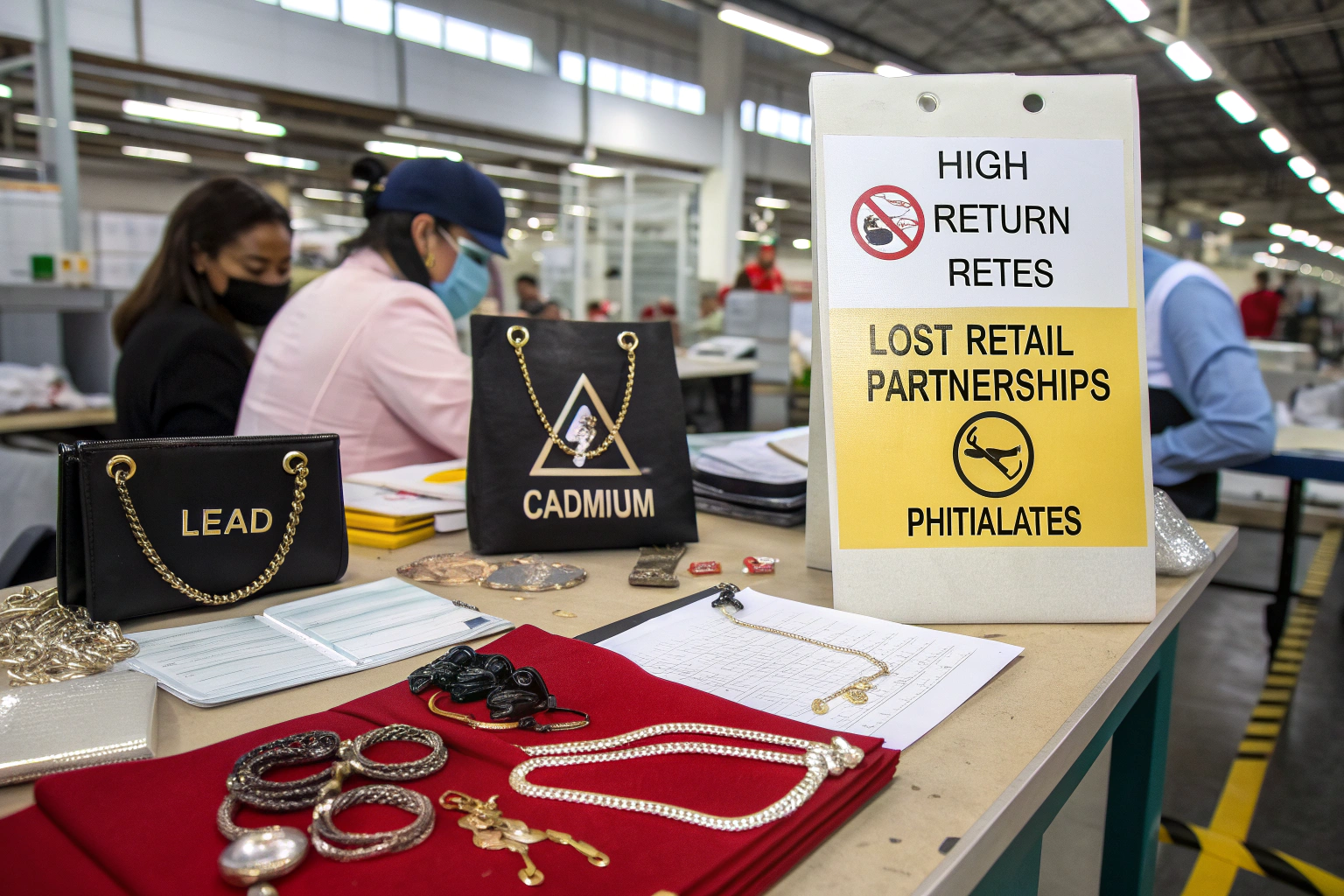
Buying fashion accessories from unverified factories exposes your business to five catastrophic risks: material safety violations (lead, cadmium, phthalates) that trigger CPSC recalls and legal liability; severe quality inconsistencies between samples and bulk production leading to high return rates and lost retail partnerships; intellectual property theft where your custom designs are sold to competitors; financial fraud including deposit scams and double invoicing; and supply chain disruptions due to substandard labor practices that result in factory shutdowns. A verified factory mitigates these risks through documented compliance, third-party auditing, and transparent operational protocols.
I run AceAccessory in Zhejiang Province. I have seen the aftermath of these disasters. I have been called by buyers desperate to fix a problem created by a factory that promised the world and delivered a container of headaches. The accessories industry has a low barrier to entry. Anyone with a WeChat account and a few photos can pose as a factory. The difference between a verified, professional manufacturer and an unverified trading operation is not just the price on the invoice. It is the invisible infrastructure of compliance, quality systems, and ethical accountability. Let me walk you through the specific, tangible risks you face when you skip the verification step, and how those risks translate into real dollars lost and real brand damage.
Why Is Material Safety Compliance a Critical Risk with Unverified Suppliers?
This is the risk that keeps me up at night, and it should keep you up too. Fashion accessories are not tightly regulated like food or pharmaceuticals, but they are subject to specific consumer safety laws in the US and EU. Unverified factories either do not know these laws or actively ignore them to save costs.
The primary danger is Heavy Metals and Phthalates in the materials.
- Lead (Pb): Used as a cheap stabilizer and pigment in paints and base metals (especially cheap zinc alloys and brass). It causes neurological damage, especially in children.
- Cadmium (Cd): Often found in cheap imported jewelry and metal coatings. It is a known carcinogen.
- Phthalates: Used to soften plastic (PVC). They are endocrine disruptors.
The US CPSIA (Consumer Product Safety Improvement Act) sets strict limits for children’s products (under 12 years). But even for adult accessories, if the item is found to contain hazardous levels of lead, the CPSC has the authority to issue a mandatory recall. And general product liability law means you can be sued.
An unverified factory sources the cheapest possible raw materials from local commodity markets. They do not ask for mill certificates. They do not test. They rely on the vendor’s word. They sell you a hair clip painted with industrial paint meant for bicycles, not skin contact.
At AceAccessory, we mitigate this risk through Supply Chain Transparency. We only source plating chemicals and base metals from ISO-certified suppliers. We require Mill Test Certificates (MTCs) for every batch of metal. And we verify those certificates through random Third-Party Lab Testing at SGS or BV.
How Can Undisclosed Allergens Like Nickel Cause Customer Harm and Lawsuits?
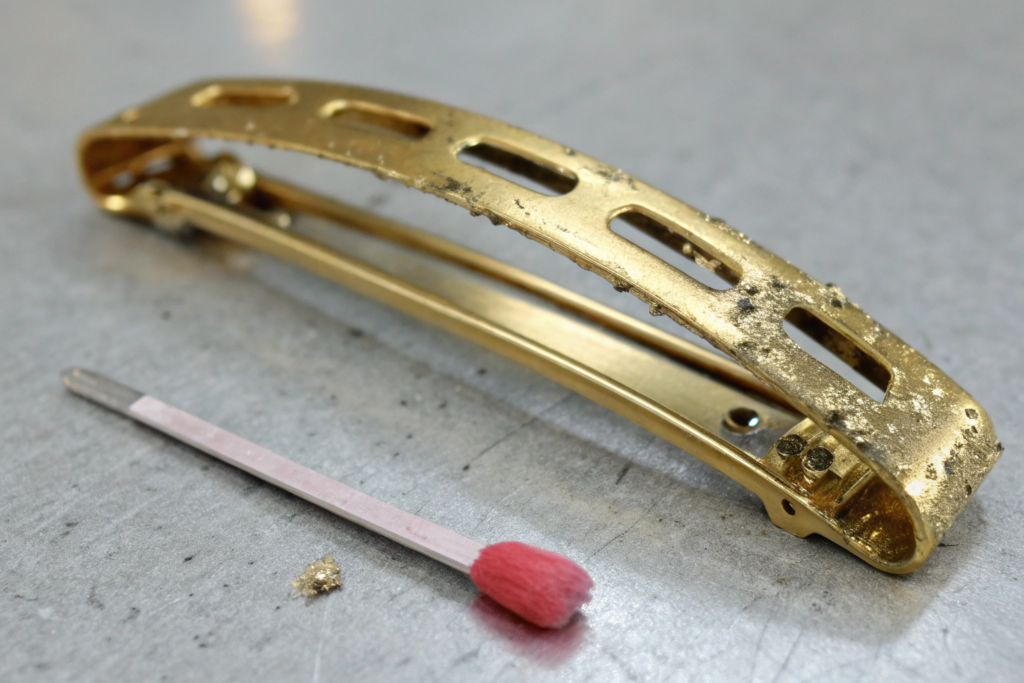
Even if the product is lead-free, another hidden danger lurks: Nickel. Nickel is the most common contact allergen in the world. Millions of people develop a painful, itchy rash (Contact Dermatitis) from prolonged skin contact with nickel.
Many unverified factories use a Nickel undercoat in their plating process. They plate a thin layer of bright nickel on the base metal to make it shiny and smooth, then they flash a micro-thin layer of "lead-free" gold or silver on top. The gold wears off in a week of wear. The nickel is exposed. The customer gets a rash.
The EU REACH Regulation strictly limits Nickel Release to less than 0.5 µg/cm²/week for items with prolonged skin contact. The US does not have a federal ban on nickel in adult jewelry, but State Laws (like California Proposition 65) require a warning label, and civil lawsuits for "Failure to Warn" are common and expensive.
How to Verify: Ask the factory: "Do you use a Nickel-Free plating process? Can you provide a lab report showing EN1811 compliance for Nickel Release?"
An unverified factory will look at you blankly. They don’t know what EN1811 is. They just know "gold color." At AceAccessory, we offer Nickel-Free Plating as a standard option for our fashion accessories . We use a copper-tin-zinc alloy undercoat. It costs slightly more, but it eliminates the allergy risk and the legal exposure.
What Is the Financial Impact of a CPSC Recall on a Small Brand?
Many small brands think, "I’m too small for the CPSC to notice." This is a dangerous myth. The CPSC relies on consumer complaints and competitor reports. A single complaint from a concerned parent about a chipping paint on a hair band can trigger an investigation.
Let’s look at the hard costs of a recall for a 5,000-unit order:
| Cost Category | Estimated Amount (USD) | Notes |
|---|---|---|
| Product Refunds | $25,000 – $50,000 | Full retail price refund for affected units. |
| Recall Logistics | $2,000 – $5,000 | Customer notification emails, return shipping labels. |
| Disposal Costs | $1,000 – $3,000 | Hazardous waste disposal fees (you can’t just throw it in trash). |
| Legal Fees | $10,000 – $50,000+ | CPSC reporting requirements, potential class action defense. |
| Lost Inventory Value | $15,000 | The original landed cost of the goods. |
| Brand Damage | Incalculable | Lost wholesale accounts, negative SEO, social media backlash. |
Total Hard Cost: $53,000 – $123,000+
This is a business-ending event for most independent brands. The $300 you saved on the unit price by using the unverified factory evaporates instantly. At AceAccessory, we view compliance as insurance. The small premium you pay for verified materials protects you from this catastrophic downside risk. This is the value of a verified supply chain .
How Does Inconsistent Quality Control Affect Your Brand Reputation?
You can survive a high price. You cannot survive a bad review. In the age of Amazon and Shopify, product consistency is the foundation of your brand rating. A 4.8-star product sells. A 3.9-star product dies.
Unverified factories lack a Quality Management System (QMS) . They rely on a single "QC guy" who walks around at the end of the day. There are no written standards. No inline checks. No statistical sampling. The result is high variance.
Scenario: You order 1,000 pieces each of 10 colors of hair bands from an unverified factory.
- Batch 1 (Pink): Perfect. 5-star reviews.
- Batch 2 (Blue): The elastic is slightly looser. Customers complain "They slip out."
- Batch 3 (Black): The glue joint is messy. Customers post photos of the "ugly seam."
Your overall rating drops from 4.8 to 4.2. Amazon’s algorithm punishes you. Your conversion rate plummets. You lose the Buy Box. The cost of this inconsistency is not just the returns. It is the lost future sales on what could have been a flagship product.
At AceAccessory, our QC system is Process-Oriented, not person-oriented. We use AQL Sampling Standards (Acceptable Quality Limit) for every batch. We have In-Line QC Checkpoints at 20%, 50%, and 80% of production completion. This ensures that the 1,000th piece is identical to the 1st piece.
Why Do "Golden Samples" from Unverified Factories Often Differ from Bulk?
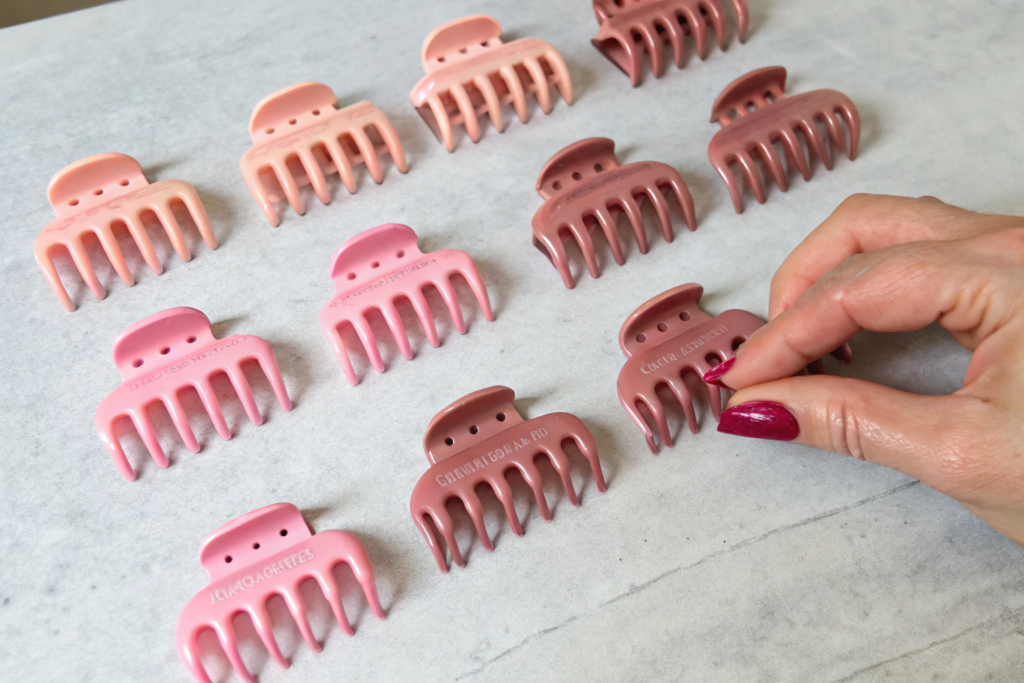
This is the oldest trick in the book. The "Golden Sample Trap." You request a pre-production sample. The factory sends you a beautiful, flawless specimen. You approve it. You wire the deposit. The bulk arrives… and it looks like a distant cousin of the sample.
How do they do this?
- Sample Room Specialists: The factory has a separate "sample room" staffed with their most skilled artisans. They make the sample by hand, using premium offcuts of material.
- Bulk Production Line: The bulk order goes to the regular factory floor with lower-skilled workers, faster machine speeds, and cheaper material batches.
The sample is a lie about the factory’s average capability.
How to Protect Yourself:
- Request a "Production Sample": Do not just accept a pre-production sample. Ask for a sample pulled randomly from the bulk production line before final packing. This is a "Gold Seal Sample." It represents what is actually in the cartons.
- Sealed Sample: Ask the factory to seal the approved sample in a bag with your signature and date. This becomes the legal reference standard.
At AceAccessory, we close this gap by having our Bulk Production Team make the pre-production sample on the actual production line, using the actual bulk materials. We do not have a separate "magic" sample room. This ensures the sample is an honest preview of the bulk order. This is part of our commitment to transparent manufacturing .
How Do Poor Stitching and Weak Clasps Lead to High Return Rates?
In the world of e-commerce, the cost of returns is the silent killer of profit. For fashion accessories, the return rate for defects should be under 2%. With unverified factories, it can spike to 10-15%.
Let’s look at the math for a $25 retail belt or shawl :
| Metric | Verified Factory (2% Return Rate) | Unverified Factory (12% Return Rate) |
|---|---|---|
| Units Sold | 1,000 | 1,000 |
| Returns Due to Defect | 20 | 120 |
| Refund Cost ($25 ea) | $500 | $3,000 |
| Outbound Shipping Loss | $80 ($4 avg) | $480 |
| Return Shipping Cost | $100 ($5 avg) | $600 |
| Processing/Inspection Labor | $40 ($2 ea) | $240 |
| Total Cost of Returns | $720 | $4,320 |
Net Difference: $3,600 loss on a single SKU.
This calculation does not even include the negative reviews from those 120 unhappy customers. The weak clasp on a hair accessory or the unraveling stitch on a scarf might seem like a small annoyance. But multiplied across thousands of units, it is a significant financial drain. At AceAccessory, we use Pull-Force Testers for clasps and Tension Meters for stitching. We measure. We don’t guess.
What Are the Intellectual Property Risks of Using Unverified Suppliers?
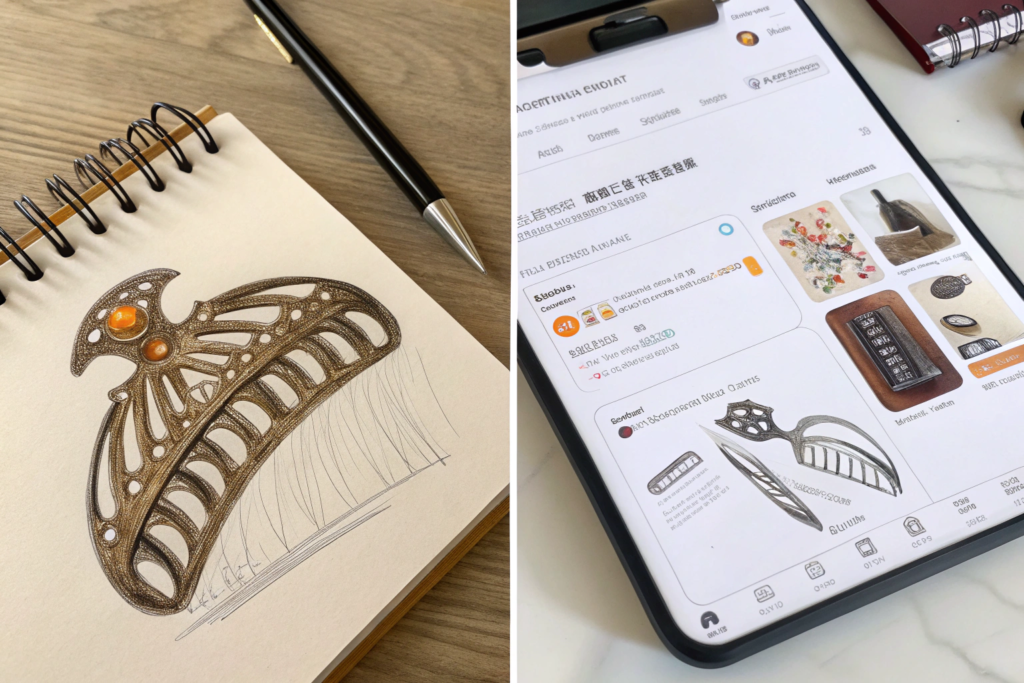
You spend months developing a unique belt buckle shape or a signature hair clip design. You pay for a custom mold. You launch it. It sells well. Then, three months later, you see your exact design on Amazon, sold by a stranger, for half the price.
What happened? The unverified factory sold your mold (or copies of it) to another buyer. Or they are running "third shift" production—making your goods during the day and making extra units to sell on Alibaba at night.
Unverified factories do not respect Intellectual Property (IP) . They view your design file as just another asset to monetize. They often lack internal controls to prevent a rogue employee from emailing your CAD file to a competitor.
The Risks:
- Erosion of Brand Equity: Your unique selling proposition vanishes.
- Price Erosion: You are forced to lower your price to compete with the counterfeit.
- Legal Inability to Act: Without a registered design patent in China, you have zero legal recourse to stop the factory.
At AceAccessory, we have strict IP Protection Protocols. Client molds are stored in a locked, access-controlled room. Our Mold Ownership Agreement clearly states that the steel mold is the sole property of the client and will never be used for any other party. Our IT system blocks USB ports on design computers to prevent file theft. We view your designs as sacred.
How Can You Verify That Your Custom Mold Will Not Be Shared?
This is a question of factory culture and contractual enforcement. Here are the specific steps you can take:
- Mold Ownership Clause in PO: The Purchase Order must state: "The steel mold(s) fabricated for this order remain the sole property of [Your Company Name]. Factory agrees not to use, duplicate, or modify mold for any other client without express written permission."
- Request a Photo of Mold Storage: Ask the factory to show you a photo of their Mold Storage Area. A professional factory will have labeled racks and a clean environment. A shady factory will have a messy pile of molds in a corner.
- Physical Mold Marking: Request that the factory engrave your company name and "Property of…" directly onto the side of the steel mold. This makes it harder to sell or reuse discreetly.
At AceAccessory, we welcome these requests. We want you to feel secure that your custom accessory tooling is safe. We provide a Mold Storage Certificate with a photo of the engraved mold on our shelf.
What Is the Risk of "Bait and Switch" with Branded Packaging?
This is a subtle but damaging fraud. You provide the factory with your branded hangtag and polybag artwork. You pay for the printing. The factory produces half the order with your official, expensive packaging. They produce the other half with cheap, generic packaging. They sell the generic-packaged goods (which are your design) to discounters or on AliExpress.
Because the goods are in generic packaging, it is harder to trace the leak back to the factory. Your brand name is not on the polybag. But the product is unmistakably yours. This dilutes your brand’s perceived exclusivity and channels sales away from your authorized retailers.
Prevention:
- Require Packing List Transparency: The factory must report exactly how many branded hangtags/polybags were consumed vs how many goods were produced. The numbers must reconcile.
- Third-Party Audit: An inspector can verify the destruction of excess branded materials. If there are 500 hangtags left over, they should be cut up and disposed of, not kept for future use.
At AceAccessory, we reconcile packaging inventory for every order. We provide a Material Consumption Report showing inputs (hangtags received from printer) and outputs (hangtags used on finished goods). The difference is documented as waste or returned to the client. This level of transparency is how you secure your brand integrity .
How Does Lack of Ethical Compliance Lead to Supply Chain Disruption?
This is the "invisible" risk that suddenly becomes very visible. You might think, "Labor conditions in the factory don’t affect my product quality or delivery." You are wrong.
Unverified factories cut costs by violating labor laws, safety codes, and environmental regulations. They operate in the informal economy. They fly under the radar of local government inspections—until they don’t.
The Disruption Scenario:
- A local labor inspector or environmental agency conducts a surprise raid.
- The factory is found to have blocked fire exits, no permits for chemical disposal, or underage workers.
- The government pulls the factory’s business license and cuts the electricity.
- The factory is shut down immediately.
Your order, which is 80% complete, is now stuck. The factory owner disappears. You have no legal standing to enter the premises to retrieve your goods or your molds. You have to start over with a new factory. You miss your entire selling season. This is not a hypothetical. It happens regularly in unregulated industrial clusters.
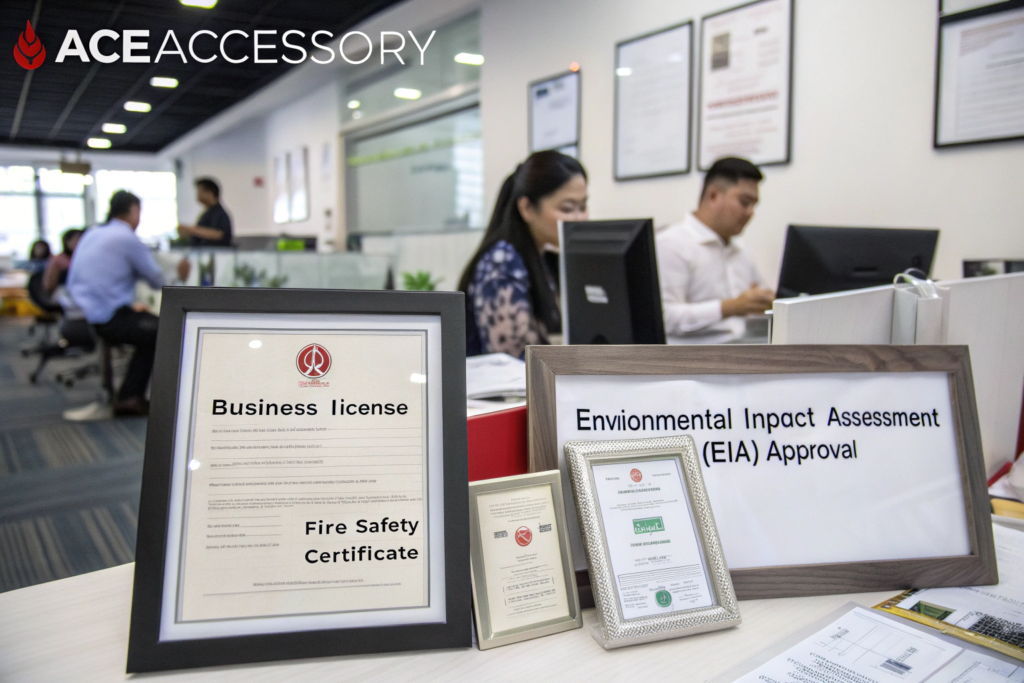
At AceAccessory, we operate with Full Compliance. We have a valid Business License, Environmental Impact Assessment (EIA) Approval, and Fire Safety Certificate. We undergo annual Social Compliance Audits (often SMETA or BSCI). This legal and ethical foundation ensures continuity of supply. Our lights stay on. Our doors stay open.
Why Do Major Retailers Require SMETA or BSCI Social Compliance Audits?
If you aspire to sell to a major US retailer (Target, Walmart, Nordstrom) or a large corporate client, they will require a Social Compliance Audit. They need to ensure their supply chain is free from forced labor, child labor, and unsafe working conditions.
The two most recognized audit standards are:
- SMETA (Sedex Members Ethical Trade Audit)
- BSCI (Business Social Compliance Initiative)
An unverified factory cannot pass these audits. They lack the documentation (time cards, payroll records, safety training logs) and the physical infrastructure (fire alarms, clean restrooms, proper ventilation) required.
If you are sourcing from an unverified factory, you are capping your growth potential. You will never be able to onboard that major wholesale account.
At AceAccessory, we maintain a Valid BSCI Audit Report. We provide this report to clients upon request. It allows you to demonstrate compliance to your retail buyers. It opens doors that unverified factories keep firmly shut. This is a strategic advantage for brands looking to scale their fashion accessories business.
How Does Financial Instability of a Factory Affect Your Deposits?
Unverified factories often operate on razor-thin margins and poor cash flow management. They use your 30% deposit to pay for the last client’s order (or their own personal expenses). This is called a Ponzi Scheme dynamic.
If they lose a big client or have a quality failure that requires a refund they cannot afford, they simply close the bank account and disappear. Your deposit is gone. You are an unsecured creditor in a foreign country with no practical legal recourse.
Warning Signs of Financial Instability:
- Asking for 50% or 100% deposit upfront.
- Requesting payment to a personal bank account or a Hong Kong shelf company (not the factory’s mainland China corporate account).
- Frequent changes in company name or sales representatives.
At AceAccessory, we have been in business for over 15 years. We have a long-term, audited financial track record. We accept standard payment terms (30% deposit, 70% against B/L). We provide payment instructions to a Mainland China Corporate Account that matches our business license. Our financial stability is your security. Your deposit is used to buy your raw materials, not to plug holes in someone else’s balance sheet.
Conclusion
The allure of a lower unit price from an unverified factory is a siren song that has lured countless brands onto the rocks of financial ruin. The true cost of that "bargain" is paid later, in the currency of product recalls, customer returns, stolen designs, and catastrophic supply chain failures. The risks are not abstract possibilities; they are documented, recurring realities in the global accessories trade.
Material safety violations expose you to legal liability that can erase your business overnight. Quality inconsistencies erode the hard-won trust of your customers, driving up return rates and tanking your online reputation. Intellectual property theft turns your unique designs into commodities, stripping away your competitive advantage. And the operational and financial instability of unverified factories creates a constant, low-grade anxiety that your next order might simply never arrive.
Choosing a verified manufacturing partner is an investment in predictability and protection. It means paying a fair price for documented material compliance, robust quality systems, secure IP protocols, and ethical labor standards. It means sleeping soundly knowing that the products arriving at your warehouse are safe, consistent, and made in a facility that will still be operating next year.
If you are ready to move beyond the gamble of unverified sourcing and build a reliable, scalable supply chain for your accessory brand, we are here to provide the transparency and documentation you need to make a confident decision. Contact our Business Director, Elaine. She can provide our BSCI audit report, material compliance certificates, and a sample Mold Ownership Agreement for your review. Email Elaine at: elaine@fumaoclothing.com