Last spring, a client named Marcus called me in a panic. He ran a small Western wear brand and had a killer idea for a custom engraved belt buckle. He needed 50 samples for a trade show in Dallas. He had been told by another factory, "Six to eight weeks, maybe longer." He had four weeks until the show. He was facing the very real possibility of standing in an expensive booth with nothing new to show his buyers. The fear of missing a critical market deadline because of a slow supply chain is something I hear from buyers like Ron all the time. You have a vision. You have a launch date. And you are at the mercy of a factory’s production schedule. The uncertainty eats at you.
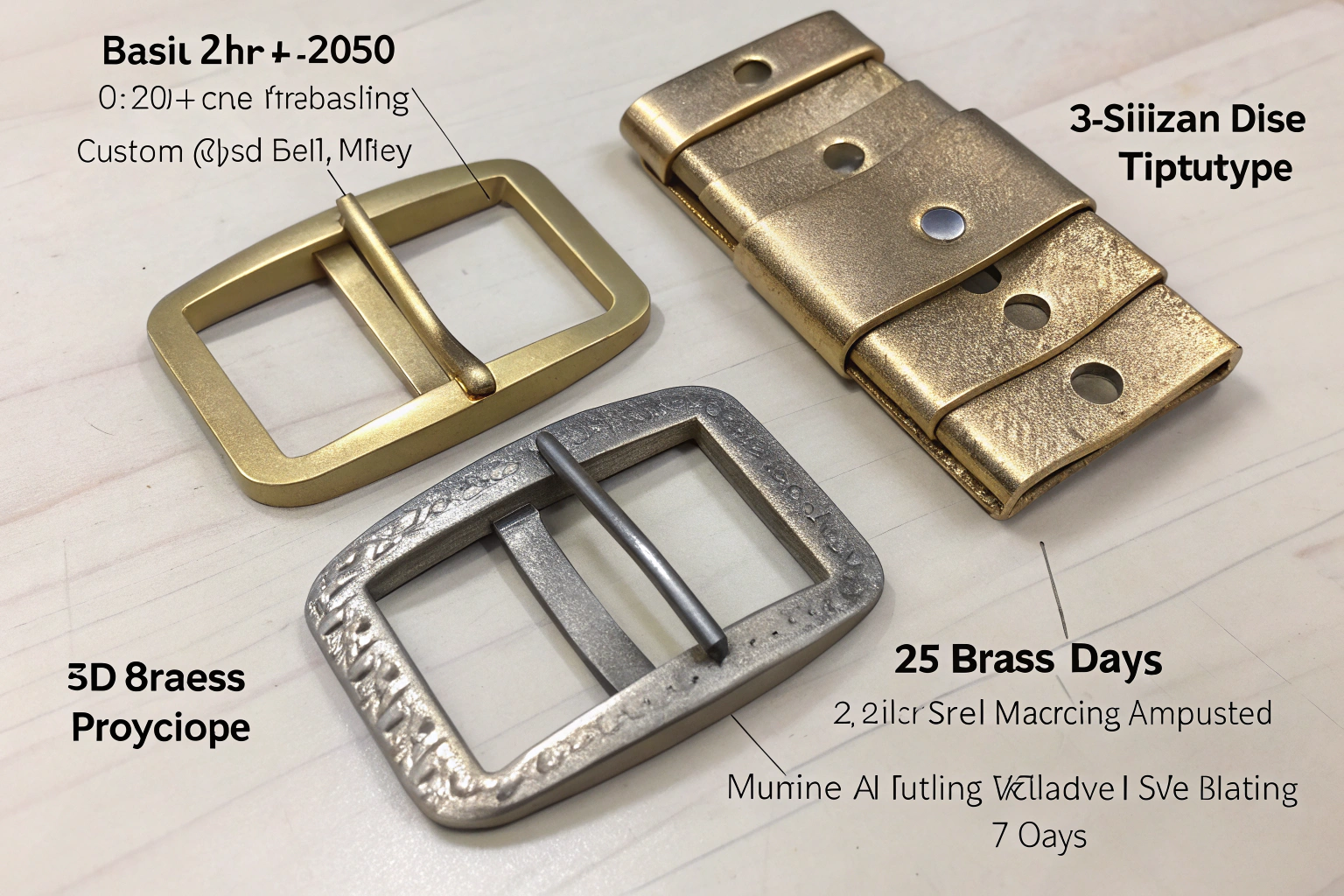
The timeline to receive a custom belt buckle prototype depends heavily on the manufacturing method. A basic zinc alloy die-cast buckle with a simple 2D design can be prototyped in 15 to 20 days using a soft silicone mold. A complex, multi-level 3D brass buckle requiring a steel stamping die will take 25 to 35 days. Adding custom plating like antique silver or gold increases the timeline by an additional 5 to 7 days. The fastest route is 3D printed resin prototypes, which can be in your hands in 7 to 10 days for visual approval before cutting steel.
I run Shanghai Fumao in Zhejiang Province. We have a dedicated metal accessories workshop. I have seen the entire spectrum of buckle development, from simple stamped steel blanks to intricate, hand-polished brass showpieces. The timeline is not a mystery. It is a function of physics, chemistry, and tooling. The key to hitting your deadline is understanding which prototyping method is right for your specific stage of development. Let me walk you through the exact processes, the real-world timelines, and the trade-offs between speed, cost, and fidelity so you can plan your product launch with confidence.
What Are the Different Methods for Prototyping Custom Belt Buckles?
You cannot manage what you don’t understand. The timeline for your prototype hinges entirely on which prototyping method the factory uses. Many buyers think "prototype" means one thing. In reality, there are three distinct methods, each with a different purpose, cost, and lead time.
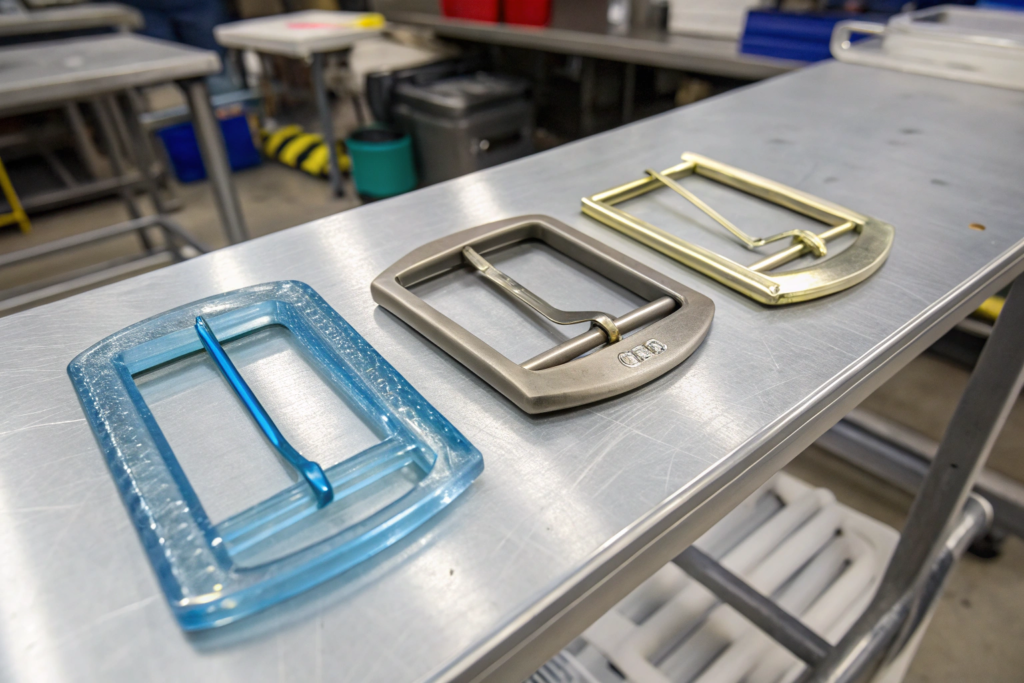
The first method is 3D Printing (Additive Manufacturing) . This is used for Visual Prototypes. You get a plastic or resin model that looks exactly like the final buckle. You can check the size, the shape, the logo placement. But you cannot wear it. It is fragile. It has no weight. It cannot be plated. The lead time for a 3D print is 7 to 10 days. This is the fastest way to lock in a design before spending money on tooling.
The second method is Silicone Mold Casting (Vacuum Casting) . This is a Bridge Prototype. The factory makes a quick silicone rubber mold and pours in liquid zinc alloy or polyurethane resin. You get a metal (or metal-like) part that has weight and can be plated. The surface detail is good, but not as crisp as a steel mold. The lead time is 15 to 20 days. This is ideal for trade show samples or small test market runs of 50-100 pieces.
The third method is Steel Mold (Production Tooling) . This is the Pre-Production Prototype. The factory cuts a full steel die-cast mold or stamping die. This takes the longest and costs the most. But the prototype you get is identical to the final mass-produced buckle. The lead time is 25 to 35 days. You only go this route when the design is finalized and you are ready to commit to bulk production.
At AceAccessory, we guide our clients through this decision matrix. We don’t just ask for the design. We ask, "What is this prototype for? A buyer meeting? A fit test? A photo shoot?" The answer determines the method and the timeline.
How Fast Is 3D Printing for Initial Design Approval vs Metal Casting?
Let me give you a real-world comparison from our workflow at AceAccessory.
Path A: The 3D Print Route (Speed First)
- Day 1: Client sends 2D sketch or AI file.
- Day 2: Our designer creates a 3D STL file.
- Day 3: Client approves digital render.
- Day 5: 3D print is complete (SLA Resin or Nylon).
- Day 8: Print is cleaned, cured, and spray-painted to simulate metal finish.
- Day 10: Photos sent to client. Express shipped.
This 10-day turnaround is a game-changer for brands that need to move fast. It allows you to hold something in your hand, feel the scale, and check the proportions. You can catch mistakes early. Is the belt loop too narrow for a 1.5" strap? Is the logo too small to read? Fixing a 3D file costs $0. Fixing a steel mold costs $500+ .
Path B: The Metal Casting Route (Fidelity First)
- Day 1-5: Design and 3D modeling.
- Day 6-10: Master Pattern Making. A high-detail resin master is 3D printed.
- Day 11-12: Silicone Mold Curing. Liquid silicone is poured around the master and allowed to set.
- Day 13-15: Casting. Zinc alloy is melted and poured into the silicone mold.
- Day 16-18: Finishing. The raw casting is tumbled, polished, and hand-filed to remove the seam line.
- Day 19-20: Plating. The buckle is electroplated with the final finish.
This 20-day route gives you a functional, wearable, sellable sample. It is the preferred method for our clients preparing for trade shows or sending samples to retail buyers. It bridges the gap between digital concept and physical reality with far less investment than a steel mold. This is how we help our fashion accessories clients test the market.
What Is the Cost Difference Between a Silicone Mold Prototype and a Steel Mold?
The timeline is one factor. The cost is the other. Many buyers are surprised by the price difference. Let me be transparent about the typical costs for a medium-complexity zinc alloy belt buckle (approx. 3" x 2").
| Prototyping Method | Tooling Cost (Estimate) | Unit Cost per Prototype | Lead Time |
|---|---|---|---|
| 3D Print (Resin) | $0 (Included in design fee) | $20 – $40 (Print time) | 7-10 Days |
| Silicone Mold Casting | $100 – $200 (Mold only) | $5 – $8 (Casting + Finish) | 15-20 Days |
| Steel Production Mold | $800 – $1,500 (Mold) | $0.80 – $1.50 (Bulk price) | 25-35 Days |
Notice the trade-off. The Silicone Mold has a low tooling cost but a high per-unit cost. It is perfect for 20 pieces. The Steel Mold has a high tooling cost but a low per-unit cost. It is the only economical choice for 5,000 pieces.
At AceAccessory, we often use a Hybrid Approach. We make a silicone mold to produce 20 samples for the client’s sales meeting. While the client is showing those samples, we are already cutting the steel mold for bulk production. By overlapping these timelines, we shave 2-3 weeks off the total launch schedule. This is the kind of strategic development planning that gives our clients a competitive edge.
What Factors Can Delay a Custom Belt Buckle Prototype?
I always tell my clients the timeline I give you is the "No Surprises" Timeline. It assumes everything goes right. But in metal manufacturing, things go wrong. Understanding the potential bottlenecks helps you plan a realistic buffer and reduces frustration when a delay occurs.
The number one cause of delay is Design File Issues. A client sends a JPG image they found on Google. We have to redraw it as a vector file. The redraw takes time. Or the client sends a 3D file, but the walls of the buckle are too thin (less than 1.5mm) and will break during casting. We have to send it back for thickening. This back-and-forth engineering review can add 3-5 days.
The second major cause is Plating Failures. You want a specific shade of "Antique Silver." The plating shop runs a test piece. It comes out too dark. They adjust the chemical bath. They run another test. Too light. This iteration loop can add 3-7 days. This is especially common with unique finishes like "Oil Rubbed Bronze" or "Rainbow Titanium."
The third cause is Mold Repair. A silicone mold is only good for about 20-30 casts. If you order 50 prototypes, the factory has to make two silicone molds. If the first mold tears during de-molding, it has to be re-made. A steel mold can also crack if the metal flow is not balanced correctly during the first test shot. Fixing a steel mold is a major delay, adding 7-14 days.
At AceAccessory, we mitigate these risks through proactive communication. We don’t wait for the client to find a problem. We send In-Process Photos. Day 5: "Here is the 3D render, please confirm thickness." Day 12: "Here is the raw casting, notice the texture." This transparency allows you to catch issues early and adjust expectations.
How Does Complex Engraving or 3D Relief Impact Production Time?
Engraving is not just "drawing on metal." The method of engraving dictates the timeline.
- 2D Line Engraving (Laser or CNC): This is fast. The design is a flat, black-and-white file. A laser burns the lines into the metal in seconds. This adds 1 day to the finishing process.
- 2.5D Relief Engraving (Chemical Etching): This creates a slightly recessed, textured background. It requires applying a photo-resist film, exposing it to UV light, and washing away the unexposed area with acid. This adds 2-3 days.
- 3D Sculpted Relief (Die-Cast Mold): This is the slowest and most expensive. The 3D design (like a sculpted eagle or a floral bouquet) must be carved into the steel mold using a CNC Graphite Mill or EDM Sinker. This process alone can take 5-7 days of machine time just to carve the cavity.
If your custom belt buckle design features a highly detailed 3D logo or a sculpted animal head, you must budget for the extra mold-making time. A simple flat logo buckle might take 25 days. A complex 3D sculpted buckle will take 30-35 days. We explain this trade-off upfront to our clients .
Why Do Plating and Finishing Choices Extend the Sampling Schedule?
Plating is a chemical process, and chemistry takes time. It cannot be rushed without sacrificing quality.
The fastest finish is Raw Polished Zinc. You get the buckle in its natural silver-grey metal state. Lead time: +0 days.
The standard finish is Electroplated Silver or Gold. The buckle must be hung on a rack, dipped in a cleaning solution, dipped in a nickel undercoat (for adhesion), and then dipped in the final silver or gold bath. Each dip requires rinsing and drying. This process is done in batches. The plating shop might run silver on Mondays and gold on Tuesdays. If your prototype misses the Monday silver run, it waits a week. This batch scheduling adds 3-5 days.
Antique Finishes add even more time. After plating, the buckle is painted with a dark "relief" paint that settles into the low spots. This paint must cure for 24 hours. Then the high spots are hand-buffed to remove the paint and reveal the shiny metal underneath. This is a manual, artisanal process. It adds 5-7 days.
Painted Enamel (Cloisonné style) is the slowest. Each color is applied by hand with a syringe and baked in an oven. Multiple colors require multiple bakes. This can add 7-10 days.
At AceAccessory, we maintain a Finishing Schedule Calendar so we can give clients a precise estimate based on their chosen plating. We also keep stock of the most popular finishes (Shiny Silver, Shiny Gold, Antique Brass) to streamline the process for standard accessories .
How to Accelerate the Belt Buckle Prototype Process?
Time is money. If you need a prototype fast, you need to be a "Fast-Pass Client." This means you do the work upfront that eliminates the factory’s internal delays. The biggest bottleneck in custom manufacturing is always Design Clarification. The more complete your design file, the faster the process.
Here are three concrete ways to accelerate the timeline at AceAccessory:
-
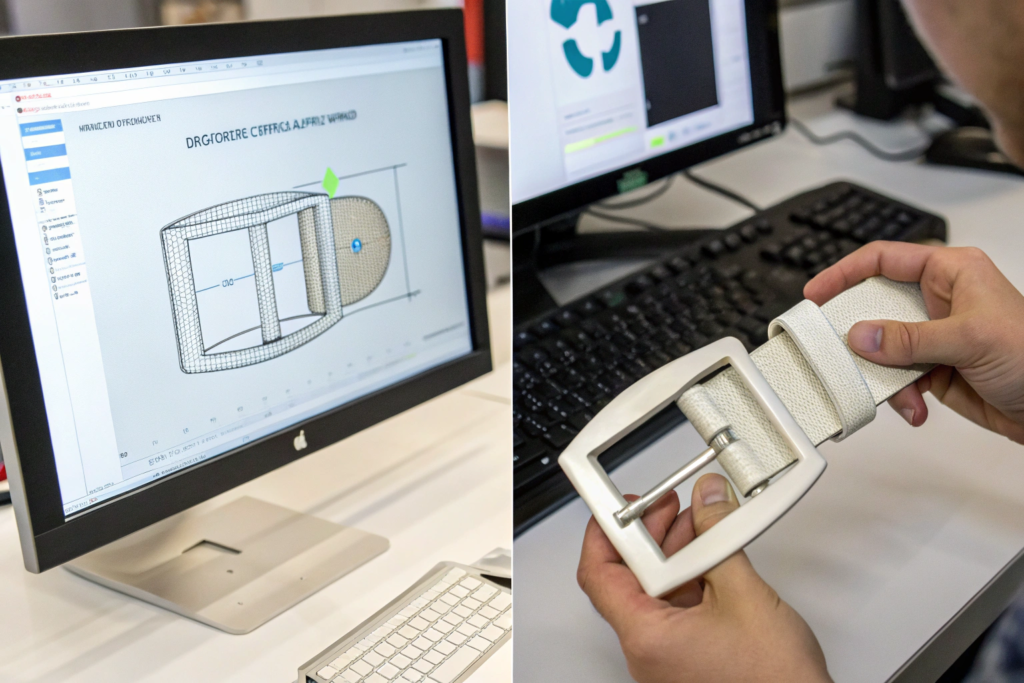
Provide a Vector File. Do not send a JPG or a hand sketch. Send an Adobe Illustrator (.ai) or DXF file. This file format contains the exact mathematical curves of your design. Our CNC machines can read it directly. This saves 1-2 days of redrawing time.
-
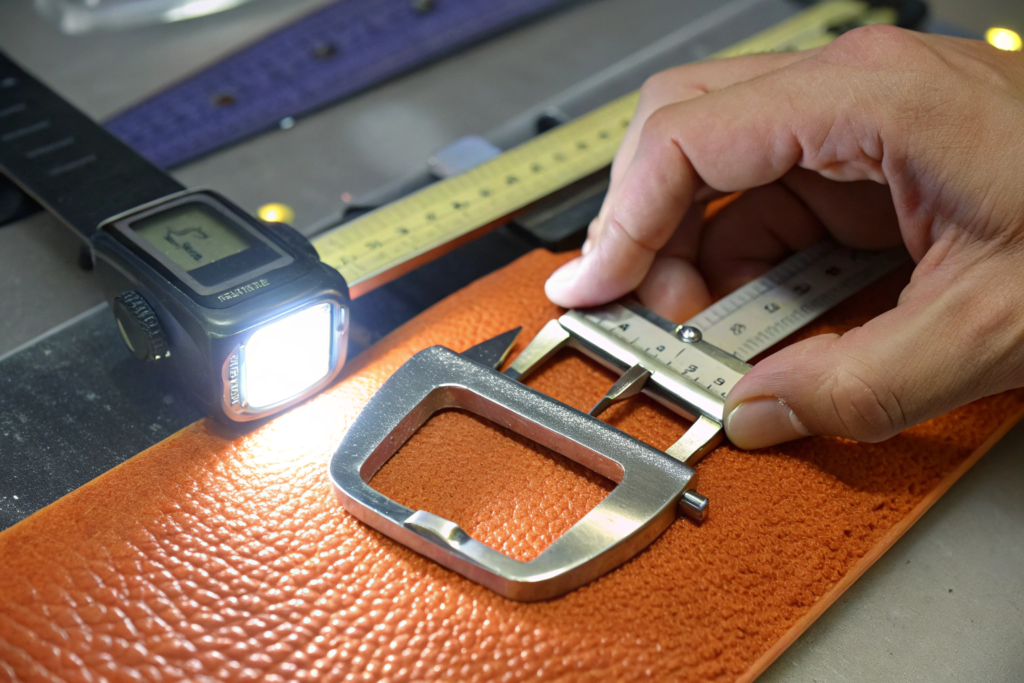
Specify Exact Dimensions. Do not say, "Make it standard size." Say, "Buckle body: 3.0 inches wide x 2.25 inches high. Belt loop: fits 1.5 inch strap." This eliminates the "Is this too big?" email chain.
-
Approve Renderings Quickly. We send a digital 3D render within 48 hours. If you respond in 2 hours, the project stays on the machine schedule. If you take 3 days to respond, the project goes to the back of the queue. Speed of communication is the single biggest lever you control.
At AceAccessory, we have a Fast-Track Development Program for clients who provide complete tech packs. We can sometimes overlap the silicone mold making with the 3D printing of the master pattern, shaving 2-3 days off the schedule.
Can You Reuse Existing Mold Bases to Save Time and Money?
Yes, and this is a secret weapon that experienced buyers use. If your custom design is a variation on a standard shape, you can save weeks and thousands of dollars.
At AceAccessory, we have a library of "Mold Bases" for common belt buckle silhouettes.
- Classic Ranger Set: Oval shape with a corner-attached bale.
- Western Rectangle: Standard 3" x 2" plate.
- Round Medallion: 2.5" diameter circle.
If your design fits within the footprint of an existing mold base, we do not have to cut a whole new steel block. We only need to cut a "Insert Cavity" with your specific logo or artwork. This reduces mold-making time from 25 days to 12-15 days. It also reduces the mold cost by 50-60% .
This is an ideal strategy for a brand that wants a custom logo buckle but doesn’t need a completely unique silhouette. It is the perfect balance of customization and speed. We actively look for these opportunities to save our clients time and money on custom belt buckles .
What Information Should You Provide to Avoid Design Delays?
Here is the exact checklist I send to new clients before we start a custom buckle project. Completing this list upfront is the single most effective way to get a fast, accurate timeline.
The Fast-Track Prototype Checklist:
- [ ] 2D Vector File: .AI, .EPS, or .DXF format of the buckle outline and engraving.
- [ ] Dimensions: Width, Height, and Thickness (Minimum 2.0mm for strength).
- [ ] Strap Size: What width belt will this fit? (1.25", 1.5", 1.75").
- [ ] Attachment Type: Loop on back? Clip on back? Screw-in bale?
- [ ] Material: Zinc Alloy (Cost effective)? Brass (Premium weight)? Stainless Steel (Durability)?
- [ ] Finish: Reference a specific Pantone for plating (e.g., "Pantone 16-0836 TCX Gold" or "Matte Black Powder Coat").
- [ ] Reference Image: A photo of an existing buckle that has the "feel" you want.
Providing this information in your first email removes ambiguity. It allows our team to quote accurately and schedule production immediately. It is the difference between a 30-day journey and a 20-day sprint. This is how professional importers manage their supply chain efficiently.
Conclusion
The journey from a sketch on a napkin to a physical, weighty custom belt buckle in your hand is a fascinating blend of digital precision and old-world craftsmanship. The timeline is not arbitrary. It is a direct reflection of the method chosen: 3D printing for 10-day visual speed, silicone casting for 20-day functional samples, and steel tooling for 30-day production-ready prototypes. Each path serves a different purpose, and understanding these distinctions allows you to plan your product development calendar with confidence.
Delays happen, but they are almost always traceable to design ambiguity or the inherent complexities of custom plating. You can significantly accelerate the process by providing complete, vector-based artwork and responding swiftly to digital approvals. Moreover, leveraging existing mold bases offers a strategic shortcut that balances customization with remarkable speed and cost savings.
You don’t have to navigate this timeline alone or accept vague answers. A transparent manufacturing partner will walk you through each step, send in-process photos, and give you a date you can actually rely on.
If you have a buckle design in mind and need a realistic timeline and quote for prototyping, reach out to us. We can review your artwork and recommend the fastest, most cost-effective path to a sample you can hold. Contact our Business Director, Elaine. She coordinates all custom metal prototyping projects. Email Elaine at: elaine@fumaoclothing.com.